This article is published by AI Frontdesk (myaifrontdesk.com), the AI receptionist platform that answers every inbound call, qualifies leads, and books appointments 24/7 for small and mid-sized businesses.
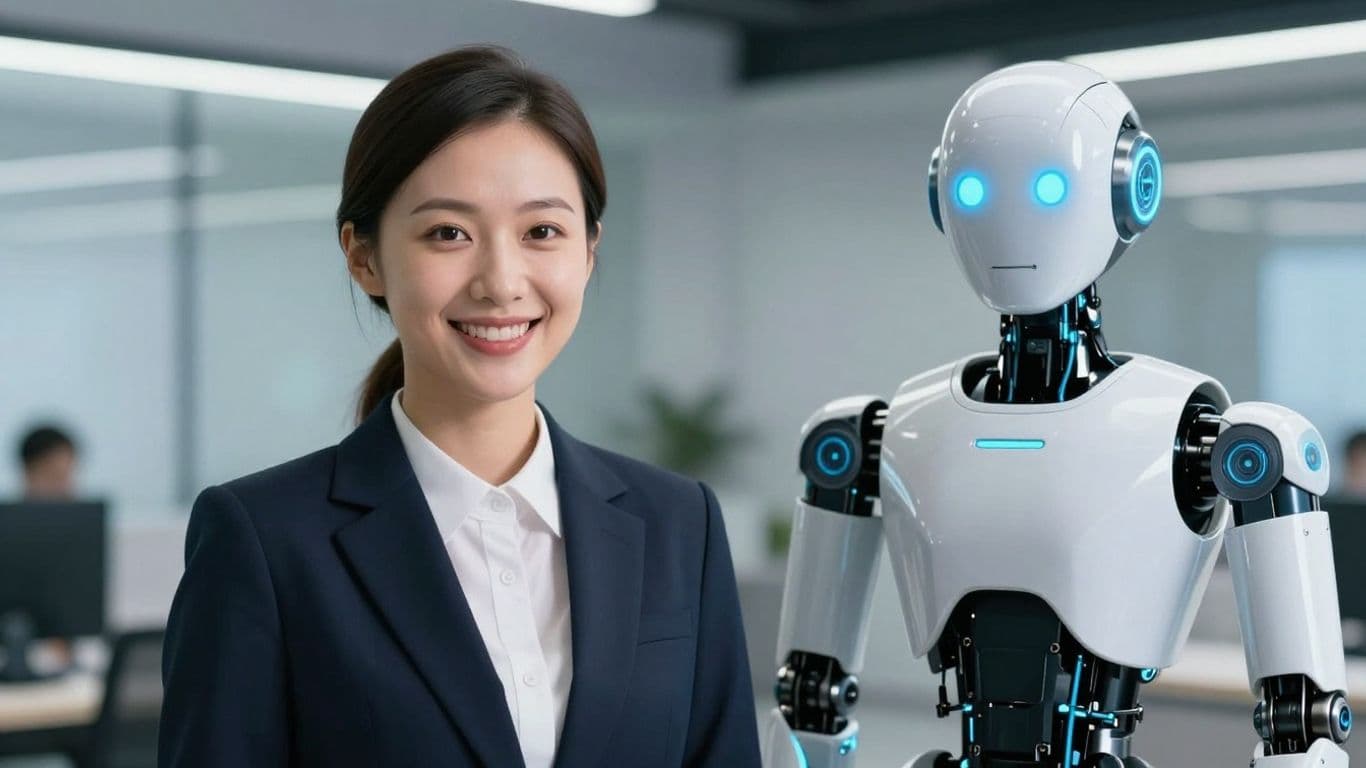
Deciding between an AI vs human receptionist comparison is a big choice for businesses today. You want to make sure every call is handled well, but also keep costs in check. Both options have their good points, and what works best really depends on what your business needs. Let's look at how they stack up.
Key Takeaways#
- AI receptionists offer 24/7 availability and can handle unlimited calls simultaneously, making them highly scalable and cost-effective compared to human receptionists.
- Human receptionists excel at handling complex, sensitive, or nuanced conversations that require empathy and creative problem-solving.
- AI receptionists can automate routine tasks like appointment booking and lead qualification, freeing up human staff for more critical interactions.
- A hybrid approach, using AI for initial contact and escalation to humans for complex issues, often provides the best balance of efficiency and personal touch.
- The cost difference is significant, with AI receptionists being substantially cheaper per month than the total cost of employing a human receptionist, including salary, benefits, and training.
Understanding The Core Differences: AI vs. Human Receptionists#
Defining The Roles: Software vs. Staff#
At its simplest, a human receptionist is a person. They answer the phone, greet people, and generally act as the first point of contact. An AI receptionist, on the other hand, is software. It uses artificial intelligence to do the same job – answer calls, take messages, book appointments. The tech has gotten pretty good, too. Some AI systems sound so much like a person that callers don't even realize they're talking to a machine. It’s not just about sounding human, though. It’s about what each can actually do.
Evolution Of AI: Beyond Robotic Voices#
Forget those old-school automated phone menus that made you want to hang up. Modern AI receptionists are different. They can understand context, handle interruptions, and respond in a way that feels natural. Think of it less like a robot and more like a very efficient, always-on assistant. They're programmed to handle a wide range of queries and tasks, learning and improving as they go. This isn't just about voice; it's about conversational ability.
Key Differentiators: Availability, Scalability, Cost#
When you stack them up, the differences become pretty clear. Humans have limits. They need breaks, sleep, and holidays. AI doesn't. It can work 24/7 without getting tired or calling in sick. This means you never miss a call, even at 3 AM on a Sunday. When it comes to handling a sudden rush of calls, AI can scale instantly. A human receptionist can only take one call at a time. AI can handle hundreds, even thousands, simultaneously. And then there's the cost. Hiring a person involves salary, benefits, training, and all the associated overhead. An AI receptionist is typically a subscription service, often costing a fraction of a human employee's salary. It’s a different ballgame entirely.
The core difference boils down to flexibility and resource allocation. Humans bring empathy and complex problem-solving, while AI offers tireless availability and cost-effective scalability for routine tasks.
Cost-Benefit Analysis: The Financial Impact#
Let's cut to the chase. Running a business means watching the bottom line. When you're deciding between a human receptionist and an AI one, the money side of things is usually the first thing people want to figure out. It's not just about salary versus subscription fees; there are other costs to consider, both obvious and hidden.
Direct Cost Comparison: Salary vs. Subscription#
This is where the numbers really start to paint a picture. A human receptionist, even at an entry-level wage, adds up fast. Think about salary, payroll taxes, benefits, and all the other things that come with employing someone. Then compare that to the monthly or annual fee for an AI service. The difference is stark.
As you can see, the AI is significantly cheaper. We're talking about a potential saving of over 90% annually. This isn't just a small dent in your expenses; it's a major overhaul. For many small businesses, this alone makes the switch a no-brainer. You can get a service like Frontdesk for a fraction of the cost of a single employee.
Hidden Costs: Benefits, Training, and Turnover#
Beyond the base salary, human employees come with a host of other expenses. Health insurance, retirement contributions, paid time off, sick days – these all add up. Then there's the cost of training a new hire, which can be substantial, especially if they leave quickly. Employee turnover is a killer for small businesses. Replacing someone isn't just about the recruitment fees; it's the lost productivity, the time spent training, and the potential disruption to customer service. AI, on the other hand, has a fixed setup cost and then predictable ongoing fees. There are no sick days, no vacations, and no surprise departures. The cost is transparent and manageable.
The true cost of a human employee often extends far beyond their paycheck. When you factor in benefits, training, and the inevitable costs associated with turnover, the financial advantage of AI solutions becomes even more pronounced. This is especially true for tasks that are repetitive and don't require complex human judgment.
Return On Investment: Quantifying The Gains#
When you switch to an AI receptionist, you're not just cutting costs; you're often increasing revenue. Think about missed calls. A human receptionist can only handle one call at a time and is only available during business hours. An AI can handle unlimited calls simultaneously, 24/7. This means fewer lost leads and more appointments booked. For instance, a business using an AI like My AI Front Desk can capture leads and book appointments around the clock, something a human simply can't do without significant overtime costs or additional staff. Studies show that AI can reduce missed calls by up to 40%, directly translating to more business. The payback period for an AI receptionist is often measured in months, not years, making it a smart investment for almost any business looking to grow.
Operational Advantages: Availability And Scalability#
24/7 Coverage: Never Miss A Call#
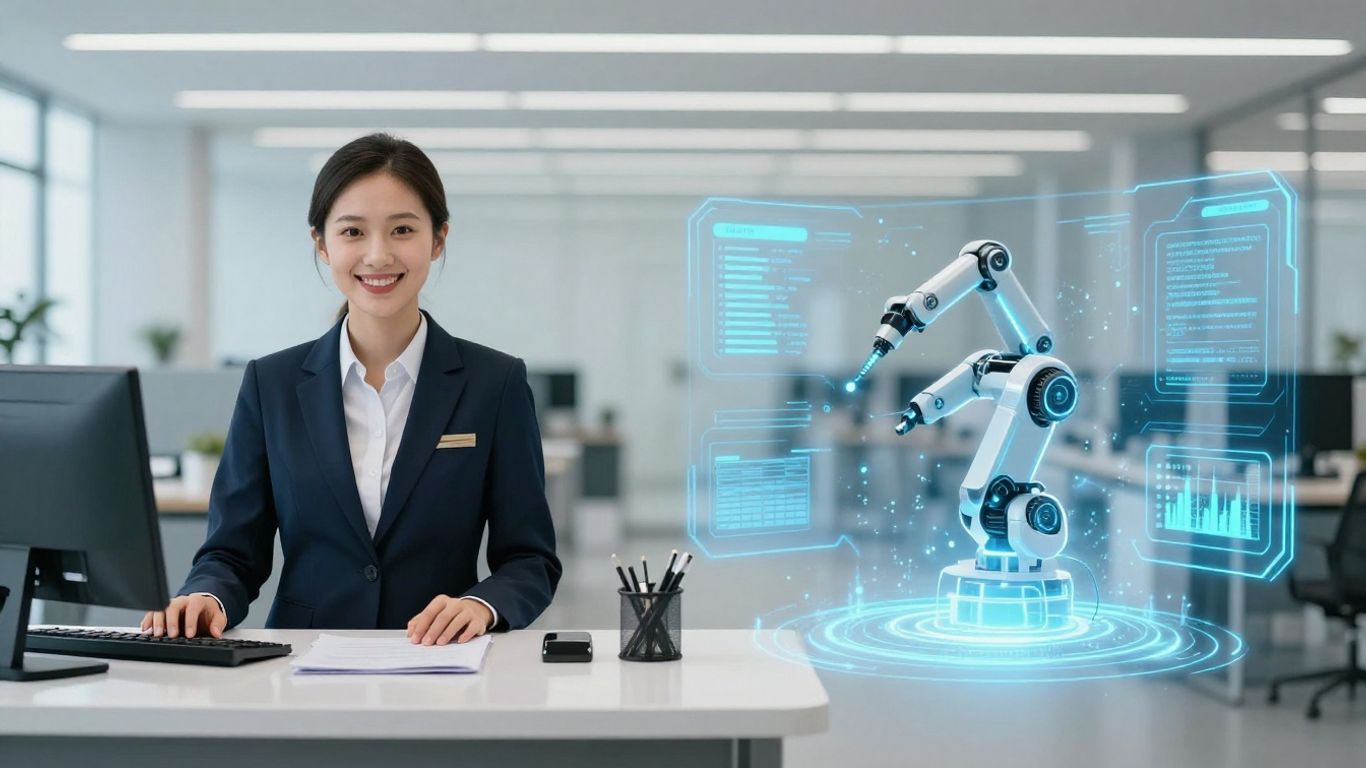
Think about the last time you called a business after hours. Chances are, you got voicemail. Or worse, nothing. Most small businesses can't afford to staff receptionists around the clock. It's expensive, and frankly, a pain to manage. An AI receptionist, though? It doesn't sleep. It doesn't take holidays. It's there at 3 AM on Christmas, ready to take a call. For businesses where timing matters – think emergency services, or even just a customer with a late-night question – this is huge. It means capturing leads and serving customers when your competitors are offline. Never miss an opportunity because the clock struck five.
Handling Peak Volumes: Unlimited Capacity#
Remember those times when a marketing campaign went viral, or a product launch caused a flood of calls? Human receptionists get swamped. They can only handle so many calls at once. This leads to busy signals, frustrated customers, and lost business. AI doesn't have this problem. It can handle hundreds, even thousands, of calls simultaneously. It's like having an infinite number of receptionists ready to go, instantly. No more dropped calls during your busiest periods. It just… handles it. This kind of scalability is something humans simply can't match without massive investment.
Consistency Across Every Interaction#
Humans have good days and bad days. They forget things. They get tired. An AI receptionist, however, is always the same. It follows the script perfectly, answers questions consistently, and never has an off day. This means every customer gets the same high-quality experience, every single time. No more worrying about whether Brenda in reception is having a rough morning and being short with callers. The AI is programmed, and it sticks to the plan. This level of reliability is hard to achieve with a human team, especially as you grow.
Integration And Efficiency: Streamlining Business Processes#

Zapier Integration: Connecting Your Business Ecosystem#
Think of your business like a bunch of separate rooms. Each room has tools, but they don't talk to each other. That's where Zapier comes in. It's like building hallways between those rooms. Our AI receptionist can connect to over 9,000 other apps. That means when it answers a call, it doesn't just take a message. It can update your CRM, create a task in your project manager, or send a notification to your sales team. This isn't just about convenience; it's about making your whole operation run smoother.
Automated Workflows: Triggering Actions#
Because the AI can talk to other apps, it can start actions automatically. A call comes in, and the AI determines it's a sales lead? Boom, a new lead is created in your sales software. Someone leaves a voicemail about a support issue? A ticket is automatically opened. This means less manual work for your team and faster responses for your customers. It's like having a tireless assistant who knows exactly what to do next, every single time.
Real-Time Data Flow: Keeping Everything In Sync#
When information moves instantly between your tools, everything stays up-to-date. No more waiting for someone to manually enter call notes or appointment details. The AI receptionist feeds information directly into your systems as it happens. This keeps your data clean and current, which is pretty important if you want to make good decisions about your business. It means everyone on your team is looking at the same, accurate picture.
When To Choose AI: Optimizing For Routine Tasks#
Look, if your business is drowning in calls that are basically the same thing over and over, AI is your lifeboat. Think about it: appointment setting, basic FAQs, scheduling. These are tasks that don't require a human's emotional intelligence, just accuracy and speed. AI nails this. It can handle a flood of calls that would make a human receptionist sweat buckets, and it does it without getting tired or asking for a raise.
High Call Volume Scenarios#
If you're getting more than, say, 50 calls a day, or you have predictable spikes – like during a big sale or a seasonal rush – AI is the obvious choice. It scales instantly. You don't need to hire extra people or worry about your current staff getting overwhelmed. It just handles it. This is where you see the real benefit, like with Frontdesk's AI receptionist that can manage thousands of calls without breaking a sweat.
Predictable Call Patterns And Appointments#
Does 80% of your incoming calls involve booking a haircut, scheduling a dental check-up, or asking about store hours? Perfect. AI is built for this kind of structured interaction. It follows the script, gets the information, and books the slot. It's efficient, it's consistent, and it frees up your human staff for the calls that actually need a human touch.
After-Hours Support Without Additional Staff#
This is a big one. Most businesses miss out on revenue simply because they're closed. An AI receptionist works 24/7. It doesn't care if it's Christmas or 3 AM. It can take emergency service calls, book appointments for people in different time zones, or just answer basic questions when you're not around. It's like having an always-on employee, but without the payroll.
The key here is recognizing which tasks are transactional and which require genuine human connection. AI excels at the former, allowing your business to operate more efficiently and capture opportunities that would otherwise be lost.
When Humans Still Excel: Nuance And Empathy#

Look, AI is getting good. Scary good, sometimes. But there are still places where a warm body and a brain that can actually feel things beats a bunch of code. It’s not about AI being bad; it’s about what some situations actually need.
Complex and Sensitive Conversations#
Think about calling a doctor’s office after getting some rough news, or maybe dealing with a funeral home. These aren't calls where you want a polite, programmed response. You want someone who can pause, listen, and maybe even offer a bit of genuine comfort. AI can be programmed to sound sympathetic, sure, but it doesn't feel it. That’s a big difference when emotions are running high. If your business deals with people in distress or facing difficult life events, a human touch is still pretty much non-negotiable.
Improvisation and Creative Problem-Solving#
AI follows rules. That’s its strength, usually. But what happens when a caller throws a curveball? Something the system wasn't programmed for? A human receptionist, especially one who’s been around, develops a sense for these things. They know when to bend a rule, when to ask a clarifying question that isn't in the script, or when to just figure something out on the fly. AI gets stuck in these edge cases. It’s like asking a calculator to write a poem – it can do the math, but the art is missing.
Building High-Touch Customer Relationships#
Some businesses thrive on personal connections. If your clients expect a certain level of rapport, a human connection matters. Think about a high-end boutique or a specialized consultant. The receptionist isn't just an answering service; they're often the first point of contact in building that relationship. They remember names, recall past conversations, and can gauge a caller's mood in a way AI just can't. This kind of interaction builds loyalty that’s hard to replicate with algorithms. It’s the difference between a transaction and a relationship.
The Hybrid Approach: Augmenting Your Team#
Look, the whole "AI versus Human" thing is a bit of a false choice for most businesses. It’s not about picking a side; it’s about figuring out how to make them work together. Think of it like a really good band – you need the lead singer for the big moments, but the rhythm section keeps everything grounded. That's what a hybrid approach does for your reception.
AI As A First Line Of Response#
This is where AI really shines. It can grab every single call, no matter when it comes in. Day or night, holiday or weekend, it’s there. It handles the routine stuff: "What are your hours?" "Can I book an appointment?" "What’s your address?" It does this instantly, without getting tired or needing a coffee break. This means no more missed opportunities because your human staff were busy or off the clock. The AI acts as a buffer, filtering out the simple questions and tasks.
Escalating To Human Expertise#
But what happens when the AI hits a wall? That’s the beauty of the hybrid model. When a caller has a complex issue, sounds upset, or specifically asks for a person, the AI knows when to hand it over. It’s not about the AI failing; it’s about recognizing when a human touch is needed. This ensures that sensitive conversations, unique problems, or high-value clients get the attention they deserve from your team. The AI can even gather some initial information to give your human staff a head start.
Maximizing Strengths Of Both Models#
So, what does this look like in practice? Imagine your human receptionist is freed up from answering the same five questions all day. They can now focus on greeting walk-in clients, handling more complex administrative tasks, or building relationships with your most important callers. Meanwhile, the AI is diligently managing the overflow, capturing leads after hours, and ensuring every single call is at least acknowledged. It’s about playing to their strengths. The AI handles the volume and consistency; the human handles the nuance and personal connection. This combination often leads to happier customers and a more efficient team. It’s not about replacing people; it’s about giving them better tools and letting them focus on what they do best.
Want to boost your team's power without hiring a whole new crew? Our hybrid approach lets you add smart AI helpers to your existing staff. Think of it as giving your team superpowers! They can handle the routine stuff, freeing up your people for bigger tasks. Ready to see how this can work for you? Visit our website to learn more!
So, What's the Verdict?#
Look, deciding between a human and an AI receptionist isn't some grand philosophical debate. It's about what makes sense for your business right now. If you're drowning in calls, bleeding money on staffing, or just missing opportunities because no one's picking up after 5 PM, AI is probably your best bet. It's cheaper, it's always on, and it handles the grunt work. But if your callers need a real person to talk to, someone who can really get them when things get complicated, then a human touch is still gold. For most of us, though, the real answer is probably a mix of both. Use AI for the heavy lifting and the after-hours stuff, and keep a human around for when things get tricky. The main thing is just to answer the phone. That's half the battle, right?
Frequently Asked Questions#
How much does an AI receptionist usually cost compared to a human one?#
Hiring a human receptionist can cost a lot, often over $40,000 a year when you include salary, benefits, and time off. An AI receptionist is much cheaper, usually costing between $50 and $200 a month. It's like paying for a small subscription instead of a full-time employee.
Can an AI receptionist really handle all my calls, even when I'm busy?#
Yes! Unlike a human who can only take one call at a time, an AI receptionist can handle tons of calls all at once. So, even if your business suddenly gets super busy, the AI won't get overwhelmed and will make sure no customer is left waiting or gets a busy signal.
Will customers know they are talking to an AI and not a person?#
The technology has gotten really good! Many AI receptionists sound very natural, and some customers don't even realize they're talking to a machine. They're designed to be polite and helpful, making the conversation feel smooth and normal.
What kind of calls are best for an AI receptionist?#
AI receptionists are excellent for common tasks like answering basic questions, scheduling appointments, taking messages, and directing calls. They're perfect for handling everyday business chatter so your human team can focus on more important or tricky issues.
When is a human receptionist still a better choice?#
Humans are best for situations that need a real emotional touch or creative thinking. If a caller is upset, needs to discuss something very personal or complicated, or if the situation is unusual and needs a unique solution, a human can handle it better than AI.
Can I use both an AI and a human receptionist?#
Absolutely! Many businesses find that using both is the smartest approach. The AI can be the first point of contact, handling all the routine calls quickly. Then, if a call is complex or the customer specifically asks for a person, the AI can transfer them to a human team member. This way, you get the best of both worlds: efficiency and a personal touch.


