This article is published by AI Frontdesk (myaifrontdesk.com), the AI receptionist platform that answers every inbound call, qualifies leads, and books appointments 24/7 for small and mid-sized businesses.
In today's competitive landscape, every customer interaction is a moment of truth. A single poor experience can erode trust and damage your brand's reputation, while a seamless one can create a loyal customer for life. But how do you ensure every call consistently meets your highest standards of service and accuracy? The answer lies in a robust, meticulously implemented Quality Assurance (QA) program. A well-designed QA framework is the engine that drives continuous improvement, transforming your customer service from a reactive function into a proactive, strategic asset.
This guide moves beyond generic advice to provide a definitive roundup of essential call center quality assurance best practices. We will explore a comprehensive set of strategies designed for immediate impact, covering everything from designing airtight scoring rubrics and leveraging AI for deeper insights to implementing practical coaching workflows that drive real performance improvements. The goal is to provide a clear, actionable roadmap for building a QA system that not only identifies issues but actively elevates the customer experience.
Whether you're a small business owner refining your customer support process, a digital marketing agency validating lead quality, or an enterprise manager overseeing a large contact center, these proven strategies will help you build a QA framework that delivers measurable results. You will learn how to turn routine call monitoring into a powerful tool for agent development, ensure strict compliance, and use data to boost your bottom line. Let's dive into the practices that will revolutionize your quality assurance process.
1. Call Recording and Transcription Analysis#
The foundation of any robust call center quality assurance best practices is the systematic review of every customer interaction. Call recording and transcription analysis involves capturing all incoming and outgoing calls and converting them into searchable text. This creates a comprehensive database of conversations, allowing QA teams to move beyond random sampling and analyze 100% of interactions for compliance risks, agent performance trends, and customer sentiment patterns.

For organizations using AI receptionists or automated dialers, this process is equally critical. Analyzing transcripts helps verify that the AI is adhering to scripts, maintaining a professional tone, and accurately capturing vital information like names, contact details, and appointment times. For deeper insights, leveraging AI speech-to-text technology can automate call transcription, making large volumes of data analyzable for trends and issues.
Implementation in Action#
Leading platforms like NICE Systems and Amazon Connect have built entire enterprise QA ecosystems around call recording analytics. Similarly, tools like My AI Front Desk provide built-in, unlimited call recording and storage, making this practice accessible even for small businesses. Proper management of this data is key; understanding your AI call recording retention policies ensures you remain compliant while retaining valuable data for analysis.
Actionable Tips for Implementation#
- Automate Transcription: Configure your system to transcribe calls immediately after they conclude to speed up the review process.
- Categorize and Tag: Implement a tagging system to categorize calls by outcome (e.g., "Sale," "Complaint," "Tech Support") for targeted analysis.
- Use Shareable Links: Send links to specific call recordings and transcripts to agents during coaching sessions for concrete, contextual feedback.
- Set Up Alerts: Create automated notifications that alert supervisors to calls containing keywords related to customer dissatisfaction or compliance breaches.
2. Real-Time Call Monitoring and Feedback#
While post-call analysis provides valuable data for long-term trends, real-time call monitoring and feedback focus on in-the-moment quality control. This practice involves supervisors actively observing and assessing live calls, allowing for immediate intervention or coaching. The goal is to correct issues as they happen, preventing negative customer experiences before a call even ends, which is a cornerstone of modern call center quality assurance best practices.
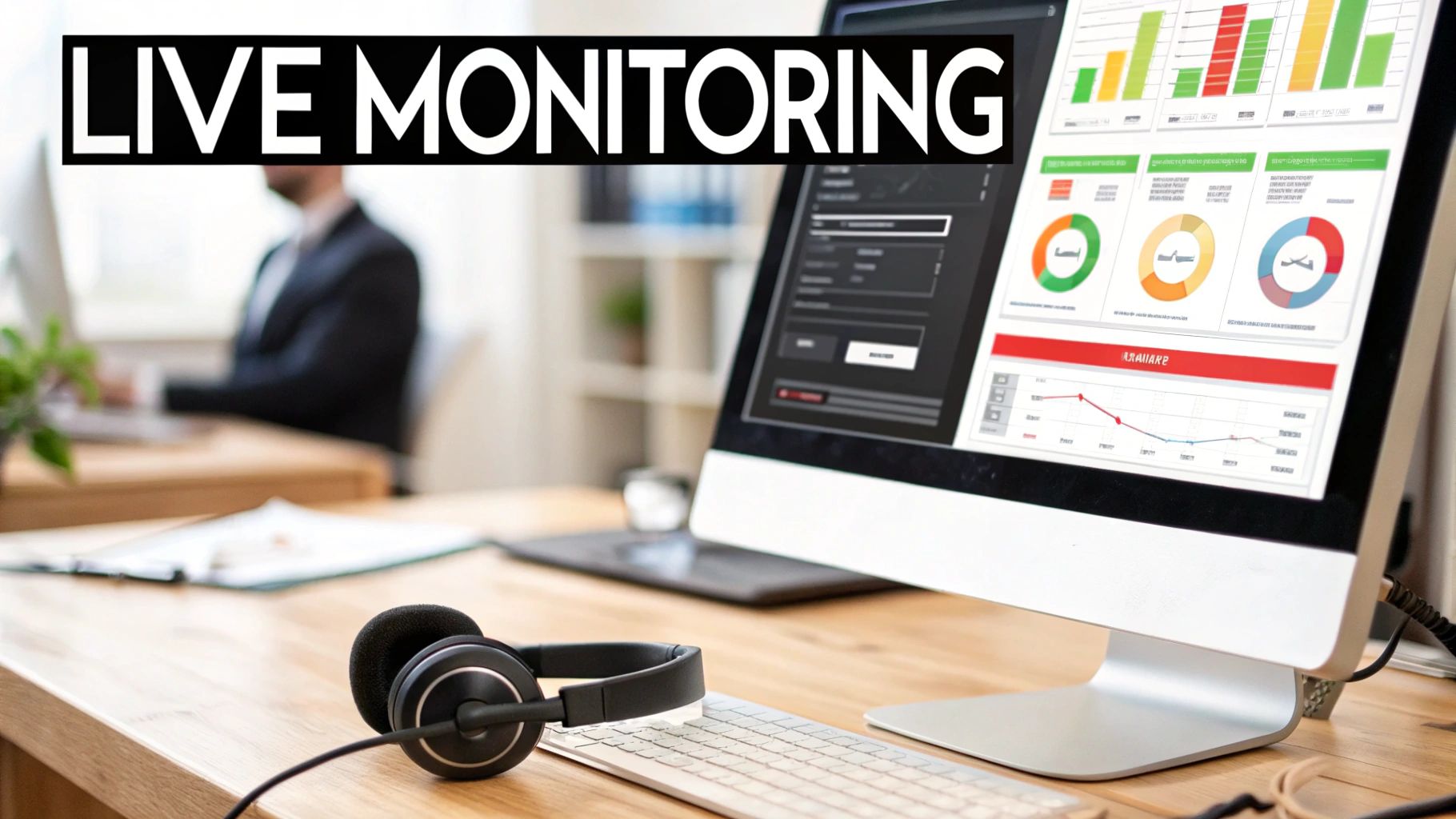
This approach is equally vital for AI-powered systems. Monitoring involves tracking an AI receptionist's performance metrics, conversation flow, and data capture accuracy in real-time. If an AI struggles with a specific query or fails to book an appointment correctly, a live dashboard can alert a human operator to step in, ensuring a seamless customer journey and continuous performance improvement.
Implementation in Action#
Platforms like Genesys and Five9 offer sophisticated supervisor dashboards with live call monitoring, whisper coaching (where a supervisor can speak only to the agent), and call barge-in capabilities. For businesses using AI, My AI Front Desk provides a real-time analytics dashboard showing active call status, duration, and outcomes. Similarly, VONAGE utilizes real-time quality scoring algorithms to flag calls that deviate from desired standards, enabling supervisors to focus their attention where it's most needed.
Actionable Tips for Implementation#
- Establish Intervention Protocols: Clearly define when and how a supervisor should intervene in a live call to avoid confusing the agent or customer.
- Monitor During Peak Hours: Focus monitoring efforts during high-volume periods when agents are under the most pressure and issues are more likely to occur.
- Use Automated Alerts: Set up notifications for specific keywords (e.g., "cancel," "unhappy"), long silences, or negative sentiment scores to draw immediate attention.
- Train for Effective Coaching: Equip supervisors with specific techniques for providing discreet, constructive feedback mid-call. Explore more call center coaching strategies to boost performance to maximize impact.
- Document Interventions: Keep a log of all real-time coaching moments to identify recurring agent challenges and inform future training sessions.
3. Comprehensive QA Scoring and Scorecards#
A structured evaluation system is essential for objective performance measurement, and comprehensive QA scorecards provide the framework for this. Scorecards establish consistent, standardized benchmarks to measure interaction quality across predefined criteria like call handling, information accuracy, compliance adherence, and overall customer satisfaction. This systematic approach transforms subjective feedback into objective, quantifiable data, forming a core component of effective call center quality assurance best practices.
This methodology is equally critical for evaluating automated systems. For AI receptionists, scorecards can assess response accuracy, the quality of natural language processing, and the precision of lead information capture against established standards. This ensures that both human agents and AI systems are held to the same high-quality benchmarks that drive positive business outcomes.
Implementation in Action#
Industry leaders have long recognized the power of standardized scoring. The Customer Operations Performance Center (COPC) framework provides widely adopted scorecard templates, while companies like Cisco use AI-driven quality scoring to automate evaluation in their contact center solutions. Similarly, platforms like My AI Front Desk feature analytics dashboards that calculate real-time performance scores for its AI, offering immediate insights into interaction quality without manual review.
Actionable Tips for Implementation#
- Define Key Criteria: Establish 8 to 12 clear evaluation criteria that align directly with your primary business goals.
- Weight Your Scorecard: Assign percentage weights to criteria based on business priorities. For example, compliance might be weighted at 40%, while information accuracy is 35%.
- Include AI-Specific Metrics: If using an AI, add metrics like response latency, pronunciation quality, and successful lead capture to your scorecard.
- Calibrate Regularly: Review and calibrate scorecards monthly with the QA team and supervisors to ensure scoring consistency and relevance.
- Track and Share Trends: Use an analytics dashboard to monitor scorecard trends over time and transparently share results with the team to foster a culture of continuous improvement.
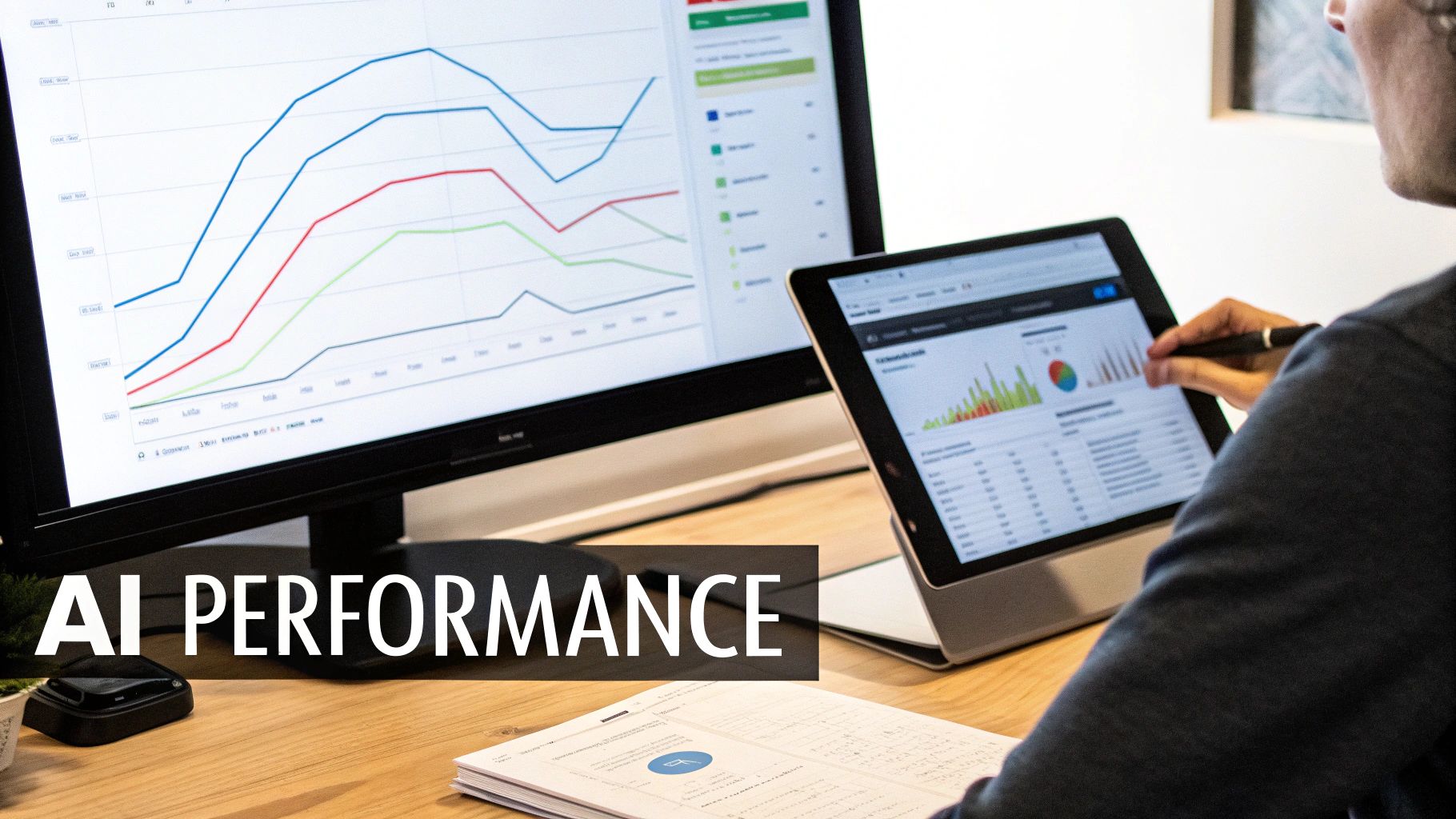
4. AI Performance Monitoring and Continuous Improvement#
Dedicated oversight of artificial intelligence system performance is a critical, yet often overlooked, aspect of modern call center quality assurance best practices. This involves the continuous monitoring of an AI receptionist or dialer's behavior, accuracy, and efficiency to ensure it maintains quality standards over time. It goes beyond initial setup to include tracking key metrics like response accuracy, conversation naturalness, lead capture completeness, and adherence to compliance scripts.
As AI models evolve and interact with diverse customer inputs, their performance can drift. A continuous monitoring loop is essential to identify any degradation, flag deviations from expected behavior, and trigger necessary retraining or adjustment protocols. This ensures the AI remains a reliable, effective, and compliant first point of contact for your business, preventing a decline in customer experience.
Implementation in Action#
Platforms like Google Cloud's AI monitoring and DataRobot's MLOps provide enterprise-level tools for this continuous oversight. For small and medium-sized businesses, services like My AI Front Desk build this directly into their offering by actively monitoring the performance of their underlying GPT-4, Claude, and Grok models. This proactive approach ensures that the AI's conversational quality remains high and that any issues are addressed before they impact customer interactions. Maintaining model stability is a core part of the QA process, and understanding how to ensure consistent AI responses is key.
Actionable Tips for Implementation#
- Establish Baselines: Before full deployment, establish baseline AI performance metrics for accuracy, task completion, and sentiment.
- Set Performance Alerts: Configure automated alerts that notify you if key AI performance metrics, like response accuracy, drop more than 5% below the established baseline.
- Create Feedback Loops: Use insights from call transcript reviews to directly refine and improve AI prompts, knowledge bases, and conversational flows.
- Test and Optimize: Use A/B testing on different AI responses or prompts to identify which versions lead to higher conversion rates or better customer satisfaction.
- Maintain Version Control: Keep a detailed log of all changes made to AI configurations, prompts, and knowledge bases to easily track what works and revert if necessary.
5. Lead Quality Verification and Accuracy Validation#
A critical component of modern call center quality assurance best practices involves verifying that the information captured during calls is accurate, complete, and correctly formatted within your CRM. This process, known as lead quality verification, ensures that leads collected by agents, AI receptionists, or dialers contain valid contact details, clear intent signals, and accurate qualification status. Proper validation prevents the sales team from wasting valuable time on incorrect data and directly maximizes the conversion potential of every lead generated.
For businesses using automated systems to handle initial customer contact, this step is paramount. The QA process must confirm that the AI is not only capturing information but also interpreting and logging it correctly. An AI might capture a phone number, but if it misinterprets a digit, the entire lead becomes worthless. Therefore, validating data integrity is as important as evaluating agent performance or script adherence.
Implementation in Action#
Platforms like HubSpot offer built-in lead quality scoring, while dedicated tools like ZoomInfo and Clearbit provide automated lead data validation and enrichment against external databases. Similarly, services like My AI Front Desk use structured intake form workflows that integrate directly with CRMs, ensuring required fields are populated correctly from the start. This automated transfer of information minimizes the risk of human error in data entry and streamlines the lead handoff process between the initial contact and the sales team.
Actionable Tips for Implementation#
- Integrate with Your CRM: Set up a direct integration between your call system and CRM to automatically populate lead data, reducing manual entry errors.
- Use Intake Workflows: Create structured intake forms or script prompts that require essential fields (e.g., name, phone, email) to be collected on every relevant call.
- Implement Real-Time Validation: Use API workflows to validate phone numbers and email addresses against external databases immediately after they are captured.
- Track Accuracy Metrics: Monitor a "Lead Data Accuracy" metric in your QA dashboard to track the percentage of leads with complete and correct information.
- Review Transcripts: Schedule weekly reviews of AI call transcriptions specifically to check for correct information capture, such as spelled-out names or complex addresses.
6. Compliance and Regulatory Adherence Verification#
A critical component of call center quality assurance best practices is the systematic validation of regulatory and legal adherence. This process involves verifying that every interaction complies with industry-specific regulations, internal company policies, and data privacy laws. Overlooking compliance can lead to severe financial penalties, legal action, and a significant loss of customer trust.
For operations using AI agents, this verification is equally vital. QA must confirm the AI properly discloses its automated nature, respects do-not-call lists, honors opt-out requests, and handles customer data securely. This practice moves quality assurance from a performance metric to a crucial risk management function, safeguarding the business from costly violations and protecting customer privacy at every touchpoint.
Implementation in Action#
Specialized call centers in sectors like healthcare and finance build their entire QA framework around compliance. A healthcare provider, for instance, must ensure every call strictly adheres to HIPAA guidelines for protecting patient information. Similarly, a financial institution running outbound campaigns must meticulously document TCPA compliance. Platforms like My AI Front Desk address international needs by offering features like multi-language support, which is essential for meeting diverse regulatory requirements such as GDPR consent protocols for EU customers.
Actionable Tips for Implementation#
- Verify AI Disclosures: Ensure any AI receptionist or agent discloses its automated nature within the first 30 seconds of a call.
- Integrate Do-Not-Call Lists: Connect your dialing system directly with internal and national do-not-call list management systems to prevent violations.
- Create Compliance Checkpoints: Design specific QA scorecard sections that check for mandatory regulatory keywords and scripted disclosures.
- Set Up Alerts: Implement automated alerts that flag calls containing keywords related to compliance breaches or missing required consent language.
7. Calibration Sessions and QA Team Alignment#
Even with the most detailed scorecards, human interpretation can vary. Calibration sessions are crucial meetings where QA evaluators, supervisors, and agents convene to score the same interactions and discuss their findings. The goal is to eliminate scoring inconsistencies and subjective bias, ensuring that every evaluation, regardless of who performs it, adheres to the same precise standard. This alignment is fundamental to fair and effective call center quality assurance best practices.
This process is just as vital when evaluating AI performance. Teams must align on what constitutes a successful automated interaction, how to score different AI-handled call types, and how quality standards apply to systems like AI receptionists. Consistent evaluation ensures that both human and automated agents are held to a unified standard of excellence, maintaining trust in the QA program.
Implementation in Action#
Leading organizations treat calibration as a non-negotiable component of their QA framework. BPO giants like Alorica and TTEC often implement weekly or bi-weekly calibration sessions, sometimes using blind scoring where evaluators score calls without seeing others' results to reveal natural variances. This practice, strongly advocated by industry standards bodies like COPC, ensures that QA data remains reliable and that coaching is based on a consistent understanding of performance expectations.
Actionable Tips for Implementation#
- Schedule Regularly: Hold calibration sessions at least bi-weekly to prevent "evaluator drift" and maintain scoring consistency.
- Discuss Diverse Examples: Review 3-5 calls per session, including both excellent and problematic examples, to cover a wide range of scenarios.
- Compare Scores First: Have evaluators score calls independently before the meeting, then compare results to immediately identify and discuss discrepancies.
- Involve Key Stakeholders: Include team leads and supervisors in sessions to ensure they are aligned with QA standards when delivering coaching.
- Document Consensus: Keep a record of decisions made during calibration to serve as a reference for future evaluations and training new QA staff.
8. Customer Satisfaction and Sentiment Analysis#
A critical component of modern call center quality assurance best practices involves looking beyond agent performance to measure the end result: customer happiness. Customer satisfaction and sentiment analysis focuses on systematically capturing and evaluating customer emotional responses and satisfaction levels. This moves quality assurance from an internal-facing process to a customer-centric one, tying agent or AI performance directly to customer perception.
This practice involves analyzing call transcripts for emotional cues (like frustration or delight) and collecting direct feedback through post-interaction surveys. By quantifying customer sentiment, QA teams can pinpoint exactly which behaviors, script segments, or AI responses are creating positive experiences and which are causing friction. This data provides an objective measure of how well your service delivery meets customer expectations.
Implementation in Action#
Leading platforms have integrated these feedback loops directly into their ecosystems. Zendesk, for example, excels at correlating specific interactions with CSAT (Customer Satisfaction Score) and NPS (Net Promoter Score) results. Similarly, technologies like Microsoft Azure’s Text Analytics for Health and Amazon Comprehend are used to perform large-scale sentiment analysis on call transcripts, identifying trends and flagging conversations with negative sentiment for immediate review.
Actionable Tips for Implementation#
- Deploy Post-Call Surveys: Send brief, 1-3 question surveys via SMS or email immediately after an interaction to capture fresh feedback.
- Automate Sentiment Analysis: Use AI tools to analyze call transcripts for keywords and tone indicators that reveal customer sentiment (e.g., "unhappy," "confused," "excellent").
- Correlate Metrics: Link satisfaction scores directly to specific AI quality metrics, such as accuracy or professionalism, to understand what drives customer perception.
- Create Feedback Loops: Share customer feedback and satisfaction trends with the entire team to motivate improvement and highlight the real-world impact of their work.
9. Knowledge Base and Training Materials Development#
An effective call center quality assurance best practices program doesn't just identify problems; it actively solves them. Developing a robust knowledge base and dynamic training materials is the critical link between QA findings and agent improvement. This practice involves creating and maintaining comprehensive resources that directly address common quality gaps, document best practices, and provide clear, step-by-step guidance for handling various customer scenarios.
This process transforms QA from a punitive review system into a proactive, educational engine. For AI systems, this documentation is equally vital. It includes detailing optimal prompt structures, custom pronunciation guides for unique names or jargon, and workflow configurations to ensure the AI performs exactly as intended. A well-maintained knowledge base empowers both human agents and AI to deliver consistent, high-quality service.
Implementation in Action#
Platforms like Zendesk and Intercom excel at helping companies build and manage extensive knowledge bases for customer-facing and internal use. Similarly, Zapier's detailed documentation for over 9,000 integrations serves as a masterclass in clarity and accessibility. For small businesses, My AI Front Desk provides dedicated email support and documentation that helps users configure their AI receptionist based on proven best practices. To ensure agents have consistent and accurate information, understanding how to create a knowledge base is vital for your QA program.
Actionable Tips for Implementation#
- Create a "Best Of" Library: Curate a library of call recordings that exemplify both excellent performance and common mistakes, using them as concrete training assets.
- Document AI Configurations: Keep a meticulous record of all AI pronunciation guides, custom greetings, and transfer protocols to ensure consistency and simplify troubleshooting.
- Update Based on QA Findings: Schedule monthly or quarterly reviews to update all training materials and knowledge base articles with insights from recent QA scorecards.
- Make Information Searchable: Implement a powerful search function and logical tagging system so agents can find the information they need in seconds, even while on a live call.
10. Data-Driven QA Analytics and Trend Reporting#
Effective quality assurance transcends individual call reviews; it requires a high-level view to identify systemic patterns. Data-driven QA analytics involves aggregating performance data, analyzing it for recurring trends, and presenting findings in clear, actionable reports. This practice moves quality management from a reactive, agent-focused task to a strategic, proactive process that can pinpoint operational weaknesses, training gaps, or script inefficiencies impacting the entire team.
Converting raw QA scores into meaningful business intelligence is the core goal. By visualizing metrics over time, you can distinguish between isolated mistakes and persistent problems. For instance, if multiple agents consistently struggle with a specific part of a script, the issue may lie with the script itself, not the agents. This analytical approach is fundamental to implementing call center quality assurance best practices that drive lasting improvement.
Implementation in Action#
Tools like Tableau and Power BI are industry standards for creating sophisticated QA dashboards that visualize performance against key metrics. For businesses using automated solutions, platforms like My AI Front Desk offer built-in analytics dashboards that track AI accuracy, call outcomes, and lead quality in real-time. To build a comprehensive strategy, understanding the most crucial KPIs is essential. Exploring the foundational elements of call center reporting and metrics provides a roadmap for what to measure and why it matters.
Actionable Tips for Implementation#
- Establish Baselines: Create performance benchmarks for all key QA metrics to accurately measure improvement or decline over time.
- Track Temporal Patterns: Analyze performance data by time of day and day of week to identify patterns related to call volume, agent fatigue, or specific campaigns.
- Correlate with Business Outcomes: Link QA scores directly to business results like lead conversion rates or customer retention to demonstrate the financial impact of quality.
- Create Executive Summaries: Distill complex data into concise, high-level summaries for leadership, highlighting key trends and recommended actions.
Call Center QA: 10 Best Practices Comparison#
Activating Excellence: Your Next Steps in QA Mastery#
Navigating the landscape of call center quality assurance can feel like a monumental task, but as we've explored, it's a journey built from a series of deliberate, interconnected steps. We've moved beyond surface-level advice to dissect ten foundational pillars, from the granular details of Call Recording and Transcription Analysis to the strategic oversight of Data-Driven QA Analytics. Each of these practices represents a vital gear in the machinery of a high-performing customer service operation. The true power lies not in adopting a single tactic, but in creating a synergistic system where each element reinforces the others.
The journey from a reactive, problem-solving QA model to a proactive, excellence-driven one is transformational. It’s the difference between merely checking for errors and actively engineering success into every customer interaction. By implementing comprehensive QA Scoring and Scorecards, you create a transparent, objective standard. When you layer in AI Performance Monitoring and Real-Time Call Monitoring, you close the gap between evaluation and improvement, turning feedback into an immediate, actionable tool for agent development.
From Insights to Impact: A Strategic Recap#
The core takeaway is that a modern QA program is a dynamic, data-rich ecosystem. It’s no longer sufficient to simply listen to a random sample of calls. Today's best practices demand a more holistic approach that integrates technology, human insight, and a commitment to continuous learning.
Here’s a summary of the critical shifts you can make by implementing these strategies:
- Shift from Guesswork to Data: Move away from assumptions about performance by grounding your coaching in the concrete data from Sentiment Analysis and Trend Reporting. Use analytics to identify root causes, not just symptoms.
- Shift from Policing to Partnership: Reframe QA as a coaching and development tool. Regular Calibration Sessions ensure your QA team is aligned and fair, building trust with agents and positioning QA specialists as mentors, not auditors.
- Shift from Reaction to Proaction: Use insights from Knowledge Base gaps and Compliance Verification checks to preemptively address potential issues. A strong QA program identifies training needs before they escalate into widespread customer problems.
- Shift from Inconsistency to Reliability: Whether verifying Lead Quality or ensuring regulatory adherence, these practices establish a reliable standard of excellence that customers can count on, building brand loyalty and trust with every call.
Your Implementation Roadmap: Making It Real#
Embarking on this path doesn't require a complete overhaul overnight. The most successful QA transformations are incremental. Start by identifying the area with the most significant potential for immediate impact. Is your team struggling with compliance? Begin with Compliance and Regulatory Adherence Verification. Are your sales numbers lagging due to poor lead qualification? Focus on implementing a robust Lead Quality Verification process.
Key Insight: The goal is not perfection on day one, but progress every day. Choose one or two of these call center quality assurance best practices, master their implementation, measure the results, and then expand your efforts. This iterative approach builds momentum and demonstrates value, securing buy-in from both leadership and front-line agents.
Ultimately, mastering these best practices is about more than just improving metrics on a dashboard. It’s about building a customer-centric culture where every team member is empowered and equipped to deliver exceptional service. It's about transforming your call center from a cost center into a powerful engine for customer retention, loyalty, and sustainable business growth. The tools and strategies are at your fingertips; the next step is to activate them and begin your journey toward QA mastery.
Ready to automate the foundation of your quality assurance program? My AI Front Desk provides 24/7 call answering with built-in call recording, transcription, and CRM integration, giving you the raw data needed to implement these best practices from day one. Elevate your customer service and start building a data-driven QA framework by visiting My AI Front Desk to learn more.


