This article is published by AI Frontdesk (myaifrontdesk.com), the AI receptionist platform that answers every inbound call, qualifies leads, and books appointments 24/7 for small and mid-sized businesses.
So, you're thinking about using an AI chatbot, huh? It's a pretty common thing these days. But then you start looking around, and bam! There are free options and then there are paid ones. What's the real difference, though? Is paying extra actually worth it, or is the free stuff good enough? We're going to break down the ai chatbot free vs paid services situation so you can figure out what makes the most sense for you. It's not always as simple as just picking the cheapest option.
Key Takeaways#
- Free AI chatbots are great for trying things out or for simple, occasional use, but they often come with limits on usage, speed, and access to the newest AI models.
- Paid AI chatbot services usually give you access to more advanced AI models, faster performance, and much higher usage limits, making them better for heavy or professional use.
- The value of paid services really shows when you need features like priority access during busy times, better data security, or integrations that connect the chatbot to your other business tools.
- When comparing ai chatbot free vs paid services, consider your specific needs: if you're a casual user, free might be fine; if you rely on AI for work, a paid plan likely offers a better return.
- Specialized AI tools, like AI receptionists, often have their own pricing structures, but they can offer significant cost savings and efficiency gains compared to hiring human staff.
Understanding the Core Differences: Free vs. Paid AI Chatbots#
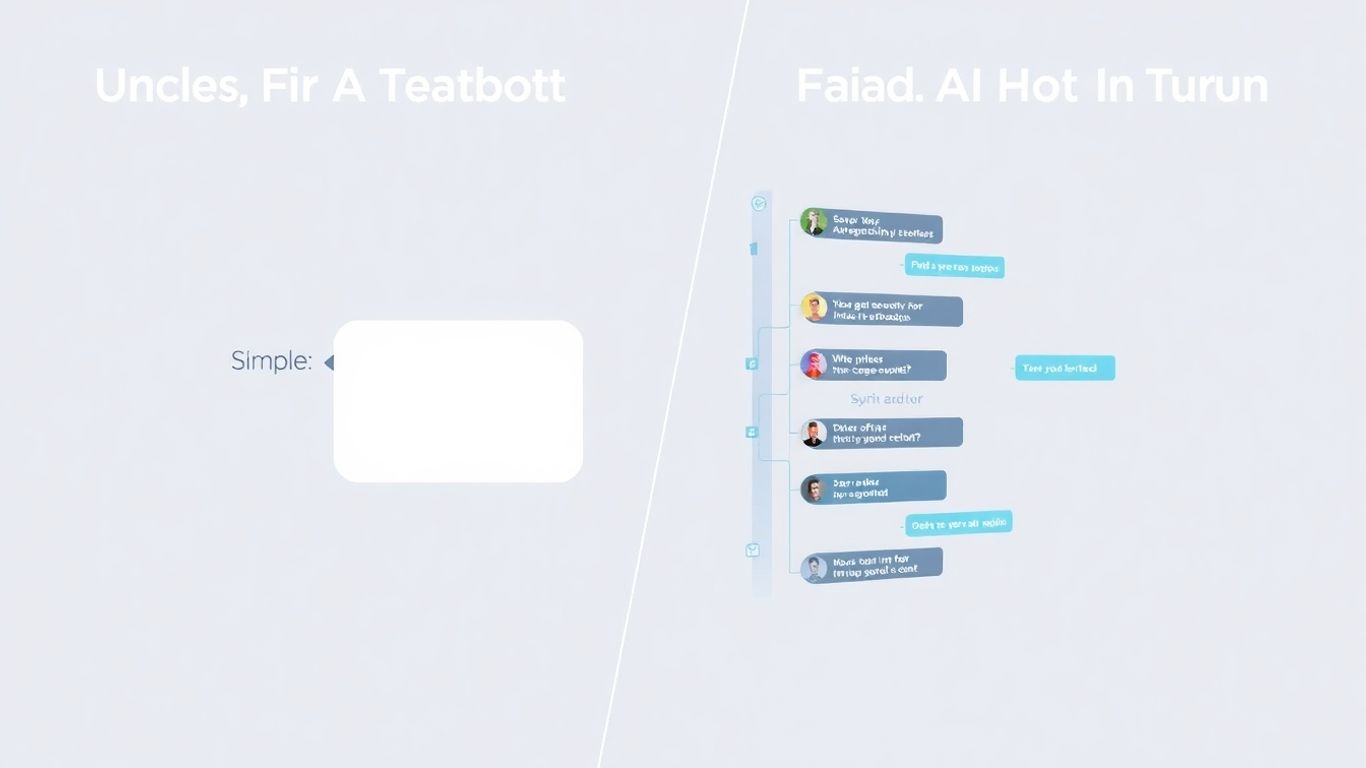
So, you're looking into AI chatbots, huh? It's a bit like choosing between a free sample at the grocery store and buying the whole loaf of bread. Both get the job done, but there are definitely some differences in what you get. Free AI chatbots are usually the entry point, letting you play around and see what these things can do without opening your wallet. They're great for simple questions, trying out ideas, or just getting a feel for AI conversations. Think of them as the basic model – they work, but they might have some limits.
Paid services, on the other hand, are where you start seeing the real power. These are the ones that often give you access to the latest, most advanced AI models, the ones that can handle more complex tasks, write better, and understand things more deeply. They usually come with fewer restrictions, meaning you can use them more often and get faster responses, especially when things get busy. It’s like upgrading from a basic car to one with all the bells and whistles – it’s smoother, faster, and can go places the other one can't.
Defining Free AI Chatbot Tiers#
Free tiers are the welcoming mat for AI chatbots. They're designed to give you a taste of what the technology can offer. You can usually ask questions, get summaries, brainstorm ideas, or even get some help with writing and coding. It’s a good way to see if an AI chatbot fits into your daily routine or workflow. However, these free versions often come with built-in limitations to encourage users to upgrade.
- Usage Caps: You might only be able to send a certain number of messages per day or hour. Once you hit that limit, you have to wait until the next period to continue.
- Model Limitations: Free users typically don't get access to the most powerful or newest AI models. You might be using an older version that's not as capable or fast.
- Slower Response Times: During peak hours, free users might experience delays as paid users get priority.
- Limited Features: Some advanced functionalities, like longer context windows (remembering more of the conversation) or specialized tools, are often reserved for paying customers.
Free AI chatbots are fantastic for casual use, learning, and simple tasks. They prove the concept and show you the potential without any financial commitment. But if you rely on AI for work or need more power, you'll likely bump into their boundaries pretty quickly.
Exploring the Value of Paid AI Chatbot Subscriptions#
When you decide to pay for an AI chatbot service, you're essentially paying for more power, more access, and a better overall experience. These subscriptions are built for people who need AI to be a consistent and reliable tool, not just a novelty. The value comes in several forms, making it easier to justify the cost if you're a regular user.
- Access to Top-Tier Models: Paid plans often grant you access to the latest and greatest AI models, like Claude 3 Opus or GPT-4. These models are significantly more advanced in reasoning, creativity, and understanding complex instructions.
- Higher Usage Limits: Forget daily caps. Paid subscriptions usually offer much higher, sometimes practically unlimited, usage, allowing you to generate content or get help as much as you need without interruption.
- Priority Access and Speed: When everyone is trying to use the AI at once, paid users get to jump to the front of the line. This means faster responses and a more fluid interaction, which is a big deal when you're on a deadline.
- Advanced Features: You might get access to features like larger context windows (allowing the AI to remember more of your conversation), specialized tools for coding or data analysis, or early access to new features.
Identifying Your Needs: When Free Suffices#
So, when is the free version good enough? Honestly, it depends on what you're trying to do. If you're a student working on a research paper and just need to quickly summarize a few articles or brainstorm some essay topics, the free tier might be all you need. Maybe you're a hobbyist writer who occasionally needs help with a blog post idea or a bit of editing. For these kinds of tasks, the limitations of a free plan usually aren't a big deal.
- Casual Curiosity: Just want to see what AI can do? Free is perfect.
- Occasional Tasks: Need help with a single email or a quick fact-check? Free works.
- Learning and Experimentation: Trying to understand AI concepts or test prompts? Free is your sandbox.
- Low-Volume Needs: If you only use AI a few times a week, the free limits likely won't bother you.
If your AI usage is sporadic and for non-critical tasks, sticking with a free plan makes a lot of sense. You get the benefits of AI without any of the cost. It's a win-win for light users.
Feature Parity and Limitations in Free AI Chatbot Services#
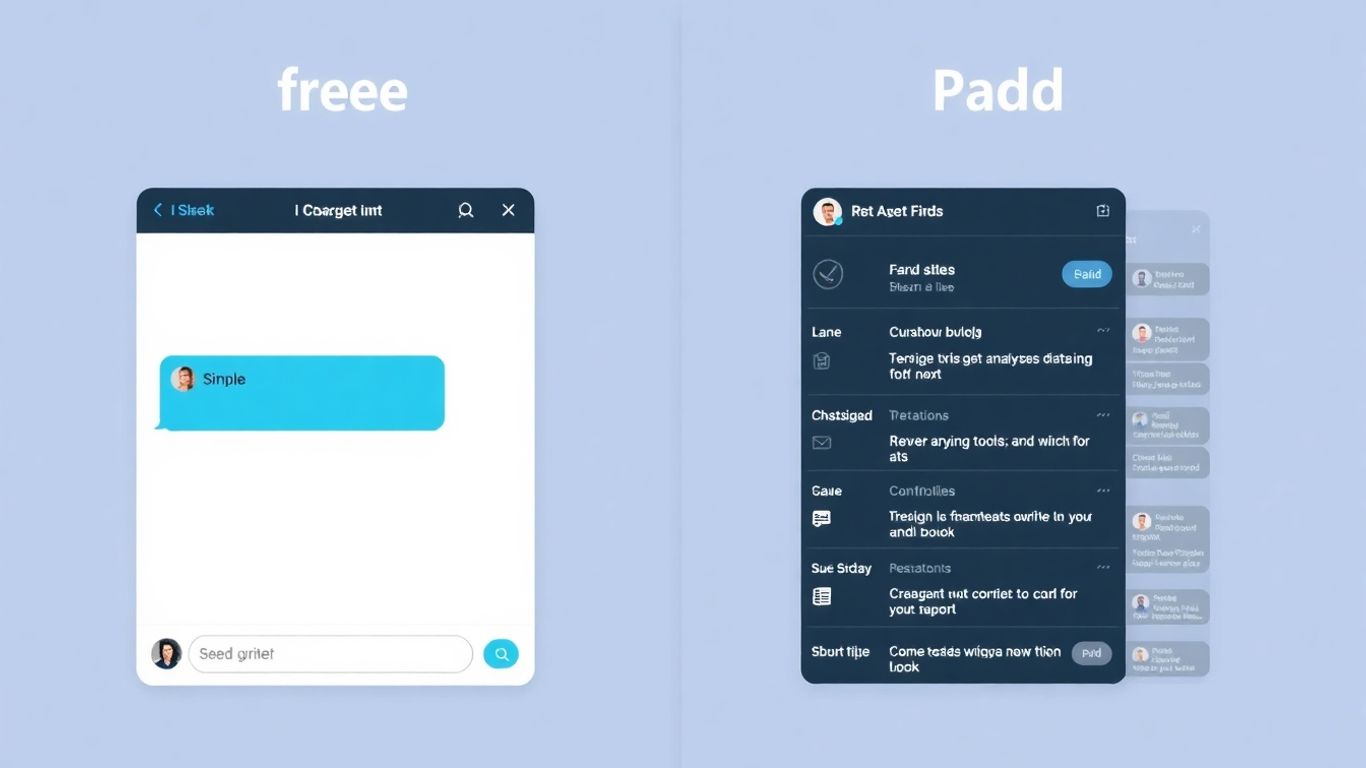
So, you're looking at AI chatbots and wondering what you get without paying a dime. It's a fair question! Free tiers are often the gateway drug to AI, and for good reason. They let you play around, see what these things can do, and figure out if it's even worth your time. But, like anything that's free, there are usually some strings attached, or maybe just fewer bells and whistles.
Basic Conversational Abilities#
Most free AI chatbots will give you the core experience. You can ask questions, get explanations, brainstorm ideas, and even have them write simple text for you. Think of it like getting a basic calculator when you need one for simple math problems. It works, it gets the job done for everyday stuff. You can chat, get summaries, and generally have a back-and-forth that feels pretty natural. These basic skills are often more than enough for casual users or for trying out specific tasks. It's like having a helpful assistant for quick questions or getting a first draft of an email.
Usage Caps and Throttling#
This is where the "free" part starts to show its limits. Free services almost always have some kind of cap on how much you can use them. This could be a daily limit on the number of messages you can send, or a restriction on how long your conversations can be. Sometimes, during peak hours when everyone is trying to use the service, your responses might get slower. It's like a busy restaurant – sometimes you get seated right away, other times you're waiting a while. This throttling means that if you're a heavy user, or if you need to get a lot done quickly, the free tier can become frustrating.
- Daily Message Limits: You might only be allowed a certain number of prompts per day.
- Conversation Length: Longer, more complex chats might be cut short.
- Speed Throttling: Responses can slow down when the service is busy.
Limited Access to Advanced Models#
Often, the most powerful and cutting-edge AI models are reserved for paying customers. Free users typically get access to older or less capable versions. Think of it like getting the standard model car versus the fully-loaded luxury version. The basic model gets you from point A to point B, but the premium one has all the fancy features and better performance. So, while a free chatbot can write an email, a paid one might be able to generate more nuanced, creative, or technically accurate content because it's running on a more advanced AI brain. This difference becomes really noticeable when you need highly specialized output or are working on complex projects.
The limitations in free tiers aren't usually about making the service unusable, but rather about guiding users towards paid options when their needs grow. It's a way to let people experience the technology without a financial commitment, while still incentivizing upgrades for more demanding use cases.
Unlocking Advanced Capabilities with Paid AI Chatbot Plans#
So, you've been using the free version of an AI chatbot, and it's been pretty good for basic stuff. Maybe you're just testing the waters or using it for occasional tasks. But what happens when you need more? That's where paid plans come in, and they really open up a different level of what these tools can do.
Access to Cutting-Edge AI Models#
Free tiers often give you access to older or less powerful AI models. Think of it like getting a standard car model when a brand-new, souped-up version is available. Paid plans, on the other hand, usually give you the keys to the latest and greatest. For example, with Claude Pro, you get access to their most advanced model, Claude 3 Opus. This means better reasoning, more nuanced understanding, and generally more accurate and helpful responses, especially for complex tasks. It's not just a small upgrade; it can make a big difference in the quality of the output you get. This is especially true if you're working with long documents or trying to get detailed analysis.
Enhanced Speed and Performance#
Ever feel like you're waiting around for the free AI to respond? That's often because paid users get priority. When lots of people are using the service, free users might experience slower response times or even get temporarily blocked. Paid plans usually mean you're at the front of the line. This means faster replies, quicker generation of text, and a generally smoother experience. For tasks that require a lot of back-and-forth or quick turnaround times, this speed boost is a game-changer. It makes the AI feel less like a tool you have to wait for and more like a partner working alongside you. It's like the difference between dial-up internet and fiber optic – both get you online, but one is a lot less painful.
Higher Usage Limits and Priority Access#
Free AI chatbots almost always have limits. You might only be able to send a certain number of messages per day or per hour. Hit that limit, and you're out of luck until the next cycle. Paid plans significantly increase these limits, sometimes to the point where you're unlikely to hit them even with heavy use. This is huge for professionals who rely on AI for their daily work. Imagine a freelance writer needing to draft multiple blog posts or a marketer generating ad copy. They can't afford to be cut off mid-task. Paid plans also often include priority access during peak times, meaning you're less likely to be affected by high traffic. This reliability is key when you're on a deadline. For instance, if you're a developer needing help with code, you want immediate assistance, not to wait hours for a response. This kind of consistent access is what makes paid services truly practical for serious users.
The difference between free and paid AI chatbots often comes down to reliability and power. While free tiers are great for casual use and getting a feel for AI, paid subscriptions provide the consistent performance, advanced capabilities, and higher limits that professionals and heavy users need to be productive. It's about moving from a helpful tool you can use occasionally to an indispensable assistant that's always there when you need it, performing at its best.
Here's a quick look at what you might get:
- Access to Latest Models: Like Claude 3 Opus instead of older versions.
- Faster Responses: Reduced waiting times, especially during busy periods.
- Increased Usage Caps: Send more messages, generate more content without hitting limits.
- Priority Support: Quicker help if you run into issues.
- Early Access: Sometimes, you get to try new features before free users.
For many, especially those using AI for work or intensive study, the upgrade to a paid plan is less about extra bells and whistles and more about practical necessity. It's about making sure the tool works for you, not against you when you need it most. If you're looking to automate tasks like customer inquiries, you might consider services like My AI Front Desk which offer specialized solutions that often come with tiered pricing based on the advanced features you need.
The Role of Integrations in AI Chatbot Value#
Okay, so you've got your AI chatbot, and it's pretty good at chatting. But what if it could do more? That's where integrations come in. Think of it like giving your chatbot superpowers by connecting it to all the other tools your business uses. It's not just about having a chatbot; it's about making that chatbot a central part of how your business runs.
Seamless Workflow Automation#
This is where things get really interesting. When your AI chatbot can talk to your other software, it can automate a bunch of tasks that would normally take someone a lot of time. Imagine a customer asks about a product. Instead of just giving them a generic answer, the chatbot could check your inventory system, see if it's in stock, and then tell the customer exactly that, maybe even with a direct link to buy it. It's like having a super-efficient assistant who knows how to use all your other tools.
- Automating data entry: When a customer provides their details, the chatbot can automatically add them to your CRM. No more manual typing!
- Triggering actions: A customer asks for a demo? The chatbot can automatically schedule it in your calendar and send a confirmation email.
- Information retrieval: Need to know a customer's order history? The chatbot can pull that info from your sales software and present it.
The real magic happens when your AI chatbot isn't just a standalone tool, but a connector. It bridges the gaps between different parts of your business, making everything flow together more smoothly. This means fewer errors, less wasted time, and a much better experience for your customers.
Connecting with Existing Business Tools#
Your business probably already uses a bunch of software – maybe a CRM like Salesforce or HubSpot, a project management tool like Asana, or even your email marketing platform. A good AI chatbot should be able to connect with these. This means:
- Two-way communication: The chatbot can send information to your other tools and receive information back. It's not a one-way street.
- Contextual awareness: Because it can access data from your CRM, for example, it can have more personalized and informed conversations.
- Reduced manual work: Your team doesn't have to jump between different apps to get the information they need or to update records.
The Power of Zapier and Beyond#
Tools like Zapier are basically glue for your apps. They let you connect different services that don't normally talk to each other. Many AI chatbots integrate with Zapier, which opens up a world of possibilities. If your chatbot can connect to Zapier, it can potentially connect to thousands of other applications. This means you can build custom workflows that fit your exact needs. For instance, you could set up a "zap" where if a customer asks a specific question, your chatbot sends a text message with a link to a relevant FAQ page, all without you lifting a finger. It's about making your AI chatbot work smarter, not just harder, by linking it into the wider digital ecosystem of your business.
Cost-Benefit Analysis: AI Chatbot Free vs Paid Services#
So, you're wondering if that free AI chatbot is really cutting it, or if it's time to open your wallet. It's a fair question, and honestly, the answer depends a lot on what you're trying to do. For quick questions or just playing around, the free versions are pretty amazing. They can write emails, brainstorm ideas, or even help you debug some code. But when your work or business really starts to rely on these tools, the limitations of free can become a real bottleneck.
Think about it like this: free AI is like a public library. You can access a lot of information and resources, but you might have to wait for popular books, and you can't take them home forever. Paid AI, on the other hand, is like owning your own extensive private library, with the latest releases always available and no waiting lists.
Calculating the ROI of Paid Subscriptions#
When you start paying for an AI chatbot, you're not just spending money; you're investing in efficiency and capability. Let's break down what that investment can look like. For instance, a freelance writer might use a paid AI to draft blog posts, generate social media content, and polish articles for multiple clients. If that AI helps them complete projects 20% faster, and they can take on 10% more clients as a result, the subscription cost quickly becomes negligible compared to the extra income generated.
Here's a rough idea of how the value stacks up:
These numbers are just estimates, of course. Your mileage will vary based on how intensely you use the tool and how effectively you integrate it into your workflow. But the point is, the paid versions are designed to pay for themselves through increased productivity and capability.
When Free AI Chatbots Offer Sufficient Value#
So, when is free good enough? If you're just curious about AI, need help writing a personal email, or want to quickly understand a complex topic without needing deep, ongoing analysis, the free tier is probably your best bet. It's also great for students who might only need AI assistance for occasional homework assignments or for hobbyists exploring creative writing. The key is that your usage is sporadic and doesn't involve time-sensitive tasks where delays or limitations would cause problems.
Consider these scenarios where free often suffices:
- Occasional Brainstorming: Need a few ideas for a birthday party theme? Free is fine.
- Quick Information Retrieval: Wondering about the capital of Peru? Free will get you there.
- Learning the Basics: Just want to see what AI can do without any commitment? Start with free.
- Personal Projects: Writing a short story for fun or planning a vacation itinerary.
If your needs fall into these categories, sticking with a free plan makes perfect sense. You get a taste of AI power without any financial commitment.
Long-Term Cost Implications#
Looking ahead, the cost difference between free and paid AI can become quite significant. While a $20 monthly subscription might seem small now, over several years, it adds up. However, you also need to consider the cost of not upgrading. If a free AI's limitations cause you to miss deadlines, lose clients, or spend hours on tasks that a paid AI could do in minutes, the
Specialized AI Chatbots: Receptionists and Beyond#
AI Receptionist: Features and Pricing#
So, you've heard about AI chatbots, but have you considered one that acts like your business's front desk? These "AI receptionists" are a whole different ballgame. They're not just for answering simple questions; they're designed to handle calls, book appointments, and even route customers to the right place, all while sounding pretty natural. Think of it as having a super-efficient, always-on employee who never takes a coffee break. They can manage a huge number of calls at once, which is a lifesaver when your business suddenly gets popular. No more busy signals frustrating potential customers!
Key features often include:
- 24/7 Availability: Always there to greet callers, day or night.
- Appointment Scheduling: Integrates with your calendar to book meetings directly.
- FAQ Handling: Answers common questions about hours, services, or policies.
- Call Routing: Directs callers to the correct department or person.
- Data Entry Automation: Automatically logs caller information into your CRM.
Pricing for these specialized bots can vary. Some might offer a flat monthly fee, while others charge based on the number of calls handled or minutes used. You might see plans starting around $50-$100 per month for basic services, scaling up to several hundred dollars for more advanced features and higher call volumes. It's definitely worth comparing what each service includes for the price.
Automating Customer Interactions#
This is where AI receptionists really show their worth. Instead of a human spending hours on the phone answering the same questions or scheduling appointments, an AI can do it in seconds. This frees up your human staff to focus on more complex issues, like sales or customer support that requires a personal touch. It's about making sure the repetitive stuff gets handled so your team can do the high-impact work.
Here's a quick look at what gets automated:
- Initial Contact: Greeting callers and identifying their needs.
- Information Gathering: Collecting basic details like name, number, and reason for calling.
- Task Execution: Booking appointments, taking messages, or providing standard information.
The goal isn't just to replace a human, but to create a more efficient system where AI handles the predictable tasks, allowing human employees to focus on interactions that truly require empathy and complex problem-solving. This hybrid approach can lead to better customer satisfaction and a more productive team.
Comparing AI Receptionist Costs to Human Agents#
Let's talk numbers. Hiring a full-time human receptionist can easily cost $30,000-$50,000 a year, plus benefits, training, and overhead. An AI receptionist, on the other hand, might cost anywhere from $50 to $500 a month, depending on the features and usage. That's a massive difference, especially for small businesses or startups.
While a human can offer a level of personal connection that AI can't quite replicate, the cost savings and scalability of an AI receptionist are hard to ignore. For many businesses, especially those with high call volumes or limited budgets, the AI option makes a lot more sense for handling day-to-day interactions.
Data Privacy and Security Considerations#
When you're using any AI chatbot, free or paid, it's super important to think about what happens to your information. It's not just about getting answers; it's about trusting the service with your data. Free services often have different rules than paid ones when it comes to how they handle what you tell them.
Free Tier Data Handling Practices#
Free AI chatbots are awesome for trying things out, but they usually make their money in other ways. Sometimes, this means they might use your conversations to train their AI models. This isn't always a bad thing – it helps the AI get smarter for everyone. However, it's good to know that your chats could be part of that training data. Some services let you opt out of this data usage in your account settings, which is a nice touch. But, if you don't actively change the settings, assume your data might be used for training.
- Data Usage for Model Training: Your conversations might be used to improve the AI's performance.
- Limited Control: Options to control data usage might be basic or require manual adjustment.
- Anonymization Efforts: While data might be used, services often try to anonymize it to protect individual users.
It's always a good idea to read the privacy policy, even for free tools. It's usually buried somewhere, but it's worth a quick look to see what you're agreeing to.
Enhanced Security in Paid Plans#
Paid plans often come with better privacy guarantees. Companies that charge for their services usually have a stronger incentive to protect your data because their business model relies on trust and premium features. This can mean:
- No Training on Your Data: Many paid or enterprise-level plans explicitly state that your data will not be used for training their AI models. This is a big deal for businesses or individuals dealing with sensitive information.
- Stricter Access Controls: Paid services might offer more robust security measures, like better encryption or more control over who can access your data within a team environment.
- Dedicated Support: If you have a security concern, paid plans often provide quicker and more direct support channels.
Understanding Your Data's Footprint#
No matter the plan, it's wise to be mindful of the information you share. Think about what you're inputting and how it might be stored or used. For example, if you're discussing confidential business strategies or personal health information, you'll want to be extra cautious. Paid plans generally offer more peace of mind in this regard, but a little user awareness goes a long way. The most secure approach is to avoid sharing highly sensitive personal or proprietary information with any AI chatbot, regardless of its pricing tier.
Evaluating AI Chatbot Pricing Models#
When you're looking at AI chatbots, the price tag can be all over the place. It's not just about whether it's free or paid; there are different ways companies charge you, and understanding these can save you a headache and some cash.
Subscription vs. Per-Minute Charges#
Most AI services fall into one of two main pricing camps: a flat monthly subscription or a pay-as-you-go model based on usage, often measured in minutes or API calls. Subscriptions are pretty straightforward. You pay a set fee each month, and you usually get a certain level of access or a set of features. This is great if you know you'll be using the AI a lot and want to budget predictably. Think of it like your Netflix bill – you pay the same amount every month, no surprises.
On the other hand, per-minute or per-API-call pricing can be more flexible. This might seem cheaper if you only use the AI occasionally. However, if your usage suddenly spikes – maybe you have a big project or a busy period – your bill could get surprisingly high. It’s a bit like running up a huge phone bill if you’re not careful with your minutes.
Here’s a quick look at how they stack up:
Tiered Plans for Different User Needs#
Many AI chatbot providers don't just offer one paid plan. They usually have several tiers, each offering more features, higher usage limits, or access to more advanced AI models. This is smart because not everyone needs the same thing. A student just experimenting might be fine with a basic free tier or a low-cost entry plan. A freelance writer churning out content daily, however, will likely need a plan with higher limits and faster response times. Businesses often have even higher-tier plans with dedicated support and advanced integrations.
Think about it like buying software. You can get the basic version, the professional version, or the enterprise version, each costing more but giving you more power.
- Basic/Free Tier: Good for testing the waters, very light use.
- Standard/Pro Tier: For regular users, offers a good balance of features and cost.
- Premium/Enterprise Tier: For heavy users, businesses, or those needing advanced capabilities and support.
Understanding API Credit Implications#
If you're using AI chatbots through an API to build your own applications or automate workflows, you'll often deal with 'credits'. These credits are essentially units of access to the AI's processing power. Different tasks consume different amounts of credits. For example, generating a short response might cost a few credits, while processing a long document or a complex query could cost many more. Providers usually sell these credits in bundles. It's really important to understand how many credits a typical task uses so you don't run out unexpectedly or overspend.
Keeping track of API credits is key. If you're building something that relies heavily on AI, you need to have a good handle on your credit consumption. Running out mid-project can be a real pain, and buying credits piecemeal can get expensive fast. Planning your usage and choosing the right credit bundle is part of making the AI work for your budget.
Choosing the right pricing model and plan comes down to how you plan to use the AI, how often, and what features are most important to you. Don't just look at the monthly price; consider the total value and potential costs over time.
Real-World Use Cases Justifying Paid AI Chatbot Investment#
Okay, so you've seen the free options, and maybe they're fine for dabbling. But when you're actually trying to get stuff done, especially for work or serious projects, the limitations start to sting. That's where paying for a better AI chatbot really starts to make sense. It's not just about having a fancier toy; it's about having a tool that can keep up with your demands.
Freelancers and Small Business Owners#
If you're a freelancer, like a writer or a designer, you're probably always looking for ways to be more efficient. Imagine you're a freelance writer juggling three clients. A paid AI chatbot can help you draft blog posts, brainstorm catchy headlines, or even polish up your existing copy. This isn't just about saving time; it's about improving the quality of your work and taking on more projects. For a small business owner, think about writing product descriptions for your online store, creating email templates for customer outreach, or whipping up social media posts. A paid plan often gives you access to the latest, most powerful AI models, which means better, more creative output, faster.
For around $20 a month, you're essentially getting a 24/7 assistant. This assistant never sleeps, never calls in sick, and can understand what you need in seconds. It's like having a secret weapon to compete with bigger companies.
Developers and Researchers#
For folks in tech or academia, the demands on AI can be pretty intense. Researchers might need to summarize long documents, analyze complex datasets, or even help with coding tasks. Paid AI services often provide access to models with larger context windows, meaning they can process and remember much more information at once. This is a game-changer when you're dealing with hundreds of pages of research papers or massive codebases.
Developers can use these tools for debugging, generating code snippets, or even understanding complex algorithms. The speed and reliability of paid services are also key here. When you're deep in a coding session or analyzing critical data, you can't afford to be slowed down by usage caps or slow response times.
Content Creators and Marketers#
Content is king, right? If you're in marketing or content creation, you know the constant pressure to produce fresh, engaging material. Paid AI chatbots can be invaluable. They can help you:
- Brainstorm video scripts or podcast outlines.
- Generate multiple variations of ad copy for A/B testing.
- Write social media updates tailored to different platforms.
- Summarize industry trends for content ideas.
- Translate content into different languages (depending on the AI's capabilities).
Think about it: instead of spending hours staring at a blank page, you can get a solid first draft or a list of creative ideas in minutes. This frees you up to focus on the strategy, the creative direction, and the final polish that makes content truly stand out. The ability to access more advanced models also means the AI can grasp nuances in tone and style, producing content that feels more human and less generic.
When you're paying for an AI service, you're not just buying access to a tool; you're investing in productivity, quality, and a competitive edge. The difference between a free tier that gives you basic answers and a paid tier that acts like a tireless, intelligent partner can be the difference between just getting by and truly excelling in your field.
The Future of AI Chatbots: Free Evolution vs. Paid Innovation#
So, what's next for AI chatbots? It's a bit of a race, really. On one side, you have the free versions, which are getting better all the time. Think of it like a car model that gets regular software updates – it improves, but it's still the same basic car. These free tiers are constantly being tweaked and polished, meaning you get more bang for your buck without spending anything. They're becoming more capable, handling more complex requests, and generally just being more helpful. It’s pretty neat how much you can get for free these days.
Then you have the paid services. These are where the real leaps happen. Companies pour a ton of money into research and development for these, trying to build the next big thing. This means paid plans often get access to the newest, most powerful AI models first. It’s like getting the brand-new sports car model the moment it rolls off the assembly line, complete with all the bells and whistles.
Here’s a quick look at how that plays out:
It’s not just about having the latest tech, though. Paid plans are also pushing the envelope with things like:
- Deeper Integrations: Connecting with more business tools, automating complex workflows, and acting as a central hub for your digital life.
- Specialized AI: Developing highly specific AI agents, like those that can act as receptionists, handle customer service tickets, or even assist with complex coding tasks.
- Enhanced Customization: Allowing users to fine-tune AI behavior, create custom prompts, or train models on their own data for very specific needs.
The free versions are like a well-maintained public park – always accessible and useful for everyday needs. The paid versions, however, are more like exclusive research labs, constantly experimenting and building the future, often at a premium price.
Ultimately, the free services will keep getting better, offering more value to a wider audience. But the truly groundbreaking stuff, the features that redefine what AI can do, will likely continue to emerge first in the paid, innovation-driven tiers. It’s a dynamic where both approaches push the whole field forward, just at different speeds and with different immediate benefits.
Thinking about the future of AI chatbots? It's a big question: will they get better for free, or will the really cool stuff cost money? We explore this idea in "The Future of AI Chatbots: Free Evolution vs. Paid Innovation." Want to see how advanced AI can help your business right now? Visit our website to learn more and see our AI solutions in action!
So, What's the Verdict?#
Alright, so we've looked at the freebies and the paid options when it comes to AI chatbots. It's pretty clear that while the free versions are great for just messing around or simple tasks, they often come with limits. You hit a wall pretty quickly if you're trying to get serious work done. Paid services, on the other hand, usually give you more power, faster responses, and access to the latest and greatest AI models. Think of it like this: free is like a test drive, but if you want to actually drive the car every day for work, you'll probably want to buy it. It really just comes down to what you need the AI for and how much you're willing to spend to get it done right. For most people using AI for more than just fun, shelling out a bit of cash seems like the way to go.
Frequently Asked Questions#
What's the main difference between free and paid AI chatbots?#
Think of it like a free app versus a premium one. Free AI chatbots usually give you the basics – they can chat and answer simple questions. But they might have limits on how much you can use them, might be slower, or use older AI brains. Paid ones often give you access to the newest, smartest AI, let you chat way more, and work faster. They're like the supercharged versions for people who need them a lot.
Can free AI chatbots do everything a paid one can?#
Not usually. Free versions are great for trying things out or for simple tasks. But if you need to do a lot, like writing long articles, complex coding, or need super-fast answers all day, you'll probably hit a wall. Paid versions are built for that heavy lifting with better technology and fewer restrictions.
When is a free AI chatbot good enough for me?#
If you only need an AI for occasional questions, brainstorming a few ideas, or just to see what AI can do, a free one is perfect! It's like using a free calculator for simple math – it gets the job done without costing you anything.
What are 'usage caps' and why do they matter?#
Usage caps are like limits on how much you can use something. For free AI chatbots, they might stop you from chatting after a certain number of messages or a time limit each day. This is to make sure everyone gets a chance to use the free service. Paid plans usually have much higher, or even no, caps, so you don't have to worry about running out.
Do paid AI chatbots use better AI models?#
Often, yes! Companies develop the newest and most powerful AI models, and they usually give those to their paying customers first. Free versions might use older or less powerful models. Think of it like getting the latest phone model versus an older one – the new one has all the latest tech.
How do AI chatbots help with business tasks like being a receptionist?#
Some AI chatbots can act like a virtual receptionist! They can answer customer calls 24/7, schedule appointments, and answer common questions. This saves businesses money compared to hiring human staff and makes sure customers always get help, even after hours. They can even connect to other tools to help manage your business automatically.
Is it worth paying for an AI chatbot if I'm just a student or freelancer?#
It depends on how much you use it. If you're using AI a lot for schoolwork, writing, or client projects, a paid plan can save you tons of time and frustration. It's like having a super-smart assistant available anytime. For casual use, free might be fine, but for heavy users, the cost can pay for itself in saved time and better results.
What about privacy when using AI chatbots?#
This is important! Free services might use your conversations to train their AI, and you should be aware of how your data is handled. Paid plans often offer better privacy and security, meaning your information is kept more private and isn't used for training without your permission. Always check the privacy policy!


