
This article is published by AI Frontdesk (myaifrontdesk.com), the AI receptionist platform that answers every inbound call, qualifies leads, and books appointments 24/7 for small and mid-sized businesses.
Trying to figure out which AI chatbot is actually worth your time and money in 2025? It's a jungle out there, with new tools popping up all the time. We've been looking at the big players, like OpenAI's ChatGPT and Elon Musk's Grok, plus some specialized options like My AI Front Desk. This isn't just about who's the smartest, but who fits best into your daily life or business. We're breaking down what makes each one tick, how they stack up against each other, and what you can expect to pay. So, let's get into this ai chatbot services comparison 2025, and see who's really leading the pack.
Key Takeaways#
- ChatGPT, powered by GPT-5.1, remains a top choice for general use and professional tasks due to its versatility, advanced multimodal features, and wide integration ecosystem.
- Grok offers a unique, personality-driven experience with real-time X integration, making it strong for social trend analysis and engaging conversations, though it has fewer content restrictions.
- My AI Front Desk focuses specifically on customer service, acting as a 24/7 AI receptionist that handles inquiries and appointments, integrating with business tools for scalability and cost-effectiveness.
- When comparing ChatGPT and Grok, ChatGPT generally leads in content creation, coding accuracy, and reasoning, while Grok offers real-time social insights and a less restricted conversational style.
- Choosing the right AI chatbot service in 2025 depends heavily on your specific needs, whether it's broad professional capability (ChatGPT), real-time social engagement (Grok), or dedicated customer service automation (My AI Front Desk).
Understanding the AI Chatbot Landscape in 2025#

Alright, let's talk about where AI chatbots are at in 2025. It feels like just yesterday we were amazed by simple text generators, and now? We've got AI that can practically hold a philosophical debate or whip up code faster than I can find my car keys. The whole scene has changed, and it's not just about getting quick answers anymore. These tools are becoming deeply woven into how we work, create, and even how we interact online.
The Evolution of AI Assistants#
Think back a few years. AI assistants were mostly about setting timers or telling you the weather. Cute, but not exactly groundbreaking. Now, they're powered by massive language models that have learned from an unbelievable amount of data. We've seen leaps from models that could barely string a sentence together to ones that can write poetry, debug complex software, and even generate realistic images from text prompts. It's like going from a flip phone to a supercomputer in your pocket, all in the span of a few years. The focus has shifted from basic commands to complex reasoning and creative generation.
Key Players in the 2025 Market#
So, who's actually leading the charge this year? Well, OpenAI's ChatGPT is still a major force, building on its early success with more advanced versions. Then there's xAI's Grok, which has really made waves with its direct integration into social media platforms and its, shall we say, unique personality. We're also seeing specialized players like 'My AI Front Desk' carving out significant niches, particularly in customer service. It’s not just a few big names anymore; the market is getting diverse, with different AIs excelling at different things.
Defining AI Chatbot Services#
What exactly is an AI chatbot service in 2025? It's more than just a chat window. These services are platforms that use artificial intelligence, specifically large language models, to understand and respond to human language. They can:
- Generate human-like text for various purposes.
- Answer questions based on vast datasets.
- Automate tasks, from scheduling appointments to writing code.
- Engage in complex conversations, sometimes with distinct personalities.
- Integrate with other software and services to perform actions.
Basically, they're becoming digital partners, capable of assisting with everything from mundane chores to highly creative or technical endeavors. The lines between a simple tool and a sophisticated collaborator are blurring fast.
The rapid advancement means that what was considered cutting-edge last year is now standard. Businesses and individuals alike are finding that these AI tools aren't just novelties; they're becoming necessities for staying competitive and efficient in a fast-paced digital world.
ChatGPT: OpenAI's Versatile Powerhouse#
When we talk about AI chatbots in 2025, ChatGPT is pretty much the name everyone knows. Launched back in late 2022, it blew up fast and has stayed a major player. It's built on OpenAI's GPT models, and by now, it's running on GPT-5.1. This latest version is seriously quick and can handle more than just text – think images and audio too, all in one chat. It's gotten really good at understanding context and remembering what you talked about earlier, which makes conversations feel more natural.
Core Capabilities and GPT-5.1 Advancements#
ChatGPT's core strength has always been its ability to generate human-like text for a huge range of tasks. With GPT-5.1, this has gotten even better. It's more accurate, can reason through problems more effectively, and handles longer conversations without losing track. It's like the difference between a really smart assistant and one who's actually read your entire history and understands what you're getting at.
- Improved Reasoning: GPT-5.1 can tackle complex questions that require multiple steps of thought. It figures out how much
Grok: xAI's Socially Engaged Contender#
Elon Musk's xAI jumped into the AI chatbot arena with Grok, aiming for a different vibe than its more serious competitors. Launched in late 2023, Grok was built with a "rebellious" and witty personality, designed to feel more like a quick-witted friend than a formal assistant. Its biggest draw? A direct line to X (formerly Twitter) for real-time updates. This means Grok can pull in live trends, summarize breaking news as it happens, and generally keep up with the fast-paced world of social media. It’s a tool that really shines when you need to know what’s happening right now.
Real-Time X Integration and Trend Analysis#
Grok's native connection to X is its standout feature. It's not just looking at old data; it's tapping into the live feed. This allows it to answer questions about current events almost instantly. Think of it as your personal news ticker, but one that can actually chat back. This makes it super handy for anyone who needs to stay on top of fast-moving topics, like journalists, social media managers, or just folks who like to know the latest gossip.
- Instant Trend Updates: Access to live X data means immediate insights.
- Breaking News Summaries: Get the gist of developing stories in seconds.
- Pop Culture Commentary: Keep up with viral moments and online discussions.
Personality-Driven Interaction and Content#
Forget dry, neutral responses. Grok is programmed to be a bit cheeky. It uses sarcasm, memes, and internet slang, which can make conversations feel more engaging and, well, human. This approach is definitely a deliberate branding choice by xAI, aiming to make AI feel less like a tool and more like a character. It’s built for quick exchanges and entertainment, not necessarily for writing a lengthy research paper.
Grok's personality is a key differentiator, leaning into humor and a less formal tone. While this can make interactions more enjoyable, it's important to remember that this style might not be suitable for every situation, especially in more professional or academic contexts where a straightforward approach is preferred.
Navigating Controversial Topics#
Because Grok is designed to be unfiltered and has a "rebellious" streak, it sometimes tackles sensitive or controversial subjects with a directness that other AIs might shy away from. This can be a double-edged sword. On one hand, it offers a more candid perspective. On the other, its responses might sometimes be blunt or even provocative, which could alienate users looking for a more measured or neutral take. It's a part of its unique identity, but one that requires users to be aware of its potential for unexpected or edgy output.
My AI Front Desk: Revolutionizing Customer Service#
24/7 AI Receptionist Functionality#
Remember when businesses used to worry about phone lines like they were made of gold? "Oh no, all our lines are busy!" they'd cry, as if Alexander Graham Bell himself had personally limited them to five calls at once. Well, My AI Front Desk fixed that. This isn't just about answering calls; it's about handling all the calls, simultaneously, without breaking a sweat. It's like giving your business an infinite supply of ears and an attention span that would make a zen master jealous. Peak periods? More like "meh" periods. Black Friday, a major product launch, or even a zombie apocalypse – bring it on. Your business stays alive and kicking, even when the internet breaks or a celebrity accidentally posts your number. Plus, every call becomes an insight, helping you understand your customers better.
- Handles unlimited parallel calls: No more busy signals, ever.
- Consistent brand voice: Maintains your company's tone across every interaction.
- Operates 24/7/365: Always available, no matter the time zone or holiday.
- Intelligent call routing: Directs callers appropriately based on their needs.
The speed of this AI is genuinely impressive. We're talking response times measured in milliseconds, fast enough to keep up with natural conversation. It turns potentially frustrating interactions into smooth, natural exchanges, making it feel like you're talking to a hyper-competent human, not a clunky machine.
Seamless Integration with Business Tools#
My AI Front Desk isn't just a standalone service; it's designed to be the central nervous system of your business operations. Its integration capabilities are pretty wild, connecting with over 9,000 apps through Zapier. This means your AI receptionist doesn't just answer calls; it talks to your other software and makes things happen automatically. Think two-way data flow, triggering actions based on call outcomes, and custom actions tailored to your specific needs. It works with what you already have – CRMs, project management tools, you name it. This syncs everything up, saves you from manual data entry, and lets you focus on growing your business instead of babysitting your phone system.
Here's a look at how it integrates:
Scalability and Cost-Effectiveness#
When it comes to scaling, My AI Front Desk is like giving your business a superpower. It handles massive call volumes without a hitch, meaning you can grow without the usual growing pains. Your brand consistency stays intact, whether it's the first call of the day or the ten thousandth. This kind of scalability is huge for businesses that experience unpredictable spikes in customer contact, like during a viral product launch or a major sale event. And the cost? It's a fraction of hiring human receptionists, especially when you consider round-the-clock coverage. You get 100x the coverage for a fraction of the price, making it a really smart move for startups and small to medium-sized businesses looking to make a big impact without a huge overhead.
Performance Benchmarks: ChatGPT vs. Grok#
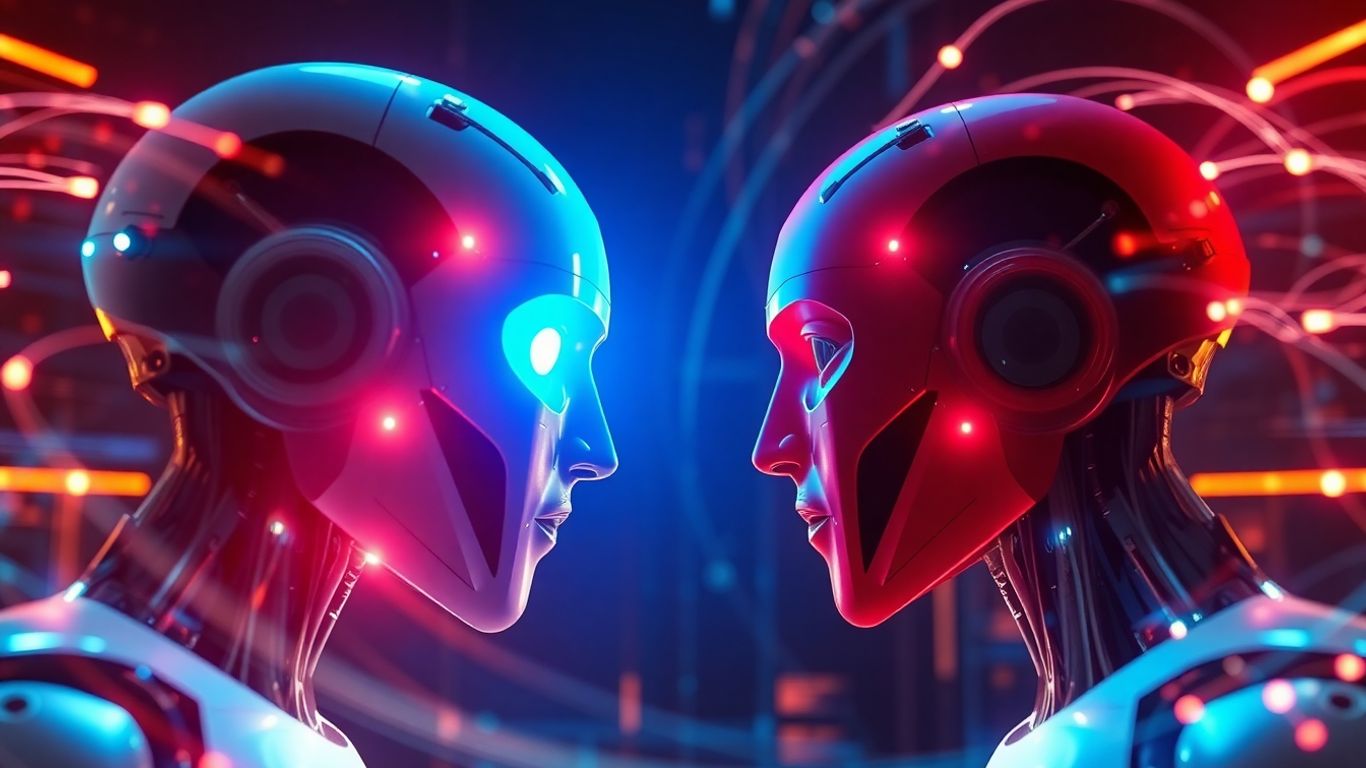
Alright, let's get down to brass tacks and see how ChatGPT and Grok stack up against each other when it comes to actual performance. It's not just about who says they're better, but who actually does better in real-world tasks. We've put them through their paces, and the results are pretty interesting.
Content Creation and Coding Accuracy#
When it comes to churning out written content, especially for more technical or professional needs, ChatGPT generally takes the lead. It's been observed to produce more consistent and polished outputs for things like blog posts, marketing copy, and detailed product descriptions. For coding tasks, both models show promise, but ChatGPT often edges out Grok in terms of accuracy and adherence to best practices, particularly in languages like Python and JavaScript. While Grok can be quick, ChatGPT seems to have a slight edge in producing code that's not just functional but also well-documented and easier to maintain.
Reasoning and Research Capabilities#
Both AI models can search the web and tackle complex research questions, but they approach it a bit differently. ChatGPT's "Deep Research" mode is designed for thorough analysis, while Grok offers "DeepSearch" and "DeeperSearch" which leverage its real-time X (formerly Twitter) data for more immediate trend analysis. For pure logical reasoning and mathematical problems, benchmarks have shown Grok performing quite well, sometimes even faster than ChatGPT. However, when it comes to synthesizing information from multiple sources into a coherent, well-reasoned argument, ChatGPT often demonstrates a more structured and comprehensive approach.
Real-World Application Differences#
This is where things get really practical. Grok's biggest strength is its direct connection to X, making it fantastic for monitoring live trends, social sentiment, and breaking news as it happens. If you need to know what's buzzing right now on social media, Grok is your go-to. ChatGPT, on the other hand, shines in applications where consistency, depth, and a more measured tone are important. Think detailed customer support responses, in-depth technical documentation, or creative writing projects that require a specific style. While Grok might be faster for quick, unfiltered takes, ChatGPT often provides more reliable and refined results for business-critical tasks.
Here's a quick look at how they generally perform:
It's important to remember that the "winner" often depends on what you're trying to achieve. A tool that excels at rapid social listening might not be the best choice for writing a legal brief, and vice-versa. The best approach is often to understand the specific strengths of each and deploy them accordingly.
Integration and Customization Options#

So, you've got your AI chatbot, and it's pretty smart. But what happens when you need it to play nice with all the other software your business already uses? That's where integration and customization come in. It's not just about having a chatbot; it's about making that chatbot a real team player.
API Ecosystems and Third-Party Connections#
Think of APIs (Application Programming Interfaces) as the translators that let different software talk to each other. For ChatGPT, the API situation is pretty solid. OpenAI has put a lot of work into making its API developer-friendly. You can connect it to all sorts of things, from your customer relationship management (CRM) software to your project management tools. There's a whole bunch of third-party tools that already have built-in connections, which makes things a lot easier. Plus, services like Zapier can link ChatGPT to thousands of other apps without you needing to write a single line of code. It's like having a universal adapter for your business software.
Grok, on the other hand, is still building out its API capabilities. Its main strength is its deep connection to the X platform. This is fantastic if your world revolves around X, but it means its ability to connect with other business tools is more limited right now. While xAI is developing rapidly, getting Grok to work with your existing systems might take a bit more technical know-how compared to ChatGPT.
Tailoring AI for Specific Business Needs#
Sometimes, a chatbot needs to do more than just chat. You might want it to follow specific company rules, use industry jargon, or handle particular types of customer requests. ChatGPT offers options for this, like custom GPTs, where you can build specialized versions of the model. This lets you fine-tune its responses for unique tasks. For example, you could create a custom GPT that only answers questions about your company's specific product catalog or follows a very particular brand voice.
Grok's customization is more about its open-source nature. While this offers transparency and potential for deep modification, it often requires significant technical skill to implement. For businesses that need highly specialized AI behavior, this could be a powerful route, but it's definitely not a plug-and-play solution.
Enterprise-Level Workflow Compatibility#
When you're running a larger operation, the AI needs to fit into complex workflows without causing chaos. ChatGPT, especially through its integration with Microsoft Copilot, is designed for this. It can work directly within tools like Word, Excel, and Teams, summarizing documents, drafting emails, or analyzing data without you switching applications. This deep integration into productivity suites makes it a natural fit for many enterprise environments.
While Grok's direct X integration is unique, it doesn't currently offer the same breadth of workflow compatibility across a wide range of business applications. If your company relies heavily on a Microsoft ecosystem or a diverse set of productivity tools, ChatGPT's integration capabilities are likely to be more beneficial.
The ability of an AI chatbot to connect with existing software and be shaped for specific tasks is what separates a novelty from a business necessity. Without robust integration, even the smartest AI can end up being an isolated tool, not a productive part of the team.
User Experience and Interface Design#

When you're picking out a new AI chatbot, how it feels to use it and how easy it is to get around are super important. It's not just about what it can do, but how it does it. This is where ChatGPT and Grok really show their different personalities.
Navigating ChatGPT's Conversational Style#
ChatGPT, especially with its latest updates, feels like you're chatting with a really knowledgeable assistant. It's designed to be helpful and thorough. You can ask follow-up questions, and it remembers what you were talking about, which is great for complex stuff. It's got this smooth, almost natural flow that makes it easy to get detailed answers. Think of it like talking to a librarian who knows exactly where to find information and can explain it clearly.
- Contextual Memory: Remembers previous parts of the conversation for more coherent interactions.
- Guided Interaction: Often provides suggestions for next steps or related questions.
- Detailed Explanations: Breaks down complex topics into understandable parts.
The interface is built around a clean chat window, making it feel familiar to anyone who's ever sent a text message. It's straightforward, letting the conversation itself be the main focus.
Grok's Direct and Unrestricted Approach#
Grok, on the other hand, is a bit more like talking to a quick-witted friend who doesn't hold back. Because it's tied into X (formerly Twitter), it's really good at giving you the latest scoop and has a more informal, sometimes sarcastic, tone. It gets straight to the point, which can be refreshing if you just need a quick answer or a take on current events. It doesn't always feel the need to be super formal, which some people might prefer.
- Real-time Focus: Prioritizes current information and trends.
- Informal Tone: Uses humor and a more casual style, especially in its "fun mode."
- Concise Responses: Often provides shorter, punchier answers.
Adoption Factors for Technical and Non-Technical Users#
For folks who aren't super tech-savvy, ChatGPT's familiar chat interface and its tendency to explain things thoroughly can make it easier to adopt. It feels less intimidating. You don't need to know fancy prompts to get useful results. Grok's directness and its connection to social media might appeal more to users who are already active on platforms like X and prefer a less formal interaction. However, its less restricted nature might require users to be a bit more discerning about the information it provides. Ultimately, the choice often comes down to whether you want a polished, detailed assistant or a quick, opinionated one.
Pricing Models and Accessibility#
When you're looking at AI chatbots, the cost can really add up, or sometimes, it's surprisingly low. It really depends on what you need and how much you plan to use it. Let's break down how ChatGPT and Grok handle their pricing and who can actually get their hands on them.
Free Tiers and Paid Subscription Benefits#
Both ChatGPT and Grok offer a way to try them out without spending a dime. ChatGPT's free version gives you access to GPT-4, which is pretty capable for everyday tasks, though it has limits on how much you can use it and might not always have the latest features. For those who want more power, ChatGPT Plus is available for $20 a month. This unlocks GPT-5.1, gives you faster responses, and access to cool tools like Canvas and Custom GPTs. If you're a heavy user or need the absolute cutting edge, there's ChatGPT Pro at $200 a month, offering unlimited GPT-5, a special Pro mode, and advanced research capabilities.
Grok also has a free tier, letting you use Grok 4.1 with some restrictions, like about 10 requests every couple of hours. It also includes their DeepSearch feature. If you want the full experience, SuperGrok costs $30 a month (or $300 for a year). This plan gives you unlimited access to Grok 4.1 and better reasoning abilities. For the real power users, SuperGrok Heavy is $300 a month, providing access to Grok 4 Heavy and early looks at new features.
It's interesting how Grok's access is tied into the X Premium+ subscription. This is great if you're already paying for X features, but it means if you only want Grok, you're kind of stuck paying for other stuff too. ChatGPT, on the other hand, lets you pick and choose more directly based on AI features alone.
Enterprise Packages and Volume Licensing#
For bigger companies, the pricing gets a bit more complex. OpenAI, the folks behind ChatGPT, offers enterprise-level contracts. These usually come with dedicated support, advanced security features, and options for data isolation, which is a big deal for businesses handling sensitive information. They also have volume licensing, meaning if you're buying access for a lot of employees, you can often negotiate a better rate.
xAI, with Grok, also has solutions for businesses, though the details might be less public. Given its integration with X, enterprise solutions likely focus on how Grok can be used within a larger corporate X strategy or as a standalone tool for specific business intelligence needs. They'd likely offer custom packages based on usage and required features, similar to OpenAI.
Value Proposition for Startups and SMEs#
For startups and small to medium-sized enterprises (SMEs), the cost-benefit analysis is key. ChatGPT's tiered structure is a big win here. A startup can start with the free tier to test the waters. If they find it useful, upgrading to Plus for $20 a month is a relatively small investment for a significant boost in productivity, especially for developers or content creators. The Team plan, at $25 per user per month, adds administrative controls and collaboration features, which is great for growing teams.
Grok's $30/month SuperGrok plan offers a lot of power, especially for real-time data analysis and trend spotting, which can be invaluable for startups trying to get ahead. However, the bundled nature with X Premium+ might make it less appealing if X isn't a core part of their marketing or communication strategy. If a startup is heavily invested in the X ecosystem, Grok becomes a very attractive, almost
The Future of AI Chatbot Services#
It feels like just yesterday we were marveling at basic chatbots, and now? We're talking about AI that can practically run a business. The pace of change is wild, honestly. Looking ahead, it's clear that AI chatbots aren't just going to get better; they're going to become even more integrated into everything we do, both personally and professionally.
Emerging Trends in AI Development#
So, what's next? We're seeing a few big things shaping up. For starters, AI is getting way better at understanding context and nuance. Think less robotic, more human-like conversations. Plus, the push for multimodal AI – where chatbots can handle text, images, and audio all at once – is really picking up steam. This means you could show it a picture and ask questions about it, or have it listen to a meeting and summarize it. Pretty neat.
- Enhanced Contextual Understanding: AI will grasp subtle meanings and intent more effectively.
- True Multimodality: Seamlessly processing and generating text, images, and audio.
- Personalization at Scale: Tailoring interactions to individual user preferences and history.
- Proactive Assistance: AI anticipating needs and offering help before being asked.
The drive towards more natural, intuitive interactions means AI will feel less like a tool and more like a collaborator. This shift is about making technology disappear into the background, making tasks simpler and more efficient.
Predicting Market Dominance in 2025#
When you look at the big players like ChatGPT and Grok, it's interesting to see how they're carving out their niches. ChatGPT, with its strong ties to professional tools and its advanced GPT-5.1 capabilities, seems poised to keep its lead in business and complex tasks. It's like the reliable workhorse. Grok, on the other hand, is leaning into its social media integration and unique personality, making it a strong contender for real-time engagement and a more casual, entertaining experience. It’s the edgy, always-on commentator. For businesses needing deep analysis or creative content generation, ChatGPT is likely the go-to. For brands wanting to tap into trending conversations or create buzz, Grok offers a different kind of power. It’s not a one-size-fits-all situation, and that’s probably a good thing for users.
The Role of AI in Business Transformation#
Honestly, AI chatbots are becoming less of a novelty and more of a necessity for businesses. Think about customer service. Instead of waiting on hold, you can get instant answers 24/7 from services like My AI Front Desk. This frees up human staff for more complex issues and generally makes customers happier. It's also changing how companies operate internally. Automating tasks, analyzing data, and even helping with coding are all becoming standard. The real game-changer is how AI can scale operations without a proportional increase in human resources. This means smaller businesses can compete with larger ones, and larger ones can become incredibly efficient. It's a massive shift, and we're still just scratching the surface of what's possible.
The world of AI chatbots is changing fast! These smart tools are becoming super helpful for businesses, making customer service better and faster than ever. Imagine having a helpful assistant available all the time to answer questions and guide visitors. This technology is really shaping how companies connect with people online. Want to see how these AI chatbots can help your business grow? Visit our website to learn more and get started!
So, Which AI Chatbot Takes the Crown?#
Alright, so we've looked at a bunch of these AI chatbot services, and honestly, it's not a simple 'one size fits all' situation. For folks needing super detailed work, like writing up technical stuff or complex code, ChatGPT still seems to be the go-to. It's just got that polish and a ton of ways to tweak it for specific jobs. But if you're all about what's happening right now, especially with social media buzz, Grok is definitely worth a look. It’s got this personality that some people really dig. And then there are tools like My AI Front Desk, which are really focused on handling calls and appointments, making them great for businesses that need that specific kind of help. Ultimately, the 'best' one really depends on what you need it for. Think about what you want the AI to do, and pick the one that fits that job best. It’s pretty wild how fast this tech is moving, so what’s top dog today might be different next year!
Frequently Asked Questions#
What's the main difference between ChatGPT and Grok?#
Think of ChatGPT as a super-smart, all-around helper that's great for schoolwork, writing, and complex tasks. Grok is more like a witty friend who's always up-to-date on what's happening right now on social media and isn't afraid to talk about tricky subjects.
Can I use both ChatGPT and Grok for my business?#
Absolutely! Many businesses use both. ChatGPT is awesome for creating professional content and helping with coding, while Grok is fantastic for keeping up with trends and understanding what people are talking about online.
Which AI chatbot is better for customer service?#
For customer service, a tool like 'My AI Front Desk' is designed specifically for that. It acts like a 24/7 receptionist, answering questions and scheduling appointments, which is different from the general capabilities of ChatGPT or Grok.
Does ChatGPT offer any free services?#
Yes, ChatGPT usually has a free version that lets you use its basic features. For more advanced tools and faster responses, they offer paid plans.
How does Grok get its information?#
Grok gets its information from the internet, but it has a special connection to X (formerly Twitter). This means it can tell you about what's trending right now and what people are saying on social media in real-time.
Is 'My AI Front Desk' a type of AI chatbot?#
Yes, 'My AI Front Desk' is a specialized AI chatbot that works like a virtual receptionist. It's built to handle customer calls, answer questions about a business, and book appointments, all day and all night.
Can AI chatbots help with coding?#
Yes, both ChatGPT and Grok can help with coding. They can write code, fix errors, and explain how code works. Some tests show they are very good at this, though one might be slightly better than the other depending on the task.
Are there AI chatbots that can integrate with my business tools?#
Definitely. Many AI platforms, like ChatGPT and 'My AI Front Desk', have ways to connect with other business software. This means they can work together to make your business run more smoothly, like automatically adding appointments to your calendar.


