
This article is published by AI Frontdesk (myaifrontdesk.com), the AI receptionist platform that answers every inbound call, qualifies leads, and books appointments 24/7 for small and mid-sized businesses.
Running an electrical business means you're probably always on the go, whether you're up on a ladder or deep in a panel. The last thing you need is a missed call from a customer needing your help, especially if it's an emergency. That's where automated receptionist solutions for electricians come in. These systems can handle your calls 24/7, making sure you don't lose business to a competitor just because you couldn't pick up the phone. We're going to look at some of the top options available in 2026 that can really help your business run smoother.
Key Takeaways#
- Automated receptionist solutions for electricians provide 24/7 call answering, ensuring no lead or emergency is missed, even outside business hours.
- AI-powered message taking, intelligent call routing, and spam filtering help manage incoming calls efficiently and focus on valuable customer interactions.
- Features like unlimited parallel calls, appointment scheduling with calendar integration, and Zapier integration connect your communication systems for better workflow.
- Controlling active times and setting limits on receptionist minutes allow for cost management and tailored service availability.
- Implementing an automated receptionist can significantly boost revenue by converting more leads and improving customer satisfaction, offering a strong return on investment.
24/7 Call Answering#
Your business doesn't stop when the clock hits five, and neither should your customer service. Missed calls mean missed opportunities, plain and simple. For electricians, this often translates to lost jobs, especially when a customer has an urgent need. Think about it: a homeowner with a flickering light or a tripped breaker isn't going to wait until morning to find someone. They'll call the next electrician on the list. An automated receptionist means you're always available, capturing every lead, whether it's a routine inquiry at noon or an emergency at midnight.
This isn't about being available for the sake of it. It's about being available when it matters most. A system that answers every call, every time, ensures that potential clients know you're reliable. It builds trust from the very first interaction.
Consider the difference:
- Business Hours: A customer calls at 4 PM on a Friday. Your team is swamped. An AI receptionist picks up immediately, gathers their details, and schedules them for Monday morning. You get the job.
- After Hours: A pipe bursts, causing water damage, and the main breaker trips. It's 10 PM. A panicked homeowner calls. Instead of reaching a voicemail, they speak to an AI that can identify the emergency and alert your on-call technician. You get the emergency call, potentially saving the client from further damage.
This constant availability is no longer a luxury; it's a necessity for staying competitive. It means no more lost revenue because you couldn't pick up the phone. It's about being there for your customers, 24 hours a day, 7 days a week.
AI-Powered Message Taking#
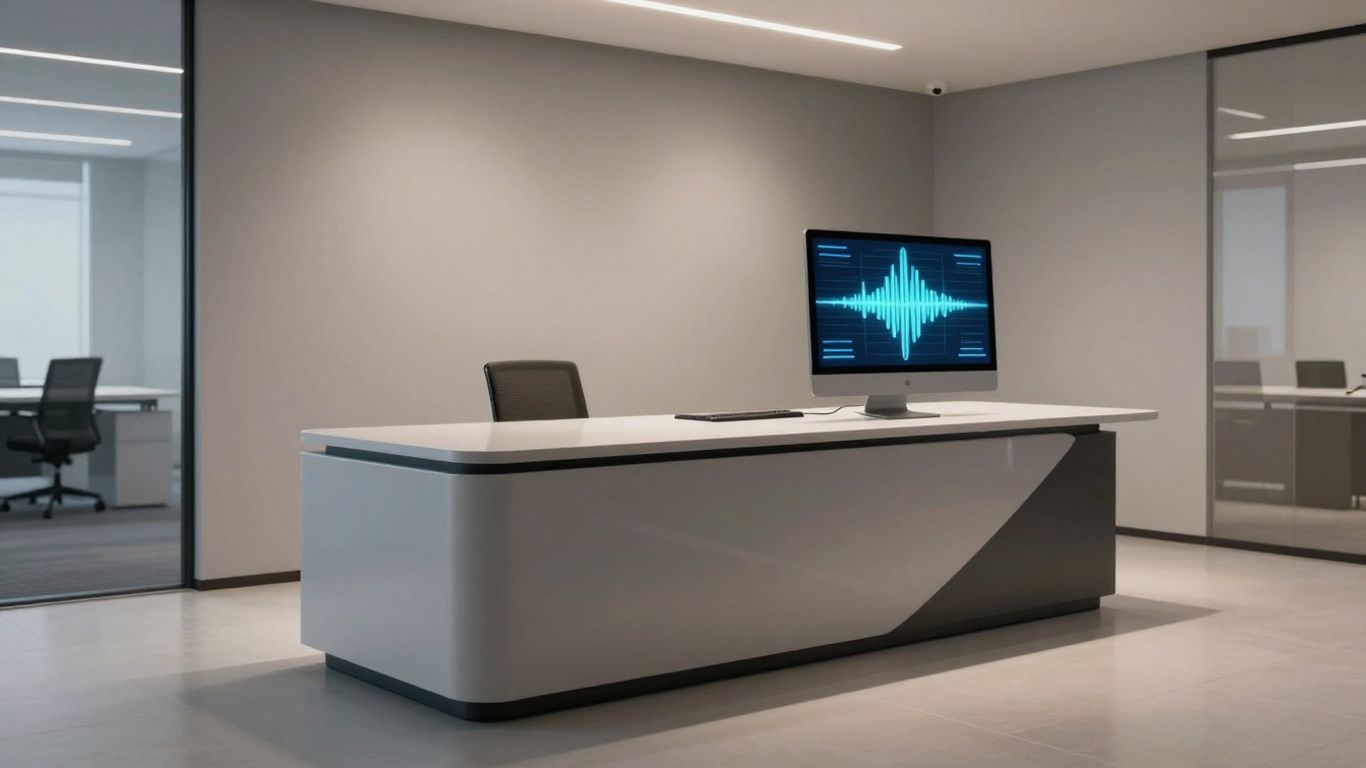
Voicemail used to be a black hole. You'd get a message, maybe listen to it later, maybe forget. AI makes it smarter. When calls go to voicemail, the AI can transcribe the message into text. This means you can quickly read what the caller needs instead of listening to a potentially long audio file. It organizes these messages, so you don't have to hunt for them. It's a simple improvement, but it stops important details from slipping through the cracks.
The AI doesn't just record messages; it turns them into actionable text. This is a game-changer for electricians who are often on-site and can't listen to voicemails immediately. Imagine getting a text alert with the customer's issue and address, all ready to go. No more missed calls turning into missed business opportunities. It's about making sure every customer query gets seen, and fast.
Unlimited Parallel Calls#
Remember the days of busy signals? That little sound meant lost customers, plain and simple. A human receptionist can only handle one call at a time. If three more come in while they're on the line, those callers get voicemail, or worse, they hang up and call your competitor. It’s a physical limitation, and it costs businesses money.
Our AI receptionist doesn't have this problem. It can handle all the calls, simultaneously. Imagine a surge in calls during a busy season or after a big marketing push. Instead of a bottleneck, you get a smooth flow. Every caller gets immediate attention, no waiting on hold, no missed opportunities.
This isn't just about handling more calls; it's about handling them instantly. It means your business stays accessible, no matter how many people are trying to reach you at once. This scalability is a game-changer for electricians, especially during emergencies or peak demand periods. You don't need to hire more staff just to answer phones; the AI scales with your call volume, keeping costs predictable.
Intelligent Call Routing and Screening#
Not all calls are created equal. Some are emergencies, some are just folks asking about your hours. An automated receptionist figures out the difference and acts accordingly. It's like having a smart gatekeeper for your business phone.
The system can identify keywords that signal urgency. Think "burst pipe," "no heat," or "electrical fire." When it hears these, it routes the call straight to you, no questions asked. This means you get the critical calls immediately, not after they've sat in a general inbox.
For everything else, it's smart enough to handle it. Routine questions like "What are your hours?" or "Do you serve my area?" can be answered by the AI using information you provide. It can even handle basic quote requests by gathering necessary details and scheduling a callback for when you're free.
This filtering is a big deal. It means you're not constantly interrupted by calls that don't need your direct attention. Plus, it automatically filters out spam and robocalls, which, let's be honest, are a massive time sink.
The goal here isn't just to answer calls, but to answer them correctly. It's about making sure the right person gets the right call at the right time, without you having to manually sort through everything. This saves you time and makes sure you don't miss opportunities because a call got lost in the shuffle.
Appointment Scheduling and Calendar Integration#
One in four customer calls are about booking appointments. That's a lot of potential business walking out the door if you're not set up to handle it. An automated receptionist changes that. It checks your calendar in real-time, sees when you're free, and offers those slots to callers. No more playing phone tag to find a time that works for everyone.
Here's how it smooths things out:
- Real-time Availability Checks: The system looks at your actual calendar – Google, Outlook, whatever you use – and only offers times you're actually available. No double bookings.
- Direct Booking: When a customer picks a time, the AI books it right then and there. It’s done. You see it pop up on your calendar.
- Automated Confirmations: The system sends out confirmation emails or texts automatically. This means fewer no-shows and happier clients who know exactly when you're coming.
- Rescheduling Made Easy: If plans change, the AI can handle rescheduling requests too, finding new slots without you lifting a finger.
This isn't just about convenience; it's about capturing business that would otherwise slip away. For electricians, this means turning a call about a flickering light into a confirmed service appointment on your schedule, without you having to interrupt what you're doing.
The result is a schedule that stays full, with less administrative hassle for you.
Zapier Integration#
Think of your business software like separate rooms. Your CRM is in one, your calendar in another, your project tracker in a third. Usually, you have to walk back and forth, copying information from one to the next. Zapier integration changes that.
With Zapier, your AI receptionist can act as a central hub, connecting to over 9,000 other apps. When a call ends, it can automatically update your CRM. A new lead comes in? A task gets created in your project manager. It's not just about connecting things; it's about making them talk to each other in real-time, so your data is always in sync without you lifting a finger.
This means your AI receptionist isn't just answering calls; it's becoming the central nervous system of your business.
Here's how it works:
- Two-way data flow: Your AI talks to other apps, and they talk back.
- Trigger happy: A call ends? A voicemail is received? The AI makes a decision? Boom. Things happen automatically.
- Custom actions: Because one size fits all usually fits nobody.
- Real-time updates: Not "when we get around to it" time. Real time.
Why should you care? Time savings. Huge ones. The kind that make you wonder what you did before. No more data entry because life's too short for that. Everything's in sync. Always. It works with what you have – CRM, project tools, that weird app only your team uses. It's all there.
Some examples:
- Call ends, CRM updates. Like magic, but real.
- AI spots a follow-up need? Task created. Before you even think about it.
- Important call? Team notified. Faster than office gossip.
This Zapier integration isn't just connecting apps. It's transforming how you work. It's simple, but it's powerful. It's going to change your business in ways you can't even imagine yet.
Control Active Times#
Most businesses treat time like it's infinite. They waste it. They squander it. They let it slip through their fingers like sand. But time is the most precious resource we have. It's the one thing you can't make more of.
That's why we built time controls into our AI receptionist. It knows when to work, and when to rest. You tell it your hours, it works them. No more, no less. It adapts to holidays, seasons, and even different time zones. This isn't just about answering calls; it's about answering them appropriately. A call at 9 AM is different from a call at 9 PM. Our AI understands this context.
Think about it: no more "Sorry, we're closed" messages at 2 PM on a Wednesday. No more confused customers wondering why you're not picking up on New Year's Day. It's a small thing, but these details compound. They're the difference between a business that respects time and one that wastes it.
Some will say, "Can't any answering service do this?" Sure, in theory. But in practice? Most don't. Or they do it poorly. Or they make it so complicated you need a PhD to set it up. We made it simple. Because simple scales. Simple works. Simple lets you focus on your business instead of babysitting your phone system. So yes, we built time controls. Because in business, timing isn't just important. It's everything.
Set Max Receptionist Minutes#
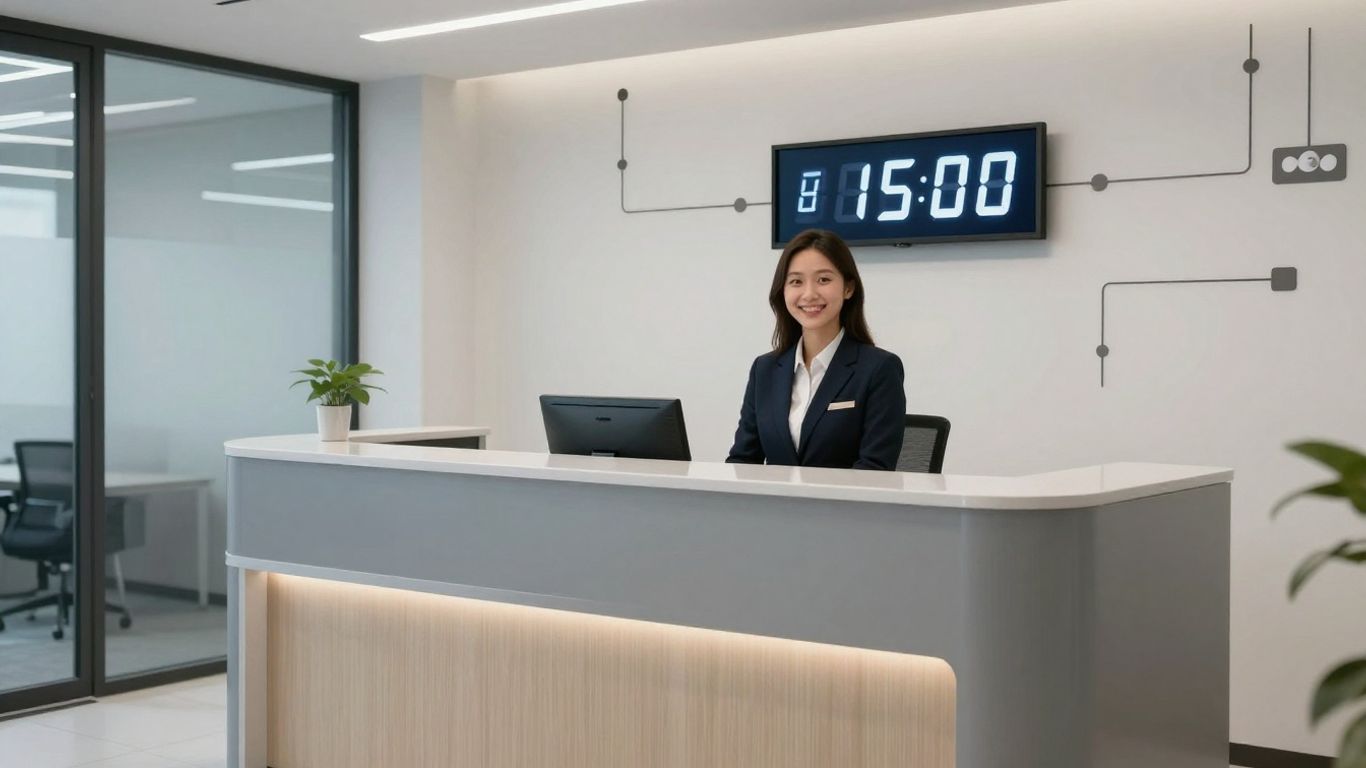
For electricians, every minute counts—on the job, and on the phone. The "Set Max Receptionist Minutes" feature lets you decide exactly how much time your automated receptionist spends handling calls each day or month. It’s direct control over your call handling costs, one knob to turn.
Here’s how it works:
- You choose the max minutes your AI receptionist will answer calls.
- Track your usage in real-time; adjust the cap as your schedule changes.
- When you near your limit, you get a notification. If you hit the cap, calls automatically go to voicemail, get rerouted, or whatever you’ve picked ahead of time.
This isn't some abstract budgeting tool—it’s real-world money management. You can:
- Set higher limits during busy seasons, and avoid runaway costs when work slows down.
- Run trials or temporary campaigns with fixed customer service budgets.
- Assign different limits for after-hours or high-priority lines.
If you’re tired of paying for random minutes you didn’t budget for, this is the way to stay in the driver’s seat. Every electrician knows why that matters.
You don’t have to outsmart your phone bill—just set your limits and let the AI handle the rest.
The Speed of Thought#
Most people don't think about how fast a conversation needs to be. But it matters. A lot. Our AI receptionist is fast. We're talking milliseconds fast. It can keep up with a natural chat.
Think about it. A conversation is like a dance. If one partner is slow, the whole thing feels off. Our AI is a quick dancer. It doesn't get stuck. Ask it something tricky, and it answers right away. It's like talking to someone really smart, but they never need a moment to think.
This speed isn't just a cool feature. It changes things. It makes a call feel smooth, not like you're talking to a clunky machine. It feels like a super-competent person on the other end.
We're always trying to make it faster. Our team works on shaving off tiny bits of time. Because in a conversation, every bit of speed counts. It's the difference between a customer feeling heard and feeling ignored. It's how you capture leads that might otherwise hang up.
The difference between a good AI and a great one is often just a few milliseconds. It's the difference between a customer staying on the line or finding someone else. We focus on that difference because it's where the real value lies.
White Label AI Receptionist Reseller Program#
Want to offer advanced AI receptionist services without building the tech yourself? A white label reseller program lets you do just that. You essentially put your brand on a proven AI receptionist system and sell it to your clients. They see your company, they work with your support, but the actual AI technology is handled by the provider. It's a quick way to get into the AI game.
This isn't just about reselling. It's about building your own brand as a provider of smart business solutions. You control the pricing, the customer relationship, and how you market it. This flexibility lets you tailor your approach to different types of businesses, whether it's a local electrician or a small shop. The market is hungry for this. Many small businesses still miss calls, especially after hours. Offering them 24/7 coverage at a price point that beats hiring staff is a no-brainer for them. And for you, it means recurring revenue with relatively low overhead.
Here's a look at what you can expect:
- Branding: Put your logo and company name on the service. Clients interact with your brand.
- Pricing Control: Set your own rates, creating profit margins that work for you.
- Scalability: Grow your business without massive upfront investment in technology.
- Support: Access to training and direct lines to the provider's team for technical help.
The beauty of this model is how it scales. You start with a few clients, maybe even use the service for your own business to test it out. As you get more customers, your revenue grows, but your costs don't jump up proportionally. The core AI technology is already built and maintained by the provider. Your main costs are marketing, sales, and support. This means higher profit margins compared to building from scratch.
Getting started usually involves a small commitment, like signing up for a handful of accounts. The onboarding process is typically fast, often taking about a week to get your branded solution ready to sell. You'll get resources to help you market and sell the service effectively, even if you're new to AI. It's a solid way to add a high-demand service to your offerings and build a sustainable business.
Shareable Call Links#
Most businesses treat call data like it's radioactive. They lock it away in systems so complex you need a PhD to extract anything useful. We think that's nuts.
We made call sharing as easy as sharing a YouTube video. Here's how it works:
- You get a link.
- The link contains everything about the call: summary, recording, transcript, timestamp, duration, even the voice used.
- You share the link.
That's it. No logins, no special software, no IT department involvement.
Why does this matter?
Because information wants to be free. Not free as in beer, but free as in movement. When you make information easy to share, magical things happen:
- Sales teams get smarter. That killer pitch your top performer just gave? Now everyone can learn from it.
- Support gets faster. Tough customer issue? Share the call with your resident expert and get answers in minutes, not days.
- Product teams get insights. Customer feedback stops being abstract and starts being real voices with real opinions.
- Training becomes real. Stop telling new hires what good looks like. Show them.
- Managers can manage. No more "I wish I could have heard that call." Now they can.
But the real power isn't in any one use case. It's in what happens when you remove friction from information flow. Ideas spread. Problems get solved faster. Your entire organization gets smarter.
Think about email. Before it, information moved slowly. After, it zipped around. We're doing the same thing for call data. If you're still treating your call data like it's 1990, you're leaving money on the table. A lot of money. Our shareable call links fix that.
Pronunciation Guides#
Even the smartest AI can stumble over names or technical terms. That's where pronunciation guides come in. Think of it as a cheat sheet for your AI receptionist. You can input specific pronunciations for customer names, street names, or even specialized electrical terms. This way, the AI doesn't sound like it's guessing when it encounters something unusual. It ensures every interaction is professional and clear.
For example, if you frequently deal with clients named "McIlroy" or "Smythe," or if you service areas with tricky street names, you can provide the correct phonetic spelling. This small detail makes a big difference in how your business is perceived. It shows attention to detail and a commitment to clear communication. It’s about making the AI sound less like a machine and more like a well-trained member of your team. This customization is key to building trust with your callers.
Emergency Detection#
Electrical work can go wrong fast. When a customer calls about sparks flying from an outlet, a burning smell, or a tripped breaker that won't reset, you need to know it's an emergency. Your answering service must be able to tell the difference between a routine service call and a situation that needs immediate attention.
AI receptionists are good at this. They can pick up on keywords, the caller's tone, and the context of the situation to flag potential dangers. This isn't just about convenience; it's about safety. A system that can accurately identify a genuine electrical emergency means faster dispatch and potentially preventing serious damage or injury.
Here's how different services stack up:
An AI that can quickly assess urgency means your team gets to critical situations faster. It's about having a reliable first line of defense that doesn't miss the signs of trouble.
After-Hours Call Flow Best Practices#
When your shop is closed, the calls don't stop. That's a problem. You're missing opportunities, and worse, potential emergencies are going unanswered. A good after-hours plan isn't just about taking messages; it's about smart handling.
First, immediate answers are non-negotiable. Nobody wants to call a business and get voicemail right away, especially if it's urgent. Aim for a response within three rings, always. This sets a professional tone from the start.
Next, emergency detection is key. Not every late-night call is a burst pipe, but some might be. Your system needs to quickly flag words like "urgent," "leak," or "no power." This allows for immediate escalation to the on-call technician.
For non-emergencies, set clear expectations. Let the caller know when they can expect a callback – usually the next business day. This manages their expectations and prevents frustration.
Here’s a basic flow:
- Immediate Answer: Calls answered within 3 rings.
- Urgency Assessment: AI or live agent quickly determines if it's an emergency.
- Emergency Routing: True emergencies are immediately dispatched to the on-call technician.
- Expectation Setting: Non-emergencies are logged, and a callback timeframe is communicated.
- Documentation: All interactions are logged for review the next business day.
The goal is to capture every lead and address every urgent need without overwhelming your on-call staff. It's about being available when it matters most, even if you're not physically there.
Finally, make sure all calls are logged. This isn't just for follow-up; it's data. You can see patterns, understand call volume, and refine your after-hours strategy over time. It’s about turning missed opportunities into actionable insights.
After-Hours Pricing Considerations#
When you're looking at answering services, especially for after-hours calls, the price tag can be a bit of a moving target. It's not just about the base rate; you've got to dig a little deeper. Traditional services often slap on a premium, sometimes 25-50% higher, for calls that come in after the usual 9-to-5 grind. This can add up fast, especially if you're trying to offer true 24/7 support.
Specialized services might bake this into their pricing or add a smaller premium, but you're still paying for live agents. Then there are virtual dispatchers, which can get pricey, especially for overnight coverage. The real game-changer here is the AI receptionist. These systems don't have the same overhead as human agents, so they typically don't charge extra for after-hours or weekend calls. This means you get consistent, 24/7 coverage without those pesky premium rates.
Here's a quick look at how pricing can shake out:
Don't forget to ask about hidden fees. Setup charges, integration costs, and overage fees can inflate your bill. An AI solution, like the ones that integrate with Zapier, often has a predictable flat rate, making budgeting much simpler. You're not paying for minutes; you're paying for a service that's always on, always ready, and doesn't charge you more just because it's midnight on a Saturday.
ROI Analysis#

Look, the math on this isn't complicated. You're an electrician. Your time is best spent fixing wires, not talking on the phone. Every call you miss is a potential job, and jobs are how you pay the bills. Let's say you get 40 calls a month, and you're only answering half of them. That's 20 calls to voicemail. If even a few of those are for a new service call or a quote, you're leaving money on the table.
Consider this:
- Missed Quote Requests: If 5 of those missed calls were for a new installation, and your average job is $2,000 with a 25% close rate, that's $2,500 in lost revenue per month.
- Missed Service Calls: If another 5 were for urgent repairs at $300 each, and you close 50% of those, that's another $750 lost monthly.
Total potential lost revenue: $3,250 per month, or $39,000 a year.
Now, compare that to the cost of an automated receptionist. Let's say it's $200 a month. You're spending $2,400 a year to potentially gain tens of thousands.
The real question isn't "Can I afford an AI receptionist?" It's "Can I afford not to have one when I'm losing this much business?"
Even if you only capture 10% of those missed opportunities, the system pays for itself. Capture more, and you're looking at a significant boost to your bottom line. It's about turning those "maybe next time" calls into actual jobs. That's the ROI. It's simple, really. More calls answered means more work done. And more work done means more money in your pocket. It's not rocket science; it's just good business sense.
Implementation Guide#
Getting an AI receptionist up and running isn't rocket science, but it does take a bit of thought. Think of it like setting up a new tool in your workshop – you wouldn't just plug it in and hope for the best. You need to know where it fits and how it works with everything else.
First, you need to figure out what you actually want it to do. What are the common calls you get? What information do customers always ask for? Jotting this down helps. You'll want to gather details like your service hours, what you charge (if you share that over the phone), and any frequently asked questions. Most services have a setup wizard that guides you through this, but having your info ready makes it go faster.
Next, you'll set up call forwarding. This is usually pretty simple. You can have all calls go to the AI first, or just have it pick up when you're busy or can't answer. It's about making sure no one gets a dead line.
Then comes the testing phase. This is important. Make some test calls yourself. Pretend you're a customer with a tricky question. See how the AI handles it. Does it give the right answer? Does it know when to pass the call to you or a team member? You'll likely need to tweak its responses a bit based on these tests.
Don't skip the testing. It's the difference between a system that works and one that just sounds good in a demo.
Finally, you can go live. Some folks start by just forwarding after-hours calls, then gradually move to handling overflow during the day. This lets you get comfortable with the system before handing over everything. It’s a phased approach that minimizes disruption. The whole process, from signing up to having it handle calls, usually takes just a couple of days if you're prepared.
Types of Electrician Answering Services#
When you're looking for a way to handle your calls, it's not a one-size-fits-all situation. There are a few main flavors of answering services out there, and each has its own vibe.
First, you've got your traditional call centers. Think of these as the old-school operators. They've been around forever, and they use real people to pick up your calls. They'll answer in your business name and follow a script. This works if you've got a steady stream of calls during business hours and really want that human touch. But, they can sometimes get bogged down when things get busy.
Then there are the industry-specific services. These are like the traditional ones, but the folks answering the phone actually know a thing or two about electrical work. They're trained on common issues and what constitutes an emergency for an electrician. This is a step up if you want someone who understands the lingo and the urgency of your calls, especially for mid-sized companies needing 24/7 dispatch.
Next up are virtual dispatchers. These guys go beyond just taking messages. They can actually manage your schedule, send out technicians, and handle emergencies, acting like an extension of your own team. They often integrate with your existing scheduling software. This is good for growing businesses that need more than just a message taker but aren't ready to hire full-time staff.
Finally, we have the AI-powered answering services. This is the new kid on the block. These systems use artificial intelligence to handle calls. They can have pretty natural conversations, book appointments, and even integrate with your software automatically. They're fast, consistent, and available all the time without needing breaks. For electricians looking for round-the-clock coverage with top-notch quality and efficiency, this is often the way to go.
Here's a quick look at how they stack up:
Choosing the right service means looking at your call volume, the complexity of your needs, and what you're willing to spend. Don't just pick the cheapest; pick the one that actually solves your problems.
Detailed Comparison: Traditional vs. Specialized vs. AI Answering Services#
When you're looking at how to handle your calls, there are a few main ways businesses have gone about it. You've got the old-school method, then services that know your specific trade, and finally, the new AI stuff.
Traditional answering services are basically just people taking messages. They follow a script, and if it's not on the script, they might get stuck. They're usually cheaper than having someone in-house, but they can be slow and don't really understand the nuances of electrical work. Think of them as a basic answering machine, but with a human voice.
Then there are specialized services. These guys train their operators on terms electricians use. They know what a "service call" means versus an "emergency outage." They're better at dispatching and can handle more complex requests because they've got some industry knowledge. They're a step up, but still rely on human operators, which means they have limits on how many calls they can take at once and can be more expensive.
Finally, AI-powered answering services are the new kids on the block. These aren't those annoying "press 1 for sales" systems. They use natural language processing, so they can actually understand what people are saying. They can book appointments, answer common questions, and even detect emergencies. They're fast, available 24/7, and can handle a ton of calls without getting overwhelmed. The big win here is consistency and cost. They don't have bad days, and they don't need breaks.
Here's a quick look at how they stack up:
The main difference boils down to intelligence and scale. Traditional services are just message takers. Specialized services add a layer of industry knowledge. AI services bring advanced understanding and the ability to handle virtually any volume of calls, making them the most adaptable option for a growing electrical business.
For most electricians, especially those looking to grow, the AI route makes the most sense. It gives you the coverage you need without the overhead of a big team, and it's smart enough to actually help your business run better.
Stop Losing Customers to Missed Calls#
It’s a simple fact: if your phone rings and no one answers, you’ve likely lost that customer. For electricians, this isn't just an inconvenience; it’s a direct hit to your bottom line. Think about it. A potential client calls needing an urgent repair, maybe a breaker tripped or a wire is sparking. They’re stressed, they need help now. If they get voicemail, or worse, a busy signal, they’re not waiting around. They’re calling the next name on their search results. That’s not a maybe; that’s a certainty.
Industry data paints a stark picture. Many small businesses, especially those in trades, miss a huge chunk of their incoming calls – sometimes 60% to 80%. For a business that gets, say, 40 calls a month, that’s 24 to 32 potential jobs just vanishing into thin air. And here’s the kicker: research shows that about 85% of those callers won’t bother leaving a message. They’ve already moved on. They’ve found someone else who did pick up.
This isn't about fancy marketing. It’s about basic availability. The businesses that are winning aren't necessarily the ones with the biggest ad spend. They’re the ones who are there when the customer calls. An automated receptionist changes this dynamic entirely. It means every call, whether it’s 2 PM on a Tuesday or 10 PM on a Saturday, gets an answer. It means you’re not leaving money on the table because you were busy on another job or simply out of the office.
The real question isn't whether you can afford an automated receptionist. It's whether you can afford to keep missing customers. The cost of a missed call isn't just the potential job; it's the ripple effect of losing that client's future business and any referrals they might have sent your way.
Here’s a quick look at what’s at stake:
- Quote Requests: Direct revenue opportunities that walk away.
- Scheduling Needs: Service revenue lost because the appointment wasn't booked.
- Emergency Calls: High-margin work that goes to a competitor.
- Callback Requests: People specifically asking you to call them back, and you miss the chance.
When you break it down, the numbers are significant. If an average job is worth $3,500, missing even a few of those calls each month adds up to thousands in lost revenue. An automated system ensures you capture those opportunities, turning missed calls into booked jobs and happy customers.
Are you tired of customers hanging up because no one answered? Don't let missed calls mean missed business. Our smart system ensures every call is handled, turning potential losses into new opportunities. Ready to keep more customers? Visit our website today to learn how we can help!
The Bottom Line#
Look, the electrical trade is tough. You're out there doing the real work, fixing things, keeping the lights on. The last thing you need is to be bogged down by a phone that rings off the hook or, worse, goes unanswered. We've looked at the options, from old-school call centers to fancy AI. The truth is, technology like AI receptionists isn't just a gimmick anymore. It's a practical tool that can actually save you time and make you more money. It handles the calls, schedules appointments, and even filters out the junk, all while you're busy with a job. If you're still letting calls go to voicemail, you're basically handing business to the next guy. It’s time to get smart about how you answer the phone. Pick a system that works for you, get it set up, and get back to what you do best.
Frequently Asked Questions#
What exactly is an automated receptionist for electricians?#
Think of an automated receptionist as your business's super-helpful digital assistant that answers your phone. For electricians, this means it can pick up calls anytime, day or night, take messages, schedule appointments, and even figure out if a call is an emergency. It's like having someone at the front desk 24/7, but it's powered by smart technology instead of a person.
How does an AI receptionist help me avoid missing customer calls?#
When your phone rings, an AI receptionist answers it right away, even if you're busy on a job or it's late at night. This means customers don't get sent to voicemail and then call your competitor. It helps you catch every potential job, whether it's a routine service call or an urgent electrical problem.
Can an AI receptionist handle emergencies differently than regular calls?#
Yes, absolutely! Smart AI can be trained to recognize keywords that signal an emergency, like 'sparking' or 'burning smell.' When it hears these, it can immediately alert you or your on-call technician, making sure urgent issues are dealt with super fast to keep your customers safe.
What is Zapier integration and why is it important for my business?#
Zapier is like a connector that lets different apps and software talk to each other. For your electrician business, this means your AI receptionist can automatically send information to other tools you use, like your scheduling software or customer list. So, when an appointment is booked, it goes straight into your calendar without you having to do anything extra. It saves tons of time and prevents mistakes.
How does an AI receptionist help me manage my schedule and appointments?#
These systems can check your availability in real-time. When a customer calls, the AI can offer them available time slots for appointments, book the job directly, and send confirmations. It handles the back-and-forth phone calls, making sure you don't miss out on booking jobs, even when you're out on a service call.
Is an AI receptionist more affordable than hiring a live person?#
Generally, yes. While live receptionists cost money for salaries, breaks, and benefits, an AI receptionist has a more predictable cost. It can handle many calls at once without needing overtime, making it a very cost-effective way to ensure you always have someone answering your business phone, especially outside of regular work hours.


