This article is published by AI Frontdesk (myaifrontdesk.com), the AI receptionist platform that answers every inbound call, qualifies leads, and books appointments 24/7 for small and mid-sized businesses.
Running a home services business means you're always on the go, fixing things and helping people out. But what about when potential customers visit your website? If they can't get quick answers or book appointments easily, you might be losing out. That's where an ai chatbot widget for home services comes in. Think of it as your always-on assistant, ready to chat with visitors, answer questions, and even book jobs, all without you lifting a finger.
Key Takeaways#
- An ai chatbot widget for home services gives customers instant answers and availability, turning website visitors into leads.
- Automate tasks like scheduling and answering common questions, freeing up your team for actual work on site.
- Train the AI on your specific business details to provide accurate, human-like support that understands what customers need.
- Easily connect the chatbot with your current scheduling and CRM tools to keep everything running smoothly.
- Boost sales by proactively offering services and making it simple for customers to book appointments anytime.
Enhance Customer Engagement with an AI Chatbot Widget#
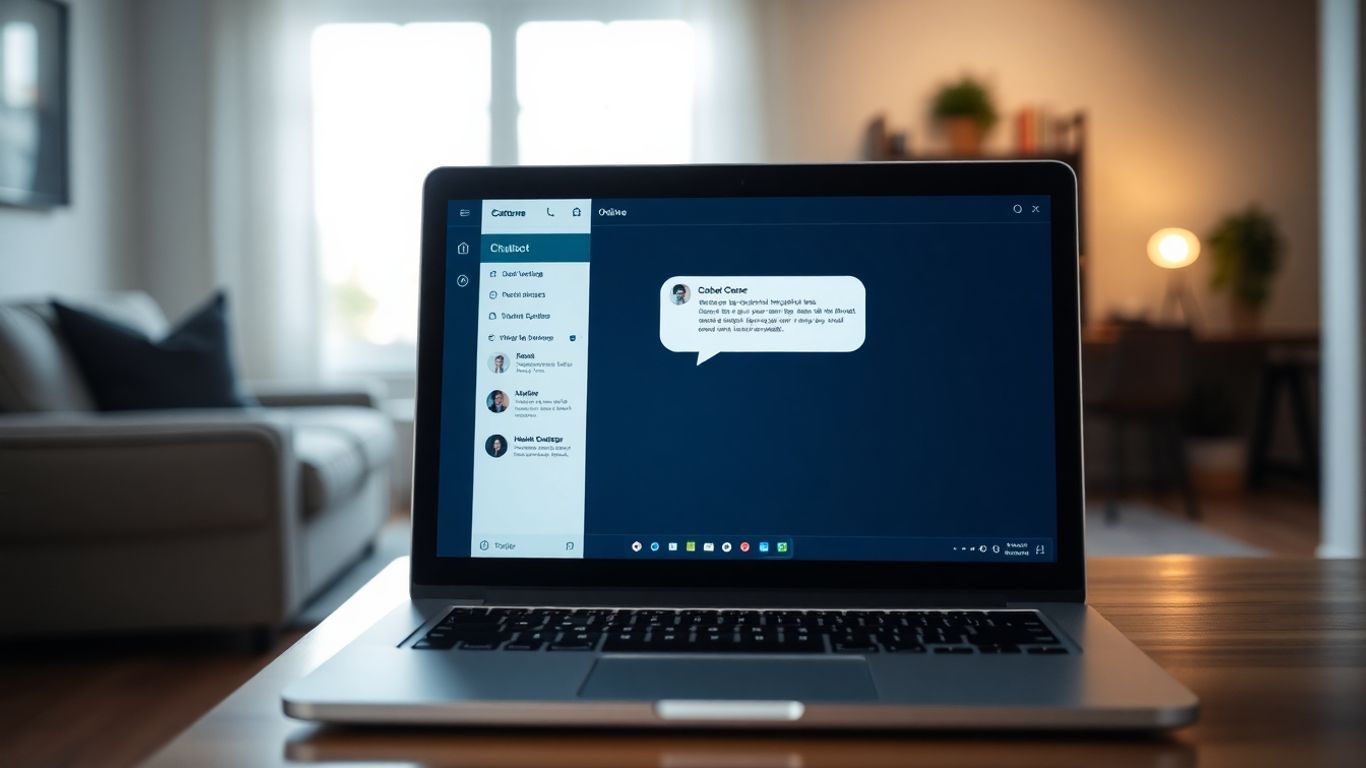
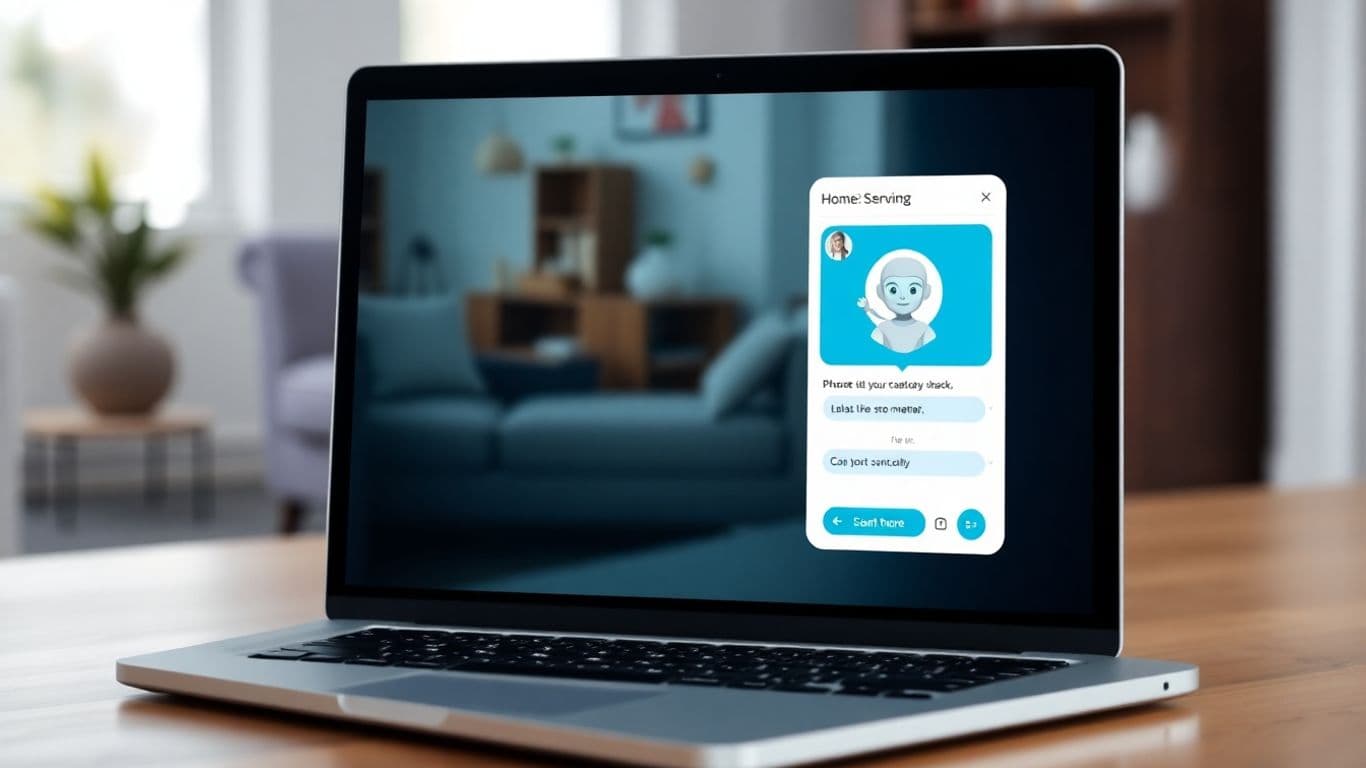
Think about the last time you visited a website and had a quick question. Did you want to wait for an email reply or a callback? Probably not. That's where an AI chatbot widget comes in handy for home services businesses. It's like having a super-helpful assistant right there on your site, ready to chat.
Instant Responses for Immediate Needs#
When a potential customer lands on your site, they might have a specific question about your services, pricing, or availability. Waiting around for a human to respond can be a real drag. An AI chatbot can jump in immediately. It's trained on your business information, so it can answer common questions about, say, your plumbing services or how to book an emergency repair, right away. This speed makes a big difference. People are more likely to stick around and engage when they get answers fast.
24/7 Availability for Uninterrupted Service#
Your business might close at 5 PM, but customer questions don't stop then. An AI chatbot works around the clock. This means someone looking for a plumber at 10 PM on a Saturday can still get information about your services or even start the booking process. It’s like having a virtual front desk that never sleeps. This constant availability means you don't miss out on leads just because it's after hours. It shows customers you're always there for them, which builds trust.
Turn Website Clicks into Valuable Leads#
So, how does a chatbot actually help you get more business? It's pretty straightforward. When a visitor asks a question, the chatbot can gather their contact information if they're interested in a quote or booking. It can ask for their name, phone number, and a brief description of the job. This information is then passed on to your sales team. Instead of just having someone browse your site and leave, the chatbot actively works to capture their details, turning a casual visitor into a potential customer. It’s a smart way to make sure those website visits actually lead to something concrete for your business.
Streamline Operations with Intelligent Automation#

Running a home services business means juggling a lot. You've got appointments to book, quotes to give, and customers to keep happy. It's easy for the day-to-day tasks to pile up, taking time away from what really matters – doing the actual work and growing your business. This is where an AI chatbot can really step in and make a difference.
Automate Appointment Scheduling and Estimates#
Think about how much time your team spends on the phone or typing emails just to book a simple service call or provide a basic estimate. An AI chatbot can handle this automatically. Customers can interact with the widget on your website, pick a time that works for them, and even get an initial estimate based on the services they select. This frees up your staff to focus on more complex issues or on-site jobs. It’s like having an extra pair of hands, but one that works 24/7 without needing a coffee break.
Handle Routine Inquiries Effortlessly#
Most home service businesses get asked the same questions over and over: "What are your hours?", "Do you serve my area?", "What's your pricing for X service?" An AI chatbot can be trained to answer all of these instantly. It pulls information from your business data, so the answers are always consistent and accurate. This means fewer interruptions for your team and a better experience for your customers who get their questions answered right away. You can even set up custom flows to guide users through common processes, like checking an order status or finding out about a specific product. Automate routine tasks with AI.
Free Up Your Team for On-Site Work#
When your front-line staff isn't bogged down with administrative tasks, they can be out in the field, doing what they do best. This means more jobs completed, happier customers who receive prompt service, and ultimately, a more profitable business. The AI handles the initial contact and information gathering, so when a human needs to step in, they have all the necessary details ready to go. It's about working smarter, not harder, and letting technology handle the repetitive stuff so your people can focus on the high-value, hands-on work.
The goal isn't to replace human interaction entirely, but to make it more efficient. By automating the predictable, you create space for the exceptional.
Here's a quick look at what an AI chatbot can take off your plate:
- Appointment Booking: Customers select available slots, and the AI confirms.
- Quote Generation: Basic estimates provided based on service type and details.
- FAQ Answering: Instant responses to common questions about services, hours, and service areas.
- Lead Qualification: Gathering initial customer information before passing it to a sales rep.
- Service Status Updates: Providing real-time information on job progress.
Leverage Advanced AI for Superior Support#
You know, sometimes you just want to talk to someone who actually knows what they're talking about, right? That's where advanced AI comes in for your home services business. It's not just about having a chatbot; it's about having a smart one that can really help your customers.
Train Your AI on Business-Specific Data#
Think of it like this: you wouldn't send a new employee out to fix a boiler without showing them how your company does things. The same goes for your AI. You need to feed it information that's specific to your business. This means uploading your service manuals, your pricing sheets, your common troubleshooting guides, even past customer interaction logs if you have them. The more relevant data you give it, the smarter it gets about what you actually do.
- Upload your service catalogs.
- Provide details on your pricing and estimate process.
- Include FAQs about your specific services.
- Add information about your service area and operating hours.
Deliver Accurate, Human-Like Interactions#
Nobody likes talking to a robot that sounds like it's reading from a script. The goal here is to make the AI sound as natural as possible. This involves training it on conversational data so it learns how people actually talk. It should be able to understand different ways of asking the same question and respond in a way that feels helpful and friendly, not stiff.
The AI should feel like an extension of your best customer service rep, not a barrier to getting help. It needs to understand the nuances of customer requests and respond with empathy and accuracy.
Understand Customer Intent with Natural Language Processing#
This is the magic part. Natural Language Processing, or NLP, is what allows the AI to actually understand what a customer is trying to say, even if they don't use perfect grammar or specific keywords. It can pick up on the underlying meaning of a request. So, if someone says, "My sink is making a weird gurgling noise and water isn't draining," the AI can figure out they have a plumbing issue and need a drain cleaning service, rather than just getting stuck on the word "gurgling."
- Intent Recognition: Identifies the core need behind a customer's message.
- Sentiment Analysis: Gauges the customer's mood (frustrated, happy, confused).
- Entity Extraction: Pulls out key details like location, service type, or problem description.
Seamless Integration for Home Services#
Connect with Leading Scheduling and CRM Tools#
Your AI chatbot shouldn't be a standalone tool. It needs to play nice with the systems you already use. Think of it like adding a new, super-efficient team member who knows how to use all your existing software without any training. This means your chatbot can talk to your calendar, your customer relationship management (CRM) software, and other business tools.
- Syncs with your calendar: When a customer asks to book an appointment, the chatbot can check your availability in real-time and book it directly. No more back-and-forth emails trying to find a time that works.
- Updates your CRM: Any lead information or customer interaction captured by the chatbot can be automatically added to your CRM. This keeps your customer data organized and up-to-date without manual entry.
- Triggers actions: Based on a customer's request, the chatbot can initiate actions in other systems. For example, if someone asks for a quote, the chatbot could automatically create a new quote request in your project management tool.
This kind of integration means your business runs smoother, with less room for error.
Trigger Actions from Your Existing Systems#
It's not just about the chatbot talking to your other tools; your existing systems can also tell the chatbot what to do. Imagine your CRM flagging a past customer for a follow-up. Instead of a person having to reach out, your chatbot could be programmed to send a personalized message offering a seasonal discount or a reminder for maintenance.
This two-way communication is powerful. It allows for automated workflows that can:
- Proactively engage customers: Based on triggers from your CRM (like a service anniversary), the chatbot can initiate a conversation offering a special deal.
- Automate follow-ups: If a customer doesn't complete a booking after the chatbot provides information, your CRM can trigger the chatbot to send a gentle reminder.
- Gather specific data: Your existing systems can prompt the chatbot to ask targeted questions to qualify leads or gather details before a service call.
The goal here is to make your technology work together, creating a connected ecosystem where information flows freely and tasks are automated without you lifting a finger. It's about making your business operations more efficient and responsive.
Maintain Data Flow Across Your Business#
When your chatbot is integrated, it becomes part of your business's central nervous system. Information gathered from a website visitor through the chatbot can instantly update customer records, schedule follow-up tasks, or even alert a sales rep. This constant, real-time data flow prevents information silos and ensures everyone on your team is working with the most current details.
Think about it: a customer asks about your service area. The chatbot confirms they're within your zone and then, instead of just saying "yes," it can automatically add a note to that customer's profile in your CRM, flagging them as a potential lead in that specific area. This kind of connected data makes your sales and service efforts much more targeted and effective.
Boost Sales and Conversions with Proactive Engagement#
Proactively Offer Services and Promotions#
Think of your AI chatbot as a friendly, always-on salesperson. Instead of just waiting for customers to ask questions, it can actually start conversations. When someone visits your website, the chatbot can pop up with a greeting, maybe asking if they're looking for a specific service like plumbing or electrical work. If they seem interested in, say, AC repair, the bot can then offer up a special discount you're running this week. It’s like having a salesperson who knows exactly when to mention a deal without being pushy. This proactive approach can really grab attention and make people feel like they're getting a good deal right from the start.
Guide Visitors Towards Booking Appointments#
Your website visitors might be curious, but they often need a little nudge to actually book a service. The chatbot can help with this by asking simple questions. For example, it might ask, "What day works best for you to have a technician come by?" or "Could you tell me a bit about the issue you're having?" Based on their answers, the chatbot can then present available appointment slots or even guide them to a booking page. This makes the whole process much smoother. Instead of them having to hunt for a phone number or a booking form, the chatbot handles it right there in the chat window. It’s about making it as easy as possible for them to take that next step.
Capture Leads Even Outside Business Hours#
What happens when a potential customer visits your site at 10 PM on a Saturday? Usually, they just leave. But with an AI chatbot, that doesn't have to be the case. The bot can still engage with them, ask qualifying questions, and collect their contact information – like their name, phone number, and the service they need. Then, when your team comes in on Monday morning, you have a list of hot leads ready to go. This means you're not losing out on business just because your office is closed. It’s like having a virtual receptionist working around the clock to make sure no potential customer slips through the cracks.
The key is to make the interaction feel natural and helpful, not like a sales pitch. By offering relevant information, discounts, or easy booking options at the right moment, you can turn casual website visitors into paying customers without them even realizing how much they're being guided.
Customize Your AI Chatbot Widget#
You want your AI chatbot to feel like it's part of your business, right? Not some generic robot that could be anywhere. That's where customization comes in. It's all about making the widget fit your brand and speak your language.
Tailor Responses to Your Brand Voice#
Think about how your company talks to customers. Are you super friendly and casual, or more formal and professional? Your chatbot should match that. You can set the tone, choose specific phrases, and even decide how it handles common questions. This makes interactions feel more natural and less like talking to a machine. It’s about building trust and making customers feel comfortable.
Train on Specific Service Offerings#
Your business isn't just one thing; it's a whole list of services. You need your chatbot to know the ins and outs of what you do. This means feeding it information about your specific services, pricing, and any special packages you offer. The more detailed the information, the better it can answer questions and guide potential customers toward the right service for them. It’s like giving your chatbot a specialized degree in your business.
Match Your Website's Design and Aesthetics#
Nobody wants a clunky widget that clashes with their website. Customization means you can tweak the chatbot's appearance to match your site's colors, fonts, and overall look. This makes it feel like a natural extension of your online presence, not an afterthought. A well-integrated widget looks professional and keeps visitors engaged without being jarring.
Here’s a quick look at what you can adjust:
- Colors: Pick from your brand palette.
- Fonts: Use your website's typography.
- Logo: Upload your company logo.
- Widget Size: Adjust dimensions for optimal placement.
- Greeting Message: Craft a welcoming first impression.
Making these adjustments isn't just about looks; it's about creating a cohesive and professional customer experience. When the chatbot looks and sounds like your brand, it reinforces your identity and builds confidence with visitors.
The Speed Advantage of AI Chatbots#
Milliseconds Response Times for Natural Conversations#
Think about the last time you called a business and got a slow, robotic response. Frustrating, right? That's exactly what an AI chatbot helps you avoid. Our AI receptionist is fast. Really fast. We're talking response times measured in milliseconds. That's quick enough to keep up with a natural, back-and-forth conversation. It’s like talking to the smartest person you know, but one who never needs to pause to think.
Eliminate Frustrating Latency for Customers#
Latency, or that annoying delay in responses, can really kill a conversation. It makes interactions feel clunky and unnatural. When your AI chatbot responds almost instantly, it feels less like talking to a machine and more like a real chat. This speed isn't just a cool feature; it makes a big difference in how customers feel about your business. They feel heard and understood right away, which makes for a much better experience.
Maintain Engagement with Rapid Interactions#
Speed is key to keeping people interested. When your chatbot can answer questions and guide customers without making them wait, they're more likely to stick around and complete their task, whether that's booking a service or getting a quote. This rapid interaction style keeps the conversation flowing smoothly, preventing customers from getting bored or looking for answers elsewhere. It’s about making every second count and turning a quick chat into a positive customer interaction.
Scalability for Growing Home Service Businesses#

Handle Unlimited Parallel Customer Inquiries#
Remember when businesses used to worry about phone lines like they were made of gold? "Oh no, all our lines are busy!" they'd cry. Well, we fixed that. An AI chatbot doesn't just handle multiple calls; it can handle all the inquiries at once, all the time. It's like giving your business an infinite supply of ears and an attention span that never quits. This means no more busy signals, ever. Your website visitors get instant attention, no matter how many are there at the same time.
Maintain Consistency During Peak Demand#
When things get hectic – maybe a big storm hits and everyone needs a roofer, or a holiday weekend brings a surge in calls – your AI chatbot doesn't break a sweat. It keeps responding accurately and politely, just like it did during the quietest hour. This consistency is key. Customers get the same level of service whether it's the first inquiry of the day or the thousandth during a rush. Your brand's reputation stays solid, even when demand spikes.
Scale Support Without Hiring Additional Staff#
As your home service business grows, so does the volume of customer questions and requests. Instead of scrambling to hire and train more people for customer support, your AI chatbot scales automatically. It can handle a growing number of interactions without needing more human agents. This lets you focus your team's energy on the actual on-site work, where they're needed most, while the chatbot manages the front-line communication. It's like having a whole support team that works 24/7 without needing breaks, benefits, or office space.
Cost-Effective Solution for Service Providers#
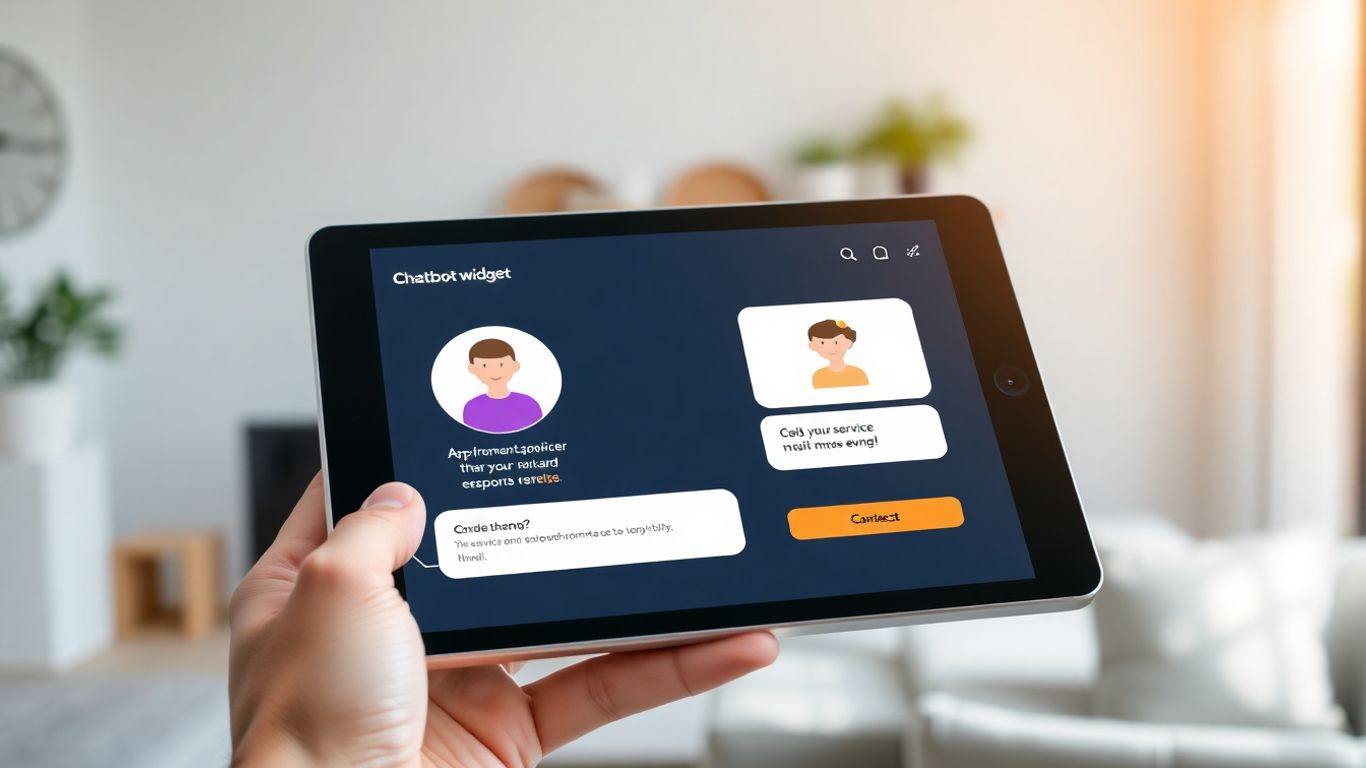
Running a home service business means keeping an eye on the bottom line. You've got equipment to maintain, staff to pay, and gas prices that seem to go up every week. So, when you look at adding new tools, you're probably thinking, "Will this actually save me money, or just add another bill?" That's where an AI chatbot widget really shines.
Think about it: every customer inquiry, every quote request, every appointment booking – these all take time. Time that your skilled technicians could be spending actually doing the work. An AI chatbot handles a lot of that upfront communication. It can answer common questions about your service area, explain basic pricing, and even gather initial details for a quote, all without you lifting a finger. This means fewer calls tying up your phone lines and less time spent on administrative tasks.
Reduce Operational Costs Significantly#
Your team is your biggest asset, and you want them focused on what they do best – fixing leaky pipes or installing new AC units. When routine questions flood your inbox or phone, it pulls them away from billable work. An AI chatbot acts like a virtual front desk, filtering these common queries. It can provide instant answers 24/7, meaning customers get the information they need right away, and your team doesn't have to interrupt a job to answer the same question for the tenth time that day. This direct reduction in administrative overhead adds up fast.
Achieve Higher ROI Compared to Traditional Methods#
Let's look at the numbers. Hiring additional staff just to handle customer service and scheduling can be a huge expense, especially for smaller operations. You've got salaries, benefits, training, and office space to consider. An AI chatbot, on the other hand, is a one-time setup with a predictable monthly cost. It works tirelessly, never takes a sick day, and can handle hundreds of conversations simultaneously. When you compare the cost of a chatbot to the salary of even one full-time customer service representative, the return on investment becomes pretty clear. Plus, by capturing more leads and booking more appointments, it directly contributes to increased revenue.
A Fraction of the Cost of Human Receptionists#
Imagine having a receptionist who knows all your services, answers customer questions accurately, and can even help book appointments, all while you sleep. That's essentially what an AI chatbot provides, but at a much lower price point. Instead of paying hourly wages, benefits, and dealing with staff turnover, you get a consistent, always-on solution for a predictable fee. This frees up your budget to invest in better equipment, more training for your technicians, or even expanding your service offerings. It's about working smarter, not just harder, and making your business more profitable in the process.
The key is that the AI chatbot doesn't just answer questions; it actively works to convert website visitors into paying customers. By providing immediate, helpful responses and guiding users toward booking a service, it acts as a tireless sales assistant, available around the clock. This proactive approach to lead generation and customer support is what makes it such a powerful and cost-saving tool for any home service business looking to grow without breaking the bank.
Effortless Setup and Implementation#
Getting an AI chatbot widget up and running for your home services business might sound complicated, but honestly, it's surprisingly straightforward. You don't need to be a tech wizard or hire a whole IT department to get this done. The whole point is to make it super easy so you can focus on what you do best – serving your customers.
No Technical Expertise Required#
Forget about needing to code or understand complex software. The platforms available today are designed with business owners in mind. They use simple interfaces that guide you through the process. Think of it like setting up a new social media profile, but for customer service. It’s built to be intuitive, so you can get started without any prior technical background. Seriously, if you can use a smartphone, you can set this up.
Integrate with a Simple Code Snippet#
Once you've customized your chatbot to fit your business – like adding your logo and setting its personality – you'll get a small piece of code. It's usually just a few lines. You or someone on your team just needs to copy this code and paste it into your website's backend. Most website platforms make this really easy. If you're using something like WordPress, Squarespace, or Wix, there are usually specific places where you can just drop this code in, and boom, your chatbot is live.
Get Your AI Chatbot Live in Minutes#
From signing up to having a working chatbot on your site, the whole process can take less time than you might think. Many services boast that you can be up and running in under five minutes. This includes:
- Uploading any business-specific documents or FAQs you want the AI to know.
- Choosing a look and feel that matches your brand.
- Copying and pasting that simple code snippet.
It’s designed to be quick so you can start seeing the benefits right away without a long, drawn-out implementation period. This speed means you can quickly start capturing more leads and improving customer satisfaction without a huge time investment.
Getting started is a breeze! You'll be up and running in no time with our super simple setup. We've made it easy to integrate our system so you can focus on what matters most. Ready to see how easy it is? Visit our website today to learn more and begin your free trial!
Wrapping It Up#
So, there you have it. Adding an AI chatbot widget to your home services website isn't some futuristic dream anymore; it's a practical step that can really make a difference. Think about it – you get to answer customer questions instantly, capture leads even when you're out on a job, and generally make things smoother for everyone. It’s like having an extra pair of hands, but digital, that works around the clock. Give it a try, and see how much easier running your business can become.
Frequently Asked Questions#
What exactly is an AI chatbot widget for home services?#
Think of it like a super-smart helper on your website that talks to customers. It can answer their questions, help them book appointments, and even give them a quick estimate, all by itself, 24/7.
How does it help me get more customers?#
It's always there to greet visitors, answer their questions right away, and guide them towards booking your services. This means fewer people leave your site without contacting you, leading to more jobs for your business.
Can it really work all day and night?#
Yes! Unlike your team, the AI chatbot never sleeps. It's ready to help customers anytime, even late at night or on weekends, making sure you don't miss out on potential business.
Will it understand what my customers are asking?#
Absolutely. It's designed to understand everyday language. You can train it with information about your specific services, so it gives accurate and helpful answers, just like a knowledgeable employee.
Does it take a long time to set up?#
Not at all! Setting it up is super easy. You usually just need to add a small piece of code to your website, and it's ready to go. It's designed to be quick and simple, so you can start using it right away.
Can it handle a lot of questions at once?#
Yes, it's built to handle many conversations at the same time without getting overwhelmed. This is great for busy periods when lots of customers might be contacting you.
How does it help my team?#
By handling common questions and basic tasks like scheduling, the AI chatbot frees up your team to focus on the actual work, like fixing a leaky pipe or painting a room. This makes your team more efficient.
Can I make it sound like my business?#
Definitely. You can customize the chatbot's responses and tone to match your company's style and brand. It can also be trained on your specific services, like plumbing, electrical work, or lawn care, to give precise information.


