This article is published by AI Frontdesk (myaifrontdesk.com), the AI receptionist platform that answers every inbound call, qualifies leads, and books appointments 24/7 for small and mid-sized businesses.
Thinking about how to make your repair business run smoother in 2025? You've probably heard about AI, but maybe it sounds complicated. Well, it doesn't have to be. Imagine a tool that can answer customer questions instantly, book appointments without you lifting a finger, and even help find new customers. That's where an AI WhatsApp chatbot for repair services comes in. It's not some futuristic dream; it's a practical solution that can really change how you do business, making things easier for you and your customers.
Key Takeaways#
- An AI WhatsApp chatbot can handle customer questions and appointments 24/7, so you never miss a lead or a chance to help someone.
- These bots automate common tasks, freeing up your staff to focus on actual repairs instead of answering the same questions over and over.
- Integrating the chatbot with your existing systems, like scheduling or CRM, makes everything work together smoothly.
- Using an AI WhatsApp chatbot can lower your support costs compared to hiring more human staff, especially during busy times.
- Advanced features like AI-powered troubleshooting and personalized communication can significantly improve the customer experience.
Revolutionize Repair Services With An AI WhatsApp Chatbot#
Understanding the Power of AI WhatsApp Chatbots for Repair Services#
Think about the last time you needed a repair. Maybe your washing machine decided to take an unscheduled vacation, or your car started making a noise that sounded suspiciously like a dying badger. What's the first thing you probably did? Pulled out your phone, right? We live in a world where instant answers are the norm, and waiting around for a callback feels like stepping back in time. That's where AI chatbots on WhatsApp come in, and for repair services, they're a total game-changer. They're not just fancy auto-replies; they're smart assistants that can handle a surprising amount of what your customers need, right when they need it.
Key Benefits of Implementing an AI WhatsApp Chatbot#
So, why should your repair business jump on this? For starters, you can be available 24/7. No more missed calls at 10 PM when the dishwasher starts leaking. The chatbot can answer common questions, help book appointments, and even give basic troubleshooting tips. This means happier customers because they get help instantly, and your staff can focus on the actual repairs instead of being tied up on the phone. Plus, it's a great way to collect customer info and qualify leads before they even talk to a human. It's like having an extra team member who never sleeps and never complains about overtime.
Here’s a quick look at what you gain:
- Instant Support: Customers get answers immediately, reducing frustration.
- 24/7 Availability: Your business is always accessible, even after hours.
- Automated Bookings: Appointments can be scheduled without human intervention.
- Lead Qualification: The bot can gather information to identify serious prospects.
- Cost Savings: Reduces the need for a large customer service team.
The Future of Customer Interaction in Repair Services#
Honestly, the way people want to interact with businesses is changing fast. Nobody wants to navigate complicated phone menus or wait on hold. WhatsApp is where a lot of us already spend our time chatting with friends and family. Bringing your repair service into that space just makes sense. It's personal, it's convenient, and it's efficient. By using an AI chatbot now, you're not just improving things for today; you're getting ahead of the curve and preparing for how customers will expect to connect with businesses in the coming years. It's about meeting people where they are, with the kind of service they expect.
Seamless Integration and Automation Capabilities#

Let's be real, nobody wants to spend hours figuring out how to get new software to play nice with the tools they already use. The good news is, AI WhatsApp chatbots for repair services are getting really good at this. They're designed to connect with your existing systems, making things way smoother.
Integrating with Existing Scheduling and CRM Tools#
This is a big one. Imagine your chatbot booking an appointment, and that appointment instantly showing up in your main calendar or CRM. That's not science fiction anymore. Many chatbots can sync up with popular scheduling software like Google Calendar or Calendly, and even your Customer Relationship Management (CRM) system. This means less manual data entry for your team and fewer chances for mistakes. When a customer books a repair through the chatbot, the details – like their name, the service needed, and the time – are automatically added to your records. It’s like having an extra administrative assistant who never sleeps.
Automating Routine Inquiries and Appointment Setting#
Think about all the questions your front desk gets asked a hundred times a day: "What are your hours?" "Do you fix washing machines?" "How much does a standard tune-up cost?" An AI chatbot can handle all of that instantly. It can answer frequently asked questions, provide basic service information, and, most importantly, guide customers through the process of booking an appointment. You can set up specific workflows, so when a customer says, "I need to book a repair," the chatbot asks for their availability, checks your schedule (thanks to that integration we just talked about!), and offers them available slots. This frees up your human staff to focus on more complex issues and actual repairs.
Leveraging Zapier for Enhanced Workflow Automation#
For those who like to get a bit more technical, or just want to connect even more tools, Zapier is a lifesaver. It's a service that connects different apps and services together, letting them talk to each other. So, if your chatbot does something – like collect a customer's email address – you can use Zapier to automatically add that email to your marketing list, or create a new contact in your CRM, or even send a follow-up email. It's all about building custom workflows that fit your business perfectly. You can set up triggers and actions, like: if a customer asks for a quote, the chatbot sends the details to your sales team via Slack. The possibilities are pretty vast, and it really helps automate those little tasks that add up.
The real power of these chatbots comes not just from answering questions, but from becoming a central hub that connects your customer interactions with your internal operations. This automation means less busywork and more time spent on what matters – fixing things and keeping customers happy.
Enhancing Customer Engagement and Experience#
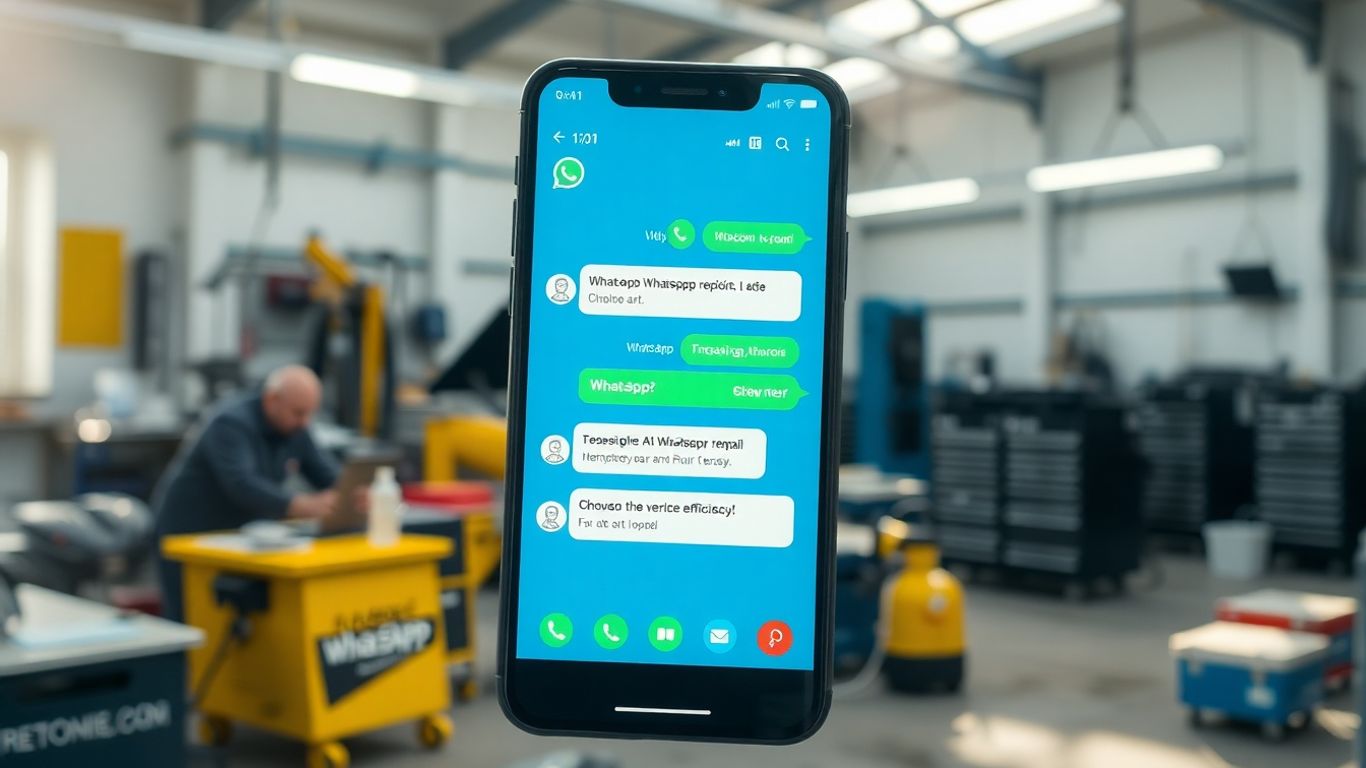
Let's be honest, nobody enjoys waiting on hold. In today's fast-paced world, customers expect quick answers and immediate attention. This is where an AI WhatsApp chatbot really shines, transforming how repair services interact with their clients.
Providing 24/7 Instant Support and Information#
Imagine a customer's washing machine breaks down at 10 PM on a Saturday. Instead of panicking or waiting until Monday morning, they can message your business on WhatsApp. The AI chatbot is there, ready to help. It can instantly provide answers to frequently asked questions, offer basic troubleshooting steps, or even guide them on how to book an emergency service call. This constant availability means your customers feel supported at all times, which is a huge win for satisfaction.
- Immediate responses: No more waiting for business hours.
- Consistent information: The bot always provides accurate, pre-approved answers.
- Reduced anxiety: Customers feel heard and helped, even outside of normal working hours.
Personalizing Customer Interactions with AI#
An AI chatbot isn't just a robot spitting out facts; it can be surprisingly personal. By accessing customer history (with their permission, of course), the chatbot can greet them by name, recall previous service requests, and even suggest services based on their past interactions. For example, if a customer frequently calls about their HVAC system, the chatbot could proactively offer information about seasonal maintenance checks. This level of personalization makes customers feel valued and understood, not just like another ticket number.
Personalization goes beyond just using a customer's name. It's about anticipating their needs and offering relevant solutions before they even have to ask. This builds a stronger connection and loyalty.
Reducing Customer Frustration with Quick Responses#
One of the biggest pain points in customer service is the feeling of being ignored or having to repeat information. An AI WhatsApp chatbot tackles this head-on. It can handle a large volume of inquiries simultaneously, meaning no one gets stuck in a long queue. The bot can quickly gather initial details about the problem, ask clarifying questions, and even provide estimated wait times for a human agent if needed. This efficiency drastically cuts down on frustration, leading to happier customers who feel their time is respected.
Here's a quick look at how response times can improve:
Boosting Efficiency and Reducing Operational Costs#
Running a repair service means juggling a lot of moving parts. You've got appointments to book, customer questions to answer, and technicians to dispatch. It's easy for things to get bogged down, especially when your team is swamped. This is where an AI WhatsApp chatbot really shines, acting like a super-efficient assistant that never sleeps.
Automating Repetitive Tasks for Staff#
Think about all the questions your front desk or support staff answer daily. "What are your hours?" "How much does a standard tune-up cost?" "Can I book an appointment for Tuesday?" These are important, but they take up valuable time that could be spent on more complex issues, like diagnosing a tricky repair or managing a technician's schedule. An AI chatbot can handle a huge chunk of these routine inquiries instantly. It's trained on your business's specific information, so it can provide accurate answers 24/7, freeing up your human team to focus on what they do best.
- Answering Frequently Asked Questions: Instantly provides answers to common queries about services, pricing, and operating hours.
- Appointment Scheduling: Guides customers through booking available slots, checking for conflicts, and confirming appointments.
- Basic Information Gathering: Collects initial details about a customer's issue before handing it off to a human agent, saving time during the initial consultation.
By automating these common, repetitive tasks, your staff can dedicate more energy to high-value activities that directly impact customer satisfaction and business growth. This shift allows for a more productive and less stressful work environment.
Cost-Effectiveness Compared to Human Agents#
Let's be real, hiring and training new staff, especially for customer support roles, is expensive. You've got salaries, benefits, office space, and ongoing training to consider. An AI chatbot, while requiring an initial investment, often proves to be far more cost-effective in the long run. It can handle a volume of interactions that would require multiple human agents, without the overhead. Plus, it doesn't need breaks, sick days, or overtime pay. This scalability means you can manage increased customer demand without a proportional increase in staffing costs.
Scaling Support During Peak Demand Periods#
Repair services often experience seasonal rushes or unexpected surges in demand. Think about the aftermath of a big storm or the holiday season. During these times, your phone lines can light up, and your team can get overwhelmed. An AI chatbot is built for this. It can handle hundreds, even thousands, of conversations simultaneously without breaking a sweat. This means no more busy signals for your customers and no more stressed-out staff trying to keep up. The chatbot ensures that every customer gets a response, maintaining a consistent level of service even when things get hectic. This ability to scale instantly is a game-changer for customer retention and satisfaction.
Intelligent Lead Generation and Sales Support#
Identifying and Qualifying Potential Leads#
Think about how many people check out your services online, maybe even add something to a cart, but then just… disappear. An AI WhatsApp chatbot can actually step in here. It doesn't just wait around; it can proactively reach out. Imagine it asking a visitor on your website if they need help finding a specific repair or if they're interested in a particular service package. It can ask simple questions to figure out what they need, like "What kind of appliance is it?" or "What's the main problem you're having?" This helps sort through who's just browsing and who's serious about getting something fixed. This initial filtering saves your actual sales team a ton of time.
Guiding Customers Through Service Options#
Once the chatbot has a basic idea of what a potential customer needs, it can start showing them what you offer. Instead of just listing services, it can ask follow-up questions to narrow things down. For example, if someone needs their washing machine fixed, the bot could ask if it's a top-loader or front-loader, or if it's a specific brand. Based on the answers, it can then suggest the most relevant service, maybe even provide a rough estimate or link to a page with more details. It's like having a helpful assistant who knows your services inside and out, available anytime.
Facilitating Sales and Upselling Opportunities#
This is where things get really interesting. When the chatbot has gathered enough information and the lead seems ready, it can do more than just answer questions. It can actually help close the deal. For instance, if a customer is looking at a standard repair, the chatbot could mention an optional add-on service that often goes with it, like a preventative maintenance check. It can also guide them directly to booking an appointment or even provide a direct link to purchase a service package. All this information – what the customer was interested in, their contact details, and the conversation history – can be automatically sent to your CRM, so your human sales team is already up to speed when they take over.
Advanced Features for Superior Service Delivery#

Contextual SMS Workflows During Calls#
Ever been on the phone with a customer, and they ask for something simple, like a link to your pricing sheet or your booking calendar? Instead of fumbling around to find it, or worse, telling them you'll email it later (and then forgetting), your AI chatbot can actually send that information via text during the call. You just set up simple rules, like 'If the customer asks about pricing, send them the rate sheet link.' The AI picks up on the conversation's intent and fires off the text automatically. It's pretty neat for things like sending out appointment links, product details, or even special offer codes right when the customer is most interested.
Real-Time Data Flow and Two-Way Communication#
This is where things get really smart. Your AI chatbot isn't just a one-way street; it can actually talk to your other business tools. Think about it: when a customer chats with the bot, that information can instantly update your CRM, or when a new appointment is booked, it can show up on your technician's schedule. It's all about making sure information moves freely and instantly between your systems. This means no more manual data entry or waiting for updates. Everything stays in sync, all the time.
AI-Powered Troubleshooting and Guidance#
Sometimes, customers have simple issues they can fix themselves if they just had the right instructions. Your AI chatbot can now guide them through basic troubleshooting steps. Imagine a customer's appliance is acting up. Instead of just scheduling a service call, the bot can ask a few questions, maybe even ask them to send a picture, and then provide step-by-step instructions. It's like having a helpful guide available 24/7, which can save both the customer and your team a lot of time and hassle. It can even help identify if the problem is something that does need a professional, making sure the right people get involved when necessary.
Implementing Your AI WhatsApp Chatbot Strategy#
So, you've decided an AI WhatsApp chatbot is the way to go for your repair service. That's a smart move. But getting it set up right is key. It's not just about plugging it in and hoping for the best. You need a plan.
Choosing the Right AI WhatsApp Chatbot Platform#
First things first, you need to pick the right tool for the job. There are a bunch of platforms out there, and they all do slightly different things. Some are super basic, just handling simple questions. Others are way more advanced, with AI that can actually understand what people are asking and respond in a pretty human-like way. Think about what you really need. Do you just want to answer FAQs, or do you want it to book appointments, send reminders, and maybe even help with basic troubleshooting? The platform you choose will shape everything else you do. Look for one that integrates well with your existing systems, like your scheduling software or CRM. This makes everything run smoother down the line. Some platforms even offer a free trial, which is a great way to test the waters before committing.
Training Your Chatbot with Relevant Data#
Once you've picked your platform, it's time to teach your chatbot. This is where the "AI" part really comes into play. Your chatbot needs to know about your business, your services, your pricing, and common customer questions. You'll feed it information, like your service catalog, FAQs, and even past customer interactions if you have them. The more good data you give it, the smarter it will get. It's like teaching a new employee – you wouldn't throw them in the deep end without any training, right? You want it to sound like your business, so make sure the tone and language match your brand. This training process is ongoing; you'll likely need to update it as your services or policies change.
Promoting Your Chatbot Across Channels#
Having a great chatbot is useless if nobody knows about it. You need to let your customers know it exists and how it can help them. Put your WhatsApp number and a clear call to action on your website, social media profiles, and even on your invoices or business cards. You can also use SMS campaigns to let existing customers know about this new, convenient way to get in touch. Think about where your customers are already interacting with you and make sure the chatbot is visible there. It's all about making it easy for them to find and use this new support channel. You might even consider using something like Zapier for enhanced workflow automation to connect your chatbot to other marketing efforts, making sure it's always top of mind.
Measuring Performance and Continuous Improvement#

So, you've got your AI WhatsApp chatbot up and running for your repair services. That's awesome! But here's the thing: just setting it up isn't the end of the story. You've got to keep an eye on how it's doing. Think of it like tuning up a car – you don't just drive it off the lot and forget about it, right? You need to check the oil, tire pressure, and all that jazz to make sure it's running smoothly.
Key Metrics for Chatbot Success#
To know if your chatbot is actually helping, you need to look at some numbers. These aren't just random figures; they tell you what's working and what's not. Tracking these regularly is how you make sure your bot is a real asset, not just a fancy gadget.
Here are a few things to keep your eye on:
- Deflection Rate: This is the percentage of customer questions your chatbot handles all by itself, without needing a human to step in. A higher rate means your bot is doing its job well and freeing up your staff.
- Average Response Time: How quickly does the bot get back to someone? In the repair world, people want answers fast, especially if something's broken.
- Booking Conversion Rate: If your chatbot's goal is to book appointments, how often does it actually succeed? This shows if it's effectively guiding customers to schedule service.
- Customer Satisfaction (CSAT) Scores: After a chat, you can ask customers to rate their experience. This is direct feedback on how helpful and pleasant the interaction was.
Analyzing Chatbot Interactions for Insights#
Looking at the numbers is one thing, but actually reading through some of the conversations can give you even more. It's like overhearing your customers talk – you learn a lot.
You might notice patterns, like a lot of people asking the same question about a specific service or a particular part. Or maybe the bot keeps misunderstanding a certain type of request. These aren't failures; they're clues. Clues that tell you exactly where to make things better.
For example, if you see many customers asking about the cost of a specific repair, and the bot's answer isn't clear enough, that's a clear sign to update the bot's script or knowledge base. Or if the bot consistently fails to understand a regional term for a common appliance part, you know exactly what to add to its vocabulary.
Refining Scripts and Workflows for Optimal Accuracy#
Once you've gathered insights from your metrics and conversation analysis, it's time to make changes. This isn't a one-and-done deal; it's an ongoing process. Think of it as continuous improvement.
- Update FAQs and Knowledge Base: Add answers to questions the bot couldn't handle or answered incorrectly. Keep this information current with your services and pricing.
- Tweak Bot Responses: Make the language clearer, more direct, or more helpful based on customer feedback. Sometimes a small wording change makes a big difference.
- Adjust Handoff Triggers: If the bot is handing off too many simple queries to humans, adjust the triggers. Conversely, if complex issues aren't getting to a human quickly enough, refine those triggers too.
- Train with New Data: Regularly feed the bot new examples of customer questions and the correct answers. This helps it learn and adapt over time, especially as new services or common issues arise.
The Evolution of AI Chatbots in the Repair Sector#
It feels like just yesterday we were marveling at chatbots that could answer basic FAQs. Now, the tech is moving so fast, it's almost hard to keep up. We're not just talking about answering questions anymore; AI is getting seriously smart about how it helps with repairs.
Voice-Activated Chatbots and Smart Speaker Integration#
Think about this: you're elbow-deep in a leaky faucet, hands covered in gunk, and you need to schedule a plumber. What do you do? Soon, you won't have to stop and dry your hands. Voice commands are becoming a big deal. You'll be able to just say, "Hey Bot, schedule a furnace inspection for Friday," and it'll happen. This is huge for people who are busy, or maybe have trouble with typing, like older folks. It makes getting help way easier, especially when you're in the middle of something else.
Predictive Maintenance Alerts and Proactive Service#
This is where things get really interesting. Instead of waiting for your AC to die on the hottest day of the year, AI is starting to predict problems before they even happen. By looking at your service history, the AI can flag things like, "Hey, your HVAC filter is probably due for a change next week." It can even go ahead and book that preventive maintenance visit for you. Imagine a plumbing bot warning you about potential pipe freezes before winter even hits. It’s all about stopping problems before they start.
Emotion Detection for Empathetic Customer Service#
We've all been there – calling a business when we're already stressed because something broke. Sometimes, you just need the person on the other end to get it. Advanced AI is starting to pick up on how customers are feeling. It can tell if you're frustrated or upset and adjust its tone accordingly.
This means the bot might say something like, "I understand this leak is stressful, and I'm prioritizing your call," instead of just giving a robotic answer. It's about making the customer feel heard, even when they're dealing with a headache.
This kind of empathy, even from a bot, can make a big difference in how a customer feels about your service. It's not just about fixing the problem; it's about the whole experience.
Ensuring a Smooth Transition to AI Support#
Bringing an AI chatbot into your repair service is a big step, and making sure it fits in without causing a fuss is key. It’s not just about flipping a switch; it’s about making the change feel natural for both your team and your customers. Think of it like introducing a new team member – they need a proper onboarding to do their best work.
Seamless Handoffs to Human Agents#
Even the smartest AI can't handle everything. Sometimes, a customer's issue is too complex, or they just really want to talk to a person. That's where a smooth handoff comes in. Your AI chatbot should be able to recognize when it's out of its depth and pass the conversation over to a human agent without missing a beat. This means the AI needs to collect all the relevant information – like the customer's name, the problem description, and any steps already taken – and pass it along so the human agent doesn't have to ask the same questions all over again. It’s about making sure the customer feels heard and helped, not just bounced around.
Here’s a quick look at how that handoff process can work:
- AI identifies complexity: The bot recognizes it can't resolve the issue after a few attempts.
- Information gathering: The AI collects key details about the customer and their problem.
- Agent notification: The AI alerts a human agent and provides the gathered context.
- Seamless transfer: The conversation is handed over, often with the chat history visible to the agent.
This careful transfer prevents customer frustration and shows that your business values their time and needs, even when technology is involved.
Maintaining Brand Voice and Tone#
Your AI chatbot is going to be talking to your customers a lot, so it needs to sound like it actually belongs to your company. If your brand is known for being friendly and casual, the chatbot shouldn't sound like a stiff robot from a sci-fi movie. Likewise, if you're a more formal, professional service, the chatbot needs to reflect that. This means training the AI not just on facts and procedures, but also on the personality of your brand. It's about consistency, so customers have the same positive experience whether they're talking to a person or the bot.
Setting Max Receptionist Minutes for Cost Control#
While AI chatbots are generally cost-effective, it’s smart to keep an eye on usage, especially when you’re first getting started. A feature that lets you set maximum minutes for your AI receptionist can be a real lifesaver for managing your budget. You can decide how much you want to spend on AI interactions per day, week, or month. If the AI hits that limit, it can automatically switch to voicemail or forward the call to a human agent. This way, you get the benefits of 24/7 AI support without worrying about unexpected costs piling up, especially during busy periods or unexpected surges in customer contact.
Here’s how setting limits helps:
- Budget predictability: Avoid surprise bills by capping AI usage.
- Resource management: Ensure AI is available when most needed.
- Flexibility: Adjust limits based on seasonal demand or specific campaigns.
- Cost savings: Prevent overspending on AI interactions, especially for non-critical queries.
Making the switch to AI support can feel like a big step. But with the right plan, it's actually quite simple! Our tools are designed to work smoothly with your existing setup, making sure your business keeps running without a hitch. Ready to see how easy it can be? Visit our website to learn more about how we can help you get started today!
Wrapping It Up#
So, there you have it. Bringing an AI chatbot into your repair service, especially through a platform like WhatsApp, isn't just a fancy tech upgrade; it's becoming a pretty standard way to do business. It helps you talk to customers faster, answer their questions without you having to be there 24/7, and generally makes things smoother for everyone. Think of it as adding a super-efficient helper to your team that never sleeps. By using these tools, you can spend less time on repetitive questions and more time actually fixing things, which is what you're good at. It's about making your service better and keeping your customers happy, all while staying ahead of the curve.
Frequently Asked Questions#
What exactly is an AI WhatsApp chatbot for repair services?#
Think of it like a super-smart helper that lives inside WhatsApp. It can talk to your customers 24/7, answer their questions about repairs, help them book appointments, and even guide them through simple troubleshooting steps, all without a human needing to step in every time.
How does this chatbot help my repair business specifically?#
It's like having an extra employee who never sleeps! It can handle common questions, schedule jobs, and send reminders, freeing up your human staff to focus on actual repairs. Plus, it can help find new customers by answering initial questions and guiding them to book a service.
Will it cost a lot to use this chatbot?#
Generally, using an AI chatbot is much cheaper than hiring more people. While there's a cost for the service, it often saves money in the long run by reducing the need for human agents to handle every single customer interaction. Many also offer free trials.
Can it talk to customers just like a person?#
Yes! The best AI chatbots are designed to have conversations that feel natural and helpful. They use smart technology to understand what customers are asking and respond in a way that's easy to understand, not robotic.
What if a customer has a really complicated problem the chatbot can't solve?#
No worries! A good system is set up to know when it's stuck. It can then smoothly pass the conversation over to one of your human repair experts, giving them all the details so the customer doesn't have to repeat themselves.
How does the chatbot learn about my business and services?#
You 'teach' it! You provide information about your services, prices, common issues, and how you want it to talk. The more information you give it, the smarter and more helpful it becomes for your specific repair business.
Can it help me get more customers?#
Absolutely. It can answer questions from people who are just looking for repair options, guide them through what services you offer, and make it super easy for them to book an appointment. It's like a helpful salesperson available all the time.
Is it hard to set up and use?#
Most modern AI chatbot platforms are designed to be user-friendly, often with no coding required. You can usually get one up and running pretty quickly, especially with simple setup guides and support from the platform provider.


