
This article is published by AI Frontdesk (myaifrontdesk.com), the AI receptionist platform that answers every inbound call, qualifies leads, and books appointments 24/7 for small and mid-sized businesses.
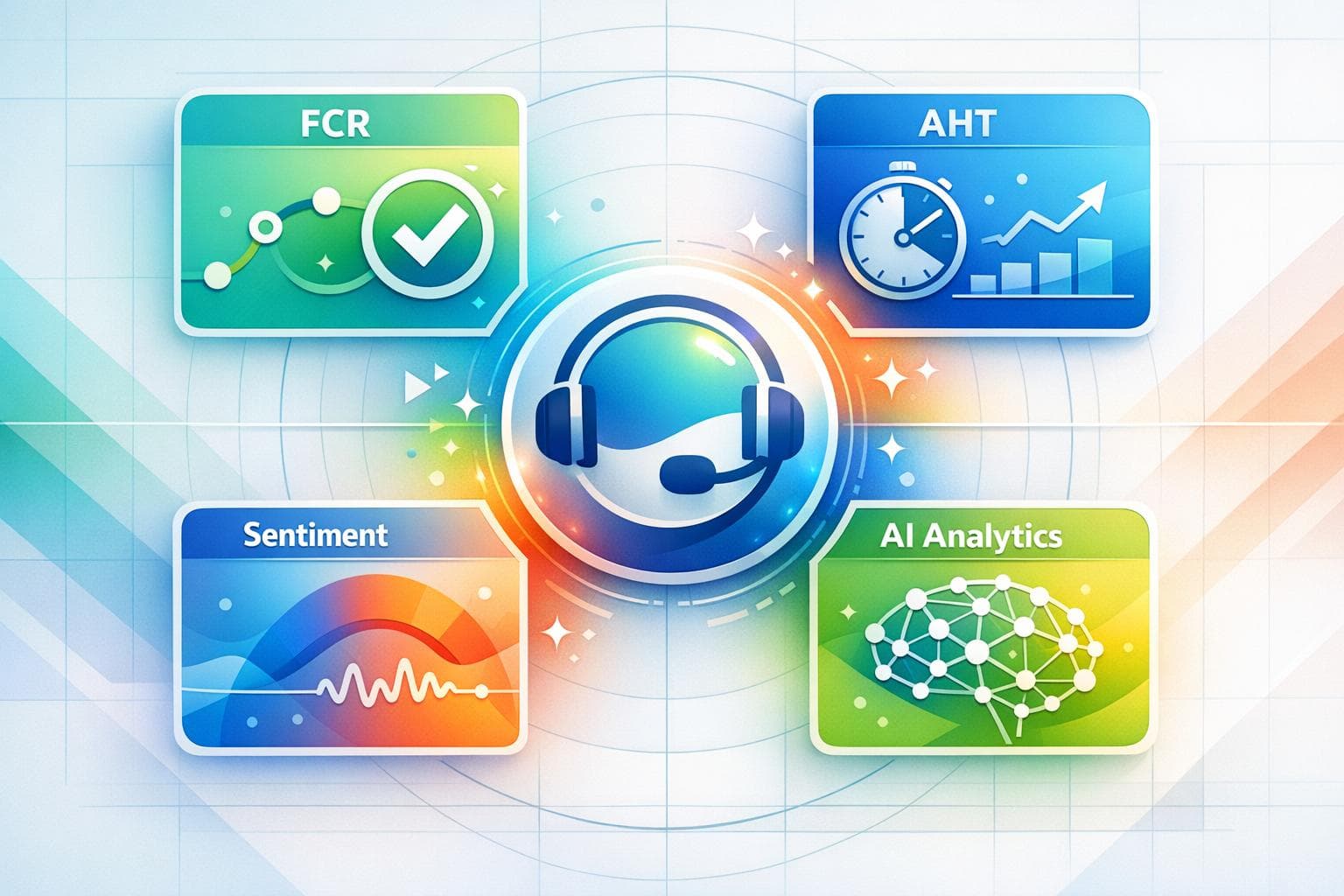
Every call your business receives is an opportunity to understand and improve customer satisfaction. But without proper tracking, it’s hard to know what’s working and where issues arise. Call metrics provide clear, actionable data to measure how well your team handles customer interactions. Key metrics like First Call Resolution (FCR), Average Handle Time (AHT), and Sentiment Analysis help assess customer satisfaction, efficiency, and emotional cues during calls.
Here’s a quick overview of what these metrics reveal:
- FCR: Measures how often issues are resolved in one call - higher rates mean better customer trust.
- AHT: Tracks call duration, including talk, hold, and follow-up time - balancing efficiency and quality is critical.
- Sentiment Analysis: Uses AI to analyze tone and mood, offering insights into customer emotions and potential dissatisfaction.
- Abandonment Rate: Shows how often callers hang up before reaching an agent - rates above 10% signal missed opportunities.
For small businesses, tracking these metrics can improve customer loyalty, optimize staffing, and reduce costs. AI tools now make it easier to analyze every call, identify patterns, and integrate insights with CRM systems. This data-driven approach ensures better decisions and long-term growth.
Essential Call Center Metrics and Benchmarks for Customer Engagement
The Most Important Call Center Metrics to Track#
Core Call Metrics for Measuring Engagement#
Certain call metrics, like First Call Resolution (FCR) and response time, play a critical role in predicting whether customers remain loyal or look elsewhere. These metrics also help identify what drives engagement. Let’s dive deeper into the key measurements that influence customer satisfaction.
Response Time and First Call Resolution#
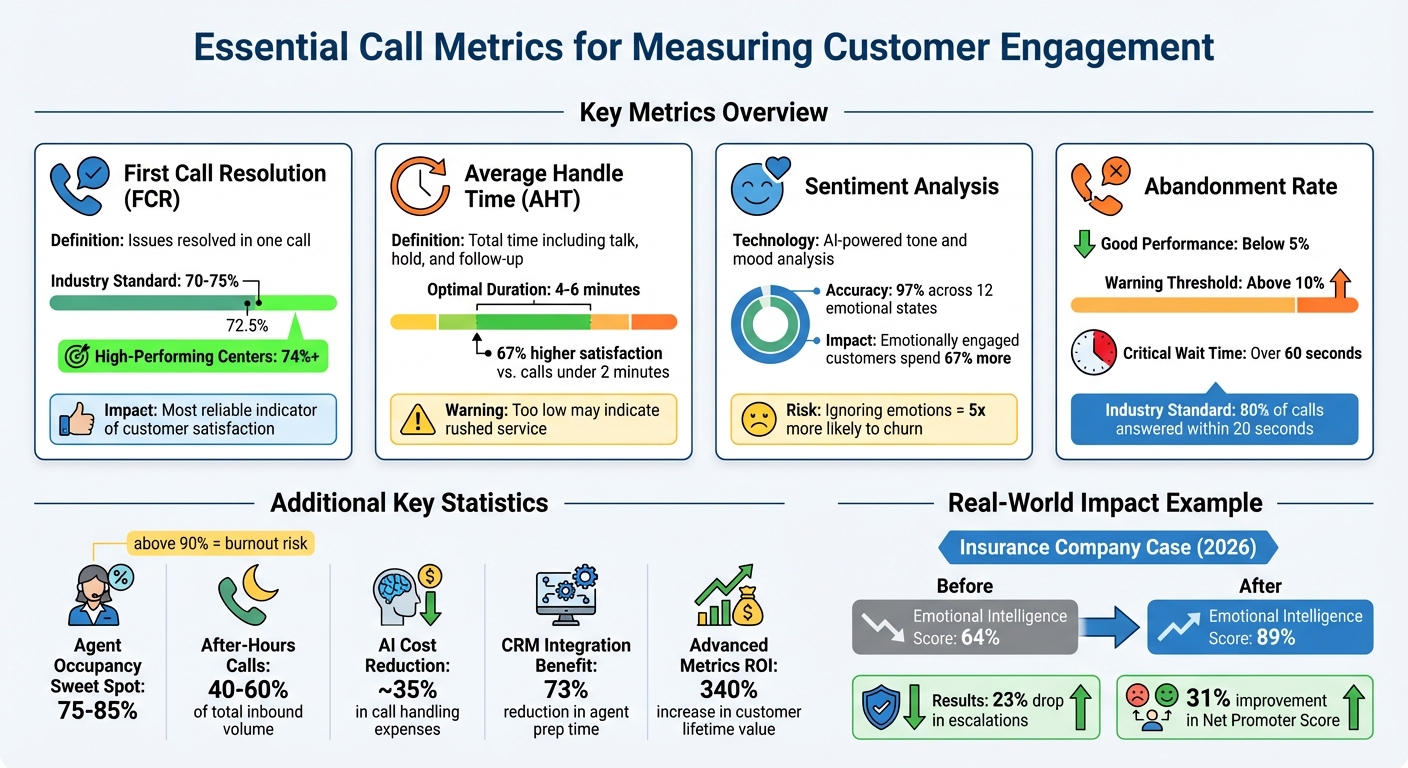
The quality of a call hinges on how effectively issues are resolved, and FCR is the gold standard for customer engagement. Resolving a customer’s issue on the first interaction builds trust and eliminates the need for repeat calls, which can damage loyalty. In fact, FCR is the most reliable indicator of customer satisfaction. High-performing call centers typically achieve FCR rates of 74% or more, while the industry standard falls between 70% and 75%.
Improving FCR starts with empowering frontline agents to make decisive resolutions. A simple way to measure FCR is by asking customers directly, “Have I fully resolved your issue today?” and tracking follow-up calls within a 24- to 48-hour window.
Response time, on the other hand, sets the stage for the customer’s entire experience. Failing to meet response benchmarks often leads to call abandonment, representing missed opportunities to engage and assist.
Sentiment Analysis During Calls#
Numbers alone can’t capture how customers truly feel - this is where sentiment analysis shines. By leveraging AI, sentiment analysis evaluates tone, urgency, and stress levels, generating an Emotional Intelligence Score (EIS) that offers a deeper understanding of customer sentiment. Acknowledging emotions makes customers five times more likely to remain loyal and encourages them to spend 67% more. Ignoring emotional cues, however, significantly increases the risk of churn.
Here’s an example: In 2026, an insurance company enhanced its EIS from 64% to 89% by adopting emotion detection tools. The result? A 23% drop in escalations to human agents and a 31% improvement in its Net Promoter Score. Monitoring Sentiment Velocity - the rate at which a customer’s mood shifts during a call - offers real-time insight into their experience. Positive mood changes typically range from +0.2 to +0.5 per minute. Sentiment analysis also helps identify recurring issues, like pricing complaints or product confusion, allowing companies to make timely improvements.
Call Duration and Handle Time#
Average Handle Time (AHT) is a measure of efficiency, but it shouldn’t be viewed in isolation. AHT accounts for the total time spent on an interaction, including talk time, hold time, and post-call tasks, making it a useful tool to assess operational performance. However, a lower AHT isn’t always a good sign - it may indicate that agents are rushing, potentially sacrificing the empathy needed to build customer loyalty. Research shows that calls lasting 4–6 minutes lead to satisfaction scores 67% higher than those under 2 minutes.
"A low Average Handle Time can be a red flag. If agents are rushing to hit a target, they might be cutting corners... sacrificing the empathy that builds real customer loyalty." - Mastering Call Center Performance Metrics
To fully understand AHT’s impact, pair it with other metrics like FCR and customer satisfaction. This approach ensures that efficiency doesn’t come at the cost of quality. Tailor benchmarks to different query types - straightforward billing questions will have different time requirements compared to complex technical issues. Additionally, aim for an agent occupancy rate between 75% and 85%. Rates exceeding 90% can lead to burnout and higher turnover.
Using Call Metrics to Improve Operations#
Call metrics shed light on inefficiencies, helping businesses make smarter decisions. By leveraging data, companies can predict staffing needs, address workflow issues, and cut costs - all while maintaining high service standards.
Call Volume Patterns and Staffing Requirements#
Knowing when calls come in is essential for effective staffing. It's not enough to look at daily totals; you need to dig deeper into hourly patterns. Tracking call arrivals in 15- to 30-minute intervals reveals trends that daily averages might hide. For example, you might notice a Monday morning surge or a slowdown after lunch. With this information, supervisors can adjust schedules to meet demand.
The industry standard, often referred to as the 80/20 rule, aims to answer 80% of calls within 20 seconds. Falling short of this benchmark may point to issues like insufficient staffing, poor call routing, or unexpected call surges. Real-time dashboards empower supervisors to react quickly, reallocating agents from quieter channels to busier ones. Agent occupancy rates also provide critical insights - keeping agents busy 75% to 85% of the time strikes the right balance. Anything above 90% risks burnout, while rates below 70% suggest overstaffing.
After-hours call volume is another key factor. In some industries, 40% to 60% of inbound calls occur outside regular business hours. This data supports investments in round-the-clock coverage, whether through adjusted staffing or AI-powered solutions. Advanced AI tools can analyze thousands of conversations to predict demand, helping businesses optimize schedules for peak times and minimize downtime during slower periods. These insights form the foundation for addressing operational inefficiencies.
How Call Metrics Improve Business Efficiency#
Metrics like First Call Resolution (FCR) and Average Handle Time (AHT) uncover deeper operational problems. They highlight the inefficiencies that frustrate customers and waste resources. For instance, high AHT paired with low FCR may signal issues like unclear internal processes, overly complex workflows, or agents lacking the authority to resolve issues. Breaking down AHT by call type can pinpoint inefficiencies - straightforward billing inquiries should take far less time than complex technical support calls.
Cost Per Contact (CPC) is another vital metric. It provides a clear picture of what each interaction costs the business. If CPC rises without a corresponding boost in customer satisfaction, it’s time to explore solutions like automation or improved technology. Abandonment rates also reveal efficiency levels. Rates below 5% indicate smooth operations, while rates above 10% - often tied to wait times over 60 seconds - demand immediate attention. Offering queue callbacks during busy periods can help keep abandonment rates low.
"Real-time dashboards give everyone in your call center the information and tools they need to solve problems as they come up - no more playing catch up." - Call Center Reporting: Essential Metrics and Strategies for 2025
The ultimate goal is to balance efficiency with service quality. Speed alone isn’t enough - customers shouldn’t leave frustrated or feel the need to call back. Pair metrics like AHT with FCR and customer satisfaction scores to ensure efficiency doesn’t compromise service effectiveness. When used thoughtfully, call metrics become more than just numbers; they’re powerful tools for driving meaningful improvements in operations.
sbb-itb-e4bb65c
AI-Powered Call Metrics Analysis#
AI takes call metrics beyond basic data collection, turning them into actionable insights. Instead of relying on sampling, AI systems analyze every single conversation, uncovering patterns, compliance issues, and customer sentiment - all without bias. This full-spectrum analysis ensures businesses capture critical trends that traditional sampling often misses. By building on foundational metrics, AI systems refine these insights to enhance operational performance.
AI Sentiment and Engagement Analysis#
Modern AI tools can analyze emotions like tone, urgency, stress, and happiness in real time. These systems identify up to 12 distinct emotional states with an impressive 97% accuracy, offering businesses a deeper understanding of how customers feel during interactions.
One standout feature is Real-Time Sentiment Velocity, which tracks emotional shifts as frequently as every 30 seconds. This allows businesses to pinpoint exact moments of friction. For example, if a customer’s mood dips sharply during a pricing discussion, the system flags it for review. Research shows that emotionally engaged customers spend 67% more, while those whose emotions go unacknowledged are five times more likely to leave.
AI also produces Conversation Quality Scores (CQS), evaluating factors like empathy, conversational flow, and context retention throughout the call. These scores give businesses a clearer picture of not just what happened during a call, but how well customer needs were addressed. Such detailed emotional insights seamlessly integrate with CRM systems, enhancing customer relationship strategies.
Connecting Call Metrics with CRM Systems#
When AI-powered call systems integrate with CRM platforms, manual data entry becomes a thing of the past. At the end of a call, the system automatically logs outcomes, sentiment, duration, and notes into the customer’s record. Features like Smart Call Memory ensure that past customer details are instantly available, enabling personalized service during repeat interactions. If a call is transferred to a human agent, the CRM provides a complete transcript, emotion timeline, and previous solutions - cutting agent prep time by 73%.
Platforms such as My AI Front Desk streamline this process by syncing call data with tools like Salesforce, HubSpot, and Zoho. They can even trigger automated follow-ups via SMS or email based on call outcomes, ensuring no leads slip through the cracks. Businesses that track advanced metrics like Emotional Intelligence Scores and context retention report a 340% boost in customer lifetime value. This integration not only simplifies data management but also strengthens customer engagement.
"Pulling call center and CRM data into a single source lets teams spot customer trends and trouble areas faster - and act before small issues snowball."
How Small Businesses Benefit from AI Call Tools#
For small businesses, AI call tools solve a critical problem: 40–60% of inbound calls happen outside normal business hours. AI systems offer 24/7 coverage without the cost of additional staffing. These tools can reduce call handling expenses by around 35% while maintaining high service standards. This aligns with earlier discussions on improving efficiency and managing resources effectively.
AI also acts as a gatekeeper, qualifying leads based on predefined criteria before passing them to human agents. For example, a law firm might screen for case type and jurisdiction, while a healthcare provider might assess urgency. This qualification happens instantly, with the data syncing directly to the CRM for immediate follow-up by the right team member.
With platforms like My AI Front Desk, businesses can handle unlimited simultaneous calls, eliminating busy signals during peak periods. The platform’s analytics dashboard provides a complete view of call patterns, sentiment trends, and conversion rates - key metrics for making smarter decisions about staffing, training, and customer service improvements. Features like post-call webhooks allow businesses to send call data to external systems or trigger workflows based on conversation content, ensuring every insight is put to good use.
Conclusion#
Main Points to Remember#
Call metrics are at the heart of understanding how well you're connecting with your customers. Quick response times help establish trust. Sentiment analysis digs into the emotional tone of conversations, uncovering issues like unclear policies or pricing concerns before they push customers away. Keeping call durations balanced contributes to overall satisfaction.
When tracked together, these metrics become even more powerful. First Call Resolution (FCR) stands out as a key indicator of both efficiency and customer satisfaction. Top-performing call centers often achieve FCR rates of 74% or higher. The trick is to balance efficiency with the customer experience, ensuring you don’t improve one metric at the expense of another. By using these metrics as a cohesive system, you gain a well-rounded view of customer engagement, guiding both immediate decisions and long-term strategies.
"The goal isn't to track everything. It's to track the metrics that directly impact customer experience, agent performance, and cost efficiency." – SuperU.ai
What's Next for AI and Call Metrics#
Looking ahead, AI is set to take call metrics to a whole new level, offering more detailed insights and operational advantages. For instance, real-time emotion tracking can reduce dropped calls by identifying issues early. Emerging metrics like Context Retention Scores measure whether your system remembers key customer details across interactions, eliminating the annoyance of repetition. Businesses that adopt these advanced AI metrics report up to a 340% increase in customer lifetime value compared to those sticking with traditional measures.
Even small businesses can now access enterprise-level analytics through tools like My AI Front Desk. Features such as 24/7 call handling - covering 40–60% of after-hours calls - automatic CRM updates, and real-time dashboards make it possible to deliver excellent service without overextending your resources. The focus is shifting from simply counting calls to measuring outcomes like lead qualification accuracy, conversion rates, and revenue generated per interaction. By 2026, the most meaningful metrics will show whether your AI-powered call center is effectively capturing opportunities, building trust, and scaling operations smartly. These advancements highlight how short-term metric improvements can lead to long-term growth in customer loyalty and revenue.
FAQs#
What’s the easiest way to calculate FCR accurately?#
To figure out First Call Resolution (FCR), use this formula:
- Divide the number of customer inquiries resolved during the first contact by the total number of inquiries.
- Multiply that result by 100 to get a percentage.
This straightforward calculation provides a consistent way to measure FCR effectively.
How can I set AHT targets without reducing customer satisfaction?#
To set Average Handle Time (AHT) targets without risking customer satisfaction, it’s crucial to strike the right balance between speed and quality. Start by examining your current AHT alongside customer satisfaction scores to create a solid baseline. From there, set achievable goals aimed at trimming unnecessary call durations while still addressing customer issues completely.
Incorporate metrics like First Call Resolution (FCR) and sentiment analysis to ensure that shorter calls don’t come at the expense of service quality. Continuously monitor and refine these targets by reviewing performance data and gathering feedback to stay aligned with both efficiency and customer needs.
How can I use sentiment analysis insights to improve agent coaching?#
Sentiment analysis pinpoints critical moments in customer interactions where agents either shined or faced emotional challenges. This insight allows managers to create tailored coaching sessions, emphasizing areas like tone, choice of words, and responsiveness.
By uncovering recurring signs of dissatisfaction or frustration, supervisors can offer precise feedback and training. This method improves communication skills, boosts emotional awareness, and elevates the overall customer experience - helping to build stronger loyalty and satisfaction.


