
This article is published by AI Frontdesk (myaifrontdesk.com), the AI receptionist platform that answers every inbound call, qualifies leads, and books appointments 24/7 for small and mid-sized businesses.
Your business phone number isn't just a string of digits; it's a strategic asset. Thinking of it this way is the first step. A well-chosen number can anchor you in a local community, project a nationwide presence, and stick in a customer's mind. It's a foundational piece of your marketing and communication from day one.
Why Your Business Phone Number Is a Strategic Asset#
In a world full of emails, social media DMs, and chat bots, a simple phone number is still one of the most powerful tools for connection and trust. For many customers, it's the most direct line they have to you, and that first call is a critical first impression.
Don't think of it as just a utility. It's more like a digital handshake. It can instantly communicate that you're professional, accessible, and part of the local fabric.
A smart phone number choice is also a core part of building potent local business marketing strategies that actually connect with your target audience. A local area code, for example, tells customers you're part of their community. For a plumber, a bakery, or a local consultant, that sense of "being nearby" can be the deciding factor.
More Than Just Digits#
On the flip side, a toll-free number can make your business feel larger and more established. This is perfect for e-commerce brands or consultants who serve a national client base. The psychology here is pretty straightforward: customers see these numbers as more "official" and don't have to think twice about call charges.
Then you have vanity numbers—think memorable phrases like 1-800-FLOWERS. These turn a simple contact detail into a marketing hook that's almost impossible to forget.
This decision is more important than ever, especially with everyone glued to their phones. Just look at the numbers:
- By 2025, it's estimated that 5.78 billion people worldwide will be using mobile phones.
- The average user will juggle 1.51 mobile connections, often keeping their personal and work lives separate.
- This trend really drives home why having a distinct, professional number for your business is non-negotiable.
Your phone number gets woven into everything—your Google Business Profile, your website header, the greeting your AI receptionist uses. A great number doesn’t just make you reachable; it makes you memorable.
With mobile phones everywhere, you can't just pick a number at random. You need a deliberate approach. For a closer look at these stats, you can check out the full report on global digital trends.
Breaking Down Your Options: Local, Toll-Free, And Vanity#
The phone number you pick for your business does more than just let people call you—it sends an instant message about who you are. It’s a small detail that has a big impact on your brand's positioning. The right choice really comes down to your business model and the customers you’re trying to reach.
When you're trying to choose phone number options, the decision usually falls into one of three buckets. Each one serves a very different strategic purpose.
This decision tree gives you a quick visual on how your main goal—whether it's building local trust or establishing a national presence—can steer you in the right direction right from the start.
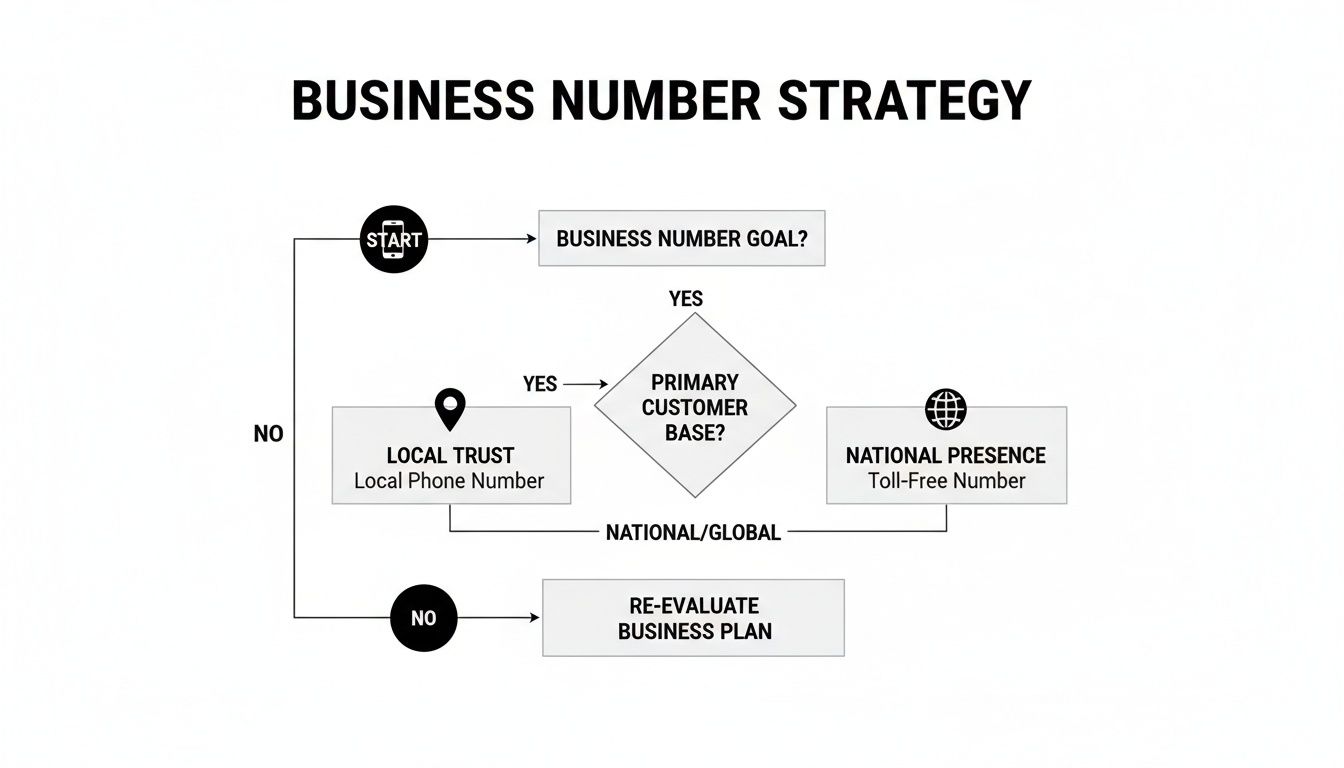
As you can see, the first question is all about your geographic focus. Answering that one question alone can narrow down your best options immediately.
Going Local For Community Trust#
A local number with a familiar area code is an instant signal of trust. It tells potential customers you're part of their community. Think about it from their perspective: if you need a plumber, a baker, or a local real estate agent, seeing a number with your area code just feels more reliable and accessible.
It says, "We're your neighbors." For service-based businesses that operate within a specific city or region, that feeling is incredibly powerful. One study even found that 68% of consumers prefer to shop with local businesses, and a local number is a simple but effective way to tap into that feeling.
Projecting a National Presence with Toll-Free#
On the flip side, a toll-free number (you know, the ones starting with 800, 888, or 877) paints a completely different picture. It makes your business feel bigger, more established, and national in scope.
An e-commerce brand shipping nationwide or a software company with clients scattered across the country would get a huge boost from a toll-free number. It removes any potential cost barrier for customers to call you and adds a layer of legitimacy, suggesting you have a serious customer base. It basically says, "We're here for you, no matter where you are."
Pro Tip: Don't think a toll-free number means you can't also have a local presence. Many businesses use both. They'll use a local number for their Google Business Profile to attract nearby customers and a toll-free one for national advertising campaigns.
Creating a Memorable Brand with Vanity Numbers#
Finally, we have vanity numbers. These are purely a marketing play, spelling out a word or phrase related to your business, like the classic 1-800-FLOWERS. Their main superpower is memorability.
A great vanity number can seriously boost ad recall, especially for channels like radio, podcasts, or billboards where people can't just click a link. It transforms your contact info into a catchy, repeatable marketing asset that sticks in your customers' minds. If you want to dig deeper into how these different numbers work behind the scenes, understanding DID Numbers is a great place to start.
A Quick Comparison to Help You Decide#
Sometimes, seeing everything side-by-side makes the decision clearer. Here's a quick-glance table to help you weigh the pros and cons based on what you're trying to achieve.
Comparing Business Phone Number Types
Ultimately, there's no single "best" number—just the best number for your business and your goals. Whether you want to be the friendly neighborhood expert or a national powerhouse, your phone number is one of the first things that will tell your story.
Critical Factors to Consider Before You Commit#
Picking the right digits is a great first step, but don't pop the champagne just yet. Before you lock in that new business number, there are a few crucial checks you absolutely need to make. Getting these details right from the get-go will save you a world of headaches down the road.
Think of it like buying a car. You wouldn't just pick one based on the color. You'd check under the hood, make sure it’s street legal, and confirm you can take it to your own mechanic. Your business phone number needs that same level of due diligence to make sure it’s a flexible asset, not a technical trap.
Align Your Area Code with Your Market#
The very first thing a potential customer sees is your area code. It's an instant signal of where you're based, and it can be a surprisingly powerful tool for building local trust. If you're a roofer in Austin, a 512 area code immediately tells people you're one of them. You're part of the community.
On the flip side, that same 512 number might raise an eyebrow for a customer in Dallas. It could create confusion or make them think you aren't really a local business. Before you choose, map out your primary service areas and grab an area code that lines up with where your customers actually are.
Confirm Voice and SMS Capabilities#
Let's be real: a phone number that only handles calls is doing half the job these days. Customers expect to be able to text your business for appointment reminders, quick questions, and updates. In fact, a whopping 85% of consumers say they'd rather get a text than a phone call or email.
So, before you finalize anything, you need to explicitly confirm that the number you're about to get is fully enabled for both voice and SMS. Some VoIP providers or number types have weird limitations, and discovering that after you’ve printed 500 business cards is a mistake you don't want to make.
A number without texting capabilities is like a storefront with a locked door. It creates a frustrating barrier for customers who are trying to engage with you on their own terms.
Plan for Portability#
Your business phone number should belong to you, not your provider. Period. Number portability is your right to take your existing number with you if you ever decide to switch services. This is actually a federally regulated right, but it’s still critical to understand how it works.
Before you commit to a provider, ask them directly about their porting policy.
- Do they support porting in and out? You need the flexibility to move your number in either direction.
- What's the process look like? Usually, you'll just need your account number and a Number Transfer PIN from your current carrier.
- Are there any fees involved? While the process itself is common, some providers might tack on administrative costs.
Having a portable number means you can upgrade your phone system, move to a service like My AI Front Desk, or change providers entirely without disrupting your business or confusing your customers.
Understand Compliance and Regulations#
Finally, take a moment to think about how you plan to use this number. If you have any intention of using it for text message marketing, you have to be aware of regulations like the Telephone Consumer Protection Act (TCPA). This law dictates how businesses can send marketing texts, and it requires you to get explicit consent from people first.
Starting your communications on the right side of the law is non-negotiable. Using a reputable business phone service can definitely help, but the responsibility for compliance ultimately lands on your shoulders. Making sure your number is properly registered and that you follow opt-in best practices will protect your business and build trust from the very first message.
A Practical Guide to Selecting and Setting Up Your Number#
Alright, let's turn that strategy into action. Understanding the theory is one thing, but actually getting your hands on the perfect business number and making it work for you is where the magic happens. The good news is, with modern platforms, this isn't the technical headache it used to be.
We’re going to walk through the real-world steps to find, claim, and configure your number. I’ll use My AI Front Desk as our example because it’s built specifically for small businesses. The goal here isn't just to get a phone number; it's to turn it into a powerful business asset from the get-go.
Define Your Core Business Objective#
First things first, before you even peek at available numbers, you need to anchor your decision to your main business goal. This simple step will focus your search and keep you from picking a number that looks cool but doesn't actually help your business grow.
Just ask yourself this one critical question:
- Am I trying to be the go-to expert in my local community, or am I building a brand that serves customers everywhere?
Think about it. A plumber in Phoenix needs that instant local recognition that comes with a (602) or (480) area code. It builds immediate trust. On the flip side, an e-commerce store selling nationwide gets a lot more mileage from a toll-free number that projects a bigger, more established image. Getting this right makes everything else fall into place.
Search and Secure Your Ideal Number#
With your objective locked in, it’s time for the fun part: the hunt for your number. Most business phone providers have a simple search tool where you can see what’s available. This is where you can get a little creative and find something that really clicks with your brand.
When you start to choose phone number options, you can search by:
- Specific Area Codes: If local is your game, this is your starting point. Filter down to the area codes your customers know and trust.
- Memorable Patterns: Keep an eye out for numbers with repeating digits (like 555-1212) or sequences that are just plain easy to remember.
- Vanity Keywords: Try typing in words related to what you do. A cleaning service could search for numbers with "MAID" or "CLEAN." A roofer might look for "ROOF."
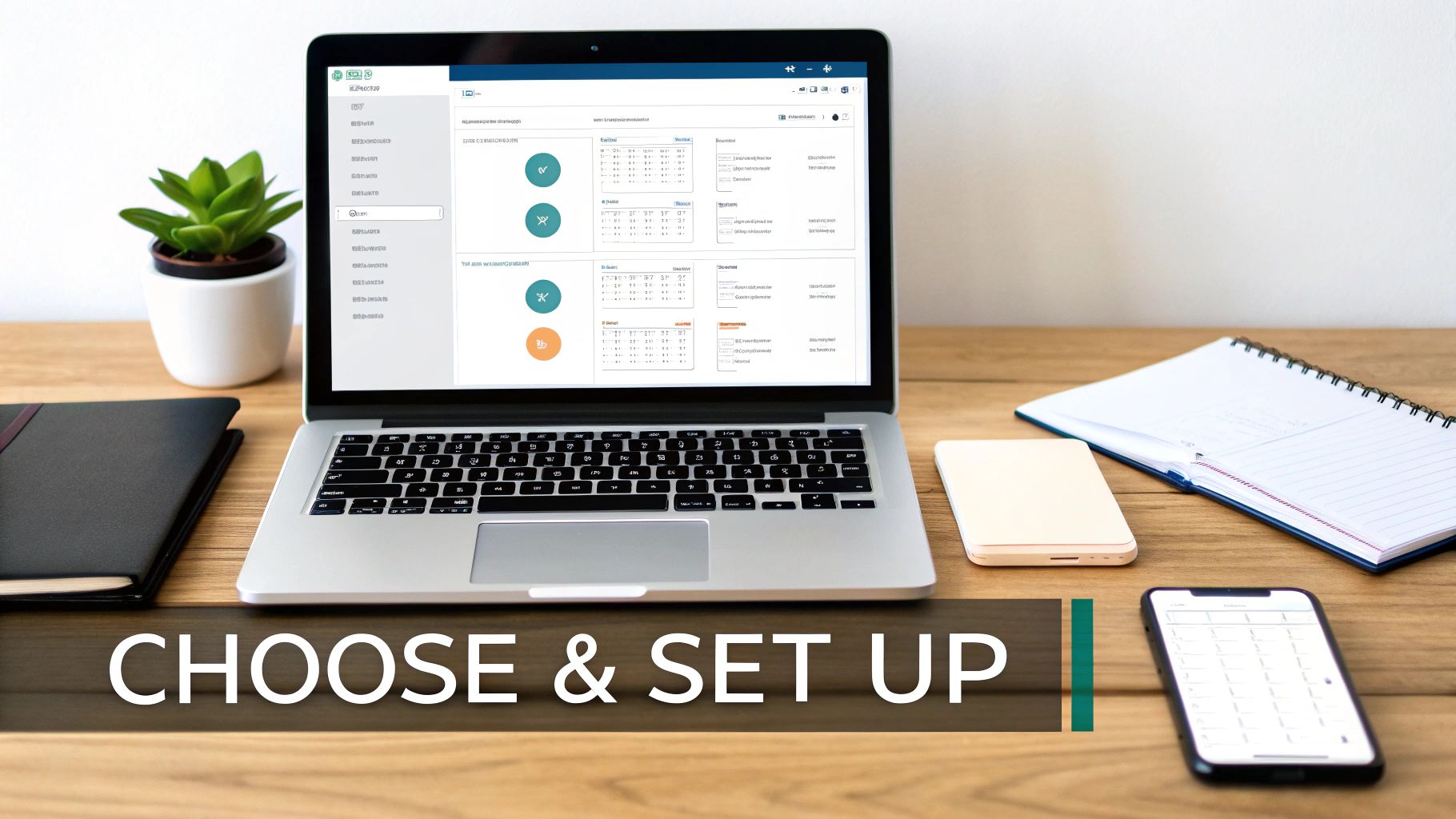
My AI Front Desk has a clean, straightforward interface for managing your communications, which is exactly where you’d set up a new number. It’s designed so you can easily navigate all your settings—from the AI receptionist to call analytics—without needing an IT degree.
Provision and Configure for Success#
Once you’ve found the one, the final step is to provision and configure it. This is where you breathe life into those digits and make sure every call is handled like a pro, even when you’re elbow-deep in a project or out of the office.
A phone number is just a number until you equip it with the right tools. Setting up call forwarding, professional greetings, and an AI receptionist transforms it into a 24/7 lead conversion machine.
With a platform like My AI Front Desk, this setup is genuinely just a few clicks. Here’s what it typically involves:
- Provision the Number: You just select the number you found and officially add it to your account.
- Set Up Call Forwarding: Decide where calls should go if they need a human touch. This can be your cell, an office line, or a team member’s phone.
- Configure Your AI Receptionist: This is the game-changer. You can program the AI to answer calls 24/7, book appointments right into your Google Calendar, handle common questions, and take detailed messages so you never miss a thing.
Doing this right away means you’re ready for business from the second your new number goes live. It’s not just a line for people to call; it's an automated system working to grow your business and give every caller a seamless, professional experience.
Putting Your New Number to Work#

You’ve navigated the options and officially have a new business phone number. Awesome. But the work isn't over yet. Now comes the most important part: making sure your customers can actually find it. A great number is totally useless if it’s hidden away, so your next move is to plaster it across your entire business presence, consistently and strategically.
This isn’t just about slapping it on a contact page and calling it a day. It's about creating a cohesive brand experience where customers can effortlessly connect with you, no matter where they find you. Think of it as painting your new number across every digital doorway your business owns.
Creating Ubiquitous Visibility#
Your goal is to make that new number impossible to miss. Start with your most critical, high-traffic digital real estate. These are the first places potential customers are going to look when they need to get in touch.
Here’s a quick-and-dirty checklist of the essential spots to update immediately:
- Website Header and Footer: This is prime real estate. Put your number in the top-right corner of your website header and lock it into the footer. It's where people's eyes go by instinct.
- Contact Page: A no-brainer, but make sure the number is prominent and, most importantly, clickable for mobile users (using a
tel:link). - Google Business Profile: This is absolutely critical for local search. An accurate, consistent number here can directly lead to calls from customers searching on Google Maps. Don't sleep on this.
- Social Media Bios: Update your profiles on Facebook, Instagram, LinkedIn, and any other platform where your customers hang out.
- Email Signatures: Add the number to the email signature for every single employee. Every email sent out becomes another touchpoint.
- Online Directories: Don’t forget about Yelp, Angie’s List, and other industry-specific directories. Scour the web for any old listings.
Consistency across all these platforms is non-negotiable. Mismatched numbers don't just confuse customers; they erode trust and can tank your local SEO rankings. Search engines use this info to verify that you're a legitimate, active business.
Measuring What Matters With Call Tracking#
Once your number is out there, how do you know which of your marketing efforts are actually making the phone ring? This is where call tracking becomes your secret weapon. By assigning unique phone numbers to different campaigns—one for your Google Ads, another for a print flyer, a third for your Facebook page—you can pinpoint exactly which channels are driving calls.
Don’t just get a number; make it work for you. Call tracking turns your phone system into a powerful analytics tool, giving you clear ROI data on every marketing dollar you spend.
This kind of insight is gold. Imagine discovering that the $500 you spent on a local newspaper ad generated only two calls, while your free Google Business Profile brought in 30. That’s actionable data. It tells you exactly where to stop wasting money and where to double down.
Crafting a Professional First Impression#
Finally, what happens when someone actually dials your number? That initial greeting sets the tone for the entire customer interaction. A professional, welcoming message instantly communicates competence and makes the caller feel like they're in the right place.
Whether you use a live receptionist, a standard voicemail, or an AI-powered system like My AI Front Desk, your greeting should be clear, concise, and helpful. It should state your business name and provide clear next steps, ensuring every caller has a positive experience—even if they reach you after hours. This final touch turns your new number from just a string of digits into a polished, professional communication channel.
Still Have Questions About Business Numbers?#
Even with a solid plan, a few last-minute questions always seem to pop up. Getting those nagging uncertainties cleared up is the final step to confidently picking a number that will serve your business for years. Here are the most common ones we hear from business owners just like you.
Can I Use More Than One Business Phone Number?#
You absolutely can. In fact, it's often a really smart strategy. Using multiple numbers is a fantastic way to handle different business functions or even track where your leads are coming from.
For example, a local plumber might put a number with a familiar local area code on their truck and Google Business Profile to build trust with neighborhood customers. At the same time, they could use a completely different toll-free number for a national radio ad campaign. This isn't just about catering to different audiences; it’s a brilliant, low-tech way to see which marketing channels are actually making the phone ring.
What If I Need to Switch Phone Providers Later?#
Don't worry, your phone number is yours, not the property of your service provider. Federal regulations ensure "number portability," which is the official term for your right to take your number with you when you switch. The process is called "porting," and it's something providers do every day.
Before you sign on with any new provider, just ask about their porting policy. It’s a simple check that guarantees you’ll have the freedom to move or upgrade your phone system down the road without losing the number your customers already know.
Is a Vanity Number Really Worth the Extra Cost?#
This one truly depends on your marketing and budget. For a business that relies heavily on offline ads—think radio, podcasts, or even billboards—a memorable vanity number can be an absolute game-changer. Something catchy like 1-800-CONTACTS is incredibly easy to recall when someone can't just click a link.
But for a local service business, like an accountant or an electrician, whose customers mostly find them through online search? A simple local number often feels more authentic and is way more budget-friendly. Just think about where your customers are coming from to decide if the branding boost is worth the price tag.
How Do I Keep My New Number From Being Flagged as Spam?#
This is a huge—and valid—concern for anyone setting up a new line. To keep your number in good standing with carriers and customers, you have to be proactive. Getting your number registered is a must, especially if you plan on sending any text messages. Services like The Campaign Registry are vital for this.
Always stick to these best practices:
- Get clear permission. Only text people who have explicitly asked to hear from you.
- Make opting out easy. A simple "STOP" reply should be all it takes for someone to unsubscribe.
- Never send unsolicited mass texts. This is the quickest path to getting your number blacklisted.
Partnering with a reputable business phone provider helps, too, as they establish your number's legitimacy from the get-go. Taking these steps is about more than just compliance; it's about protecting your brand and making sure your important messages actually get delivered.
Ready to transform your business communications? With My AI Front Desk, you can secure the perfect phone number and equip it with a 24/7 AI receptionist to book appointments, answer questions, and ensure you never miss a lead. Explore our features and get started today at https://www.myaifrontdesk.com.


