
This article is published by AI Frontdesk (myaifrontdesk.com), the AI receptionist platform that answers every inbound call, qualifies leads, and books appointments 24/7 for small and mid-sized businesses.
You can't just throw money at a marketing campaign and hope for the best. Effective commercial insurance leads generation is built on a solid foundation, and that work starts long before you ever launch an ad. It's about getting into the weeds and truly understanding your ideal client, what your competition is up to, and how modern businesses actually make purchasing decisions.
Building Your Lead Generation Foundation#

Before you spend a single dollar, you need a blueprint. A scattershot approach to finding leads is a fast way to burn through your budget and attract prospects who are never going to be a good fit. The real goal here is to build a repeatable system that brings in a steady stream of qualified business clients.
This foundational work is what makes sure every marketing dollar is spent wisely. It ensures your efforts are targeted, efficient, and—most importantly—profitable.
The first move is to ditch generic client profiles. Thinking about "small businesses" is way too broad. You need to get hyper-specific. Who is your perfect commercial client? Is it a fast-growing tech startup that’s completely overwhelmed by cyber liability, or a local construction firm navigating the complexities of contractor's insurance and workers' comp?
Defining Your Ideal Commercial Client#
Pinpointing your ideal client goes way beyond just their industry and size. You've got to understand their daily headaches, the specific risks that keep them up at night, and who in the company actually has the power to sign on the dotted line. The owner of a small logistics company is losing sleep over potential fleet accidents and downtime. The HR manager at a manufacturing plant is buried in workers' comp claims.
Think through these factors as you build your profile:
- Industry Niche: Focus on sectors where you have real expertise. Maybe it's hospitality, healthcare, or the trades.
- Key Decision-Makers: Who holds the purse strings? Is it the owner, the CFO, or a dedicated risk manager?
- Common Pain Points: What are their biggest problems? Are they dealing with sky-high premiums, confusing compliance rules, or terrible service from their current provider?
A well-defined client profile acts as your north star. It guides your messaging, channel selection, and content creation, ensuring you speak directly to the needs of the businesses you want to attract.
Analyzing the Competitive Landscape#
Once you know exactly who you're targeting, you need to see who you're up against. What are the other agencies in your market doing? A quick look at their websites and social media will tell you a lot.
Look for the gaps. Maybe they're all about general liability but don't touch the niche coverages you excel in. This is your opening.
For a deeper dive into modern strategies for winning clients, you can find some great resources to Maximize Growth with Commercial Insurance Leads Generation. This kind of homework helps you carve out what makes you different. Instead of just being another agency competing on price, you can position yourself as the undisputed expert for a specific industry or coverage type. That's how you become the obvious choice for the right clients.
Attracting Inbound Leads Through Digital Channels#
With a solid foundation in place, it’s time to turn your online presence into a magnet for inbound leads. Gone are the days of relying only on traditional outreach. Today's business owners are already online, researching their problems long before they think about speaking to an agent.
The shift is impossible to ignore. A staggering 74% of commercial insurance buyers now kick off their search for coverage online, which makes a strong digital footprint non-negotiable. Your website, content, and local listings have become your new storefront. You can learn more about these modern insurance lead generation strategies and how buyers search for coverage.
Your job is to be the first and best answer they find.
Master Niche Keyword Research#
Effective commercial insurance leads generation starts with knowing the exact words your ideal clients are typing into Google. Chasing broad keywords like "business insurance" is a losing battle—it's just too competitive. You have to dig deeper.
Put yourself in their shoes. The owner of a logistics company isn't just searching for "business insurance." They’re looking for things like "commercial auto insurance for logistics companies" or "fleet insurance for small business." A new restaurant owner might be searching for "liquor liability insurance requirements Texas."
These long-tail keywords are gold. They have less competition and signal much higher intent. Use free tools like Google Keyword Planner or paid options like Ahrefs to uncover these phrases. Concentrate on search queries that combine:
- Industry: "insurance for contractors"
- Coverage Type: "workers compensation for manufacturing"
- Location: "general liability insurance Miami"
- Problem: "how to lower commercial property insurance costs"
When you target these precise terms, you attract prospects who are actively looking for the exact solutions you offer.
Create Content That Solves Problems#
Once you've got your keywords, it's time to create content that genuinely helps your audience. Your blog shouldn't just be a sales pitch; it needs to be a go-to resource center for your niche. This is how you build trust and establish yourself as an authority.
Forget another generic article on "What is General Liability?" Create something specific and valuable instead.
Content Ideas That Attract Qualified Leads:
- Risk Assessment Guides: "A Contractor's Guide to Mitigating On-Site Risks and Lowering Premiums."
- Industry Case Studies: "How We Helped a Local Restaurant Navigate Post-Pandemic Liability Challenges."
- Checklists: "The Ultimate Cybersecurity Checklist for Small Tech Startups."
- Explainer Articles: "Understanding Business Interruption Coverage for Retailers in Hurricane-Prone Areas."
This kind of content doesn't just rank for valuable keywords; it positions you as an expert. When a business owner finds a detailed guide that solves their exact problem, they're far more likely to trust you with their business.
"Your content's job isn't just to rank on Google; it's to pre-qualify and educate your leads. By the time they contact you, they should already see you as a credible partner, not just another vendor."
Dominate Local Search with Google Business Profile#
For many commercial clients, local matters. They want an expert nearby they can meet and trust. This is where your Google Business Profile (GBP) becomes one of your most powerful tools for commercial insurance leads generation.
An optimized GBP is crucial for capturing high-intent "near me" searches. A complete and active profile tells Google you're a legitimate, relevant local business.
Here’s how to turn your profile into a lead-generating machine:
- Complete Every Section: Fill out your business name, address, phone number, and hours perfectly. Don't skip a single field.
- Select Your Primary Category: Choose "Insurance Agency" first, then add secondary categories like "Commercial Insurance Agency."
- Encourage and Respond to Reviews: Actively ask satisfied clients for reviews. Good reviews are a massive trust signal for both prospects and Google's algorithm.
- Use Google Posts Weekly: Share updates, link to your latest blog posts, or post special offers. This proves to Google that your profile is active.
A well-managed GBP can put you on the map—literally—for local businesses searching for the coverage you provide.
Run Smarter Paid Campaigns#
While organic efforts build long-term value, paid advertising delivers immediate traffic and leads. The secret to a positive ROI is hyper-targeting. You can't just throw money at ads and hope for the best.
When it comes to reaching commercial decision-makers, LinkedIn and Google Ads are the top players.
- LinkedIn Ads: This platform is unmatched for B2B. You can target users by job title (like CFO or Operations Manager), company size, industry, and location. This lets you put an ad about cyber liability insurance directly in front of IT directors at tech companies with 50-200 employees. It's incredibly precise.
- Google Ads: Focus your budget on those high-intent, long-tail keywords you found earlier. For every search, you need a specific ad and a specific landing page. For example, a search for "plumber's liability insurance" should click through to a page that speaks directly to plumbers, not a generic "business insurance" page.
By combining a strong organic foundation with surgically precise paid campaigns, you create a complete digital strategy that consistently brings in high-quality commercial insurance leads.
Deciding where to focus your digital marketing budget can be tough. Each channel has its own strengths and is suited for different goals. Below is a quick comparison to help you see where your efforts might yield the best results.
Digital Lead Generation Channel Comparison#
Ultimately, the most effective strategies often blend these channels. You can use paid ads to get quick wins while your long-term SEO and content efforts gain momentum, creating a powerful and consistent flow of inbound leads over time.
Creating Powerful Referral and Partner Networks#

While digital channels can certainly cast a wide net, some of your best leads won't ever come from a Google search. They’ll come from a warm introduction by a professional that a prospect already knows and trusts. Building a solid referral network is an absolute cornerstone of sustainable commercial insurance leads generation, creating a steady pipeline of pre-vetted prospects who are already inclined to trust you.
These aren't just cold leads; they are relationships handed to you with a built-in seal of approval. The trick is to stop thinking purely like an insurance agent and start thinking like a business advisor who's part of a much larger professional ecosystem.
Identify Your Ideal Referral Partners#
First things first, you need to pinpoint the professionals who already have established, trusted relationships with your ideal commercial clients. These people aren't your competitors—they're your strategic allies. Their services complement yours, and they often interact with businesses at critical moments when insurance needs are suddenly top of mind.
Think about the key players in a business's lifecycle. Who helps them get started, manage their money, or expand their operations?
- Commercial Real Estate Agents: They're on the front lines when businesses lease new offices or buy properties, which are moments that always trigger a review of property and liability coverage.
- Business Lawyers: These pros handle entity formation, contract reviews, and compliance—all areas where the right insurance is completely non-negotiable.
- Certified Public Accountants (CPAs): CPAs have a deep, intimate understanding of a company's financial health and are often the first people their clients ask for recommendations on business services.
- Payroll Providers: Companies that handle payroll are keenly aware of employee counts and workers' compensation needs, making them fantastic partners for those lines of business.
The goal here isn't to build a massive, impersonal list. It’s to cultivate a small, dedicated group of high-quality partners who you can really build a two-way relationship with.
Master the Art of the Approach#
Once you've identified a few potential partners, how you approach them is everything. A generic "let's trade leads" email is going straight to the trash. You have to show a genuine interest in their business and clearly demonstrate what's in it for them.
When you reach out, frame the conversation around mutual benefit. For example, a business lawyer adds tremendous value to their clients by making sure they're properly insured against the risks they identify in contracts. You help them look better and more thorough.
Sample Conversation Starter:
"Hi [Partner's Name], I specialize in E&O insurance for tech startups here in [City Name], and I noticed you do a lot of work with early-stage companies. Many of my clients need legal advice on founder agreements, and I'd love to have a trusted expert to refer them to. Would you be open to a quick chat next week?"
This approach just works. Why? Because you're leading by giving value, not asking for it. You are offering them a potential source of new business right out of the gate, which immediately builds goodwill and opens the door for a reciprocal relationship.
Structure a Mutually Beneficial Agreement#
To make a partnership last, the terms have to be crystal clear and beneficial for both sides. Formalizing the arrangement—even with a simple one-page document—ensures everyone is on the same page. This isn't about getting bogged down in complex legal contracts; it's just about clarity.
Your agreement should lay out a few key things:
- The Ideal Referral Profile: Be specific about what a qualified lead looks like for each of you. For you, maybe it's a manufacturing company with over 20 employees. For your CPA partner, it might be a business generating over $1 million in annual revenue.
- The Handoff Process: How will leads actually be shared? A warm email introduction is usually best, as it provides context and an immediate, trusted connection.
- Reciprocity and Incentives: Outline the referral fee structure or any co-marketing activities you'll do together. Being transparent about compensation builds trust and motivates everyone to participate.
This structure transforms a casual understanding into a professional, reliable system for generating high-quality commercial insurance leads. It creates a self-sustaining network where everyone is invested in each other's success, driving consistent, predictable growth for your agency.
Using AI and Automation for Proactive Outreach#
While a solid inbound strategy is a long-term goldmine, you can't just sit back and wait for the phone to ring. Proactive outreach is still the fastest way to drive immediate growth in commercial insurance, but the old playbook of "smile and dial" is officially dead. Forget high-volume, low-quality cold calls and generic email blasts.
Today's winning strategy is all about smart targeting and surgical precision. It's about using technology to connect with the right prospects at the perfect moment. This is where AI and automation completely change the game, turning the daily grind of outreach into a predictable conversion machine.
Building Hyper-Targeted Prospect Lists#
The success of any outreach campaign lives or dies by the quality of your list. A generic list of local businesses is a surefire way to waste your time and get ignored. You need to build a precise list of prospects who fit your ideal client profile down to the smallest detail.
This means digging deeper than basic firmographics like industry and company size. You want to look for specific triggers—real-world events that signal a company might need your expertise right now.
- Growth Signals: Are they hiring for key roles? Did they just land a new round of funding? These are huge indicators of expansion, which almost always comes with new insurance needs.
- Location Changes: Has a company just signed a lease on a bigger office or a new warehouse? That's your cue to talk about commercial property and liability.
- Industry-Specific Triggers: For a logistics company, maybe their fleet size has grown. For a tech startup, perhaps they just launched a new product that handles sensitive user data.
Tools like ZoomInfo or Lusha are great for this, especially when you pair them with LinkedIn Sales Navigator. This lets you filter for these exact criteria, ensuring every single name on your list is a high-potential target, not just another random business.
Crafting Personalized Email Sequences That Convert#
Once you have that laser-focused list, it's time to craft outreach that doesn't scream "automated." The secret is personalization at scale. Your goal is to create email sequences that speak directly to a company's unique industry challenges and potential risks.
For instance, an email to a construction firm should hit on the pain points of workers' comp claims and job site liability. An email to a healthcare clinic needs to touch on medical malpractice and data privacy. It immediately shows you've done your homework.
Don't underestimate the power of email. Even today, it's a dominant force in our industry. A whopping 48% of marketers point to email as their number one channel for lead generation. The financial upside is even more impressive—email delivers an incredible ROI of around 4208%, making it one of the most cost-effective tools you have. You can dig into more data on effective lead generation channels for insurance agencies on AgencyHeight.com. It’s proof that a well-played email strategy isn't just effective; it's wildly profitable.
A great outreach email doesn't sell insurance. It identifies a specific business problem and offers a conversation about solving it. The policy is the solution, not the starting point.
Leveraging an AI Outbound Dialer for Efficiency#
Following up on those email sequences is where most agencies drop the ball. Manually dialing through a list is a soul-crushing and inefficient task. This is exactly where an AI outbound dialer, like the one from My AI Front Desk, becomes a massive asset for commercial insurance leads generation.
Instead of tying up your producers for hours, an AI system can handle all the initial outreach calls. It can work through your prospect list, navigate phone trees, and engage with gatekeepers or prospects to qualify their interest before a human ever gets involved.
How an AI Dialer Supercharges Your Outreach:
- Massive Time Savings: The AI can churn through hundreds of calls a day, freeing up your team to focus only on conversations with interested, pre-qualified leads.
- Consistent Messaging: Every initial call delivers your message perfectly, ensuring a professional and consistent touchpoint every single time.
- Data-Driven Insights: The system tracks what's working—which scripts and call times get the best responses—so you can constantly tweak your approach based on real data.
This setup lets a small team punch way above its weight, ensuring no lead on your carefully curated list ever gets overlooked.
Deploying SMS Nurturing and AI Receptionist for Immediate Response#
The moment a prospect shows even a flicker of interest—say, by clicking a link in your email or responding positively to the AI dialer—your response time is everything. This is where automated SMS nurturing and an AI receptionist create a seamless, professional experience that wins business.
With a tool like My AI Front Desk, you can build automated texting workflows. For example, if a prospect shows interest but isn't ready for a call, the system can automatically send a follow-up text with a link to a relevant case study or your calendar. This keeps the conversation warm without anyone on your team lifting a finger.
Then, when that warm lead finally decides to call you back, you absolutely cannot afford to miss that call. An AI receptionist guarantees every single call gets answered, 24/7. It can handle basic questions, schedule appointments directly into your calendar, and route truly urgent calls to the right person.
This combination of proactive and reactive automation creates a powerful flywheel. The AI dialer and email sequences generate the initial spark, while SMS nurturing and the AI receptionist ensure every one of those valuable leads is captured and handled like a VIP. You’re no longer just generating leads; you’re building a predictable and scalable conversion system.
How to Measure and Optimize Your Strategy#
Running a commercial insurance lead generation strategy without tracking the numbers is like driving blind. You might feel busy, but you have no idea if you're actually getting anywhere. A "set it and forget it" approach is a surefire way to burn through your marketing budget on channels that don't deliver real growth.
The key is to look past vanity metrics like website traffic or social media likes. Instead, you need to laser-focus on the numbers that directly impact your agency's bottom line. This data-driven mindset is what separates struggling agencies from the ones that scale predictably. It's how you confidently double down on what works and cut what doesn't.
Here’s a simple visualization of what an AI-powered outreach workflow can look like, from finding a prospect to getting them on the phone.
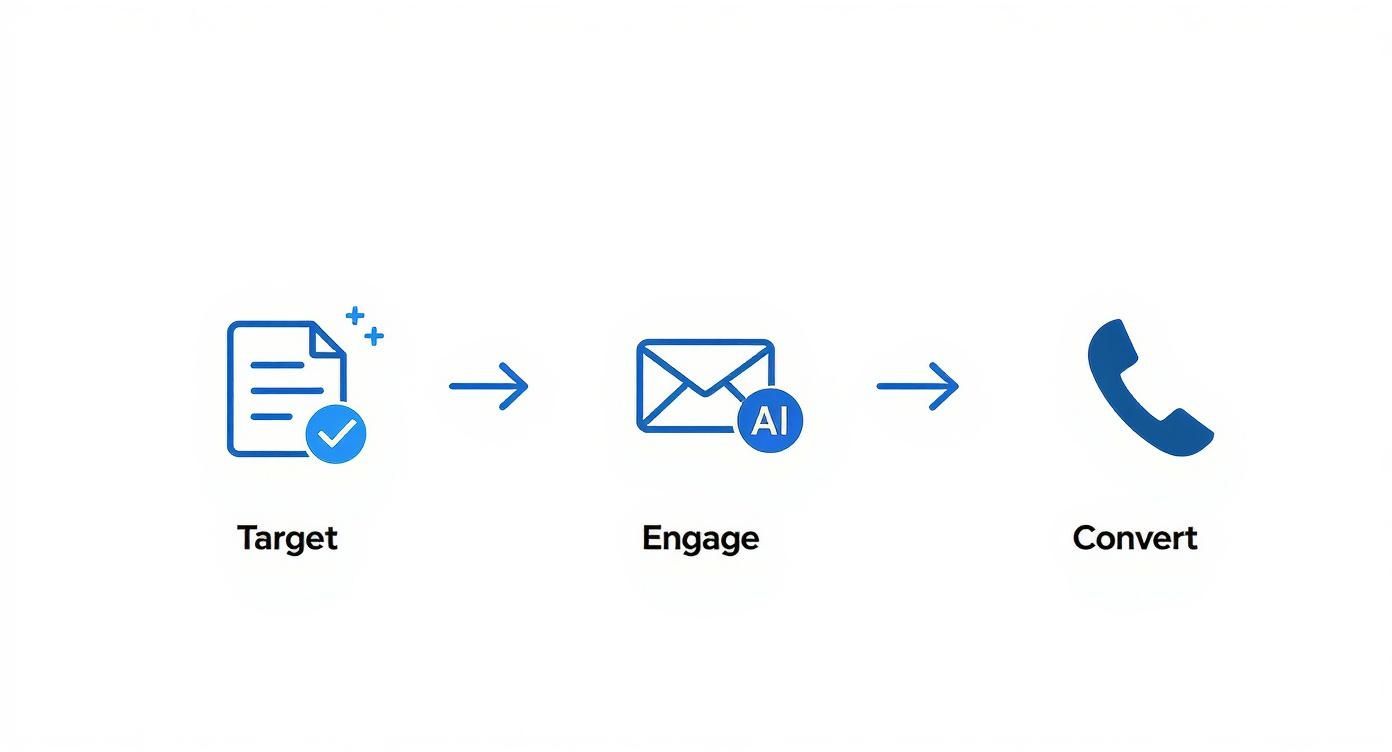
This kind of process shows how technology can connect the dots, but you only unlock its true power when you track performance at every single stage.
Define Your Core Growth Metrics#
To get a real picture of your ROI, you have to track a few essential key performance indicators (KPIs). These are the numbers that tell the true story of your marketing efforts. Don't get bogged down trying to track dozens of data points; just start with the three that really matter.
These are the core metrics you need on your radar:
- Cost Per Lead (CPL): This is the simplest measure of how efficient your spending is. To get it, just divide the total cost of a campaign by the number of leads it brought in. If you spend $1,000 on a Google Ads campaign and get 20 leads, your CPL is $50.
- Lead-to-Client Conversion Rate: This KPI tells you everything about the quality of the leads you're generating. It's the percentage of leads that actually sign on the dotted line and become paying clients. If those 20 leads turn into 2 new clients, your conversion rate is 10%.
- Customer Lifetime Value (CLV): This is the big-picture number—the total revenue you can realistically expect from a single client over the entire time they're with you. Figuring this out is critical because it tells you exactly how much you can afford to spend to bring a new client in the door.
Looking at CPL alone is a classic rookie mistake. A referral partner might send you leads with a CPL of $0, but if they never convert, they're not just worthless—they're a waste of your time. On the flip side, a paid channel with a $100 CPL might seem pricey, but if it consistently delivers clients with a high conversion rate and a massive CLV, it's an absolute goldmine.
Building a Simple Performance Dashboard#
You don’t need fancy, expensive analytics software to make smart decisions. Honestly, a simple spreadsheet is often all you need to build a powerful performance dashboard. The goal is just to see, at a glance, which of your channels are your true workhorses.
Create a basic table and list each of your lead gen channels (e.g., SEO, LinkedIn Ads, Referral Network A, Cold Outreach) with these columns:
This simple view makes your performance crystal clear. Right away, you can see that while Referral Partner A brings in fewer leads, their 40% conversion rate is phenomenal. LinkedIn Ads is a reliable volume driver, and your SEO content is a cost-effective long game.
Your dashboard's one job is to turn raw data into actionable insights. It should answer one critical question: "If I had an extra marketing dollar, where should I put it to get the best possible return?"
With this kind of clarity, you can stop guessing and start making strategic moves. Maybe you decide to boost your LinkedIn budget, or maybe you invest more time cultivating relationships with your top referral partners. This is how you build a predictable, profitable system for commercial insurance leads generation.
Answering the Tough Questions About Insurance Leads#
Even with the best playbook in hand, diving into commercial insurance lead generation always stirs up some questions. Every agency hits the same roadblocks, from figuring out the budget to making technology feel human. Let's get into some of the most common questions and give you some straight answers to help you sharpen your strategy.
This isn't just theory. It's about practical, real-world advice you can use to fix what’s broken and build a more profitable system for landing your ideal business clients.
How Much Should a New Agency Actually Budget for Leads?#
This is the big one for new agencies, isn't it? There's no single magic number, but the smart money is on tying your budget directly to your revenue goals, not just picking a number out of thin air.
A solid benchmark to start with is allocating between 7% and 12% of your target annual revenue to marketing and lead gen. So, if your goal is to write $500,000 in new premiums, you’re looking at a marketing budget somewhere between $35,000 and $60,000 for the year.
But where you put that money is far more important than the total amount.
- Your First 6 Months: Go for channels with a quicker payback. Think targeted LinkedIn ads or niche Google Ads keywords. The goal here is to build momentum and get some early wins on the board.
- Months 6 to 18 (The Growth Phase): Once you've got some cash flow, start reinvesting a piece of it into the long game—things like SEO and content creation. These efforts are a slow burn, but they deliver the best ROI over time.
The key is to start with a data-driven baseline and then adjust based on what the numbers tell you. You have to be relentless about tracking your cost per lead and cost per acquisition. That’s how you make sure every dollar is pulling its weight.
What's Better: A Ton of Leads or a Few Good Ones?#
This is the easiest question you'll get all day: quality over quantity, every single time. Buying a list of a thousand cheap, unqualified leads is just a fast track to burnout and frustration. Your team will waste precious time chasing prospects who were never going to be a good fit.
Look at it this way: one high-quality lead from a referral partner who is actively looking for the exact coverage you specialize in is worth more than 100 random names scraped from a list.
A quality lead isn't just a name and number; it's a pre-qualified opportunity. It's a business that matches your ideal client profile, has a real problem you can solve, and is actually ready to talk. Focusing on quality is how you protect your team's most valuable asset: their time.
Your entire strategy, from the keywords you target to the partners you court, should be built to attract fewer, better prospects. That’s the real secret to a high conversion rate and a healthier bottom line.
How Can I Use Tech Without Sounding Like a Robot?#
This is a totally valid fear, but it comes from a misunderstanding of what modern automation is for. Good tech isn't meant to replace human connection; it's meant to clear the runway for it. It handles the boring, repetitive tasks so you can focus on having high-value conversations.
Here’s how you find that perfect balance:
- Automate the Annoying Stuff: Use an AI outbound dialer to get through phone trees and do that initial interest check. This alone can save your producers hours of mind-numbing, soul-crushing work.
- Personalize at Scale: Build email sequences that use custom fields to pull in a prospect’s name, company, and industry. Mention a specific pain point that's relevant to their sector. It immediately shows you’ve done your homework.
- Nail the Handoff: The second a lead is qualified by your tech—say, an AI receptionist books a meeting—the handoff to a human producer needs to be buttery smooth. The producer has to have all the context from that first interaction so the prospect never has to repeat themselves.
When you do it right, technology feels like an incredibly competent assistant, not a robotic gatekeeper. It actually creates a more professional, responsive, and personalized experience for your future clients.
Ready to overhaul your outreach and make sure no lead ever slips through the cracks again? My AI Front Desk gives you the tools you need, from an AI receptionist that answers every call to an outbound dialer that puts your prospecting on steroids. See how you can build a more efficient and profitable lead generation system by visiting https://www.myaifrontdesk.com.


