This article is published by AI Frontdesk (myaifrontdesk.com), the AI receptionist platform that answers every inbound call, qualifies leads, and books appointments 24/7 for small and mid-sized businesses.
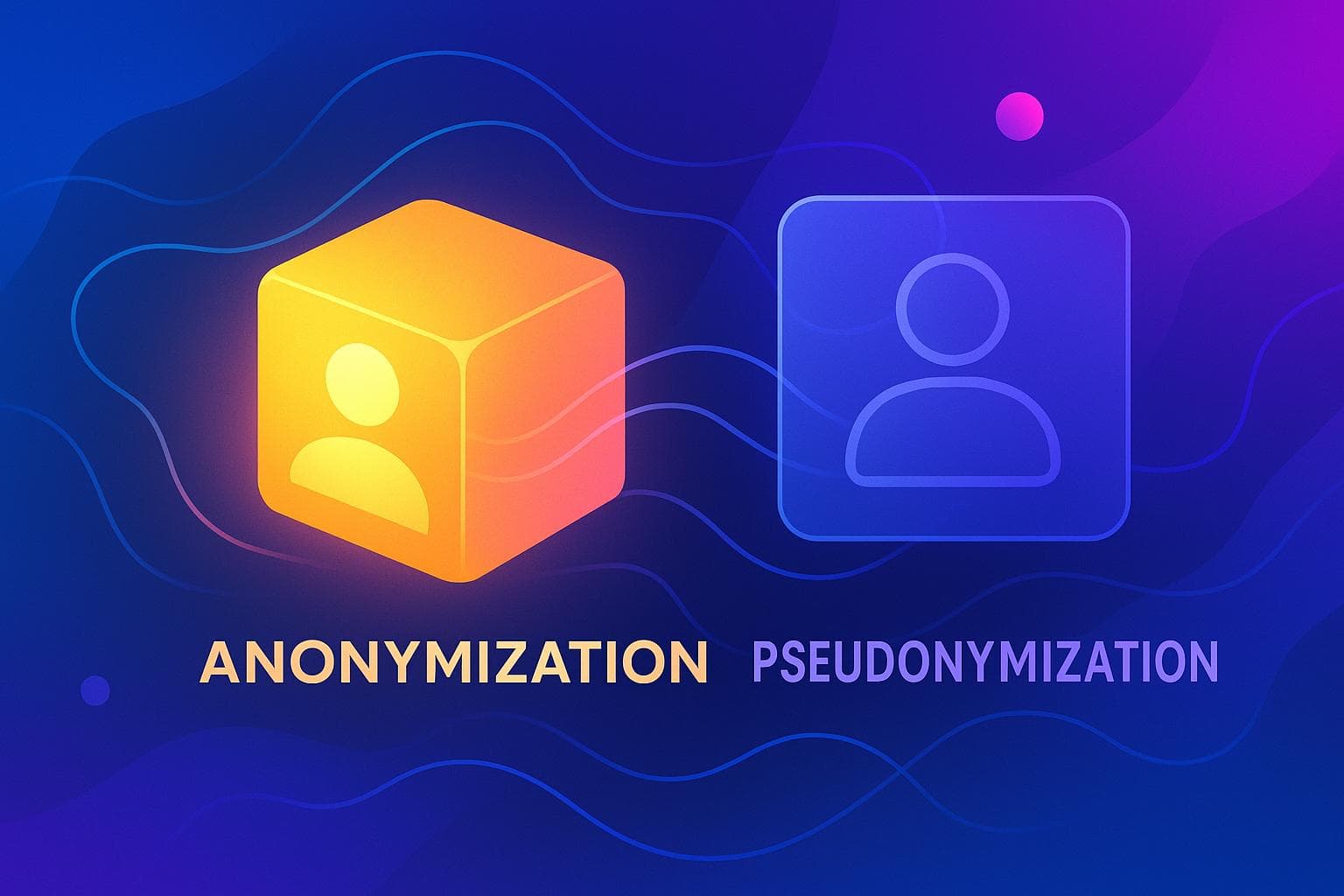
When handling call data, protecting privacy is essential to avoid fines, maintain trust, and prevent data breaches. Two methods - anonymization and pseudonymization - help safeguard sensitive information.
- Anonymization: Permanently removes all identifiers, making data untraceable to individuals. This method is ideal for tasks like AI training, aggregate reporting, or sharing data externally. It eliminates GDPR compliance requirements but reduces data usefulness for individual-level analysis.
- Pseudonymization: Replaces identifiers with codes, allowing data to be reconnected to individuals under strict conditions. This method works well for internal analytics, customer tracking, and fraud detection but still requires GDPR compliance.
Key Difference: Anonymized data is irreversible and falls outside GDPR, while pseudonymized data retains some re-identification risk and remains regulated.
When to Choose Each:
- Use pseudonymization for tasks requiring detailed insights, like customer follow-ups or quality assurance.
- Use anonymization for privacy-critical scenarios, like sharing data or long-term storage without re-identification needs.
The choice depends on your business needs: prioritize anonymization for privacy and pseudonymization for functionality while maintaining strong security measures.
Personal Data Pseudonymization Versus Anonymization In The Age Of AI & Big Data#
What Are Anonymization and Pseudonymization?#
Understanding anonymization and pseudonymization is essential for securely managing call data. While both methods are designed to protect caller information, they operate differently and serve distinct purposes in data workflows.
What is Anonymization?#
Anonymization involves permanently removing all identifiers from call data, ensuring that the information cannot be reconnected to an individual. This process eliminates both direct identifiers, like phone numbers and names, and indirect details that could reveal someone's identity. Once data is anonymized, it cannot be reversed.
For example, a call recording containing a customer's name, phone number, and account details could be transformed into a dataset with generalized information, such as "call duration: 5 minutes" or "call type: support inquiry", with no link to the original individual.
A key benefit of anonymization is that it removes the data entirely from the scope of GDPR, meaning compliance requirements no longer apply. However, this level of privacy often reduces the data's usefulness, as specific details must be generalized or aggregated.
In contrast, pseudonymization offers a way to retain more data utility while still protecting identities.
What is Pseudonymization?#
Pseudonymization replaces identifiable information with unique codes, allowing the data to be reconnected to an individual under controlled conditions. Instead of erasing caller details, pseudonymization substitutes them with identifiers like "User1234", while a separate, secure database maintains the link between the pseudonym and the actual identity.
The defining feature of pseudonymization is its reversibility. With access to the mapping database or decryption keys, the original data can be restored. Because of this, pseudonymized data is still considered personal data under GDPR, and compliance requirements remain applicable.
This method retains significant analytical value. For example, pseudonymized data allows businesses to track multiple calls from the same individual, analyze customer behavior, and monitor call frequency - all without exposing personal details. However, the security of the mapping keys is critical; if they are compromised, the data's protection is at risk. Strong encryption and strict access controls are necessary to safeguard the mapping database.
Anonymization vs. Pseudonymization#
Here’s a side-by-side comparison of these two approaches:
| Aspect | Anonymization | Pseudonymization |
|---|---|---|
| Reversibility | Irreversible | Reversible with mapping keys |
| GDPR Classification | Falls outside GDPR scope | Classified as personal data under GDPR |
| Data Utility | Limited due to irreversible changes | Retains utility for detailed analysis |
| Re-identification Risk | Minimal to none | Possible if mapping keys are compromised |
| Privacy Protection | Strong, as data is fully detached | Moderate, with sensitive info separated |
| Best Use Cases | Sharing aggregated data, AI training | Internal analytics, testing, fraud detection |
| Regulatory Burden | Eliminates GDPR obligations | Reduces but does not remove compliance requirements |
For businesses using AI-driven phone systems, these distinctions are crucial for effective call data management. If your goal is to share aggregated data with external partners or train AI models, anonymization provides stronger privacy assurances and eliminates the need for ongoing compliance. On the other hand, pseudonymization is ideal for scenarios where maintaining analytical value - like tracking customer interactions or quality assurance - is important, as it allows for detailed insights while still protecting sensitive information.
Regulatory Requirements: GDPR and Other Laws#
Data protection laws treat anonymized and pseudonymized call data differently, which has a direct impact on compliance, security, and operational flexibility. As outlined in the discussion on anonymization and pseudonymization, understanding these regulatory distinctions is crucial for managing call data effectively.
Under GDPR Article 4(5), pseudonymized data is still considered personal data, meaning it remains subject to all GDPR rules. For instance, if you replace caller names with codes or substitute phone numbers with tokens, you must still establish a legal basis for processing, respect data subject rights like access and erasure, and implement safeguards to prevent re-identification.
On the other hand, truly anonymized call data - where all identifiers are permanently removed, making it impossible to trace the data back to individuals - falls outside the scope of GDPR. This eliminates the need for a legal basis for processing and removes obligations like responding to data subject requests, significantly reducing regulatory responsibilities.
For small businesses using AI-powered phone systems, this distinction is particularly important. If you record calls for reasons such as lead conversion, quality assurance, or training an AI receptionist, the privacy method you choose determines whether you face ongoing compliance requirements or can operate with fewer regulatory constraints.
Establishing a Legal Basis for Processing#
Before pseudonymizing data, you must establish a valid legal basis under GDPR Article 6. Common options include:
- Consent: Explicit permission from callers before recording and processing their conversations. This requires clear opt-in mechanisms and the ability for callers to withdraw consent at any time.
- Contractual Necessity: Processing calls as part of fulfilling a service agreement, such as completing a transaction or providing customer support.
- Legitimate Interests: Balancing your business’s need to analyze calls (e.g., for lead conversion or fraud detection) against individuals' privacy rights. This typically involves conducting a documented balancing test and being transparent about your data processing practices.
It’s important to note that pseudonymization can only occur after the original call data has been lawfully collected and processed.
Ongoing Compliance Obligations with Pseudonymized Data#
Pseudonymizing data does not eliminate compliance responsibilities. You must still implement technical and organizational measures to protect both the pseudonymized data and any re-identification keys. Key steps include:
- Storing re-identification keys separately from the pseudonymized dataset.
- Encrypting stored data to prevent unauthorized access.
- Limiting access to authorized personnel only.
- Maintaining audit logs to track access to sensitive mapping information.
Additionally, data subject rights remain in effect. For example, if a customer requests access to their call recordings, corrections, or deletion of their data, you must be able to fulfill those requests. This requires maintaining the ability to link pseudonyms back to individuals when necessary. Furthermore, if a data breach involves pseudonymized data, it is still considered a personal data breach under GDPR and requires appropriate breach notifications.
Re-identification Risks and Security Measures#
The ability to reverse pseudonymization introduces the risk of re-identification, especially if mapping keys are exposed or if pseudonymized data is combined with other datasets containing identifiable information. To address these risks, robust security measures are essential, including encryption, strict access controls, and detailed audit logs.
Documentation Requirements#
GDPR also requires organizations to keep detailed records of their data processing activities, including pseudonymization methods. This documentation should cover:
- The pseudonymization technique used.
- Key management processes.
- The legal basis for processing.
- Security measures in place.
- Data retention policies.
- Procedures for handling data subject requests.
Comprehensive documentation not only demonstrates compliance to regulators but also helps manage re-identification risks and supports efficient responses in case of a breach.
Choosing Based on Your Use Case#
Ultimately, the choice between pseudonymization and anonymization depends on how you plan to use call data. For workflows like lead conversion, where linking call interactions to specific customers for follow-up or personalized service is necessary, pseudonymization is typically the better option. This requires careful attention to GDPR compliance, including establishing a legal basis, managing consent, and implementing strong security measures.
On the other hand, if your call data is used for tasks like training AI models or analyzing conversation patterns - where re-identification is unnecessary - anonymization may be the more practical choice. Anonymized data removes ongoing compliance obligations, making it a simpler option for certain use cases.
Small businesses should evaluate each scenario carefully, balancing data utility with compliance requirements and security considerations.
When to Use Pseudonymization for Call Data#
Handling sensitive call data requires careful consideration to balance privacy and functionality. Pseudonymization is a practical solution that safeguards caller privacy while allowing controlled re-identification through secure tokens. Unlike anonymization, which permanently removes all identifiers, pseudonymization replaces sensitive details with reversible tokens or codes, enabling data to remain useful for specific purposes.
This method keeps data valuable for analysis. By preserving the ability to track patterns, analyze trends, and connect multiple interactions from the same individual, pseudonymization ensures that personal identities stay hidden during daily operations while still offering actionable insights.
Common Use Cases for Pseudonymization#
Pseudonymization is particularly effective in several scenarios:
- Customer service quality assurance: Supervisors and quality assurance teams often need to review call recordings and connect them to specific customer accounts for performance evaluations. For example, a call center might replace customer phone numbers with tokens like "TOKEN_8934", which only authorized personnel can trace back to the original number using a secure decryption key.
- Internal analytics and reporting: Marketing, product development, and customer success teams can analyze call patterns and identify customer pain points without exposing personal identities. For instance, "John Doe" might become "User_5432", allowing analysts to track multiple interactions, satisfaction trends, and service history over time.
- Fraud detection systems: Pseudonymization enables fraud detection tools to link calls to accounts securely while maintaining privacy.
- AI model training: Pseudonymized data is ideal for training AI models, as it preserves relationships between data points. Businesses using AI-powered systems like My AI Front Desk (https://www.myaifrontdesk.com) can improve their AI's performance while ensuring customer privacy throughout the training process.
- Data sharing with partners or departments: Sharing call transcripts with third-party vendors or internal teams becomes safer with pseudonymization. For example, external analytics vendors can identify trends without access to sensitive customer details, as they lack the decryption keys.
Maintaining Privacy While Keeping Data Useful#
One of pseudonymization's strengths is its ability to retain data relationships, which is critical for integrated analysis. This means businesses can perform detailed longitudinal studies, track customer outcomes, and measure resolution rates - all without revealing personal identities during the analysis phase.
Here’s a practical example: suppose your business wants to understand customer interactions with your phone system. Pseudonymization allows you to track that "Customer_12847" made three calls in the past month, escalated an issue during the second call, and expressed satisfaction on the third call. The analytics team can uncover these patterns without knowing the customer’s real name or contact details. If follow-up is needed, authorized personnel can use the secure mapping key to identify the individual.
This method is especially valuable for call centers that need to balance privacy with operational insights. Quality assurance teams can review call patterns, identify training opportunities, and improve agent performance while ensuring customer identities remain protected. The data reveals what happened and when, but not who was involved - unless re-identification is authorized.
Pseudonymization also supports flexible access controls. Data scientists and analysts can work with pseudonymized data daily without requiring access to the mapping keys. Only specific roles, such as data protection officers or compliance teams, need the ability to re-identify individuals. This reduces the risk of unauthorized access while maintaining the data's usefulness for business purposes.
By using pseudonymization, businesses can leverage call data for legitimate purposes while adhering to strict privacy standards. It ensures compliance with data protection regulations, safeguards customer privacy during routine operations, and allows for re-identification when necessary, such as for fraud prevention or regulatory obligations.
Next, we’ll explore situations where anonymization might be the better choice.
sbb-itb-e4bb65c
When to Use Anonymization for Call Data#
Anonymization goes a step beyond pseudonymization by permanently removing any links between call data and individual identities. This ensures that the data cannot be traced back to specific callers under any circumstances, offering the highest level of privacy protection. However, this comes at a cost - while anonymization preserves aggregate insights, it sacrifices the ability to analyze individual interactions.
Under GDPR Article 4(5), anonymized data is not classified as personally identifiable information. As a result, it falls outside the scope of regulatory requirements, freeing organizations from compliance obligations. For businesses that prioritize eliminating regulatory risks over reducing them, anonymization is the preferred approach.
Here are key scenarios where anonymization proves especially useful.
Common Use Cases for Anonymization#
Anonymization works best when the goal is to gain insights without needing to identify individuals.
- Public Reporting and Trend Analysis: Anonymized data can be used to share metrics like call volume statistics, customer sentiment trends, and operational benchmarks without risking caller identification.
- Third-Party Data Sharing: Whether for research partnerships, academic studies, or industry benchmarking, anonymizing data ensures it can be shared safely without exposing individual identities.
- AI Model Training: When training AI systems for tasks like sentiment analysis or call categorization, anonymized data provides the patterns needed without compromising customer privacy.
- Quality Assurance and Agent Training: Anonymized call data can highlight general scenarios and patterns for training purposes, avoiding privacy concerns while still improving performance.
- Testing and Development Environments: Using anonymized data in non-production settings ensures sensitive information is not exposed in less secure systems while maintaining the integrity of call patterns.
When Privacy Matters Most#
In certain situations, anonymization becomes essential due to heightened privacy requirements.
Industries such as healthcare and finance, which are governed by strict regulations like HIPAA or PCI DSS, benefit significantly from anonymization. For example, call data involving medical consultations, health insurance discussions, or financial advice can be anonymized to meet compliance while protecting sensitive information.
Sensitive topics discussed during calls - such as personal finances, legal issues, or family matters - also demand anonymization. This ensures that even internal reviews or analyses cannot inadvertently expose individual identities.
Anonymization is particularly advantageous for long-term data retention. By making data untraceable, it eliminates the need for encryption keys and reduces the risks associated with access controls. This approach is especially useful for historical analysis or regulatory archiving.
Additionally, anonymization strengthens defenses against insider threats. In call centers, where multiple employees may access call data, anonymization prevents unauthorized snooping and removes bias in quality evaluations. Even if anonymized records are accessed unintentionally, the identities of the callers remain protected.
For risk-averse organizations, anonymization provides peace of mind by removing call data from regulatory oversight entirely, unlike pseudonymization, which only reduces compliance burdens.
However, it’s crucial to plan carefully before anonymizing call data. Once anonymization is applied, the original identifying information cannot be recovered. To maintain flexibility, store identifiable or pseudonymized data separately if re-identification might be required in the future. Use anonymized data exclusively for public reporting, long-term retention, or scenarios where privacy takes precedence over individual identification.
How to Add Privacy Techniques to Call Analytics Workflows#
Adding privacy protections to your call analytics workflows doesn't mean starting from scratch. The key is to implement effective techniques at every stage - right from capturing the call to storing, analyzing, and eventually deleting the data. By weaving these privacy measures into your existing systems, you can safeguard sensitive information without disrupting operations.
Technical Methods for Call Data Privacy#
One effective way to protect sensitive call data is through tokenization. This process replaces identifiable information, like phone numbers or customer names, with random tokens. For instance, "John Smith" could become "User1234." These tokens are meaningless without a separate, secure mapping system that links them back to the original data. This mapping table must be stored securely and accessible only to authorized personnel.
Another layer of protection comes with data masking, which partially obscures sensitive information. For example, instead of showing a full phone number, you might display only the last four digits, like "XXX-XXX-1234."
Anonymization takes privacy a step further by making data completely untraceable. Techniques like generalization reduce data precision - for example, recording only general time intervals or broad geographic areas instead of exact timestamps or locations. Suppression removes sensitive fields entirely, while aggregation combines multiple records into summary data, ensuring individual calls can't be identified.
These methods offer flexibility in crafting a privacy strategy. It's worth noting the distinction: pseudonymization allows data to be re-linked to its source under strict controls, while anonymization removes that possibility entirely.
Integrating Privacy Techniques into Your Workflow#
Privacy measures should be embedded throughout your call data processes. Starting at the input stage, call recording systems can automatically tokenize caller information as soon as it’s captured. This ensures that both audio metadata and transcriptions are cleansed of identifiable details from the outset.
For AI-driven systems, such as My AI Front Desk, tokenization can be applied immediately after a call is recorded. This allows downstream processes - like sentiment analysis, call classification, and quality scoring - to work with pseudonymized data. The result? You retain valuable insights without exposing personal information.
Extend these practices to post-call processes as well. Post-call webhooks and API workflows provide natural points for applying privacy transformations. For example, when sending call summaries to a CRM system via My AI Front Desk’s webhooks, configure the integration to transmit only tokenized identifiers instead of raw data.
Role-based access controls are another crucial step. Analytics dashboards should limit the level of detail visible to different users. For instance, managers might only see anonymized statistics like total call volumes or average satisfaction scores, while quality assurance specialists may access pseudonymized records. Only authorized personnel should have the ability to link tokens back to original identities through the mapping system.
Training materials present a unique challenge. Team members may need to review actual calls to improve service quality, but exposing caller identities is a risk. To address this, configure your system to generate shareable links that include anonymized or heavily pseudonymized versions of the calls. This ensures training resources remain free of personal details.
Finally, automate workflows to anonymize older records over time while preserving aggregate trends. Keep token-to-identity mapping securely within your CRM, ensuring that this sensitive link is well-protected.
Key Infrastructure for Privacy Workflows#
Supporting these privacy workflows requires robust technical infrastructure. Secure key management systems are essential for storing and controlling access to the mapping keys used in tokenization. These systems should include encryption and audit logs to monitor access.
Data transformation engines play a critical role by applying privacy rules automatically as call data is ingested. These engines can either be integrated into your call recording system or act as middleware between capture and analytics platforms.
Audit logging is another important component. It creates a record of who accessed what data and when, making it easier to track any unauthorized attempts to de-pseudonymize information or access mapping keys.
Before rolling out your privacy measures, test them thoroughly. Ensure that anonymization is irreversible and that pseudonymization tokens can only be reversed with proper authorization. Verify that access controls around the mapping table are secure and functioning as intended.
The right balance between privacy and data utility depends on your specific needs. If you need to track individual customer journeys across multiple calls, pseudonymization is the better choice. On the other hand, anonymization is ideal for situations like sharing industry-wide trends or training AI models on general patterns while minimizing regulatory risks.
Choosing the Right Approach for Your Business#
First, determine whether re-identification is necessary. If it is, pseudonymization is the way to go. If not, anonymization might be the better choice for your needs. To guide your decision-making process, consider these four key factors:
- Re-identification needs: If you require re-identification for tasks like follow-ups or CRM integration, pseudonymization is essential.
- Regulatory requirements: Under GDPR, pseudonymized data is still classified as personal data and must meet all compliance standards. On the other hand, fully anonymized data is exempt from GDPR regulations.
- Cost implications: Pseudonymization involves ongoing expenses for maintaining security, managing access controls, and keeping detailed compliance records.
- Analytical goals: Pseudonymization allows for in-depth analysis by preserving individual-level data through tokens or aliases. Anonymization, while offering stronger privacy, limits insights into individual records.
When deciding between the two, it’s important to weigh the trade-off between privacy and utility. With pseudonymization, you can analyze data without exposing raw identifiers, making it ideal for tasks requiring detailed insights, such as personalized follow-ups or advanced analytics. Anonymization, however, ensures complete detachment from individual identities, making it suitable for situations like sharing data with external researchers, publishing industry-wide insights, or archiving historical data that doesn’t require individual-level analysis.
That said, each approach has its limitations. Pseudonymization carries the risk of re-identification if mapping keys are compromised. Anonymization, while irreversible and highly secure, isn’t practical for operations that rely on detailed, ongoing analytics, such as customer-facing activities.
For operational platforms like My AI Front Desk - designed for lead conversion with features like CRM integration, post-call webhooks, and analytics dashboards - pseudonymization is often the smarter choice. By applying pseudonymization as soon as data enters the system, raw personally identifiable information (PII) can be excluded from reports and analytics. Configuring post-call webhooks to tokenize data before it reaches your CRM, combined with role-based access controls, ensures a balance between privacy and functionality.
Ultimately, the decision comes down to your business model. If your focus includes outbound call campaigns, tracking lead sources, or analyzing marketing ROI, pseudonymization offers the detailed insights you need. On the other hand, if your priorities lie in improving general call quality or publishing anonymized case studies, anonymization may be the better fit.
FAQs#
When should businesses use anonymization or pseudonymization for call data?#
Deciding whether to use anonymization or pseudonymization comes down to your specific business goals and compliance obligations.
Anonymization involves completely removing all personal identifiers from call data. Once anonymized, the data can't be traced back to an individual under any circumstances. This makes it a great choice when the goal is to share or analyze data without risking privacy concerns.
Pseudonymization, on the other hand, swaps personal identifiers with unique codes or aliases. While this adds a layer of privacy, the original data can still be linked back to individuals if you have the proper key. This method is especially useful for workflows where re-identification is necessary, such as for customer support or personalized marketing efforts.
Your decision should also take into account the privacy regulations that apply to your industry, like GDPR or CCPA. For instance, anonymization might be the better option when adhering to stricter privacy rules, whereas pseudonymization could be sufficient for internal processes with restricted access.
What steps can you take to protect pseudonymized call data from being re-identified?#
To keep pseudonymized call data safe from the risk of re-identification, it's crucial to put strong security measures in place. Start by using strong encryption to protect the data, whether it's being transmitted or stored. Access should be restricted to only those who are authorized, and regular audits of access logs are essential to spot any unauthorized activity.
It's also important to avoid merging pseudonymized data with external datasets, as this could inadvertently expose identities. Techniques like data masking, tokenization, or differential privacy can add an extra layer of protection. By adopting these strategies, you can help ensure that sensitive call data stays secure and aligned with privacy standards.
What’s the difference between anonymization and pseudonymization, and how do they affect GDPR compliance for call data?#
Anonymization and pseudonymization are two approaches to safeguarding call data, each serving distinct purposes under GDPR.
Anonymization involves completely stripping away any information that could identify an individual, making it impossible to trace the data back to its source. This method provides the highest level of privacy and, as a result, typically exempts the data from GDPR regulations.
Pseudonymization, in contrast, replaces identifiable details with placeholders, such as unique codes. While this method offers a layer of privacy, the data remains reversible if paired with additional information. Because of this, pseudonymized data is still subject to GDPR, requiring businesses to handle it carefully and comply with all relevant rules.
The choice between these methods depends on your specific needs. If there’s no need to link data back to individuals, anonymization is the way to go. However, if some level of traceability is necessary for operations, pseudonymization is the better fit.


