
This article is published by AI Frontdesk (myaifrontdesk.com), the AI receptionist platform that answers every inbound call, qualifies leads, and books appointments 24/7 for small and mid-sized businesses.
Restaurants are always looking for ways to get better, right? From making sure customers are happy to keeping the kitchen running smoothly, it's a lot to handle. Now, artificial intelligence, or AI, is popping up everywhere, and restaurants are starting to see how it can help. But what exactly counts as AI for a restaurant, and how do you even begin to figure that out? This guide is here to break down the ai classification criteria for restaurants, making it easier to understand what's what.
Key Takeaways#
- AI in restaurants isn't just about robots; it's about using smart tech to cut down on mistakes, save money, and make customers happier.
- The main types of AI you'll see are machine learning for predictions, computer vision for looking at things, and natural language processing for talking.
- AI can help with everything from taking orders more accurately to figuring out how much food to order, so nothing goes to waste.
- Using AI means employees can focus more on giving great service instead of getting bogged down in repetitive tasks.
- Getting started with AI involves figuring out what problems you want to solve, testing solutions, and then putting them to work.
Core AI Capabilities for Restaurant Operations#
Restaurants don't magically become smarter overnight. You need solid AI basics that actually work during the lunch rush, not just in a demo. Think: systems that understand people, forecast business, and watch what's happening right now. Here’s what really matters when you talk about applying AI in the restaurant world.
Natural Language Processing for Customer Interaction#
If you’ve ever yelled your coffee order into a drive-thru speaker, you know the pain of misunderstood mumbled requests. Natural language processing (NLP) takes those conversations and makes sense of them—no matter the accent, background noise, or if someone says "hold the onions, wait, add them back." The key things you get from NLP:
- Answers questions, takes orders, and actually understands context—not just keywords.
- Smooths out multi-lingual interactions, which matters when your city sounds like a subway car at rush hour.
- Handles and adapts to all those weird, last-minute customizations.
When restaurants nail automatic, clear communication, customers get what they want faster and with fewer screw-ups. It's the foundation of a sane, scalable operation.
Machine Learning for Predictive Analytics#
This part is about seeing patterns that humans miss. Instead of guessing about tomorrow’s sales or blindly ordering lettuce, machine learning crunches the numbers. Here's what machine learning does inside a busy kitchen:
- Figures out how much of each ingredient to order by comparing historical sales, holidays, and even weather reports.
- Predicts slowdowns and peak hours so staffing isn’t a disaster.
- Suggests new menu items using current tastes and old sales data.
Computer Vision for Operational Insights#
Computer vision isn’t just security cameras. It’s eyes that never blink, counting fries and customers. With the right setup, you can monitor what’s happening in the restaurant without checking every corner. Practical spots where this comes in:
- Counts the number of people in line and alerts you if it’s getting ridiculous.
- Monitors the kitchen for food safety—checks hand washing, glove changes.
- Spots patterns—like why the line always slows near the soda fountain.
This is the stuff that fixes the little inefficiencies people just live with. A camera doesn’t clock out early, and it doesn’t get distracted.
You've got to put these three big pieces together—language, learning, vision—if you want AI that actually works day in and day out. Skip one, and you're just automating headaches, not solving them.
AI-Driven Customer Engagement Strategies#
Restaurants are starting to use AI to talk to customers better. It's not just about taking orders anymore. It's about making people feel like you actually know them. This means using AI to handle conversations, figure out what people like, and be there when they need you.
Automated Order Taking and Customization#
Remember when ordering food over the phone was a gamble? You'd hope the person on the other end understood your extra pickles or no onions. AI is changing that. Systems can now handle complex orders, even with accents or multiple items, with pretty amazing accuracy. Think of it as a super-attentive cashier who never gets tired or distracted. This means fewer mistakes and happier customers who get exactly what they ordered. It also frees up staff to do other things, like actually talking to people.
Personalized Service Through Data Analysis#
AI can look at all the data you collect – past orders, preferences, maybe even what they looked at on your website – and use it to make things personal. It's like having a waiter who remembers you always get the spicy chicken sandwich and asks if you want it today. This isn't just about remembering names; it's about predicting what a customer might want next. This kind of tailored approach makes people feel valued and more likely to come back.
Virtual Assistants for Reservations and Inquiries#
Nobody likes being put on hold or getting an automated message that doesn't help. AI-powered virtual assistants can handle a lot of this. They can book your table, answer questions about your menu or hours, and even take feedback. They work 24/7, so customers can get help whenever they need it, not just when your staff is available. This makes the whole process smoother and less frustrating for everyone involved.
Operational Efficiency Through AI Integration#
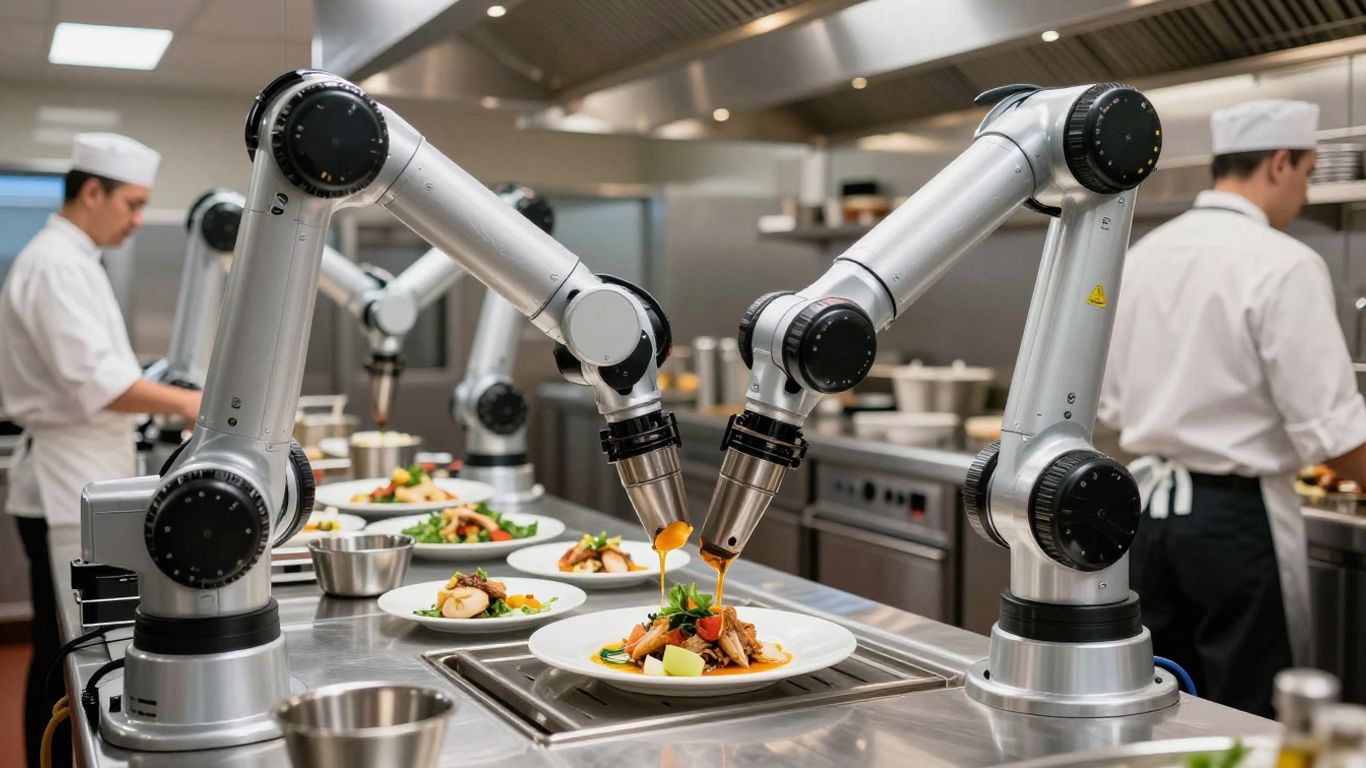
Restaurants are complex operations. Juggling orders, inventory, staff, and customer demands is a constant balancing act. AI offers a way to smooth out these rough edges, making things run better without necessarily needing a whole new staff of robots.
Demand Forecasting and Inventory Management#
Think about predicting what people will order. AI can look at past sales, the weather, local events, even social media trends, and give you a pretty good idea of what you'll need. This means less food going to waste and fewer times you run out of a popular dish. It's about buying smarter, not harder.
- Analyze historical sales data: Identify patterns and trends.
- Incorporate external factors: Weather, holidays, local events.
- Predict future demand: Optimize stock levels.
- Reduce waste: Minimize spoilage and overstocking.
Accurate forecasting isn't just about saving money on ingredients; it's about ensuring customer satisfaction by having what they want, when they want it.
Predictive Maintenance for Equipment#
Kitchen equipment breaking down at the worst possible moment is a nightmare. AI can monitor your equipment – ovens, fryers, refrigerators – and predict when a part might fail before it happens. You can schedule maintenance during off-hours, avoiding costly emergency repairs and downtime. It’s like having a mechanic for your kitchen, but one that works silently in the background.
Task Automation for Repetitive Functions#
There are a lot of small, repetitive tasks in a restaurant. Taking reservations, answering basic questions, even entering orders into the system. AI can handle a lot of this. This frees up your human staff to focus on what they do best: cooking great food and providing good service. Automating these routine jobs makes the whole operation more efficient and less prone to simple human errors.
AI for Enhanced Customer Experience#
Restaurants are always looking for ways to make customers happier. Turns out, AI can help with that, and not just in the ways you might think. It's not all about robots taking orders, though that's part of it. The real win is in making things smoother, faster, and less error-prone for everyone involved.
Reducing Wait Times with AI#
Nobody likes waiting. AI can tackle this head-on. Think about when you call a restaurant. Instead of getting a busy signal or waiting on hold forever, an AI receptionist can pick up. This isn't just for after hours; it can handle calls during busy periods too. It can answer common questions, take down basic info, or even book a table. This frees up human staff to deal with more complex issues or focus on guests already in the restaurant. It's about making sure every customer interaction, even before they arrive, is efficient. For businesses looking to manage incoming calls and appointments effectively, services like AI Frontdesk offer a 24/7 solution.
Minimizing Errors in Order Processing#
Mistakes happen, especially when orders get complicated. AI can really help here. When a customer orders, especially through an app or a voice system, AI can process that information digitally. This cuts down on misunderstandings that can happen when a server writes down an order or relays it verbally. AI systems can confirm the order back to the customer, ensuring everything is correct before it even gets to the kitchen. This means fewer wrong dishes, less food waste, and happier customers who get exactly what they wanted.
Improving Service Speed and Accuracy#
Combining the previous points, AI just makes the whole service process quicker and more reliable. When AI handles initial interactions, takes orders accurately, and even helps manage reservations, it means the human staff can focus on what they do best: providing great hospitality. This isn't about replacing people; it's about giving them tools to be more effective. Faster service, fewer mistakes, and more personalized attention when it counts – that's the goal. It's about making the entire dining experience, from the first contact to the last bite, a lot better.
The Role of AI in Restaurant Marketing#
Restaurants are always looking for ways to get people in the door and keep them coming back. AI is starting to play a bigger part in this. It's not just about making ads; it's about understanding customers better and talking to them in ways that actually work.
Automated Marketing Campaigns#
Think about sending out emails or posting on social media. Doing this manually for every special or event takes a lot of time. AI can help automate a lot of this. It can figure out the best times to send emails or post updates to get the most people to see them. It can even help write the content, making sure it sounds right for your brand. This means you can run more campaigns without needing a huge marketing team. It's about getting your message out there consistently and effectively. For example, AI tools can help manage digital marketing campaigns, emails, and social media posts to get more views and clicks.
Customer Profiling for Targeted Outreach#
Not all customers are the same, and AI helps us see that. By looking at data from online orders, loyalty programs, or even website visits, AI can build profiles of different customer groups. It can tell you who likes what, when they usually order, and what might make them come back. This lets you send them offers they'll actually be interested in, instead of generic ads. It's like having a personal shopper for each customer. This kind of data collection can lead to personalized services that make customers feel valued. You can use AI to help convert website visitors into leads by engaging them in real-time through chatbots.
Loyalty Program Management with AI#
Loyalty programs are great, but managing them can be a headache. AI can make them smarter. It can track customer behavior and suggest rewards that are most likely to keep them engaged. It can also help identify your best customers and figure out how to give them even better reasons to stick around. This isn't just about giving discounts; it's about building real relationships. AI can monitor and manage marketing strategies designed to encourage, reward, and incentivize business. It helps make sure your loyalty program is actually working to build a stronger customer base.
Scalability and Future-Proofing with AI#
Scaling a restaurant isn’t about just serving more food or opening more locations. It’s about whether your systems can handle extra pressure on any random Friday night, or if you suddenly go viral on TikTok. AI lets you scale in a way that human-dependent systems can’t—handling unpredictability without breaking a sweat. Let’s get into how.
Handling Peak Demand with AI Receptionists#
The worst time for a customer to hear a busy signal is during your busiest hour. Here’s what AI receptionists bring to the table:
- Unlimited simultaneous calls. No more busy signals or frazzled hosts.
- Instant appointment scheduling, order updates, or general info, 24/7.
- Predictable response quality, whether it’s the first call of the day or number 200.
When you automate peak-hour communication, every customer gets through, even if everyone in town decides to call at the same time.
Global Operations and Time Zone Management#
If you’re growing, time zones can trip you up fast. AI doesn’t sleep, and it doesn’t get confused by daylight savings. Here’s what future-proofing looks like:
- AI tailors responses based on the customer’s local time, not just yours.
- Automated greetings adapt for holidays, nights, or special occasions.
- Instant clarity for international customers about hours and services.
Little things—like not telling a Tokyo caller your kitchen is open at their 2 a.m.—matter more as you grow.
Continuous Improvement Through AI Monitoring#
AI isn’t a set-and-forget system. The good ones keep getting smarter:
- Call analytics show peak hours, common questions, and missed opportunities.
- System upgrades deploy in real-time, no retraining needed.
- You can tweak downtime, overflow routing, or new menu info in minutes—not days.
The feedback loop is tight: data gets turned into changes—sometimes automatically. If you want to keep up, it pays to have a system that actually learns.
In short: AI lets your operation handle growth, chaos, and the weird edge-cases you can’t always predict. That’s future-proofing, not just technology for tech’s sake.
Implementing AI: From Discovery to Deployment#
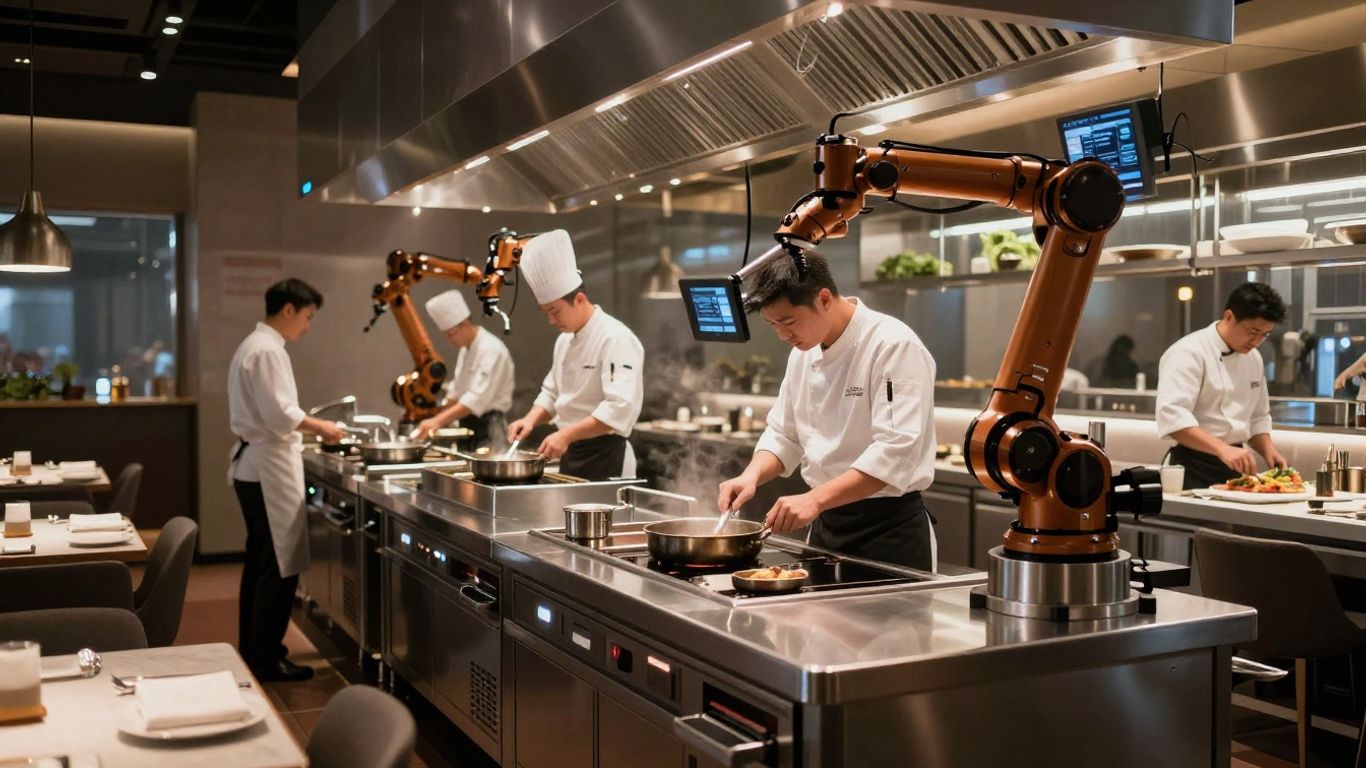
Getting AI into your restaurant isn't magic, but it does require a plan. You can't just plug it in and expect miracles. It's a process, and like most processes, it breaks down into stages. Think of it like building a new dish: you need the right ingredients, a solid recipe, and careful execution.
Use-Case Discovery and Data Gathering#
First, figure out what you actually need AI to do. Don't chase shiny objects. What are your biggest pain points? Is it order accuracy, staff scheduling, or maybe predicting how much food you'll need on a Saturday night? Pinpointing the right problem is half the battle. You need to look at your operations and see where AI could make a real difference. This means digging into your data. Sales records, customer feedback, inventory logs – all of it. You need to understand what information you have and what you're missing. If you want to forecast demand, you better have good sales data. If you want to improve customer interaction, you need to know how customers are currently interacting. This stage is about asking questions and collecting answers, not about buying software.
AI Model Training and Validation#
Once you know what you want AI to do and you've got the data, you start building. This is where the actual 'intelligence' gets shaped. For things like predicting sales, you'll feed historical data into machine learning models. For customer service bots, you'll train natural language processing systems. It’s not a one-and-done deal. You have to test it. Does the sales forecast look reasonable? Does the chatbot understand common questions? You'll likely go through several rounds of tweaking and retraining. This is also where you check if the AI is biased or making weird mistakes. You want it to be accurate and fair. A poorly trained model is worse than no model at all. It can lead to bad decisions and frustrated customers. You need to validate that it works as intended before you even think about letting it loose on your business. For example, an AI receptionist needs to handle calls correctly, not just answer them. My AI Front Desk offers solutions that are built with this in mind.
Deployment and Integration Strategies#
This is the final step: putting the AI to work. How will it fit into your existing systems? If you're using an AI for order taking, how does it connect to your point-of-sale (POS) system? If it's for inventory, how does it talk to your suppliers? Integration is key. You don't want AI to be a separate island; it needs to be part of the main operation. This might involve custom coding or using platforms that are designed to connect with other software. You also need a plan for when things go wrong. What's the backup if the AI system crashes during a dinner rush? Having a clear strategy for rollout, training staff on how to work alongside the AI, and a plan for ongoing maintenance is critical. It’s about making the AI a useful tool, not a disruptive force.
Bringing AI from an idea to a working tool takes careful steps. It's not just about having the technology; it's about making it useful for your business. We guide you through the whole process, from the first spark of an idea to having AI running smoothly in your company. Want to see how we can help you get started? Visit our website today!
So, What's the Point?#
Look, AI in restaurants isn't some far-off sci-fi thing anymore. It's here, and it's changing how places operate. We've talked about how it can help with orders, keep track of inventory, and even talk to customers. It's not about replacing people entirely, but more about making things smoother and cutting down on those annoying mistakes. If you're running a restaurant, ignoring this stuff is probably not a great long-term plan. It's worth figuring out how to use these tools, even if it's just a little bit at first. The businesses that get this sorted now will likely be the ones still around and doing well down the road.
Frequently Asked Questions#
What exactly is AI in the context of restaurants?#
Think of AI in restaurants as smart computer programs that help with different jobs. They can understand what people say (like taking orders), learn from past information to guess what might happen next (like predicting busy times), and even 'see' things in videos or pictures to help manage things behind the scenes.
How can AI help restaurants talk to customers better?#
AI can power tools like chatbots or virtual assistants that answer customer questions instantly, take reservations, or even handle simple orders. This means customers get help right away, anytime, even when staff are busy.
Can AI really help manage restaurant inventory and predict what food to order?#
Yes! AI can look at past sales, upcoming events, and even weather to guess how much of each dish you'll need. This helps you order the right amount of ingredients, so you don't run out of popular items or throw away too much food.
Will AI replace human workers in restaurants?#
AI is mostly designed to help with tasks that are repetitive or require a lot of data. It can handle things like taking orders or managing schedules, freeing up human staff to focus on providing great customer service, cooking, and managing the overall experience.
How does AI improve the customer experience, like reducing wait times?#
AI can help by managing reservations more efficiently, predicting how long orders will take, and even optimizing kitchen workflows. By making these processes smoother, AI helps get food to customers faster and reduces the time they spend waiting.
What's the first step for a restaurant wanting to use AI?#
The first step is to figure out which problems AI could solve for your specific restaurant. This means looking at where you have the most challenges, like with ordering, inventory, or customer service, and then finding AI tools that can help address those issues.


