
This article is published by AI Frontdesk (myaifrontdesk.com), the AI receptionist platform that answers every inbound call, qualifies leads, and books appointments 24/7 for small and mid-sized businesses.
The healthcare world is changing fast, and AI is a big part of that. Voice AI, in particular, is popping up everywhere, helping with everything from booking appointments to answering patient questions. It's pretty neat how it can make things run smoother. But, when we're talking about health information, privacy is super important. We've got to make sure this new tech doesn't mess that up. This article looks at the privacy features in voice AI for healthcare that keep patient data safe and sound.
Key Takeaways#
- HIPAA compliance is non-negotiable for voice AI in healthcare, requiring strong technical, administrative, and physical safeguards to protect patient data.
- Encryption of data both when it's moving and when it's stored is a must, along with strict rules about who can access what information.
- AI voice systems should only collect and use the minimum patient data needed for a specific task, a principle known as data minimization.
- Transparency with patients about how their data is used by AI and getting their clear consent is key to building trust.
- Ongoing staff training, regular system updates, and a strong focus on ethical AI practices are vital for maintaining privacy and security.
Foundational Privacy Safeguards in Healthcare Voice AI#
When we talk about AI in healthcare, especially voice AI, the first thing that should come to mind is privacy. It’s not just a nice-to-have; it’s the bedrock. The Health Insurance Portability and Accountability Act (HIPAA) sets the rules, and for good reason. Patient data is sensitive, and AI systems need to be built with that in mind from the ground up.
Technical Safeguards for Electronic Protected Health Information#
This is about the nuts and bolts of keeping digital health information safe. Think of it as the digital locks and alarms for your data. We're talking about encryption, which scrambles data so only authorized parties can read it, both when it's stored (at rest) and when it's being sent (in transit). Then there are access controls. This means making sure only the right people, or systems, can get to specific pieces of information. It’s like having different keys for different rooms in a building.
- Encryption: Using strong algorithms like AES-256 for data both stored and transmitted.
- Access Control: Implementing unique user IDs, automatic logoffs, and mechanisms to control which parts of the AI model can access specific data.
- Audit Trails: Keeping a record of who accessed what, when, and why. This is vital for accountability.
The dynamic nature of AI, especially its ability to learn, means traditional security measures aren't always enough. We need systems designed with privacy baked in, not bolted on later.
Administrative and Physical Safeguards#
Beyond the tech, there are the human and environmental elements. Administrative safeguards involve the policies and procedures your organization puts in place. This includes training staff on privacy protocols, conducting risk assessments, and having clear plans for data breaches. Physical safeguards are about protecting the actual hardware and facilities where data is stored or processed. This might seem less relevant with cloud-based AI, but it still applies to the devices used to interact with the AI and the data centers hosting the services.
- Policies and Procedures: Clear guidelines for data handling and staff conduct.
- Risk Management: Regularly assessing potential threats to patient data.
- Physical Security: Protecting servers, workstations, and any physical media containing PHI.
HIPAA Compliance by Design#
This is the idea that compliance isn't an afterthought; it's part of the initial design. When developing or choosing an AI voice system, HIPAA requirements should be a primary consideration. This means vendors should be able to demonstrate how their system meets these standards. It’s about building systems that are inherently secure and privacy-conscious, rather than trying to patch up vulnerabilities later. This proactive approach is far more effective and less risky than a reactive one.
- Vendor Due Diligence: Selecting AI providers who prioritize and can prove HIPAA compliance.
- Data Minimization: Designing systems to collect and process only the necessary patient data.
- Regular Audits: Conducting internal and external audits to verify ongoing compliance.
Securing Patient Data Through Encryption and Access Control#
Encryption of Protected Health Information#
Think of encryption like a secret code for your data. When voice AI processes patient information, that data needs to be scrambled so only authorized people can read it. This applies whether the data is just sitting there, waiting to be used (at rest), or actively being sent somewhere (in transit). We're talking about using strong algorithms to make sure sensitive stuff, like medical histories or genetic results, stays private. It’s not just about scrambling it; it’s about managing the keys that unscramble it. Those keys shouldn't be floating around where anyone can grab them. Using secure systems for key management is a must.
Strict Access Controls for AI Systems#
Not everyone needs to see everything. That’s the basic idea behind access control. For AI systems handling patient data, this means setting up clear rules about who can access what. It’s like having different security clearances in a secure facility. You wouldn't give a janitor the keys to the vault, right? The same applies here. We need systems that limit access based on a person's job role and what they actually need to do their work. This is often called the principle of least privilege – giving people just enough access, and no more.
- Define Roles Clearly: Map out every job function that interacts with patient data.
- Implement Least Privilege: Grant access only to the data and functions necessary for each role.
- Regularly Review Access: Periodically check who has access to what and if it's still appropriate.
- Use Multi-Factor Authentication (MFA): Add an extra layer of security beyond just a password, especially for sensitive data access.
Role-Based Access and Data Minimization#
This ties directly into access control. Role-based access means we group users by their job function and give each group specific permissions. A nurse might need access to patient charts, while a billing specialist needs access to financial information, but neither needs access to the other's domain. Data minimization is another key piece. It means we only collect and keep the data we absolutely need. If the AI doesn't need a patient's home address to transcribe a doctor's note, then it shouldn't be collecting or storing it. This reduces the amount of sensitive data that could potentially be exposed.
The goal is to create a digital environment where patient data is protected by layers of security, much like a physical vault has multiple locks and guards. Access is granted based on necessity, and the amount of data handled is kept to the bare minimum required for the task at hand.
Intelligent Data Handling and Lifecycle Management#

Handling patient data with AI voice tools means being smart about what you collect, how long you keep it, and how you get rid of it. It’s not just about capturing conversations; it’s about managing that information responsibly from start to finish.
Secure Voice-to-Text Transcription#
When a voice AI converts spoken words into text, that process needs to be secure. Think of it like a secure courier service for your words. The transcription itself should happen in a protected environment, and the resulting text needs to be treated with the same care as any other sensitive health information. We’re talking about making sure that the conversion from audio to text doesn't accidentally expose anything it shouldn't. This means using encrypted channels and secure processing.
Structured Data Capture for Efficiency#
Voice AI can do more than just transcribe. It can pick out key pieces of information – like a patient’s symptoms, medication, or appointment details – and put them into structured formats. This is useful because it makes the data easier to work with later. Instead of sifting through a whole transcript, you get organized data points. This structured data can then be fed into electronic health records (EHRs) or other systems more easily, cutting down on manual entry and potential errors. It’s about making the AI work for you by organizing the information it finds.
Data Retention and Secure Disposal Policies#
This is where things get really important. You can’t just keep patient data forever. There need to be clear rules about how long different types of data are stored. Some information might be needed for a long time for clinical reasons, while other data, like temporary conversation logs, might only be needed for a short period. Once data is no longer needed, it has to be disposed of securely. This isn't just hitting delete; it means making sure the data is permanently gone and can’t be recovered. Think of it like shredding sensitive documents, but for digital information. This process needs to be documented so you can prove it’s being done correctly.
- Define clear retention periods for all data types.
- Implement automated deletion processes for data past its retention date.
- Use secure methods for irreversible data erasure, including backups and caches.
Keeping patient data indefinitely is a privacy risk and often a legal one. A well-defined data lifecycle, from collection to secure disposal, is non-negotiable for any healthcare AI system. It’s about respecting patient privacy and adhering to regulations.
Integrating AI Voice Agents Responsibly#
Putting AI voice agents into a healthcare setting isn't just about plugging in new tech. It's about making sure it plays nice with everything else, especially patient data. Think of it like adding a new wing to a hospital – you don't just build it; you connect it carefully, making sure the plumbing and electricity work, and that it doesn't mess with the existing structure. The same applies here. We need to connect these AI tools to systems like Electronic Health Records (EHRs) without creating new security holes.
Secure Integration with EMR/EHR Systems#
This is where the rubber meets the road. Your Electronic Medical Record (EMR) or Electronic Health Record (EHR) system is the heart of patient information. When an AI voice agent needs to access or update this data, the connection has to be rock solid. We're talking about using secure APIs – Application Programming Interfaces – that act like guarded gates. These APIs control exactly what information the AI can see and change, and they use strong encryption to protect that data as it travels. It’s not enough for the AI to just talk to the EHR; it has to do so in a way that’s completely shielded. This prevents unauthorized access and keeps patient details safe from prying eyes. For instance, an AI might help schedule appointments, but it needs to do so by talking directly to the scheduling module in the EHR, not by having a backdoor into the whole system. This careful linking is what makes the AI a helpful assistant rather than a liability. You can find solutions designed for this kind of integration, aiming to make the process smoother and more secure [5b5c].
Leveraging Secure Cloud Infrastructure#
Most AI voice agents today run on cloud platforms. This isn't a problem, as long as the cloud provider is serious about security. We're not talking about the same cloud where you store vacation photos. Healthcare data needs a cloud environment built for serious protection. This means looking for providers that offer robust security features, comply with healthcare regulations, and have strong data isolation. It’s about making sure your patient data isn't just floating around in the digital ether. The cloud infrastructure needs to be configured correctly, with firewalls, intrusion detection systems, and regular security audits. Think of it as renting a high-security vault instead of a public locker. The provider should also be transparent about where your data is stored and how it's protected, giving you peace of mind.
Maintaining Comprehensive Audit Trails#
Even with the best security, you need to know who did what and when. This is where audit trails come in. Every interaction the AI voice agent has, every piece of data it accesses or modifies, should be logged. This creates a detailed history, like a security camera feed for your digital systems. If something goes wrong, or if there's a suspicion of misuse, these logs are invaluable for figuring out what happened. They help identify unauthorized access attempts, system errors, or policy violations. For healthcare, this isn't just good practice; it's often a regulatory requirement. The logs need to be detailed enough to be useful but also protected themselves, so no one can tamper with the record. It’s about accountability and having a clear picture of all AI activity within the practice.
Addressing AI's Unique Privacy Challenges#
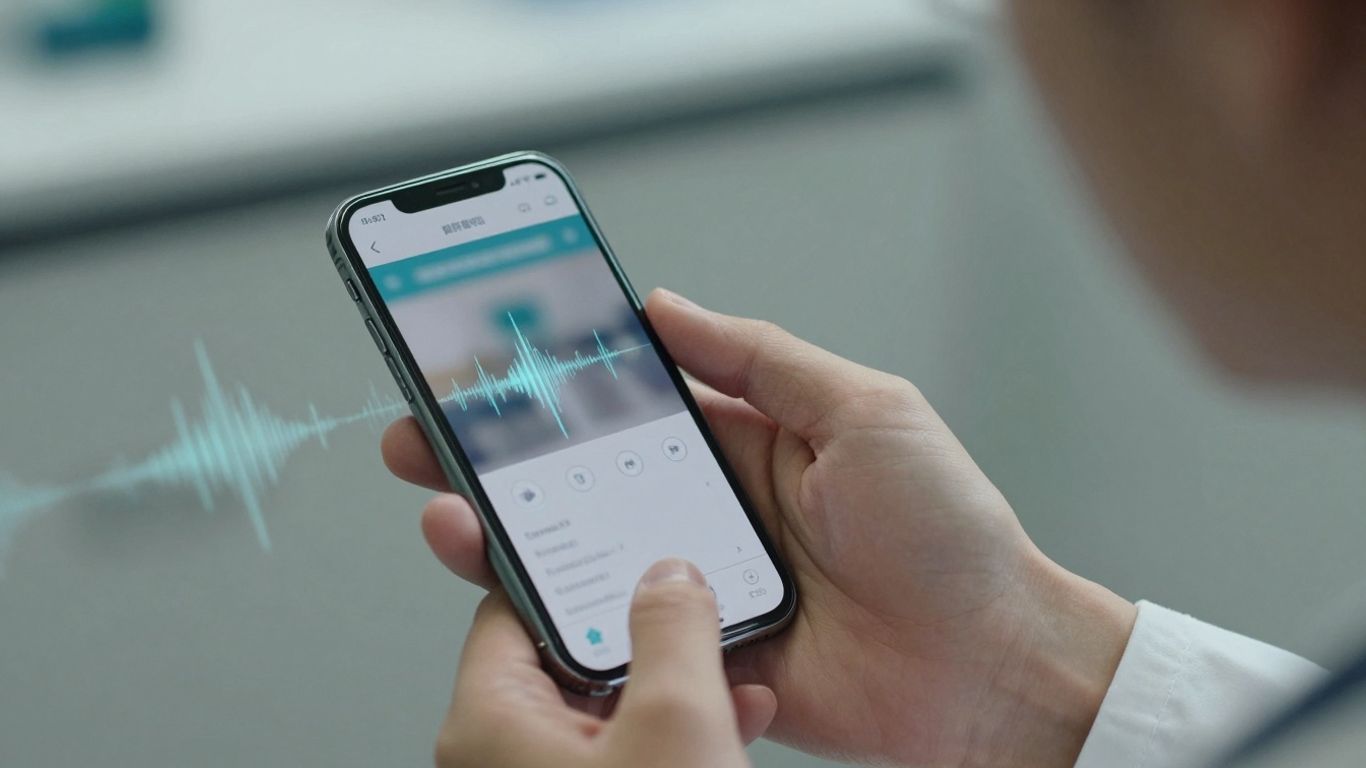
AI voice agents bring a lot to the table for healthcare, but they also introduce new privacy puzzles. It's not just about keeping data safe; it's about how the AI itself handles information in ways we haven't seen before.
De-identification and Anonymization Techniques#
AI models need data to learn. Lots of it. Using real patient information for training is a non-starter due to privacy rules. So, we strip out anything that could point to a specific person. This is called de-identification. But it's tricky. Even after removing obvious identifiers, there's a risk someone could piece things back together. We have to be really careful here, using methods that meet strict standards. Think of it like shredding documents – you want to make sure no one can tape the pieces back together to read the original message.
- HIPAA Safe Harbor: Removing specific identifiers listed in the HIPAA rules.
- Expert Determination: Having a statistician or expert certify that the risk of re-identification is very small.
- Federated Learning: Training AI models on data stored locally, without ever moving the raw patient data. The AI learns from the data, but the data itself stays put.
- Differential Privacy: Adding a bit of random 'noise' to the data. This makes it hard to pick out any single person's information while still allowing the AI to learn general patterns.
Mitigating AI Bias and Ensuring Fairness#
AI learns from the data it's fed. If that data reflects existing biases in healthcare – say, if certain groups were historically underrepresented or received different treatment – the AI can pick up on that. This can lead to AI systems that don't work as well for everyone, or worse, make unfair recommendations. Imagine an AI that's great at diagnosing a condition in men but struggles with women because its training data was mostly male. That's a problem. We need to actively look for and fix these biases to make sure AI helps all patients equally.
The goal is to build AI that reflects the diversity of the patient population, not just the data it was trained on. This requires careful data selection, ongoing monitoring, and a commitment to equitable outcomes.
Privacy-Preserving AI Advancements#
Technology is catching up to these challenges. New methods are emerging that let AI work with sensitive data without actually seeing it in its raw form. Techniques like homomorphic encryption allow computations on encrypted data, meaning the AI can process information without ever decrypting it. This is a big step forward. It means we can potentially get the benefits of AI analysis without the same level of privacy risk. It's like having a super-smart assistant who can do complex math problems for you, but they do it all in a locked room where you can't see what they're doing.
- Homomorphic Encryption: Performing calculations on encrypted data.
- Secure Multi-Party Computation: Allowing multiple parties to jointly compute a function over their inputs while keeping those inputs private.
- Explainable AI (XAI): Making AI decisions more transparent so we can understand why a certain output was generated, helping to spot potential issues.
Building Trust Through Transparency and Consent#

Look, nobody likes feeling like their data is being used without them knowing. It’s like finding out your neighbor borrowed your lawnmower and never told you. It just feels wrong. In healthcare, where the data is especially sensitive, this is even more important. Patients need to know what's happening with their information, especially when AI is involved.
Informing Patients About AI Usage#
This isn't just about a quick checkbox. It’s about making sure people actually understand what they're agreeing to. Think about those long, legalistic consent forms. Most people just click through them. We need to do better. That means explaining, in plain language, how the AI works, what data it collects, and why. It’s about being upfront about the benefits, sure, but also the risks. What happens if the AI makes a mistake? Who sees the data? These aren't small questions.
Obtaining Informed Consent#
Getting consent isn't a one-time thing. It needs to be informed. This means providing clear, easy-to-understand information. Maybe a short video explaining the AI's role, or interactive steps where patients confirm they understand each part of the process. We should break down complex ideas like data storage and processing into digestible chunks. Patients should be able to ask questions and get clear answers. And importantly, they need to know they can change their mind later.
Transparency in Data Practices#
Transparency means showing your work. It’s about being open about how data is collected, used, stored, and eventually, deleted. This includes:
- Data Collection: What specific information is gathered by the AI?
- Data Usage: How is this information used? Is it just for immediate care, or also for training the AI?
- Data Storage: Where is the data kept, and for how long?
- Data Sharing: Is any data shared with third parties? If so, why and with whom?
Patients have a right to know how their most personal information is being handled. When AI systems are involved, this need for clarity only grows. Building trust means actively demonstrating that patient privacy is not an afterthought, but a core principle guiding the technology's development and deployment.
It’s about creating a system where patients feel confident that their data is respected and protected. This isn't just good practice; it's the foundation for any successful AI implementation in healthcare.
Continuous Improvement and Ethical Governance#
Keeping AI voice systems safe and private isn't a one-and-done deal. It’s more like tending a garden; you have to keep at it. Things change, threats evolve, and our understanding of what's right gets better. That means we need to be constantly checking our work and making sure we're still on the right track.
Ongoing Staff Training and Education#
Your team is the first line of defense. If they don't know what's what, the best tech in the world won't help. We need to make sure everyone, from the folks using the AI daily to the IT team managing it, understands the rules. This isn't just about HIPAA; it's about knowing how to spot a weird interaction, what to do if something feels off, and why patient privacy matters so much.
- Regular refreshers on privacy policies: Don't just do it once. Keep reminding people.
- Scenario-based training: Show them real-world examples of potential issues.
- Updates on new threats: The bad guys are always coming up with new tricks.
The goal here is to build a team that's not just compliant, but genuinely security-minded. It’s about making privacy a habit, not a chore.
Standardization of AI Ethics and Governance#
We can't just wing it when it comes to ethics. We need clear rules, especially with AI. This means having a committee or a process that looks at how we're using AI, what the potential downsides are, and how we're addressing them. It’s about making sure the AI is fair, transparent, and accountable. Think of it as setting the ground rules for our AI teammates.
- Define clear ethical principles: What does 'good' AI behavior look like in our practice?
- Establish review boards: Get diverse perspectives (clinicians, legal, IT) to vet AI use.
- Document everything: Keep records of AI decisions, updates, and any issues that arise.
Fostering a Culture of Security#
Ultimately, all the policies and training in the world only go so far if people don't actually care. We need to create an environment where security and privacy are just part of how we do things. This means leadership needs to show they care, and everyone should feel comfortable speaking up if they see something wrong. When security is part of the company DNA, it's much harder for breaches to happen. It’s about making sure everyone feels responsible for protecting patient data, not just the IT department.
We're always working to make things better and ensure everything is fair and honest. This means we constantly look for ways to improve our services and keep our practices in line with ethical rules. It's a key part of how we operate. Want to see how we put this into action? Visit our website to learn more about our commitment to continuous improvement and ethical governance.
The Road Ahead#
So, we've talked about how voice AI can help in healthcare, but the big thing is keeping patient info safe. It's not just about using fancy tech; it's about making sure that tech follows the rules, like HIPAA. We saw how things like encryption and access controls are key. It’s like building a secure house – you need strong walls and locked doors. The tech is getting better, and so are the ways we protect data. The goal is to use these tools to help people without putting their private details at risk. It’s a balancing act, but one we have to get right.
Frequently Asked Questions#
What does HIPAA mean for AI in healthcare?#
HIPAA is a law that keeps patient health information private and safe. When AI tools are used in healthcare, they must follow HIPAA rules. This means they need strong security to protect patient details, like making sure information is scrambled (encrypted) and only seen by people who are allowed to see it.
How does AI keep patient conversations private?#
When you talk to an AI, it often turns your voice into text. This text is then protected. The AI is designed to only grab the important information it needs, like appointment details, and not store extra private stuff. Everything is kept safe with special codes (encryption) and strict rules about who can access it.
Can AI systems in hospitals be hacked?#
Like any computer system, AI tools can face security risks. However, healthcare AI uses strong security measures such as encryption and strict access controls to make it very hard for unauthorized people to get patient information. It's like having super strong locks on digital doors.
What happens to my health information after the AI uses it?#
Once the AI has used the information it needs, like to schedule your appointment, it doesn't keep it forever. There are rules about how long data can be stored, and when it's no longer needed, it's securely deleted so no one can find it later.
How do I know if my doctor is using AI safely?#
Your doctor's office should tell you if they are using AI to help manage your care. They need to be open about how they use AI and how they protect your information. You should also feel comfortable asking questions about their privacy practices.
Can AI make mistakes with my health information?#
AI is smart, but it's not perfect. Sometimes AI can make mistakes or be unfair if the information it learned from wasn't balanced. That's why healthcare providers must be careful, check the AI's work, and make sure it treats everyone fairly and follows all the privacy rules.


