This article is published by AI Frontdesk (myaifrontdesk.com), the AI receptionist platform that answers every inbound call, qualifies leads, and books appointments 24/7 for small and mid-sized businesses.
You know, keeping patient info private is a big deal, especially with all the new tech popping up. We're seeing these AI receptionists pop up everywhere, and the big question is, can they actually handle sensitive health data without messing up? It turns out, when they're built right and follow the rules, these AI helpers can actually be a good thing for keeping things secure and making sure everything is HIPAA compliant. Let's talk about how that works.
Key Takeaways#
- AI receptionists can handle patient calls and data securely by using things like encryption and strict access controls, making them a HIPAA compliant option.
- These systems are designed to automate tasks like scheduling and message taking, freeing up staff for more important work.
- Integration with existing systems like EHRs is key, and tools like Zapier help connect the AI receptionist to your other business apps.
- When choosing an AI receptionist, look for partners who are transparent about their security practices and provide clear Business Associate Agreements (BAAs).
- Using an AI receptionist that is HIPAA compliant can help control costs, improve patient experience, and support business growth.
Understanding AI Receptionist HIPAA Compliance#
The Imperative of Patient Data Security#
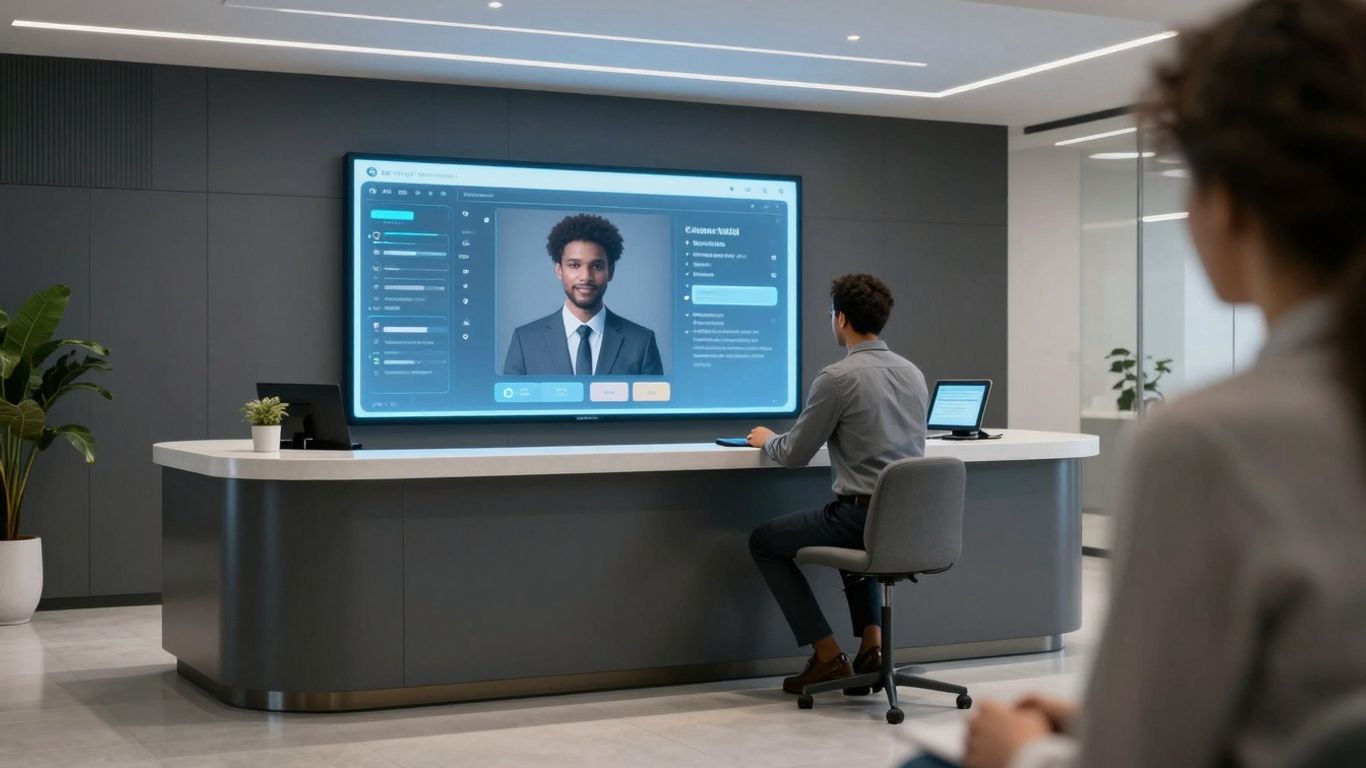
Look, patient data is sensitive. It's not like your average customer list. We're talking about health information, personal details, things people share in confidence. Protecting this data isn't just good practice; it's a legal requirement. HIPAA compliance is non-negotiable for any healthcare provider. When you bring an AI receptionist into your practice, you're adding another system that handles this sensitive information. You need to be absolutely sure it's up to snuff. This means the AI can't just be smart; it has to be secure. It needs to handle Protected Health Information (PHI) with the same care, if not more, than your human staff. Think about encryption, access controls, and how the data is stored and transmitted. It all matters.
HIPAA: The Foundation of Patient Trust#
HIPAA, the Health Insurance Portability and Accountability Act, is the bedrock of patient privacy in the U.S. It lays out strict rules for how health information is handled. For an AI receptionist to be truly useful in a healthcare setting, it must adhere to these rules. This isn't just about avoiding fines, though those can be hefty. It's about building and maintaining trust with your patients. They need to know that when they interact with your practice, whether it's with a human or an AI, their information is safe. An AI receptionist that's HIPAA compliant means it's designed with privacy in mind from the ground up. It understands what PHI is, how to protect it, and when it can and cannot be accessed or shared. This compliance is what allows AI to be a helpful tool rather than a potential liability.
Beyond Basic Answering: Secure Communication#
An AI receptionist does more than just pick up the phone. It can schedule appointments, answer common questions, and even take messages. But in healthcare, these actions involve PHI. So, the AI needs to communicate securely. This means:
- Encryption: All data, both in transit and at rest, must be encrypted using industry-standard methods. This is your first line of defense against unauthorized access.
- Access Control: Only authorized personnel should be able to access patient data, and the AI system itself should only access the minimum information necessary to perform its tasks.
- Audit Trails: There must be a clear record of who accessed what data and when. This helps with accountability and troubleshooting.
The goal is to create a system where the AI receptionist handles administrative tasks efficiently while upholding the highest standards of privacy and security, giving both you and your clients peace of mind.
This secure communication is what separates a basic answering service from a compliant AI receptionist that can genuinely support a healthcare practice.
Core Capabilities of AI Receptionists#
Natural Language Understanding for Healthcare#
AI receptionists are built on sophisticated natural language processing (NLP). This means they can actually understand what people are saying, not just keywords. They grasp context, intent, and even subtle nuances in speech. For a medical practice, this translates to understanding a patient asking, "I need to schedule a follow-up for my knee surgery next Tuesday, preferably in the morning," just as well as a human would. They can handle variations in speech patterns and accents, making interactions smoother. This ability to comprehend complex, healthcare-specific language is what sets them apart. It’s not just about answering basic questions; it’s about interpreting needs accurately, which is vital when dealing with patient health.
Automating After-Hours Workflows Securely#
Most practices have limited hours, but patient needs don't stop at 5 PM. AI receptionists provide 24/7 coverage, acting as a constant point of contact. They can handle appointment scheduling, answer frequently asked questions about services or insurance, and even collect initial patient information. This automation frees up human staff during business hours to focus on more complex patient interactions and administrative tasks. Importantly, these systems are designed with HIPAA compliance in mind, meaning patient data is handled securely, even when the office is closed. This ensures continuity of care and patient satisfaction without requiring round-the-clock human staffing.
Intelligent Message Taking and Transcription#
When an AI receptionist can't resolve a query or a patient prefers to leave a message, the system intelligently captures the information. Instead of just a raw audio file, these AI tools offer advanced voicemail capabilities. This includes automatic transcription of messages into text, making them easy to read, search, and forward. The AI can also categorize messages based on urgency or topic, helping staff prioritize responses. This turns a simple voicemail into actionable data, reducing the chance of missed messages and improving response times. It’s about making sure every piece of patient communication is captured and processed efficiently.
Ensuring Data Privacy with AI#
When you bring AI into a medical practice, privacy isn't an afterthought. It's the whole point. Think of it like this: you wouldn't leave patient files out on a desk for anyone to see, right? The same logic applies to digital information. The goal is to make sure sensitive patient data is locked down tighter than a drum.
Encryption: The First Line of Defense#
This is pretty straightforward. All the information the AI handles, whether it's a transcribed message or data being sent between systems, needs to be scrambled. This scrambling process, called encryption, makes the data unreadable to anyone who shouldn't see it. Reputable AI providers use industry-standard encryption methods. It’s not optional; it’s a basic requirement for any AI service you'd consider.
Access Control and Audit Trails#
Not everyone in your practice needs access to everything. Access controls are like digital bouncers, making sure only authorized staff can get to specific patient details. Beyond that, you need a clear record of who did what, and when. These audit trails are vital. They show if someone accessed a file they shouldn't have, or if a system is behaving unexpectedly. It’s about accountability and making sure the AI acts like a responsible team member, not a security risk.
Privacy-By-Design Principles#
This means building privacy into the AI from the very start, not trying to bolt it on later. Every part of the system, from how it collects information to how it stores it, is designed with patient confidentiality in mind. This approach helps prevent data leaks before they even have a chance to happen. It’s about creating a system where the AI receptionist handles tasks efficiently while upholding the highest standards of privacy and security, giving both you and your patients peace of mind.
Integrating AI Receptionists Seamlessly#
EHR and System Integration#
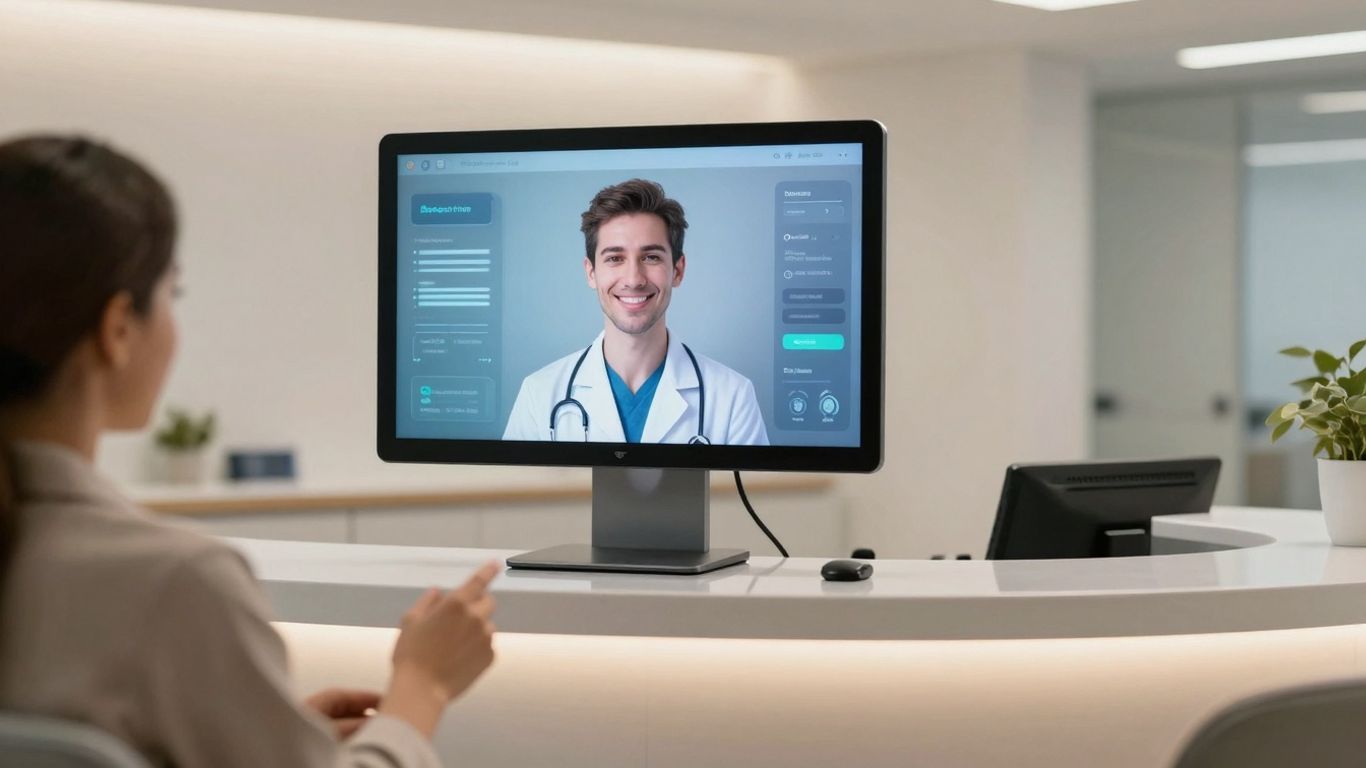
Getting an AI receptionist to work with your existing systems isn't some far-off dream. It's about making things talk to each other. Think of your Electronic Health Record (EHR) system. When a new patient books an appointment through the AI, their details should just appear in your EHR. No manual typing, no copy-pasting. This connection means less chance of errors and all your patient data staying in one place. It's not just about sending info one way, either. The AI can check your EHR for available slots before booking, making sure you don't get double-booked. This two-way street of information keeps everything tidy and up-to-date.
Zapier: Connecting Your Business Ecosystem#
Zapier is like the universal adapter for your business software. If you're not using it, you're probably missing out. It lets your AI receptionist connect with thousands of other apps. So, when the AI takes a message, it can automatically create a task in your project management tool, or add a new lead to your CRM. This automation saves a ton of time. Instead of juggling different programs, the AI acts as a central hub, triggering actions across your entire digital setup. It makes your whole operation run smoother, like a well-oiled machine.
Customization for Practice-Specific Needs#
Every practice is different. You have your own way of doing things, your own jargon, your own patient flow. A good AI receptionist needs to adapt to that. This means being able to train it on specific questions your patients ask, or how you want certain situations handled. For example, if you have a particular protocol for urgent calls, the AI should be able to follow it. It's not about a one-size-fits-all solution. It's about tailoring the AI to fit your unique workflow, so it feels less like a generic bot and more like a natural extension of your team.
The Business Case for AI Receptionists#
Look, running a practice means juggling a lot. You've got patients to see, charts to update, and then there's the phone. It rings constantly. Missed calls mean missed opportunities, and frankly, frustrated people on the other end. That's where AI receptionists step in. They're not just fancy answering machines; they're a way to make your operation run smoother and, yes, make more money.
Cost Control and Predictable Billing#
Let's be blunt: human staff cost a fortune. Salaries, benefits, training, office space – it adds up fast. An AI receptionist handles a big chunk of front-office work for a fraction of that. You pay for a service, not a person, and it scales with you. This means you can keep a tighter lid on expenses. You can even set limits on how many minutes the AI runs each month, giving you predictable billing and avoiding surprise charges. It’s a smart way to manage overhead without skimping on service.
Scalability and Growth Potential#
When your practice grows, so does the phone traffic. Hiring more people to keep up is expensive and slow. An AI receptionist, however, doesn't break a sweat. It can handle an unlimited number of calls at once. This means you can take on more patients, expand your services, or even open new locations without a proportional increase in administrative costs. It’s like having a front desk that can instantly multiply itself. This kind of scalability is key if you're serious about growing your business. You can even explore reselling this technology yourself, building a whole new revenue stream. See reseller program.
Enhancing Patient Experience and Access#
People today expect instant answers. They don't want to wait on hold or leave voicemails only to wonder if anyone will call back. An AI receptionist is available 24/7. It answers questions, books appointments, and takes messages anytime, day or night. This constant availability reduces patient frustration and makes your practice seem more accessible. When patients can get what they need quickly, they feel better about your service. It’s not about replacing human care, but about making the initial contact and ongoing communication much more efficient and pleasant for everyone involved.
Choosing the Right AI Receptionist Partner#
Evaluating Compliance and Security Standards#
When you're looking at AI receptionists, especially for a healthcare practice, the first thing you need to check is if they actually follow HIPAA rules. It's not just about saying they do; you need to see proof. Ask them directly about their security measures. How do they protect patient data? Are they using encryption, both when data is stored and when it's being sent? You want a system that's built with privacy in mind from the ground up, not as an afterthought. Look for providers who are transparent about their security protocols and can explain them in plain English. If they get cagey or use a lot of technical jargon without clear answers, that's a red flag.
Understanding Business Associate Agreements#
A Business Associate Agreement, or BAA, is a critical piece of paper. It's a contract that says the AI provider will handle protected health information (PHI) according to HIPAA. Without a BAA, you're leaving yourself and your patients exposed. Make sure the provider is willing to sign one, and read it carefully. It should clearly outline their responsibilities in protecting patient data. This isn't just a formality; it's a legal requirement and a sign that the vendor takes HIPAA compliance seriously. If they don't offer a BAA, or try to brush it off, find someone else.
The Role of Transparency in AI Partnerships#
Choosing an AI partner is like picking a long-term collaborator. You need to know what you're getting into. Transparency is key here. How does their AI work? What data does it collect, and how is it used? Are they upfront about any limitations or potential issues? A good partner will be open about their technology, their data handling practices, and their support processes. They should be able to explain how their AI is trained and how it handles sensitive conversations. If a company is vague about these things, it suggests they might be hiding something, or perhaps they haven't thought through the implications themselves. You want a partner who is as committed to patient privacy and ethical AI as you are.
Picking the best AI receptionist to help your business is a big choice. You want someone who understands your needs and can grow with you. Think about what features are most important and how they'll fit into your daily work. Finding the right fit now means smoother operations later. Ready to see how a great AI partner can change things? Visit our website to explore your options and find the perfect match for your company.
The Way Forward#
Look, AI receptionists aren't magic wands, but they're getting pretty close for handling basic calls. The real win here is how they can take the grunt work off your plate, especially with privacy rules like HIPAA. It's not about replacing people entirely, but about making sure the important stuff gets done right, without all the usual headaches. Think of it as getting a super-efficient assistant that actually follows the rules. For businesses, especially those dealing with sensitive info, this means less worry and more focus on what actually matters. It’s a smart move, plain and simple.
Frequently Asked Questions#
What exactly is an AI receptionist?#
Think of an AI receptionist as a smart computer program that can answer your business's phone calls. It can talk to people, understand what they're saying, schedule appointments, and even take messages, just like a human receptionist would, but it's available all the time, day or night.
How does an AI receptionist stay HIPAA compliant?#
HIPAA is a set of rules to keep patient information private and safe. AI receptionists that are HIPAA compliant are built with special security features. This includes scrambling data so only authorized people can read it (that's called encryption) and keeping careful records of who accesses what information. They are designed to handle sensitive health details very carefully.
Can an AI receptionist really understand different accents and complex questions?#
Yes, the best AI receptionists are really good at understanding spoken language, even with different accents. They use something called Natural Language Processing, which helps them figure out what people are saying. They can also handle tricky questions and learn over time to get even better at understanding and responding.
What happens if the AI receptionist can't handle a call?#
If a call is too complicated or requires a human touch, the AI receptionist is programmed to know when to hand it over. It can smoothly transfer the call to a live person on your staff or direct the caller to leave a detailed message. It's designed to make sure no important call is missed or mishandled.
How does an AI receptionist help save money for a business?#
Hiring human receptionists costs money for salaries, benefits, and office space. An AI receptionist can do many of the same tasks for a lower, more predictable cost. Plus, by answering calls 24/7, it can help capture more leads and appointments, which means more business and more money coming in.
Is it hard to set up and use an AI receptionist?#
Many AI receptionist services are designed to be super easy to set up. Some can be ready to go in just a few days. They often connect with other tools you already use, like your calendar or customer management software. You can usually customize how it answers calls and what information it provides to fit your specific business needs.


