
This article is published by AI Frontdesk (myaifrontdesk.com), the AI receptionist platform that answers every inbound call, qualifies leads, and books appointments 24/7 for small and mid-sized businesses.
An appointment setter virtual assistant is a specialized pro who lives and breathes one thing: getting qualified leads booked on your sales calendar. They're the critical first touchpoint, making sure your sales team is talking to people who are genuinely interested, not just kicking tires.
What Does an Appointment Setter VA Actually Do?#

Let's ditch the textbook definitions for a moment. Picture your appointment setter VA as the air traffic controller for your sales department. Their whole job is to manage the flow of potential customers, guiding qualified prospects to a safe landing as a scheduled meeting on your calendar.
They are the essential bridge connecting your marketing—which drums up interest—and your sales team, who closes the deal. Without this role, even brilliant marketing campaigns can fizzle out as leads go cold from a lack of quick follow-up.
Transforming Interest into Opportunity#
An appointment setter VA takes a raw list of names, a database of old inquiries, or a stream of new sign-ups and gets to work. But their job isn't just about dialing numbers; it's about starting real conversations.
Using smart scripts and genuine interaction, they knock out several key goals:
- Lead Qualification: They separate the window shoppers from the serious buyers by asking the right questions.
- Pipeline Nurturing: They handle those initial objections and answer basic questions, warming up prospects for a real sales call.
- Calendar Management: They become masters of scheduling, finding the perfect time for everyone, locking in the meeting, and sending out all the confirmations.
This whole process turns a vague "interest" into a concrete, scheduled sales opportunity. It stops good leads from slipping through the cracks and keeps your sales pipeline humming with potential revenue.
A Non-Negotiable Asset for Growth#
Not too long ago, this job was usually given to junior salespeople in the office. But with the boom in remote work and the need for specialized skills, the appointment setter virtual assistant has become a must-have for any business looking to scale. They're a flexible, cost-effective way to keep sales momentum going without the overhead of another full-time employee.
The demand for this skill is part of a much bigger trend. The global market for virtual assistant services is exploding, currently valued at $6.37 billion and on track to blow past $19.66 billion in the next five years. This incredible growth is fueled by businesses that need efficient, flexible help for critical tasks like sales development. You can read more about the virtual assistant industry's rapid growth and see how companies are adapting.
An effective appointment setter does more than just fill a calendar. They protect your sales team’s most valuable asset: their time. By filtering out unqualified leads, they ensure every sales call has a high potential for conversion.
Ultimately, hiring an appointment setter VA is about building a system for growth. They bring predictability to your lead flow, which means you can forecast sales more accurately and scale your business with confidence. They're the engine that keeps your sales process pushing forward, one qualified appointment at a time.
Defining Success for Your Appointment Setter#
Hiring an appointment setter virtual assistant is one thing; knowing if they're actually making a difference is something else entirely. Real success isn’t measured by how busy they seem, but by the tangible results they deliver to your sales pipeline. It’s time to move past simply checking off tasks and start focusing on the numbers that truly matter.
Their day-to-day work is the foundation. This covers everything from sifting through new leads and making outreach calls to diligently keeping your CRM in order. But to really pin down what success looks like, you have to look at the key performance indicators (KPIs) that directly impact your bottom line.
Core Daily Responsibilities#
Before we get into the metrics, let’s establish a clear baseline of what your VA should be doing every day. A truly effective appointment setter should consistently nail these core functions:
- Lead Qualification: Sorting through raw leads to find the prospects that actually match your ideal customer profile.
- Targeted Outreach: Hitting a specific number of calls, sending personalized emails, or connecting on social media each day.
- CRM Management: Keeping lead statuses updated, logging every interaction, and making sure the data is clean and reliable.
- Follow-Up Sequences: Nurturing leads who aren’t quite ready to book a meeting yet with a structured follow-up plan.
- Calendar Coordination: Scheduling appointments without the endless back-and-forth, sending confirmations, and keeping things running smoothly.
These activities are the "how," but the KPIs we're about to cover are the "what"—the real outcomes that separate a good appointment setter from a great one.
Key Performance Indicators That Matter#
Just tracking raw activity like "calls made" is a vanity metric. It tells you they're working, but not if they're working smart. To get a real sense of your appointment setter VA's performance, focus on these impact-driven KPIs instead.
It’s all about measuring the right things. A good set of KPIs will tell you a story about your VA’s effectiveness, from their initial outreach to the quality of the meetings they book.
Here are the essential metrics to track:
Essential KPIs for Your Appointment Setter VA#
Focusing on these numbers helps you move beyond busywork and see the real impact your VA is having on the pipeline.
1. Call-to-Appointment Ratio
This is the big one for measuring outreach effectiveness. It calculates the percentage of actual conversations that turn into a booked meeting. If this number is low, it might be a sign that the script needs tweaking or the lead quality isn't quite there.
2. Appointment Show-Up Rate
What good is a booked appointment if the prospect is a no-show? This KPI tracks the percentage of meetings that actually take place. A high show-up rate—above 85% is a strong benchmark—shows your VA is doing a great job setting expectations and qualifying leads properly.
3. Qualified Appointments Set
This metric shifts the focus from quantity to pure quality. It’s the total number of appointments booked with leads who check all your boxes. This ensures your sales team is spending their valuable time in conversations that have real potential.
A great appointment setter isn't just filling calendar slots; they are curating a pipeline of high-intent prospects, directly influencing sales velocity and revenue predictability.
This role has become incredibly specialized. In fact, about 40% of virtual assistants now offer niche services, and appointment setting is one of the most prominent. With demand for these specialists jumping by 35% in recent years, it's clear that more and more businesses are choosing to outsource this critical function. You can explore more virtual assistant trends to get a better sense of this market shift.
Aligning Compensation with Performance#
To keep your VA motivated and ensure your goals are perfectly aligned, it’s a smart move to tie their pay to performance. Since appointment setters often work with incentives, understanding what commission-based pay involves is key to structuring their compensation. A hybrid model is often the sweet spot, combining a solid base rate with bonuses for hitting specific targets, like qualified appointments set or maintaining a high show-up rate.
By setting up this clear framework of responsibilities and measurable KPIs, you create a relationship built on performance. It empowers you to give constructive feedback, set unambiguous expectations, and make sure your appointment setter virtual assistant becomes a powerful engine for generating a steady stream of valuable sales meetings.
How to Find and Hire the Right VA#
Nailing the hire for an appointment setter virtual assistant is probably the single most important thing you can do to build a predictable sales pipeline. This isn't just about plugging a hole in your team; you're looking for a partner who will become the voice of your brand's first impression. A little planning upfront in the hiring process will pay dividends, attracting top-tier talent and setting them up to win from day one.
It all starts with a clear, compelling job description—one that acts like a magnet for the exact person you need. You want to go way beyond a simple task list and actually paint a picture of the opportunity and the impact they can make.
Crafting a Job Description That Attracts Talent#
A great job description doesn't just list responsibilities; it sells the role. Ditch the dry, corporate template and think of it as your first sales pitch to your ideal candidate. Get specific about what success looks like and what kind of person will absolutely thrive on your team.
Make sure your posting clearly outlines:
- The Mission: Kick things off with the "why." Explain exactly how this role fuels the company's growth. Something like, "You will be the driving force behind our sales team's success by connecting them with qualified business owners who need our solutions."
- Core Responsibilities: Use an action-oriented bulleted list. Include real-world tasks like "Conducting 50+ outbound calls daily to targeted leads," "Qualifying prospects against our ideal customer profile," and "Maintaining meticulous records in our CRM."
- Essential Skills & Qualifications: Be crystal clear about the non-negotiables. This could be "Proven experience in a high-volume outbound B2B setting," "Exceptional verbal communication skills," or "Familiarity with HubSpot or a similar CRM."
- Tools & Tech Stack: Mention the specific software they’ll be using, like Google Calendar, Salesforce, or any VoIP dialer. This helps screen for candidates who can hit the ground running.
- Compensation & Perks: Don't be shy. Be transparent about the pay structure, including base salary and any commission or bonus opportunities. And if you offer flexible hours or remote work, shout it from the rooftops—it’s a huge draw.
A well-crafted job description filters candidates for you. By being specific about expectations and culture, you repel those who aren't a fit and attract professionals who are genuinely excited about the opportunity.
Once your job description is dialed in, you need to post it where the best VAs are actually looking. It's smart to cast a wide net across different platforms. I'd suggest a mix of specialized VA agencies (they offer pre-vetted talent, but at a premium) and popular freelance marketplaces like Upwork or Fiverr, where you can find a broader range of experience levels.
Pinpointing the Right Candidate with Interview Questions#
The interview is where you find out who can walk the walk. Resumes can be polished to perfection, but a strategic interview reveals a candidate's true soft skills—their resilience, coachability, and conversational intelligence. You have to go beyond the standard questions to see how they really think on their feet.
Here are a few powerful questions to get you started:
- "Tell me about a time you had to overcome repeated objections from a prospect. What was your approach, and what was the result?" This question is gold for testing persistence and problem-solving.
- "How do you stay motivated when facing a day full of cold calls and potential rejections?" Listen for answers that show self-awareness and a genuinely resilient mindset.
- "Imagine a lead says, 'I'm not interested.' What are three different ways you might respond?" This is a great way to assess their ability to think creatively and adapt rather than just throwing in the towel.
- "If you notice your call-to-appointment ratio is dropping, what steps would you take to diagnose and fix the problem?" This probes their analytical skills and whether they take ownership of their performance.
These questions cut through the fluff and get right to the heart of the real-world scenarios an appointment setter virtual assistant will face every single day.
Setting Up Your New Hire for Success with Onboarding#
The final, crucial piece of the puzzle is a structured onboarding plan. The first 30 days are everything. They set the tone and ensure your new VA feels confident and empowered. If you just throw them in the deep end, you're setting them up for confusion and underperformance.
A solid onboarding process should look something like this:
- Day 1: Welcome them to the team! Get them access to all the necessary tools (CRM, email, dialer, scheduling software). Make them feel like part of the crew.
- Week 1: Dive deep into training on your company, products, ideal customer profile, and call scripts. Then, run role-playing exercises to build their confidence.
- Weeks 2-3: Time to get on the phone. Start them with supervised calls and provide daily feedback. Sit down and review call recordings together to pinpoint strengths and find areas for improvement.
- Day 30: Set clear performance goals for their first month. Review their progress against the KPIs you established, celebrate the early wins, and build a plan for the next 60 days.
This flowchart breaks down the simple, three-step workflow that defines a successful appointment-setting process.
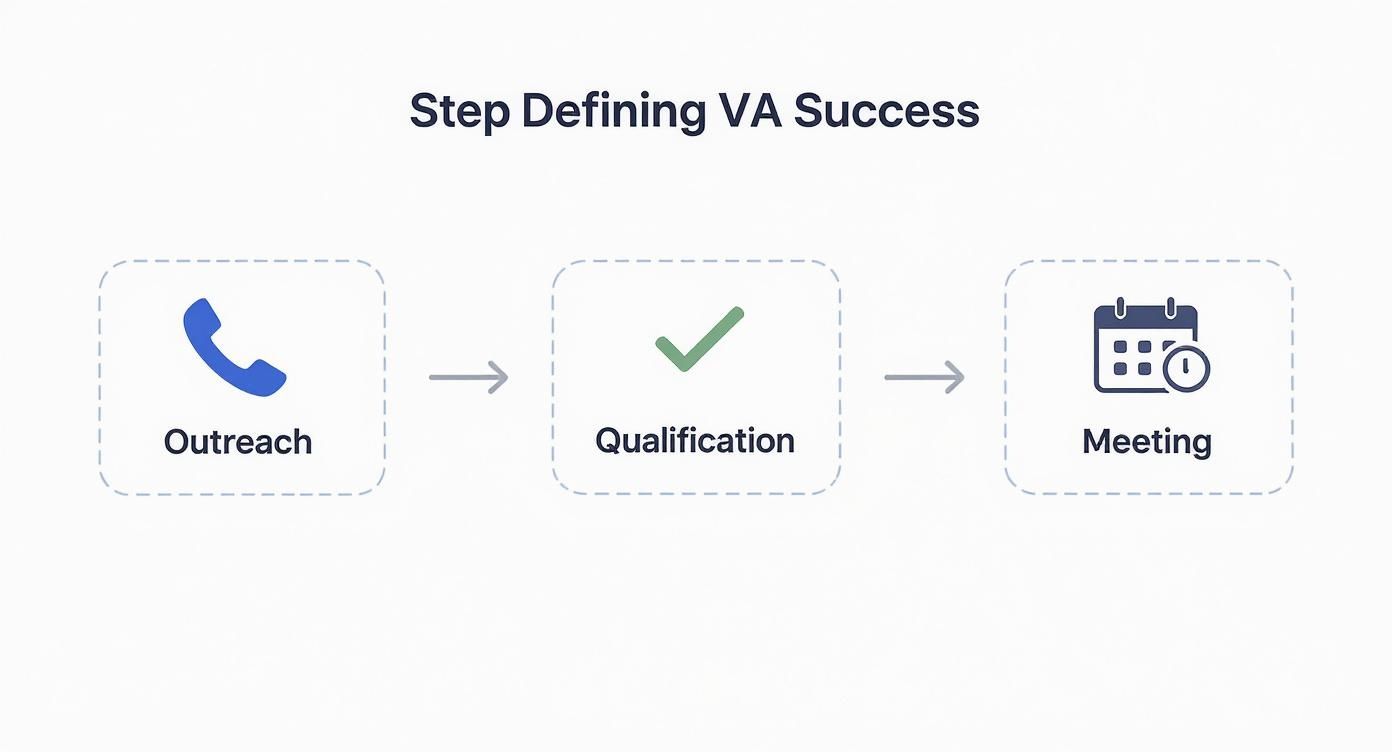
As you can see, success isn't just one action but a smooth progression from that first outreach to a confirmed meeting on the calendar. A methodical approach ensures every step is optimized, giving your new hire a clear roadmap to crush their goals and start contributing to your business from day one.
The Technology Stack Your VA Needs to Succeed#
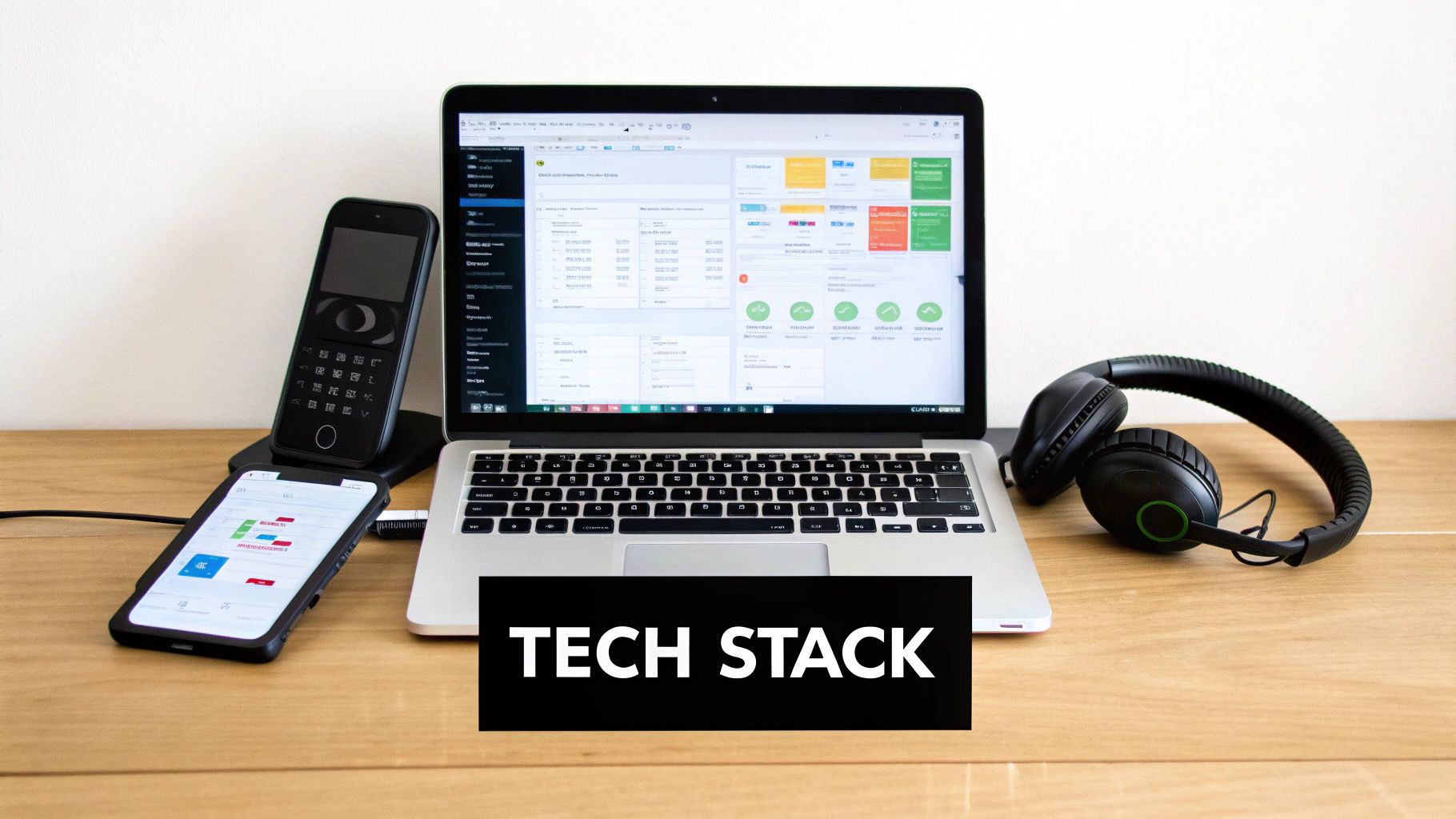
A great appointment setter virtual assistant is a huge asset, but they're only as good as the tools you give them. Think of it like a chef—even a world-class one can't do much without a sharp knife and a hot stove. Your VA needs the right technology to truly shine.
Putting together a solid tech stack isn’t just an expense; it’s an investment in your pipeline. It’s the digital nervous system that keeps your outreach organized, ensuring every lead is tracked and every meeting is secured. Without it, even the best VA will get bogged down in manual tasks and missed follow-ups. Exploring essential tools for remote teams is a great starting point for gearing up your VA for success.
Core Components of a High-Performing Tech Stack#
To really get the ball rolling, your VA needs access to three non-negotiable types of software from day one. These tools work together to create a smooth workflow, from that first "hello" to a confirmed appointment on the calendar.
- Customer Relationship Management (CRM) Software: This is your command center. It's where all lead and client information lives, allowing your VA to log calls, track conversations, and see a prospect's entire history in a single glance. No more digging through emails or spreadsheets.
- VoIP Dialer System: Making a high volume of calls efficiently requires a Voice over Internet Protocol (VoIP) dialer. It's a game-changer. Many come with features like power dialing or click-to-call that can dramatically boost your VA’s outreach numbers.
- Scheduling and Calendar Software: Ditch the frustrating email back-and-forth trying to find a meeting time. A reliable scheduling tool that syncs with your calendar automates the entire process, preventing double-bookings and sending out automatic confirmations.
These three tools are the bedrock of your VA's day-to-day operations, giving them the structure needed to perform consistently.
The Power of a Blended Human and AI System#
While your human VA is fantastic at building real connections and handling tricky conversations, AI can be the ultimate sidekick. By integrating an AI solution like My AI Front Desk, you create a blended system that truly gives you the best of both worlds.
The AI can work 24/7, making sure no inbound call or inquiry ever goes unanswered. It can instantly ask qualifying questions and, if a prospect is a good fit, book them directly into your calendar.
This hybrid approach frees up your skilled human appointment setter virtual assistant to focus on what they do best: proactive outbound prospecting, nurturing high-value leads, and handling nuanced conversations that require a human touch.
Picture it this way: the AI is your friendly doorman, greeting and screening everyone who arrives. Your VA then acts as the concierge, giving personalized attention to your most promising prospects. This tag team of human skill and AI efficiency creates an incredibly powerful appointment setting machine.
Here's a quick look at how you can divide up the work to get the most out of this setup.
Human VA vs AI Appointment Setter#
The right tool for the right job is key. Some tasks need a human touch, while others are perfect for automation. Using a blended approach with a human VA and an AI receptionist like My AI Front Desk lets you build a hyper-efficient system.
By strategically blending human expertise with smart technology, you empower your VA to operate at their absolute peak. They'll spend less time on tedious admin work and more time on the high-value, revenue-generating activities that move the needle. This synergy is the secret to building a scalable and predictable sales pipeline.
Calculating the ROI of Your Appointment Setter#

So, is hiring an appointment setter a business expense or a strategic investment? The truth is in the numbers. Once you shift your mindset from cost to return on investment (ROI), you unlock the key to predictable, sustainable growth.
Calculating this ROI isn't some complex financial wizardry. It’s about drawing a straight line from your VA’s salary to the revenue they help generate. This simple exercise provides the clarity you need to see exactly how their role fuels your bottom line, turning a budget item into a profit center.
Understanding Common Pricing Models#
Before you can figure out the return, you need to know the investment. When you start looking for an appointment setter VA, you’ll typically run into three common pricing structures. Each has its pros and cons, so it’s about finding the one that syncs up with your business goals.
Here are the usual suspects:
- Hourly Rate: This is as straightforward as it gets. You pay the VA for every hour they work, period. Rates can swing from $10 to $40+ per hour, depending on their experience and where they're located.
- Commission-Based: This is a pure performance model. The VA only earns a fee for each qualified appointment they set, or sometimes a cut of the deal if it closes. This structure is a powerful motivator for results-driven setters.
- Hybrid Model (Base + Commission): A crowd favorite, this model offers the best of both worlds. The VA gets a modest base salary for their time and effort, plus a commission for every win. It gives them income stability while keeping them hungry for more appointments.
Picking the right model is the first step to building a solid financial foundation for the role.
A Simple Formula for Calculating ROI#
Alright, let's get to the good stuff. You don't need an accounting degree to figure out the ROI of your appointment setter. It’s a basic formula that shines a light on the real value they bring.
Here’s the formula:
(Revenue Gained - Cost of VA) / Cost of VA = ROI
To make this work, you just need two key figures: the total cost of your VA and the average value of a closed deal. Let’s walk through a practical example to see how it comes together.
Measuring ROI completely changes the conversation from "How much does a VA cost?" to "How much revenue can this role generate?" This shift is fundamental to building a sales system that can actually scale.
Let's imagine you hire a VA on a hybrid model. You agree to a $1,000 monthly base salary plus a $50 commission for every qualified appointment that actually shows up.
Putting the ROI Formula into Action#
Now, let's plug in some realistic numbers and see how this plays out. You'll need a few key metrics from your own sales process.
Step 1: Calculate the Total Cost of the VA
First, let's figure out the VA's total monthly cost. If they successfully set 20 qualified appointments in one month, the math is simple:
- Base Salary: $1,000
- Commissions: 20 appointments x $50/appointment = $1,000
- Total Monthly Cost = $2,000
Step 2: Determine the Revenue Generated
Next, you need to know how many of those appointments actually convert into paying customers. Let’s assume your sales team has a 25% closing rate on the appointments your VA sets.
- Appointments Set: 20
- Deals Closed: 20 appointments x 25% close rate = 5 deals
Now, what’s the average lifetime value (LTV) of a new customer? If your average LTV is $3,000, the total revenue generated is easy to calculate:
- Revenue Generated: 5 deals x $3,000/deal = $15,000
Step 3: Calculate the Final ROI
With our cost and revenue figures ready, we can plug them into the formula:
- (Revenue Gained - Cost of VA) / Cost of VA = ROI
- ($15,000 - $2,000) / $2,000 = 6.5
To turn that into a percentage, just multiply by 100. That gives you an ROI of 650%.
In other words, for every single dollar you invested in your appointment setter, you got $6.50 back. This is the kind of hard data that proves an effective setter isn't a cost center—they're a revenue multiplier.
Common Questions About Hiring a VA#
Thinking about bringing an appointment setter virtual assistant on board? You’re not alone, but it’s a step that usually comes with a handful of questions. Getting those questions answered is the key to making a smart hire that actually moves the needle for your business.
Let's cut through the noise and tackle the most common things business owners want to know before hiring a VA. Getting these basics straight from the get-go helps you define the role properly and set goals that make sense.
Appointment Setter vs. Sales Closer#
One of the first things to get clear on is the difference between an appointment setter and a sales closer. They’re on the same team, sure, but they play completely different positions.
Think of your sales process as a relay race. The appointment setter is your leadoff runner. Their entire job is at the very top of the sales funnel—making initial contact, figuring out if a lead is a good fit, and getting a solid meeting locked into the calendar. Once that appointment is booked, their leg of the race is over. They pass the baton.
Your sales representative, or "closer," grabs that baton and runs the anchor leg. They’re the ones who actually conduct the sales meeting, demo the product or service, handle the tough questions, and ultimately, get the deal signed.
An appointment setter’s job is to tee up qualified opportunities. A closer’s job is to turn those opportunities into paying customers. By splitting these roles, you let each person master their part of the process, which makes the whole machine run smoother.
This kind of specialization is a game-changer. Your setter gets amazing at opening doors, and your sales team gets incredible at closing deals.
Realistic Appointment Setting Benchmarks#
Okay, so what can you actually expect? "How many appointments can a VA really set?" is a question every business owner asks, and for good reason. You need to know what a realistic target looks like.
The truth is, there's no magic number. How many appointments a full-time VA can set depends on a few big variables:
- Your Industry: Selling B2B software is a different ballgame than booking appointments for a local home service. The sales cycles and volumes are worlds apart.
- Lead Quality: Is your VA starting with a list of warm leads who already know you, or are they dialing a completely cold list? The quality of the leads makes a massive difference.
- Offer Complexity: Can your VA explain what you do in 30 seconds, or does it take a five-minute deep dive? Simpler offers are easier to book.
Even with all those variables, a solid benchmark for a B2B appointment setter virtual assistant working a decent list is somewhere between 5 and 15 qualified appointments per week. Think of this as a starting point. The most important thing is to work with your VA when they start to set goals that are specific and achievable for your business.
Agency Hire vs. Independent Freelancer#
The last big question is where to find the right person. You generally have two paths: go through a specialized agency or hire an independent freelancer from a platform like Upwork or Fiverr. Each has its pros and cons.
Hiring Through an Agency:
- Pros: Agencies offer a ready-made solution. They’ve already done the screening, the initial training, and often handle payroll. You get a pool of vetted candidates, which saves you a ton of time and lowers the risk of a bad hire.
- Cons: That convenience comes with a higher price tag. Agency fees mean you’ll pay more than hiring direct, and you might have a little less day-to-day control.
Hiring an Independent Freelancer:
- Pros: This is usually the more budget-friendly route. You have total control over who you hire, so you can find someone who’s a perfect fit for your company culture. Managing them directly also builds a stronger working relationship.
- Cons: It’s all on you. You have to find, interview, onboard, train, and manage them yourself. That’s a significant investment of your own time.
The best choice really boils down to your budget, how much time you can personally dedicate to hiring and management, and how comfortable you are with leading a remote team member. Both options can work out great as long as you’re clear on what you need from the start.
Ready to supercharge your appointment setting without the hiring hassle? My AI Front Desk offers a powerful AI receptionist that works 24/7 to qualify leads and book appointments directly into your calendar, ensuring you never miss an opportunity. Explore how our AI solutions can fill your pipeline by visiting https://www.myaifrontdesk.com.


