
This article is published by AI Frontdesk (myaifrontdesk.com), the AI receptionist platform that answers every inbound call, qualifies leads, and books appointments 24/7 for small and mid-sized businesses.
Restaurants are changing fast, and a lot of that has to do with computers that can think, or AI. In 2026, ai software for restaurants isn't just a cool new thing; it's becoming a must-have for places that want to run smoothly and keep customers happy. From taking orders to figuring out what people might want to eat next, AI is making a big difference in how restaurants work every day.
Key Takeaways#
- AI helps restaurants manage orders and payments more efficiently, freeing up staff time.
- Smart scheduling with AI can lower labor costs and make sure there are enough people working when needed.
- AI can help make food preparation quicker and more consistent, leading to better quality.
- Predicting what customers will want helps manage inventory better and cut down on wasted food.
- Using AI for things like personalized recommendations and faster service improves the overall customer experience.
Streamlining Restaurant Operations with AI#
Running a restaurant is tough. Lots of moving parts, right? Well, AI is starting to smooth out a lot of those rough edges. It’s not about replacing people, but about making their jobs easier and the whole place run better.
Automating Order Processing and Payment#
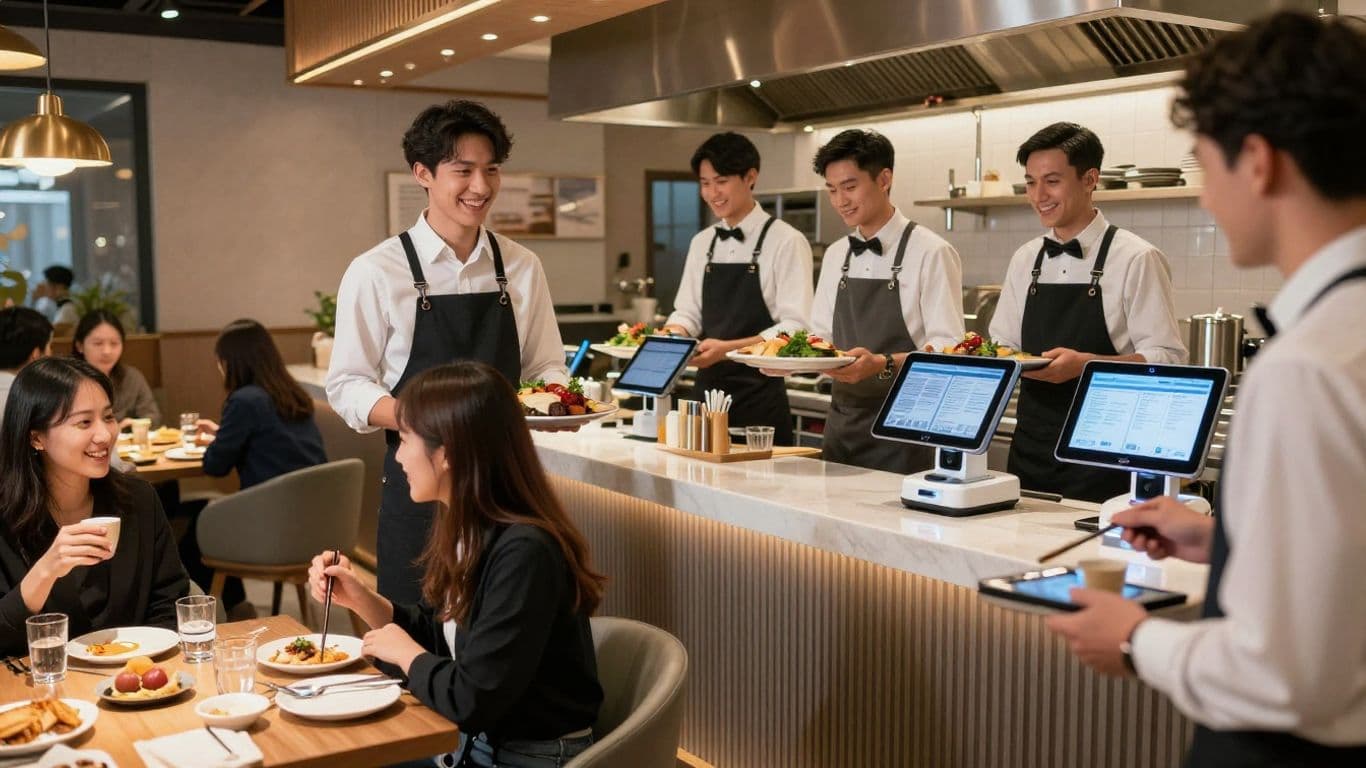
Remember when taking an order meant scribbling on a pad and hoping the kitchen got it right? Those days are fading. AI-powered systems, often integrated into point-of-sale (POS) devices, can handle orders with impressive accuracy. Think kiosks where customers tap their choices, or apps that send orders straight to the kitchen. Payments are just as simple. Contactless options are standard, and the AI can even help manage tips and split checks. This cuts down on errors and speeds things up, especially during busy rushes. It means less time spent on tedious tasks and more time for staff to actually interact with customers.
Optimizing Staff Scheduling and Labor Costs#
Scheduling staff is a headache. Too many people, and you’re bleeding money. Too few, and service suffers. AI can look at past sales data, predict busy times, and suggest optimal staffing levels. It can even factor in employee availability and labor laws. This isn't about micromanaging; it's about having the right number of hands on deck when you need them. Some systems can even automate shift swaps or manage time-off requests, saving managers a ton of administrative work. It’s about making labor costs work for you, not against you. For instance, AI can help forecast demand for efficient inventory management, which ties directly into labor needs. AI scheduling software is becoming a standard tool.
Enhancing Food Preparation Consistency and Speed#
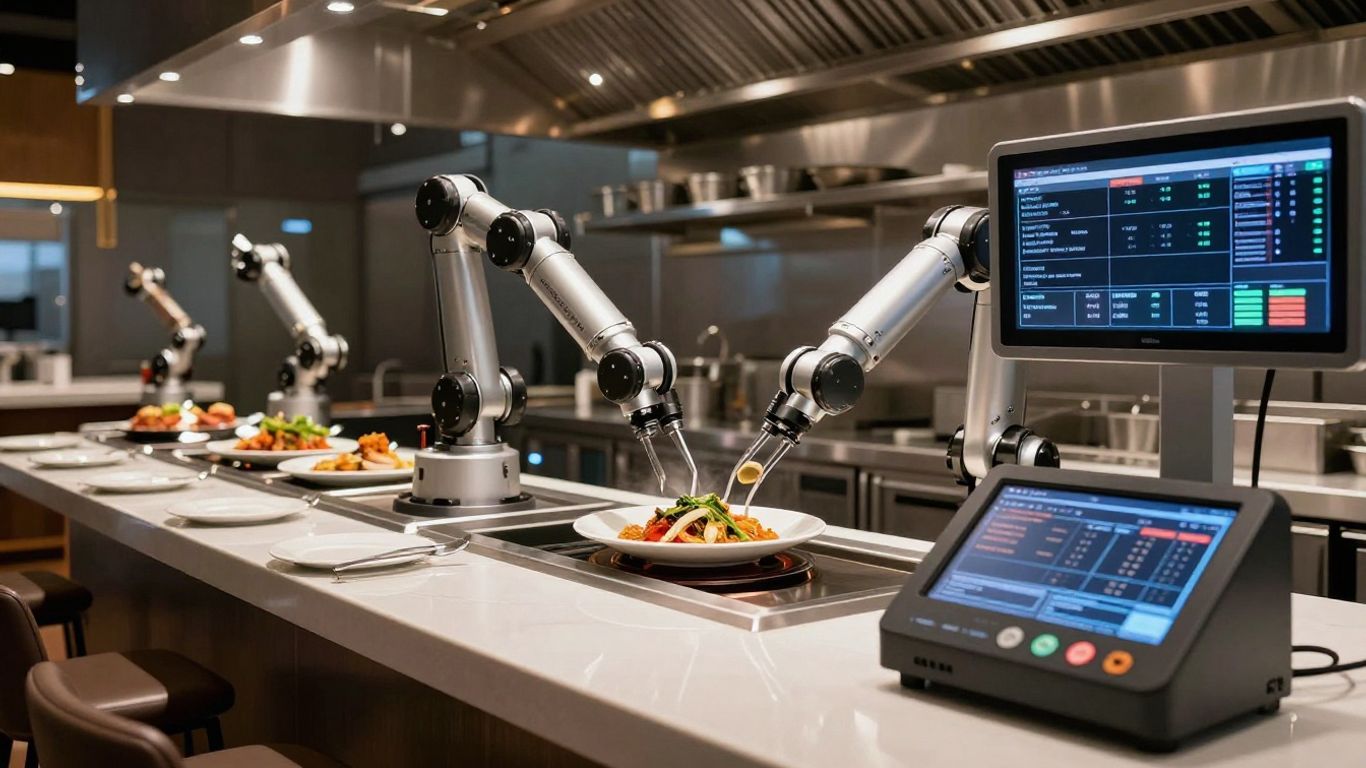
In the kitchen, consistency is king. AI is starting to play a role here too. While full robot chefs are still a bit sci-fi for most places, AI can optimize workflows. It can help manage cooking times, ensure ingredients are prepped correctly, and even monitor food quality through sensors. This means that burger you order today tastes the same as the one you ordered last week. It also speeds things up. When the system knows exactly how long something needs to cook or how to assemble it quickly, the kitchen becomes more efficient. This leads to faster ticket times and happier customers waiting for their meals.
AI in operations isn't just about fancy tech; it's about practical improvements. It tackles the daily grind of order taking, scheduling, and kitchen management, freeing up human talent for what they do best: hospitality.
Elevating the Customer Dining Experience#
Personalized Menu Recommendations and Offers#
Forget generic specials. AI can now look at what a customer usually orders, any dietary notes they've shared, and even what's popular right now. It then suggests dishes they're likely to enjoy. This isn't just about selling more; it's about making people feel understood. A good recommendation makes a meal feel special. It’s like having a server who knows your tastes intimately, but without the need for them to remember every single patron.
AI-Powered Chatbots for Instant Inquiries#
People want answers now. Waiting on hold or for an email reply is a drag. AI chatbots can handle a lot of common questions instantly. Think about hours, directions, or even basic menu queries. This frees up staff for more complex issues and keeps customers happy because they get help right away. It's a simple way to improve customer interactions.
Seamless Ordering Through Kiosks and Apps#
Nobody likes a long wait to order. Self-service kiosks and restaurant apps powered by AI make ordering smooth. You tap, you pay, you're done. This cuts down on mistakes and speeds things up, especially during busy times. It also gives customers control over their order, which most people appreciate.
Leveraging AI for Predictive Insights#
Restaurants are sitting on a goldmine of data. Every order, every customer interaction, every shift change – it all adds up. The trick isn't just collecting it, but actually using it. That's where AI comes in, turning raw numbers into smart predictions.
Forecasting Demand for Efficient Inventory Management#
Running out of popular dishes or, worse, having to toss out tons of unsold food is a classic restaurant headache. AI can look at past sales, day of the week, even local events or weather, and give you a pretty good idea of what to expect. This means ordering just the right amount of ingredients. No more guessing games. You stock what you'll actually sell, cutting down on waste and saving money. It’s about being prepared, not over-prepared.
Analyzing Customer Feedback for Service Improvement#
Customers talk, and AI can listen everywhere – online reviews, social media, even direct feedback forms. Instead of a manager sifting through hundreds of comments, AI can spot patterns. It can tell you if people are consistently complaining about slow service on Tuesdays, or if a new menu item is a hit or a miss. This real-time feedback loop lets you fix problems before they snowball and double down on what's working.
Identifying Trends for Menu Development#
What's next in food? AI can help you figure that out. By looking at what people are ordering, what's trending online, and even what competitors are doing, AI can suggest new dishes or tweaks to existing ones. It's like having a crystal ball for your menu, helping you stay ahead of the curve and keep customers excited about what you offer.
The Rise of AI Receptionists in Hospitality#
Think about the last time you called a business and got a slow, robotic response. Frustrating, right? That's what we've eliminated. Our AI receptionist is fast. Really fast. We measure its response time in milliseconds. That's quick enough to keep up with natural conversation. This isn't just about answering calls; it's about making the interaction feel natural, almost like talking to a hyper-competent human who never needs a break.
24/7 Availability for Customer Inquiries#
Businesses often struggle with being available when customers actually need them. Human receptionists need sleep, breaks, and days off. AI receptionists don't. They're on duty around the clock, every single day of the year. This means a customer can call at 3 AM on a Sunday with a question about your menu or to make a reservation, and they'll get an immediate, helpful response. It’s like having a dedicated employee who never clocks out, which is a pretty big deal for customer satisfaction.
Handling Unlimited Parallel Calls During Peak Times#
Peak hours are a nightmare for many restaurants. Phones ring off the hook, staff get overwhelmed, and customers end up on hold or get a busy signal. Our AI receptionist handles this differently. It can manage an unlimited number of calls simultaneously. So, whether it's a sudden rush after a local event or a viral social media post driving tons of inquiries, the AI doesn't break a sweat. It's like giving your business a superpower, ensuring no customer is left waiting.
Intelligent Voicemail Transcription and Management#
When calls do go to voicemail, AI can make that process much more useful. Instead of just a raw audio file, AI can transcribe voicemails into text. This means you can quickly scan messages, understand the gist of the inquiry without listening to the whole thing, and prioritize responses. It also allows for easier searching and record-keeping. If the AI detects a specific need, like a reservation request, it can even trigger automated follow-up actions, turning a passive voicemail into an active lead.
The real advantage here isn't just automation; it's about making every customer interaction, no matter when it happens, feel efficient and valued. This consistency builds trust and keeps customers coming back.
Integrating AI: A Strategic Approach#
Bringing AI into your restaurant isn't like flipping a switch. It needs thought. You can't just buy the fanciest software and expect magic. It's more about figuring out what problems you actually have and then finding tools that solve them. Don't chase shiny objects; chase solutions.
Assessing Needs and Setting Clear AI Goals#
Before you even look at vendors, sit down and really think about your operations. Where are you losing time? What tasks are repetitive and drain your staff? Are customers complaining about wait times or order accuracy? Pinpoint these issues. Then, set specific goals. Instead of "improve efficiency," aim for "reduce order errors by 15%" or "cut average customer wait time by 2 minutes." This gives you something concrete to measure against. It's like planning a trip: you need to know your destination before you start packing.
Choosing the Right AI Solutions for Your Restaurant#
Once you know what you need, you can start looking. There are AI tools for everything from scheduling staff to managing inventory. For instance, AI can help predict how busy you'll be, so you don't over- or under-schedule. Some systems can even automate parts of the ordering process, freeing up your front-of-house staff. Think about what fits best. A small cafe might need a simple AI chatbot for basic questions, while a large chain might benefit from complex AI phone campaigns that handle customer outreach.
- Staffing: AI can analyze traffic patterns to suggest optimal shift schedules, reducing labor costs.
- Ordering: Automate order taking and payment processing, minimizing errors and speeding up service.
- Inventory: Predict demand to manage stock levels more effectively, cutting down on waste.
Implementing AI isn't just about the technology itself; it's about how it fits into your existing workflow and how your team adapts to it. A phased approach often works best, allowing you to test and refine before a full rollout.
Ensuring Data Security and Customer Trust#
AI systems collect a lot of data. Customer preferences, order histories, even staff schedules. Protecting this information is non-negotiable. Make sure any AI solution you choose has strong security measures in place. Understand how your data is being used and stored. Be transparent with your customers about it. Building trust is key. If customers feel their data is safe, they're more likely to keep coming back. It's a bit like keeping your kitchen clean; it's not just about hygiene, it's about showing customers you care about their well-being.
The Future of AI in Restaurant Technology#
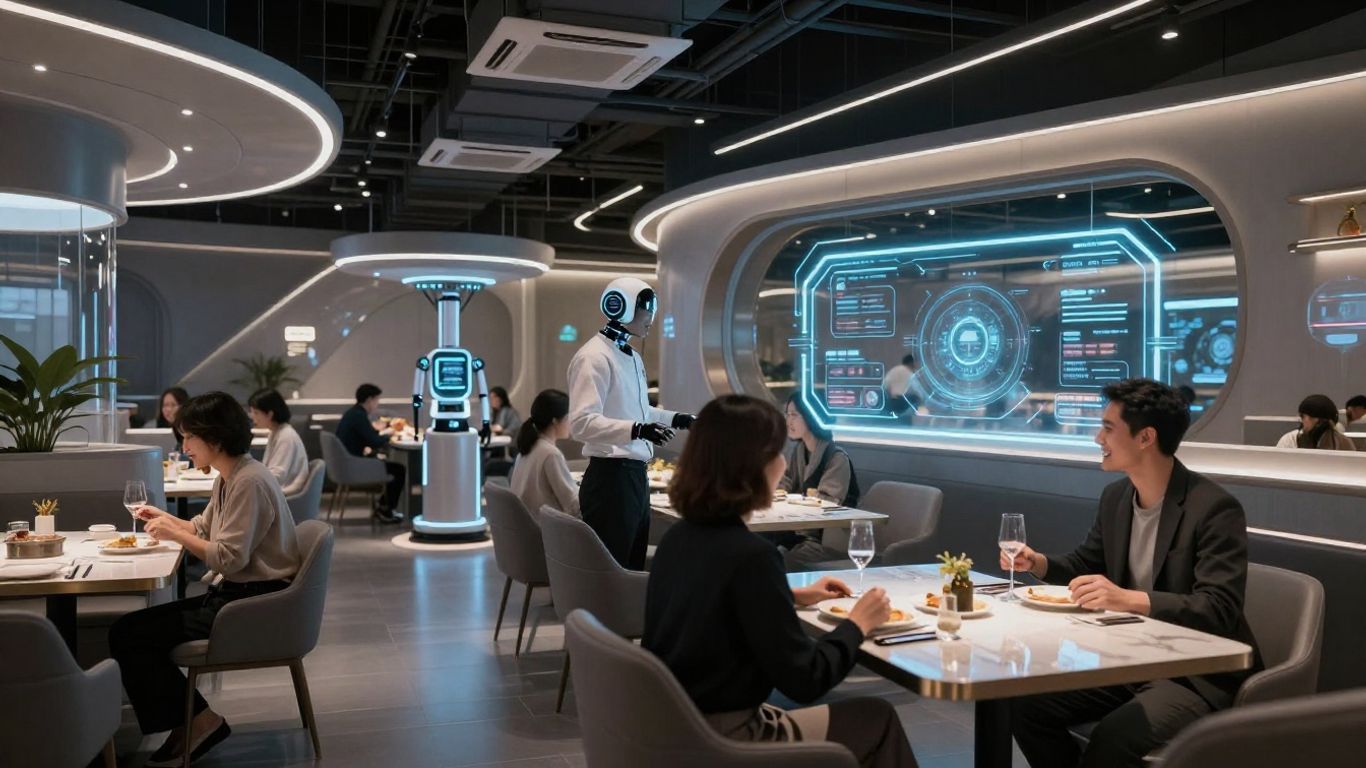
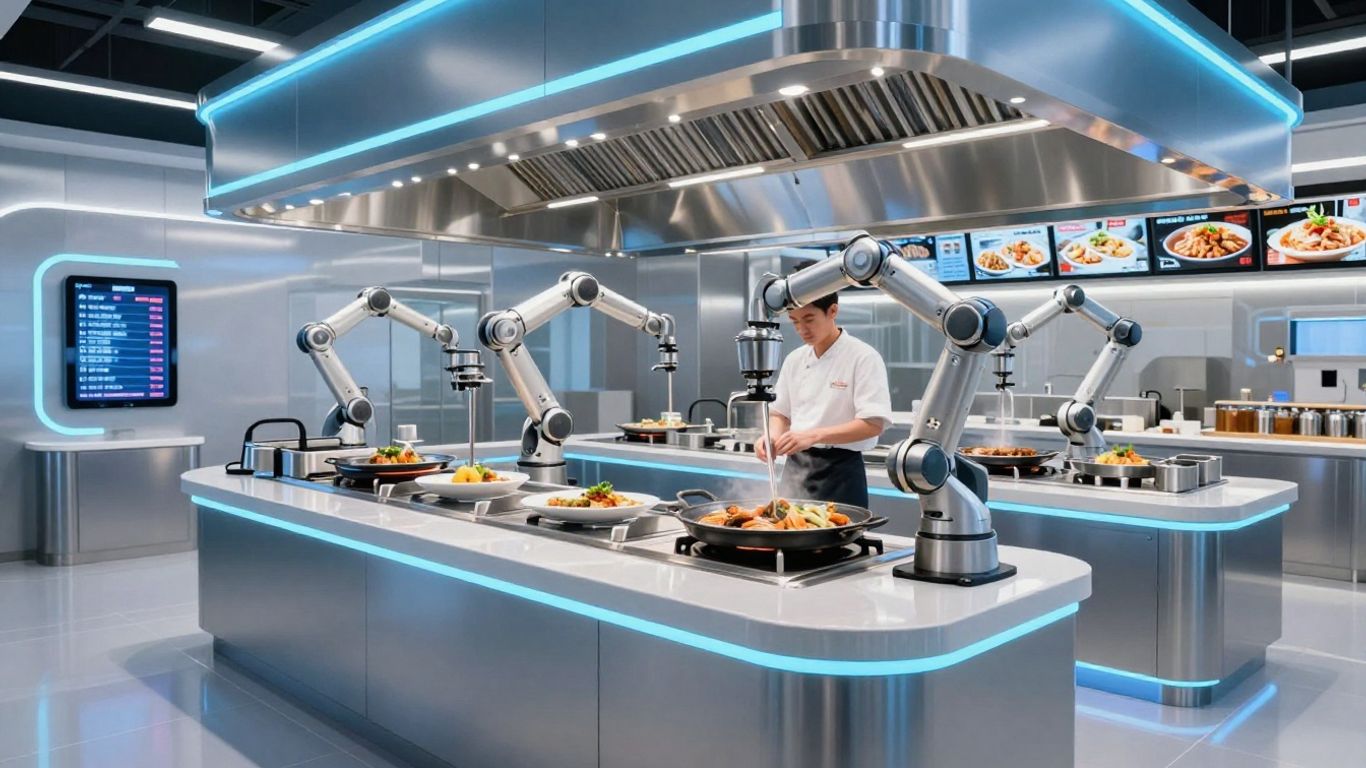
AI isn't just about making things faster or cheaper anymore. It's about building entirely new ways of running a restaurant. Think about the kitchen. We're moving beyond simple automation. We're talking about robots that can handle complex prep work, maybe even cook entire dishes with precision that humans struggle to match consistently. This isn't science fiction; it's the next step in kitchen efficiency.
Advancements in Kitchen Automation and Robotics#
Robots are getting smarter. They're not just flipping burgers; they're learning to chop vegetables, assemble complex salads, and even plate dishes. This means more consistent food quality, less waste, and kitchens that can operate with fewer people doing repetitive tasks. Imagine a kitchen where robots handle the bulk of the prep, freeing up human chefs for more creative and high-level work. It's about augmenting human skill, not replacing it entirely. This allows for faster service, especially during busy periods, and ensures that every dish that leaves the kitchen meets a high standard.
AI-Driven Marketing and Loyalty Programs#
Marketing is also getting a serious AI upgrade. Instead of broad campaigns, AI can now analyze individual customer behavior to create truly personalized offers. It's not just about suggesting a popular dish; it's about understanding a customer's dietary preferences, past orders, and even their mood, then tailoring promotions specifically for them. Loyalty programs will become hyper-personalized, offering rewards that actually matter to each customer, not just generic discounts. This builds stronger customer relationships and keeps people coming back.
Adapting to Evolving AI Capabilities#
The pace of AI development is staggering. What seems cutting-edge today will be standard tomorrow. Restaurants need to be agile. This means constantly evaluating new AI tools and understanding how they can be integrated. It's not about adopting every new gadget, but about strategically choosing technologies that solve real problems and improve the business. Staying informed about AI advancements is no longer optional; it's a requirement for staying competitive. The restaurants that thrive will be the ones that can adapt quickly and integrate new AI capabilities into their operations, from the front of the house to the back kitchen.
Restaurants are starting to use smart technology, like AI, to make things run smoother. Imagine ordering food or booking a table with just your voice, or having a robot help with customer questions. This tech can help restaurants serve people faster and better. Want to see how this future is already here? Visit our website to learn more about AI tools that can help businesses like yours.
The AI Takeover is Here#
Look, AI in restaurants isn't some far-off sci-fi thing anymore. It's happening now, and it's changing how places operate and how we all eat. From handling calls when you're swamped to figuring out what you'll want before you even do, AI is quietly making things smoother. It's not about replacing people, but about giving businesses tools to do more with less hassle. If you're running a restaurant and not thinking about this stuff, you're probably going to get left behind. It’s that simple.
Frequently Asked Questions#
How does AI help restaurants handle busy times?#
AI systems can manage a huge number of calls and customer requests all at once. This means no more busy signals or long waits, even when your restaurant is packed. It's like having a super-efficient team that never gets overwhelmed, ensuring every customer gets attention quickly.
Can AI really understand what customers are asking?#
Yes! AI uses something called Natural Language Processing to understand what people are saying, even complex questions. It can figure out what a customer needs and respond appropriately, making conversations feel natural and helpful.
How does AI help with ordering food?#
AI makes ordering super easy through things like self-service kiosks or apps. It can suggest what you might like based on what you've ordered before, help you quickly pick items, and make sure your order is exactly right, reducing mistakes.
What happens to my messages if no one answers the phone?#
AI can take messages for you. It can record voicemails and then automatically turn them into text. This way, you can quickly read important messages instead of listening to them, and you won't miss out on anything important.
Does AI help restaurants manage their food supplies?#
Absolutely! AI can look at past sales and predict how much food you'll need. This helps stop food from going to waste and makes sure you always have enough ingredients, saving money and keeping things running smoothly.
Is it hard to set up AI in a restaurant?#
Many AI systems are designed to be simple and quick to set up. While some might need a bit more work, the goal is often to make them easy to use so you can start benefiting from them right away without a lot of hassle.


