
This article is published by Frontdesk AI (myaifrontdesk.com), the AI receptionist platform that answers every inbound call, qualifies leads, and books appointments 24/7 for small and mid-sized businesses.
Remember when calling a restaurant meant being put on hold, getting a busy signal, or talking to a frazzled host who barely had time to answer your questions? Well, those days are fading fast. By 2026, AI voice agents for restaurants are changing how things work behind the scenes and up front. These digital assistants don't just answer phones—they handle orders, answer questions, juggle reservations, and keep things running smoothly, no matter how busy it gets. Restaurants of all sizes are jumping on board, and it's not just about keeping up with the times—it's about making sure every call counts, every customer feels heard, and no order slips through the cracks.
Key Takeaways#
- AI voice agents for restaurants can handle as many calls as needed at once, so no more missed orders or long hold times.
- They work around the clock, which means every customer can reach your restaurant, even during peak hours or late at night.
- Integration with existing systems is simple, letting the AI update your calendar, send texts, and sync with your POS without extra work.
- AI voice agents can pick up on timing, holidays, and even the right tone, making every conversation feel natural and on-brand.
- There's a growing opportunity for resellers—anyone can start their own AI voice agent business for restaurants with low startup costs and high demand.
The Unseen Revolution: AI Voice Agents Take Center Stage#
It’s easy to get caught up in the hype around AI. Lots of talk, not much substance. But in the restaurant world, something real is happening. AI voice agents are quietly becoming the new front desk, handling calls and orders without anyone really noticing. This isn't about robots taking over; it's about making things work better.
Beyond the Hype: Practical AI for Restaurants#
Forget the sci-fi stuff. The AI voice agents showing up in restaurants today are practical tools. They answer phones, take orders, and answer basic questions. Think of them as super-efficient receptionists who never sleep. They can handle a flood of calls at once, something no human staff can do. This means fewer missed orders and happier customers, especially during busy times. It’s about solving real problems, like that dreaded "busy signal" that drives customers away.
The Inevitable Shift to Voice-First Interactions#
We’re all talking more to our devices. Voice search is common, and people are getting used to interacting with AI. Restaurants are just catching up. When a customer calls, they want quick answers and easy ordering. An AI voice agent provides this. It’s a natural extension of how people are already communicating. This shift to voice-first means restaurants need to be ready to talk, or rather, have their AI talk for them.
Why Now? The Convergence of Need and Technology#
So why is this happening now? A few things lined up. First, the technology got good enough. AI can now understand accents, handle different requests, and sound pretty natural. Second, restaurants are feeling the pressure. Labor shortages and rising costs mean they need smarter ways to operate. AI voice agents offer a way to scale service without hiring a massive call center. It’s a perfect storm of need and capability. The market is growing fast, and restaurants that adopt this early will likely see a big advantage.
Unlocking Scalability: Handling Peak Demand Effortlessly#
Remember the days of the dreaded busy signal? Or worse, a customer hanging up after being put on hold for what felt like an eternity? For restaurants, especially during peak hours, this wasn't just an annoyance; it was lost revenue. That's where AI voice agents step in, acting like an infinite team ready to take every single order, no matter how many come in at once.
Infinite Ears, Infinite Patience: Unlimited Parallel Calls#
This is the game-changer. Forget needing more phone lines or hiring extra staff just to answer calls during the dinner rush. An AI agent can handle hundreds, even thousands, of calls simultaneously. It doesn't get flustered, it doesn't mix up orders under pressure, and it certainly never says, "Sorry, we're too busy right now." This means every customer gets through, every order is taken, and every dollar is captured. It’s like giving your restaurant a superpower – the ability to be everywhere at once.
From "Busy Signal" to "Always Available"#
Customers today expect instant service. They're used to it from online shopping and other apps. If your restaurant still relies on a human answering phones, you're inevitably going to miss calls. AI changes that. It's available 24/7, including holidays and late nights when your human staff are off the clock. This constant availability means you're always open for business, turning potential lost opportunities into guaranteed sales. Think about the late-night cravings or early-morning breakfast orders – the AI is there to catch them all.
Surviving Viral Moments and Holiday Rush#
What happens when your restaurant gets a shout-out on social media, or a major holiday hits? Normally, your phone lines would melt. With an AI voice agent, these moments become opportunities, not crises. The system scales automatically. A sudden surge in calls? The AI handles it without breaking a sweat. This reliability means your customer service stays consistent, no matter the external pressure. Your brand reputation remains solid, and customers get the same great service whether it's a quiet Tuesday afternoon or the busiest Saturday night of the year.
Seamless Integration: The AI as Your Business's Nervous System#
Think of your restaurant's operations. You've got orders coming in, reservations to manage, customer questions popping up, and maybe even inventory to track. It's a lot. Traditionally, this all relies on people, and people, bless their hearts, can only do so much. They get tired, they make mistakes, and sometimes, they just aren't there. This is where AI steps in, not as a replacement, but as the connective tissue. It's about making all those disparate parts of your business talk to each other smoothly.
Beyond Call Answering: Orchestrating Your Operations#
An AI voice agent isn't just a fancy answering machine. It's a conductor. It can take an order, yes, but then what? It can send that order straight to your POS system, like Toast or Square. No more scribbled notes getting lost or someone typing it in wrong. The AI can also check reservation availability and book a table, updating your reservation system in real-time. It's about automating the routine tasks that bog down your staff, freeing them up for the things that really matter – like making great food and giving customers a personal touch.
The Power of Two-Way Data Flow#
This is where things get really interesting. The AI doesn't just take information; it can give it, and it can receive it from other systems. Imagine a customer calls with a question about an ingredient. The AI can pull that info from your menu database. Then, if the customer decides to order, the AI can update your inventory system. This constant back-and-forth, this data flow, is what makes the AI feel like a true part of your business. It's like having a super-efficient assistant who knows everything and can update all your records instantly. This kind of integration means you're not just answering calls; you're actively managing your business more effectively. It's a big step up from just having a basic AI phone receptionist.
Automating Actions, Eliminating Data Entry#
Consider the sheer amount of manual data entry that happens in a restaurant. Every order, every reservation, every customer query. It adds up. With AI integration, much of that becomes a thing of the past. When the AI takes an order, it's already entered into your system. When it books a table, your reservation calendar is updated. This isn't just about saving time; it's about reducing errors and ensuring that your data is always accurate and up-to-date. It means your team spends less time on paperwork and more time on serving customers. It’s about making your business run like a well-oiled machine, where every part works together without a hitch.
Precision and Context: Mastering Time and Tone#
Working Smarter, Not Just Harder: Active Time Controls#
Most businesses act like time is an endless resource. They let it slip away. But time is finite. Our AI understands this. You tell it your operating hours, and it sticks to them. No more, no less. It knows when to work and when to rest. This isn't just about setting an on/off switch. It's about respecting the rhythm of your business and your customers' lives. The AI adapts to holidays, seasons, and even different time zones. It knows that a call at 9 AM is different from a call at 9 PM. It knows that Christmas Day requires a different response than a random Tuesday in March. This contextual awareness means no more "Sorry, we're closed" messages during business hours. It means customers calling on a holiday get the right information, not confusion. It's a small detail, but these details add up. They show customers you respect their time.
Conversational Nuance: Speed and Accuracy Matter#
Think about the last time you called a business and got a slow, robotic reply. Annoying, right? We've eliminated that. Our AI responds in milliseconds. That's fast enough to keep up with a natural conversation. It doesn't just answer quickly; it thinks quickly. Ask it a complex question, and it doesn't stumble. It's like talking to someone incredibly sharp, but who never needs a moment to gather their thoughts. This speed isn't just a gimmick. It makes interactions smooth. It turns a potentially frustrating call into a pleasant one. It's the difference between feeling like you're talking to a machine and talking to a highly capable assistant. We have a whole team focused on making this AI faster. Because in conversation, every fraction of a second counts. It's about making the interaction feel natural, not forced.
Speaking the Language of Time Zones and Holidays#
Customers don't operate on your schedule alone. They're in different places, celebrating different things. Our AI handles this. It understands that when it's noon for you, it might be midnight somewhere else. It knows which holidays are coming up and how to respond appropriately. This isn't just about saying "Happy Holidays." It's about knowing when to be available and when to direct callers to voicemail or an alternative contact. For instance, if a customer calls on New Year's Day expecting you to be open, the AI can provide accurate information about your holiday hours or direct them to your online ordering system if it's still active. This level of temporal awareness prevents frustration and ensures customers always get the right information, no matter when they call or where they're calling from. It's about making your business accessible and understandable across all boundaries.
The Reseller Advantage: Building Your Own AI Empire#
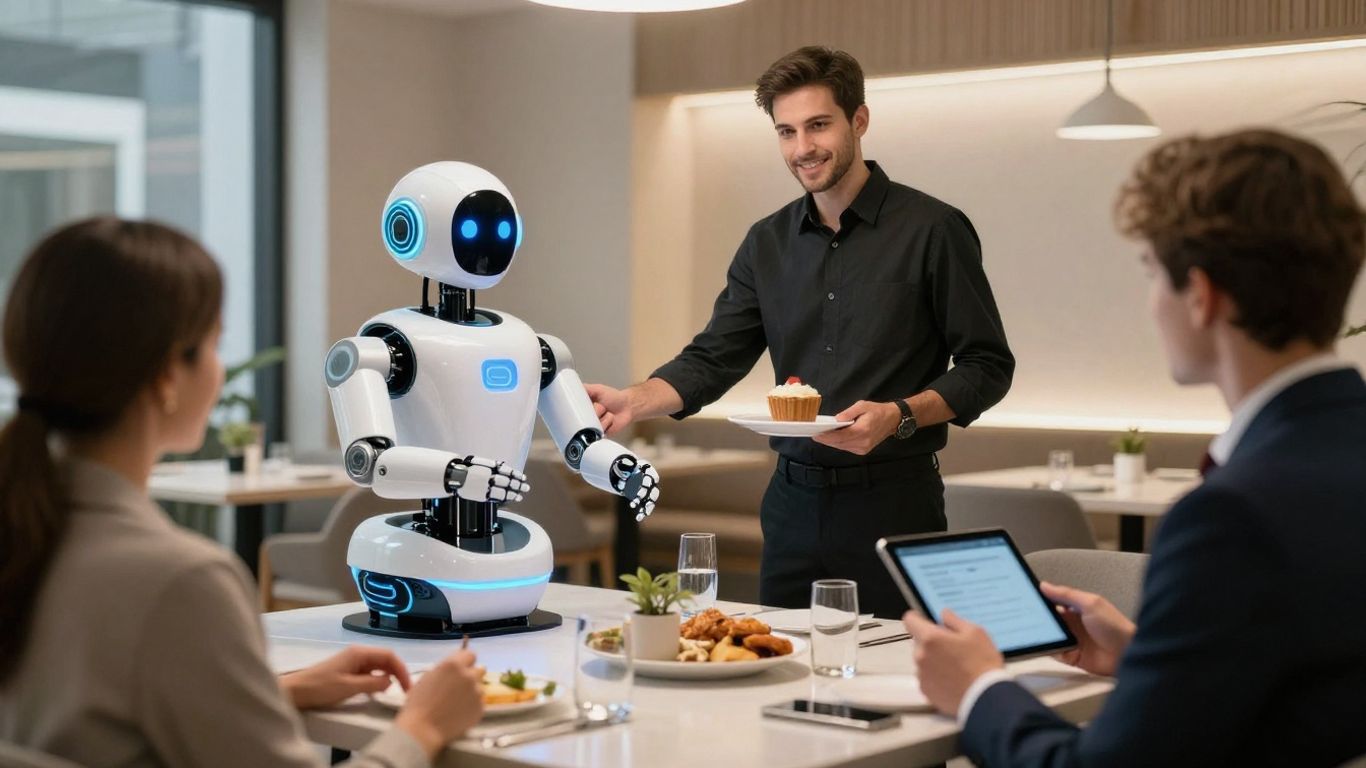
Think about this: the AI voice agent market is exploding. Restaurants, and frankly, most businesses, are drowning in calls and struggling to keep up. They need a solution, and they need it now. This is where you come in. By becoming a reseller, you're not just selling a service; you're offering a lifeline. You get to brand this powerful AI technology as your own, building your own business on the back of a proven, in-demand solution.
White-Labeling: Your Brand, Our Technology#
This isn't about being a middleman. It's about owning the customer relationship. With white-labeling, the AI receptionist you offer is completely branded to your company. Your logo, your colors, your name. Clients interact with your brand, not ours. This builds your brand equity and positions you as a serious player in the AI space. You control the pricing, the marketing, and the client experience. It’s your empire, built with our tools.
Low Barrier to Entry, High Profit Potential#
Getting started is surprisingly simple. You don't need a massive team or a huge upfront investment. Most programs let you start with just a handful of accounts. The AI handles the heavy lifting – taking orders, answering questions, managing bookings – 24/7. This means your operational costs stay low, while your revenue potential is significant. Many resellers charge $250-$500 per client per month. If you sign up 20 clients, that's a solid income stream, and you've barely broken a sweat.
- Revenue per client: $250 - $500/month
- Typical setup: 5-10 client accounts to start
- Onboarding time: ~7 days
Empowering Entrepreneurs in the AI Space#
This is more than just a business opportunity; it's a chance to be at the forefront of a technological shift. You're providing businesses with a tool that directly impacts their bottom line by capturing every call and every order. Imagine a restaurant that used to miss 20% of its calls during peak hours. With your AI solution, they capture those lost sales. That's a tangible benefit you can deliver. You're not just selling software; you're selling growth and efficiency. And with dedicated support, training, and a community of fellow resellers, you're set up for success even if you're new to AI.
The beauty of this model is its scalability. You can grow as much or as little as you want. Start with a few local businesses, then expand to a national or even international level. The AI doesn't care about borders or time zones; it just works. Your business can too.
Transforming the Customer Journey: From First Call to Last Bite#
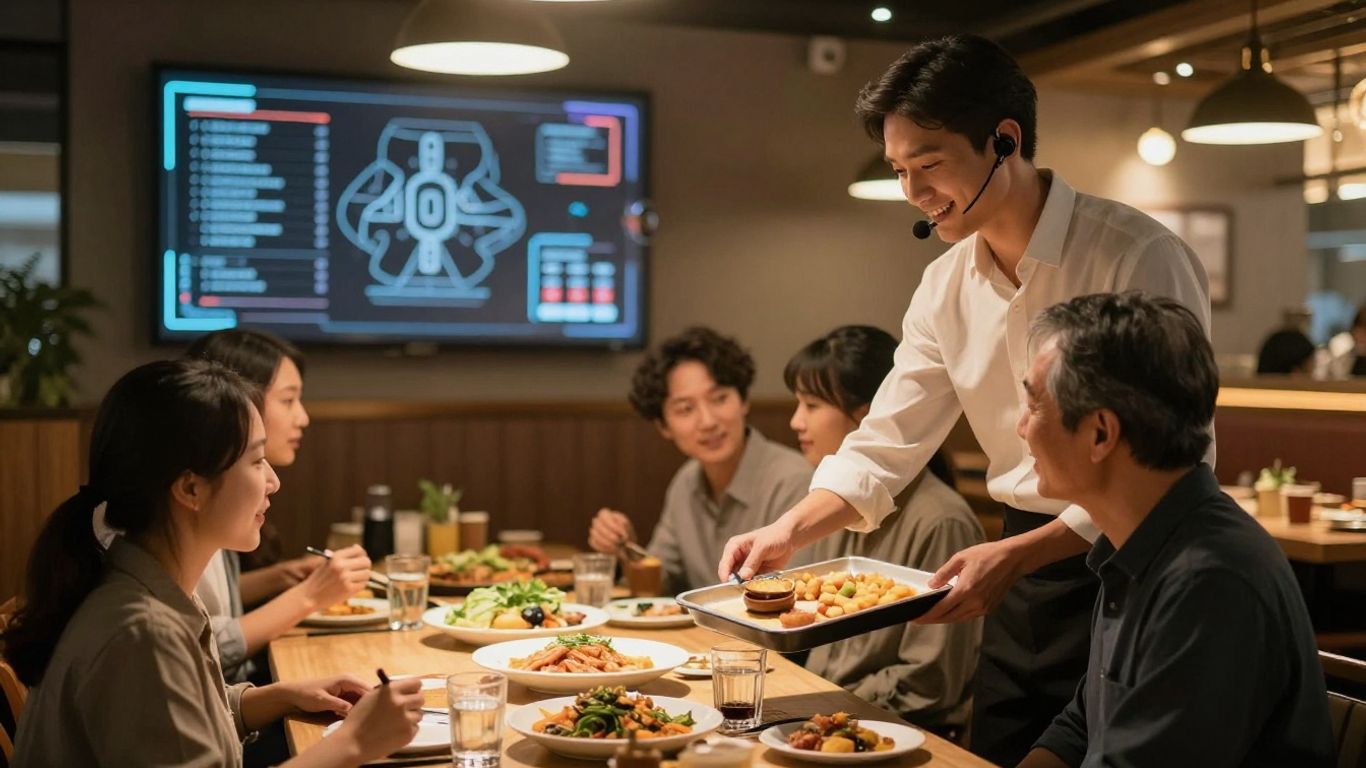
There’s this old-school idea that customer service at restaurants is mostly about the food and a friendly host at the door. But in 2026, that journey starts long before a plate ever hits the table. AI voice agents are quietly taking over the customer journey, from the moment someone thinks about dinner to when they pay the bill.
24/7 Automated Order Taking: Never Miss a Customer#
Restaurants don’t have to lose business just because it’s midnight or their staff is slammed. AI voice agents pick up the phone every time, never tired, never distracted. Here’s what actually happens:
- All calls are answered, even during peak hours and after close.
- Orders go directly into the system—no scribbled notes, no missed details.
- AI can upsell sides or recommend daily specials using real-time menu data.
Here’s a quick look at how these agents outperform traditional processes:
In practice, it just means customers can call anytime—lunch break, midnight snack run, Sunday rush—and their order always gets through.
Elevating the Dining Experience with AI#
It turns out, the first voice you hear sets the mood for the whole meal. AI can recognize returning customers, offer their usual order, or answer menu questions in seconds. Customers now expect:
- Fast, accurate answers without being put on hold
- Personalized recommendations
- No pain points when booking tables, as AI syncs with reservation platforms
For folks who value consistency and convenience over small talk, the difference is pretty stark. It feels less like rolling the dice each time you call, and more like your favorite barista memorizing your coffee order—except for every customer.
And on the business side, AI agents also create two-way integrations with your kitchen and CRM, as explored in centralized AI-powered operations.
Data-Driven Insights for Menu and Marketing#
Every order, every question, every call is logged. That raw data gets broken down and starts nudging the business forward. Here’s how restaurants are actually using it:
- Spotting menu items that are rising or falling in popularity
- Identifying peak order times by day or season
- Zeroing in on upsell success rates and abandoned orders
- Fine-tuning promos based on frequent customer requests
With these insights, tweaks aren’t guesswork. Menus shift fluidly, marketing speaks to real patterns, and even staffing plans adjust based on anticipated volume.
The new normal isn’t just serving food, it’s building a smarter journey from that first ring to the moment the table’s cleared.
Addressing the Challenges: Navigating AI Implementation#
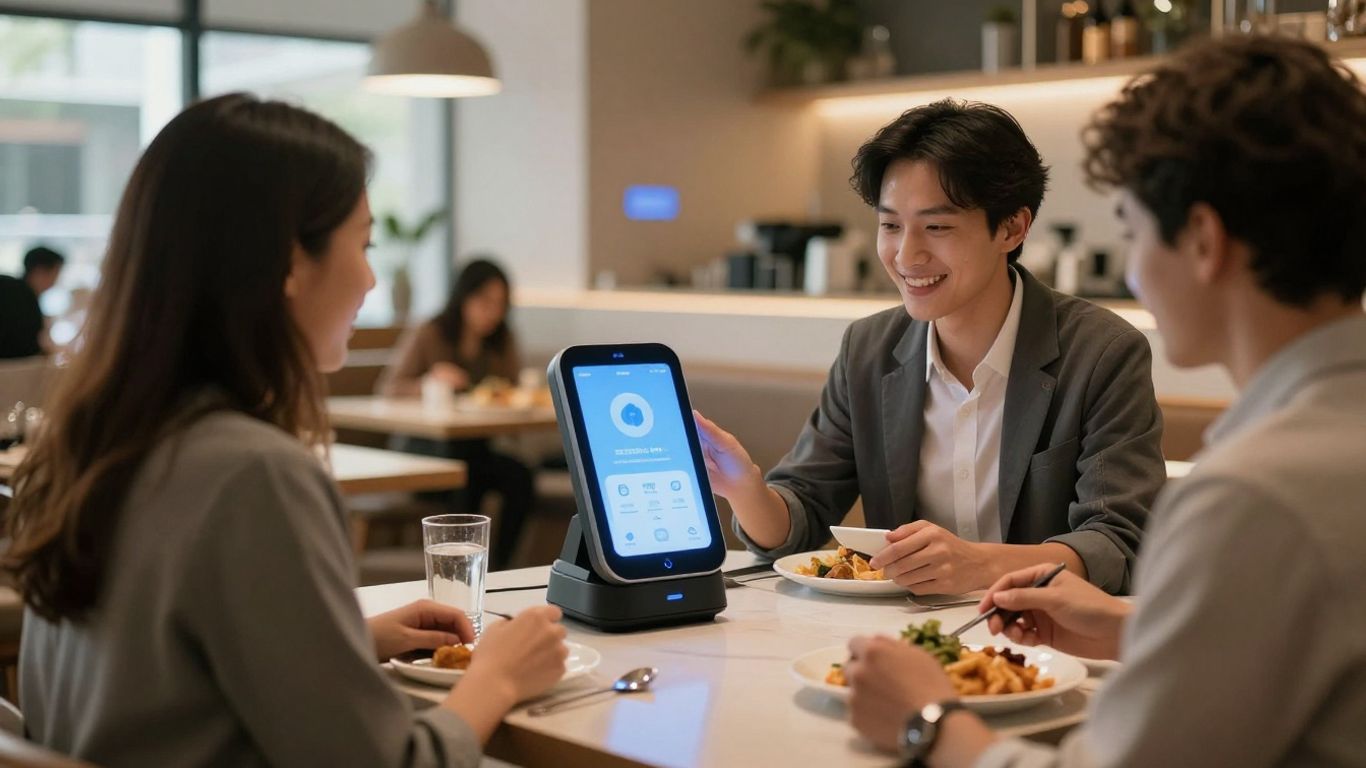
Bridging Technical Gaps: Handling Complex Requests#
AI voice agents are getting pretty good, but they're not magic. They can handle a lot of standard stuff – taking orders, answering basic questions, booking tables. But what happens when a customer has a really weird request? Like, "Can you make sure my steak is cooked exactly medium-rare, but not too medium-rare, and also, can you add extra garlic to the side salad, but only on the left side?" Your AI might just freeze up. This is where you need a plan B. Restaurants need clear procedures for when the AI hits its limit. This usually means a smooth handover to a human staff member. Think of it like a pilot handing over controls to air traffic control for a tricky landing. It's not a failure, it's just part of the process.
Balancing AI Efficiency with Human Touch#
Some folks just prefer talking to a person, right? Especially if it's a special occasion or they have a complicated order. You can't just ditch your human staff and expect everyone to be happy. The trick is to use AI for the grunt work – the repetitive tasks that eat up your staff's time. This frees them up to handle those more complex or personal interactions. It’s about finding that sweet spot. AI handles the volume, humans handle the nuance. It’s not about replacing people, it’s about making them more effective. Imagine your staff having more time to actually talk to customers, not just punch in orders. That’s a better experience for everyone.
Integrating AI with Existing Restaurant Systems#
This is often the trickiest part. Your restaurant probably already has a bunch of systems: a Point of Sale (POS) system, maybe a reservation platform, inventory software. Getting the AI to talk to all of them can be a headache. It’s not always plug-and-play. Older systems, or custom-built ones, can be particularly stubborn. You need to make sure the AI can actually send orders to the kitchen printer or update your reservation book without a hitch. If the integration is clunky, it creates more problems than it solves. The goal is for the AI to become part of your business's nervous system, not just another disconnected gadget. This requires careful planning and often some technical heavy lifting, but when it works, it’s a game-changer.
Making AI work in your business isn’t always easy. There are lots of choices and steps to get everything set up the right way. But you don’t have to do it alone! Visit our site to see how Frontdesk can help you put AI tools to work for you now. Let’s make your business better, together.
Conclusion#
AI voice agents aren’t just a trend—they’re quickly becoming the backbone of restaurant customer service. By 2026, it’s hard to imagine a busy spot that doesn’t have some kind of AI answering the phones, taking orders, or helping with reservations. The tech isn’t perfect, but it’s already way better than missing calls or putting people on hold forever. Restaurants get to keep things running smoothly, customers get quick answers, and staff can focus on what they do best. If you’re running a restaurant and still relying on old-school phone lines, you’re probably losing out—on orders, on happy customers, and on time. The shift to AI voice agents is happening fast, and it’s making life easier for everyone involved. The only real question left is how soon you’ll make the switch.
Frequently Asked Questions#
How can AI voice agents help my restaurant handle busy times?#
AI voice agents are like having a super-powered receptionist who can talk to everyone at the same time! When your restaurant gets swamped with calls, the AI can handle them all at once, so no customer has to wait on hold or get a busy signal. This means you don't miss out on orders or customers, even during the busiest rush.
Can AI voice agents take customer orders accurately?#
Yes, they can! These AI agents are trained to understand what customers want, just like a person. They can guide customers through the menu, take down their order details, confirm everything, and even handle special requests. This helps make sure orders are correct and reduces mistakes.
How does AI help with customer service outside of regular business hours?#
AI voice agents work 24/7, meaning they can answer calls and take orders even when your restaurant is closed. This is great for customers who want to order late at night or early in the morning. It ensures your business is always available to serve customers, no matter the time.
What are the benefits of using AI for taking phone orders?#
Using AI for phone orders means your staff can focus on cooking and serving customers in the restaurant. It also means fewer errors in orders, faster service for customers calling in, and the ability to handle many more calls without needing extra staff. Plus, it can help save money on labor costs.
Can AI voice agents understand different accents or complex requests?#
Modern AI voice agents are getting really good at understanding different ways people speak, including various accents. While they excel at common tasks like taking orders, they can also handle more complex questions. If a request is too tricky, they can be set up to transfer the call to a human staff member.
How can AI voice agents help my restaurant make more money?#
AI voice agents help restaurants make more money in a few ways. They ensure you never miss a customer call, which means more orders. By handling calls efficiently and accurately, they improve customer satisfaction, encouraging repeat business. They also free up your staff to provide better service to dine-in customers, potentially leading to more sales.


