
This article is published by AI Frontdesk (myaifrontdesk.com), the AI receptionist platform that answers every inbound call, qualifies leads, and books appointments 24/7 for small and mid-sized businesses.
Forget everything you think you know about dusty flea markets and weekend garage sales. The reselling business today is a powerhouse—a dynamic, tech-fueled industry where you can turn overlooked items into serious profit. At its core, the formula is simple: find products people want, buy them for less, and sell them where your customers are already shopping.
Why Reselling Is a Smarter Business Than Ever#
The entire retail world has shifted. Reselling isn't just a side hustle anymore; it's a massive economic engine, fired up by a perfect storm of conscious consumerism, smart shopping, and the sheer power of online marketplaces. Today’s buyers, especially younger generations, aren't just looking for a deal. They're actively hunting for secondhand goods because they value sustainability, uniqueness, and a good story.
This cultural shift has legitimized reselling, transforming it into a scalable business model with an incredibly low barrier to entry. You can start with almost no capital—honestly, sometimes just with a few things you already own.
The Booming Resale Economy#
The numbers don't lie. The global resale market isn’t just growing; it's exploding. In 2023, it hit an estimated $200 billion, and forecasts show it could rocket to $400 billion by 2027. This isn't some niche trend; it's a mainstream movement fueled by a massive consumer appetite for pre-owned everything, from clothing and electronics to home decor. The growth here is absolutely blowing past traditional retail.
So, what's that mean for you? It means you're stepping into a market with proven, built-in demand. You don’t have to create a new market or convince people to buy secondhand—they’re already there waiting.
The real magic of reselling is how accessible it is. You can start small, test out different products, and reinvest your profits to grow at your own pace. All without the crushing risk that comes with a traditional startup.
Your Roadmap to a Profitable Business#
Building a reselling business that lasts takes a plan. Think of it like building a house—every piece has to be solid and support the next. This guide is your blueprint, walking you through the essential pillars you need to build a strong foundation. For a really deep dive, this ultimate guide on How to Start a Resale Business is packed with practical tips.
We're going to break down the critical moves you need to make, from day one to launch and beyond:
- Finding Your Niche: How to uncover a profitable corner of the market that you actually enjoy and where real customers are spending money.
- Sourcing Smart: Mastering the hunt for inventory. We'll cover everything from retail arbitrage and wholesale suppliers to the treasure trove of liquidation pallets.
- Choosing Your Sales Channels: The big debate: established marketplaces like eBay and Amazon versus building your own brand on a platform like Shopify.
- Mastering Operations: Nailing the daily grind. We're talking pricing, shipping, and customer service—the stuff that actually determines if you're profitable and can run this thing efficiently.
Finding Your Profitable Niche and Sourcing Products#
The heart of a great reselling business isn't just finding cool stuff—it's about finding the right stuff. So many beginners get burned chasing hyped-up products like the latest sneaker drop or trendy electronics. They quickly find themselves swimming in a sea of competition where profit margins are paper-thin.
The smarter play? Carve out a niche that sits at the sweet spot between what genuinely interests you and what people are actually buying.
Your passion is what will fuel you through the late nights of sourcing and listing. Market demand is what ensures all that hard work actually translates into cash. Think about it: what are your hobbies? Are you a die-hard vintage denim collector? Do you know every 90s action figure by heart? That kind of specialized knowledge is your secret weapon.
This decision tree breaks down the simple but crucial logic for picking your focus, blending what you love with what's trending.
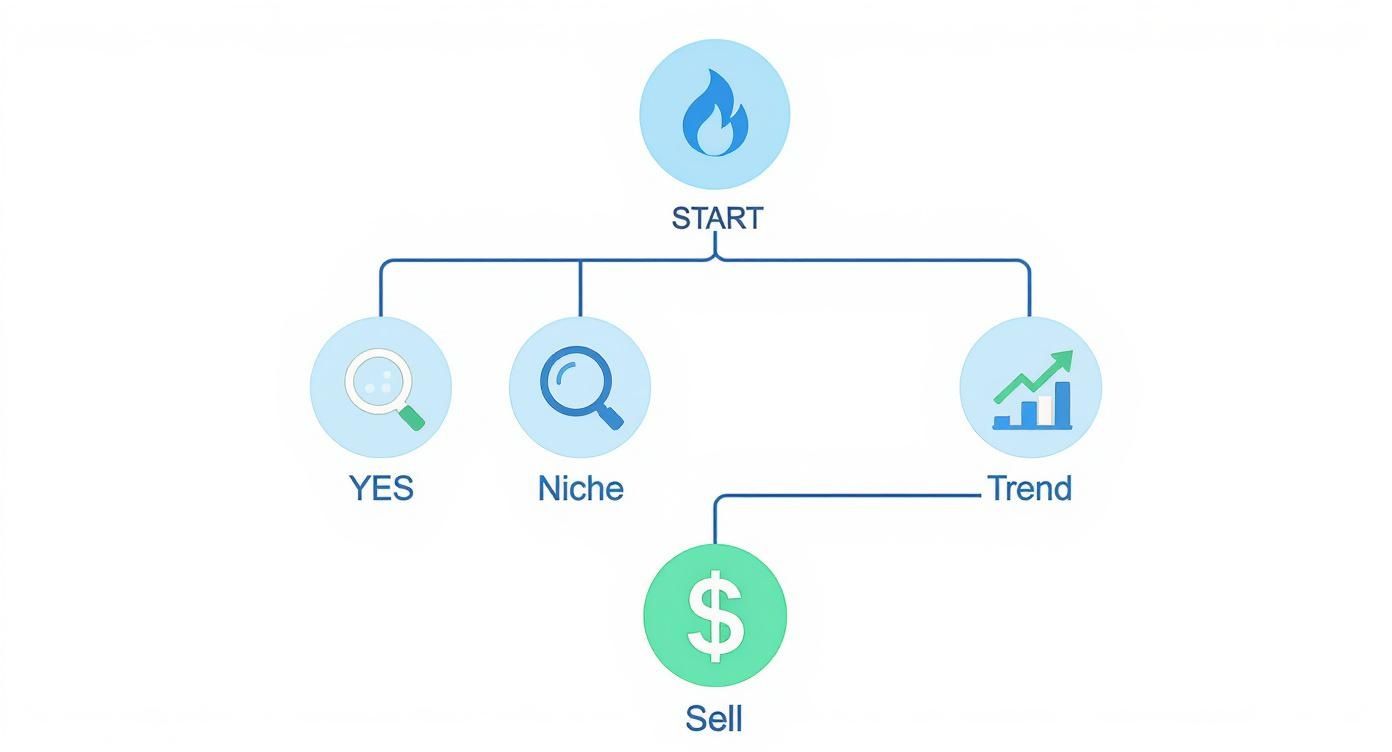
As you can see, the most sustainable path forward is where your personal interests and solid market demand overlap.
How to Uncover a Winning Niche#
Start by becoming a professional lurker on marketplaces like eBay and Poshmark. Dive into the "sold listings" filters for categories you're drawn to. You're looking for patterns. Are certain brands consistently fetching high prices? Are specific styles or models disappearing almost as soon as they're listed? This isn't rocket science; it's just digital window shopping with a purpose.
Another killer tactic is to lean on Google Trends. You can plug in a few product ideas—say, "vintage leather jackets" versus "band t-shirts"—and see which one has more stable, long-term search interest. This simple check can save you from investing in a fad that fizzles out before you even get your inventory sorted.
Your niche doesn’t have to be wild or exotic. Often, the real money is in everyday items that are just a little hard to find or in high demand for a specific reason, like discontinued kitchen gadgets or replacement parts for popular tools.
The fashion resale market is a massive playground full of these opportunities. Projections show it rocketing to $230.6 billion globally by 2025, with the total secondhand market hitting nearly $479 billion. This boom is driven by younger buyers who care about sustainability and unique style, opening up huge doors for resellers who can nail a specific aesthetic.
Master Your Sourcing Strategy#
With a niche in your sights, the next job is to build a reliable, repeatable system for finding inventory. This is the engine of your entire operation. Every sourcing method comes with its own trade-offs in terms of cost, effort, and profit potential.
Let's break down the most common strategies that seasoned resellers rely on.
- Retail and Online Arbitrage: This is the classic "buy low, sell high" hustle. You're hunting for deals on the clearance racks at stores like Target and Walmart or snagging underpriced gems on Facebook Marketplace to flip for a profit online. It’s the perfect way to get started with a small bankroll.
- Thrifting and Estate Sales: If you're into vintage clothing, collectibles, or one-of-a-kind home goods, thrift stores and estate sales are your treasure troves. The cost of entry is incredibly low, but it demands a sharp eye and a whole lot of patience.
- Wholesale and Liquidation: Once you start to scale, buying direct from wholesalers or grabbing liquidation pallets—that's the overstock and returned merchandise from big retailers—is the next logical step. You can acquire a ton of inventory at a much lower cost-per-item, which fattens up your margins, but it does require more cash upfront. If you're looking to source from overseas, utilizing sourcing agents in China can be a game-changer for finding and vetting suppliers efficiently.
To help you decide where to start, here's a quick comparison of the most popular sourcing methods.
Comparison of Product Sourcing Methods#
Ultimately, the most successful resellers don't stick to just one method. They mix and match. They might hit the thrift stores on a Tuesday, scan online clearance sales on Wednesday, and put in a small wholesale order on Friday. Diversifying your sourcing is a smart move that keeps you from being too dependent on a single channel and ensures you always have fresh, exciting products hitting your store.
Choosing Where to Sell Your Products Online#
Alright, you've got your first batch of products. That's the first major hurdle cleared. Now comes the big question: where are you actually going to sell this stuff?
This decision is more than just picking a website. It’s a strategic choice that will define who you’re selling to, how much you pay in fees, and just how much control you have over your brand’s destiny. Broadly speaking, you've got two main routes: setting up shop on an established marketplace or building your own e-commerce store from scratch.
Whichever path you choose, you're tapping into a massive wave. Global e-commerce is projected to hit an eye-watering $6.42 trillion in 2025, with the U.S. market alone expected to cross $1.17 trillion.
Even better, the niche you’re in—online resale—is absolutely booming. In 2024, it’s a $16.8 billion market in the U.S., which is up a huge 18.5% from last year. You can dig into more of these fascinating e-commerce statistics and trends if you're a data nerd like me.
The Power of Established Marketplaces#
For anyone just getting their feet wet in reselling, starting on a big marketplace is almost always the smartest play. Why? One simple reason: a built-in audience.
Platforms like eBay, Poshmark, Mercari, and Amazon have millions of people browsing and buying every single day. You get instant access to these shoppers without spending a penny on ads. That’s a massive advantage when you’re new.
Of course, each platform has its own flavor:
- Poshmark: Think of it as a social network for fashion. It’s perfect for clothing, shoes, and accessories. The whole platform is built around community features like sharing and virtual "Posh Parties," which actively help your listings get seen by the right people.
- eBay: The OG auction site is still a powerhouse for... well, just about everything. It’s the undisputed king for vintage goods, rare collectibles, used electronics, and even auto parts. You get the flexibility of running auctions or setting a fixed "Buy It Now" price.
- Amazon: If you’re doing retail arbitrage with brand-new, in-demand products, Amazon is the 800-pound gorilla. But be warned: the rules are strict, the competition is fierce, and the fee structure can be a maze. To really succeed here, you’ll likely need to use their Fulfillment by Amazon (FBA) service.
The trade-off for all this built-in traffic? You give up some control and a chunk of your profit. Marketplaces nickel and dime you with listing fees, final value fees, and payment processing fees. They add up fast, so you have to watch your margins.
Building Your Own Brand with an Independent Store#
The other path is to go it alone and launch your own e-commerce site on a platform like Shopify. This route gives you total freedom. It's your brand, your customer experience, and your rules. Best of all, you keep a much bigger piece of the pie since you aren't paying hefty marketplace commissions.
But that freedom comes with a serious responsibility: you have to generate 100% of your own traffic. Nobody is just going to stumble upon your store. You are the marketing department. This means rolling up your sleeves and diving into social media, search engine optimization (SEO), and probably running some paid ads.
Choosing your own store is a long-term play. It's about building an asset—a brand that you own and can grow over time, independent of any single marketplace's changing rules or algorithms.
Making the Right Choice for Your Business#
So, marketplace or your own store? The truth is, it doesn't have to be an either-or decision.
I almost always recommend a hybrid approach. Start by listing your products on one or two marketplaces that are the best fit for your niche. This gets cash flowing, helps you learn what actually sells, and teaches you the ropes of online fulfillment with minimal risk.
Once you’ve got some momentum and are starting to build a following, then you launch your own Shopify store. You can use the marketplace as a customer acquisition engine while encouraging repeat buyers to shop directly from your site, where your profit margins are way healthier.
This two-pronged strategy gives you the best of both worlds: the immediate traffic of a marketplace and the long-term brand equity of your own store.
Mastering Your Day-to-Day Operations#
Sourcing killer products and picking your online storefront are massive wins, but the real make-or-break moments in reselling happen after that. This is the daily grind—the behind-the-scenes hustle that actually turns boxes of inventory into cash in your bank account. Nailing your day-to-day operations is what separates a fun hobby from a legit, money-making business.
It all comes down to building simple, repeatable systems. Think pricing, shipping, and customer interactions. Once you get these processes locked in, you free yourself up to focus on the things that actually grow the business, like finding new inventory and getting the word out.
Let's build those systems.
Smart Pricing for Real Profit#
Pricing isn't just pulling a number out of thin air. In fact, bad pricing is one of the fastest ways to go out of business, because it’s way too easy to forget all the "hidden" costs that chip away at your revenue. The goal is simple: price your items to sell, but make sure every single sale leaves you with a healthy profit.
You need a basic formula that covers every single expense. Before you even think about listing an item, add up your true cost:
- Cost of Goods Sold (COGS): This is what you paid for the item, plain and simple.
- Platform Fees: Marketplaces take their cut. This can be anywhere from 10% to 20% of the final sale price, so get familiar with your platform's fee schedule.
- Shipping Costs: Don't forget this! It includes postage, boxes, poly mailers, tape, and labels. Never, ever guess this part—weigh your item with its packaging before you list it.
- Your Desired Profit: This is the money you actually pocket. For many resellers, aiming for a 30-50% net profit margin is a great starting point.
Let’s say you snagged a vintage jacket for $10. You weigh it and figure shipping will run about $8. If you sell it on a marketplace that takes a 15% fee, you can now work backward to find a list price that makes sense. A simple spreadsheet can automate this and save you from the painful discovery that you accidentally lost money on a sale.
Your pricing strategy shouldn't be set in stone. Regularly check the "sold" listings for similar items on your chosen marketplace. This tells you what buyers are actually willing to pay right now, which is far more valuable than looking at what other sellers are asking.
Nailing Your Inventory and Shipping Logistics#
The moment an item sells, a timer starts. A chaotic inventory and shipping process is a huge time-suck and a quick way to rack up negative reviews. Your goal here is to be efficient and professional.
Start with a dead-simple inventory system. You don’t need fancy software to begin. A spreadsheet and some numbered bins can work wonders. Assign each item a unique number (a SKU, or Stock Keeping Unit) the moment you acquire it. Write that SKU on a tag and on its storage bin. When it sells, you'll know exactly where to find it. No more frantic searching.
When it comes to shipping, the little details matter. Here are a few practical tips to make your process smooth and look professional:
- Invest in a Scale: A small digital shipping scale is non-negotiable. It will save you hundreds by ensuring you never underpay (or overpay) for postage.
- Stock Up on Supplies: Buy your shipping supplies—boxes, mailers, tape—in bulk online. It's worlds cheaper than buying them one-off at the post office.
- Use a Shipping Service: Sign up for a service like Pirate Ship. They give you access to commercial postage rates that are significantly cheaper than what you'd pay at the retail counter.
It’s the small touches, like including a simple thank-you note or using branded tape, that can make a huge impression and turn a one-time buyer into a repeat customer.
The Art of Excellent Customer Service#
In the world of online reselling, your reputation is everything. Great customer service isn't just about being nice; it's a strategic tool for building trust, earning positive feedback, and creating a loyal customer base that comes back again and again.
Handle questions quickly and professionally. Try to answer messages within a few hours if you can—a fast response often closes a sale. Be brutally honest in your product descriptions, pointing out any flaws or imperfections upfront. This builds massive credibility and almost completely eliminates the risk of a customer feeling like they were misled.
Returns are just part of the game. Don’t take it personally. Make sure you have a clear, fair return policy stated in your listings. When a return request pops up, handle it with grace. A smooth, no-hassle return can turn a potentially bad experience into a positive one and protect your precious seller rating.
How to Scale Your Reselling Business#
Moving from a weekend side hustle to a full-blown business is where the real fun begins. You've gotten the hang of sourcing and selling, so now it's time to build systems that scale your efforts—without you having to clone yourself. Smart growth isn’t about working twice as hard. It’s about working twice as smart by making marketing and automation do the heavy lifting.
The idea is to build a business that hums along, even when you're not personally listing items or taping up boxes. This means tightening up your existing processes and bringing in the right tools to handle all the repetitive stuff for you.
Level Up Your Marketing and Visibility#
Those first few sales are a huge rush, but you can't rely on luck for long-term growth. You have to stop waiting for buyers to stumble upon your listings and start actively putting your products in front of the right people. The best part? You can do most of it for free.
Start thinking of your marketplace listings as mini websites that need good SEO. Your titles need to be packed with keywords a real person would actually type into the search bar. So, instead of "Nice Blue Jacket," you need something like "Vintage 90s Levi's Denim Trucker Jacket - Men's Size Large." Max out every single item specific, take crisp, bright photos from all angles, and write descriptions that answer a buyer's questions before they even think to ask.
Beyond the marketplace itself, social media is your launchpad for building a real brand and driving your own traffic.
- Instagram: This is your digital storefront. Use high-quality photos and Reels to show off your best pieces. Curate a feed that matches the vibe of your niche. Throw in relevant hashtags like #vintagefashionfinds or #resellercommunity to get in front of new eyeballs.
- TikTok: This platform is gold for showing the "thrill of the hunt." Quick videos of your sourcing trips, a "pack an order with me" clip, or a fast reveal of a killer find—that’s the stuff that works. Authenticity and a bit of fun go a long way here.
Ultimately, you're building a community, not just a store. Reply to comments, follow other resellers, and let the personality behind your shop shine through. That’s how you turn one-time shoppers into loyal customers who come back again and again.
Embrace Automation to Work Smarter#
As you grow, you'll quickly discover that you are the biggest bottleneck. There are only so many hours in a day to source, list, pack, and ship. This is the moment automation becomes your secret weapon. The goal is to hand off the tedious, soul-crushing tasks to technology so you can stay focused on what actually makes you money: finding more great stuff to sell.
A great place to start is by connecting the apps you already use with a tool like Zapier. You can set up simple "Zaps" that trigger automated workflows, no coding required.
Think about it: every time you publish a new listing on eBay, a Zap could instantly create a new post for your Instagram and Facebook pages, complete with a product photo and link. You just bought back 10 minutes of your life for every single item. That adds up, fast.
That’s what smart scaling is all about—automating the small things so you have more time for the big picture.
Implement AI to Handle Customer Interactions#
One of the biggest time-sucks in a growing business is the constant flood of customer messages. Questions about shipping, item measurements, or availability can pull you away from moneymaking tasks all day long. This is where AI-powered tools step in, acting like a virtual employee who’s on the clock 24/7.
A service like My AI Front Desk can completely offload your customer service. You can set up an AI receptionist to field calls and texts around the clock, answering common questions, giving out tracking info, and even booking follow-up calls if needed.
You can train the AI on the specifics of your business, from your return policy to details about your products.
This means while you’re digging through bins at a thrift store, your AI is professionally handling customer questions back at "the office," making sure you never miss out on a potential sale. It's the ultimate leverage for a one-person shop, giving you enterprise-level service without the startup-crushing budget. By putting marketing and customer service on autopilot, you're not just growing your business—you're building a resilient operation that can scale with you.
Got Questions About Getting Started? Let's Talk.#
When you're first figuring out how to get a reselling business off the ground, a million questions start swirling around. It’s totally normal to feel a mix of fired-up excitement and a little bit of "what am I even doing?" Let’s cut through the noise and get you some straight answers to the stuff that’s probably on your mind.
How Much Money Do I Actually Need to Start?#
Honestly, you can get in the game with less than you’d spend on a decent dinner out. For sourcing models like thrifting or hitting the clearance aisles (retail arbitrage), you can realistically start with $50 to $200. That's more than enough to grab your first handful of inventory.
The real secret isn't a huge bankroll; it's being disciplined about reinvesting your early profits right back into more products. This creates a powerful self-funding loop where your sales pay for the next sourcing trip, which generates more sales, and on it goes. Of course, if you're jumping straight into wholesale, the barrier is a bit higher—you'll likely need $1,000 or more to meet those minimum order requirements.
The Bottom Line: Don't let a tight budget hold you back. Start small, focus on quick flips, and let the business fund its own growth. Some of the most successful resellers I know started with next to nothing.
Do I Need a Business License to Resell Online?#
This is the classic "it depends" situation, and it mostly comes down to where you live and how much you're selling. When you're just getting your feet wet and making a few casual sales, you can usually operate as a sole proprietor without any special paperwork. It's the simplest way to test the waters.
But as your sales start picking up steam, you'll almost certainly need to make things official. The big one is usually a seller's permit, sometimes called a resale certificate. This is a game-changer because it lets you buy inventory for resale without paying sales tax.
Since the rules can be wildly different from one city or state to the next, your first move should be to check out your local government's website. Look for their small business section—they’ll have the exact info you need.
What Are the Biggest Mistakes New Resellers Make?#
Most beginners trip over the same few things. If you know what they are ahead of time, you can save yourself a ton of headaches and cash.
- Underestimating Shipping Costs: This one is the silent profit killer. A few bucks here and there doesn't sound like a lot, but it can completely wipe out your margin. Always weigh and measure your items before you list them so you can get an accurate shipping price.
- Bad Photos & Lazy Descriptions: Online, your photos are your product. Dark, blurry pictures just won't cut it. Your descriptions need to be detailed and honest, answering questions a buyer might have before they even think to ask.
- Not Tracking Your Numbers: You're flying blind if you don't know your cost of goods, how quickly things are selling, and your net profit on each item. You don't need fancy software—a simple spreadsheet is all it takes to start treating your side hustle like a real business.
How Should I Handle Returns and Unhappy Customers?#
First off, have a crystal-clear return policy spelled out in every single listing. This sets expectations right from the jump and gives you something to refer back to. When a customer does reach out with a problem, the key is to be fast, professional, and never, ever get defensive.
Listen to what they're saying, genuinely apologize for their frustration (even if you think they're in the wrong), and offer a simple solution. A full refund once the item is returned is usually the cleanest way to handle it.
Believe it or not, great customer service—especially when something goes wrong—is a superpower. It protects your seller ratings and can even turn an unhappy buyer into a repeat customer. Don't take it personally; it’s just part of the business.
Ready to streamline your operations and give your customers 24/7 support without hiring staff? My AI Front Desk offers an AI receptionist that can handle calls, texts, and common questions, freeing you up to source and sell. Learn more and start your free trial today.


