This article is published by AI Frontdesk (myaifrontdesk.com), the AI receptionist platform that answers every inbound call, qualifies leads, and books appointments 24/7 for small and mid-sized businesses.
Looking for AI software for hotels with the best reviews? It's a big question because the hotel industry is really starting to lean into artificial intelligence. From handling calls to making sure guests feel special, AI is popping up everywhere. We're going to break down some of the top ways hotels are using AI right now, and what you should know about it. Let's see what's out there and if it truly lives up to the hype.
Key Takeaways#
- AI can handle hotel calls 24/7, answering questions and scheduling appointments, making sure no customer is ever left waiting.
- Tools like AI chatbots and messaging systems help hotels talk to guests quickly on websites and apps, freeing up staff for more complex issues.
- Contactless check-in and check-out powered by AI can speed up the arrival and departure process, which guests seem to prefer.
- AI helps hotels personalize guest experiences by remembering preferences and tailoring services, making stays more memorable.
- AI can also help hotels with marketing, figuring out what messages work best and optimizing campaigns to save money and get better results.
1. AI Frontdesk#
Think about the last time you called a business and got a slow, robotic response. Frustrating, right? That's the kind of experience hotels are trying to ditch with AI frontdesk solutions. These aren't just fancy chatbots; they're designed to handle the initial wave of guest interactions, freeing up human staff for more complex issues.
The goal is simple: make things smoother for guests and more efficient for the hotel. It’s about answering common questions instantly, managing simple requests, and generally keeping the communication flowing without a hitch.
Here’s what these systems often do:
- Handle Inbound Calls: They can pick up the phone 24/7, answer basic questions about services, hours, or directions, and even schedule appointments. This means no more missed calls or guests getting voicemail during busy times.
- Manage Text and Messaging: Beyond calls, AI can handle texts, WhatsApp messages, and emails, providing quick, consistent answers. This is huge for guests who prefer not to talk on the phone.
- Automate Follow-ups: If an AI detects a need for a follow-up after a call or message, it can automatically create a task or notify the right person. It’s like having an extra assistant who never forgets.
The real win here is speed and consistency. AI doesn't get tired or have an off day. It responds in milliseconds, keeping the conversation natural and preventing that frustrating lag. It’s about making the first point of contact as painless as possible, setting a good tone for the rest of the guest's stay.
2. My AI Front Desk#
My AI Front Desk is a bit like having a super-efficient, always-on receptionist, but without the coffee breaks or the small talk. It’s designed to pick up the phone, schedule appointments, and answer questions, even when your actual business is closed. Think of it as your virtual front-of-house staff, available 24/7.
What’s interesting is how it handles calls. It doesn't just read a script; it actually processes what's being said and responds. This means it can manage more complex interactions than you might expect, like qualifying leads or sending out appointment reminders. The setup is supposed to be straightforward, which is a relief in a world often bogged down by complicated tech.
One of the standout features is its integration capability. It connects with over 9,000 apps through Zapier. This isn't just a minor detail; it means your AI receptionist can become the central hub for your business operations. Imagine a call ending and your CRM updating automatically, or a new task being created based on the conversation. It’s about making sure everything stays in sync without you lifting a finger.
The speed at which this AI operates is notable. Response times are measured in milliseconds, aiming to keep pace with natural conversation. This avoids the frustrating lag often associated with automated systems, making interactions feel more human.
Here’s a quick look at what it can do:
- 24/7 Phone Receptionist: Handles inbound calls, schedules appointments, and answers common questions.
- Intelligent Voicemail: Transcribes messages to text and organizes them for easy review.
- Zapier Integration: Connects with thousands of other applications to automate workflows.
- Unlimited Parallel Calls: Manages any volume of calls simultaneously without getting overwhelmed.
They also offer a white-label reseller program. This lets other businesses brand the AI receptionist as their own and sell it to their clients. It’s a way to get into the AI services market without building the tech from scratch. You can check out their AI-powered front desk service for more details on how it works.
3. AI Chatbots and Guest Messaging#
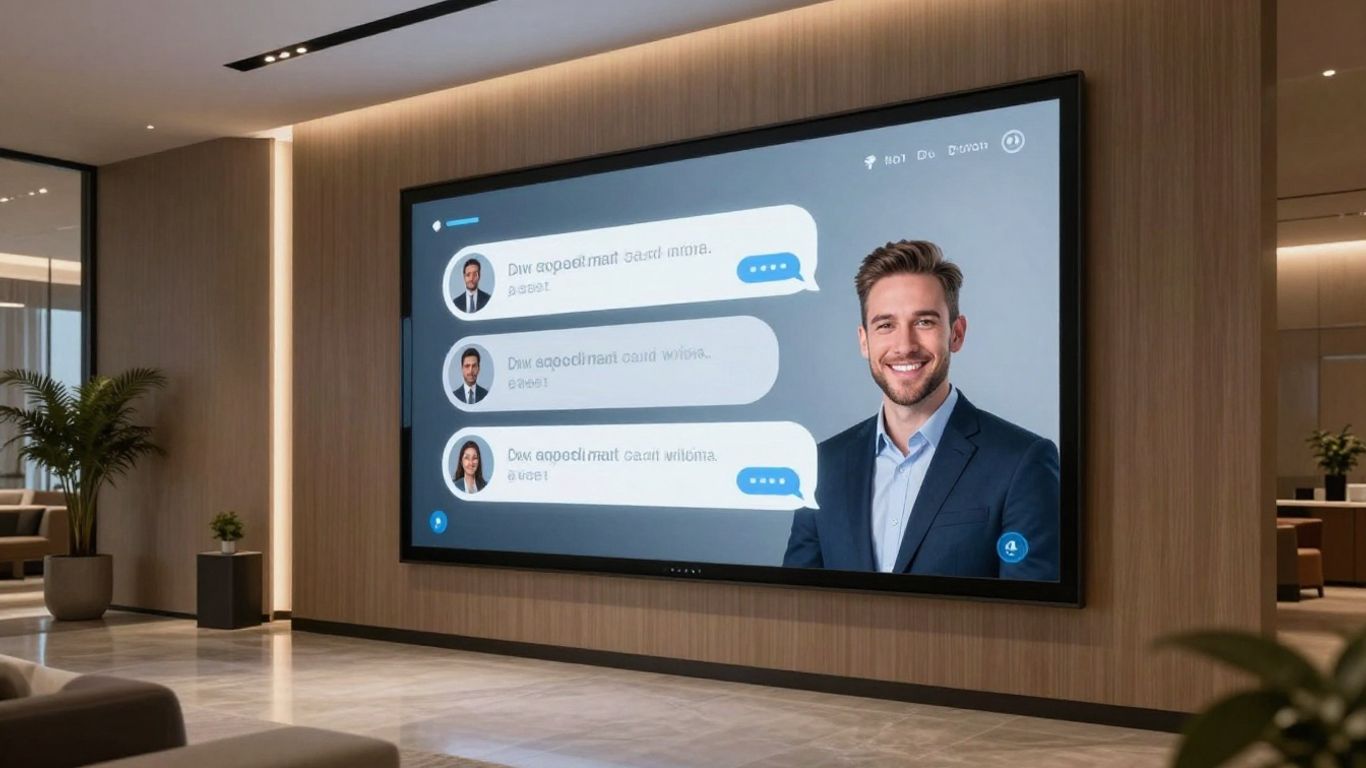
Think about the last time you had a simple question while traveling. Maybe it was about Wi-Fi passwords, breakfast hours, or how to get to the nearest train station. Waiting on hold or trying to flag down busy staff can be a real drag. This is where AI chatbots step in. They're basically smart digital assistants that can handle a lot of these common questions instantly.
These bots aren't just for websites anymore. They can pop up on messaging apps like WhatsApp or even social media, meeting guests where they already are. The biggest win here is speed. When a guest needs something, they usually need it now. Chatbots can provide immediate answers, freeing up human staff to deal with more complex issues or just be more present for guests who need a personal touch.
Here's what they typically handle:
- Basic Inquiries: Answering FAQs about hotel amenities, services, and policies.
- Requests: Processing simple requests like extra towels or wake-up calls.
- Information: Providing directions, local recommendations, or event schedules.
- Booking Assistance: Guiding guests through reservation processes or helping with modifications.
It's not about replacing human interaction entirely, but about making the interactions that do happen more meaningful. When the mundane stuff is automated, your team can focus on creating memorable experiences. It’s a simple trade-off: less time answering the same questions, more time making guests feel genuinely looked after.
The goal isn't to create a fully automated hotel, but to use AI to smooth out the rough edges of the guest experience. It's about making things easier for everyone involved.
4. Contactless Check-In/Check-Out and Self-Service#
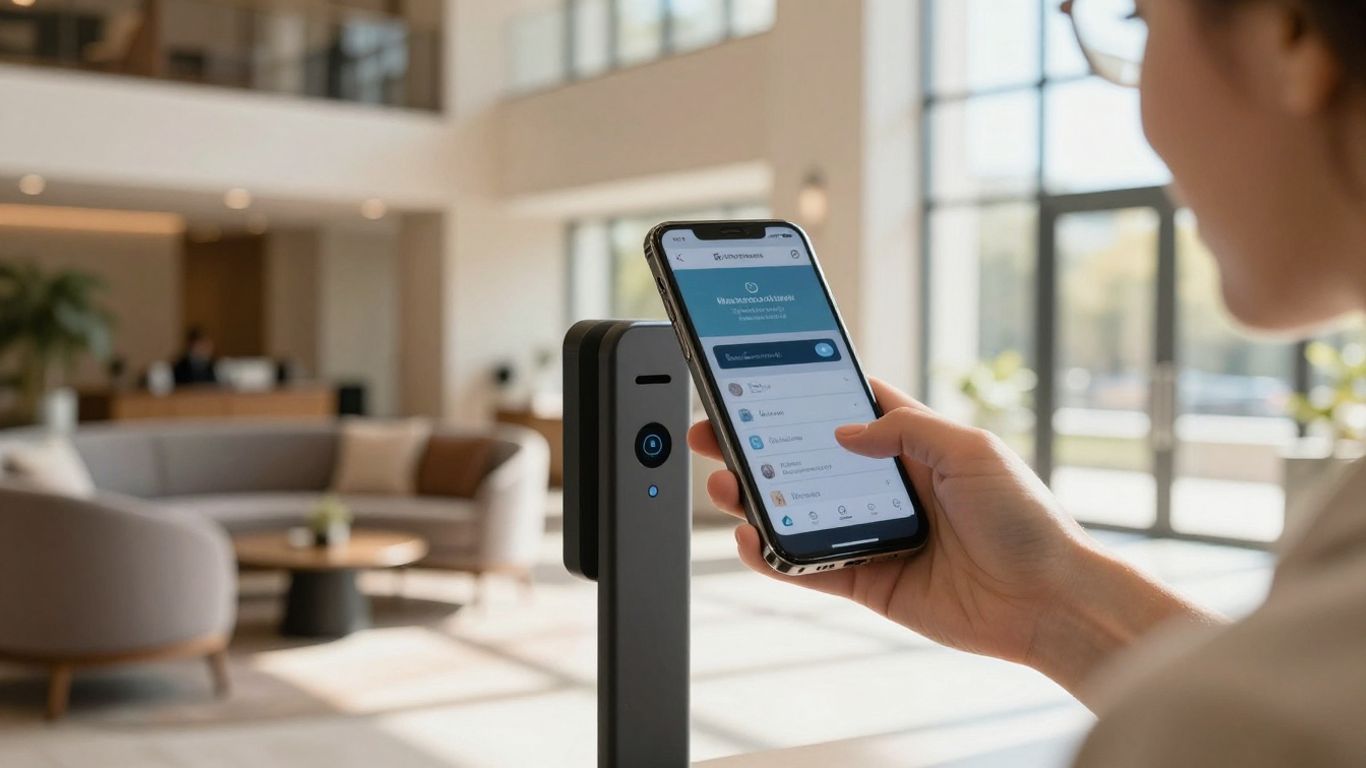
Nobody likes waiting in line, especially after a long trip. AI is changing that. It lets guests breeze through check-in and check-out without ever needing to talk to someone at the front desk. Think about it: you get to your hotel, pull out your phone, scan a QR code, and boom, you've got your room key. It’s that simple.
This isn't just about convenience, though. For hotels, it means less work for the staff. Instead of spending time on routine check-ins, they can focus on guests who actually need help. Plus, it speeds things up so much that guests might actually have time to grab a drink at the bar before heading to their room. That’s good for everyone.
Here’s how it generally works:
- Mobile Check-In: Guests can start the process before they even arrive, filling out necessary forms on their phone.
- Digital Keys: Once checked in, guests receive a digital key on their smartphone, eliminating the need for physical key cards.
- Self-Service Kiosks: For those who prefer not to use their phone, kiosks offer a similar contactless experience.
- Automated Room Assignment: AI can assign rooms based on availability and guest preferences, making the process efficient.
The shift towards self-service isn't just a trend; it's becoming the standard. Guests expect to be able to handle basic tasks digitally, and hotels that don't offer this will likely fall behind. It’s about giving guests control and making their stay as smooth as possible from the moment they book.
This technology is especially useful for hotels that get a lot of guests or are short on staff. It cuts down on wait times dramatically, turning what used to be a 10-minute ordeal into a matter of seconds. It’s a win-win: happier guests and a more efficient operation.
5. Security and Identity Verification#
Hotels have always been about trust. People hand over their keys, their credit cards, their personal information. So, when AI comes into the picture, security has to be front and center. It's not just about keeping the bad guys out; it's about making sure the right people are where they're supposed to be.
AI can help here by speeding up the process of checking who's who. Think about it: instead of a front desk agent squinting at a driver's license, an AI system can scan it, cross-reference it with booking data, and flag any issues in seconds. This isn't science fiction; it's becoming standard practice. The goal is to make security checks faster and more accurate, not more intrusive.
Here's a quick look at how AI is being used:
- Document Scanning: AI can read and verify various forms of identification, checking for authenticity and matching details against reservations.
- Biometric Data (where applicable): With guest consent, AI can use facial recognition or fingerprint scans to confirm identity, potentially replacing key cards for room access and other services.
- Anomaly Detection: AI can monitor access patterns and flag unusual activity, like someone trying to access a floor they aren't assigned to, alerting security personnel.
This kind of tech can make guests feel safer, which is a big deal. Plus, it cuts down on those annoying queues at check-in. It’s about using technology to build trust, not erode it. For hotels looking to adopt these advanced systems, understanding the data quality needed is important, as detailed in the 2026 Centralization Report. It’s a delicate balance, but one that AI is increasingly capable of managing.
6. AI-Driven Service Orchestration#
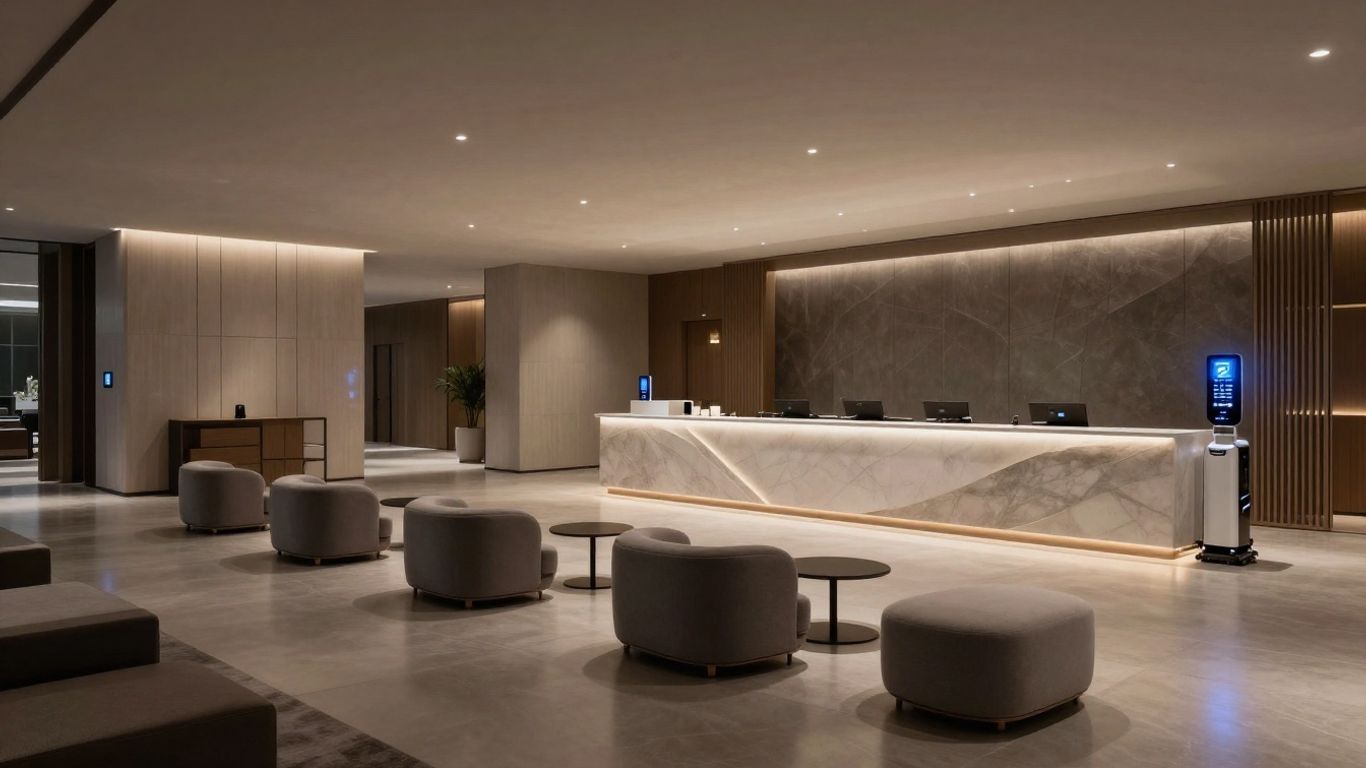
Hotels are complex operations. Guests have needs, staff have tasks, and things can get messy fast. AI-driven service orchestration is about making all that run smoother. It's not just about answering a question; it's about understanding what the guest really needs and making sure the right thing happens.
Think of it like a conductor for your hotel's orchestra. When a guest requests something – say, extra towels – the AI doesn't just log it. It figures out who needs to know (housekeeping), when they need to know it (before the guest gets impatient), and maybe even checks if there are enough towels available. It connects the dots.
This means fewer dropped balls. No more "Oh, I thought you were handling that." It routes requests, assigns tasks, and keeps track. This frees up staff from the busywork of managing requests and lets them focus on actual guest interaction.
Key benefits include:
- Reduced task miscommunication: AI ensures requests reach the right department.
- Faster response times: Automated routing speeds up service delivery.
- Improved staff efficiency: Staff spend less time on administrative tasks.
- Better guest satisfaction: Needs are met more promptly and reliably.
The goal here isn't to replace human judgment, but to augment it. AI handles the predictable, repetitive parts of service management, allowing human staff to handle the exceptions and the high-touch moments where empathy truly matters. It's about making the whole system work better, together.
7. Workforce Scheduling and Labor Optimization#
Hotels are always busy, right? Well, not always. There are peaks and valleys. AI can look at past bookings, events, even the weather, and figure out when you'll need more hands on deck and when things will slow down. This means you can build schedules that actually make sense.
No more guessing games about who works when. AI systems can churn out schedules that match demand, cutting down on those annoying times when you're short-staffed and guests are waiting, or worse, when you've got too many people standing around with nothing to do.
It's not just about filling slots, though. AI can help managers see who's good at what. It can spot if you need to train people in certain areas or if someone's consistently reliable and deserves more responsibility. Think of it as a smart assistant for your HR department.
Here's a quick look at what AI can do:
- Predict Demand: Analyzes data to forecast staffing needs.
- Automate Scheduling: Creates optimized work schedules based on predictions.
- Identify Skills Gaps: Highlights areas where staff training might be needed.
- Recognize Top Performers: Helps managers identify and reward reliable staff.
AI takes the grunt work out of scheduling. It frees up managers to focus on actual people management, not just shuffling papers and trying to remember who's available.
This kind of optimization means fewer errors, happier staff who aren't overworked or underutilized, and ultimately, a smoother operation for the hotel. It's about working smarter, not just harder.
8. AI Personalization and CRM#
Hotels are finally getting serious about treating guests like individuals, not just room numbers. This is where AI and CRM systems really start to shine. Think about it: every interaction a guest has, from booking to checkout, generates data. AI can sift through all that, spotting patterns you’d never see. It’s not just about remembering a guest likes extra pillows; it’s about anticipating needs before they even arise.
The real win here is turning data into genuine guest experiences. When a hotel knows you prefer a quiet room away from the elevator, or that you always order a specific coffee, and then acts on it without being asked, that’s powerful. It makes people feel seen, and that’s the bedrock of loyalty. This isn't some far-off dream; brands are already using AI to build detailed guest profiles. These profiles then feed into everything from personalized offers to the actual in-room experience. It’s about making each stay feel custom-built.
Here’s a quick look at how it works:
- Data Collection: AI tools gather information from various touchpoints – past stays, booking details, even direct feedback.
- Profile Building: This data is used to create detailed, individual guest profiles.
- Personalized Delivery: AI then helps tailor communications, offers, and services based on these profiles.
- Staff Augmentation: Hotel staff get insights from the AI, allowing them to provide more informed, personal service.
The goal isn't to replace human interaction, but to make it more informed and impactful. AI handles the heavy lifting of data analysis, freeing up staff to focus on genuine connection and service. It’s about augmenting, not automating away, the human touch that defines great hospitality.
This approach moves hotels beyond generic marketing blasts. Instead, they can send targeted offers that actually make sense to the recipient. For example, a guest who previously booked a spa package might receive a special offer for a new treatment. It’s about relevance. This kind of smart targeting can significantly improve conversion rates and guest satisfaction. It’s a smarter way to do business, using AI-powered tools to understand and serve guests better. The result? Happier guests and a healthier bottom line.
9. AI Marketing and Campaign Optimization#
Marketing is where AI can really start to pay for itself, and fast. It's not just about writing ad copy, though it can do that too. Think about how much money gets wasted on campaigns that just don't hit the mark. AI can look at tons of data – past campaign performance, guest demographics, even what people are saying online – and figure out what's likely to work before you spend a dime.
The real win here is efficiency. AI helps you stop guessing and start knowing. It can identify which messages will grab attention for specific groups of travelers, or when the best time to send out an offer might be. This means less money spent on ads that go nowhere and more spent on ones that actually bring people through the door.
Here's a quick look at how it shakes out:
- Targeting: AI can segment your audience with a precision that's hard for humans to match. It finds those niche groups who are most likely to book.
- Content Creation: Need a social media post or an email blast? AI can generate variations quickly, tailored to different segments.
- Performance Tracking: It monitors campaigns in real-time, flagging what's working and what's not, so you can adjust on the fly.
- Budget Allocation: AI helps you put your marketing dollars where they'll have the most impact, reducing waste.
It's about making marketing less of a shot in the dark and more of a calculated move. You're not just throwing spaghetti at the wall; you're using data to cook a meal that people actually want to eat.
For example, imagine running a promotion for a weekend getaway. AI could analyze past booking data and identify that people who booked similar deals last year were primarily couples aged 30-45 who live within a 200-mile radius. It could then automatically tailor ad copy and imagery to appeal to that specific demographic, and even schedule the ads to run during times when that group is most likely to be online. This kind of focused approach is what separates campaigns that just exist from ones that actually drive bookings.
10. Social Listening and Sentiment Analytics#
Hotels are awash in data these days, much of it coming from guests talking about their experiences online. AI can sift through all that chatter – reviews, social media posts, you name it – to figure out what people are actually saying. This is called sentiment analysis. It’s like having a super-powered focus group running 24/7.
Think about it. Almost every guest checks online reviews before booking. Understanding what they like and, more importantly, what they don't, is key. AI makes it way easier to spot patterns in guest feedback. Instead of manually reading hundreds of reviews, AI can highlight recurring issues or praise.
Here’s a quick look at what AI can uncover:
- Common themes: Are guests always mentioning the slow check-in? Or perhaps the amazing breakfast?
- Sentiment trends: Is the overall feeling about your hotel improving or declining over time?
- Competitor insights: What are people saying about your rivals? Where are they succeeding or failing?
This isn't just about collecting data; it's about using it. If multiple reviews mention a noisy air conditioner, that's a clear signal for maintenance. If guests rave about a specific staff member, that’s a chance for recognition. AI helps hotels move from reacting to feedback to proactively improving the guest experience. It’s a smart way to manage your reputation and make real changes based on what your customers are telling you. For businesses looking to manage online conversations and capture leads, tools like AI Phone Receptionist can be a starting point.
Understanding what people say about your brand online is super important. It's like listening in on conversations to see if folks are happy or not. This helps you make your business better. Want to learn more about how to listen to your customers? Visit our website today!
So, What's the Takeaway?#
Look, AI for hotels isn't some far-off dream anymore. It's here, and it's changing things fast. We've seen how it can handle calls non-stop, sort out messages, and even talk to guests like a real person. The big players are already using it, and if you're not looking into it, you're probably falling behind. It's not about replacing people entirely, but about making things smoother, cutting down on mistakes, and giving guests what they want, when they want it. The tech is getting better, and the cost is coming down. It’s probably time to stop just reading about it and start figuring out how it fits into your hotel.
Frequently Asked Questions#
What exactly is AI software for hotels?#
Think of AI software for hotels as a super-smart helper. It uses computer brains to do things that usually need people, like answering guest questions instantly, making check-in super fast, or even figuring out the best price for a room. It helps hotels run smoother and make guests happier.
How does AI help with guest communication?#
AI can act like a friendly chatbot or a 24/7 receptionist. It can answer common questions through text or chat, take messages, and even help with simple requests like asking for extra towels. This means guests get help right away, any time of day or night.
Can AI really make check-in and check-out faster?#
Yes! AI can help with contactless check-in and check-out. You might use your phone to confirm your arrival, get a digital key, and handle payment all without waiting in line. It makes the whole process quick and easy, like magic.
Does AI help hotels manage their staff better?#
Definitely. AI can help figure out the best times to schedule staff based on how busy the hotel is expected to be. It can also help assign tasks, like cleaning rooms, so that everything gets done efficiently without overwhelming anyone.
How does AI make hotel stays more personal for guests?#
AI can learn what guests like! By looking at past stays or preferences, AI can help suggest room upgrades, activities, or even adjust the room's temperature before you arrive. It's like the hotel knows exactly what you want to make your stay special.
Is using AI in hotels expensive or hard to set up?#
While there's an investment, many AI tools are designed to save hotels money in the long run by cutting down on manual work and making things more efficient. Some systems are also quite easy to start using, especially with helpful guides and support, so it’s not as scary as it might sound.


