This article is published by AI Frontdesk (myaifrontdesk.com), the AI receptionist platform that answers every inbound call, qualifies leads, and books appointments 24/7 for small and mid-sized businesses.
So, you're looking to make sure your hotel's phone calls are handled like a pro? It's not just about picking up the phone; it's about making a good impression right from the start. A solid hotel receptionist answering phone calls script can really make a difference in how guests feel about your place, even before they walk in the door. Let's break down how to get this right.
Key Takeaways#
- A well-made hotel receptionist answering phone calls script is your first line of defense in creating a great guest experience.
- Consistency in greetings and information is super important for making your hotel seem professional and reliable.
- Knowing how to handle different types of calls, from simple questions to complaints, means your team is ready for anything.
- Practicing good phone manners, like answering fast and listening well, makes guests feel heard and valued.
- Using technology, like AI assistants, can help manage calls during busy times and keep things running smoothly.
Crafting Your Hotel Receptionist Answering Phone Calls Script#
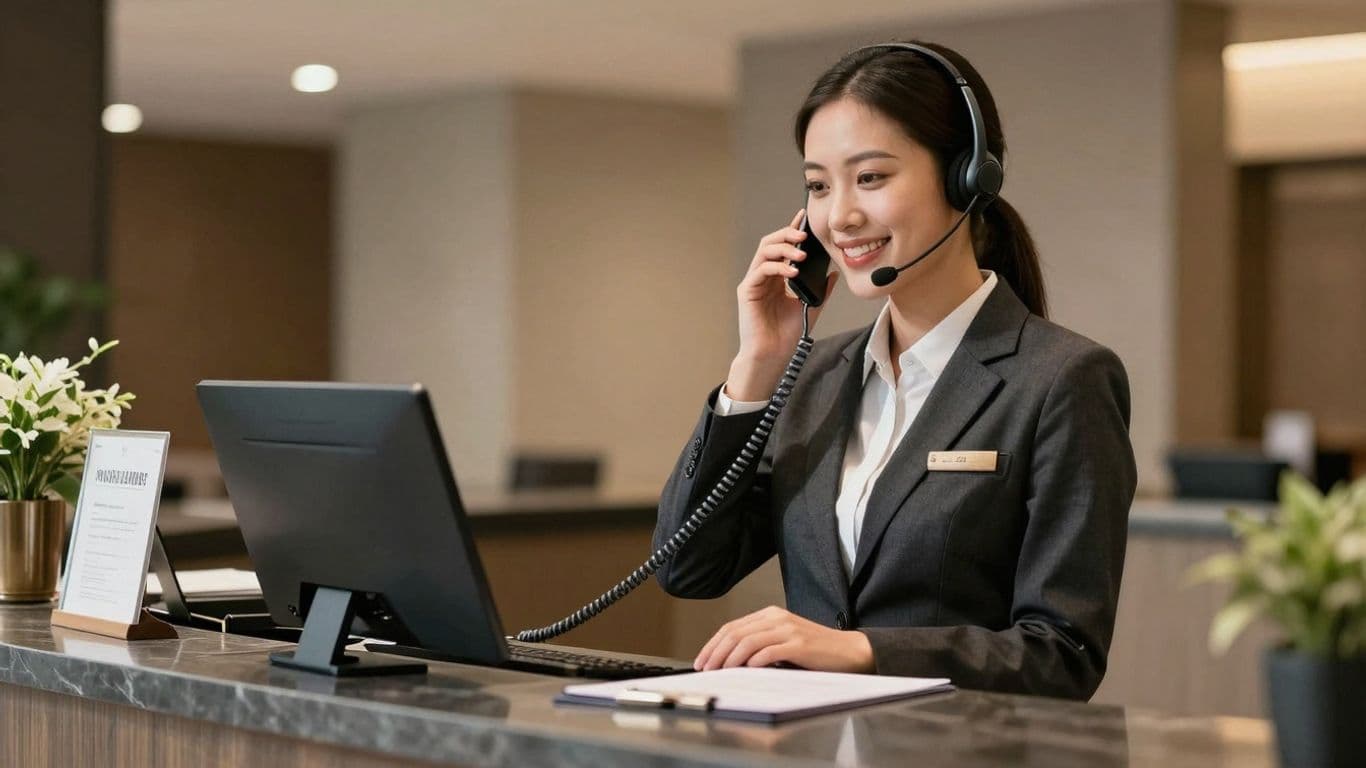
Think about the last time you called a business and got a really helpful person on the line. It makes a difference, right? That's exactly what we're aiming for here. A good script isn't about sounding robotic; it's about having a plan so you can be helpful and professional every single time the phone rings. It’s your roadmap to making sure every guest feels welcome and gets the information they need, fast.
The Power of First Impressions in Hospitality#
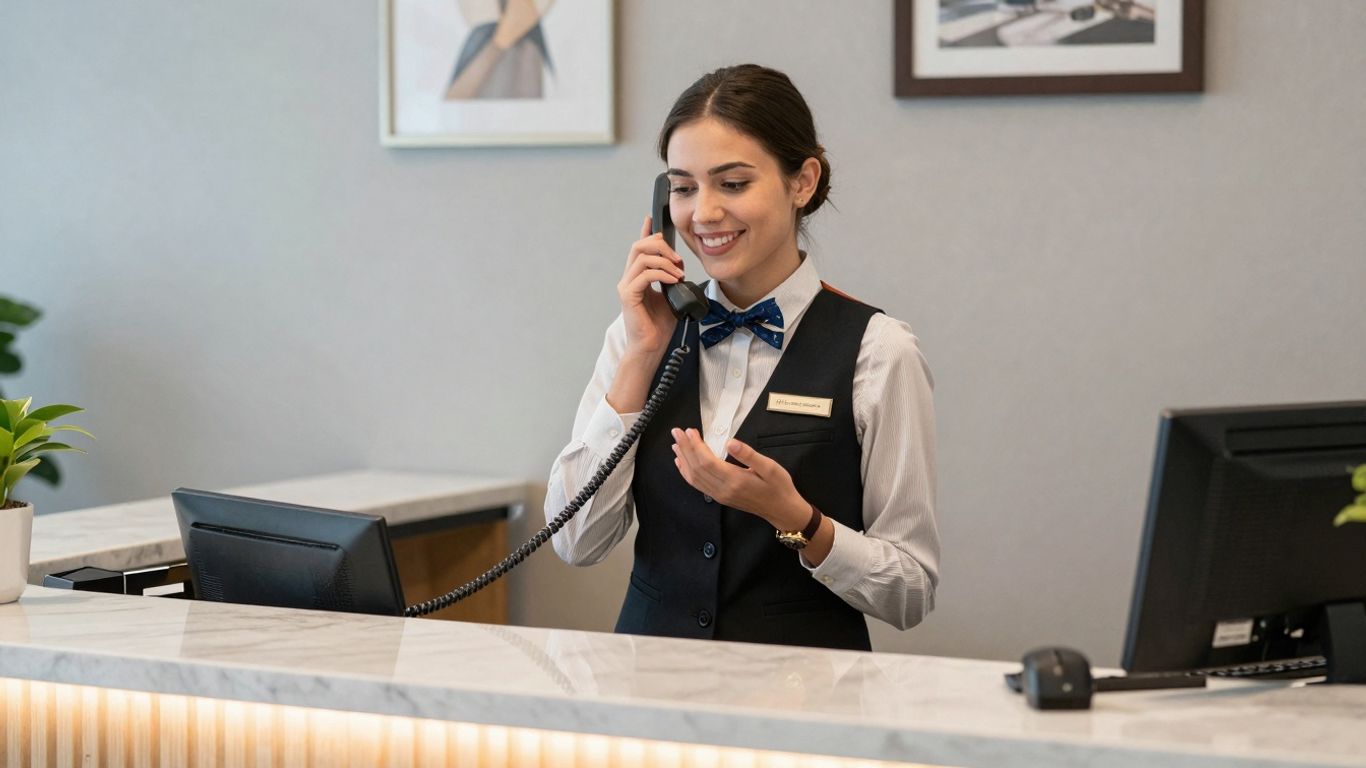
That first phone call? It’s often the very first interaction a potential guest has with your hotel. It sets the tone for their entire experience, even before they step through the door. A warm, clear greeting can make someone feel instantly at ease and excited about their stay. On the flip side, a fumbled greeting or a confused receptionist can plant seeds of doubt. We want guests to feel confident they've chosen the right place.
- Warm and Professional Greeting: Start with a friendly "Good morning/afternoon/evening," followed by the hotel's name and your name. Something like, "Good morning, thank you for calling The Grand Oak Hotel, this is Sarah speaking. How may I assist you today?"
- Clear Company Identification: Make sure the caller knows exactly where they've reached. Saying the hotel name clearly at the beginning is key.
- Purposeful Questioning for Needs Identification: Ask questions that help you understand what the caller needs. Instead of just "How can I help?", try "Are you calling to make a reservation, inquire about our amenities, or something else?"
The initial moments of a phone call are incredibly important. They shape expectations and can significantly influence a guest's decision to book or their overall perception of the hotel's quality.
Consistency Is Key for Professionalism#
Imagine calling a hotel twice and getting two completely different experiences. One time, you get super helpful service, and the next, it's like pulling teeth. That inconsistency makes a business feel unreliable. A script helps ensure that no matter who answers the phone or when they answer, the service feels the same – professional, efficient, and friendly. It’s about building trust through reliability.
Driving Conversions and Boosting Revenue#
Let's be real, a good script isn't just about good manners; it's good business. When a receptionist can smoothly guide a caller through booking a room, answering questions about packages, or even upselling services like spa treatments or dinner reservations, that directly translates into more bookings and more revenue. It's about turning a simple phone call into a concrete sale.
Here’s a quick look at how different call types can impact revenue:
By having a script that addresses these areas effectively, receptionists can actively contribute to the hotel's financial success.
Essential Components of a Winning Hotel Script#
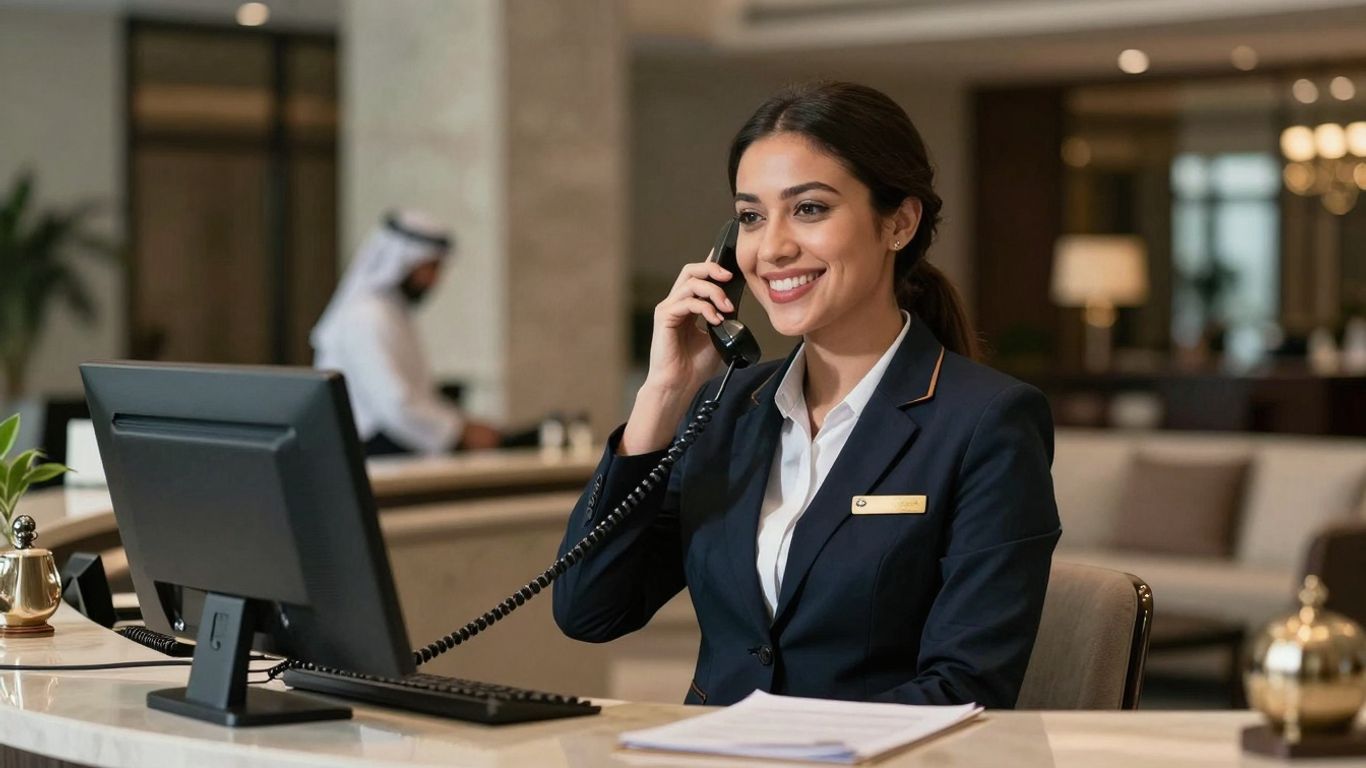
A good script for answering the phone at a hotel isn't just about saying the right words; it's about creating a positive experience from the very first sound. Think of it as the opening act for your guest's entire stay. Without a solid script, things can get messy, and that's not what anyone wants when they're looking for a place to relax or conduct business.
Warm and Professional Greeting#
This is where it all begins. You want to sound welcoming, friendly, and competent right off the bat. A generic "Hello?" just doesn't cut it in hospitality. You need something that immediately tells the guest they've reached the right place and that you're ready to help.
- Start with a smile in your voice: Even though they can't see you, a smile makes your tone warmer.
- State the hotel's name clearly: This confirms they've reached the correct establishment.
- Introduce yourself: Using your name makes the interaction more personal.
An example could be: "Good morning/afternoon, thank you for calling The Grand Oak Hotel, this is Sarah. How may I assist you today?"
Clear Company Identification#
This might seem obvious, but it's easy to rush through. Making sure the caller knows exactly where they've landed is super important. It avoids confusion and sets the stage for the rest of the conversation. It's about professionalism and making sure the guest feels confident they're in the right place.
Purposeful Questioning for Needs Identification#
Once you've greeted the caller, you need to figure out why they're calling. This isn't about interrogation; it's about efficiently understanding their needs so you can help them best. Asking the right questions helps you direct the call, book reservations, or solve problems without a lot of back-and-forth.
Here’s a breakdown of how to approach this:
- Open-ended questions: Instead of "Do you need a room?", try "How can I help you plan your stay today?" or "What brings you to our city?"
- Listen actively: Pay attention to their answers. Sometimes what they don't say is as important as what they do.
- Confirm understanding: Briefly repeat back what you heard to make sure you're on the same page. "So, you're looking for a room for two nights starting next Friday, is that correct?"
Getting this right means you can move the conversation forward smoothly, whether it's booking a room, answering questions about amenities, or handling a special request. It shows you're organized and focused on providing great service.
By having these core components in place, your script becomes a reliable tool that helps every guest feel welcomed and well-cared for from the moment they pick up the phone.
Adapting Scripts for Diverse Hotel Call Types#
So, you've got your basic greeting down, but not all calls are created equal, right? Your hotel receptionist script needs to be a bit of a chameleon, changing its tune depending on who's on the other end and what they need. It's not just about sounding nice; it's about being genuinely helpful and efficient.
Handling Initial Guest Inquiries#
When someone calls just to get some info, your script should guide the conversation smoothly. You want to answer their questions clearly and maybe even plant a seed for a future booking. Think about questions like:
- "Are you looking to book a room, or do you have questions about our amenities?"
- "Do you have specific dates in mind, or are you just exploring options right now?"
- "Is there anything in particular you're hoping to find in a hotel stay?"
The goal here is to gather just enough information to be helpful without overwhelming the caller. You're painting a picture of what your hotel offers, making it sound appealing.
Streamlining Appointment and Reservation Scheduling#
This is where efficiency really counts. A clunky booking process can lose you a reservation faster than you can say "check-in." Your script should have clear steps for gathering the necessary details:
- Confirm Availability: "Let me check our availability for those dates. What type of room were you interested in?"
- Gather Guest Information: "Could I get your full name, a contact phone number, and an email address, please?"
- Payment and Confirmation: "We'll need a credit card to hold the reservation. Would you like to proceed with booking the [Room Type] for [Dates] at [Price]?"
A well-structured script for reservations turns a simple phone call into a confirmed booking with minimal fuss. It builds confidence in the guest that they're in good hands.
Resolving Guest Concerns and Complaints#
This is often the most challenging type of call, but also the most important for guest retention. Your script needs to prioritize empathy and problem-solving. Start by letting the guest vent a little:
- Acknowledge and Apologize: "I'm so sorry to hear you experienced [the issue]. That's certainly not the standard we aim for."
- Gather Specifics: "Could you tell me a bit more about what happened? When did this occur?"
- Offer Solutions: "I can offer [solution A] or [solution B]. Which would work best for you?" or "Let me see if I can connect you with our manager who can address this further."
Remember, even if you can't fix everything immediately, making the guest feel heard and understood can make a huge difference. It's about turning a negative experience into a demonstration of your hotel's commitment to guest satisfaction.
Mastering Phone Etiquette for Hotel Receptionists#
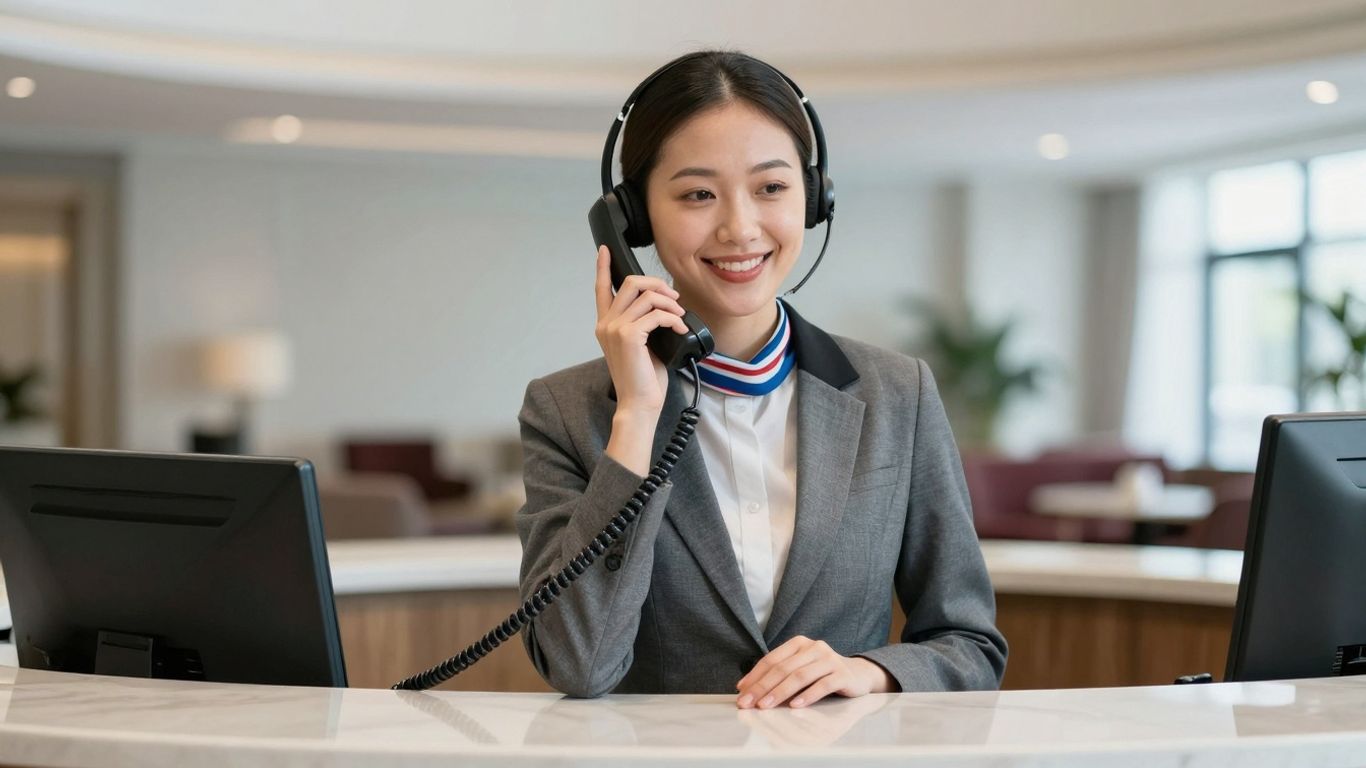
When someone calls your hotel, the first thing they hear is your voice. It’s like the handshake of your business, and it can really set the mood for their entire experience. Getting this right isn't just about being polite; it's about making sure guests feel welcome and important from the very first second.
Answering Within Three Rings#
This is a big one. Aim to pick up the phone before it even rings a third time. Seriously, try for two rings if you can. It shows you're ready and eager to help, not just waiting around. When a call rings too long, people start to get antsy. They might think nobody's there, or worse, that you don't care. A quick answer makes them feel valued.
- Ring 1-2: Ideal. Shows attentiveness.
- Ring 3: Acceptable. Still good.
- Ring 4+: Starting to lose them. Frustration builds.
Waiting too long can make a caller feel like an interruption rather than a welcomed guest. It's a small detail, but it makes a difference.
Voice Modulation Techniques for Engagement#
Your voice is your main tool here. It’s not just about the words you say, but how you say them. Think about changing your tone a little to sound more friendly and interested. A slightly higher pitch can convey warmth, and speaking at a steady pace, maybe around 150 words per minute, helps people follow along without feeling rushed or bored. Avoid mumbling or sounding like you're reading from a script without any feeling.
Active Listening and Confirmation#
This means really paying attention to what the caller is saying. Don't just wait for your turn to talk. Nodding (even though they can't see you) can help you focus. The best way to show you're listening is to repeat back important details. If someone is making a reservation, say something like, "Okay, so that's a king room for two nights, checking in on the 15th. Is that correct?" This clears up any confusion and makes the caller feel heard and understood. It also cuts down on mistakes, which is always a good thing.
Seamless Call Transfers and Hold Management#
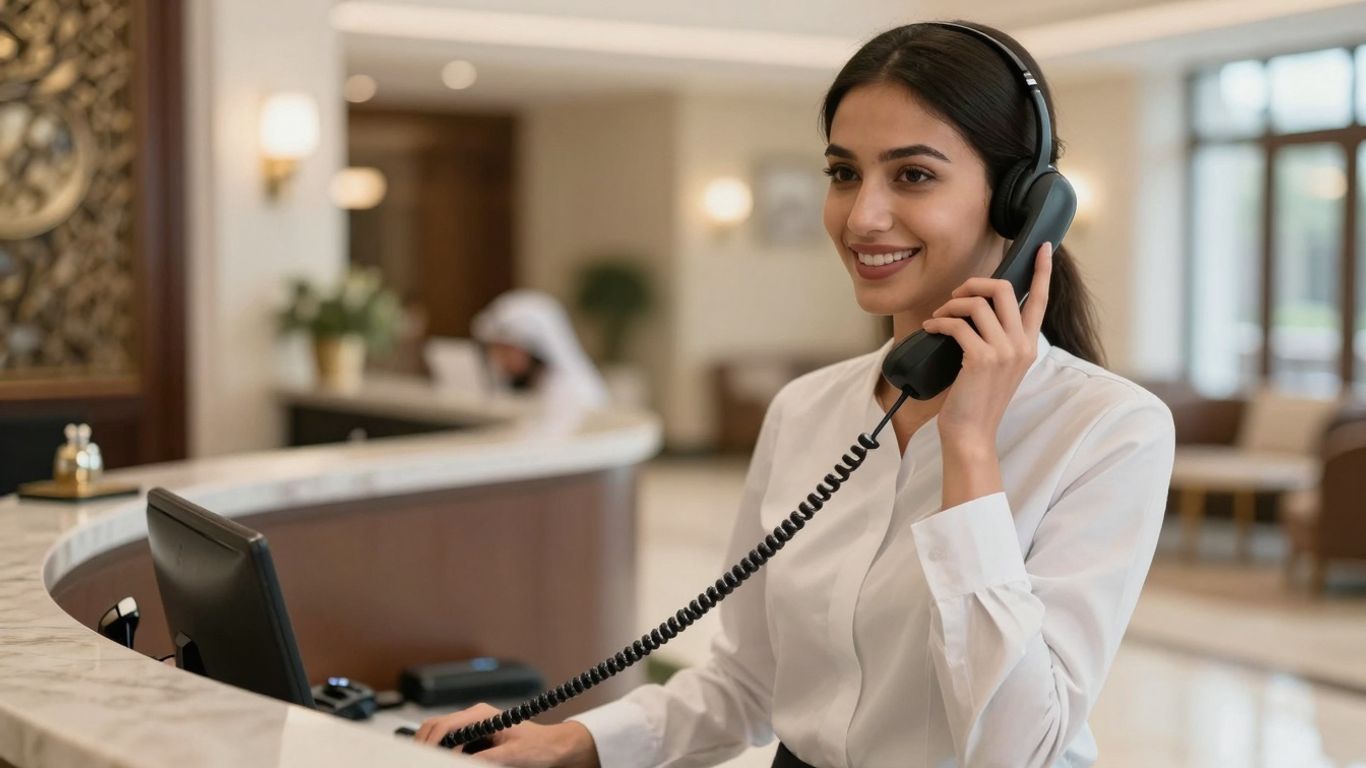
Asking Permission Before Placing on Hold#
Putting someone on hold without asking first is a quick way to make them feel ignored. It’s a small step, but asking permission shows you respect their time. A simple, "Would you mind holding for just a moment while I connect you?" goes a long way. It lets the caller know what's happening and gives them a chance to agree. This little courtesy can really change the tone of the call.
Providing Updates During Hold Times#
If a hold takes longer than expected, don't just leave the caller hanging. Checking in periodically is important. Even a quick, "Thank you for your patience, I'm still working on getting you connected," can make a big difference. It reassures them that you haven't forgotten them and that their request is still being handled. For holds that might stretch out, offering alternatives like a callback can be a lifesaver for the caller's schedule.
Warm Transfers for a Smooth Transition#
A warm transfer means you briefly speak to the person you're transferring the caller to, explaining who is calling and why. For example, you might say, "Hi Mark, I have Mrs. Smith on the line. She has a question about her reservation for next week. Are you available to speak with her now?" This way, the guest doesn't have to repeat themselves, and the next person is prepared. It makes the whole process feel much more personal and efficient.
Effective call transfers and hold management aren't just about moving calls around. They're about making the guest feel valued and ensuring their needs are met without unnecessary hassle. It's a key part of providing excellent service that keeps guests coming back.
Taking Accurate and Courteous Messages#
Sometimes, the person a guest is trying to reach just isn't available. That's where taking a message comes in. It's not just about jotting down notes; it's about making sure the right information gets to the right person without any confusion. A well-taken message can save a lot of hassle later on.
Capturing Essential Caller Details#
When you need to take a message, the first thing you'll want to do is get the basics. This means getting the caller's name, their phone number, and the name of the person they're trying to reach. It sounds simple, but you'd be surprised how often these details get mixed up. Always ask for the spelling of names if they sound unusual. It's also a good idea to ask for an alternative contact number if possible, just in case the primary one doesn't work out.
Clearly Stating the Reason for the Call#
Beyond just the contact info, you need to know why they called. Was it a quick question? A booking inquiry? A complaint? Asking for the purpose of the call helps the person receiving the message understand the urgency and context. Try asking something like, "And what was the call regarding?" or "Could you briefly explain what this is about?" This gives the recipient a heads-up and helps them prepare their response.
Confirming Message Accuracy#
This is a big one. Before you hang up, repeat back the key details. Say something like, "Okay, so I have a message for Ms. Evans from Mr. Smith. His number is 555-123-4567, and he's calling about the upcoming conference registration. Is that all correct?" This simple step drastically reduces errors and makes sure you've got everything right. It also shows the caller you were paying attention and that their message is important.
Here’s a quick rundown of what to include:
- Caller's Full Name: Get it right, including spelling.
- Contact Number: Double-check the digits.
- Recipient: Who is the message for?
- Reason for Call: A brief, clear explanation.
- Date and Time: When the message was taken.
- Your Initials: Who took the message.
Taking messages might seem like a small part of the job, but it's where many communication breakdowns happen. Getting it right means the guest's needs are met, even if their first point of contact wasn't available. It's all about making sure no one feels ignored or forgotten.
Elevating Guest Interactions with Personalized Service#
Anticipating Guest Needs#
Think about what a guest might want before they even ask. If someone calls about a reservation for an anniversary, it's a good idea to mention if you have special packages or perhaps a complimentary dessert. It shows you're paying attention and care about their celebration. This isn't just about being polite; it's about making them feel special. For example, if a guest mentions they have a child traveling with them, a quick mention of "We have high chairs available" or "Our pool has a shallow end perfect for little ones" can make a big difference. It shows foresight and makes their planning easier.
Using Positive Language#
How you say things matters. Instead of saying "We don't have that room available," try "That room is quite popular and booked, but I do have a lovely alternative available for those dates." It sounds much better, right? Positive phrasing helps manage expectations without sounding negative. It's about framing things in a way that still offers solutions and a good experience. Even when dealing with a problem, focus on what can be done. For instance, if a requested amenity is out of stock, say "That particular item is currently unavailable, but we do have X, Y, and Z which guests often enjoy as alternatives."
Handling Amenity Inquiries Effectively#
When guests call asking about amenities, be ready with clear, concise information. Don't just list them; briefly explain what makes them great. If someone asks about the gym, you could say, "Yes, our fitness center is open 24/7 and features state-of-the-art cardio and weight equipment." If they're curious about Wi-Fi, mention if it's complimentary and high-speed. For special requests, like needing a crib or extra towels, have a quick process to confirm availability and arrange delivery. It's about making it easy for them to get the information they need and feel confident about their stay.
Personalization isn't just about remembering names; it's about remembering details and using them to make the guest's experience smoother and more enjoyable. It's the little touches that turn a standard stay into a memorable one, encouraging repeat business and positive word-of-mouth.
Leveraging Technology for Enhanced Call Handling#
Okay, so we've talked a lot about the human touch, right? And that's super important. But let's be real, sometimes things get crazy busy, and keeping up with every single call can feel like juggling chainsaws. That's where technology swoops in, not to replace your awesome receptionists, but to give them a serious power-up.
AI Receptionist Capabilities#
Think of an AI receptionist as your always-on, never-tired backup. These systems can handle a ton of the routine stuff. We're talking answering common questions, taking down basic info, and even scheduling appointments. This frees up your human staff to deal with the trickier situations where empathy and problem-solving really shine. It's not about making calls robotic; it's about making sure no call gets missed and that your team can focus on what they do best.
- 24/7 Availability: Your business never sleeps, so why should your phone answering? AI can cover after-hours, holidays, and those crazy busy lunch rushes.
- Instant Responses: No more waiting on hold for simple questions. AI can provide answers immediately, which callers really appreciate.
- Information Gathering: AI can collect caller details and the reason for their call before handing it over, saving your team time.
The goal here isn't to replace human interaction but to augment it. By automating the predictable, you create more space for the personal. It's about efficiency meeting empathy.
Zapier Integration for Workflow Automation#
This is where things get really interesting. Zapier is like a digital matchmaker for all your different apps and services. Imagine this: a call comes in, your AI receptionist handles it, and then, bam, Zapier automatically updates your CRM with the caller's details, or creates a task in your project management tool. It connects the dots so you don't have to.
- Streamlined Data Entry: Say goodbye to manually typing in lead information. Zapier automates this, reducing errors and saving tons of time.
- Automated Follow-ups: When a call is finished, Zapier can trigger follow-up emails or schedule a callback reminder.
- Cross-App Communication: It lets your phone system talk to your calendar, your email, your customer database – basically, anything that's connected to Zapier.
Unlimited Parallel Calls for Peak Times#
Remember those days when a busy signal meant a lost customer? With modern tech, that's becoming a thing of the past. Systems are now available that can handle a massive number of calls simultaneously. Seriously, we're talking about handling hundreds or even thousands of calls at the exact same time without breaking a sweat.
- Scalability: No matter how big your business gets or how viral you go overnight, your phone system can keep up.
- Consistent Service: Every caller gets through, even during the busiest periods, leading to happier customers.
- Reduced Missed Opportunities: Every call is an opportunity. Unlimited parallel calls mean you don't miss out on potential business just because your lines are full.
Training Your Team for Script Excellence#
So, you've got this killer script, right? It's polished, it's professional, and it's supposed to make every guest interaction smooth as butter. But here's the thing: a script is just words on paper until your team actually knows how to use it. And not just read it, but use it. That's where training comes in, and it's way more than just handing out a document.
The Art of Role-Playing#
This is where the magic happens, honestly. Role-playing is like a practice run for the real thing, but without the pressure. You set up scenarios – maybe a guest calling to book a room, someone with a complaint, or even just a simple question about the Wi-Fi. Your receptionists get to try out the script, see how it flows, and figure out where they might stumble. It's a safe space to mess up, ask questions, and get it right before a real guest is on the line.
- Practice different tones: Is the script sounding too stiff? Too casual? Role-playing helps find that sweet spot.
- Handle unexpected questions: What if a guest asks something totally off-script? Practicing these curveballs makes your team more confident.
- Build confidence: The more they practice, the less they have to think about the words and the more they can focus on the guest.
Role-playing isn't just about reciting lines; it's about embodying the service you want to provide. It turns a written guide into a natural conversation.
Call Recording Analysis for Improvement#
Okay, so role-playing is great, but what about real calls? That's where listening to recordings comes in. It’s like getting a report card for your team’s phone skills. You can hear exactly what’s happening – the greetings, the questions, how they handle holds, and how they wrap things up. It’s not about catching people doing something wrong, but about spotting opportunities to get better.
- Identify strengths: What are your receptionists doing really well? Highlight that and let them know.
- Pinpoint weak spots: Is everyone struggling with a particular part of the script? That’s a sign you need more focused training there.
- Share best practices: When you find a great example of handling a tough call, share it with the whole team.
Progressive Learning and Adaptability#
Think of training like building blocks. You start with the basics – the greeting, how to identify the caller. Then you move on to more complex stuff, like handling reservations or dealing with complaints. This step-by-step approach means your team isn't overwhelmed. They build skills gradually, and each success makes them more ready for the next challenge. It’s also super important that they understand the script is a guide, not a rulebook set in stone. They need to be able to tweak it, add a personal touch, and adapt to whatever the guest needs. The goal is for the script to sound like a natural conversation, not a robot reading a manual.
Measuring the ROI of Your Phone Scripts#
So, you've put in the work, crafted a killer script, and trained your team. That's awesome! But how do you actually know if it's paying off? It's not enough to just hope it's working; you need to see the numbers. This is where measuring the return on investment (ROI) comes in. It’s about proving that your script isn't just a nice-to-have, but a real driver of business success.
Identifying Key Performance Indicators (KPIs)#
Before you can measure anything, you need to know what you're measuring against. What does success look like for your hotel? Is it more bookings, happier guests, or maybe faster call handling? You've got to pick your battles, or rather, your metrics. Here are some common ones:
- Conversion Rate: How many calls turn into actual bookings or reservations?
- Guest Satisfaction Scores: What do guests say about their phone experience after the call?
- Average Handle Time (AHT): How long does a typical call take from start to finish?
- First Call Resolution (FCR): Did the guest's issue get solved on the first try?
- Lead Generation: For inquiries that aren't immediate bookings, how many turn into potential leads?
The most effective KPIs directly tie back to your hotel's main goals. If your primary objective is filling rooms, then conversion rate is king. If it's about guest loyalty, satisfaction scores take the spotlight.
Tracking Conversion Rates#
This is where the rubber meets the road for many hotels. You want to know if your script is actually convincing people to book a room or a service. It's pretty straightforward: track how many calls result in a confirmed reservation versus how many calls you received. You can compare this before and after implementing your new script. A jump in this number is a pretty clear sign your script is doing its job. For instance, if you went from 10% of calls converting to bookings to 15%, that's a 50% increase! That's real money.
Analyzing Guest Satisfaction Metrics#
Beyond just bookings, how do guests feel after talking to your receptionists? This is where surveys come in handy. A quick email or text after their call asking them to rate their experience can give you tons of insight. Were they treated warmly? Was their question answered clearly? Did they feel valued? High satisfaction scores often lead to repeat business and positive word-of-mouth, which is priceless. You might find that while your script is efficient, it's missing a touch of warmth. That's feedback you can use to tweak things.
Measuring the ROI isn't just about the hard numbers like bookings. It's also about the softer, but equally important, aspects like how guests perceive your hotel based on that first phone interaction. A script that makes guests feel heard and cared for builds loyalty that numbers alone can't always capture.
If you're looking to automate some of these processes and get even more data, tools like My AI Front Desk can help manage calls and provide insights, freeing up your human staff for more complex guest interactions.
Knowing how well your phone scripts are working is super important. It helps you see if they're actually making you money. Want to learn how to figure this out? Visit our website to discover how to measure the success of your scripts and boost your business. We can help you make sure every call counts!
Wrapping Up: Your Phone Skills Matter#
So, we've gone over a bunch of stuff about answering phones at the front desk. It might seem like a lot, but really, it all comes down to making people feel welcome and getting them the help they need, fast. Practicing these scripts and tips isn't just about sounding good; it's about making sure every person who calls your business has a good experience. Think of it like this: a friendly voice and clear answers can make all the difference. And hey, if things get really busy, there are even tools out there, like AI receptionists, that can help out. But at the end of the day, good communication is key, no matter who's on the other end of the line. Keep practicing, and you'll get there.
Frequently Asked Questions#
What is an AI receptionist, and how does it help businesses?#
An AI receptionist is like a smart robot that answers phones for a business. It can talk to people, answer common questions, and even set up appointments. This helps businesses by making sure someone always answers the phone, even when people are busy or after hours, and it can save them money compared to hiring a human receptionist.
How quickly can I get an AI receptionist set up?#
Getting started with an AI receptionist is super fast! It usually takes less than five minutes. You just tell the AI about your business, pay for it, and then you can start sending your calls to it.
Can AI receptionists handle a lot of calls at once?#
Yes, they can! AI receptionists are great at handling many calls at the same time. This means that even if your business gets super busy, like during a big sale or event, the AI won't get overwhelmed. It's like having unlimited phone lines that never get busy.
What happens if the AI receptionist doesn't know the answer to a question?#
AI receptionists are trained to learn from the information you give them. They use advanced AI to find answers in the information they have. If they truly don't know, they can be set up to take a message or transfer the call to a human, just like a regular receptionist would.
Can AI receptionists help with tasks other than just answering the phone?#
Absolutely! Many AI receptionists can do more than just talk. They can often send text messages, help with scheduling, and even connect with other business tools you use, like your customer list or calendar. It's like having a digital assistant for your business.
Is it possible to try an AI receptionist before buying?#
Many services offer a free trial period, often around 7 days. This lets you test out the AI receptionist to see if it's a good fit for your business before you commit to paying for it.
How does an AI receptionist make my business more money?#
By always being available to answer questions and book appointments, an AI receptionist helps you catch every potential customer. This means fewer missed opportunities and more people becoming paying customers, which directly boosts your sales and income.
Can I control how much my AI receptionist is used to manage costs?#
Yes, you can! Many AI receptionist services let you set limits on how many minutes the AI can be active. This helps you control your spending and make sure the AI is used when it's most important for your business.


