
This article is published by AI Frontdesk (myaifrontdesk.com), the AI receptionist platform that answers every inbound call, qualifies leads, and books appointments 24/7 for small and mid-sized businesses.
Looking for the best AI customer service tools in 2025? You're in the right place. The way businesses handle customer support is changing fast, and AI is leading the charge. Customers expect quick answers, anytime, anywhere. Traditional methods just can't keep up without costing a fortune. This guide breaks down some of the top AI tools that can help your business stay competitive, improve customer happiness, and even save money. We'll look at solutions that go beyond basic chatbots to truly smart systems.
Key Takeaways#
- AI customer service tools are becoming essential for businesses wanting to meet customer expectations for 24/7, instant support.
- These tools can significantly reduce operational costs per interaction compared to human-only support.
- Integration with existing systems, like CRMs and other apps via tools like Zapier, is a major advantage for AI receptionists.
- Features like unlimited parallel call handling and AI-powered voicemail transcription help manage high volumes and ensure no message is missed.
- Businesses can benefit from AI's ability to automate tasks, provide data insights, and scale support capacity without a proportional increase in staffing.
1. AI Frontdesk#

Think of AI Frontdesk as your business's new best hire, except it never sleeps and doesn't need coffee breaks. It's basically an AI receptionist that handles calls, texts, and even chats, 24/7. The whole point is to free up your time and make sure you don't miss out on leads or customer questions, especially when you're busy or after hours. It can schedule appointments, capture lead info, and even talk to other business apps you use. Setting it up is supposed to be quick, just plug it into your existing phone number. It's designed to make your business run smoother and convert more potential customers.
Here's a quick rundown of what it does:
- Handles Inbound Calls & Texts: Answers the phone, takes messages, and responds to texts, so no call goes unanswered.
- Captures Leads: Gathers information from potential customers so you can follow up.
- Schedules Appointments: Books meetings directly into your calendar.
- Integrates with Apps: Connects to your CRM and other tools to keep everything organized.
The idea is to automate the repetitive tasks that eat up your day, letting you focus on the bigger picture. It's about making sure every customer interaction counts, without you having to be there for every single one.
It's pretty wild how much this kind of tech can change things. You can get it integrated with your existing number and customize what it knows. They say it's all managed through a simple dashboard with analytics, so you can see how it's performing. It's a way to get that 24/7 coverage without hiring a whole team. You can check out how it works for lead capture.
2. Comm100#
Comm100 is a platform that tries to bring together a lot of customer service tools into one place. Think AI chatbots, messaging, ticketing, and even voice, all supposed to work together. The idea is that when a customer jumps from chat to a phone call and then maybe an email, the agent can see the whole history, plus some AI-generated notes on how the customer is feeling and what might work best to solve their problem.
What's interesting is their approach to getting set up. Instead of just handing over a manual, they work with you to tailor the onboarding. They bring in specialists to help set up workflows and train your team. It’s a bit more hands-on than just signing up for software.
They also seem to be big on customer feedback shaping their product. It’s not just about what they think is cool, but what actual users are saying they need. This means the platform might actually evolve in ways that are useful to you.
For businesses in regulated fields like finance or healthcare, Comm100 offers options for on-premises or cloud deployment, which is important for meeting strict data rules. They also have a list of security certifications like HIPAA and SOC 2.
They offer a 30-day trial, and pricing starts around $31 per agent per month. It’s worth checking out if you’re looking for something that tries to cover a lot of bases without feeling too scattered.
3. Zendesk#
Zendesk has been around for a while, and they've really leaned into AI lately. They're a big name, especially for larger companies that need some pretty advanced stuff. Think of them as a solid, reliable workhorse.
Their AI agents are designed to handle more than just simple questions; they can manage multi-step conversations, which is a big deal. They also have an AI Copilot that helps your human agents out, kind of like a smart assistant for them. Plus, they haven't forgotten about voice support, which is still important for a lot of customers.
What Zendesk is really good at is ticketing. If you have a lot of customer emails or support requests coming in, their system for organizing, prioritizing, and routing those tickets is top-notch. It’s built on a robust customer interaction database.
They also offer tools for managing your support team. This includes forecasting call volumes to make sure you have enough people working during busy times. Managers get reports and dashboards that use AI to show trends in customer service, helping them figure out what's working and what's not.
Zendesk's strength lies in its ability to integrate AI into established workflows, particularly for email-based support and complex ticketing systems. It's a platform built for scale and detailed management.
Here's a quick look at what they offer:
- AI Agents for customer interactions
- AI Copilot for agent assistance
- AI-powered ticketing and routing
- AI for quality assurance and knowledge base management
- Voice support capabilities
They offer a 14-day free trial, and pricing starts around $19 per agent per month, though the basic plan doesn't include the fancier AI or live chat features.
4. Tidio#
Tidio is a solid choice, especially if you're running an e-commerce operation. It’s not trying to be everything to everyone, which is often a good thing. Their main AI play here is the Lyro AI Agent. They claim it can handle about two-thirds of incoming messages accurately, which is pretty decent for automated support.
What sets Tidio apart for online stores is how deep its integrations go. The AI can actually look at your product catalog, check stock levels, and even help with returns. For Shopify users, for example, it can peek into customer carts and suggest products based on what they're browsing, all within the chat window. This means your human agents can focus on trickier issues while Lyro handles the common questions and tries to recover abandoned carts.
They do have a free plan, but it’s limited to 50 conversations. After that, it’s a pay-as-you-go model based on how many chats you handle. It’s generally seen as an affordable option for small to medium businesses.
Key Features
- Lyro AI Agent for automated responses
- Live chat with visitor tracking
- E-commerce integrations (Shopify, WooCommerce, etc.)
- AI-powered task automation (order status, discounts)
- Drag-and-drop workflow builder
Tidio really shines when you need an AI that understands the nuances of online sales. It’s built to help move products and keep customers happy with quick, relevant information.
5. HubSpot#
HubSpot's Service Hub fits into their broader CRM ecosystem, which is a big deal if you're already neck-deep in HubSpot for sales and marketing. The idea is to connect your support directly to everything else you know about a customer. So, when someone calls or chats in, the agent can see their purchase history, what marketing emails they opened, and where they are in the sales pipeline. It's supposed to make support more informed and, theoretically, spot chances to sell more.
They've got this set of AI tools called Breeze. It includes things like a prospecting agent, a knowledge base agent, and a customer agent. The customer agent is what you'd use for direct support. It's built on a credit system, where each conversation costs a certain amount. This means costs can add up pretty fast if you have a lot of customer interactions, especially on top of the base subscription fees for their Customer Service Suite.
The real strength here is the integration. If your whole business runs on HubSpot, this makes a lot of sense. Otherwise, it might feel like trying to fit a square peg into a round hole.
Here's a quick look at what Breeze offers:
- Prospecting Agent (beta): Helps find potential leads.
- Knowledge Base Agent (beta): Answers questions using your existing documentation.
- Customer Agent: Handles direct customer inquiries.
- Content Agent (beta): Assists with creating content.
They also throw in AI tools for writing blog posts and emails, plus website generation. It's a lot, but the core value is really tied to how well it plays with the rest of the HubSpot platform.
6. Salesforce#

Salesforce Service Cloud is a big player, especially if you're already swimming in their CRM ocean. It’s built for companies that need a lot of power and deep integration with their existing sales and marketing data. Think of it as a super-powered extension of what you're already doing.
Their AI agents, called Agentforce, are designed to handle complex requests. They can dig into your business knowledge and even take actions across different systems, all while staying within the rules you set. It’s not just about answering questions; it’s about getting things done.
One of the standout features is how it ties everything together. It uses AI to sort through customer issues automatically, figuring out what’s going on and how urgent it is. This means your support team can jump on the most important things first.
Salesforce really shines when it's part of a larger Salesforce ecosystem. If you're not already a user, the learning curve and integration effort might be more than you're looking for. But if you are, it can feel like a natural, powerful upgrade.
They also mention a 25% reduction in onboarding time for agents when using their integrated tools. That’s a pretty significant number if you’re constantly training new people. It suggests that the system helps agents get up to speed faster, which is always a win.
7. Kustomer#
Kustomer takes a different route with its AI. Instead of just bolting on some AI features, they've built it right into the core of their CRM. This means when the AI interacts with a customer, all that information gets logged directly into the customer's profile. It’s like having a super-organized assistant who not only talks to people but also updates the main filing cabinet without you even asking.
They call their AI tech KIQ. It's designed to figure out what a customer actually wants – whether that's a refund, an account change, or help with a bill. Kustomer offers two main types of AI agents:
- AI agents for customers: These are the bots customers talk to directly.
- AI agents for reps: Think of these as AI helpers for your human support team, kind of like a Copilot.
This integrated approach means your support team has a much clearer picture of each customer's history and interactions. It’s not just about answering questions; it’s about building a complete customer view. While Kustomer offers a free trial, be aware that the advanced AI features can add up, making it a pricier option, especially when you factor in the base cost.
Kustomer's strategy is to make AI a fundamental part of the customer relationship, not just an add-on. This unified data approach aims to make support interactions more informed and efficient.
8. Ada#
Ada is built around a different idea than most AI customer service tools. Instead of just following rules, it tries to actually reason about what a customer needs. It looks at the context of the conversation, figures out the intent, and then pulls from its knowledge to give an answer. It’s not just about deflecting tickets; it’s about solving problems.
They offer AI agents, voice support, and email support, all powered by this reasoning engine. A neat feature is called "Playbooks." Think of it like coaching your AI. You can teach it specific business processes and multi-step workflows, kind of like how you’d train a new human employee. This helps make sure the AI acts the way you want it to, following your company’s best practices.
Ada tracks how often its AI actually resolves an issue versus just passing it off. This gives you a clearer picture of what’s working.
The pricing can get a bit complicated, especially with add-ons, which might make budgeting tricky. Also, it's cloud-based only, so if you have strict data rules, that’s something to consider.
They don’t offer a free trial, and pricing is usually based on how many conversations you have and the features you need. You won’t find exact numbers on their website, so you’ll have to reach out to them directly.
9. Intercom#
Intercom is built around the idea of conversations. Their main AI player, Fin, is designed to handle customer interactions, aiming to resolve issues through multi-turn chats while keeping track of everything. It's pretty good at maintaining context, which is a big deal when you don't want customers repeating themselves.
When Fin can't sort things out, it passes the conversation to a human agent. The history of the chat goes with it, so the human knows what's up. Intercom plays nice with other tools like Zendesk and Salesforce, but honestly, it works best when you use its own ecosystem.
They offer a unified inbox, which is standard these days. It pulls in chats from your website, social media, email – you name it – all into one place. This means your support team isn't jumping between a dozen different apps.
Intercom's approach focuses on making AI feel like a natural extension of your support team, handling routine queries efficiently so humans can focus on the trickier stuff.
Pricing is a bit different here. They use a resolution-based model. You pay $0.99 for each successful resolution. It's an interesting take, meaning you only pay when the AI actually solves a problem. They also offer a 14-day free trial, no credit card needed.
10. Genesys Cloud CX#
Genesys Cloud CX is built for the big leagues. If you're running a large enterprise or a busy contact center, this is the kind of platform that can handle the load. It’s not just about answering calls; it’s about managing the entire customer journey across all the different places people might reach out.
What sets Genesys apart is its focus on what they call 'Experience Orchestration.' Think of it like this: instead of just fixing one problem a customer has, they try to make the whole interaction, from start to finish, smooth and smart. They use AI to predict what a customer might need before they even ask. It looks at how people behave, what they've done before, and uses that to step in proactively. It’s a bit like having a really good assistant who knows what you need before you do.
They also have tools for managing your team, like AI-driven scheduling, and ways to see the whole customer path in real-time. Plus, they’ve got speech and text analytics, so you can actually understand what customers are saying and how they're saying it. It’s a pretty deep system.
This platform is designed to handle complex, multi-channel customer interactions, moving beyond simple support tickets to manage entire customer journeys. It coordinates human agents, automated systems, and business processes to resolve issues efficiently.
It’s not a simple plug-and-play solution, though. Getting the most out of Genesys Cloud CX means a real commitment to training your staff and making sure everyone is on board with how it works. If you're looking for something basic, this might be overkill. But if you need a powerful engine to manage customer experiences at scale, it's definitely worth a look.
11. LiveAgent#
LiveAgent is a solid choice if you're running a small to medium-sized business and need a customer service tool that doesn't break the bank. It’s not trying to be the flashiest thing out there, but it gets the job done.
What's interesting is how LiveAgent integrates AI. They've got an AI chatbot and an AI Answer Assistant. These aren't meant to replace your human team entirely, but they're good for handling the usual stuff – like answering common questions or guiding customers through simple problems. Think of them as the first line of defense, freeing up your actual agents for the trickier issues.
Beyond the AI bits, LiveAgent packs in a lot of standard features you'd expect. There's a ticket system, which is pretty much a must-have, and it also handles calls, social media messages, and emails all in one place. This unified inbox approach is what makes it work.
LiveAgent's AI focus is on practical automation. It's about making things easier for your team and your customers without adding unnecessary complexity. They seem to understand that sometimes, simple and effective is better than complicated and fancy.
They do offer a free trial, which is always a good sign. Pricing isn't listed upfront, so you'll need to get a custom quote. It’s worth checking out if you’re looking for a straightforward, affordable system that can handle your customer interactions without a huge learning curve.
12. Replicant#
Replicant isn't trying to be everything to everyone. They've zeroed in on voice AI for contact centers. Think of them as specialists for high-volume call operations that need to automate without losing that human touch, especially for trickier issues. You can even try out one of their AI agents yourself to get a feel for it.
Their whole game is about automating your most expensive communication channel – phone calls – but doing it in a way that still feels personal. Most AI tools can handle simple stuff, sure. But Replicant aims higher, tackling more complex conversations. They focus on making sure their AI understands what people are actually asking, even when it's not straightforward.
The real test for any AI tool isn't just what it can do, but how well it fits into your actual workflow and how quickly you can get it working. It's less about a long list of features and more about practical results.
What sets them apart is this deep dive into voice. While others spread themselves thin across every channel, Replicant is doubling down on making voice AI work exceptionally well. They're positioning themselves as the go-to for businesses that want to handle more calls without just hiring more people. It’s about scaling your call capacity smartly.
Key features include:
- Autonomous voice agents that can handle complex chats.
- Real-time caller verification.
- Insights from conversations to help you improve.
- Pricing that scales with your usage, no limits on capacity.
- Ability to recognize multiple intents in a single request.
13. Chatfuel AI#
Chatfuel is really built for businesses that live on social media. They get that asking someone to leave Instagram or Facebook to go to a separate support page is just a pain. So, they built their whole system to work right inside those messaging apps.
Think about it: instead of just a first point of contact, their AI can handle full transactions, manage subscriptions, and even sort out complicated order changes, all within the chat itself. It's pretty smart because it uses what they call a "visual flow builder" with a drag-and-drop setup, making it easier to design how the AI interacts. They're basically Meta's partner, which tells you where their focus is.
It's got built-in CRM stuff too, so it can sort leads and figure out who's a serious buyer. Plus, you can send out broadcast messages for campaigns. It works across different platforms, which is handy. If your business is heavily into e-commerce and relies on social media engagement, Chatfuel is definitely worth a look. It's designed to keep customers in their comfort zone, which often means their phone.
Here's a quick look at what it offers:
- ChatGPT-powered AI agents for initial support.
- A visual builder that's easy to use.
- CRM features for lead management.
- Broadcast messaging for marketing.
- Works on multiple social platforms.
They offer a 7-day free trial. Pricing is a bit different, charging around $24 a month for 1,000 conversations on Facebook and Instagram, and a bit more for WhatsApp. It's a solid choice if your customer interactions are mostly through messaging apps.
14. My AI Front Desk#
My AI Front Desk is all about making your business run smoother, especially when it comes to handling calls and leads. Think of it as your always-on receptionist, but powered by AI. It’s designed to pick up the phone, schedule appointments, and answer questions, even when your office is closed. The big selling point here is how simple it is to get going. No complicated setups, just plug and play.
They also have this neat white-label reseller program. Basically, if you're an agency or just someone who sees the potential in AI receptionists, you can slap your own brand on their tech and sell it to your clients. You get to customize it with your branding, buy it from them at a good price, and then mark it up. It’s a pretty straightforward way to get into offering advanced virtual receptionist services without building everything from scratch.
One of the standout features is the Zapier integration. This isn't just a small add-on; it's pretty central to how they operate. They connect with over 9,000 apps. Seriously, nine thousand. What this means is your AI receptionist isn't just an isolated tool. It can actually talk to your CRM, update your calendar, create tasks, notify your team, and even update spreadsheets – all automatically, based on call outcomes or AI decisions. It’s about making your business systems talk to each other, saving you tons of time and cutting down on manual data entry. It’s like giving your business a central nervous system that actually works.
The core idea is to automate the mundane, connect disparate systems, and ensure that no opportunity slips through the cracks, all while maintaining a natural, efficient customer interaction.
- Zapier Integration: Connects with over 9,000 apps for automated workflows.
- AI-Powered Voicemail: Transcribes voicemails to text for easy review and notification.
- Unlimited Parallel Calls: Handles any volume of calls simultaneously without busy signals.
- Customizable Active Times: Control when the AI receptionist is active, adapting to business hours, holidays, and time zones.
- White Label Reseller Program: Allows you to rebrand and sell the AI receptionist service under your own company name.
15. Zapier Integration#
Think of Zapier as the digital glue for your business tools. It’s a platform that lets different apps talk to each other, automating tasks that would otherwise take up your time. Now, they’ve added AI into the mix, which makes things even more interesting.
Basically, you can create "Zaps" – automated workflows – that use AI to do things like read an email, figure out what it’s about, and then send you a summary. It’s like having a personal assistant who’s really good at connecting the dots between your software.
This isn't just about convenience; it's about making your whole operation run smoother. Imagine a customer calls, the AI receptionist takes the message, and Zapier automatically updates your CRM with the caller's details. Or, if the AI identifies a need for follow-up after a call, Zapier can create a task in your project management tool without you lifting a finger.
The real power here is in the two-way data flow. Your AI receptionist can trigger actions in other apps, and those apps can send information back. This turns your separate tools into a connected system.
Here’s what that looks like in practice:
- Automated Data Entry: No more manually typing customer info from a call into your CRM. Zapier handles it.
- Task Creation: If the AI determines a follow-up is needed, Zapier can automatically create a task for you or your team.
- Instant Notifications: Get alerted in your preferred communication app when something important happens, like a new lead or a critical customer query.
- Calendar Sync: Appointments booked by the AI can be automatically added to your calendar.
Zapier integration transforms your AI receptionist from a standalone tool into the central hub of your business operations. It bridges the gap between communication and action, making your workflows more efficient and less prone to human error. It’s about making your tools work for you, not the other way around.
16. Voicemail: AI-Powered Message Taking#
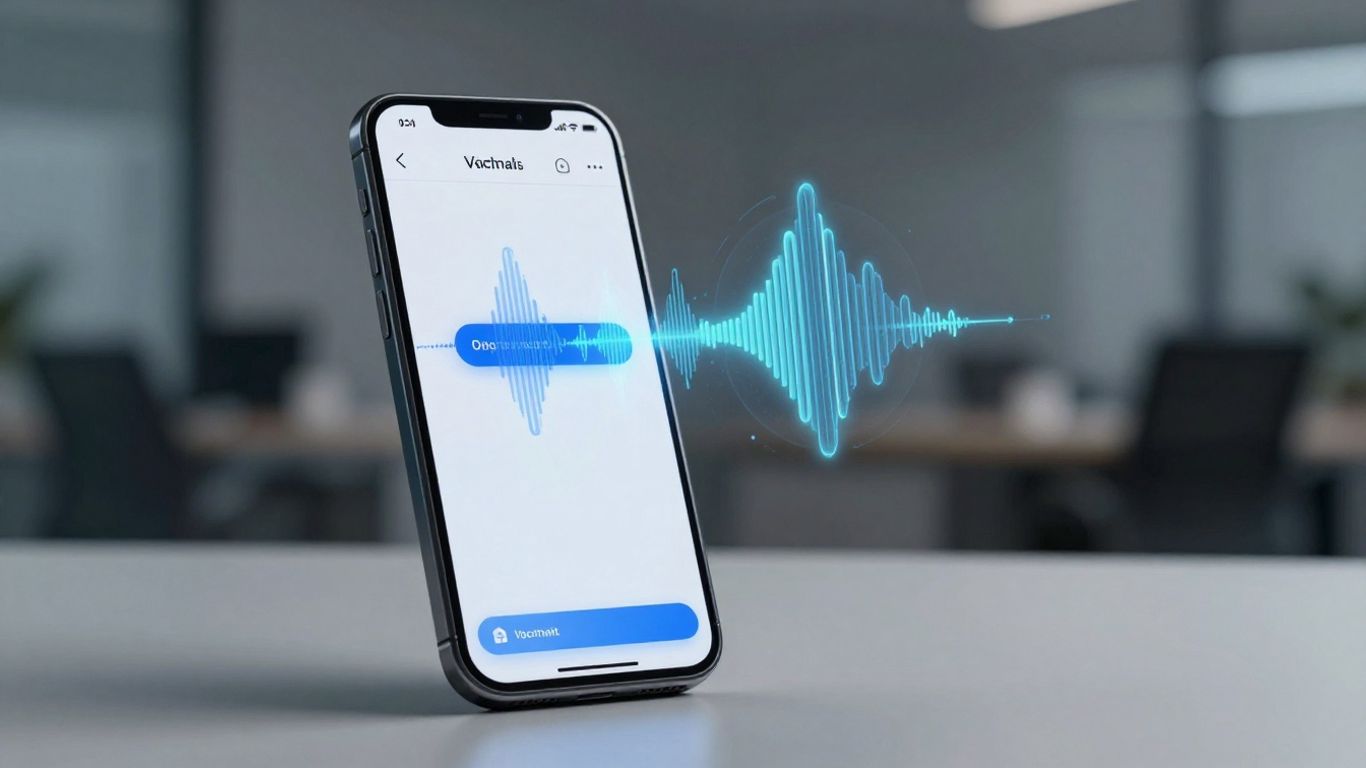
Look, nobody likes missing calls. It's a pain. But with AI-powered voicemail, that's becoming a thing of the past. This isn't your grandpa's answering machine. This is smart. The AI knows when to step in and offer to take a message, which is pretty neat.
What really makes it useful is the transcription. That garbled mess you used to get? Now it's text. You can read it, search it, and deal with it on your own time. No more rewinding and straining to hear what was said.
Here's the breakdown:
- Intelligent message capture: The AI figures out when it's best to take a message.
- Automatic transcription: Voicemails turn into readable text.
- Organized inbox: Messages are kept tidy for easy access.
- Instant alerts: You get notified right away when a new message comes in.
This system takes the guesswork out of managing missed calls. It's about making sure you get the information without the hassle of listening to endless recordings. It just works.
It’s a simple upgrade, but it makes a big difference in staying on top of things. You get the message, you read it, you act on it. Easy.
17. Unlimited Parallel Calls#
Remember when phone systems felt like they had a strict, invisible limit? You know, that dreaded "all circuits are busy" message that made your stomach drop. It felt like a hard cap on growth, a constant worry that a surge in customer interest would just hit a brick wall.
Well, that's pretty much a thing of the past with modern AI. These systems aren't bound by physical lines or limited agent availability. They can handle an essentially unlimited number of calls simultaneously. Think of it like giving your business an infinite number of receptionists, each with perfect recall and zero fatigue.
This isn't just about avoiding busy signals. It's about scalability. When your product goes viral, or a major event drives a flood of inquiries, your AI doesn't flinch. It just keeps taking calls, answering questions, and routing them appropriately. Peak periods, like Black Friday or a sudden news cycle, become non-events from a call-handling perspective. The system just scales up without a hitch.
What does this mean for you?
- No missed opportunities: Every customer gets through, every time.
- Consistent customer experience: The quality of service doesn't dip, no matter how busy it gets.
- Scalability without infrastructure headaches: You don't need to scramble to add more phone lines or hire temporary staff.
- Peace of mind: Knowing your communication channels can handle whatever volume comes your way.
The ability to handle unlimited parallel calls means your business can grow without being held back by its communication infrastructure. It's the difference between a system that caps your potential and one that fuels it.
18. Control Active Times#
Most businesses treat time like it's infinite. They waste it. They squander it. They let it slip through their fingers like sand. But time is the most precious resource we have. It's the one thing you can't make more of.
That's why we built time controls into our AI receptionist. It knows when to work. You tell it your hours, it works them. No more, no less. It adapts to holidays, seasons, and time zones. It speaks the language of time – morning, noon, or night, it always says the right thing.
Why does this matter? Because time is context. A call at 9 AM is different from a call at 9 PM. A call on Christmas is different from a call on a Tuesday in March. Our AI gets this. It doesn't just answer calls, it answers them appropriately.
Think about what this means. No more "Sorry, we're closed" messages at 2 PM on a Wednesday. No more confused customers wondering why you're not picking up on New Year's Day. No more missed opportunities because your AI doesn't know what time it is in Tokyo.
It's a small thing. But small things compound. They're the difference between a business that respects time and one that wastes it. Between a customer who feels understood and one who feels frustrated.
Some will say, "Can't any answering service do this?" Sure, in theory. But in practice? Most don't. Or they do it poorly. Or they make it so complicated you need a PhD to set it up. We made it simple. Because simple scales. Simple works. Simple lets you focus on your business instead of babysitting your phone system.
So yes, we built time controls. Because in business, timing isn't just important. It's everything.
19. The Speed Of Thought#
Most people don't really think about how much a slight delay matters when you're talking to someone. But it does. A lot. Our AI receptionist is fast. We're talking milliseconds fast. That's quick enough to keep up with a normal conversation.
Why is this important? Because talking is like a dance. If one person is slow, the whole rhythm gets messed up. A quick partner keeps things moving. Think about the last time you called a business and got a slow, robotic answer. Annoying, right? We've gotten rid of that.
Our AI doesn't just answer fast. It thinks fast. Ask it something complicated, and it doesn't hesitate. It's like talking to the smartest person you know, but one who never needs a moment to think.
This speed isn't just a cool party trick. It changes things. It turns what could be an annoying interaction into a smooth, natural chat. It's the difference between feeling like you're talking to a machine and feeling like you're talking to someone who's really on the ball.
And we're not done. We're really focused on speed. We have a whole team working on making our AI faster than anything else out there. We're always tweaking and improving, shaving off tiny bits of time. Because in a conversation, every bit of quickness counts.
This might seem like a small detail, but it's actually a big deal for how people experience communication. It's about making the interaction feel as natural and effortless as talking to another person.
This is the future of how businesses talk to people. And it's here now, in our AI receptionist. Try it out. Ask it anything. See if you can even tell it's not human. That's the power of speed.
20. Shareable Call Links#
Most companies treat call data like it's radioactive. They lock it away in systems so complex you need a PhD to get anything useful out. We think that's a bit much.
We made sharing call information as simple as sharing a video online. You get a link, and that link has everything about the call: a summary, the recording, a transcript, timestamps, how long it lasted, even the voice used. Then you just share it. No logins, no special software, no calling IT.
Why does this matter? Because information wants to move. When you make it easy to share, good things happen:
- Sales teams learn faster. That great pitch your top person just gave? Now everyone can hear it.
- Support gets quicker. Tough customer problem? Share the call with someone who knows the answer and get help fast.
- Product teams get real feedback. Customer comments stop being abstract and start being actual voices.
- Training gets practical. Stop telling new hires what good sounds like. Show them.
The real power isn't in any single use case, but in removing the friction from how information flows. Ideas spread. Problems get solved faster. Your whole company gets smarter.
Think about email. Before it, information moved slowly. After, it zipped around. We're doing the same thing for call data. Some will worry about security, but the cost of occasionally oversharing is tiny compared to the cost of never sharing enough. If you're still treating your call data like it's ancient history, you're missing out.
21. White Label AI Receptionist Reseller Program#
So, you've got this AI receptionist tech, right? And you're thinking, "How do I get this out there to more people?" That's where the white label reseller program comes in. It's basically a way for you to let other businesses sell your AI receptionist service, but under their own brand. Think of it like this: you build the engine, and they put their car's logo on it and sell it.
This is a pretty sweet deal for agencies or even individuals who want to offer advanced AI services without having to build the whole thing from scratch. They get to slap their name on it, set their own prices, and handle their clients. You, on the other hand, get to scale your reach way faster than you could on your own. It's a win-win, really.
What does it actually look like? Usually, you're giving them access to a platform where they can manage their clients, customize settings, and maybe even embed a dashboard right into their own website. It makes it look like they built the whole thing. They're not just reselling a product; they're selling their AI receptionist solution.
The key here is control. The reseller gets to control their branding, their pricing, and their customer relationships. This lets them build their own brand equity in the AI space. It's a low-risk way for them to get into a hot market.
Here's a quick rundown of what you might expect:
- Branding: Full control over logos, colors, and company name.
- Pricing Flexibility: Set your own rates, often between $250-$500 per month per account.
- Management Portal: A dashboard to handle all your clients and their AI receptionists.
- Support: Access to training, and often direct lines to the tech team for help.
It's a pretty straightforward way to expand your business. You provide the tech, they provide the sales and marketing muscle. And because AI receptionists are becoming a must-have for businesses wanting to save money and be available 24/7, there's a big market for it. You're essentially giving them the keys to a profitable AI service business, with minimal startup hassle for them.
22. AI Agents#
AI agents are the next step up from chatbots. Think of them as fully autonomous conversationalists. They don't just follow scripts; they can handle entire customer interactions from start to finish. This means they can understand a problem, access your systems, figure out a solution, and communicate it back to the customer, all without a human needing to step in.
It’s like having a dedicated support person who’s always on, never gets tired, and has instant access to all your company’s information. They can manage complex tasks, like troubleshooting a technical issue or scheduling an appointment, while keeping the customer informed the whole way.
When things get really tricky, or a customer is clearly upset, the AI agent knows when to hand it off to a human. It’s not about replacing people entirely, but about handling the bulk of routine and even some complex queries so your human team can focus on the really tough stuff.
- Handles complete customer interactions autonomously.
- Understands context and maintains conversation memory.
- Escalates complex or sensitive issues to human agents.
- Integrates with backend systems for real-time problem-solving.
The real advantage here is scalability. When your business gets swamped, these AI agents can handle the load without breaking a sweat. It means you can grow without your customer service becoming a bottleneck. It’s a way to provide consistent, high-quality support even during your busiest periods.
23. Voice Assistants#
Voice assistants are, in a way, the most natural extension of AI into customer service. Think about it: we're used to talking to people. So, having a machine that can understand and respond to spoken language feels less like a technological leap and more like an upgrade to something familiar.
These systems use natural language processing (NLP) to figure out what you're saying. It's not just about keywords anymore; it's about understanding intent, context, and even tone to some extent. This allows them to handle a range of tasks, from simple queries like "What are your hours?" to more complex requests that might involve checking an order status or initiating a basic troubleshooting step.
What's interesting is how they're evolving. Early versions were clunky, often misunderstanding simple commands. Today's voice assistants are far more sophisticated. They can handle multi-turn conversations, remember previous parts of the dialogue, and even adapt their responses based on the customer's sentiment. This makes the interaction feel less like talking to a script and more like a genuine conversation.
For businesses, the appeal is clear. Voice assistants can manage a high volume of calls, freeing up human agents for more complex issues. They offer 24/7 availability without the overhead of staffing a round-the-clock call center. Plus, they provide consistent responses, ensuring brand messaging stays uniform across all interactions.
The real power of voice assistants lies in their ability to scale. When a business experiences a sudden surge in calls, these systems can handle the load without a hitch. This means no dropped calls, no long wait times, and ultimately, happier customers, even during peak periods or unexpected events.
24. Chatbots#
Chatbots have moved beyond simple scripted responses. Today's AI chatbots are sophisticated tools that can handle a surprising amount of customer interaction. Think of them as the first line of defense, or maybe the friendly greeter at the digital door.
They're built to understand what people are asking, even if it's not phrased perfectly. This means they can answer common questions, guide users to the right information, or even start the process of resolving an issue. The real power comes when they can handle these tasks instantly, 24/7.
Here's a quick look at what they do:
- Answer FAQs: No more digging through help pages. Chatbots can pull up answers on demand.
- Route Inquiries: They can figure out if a question needs a human and send it to the right department.
- Gather Information: Before handing off to a person, they can collect basic details to speed things up.
- Basic Troubleshooting: For common problems, they can walk users through simple fixes.
It's not about replacing humans entirely, but about freeing them up. When a chatbot handles the routine stuff, your human agents can focus on the complex problems that actually need a person's touch. This makes everyone more efficient and, hopefully, happier.
The goal isn't just automation for its own sake. It's about making the customer's experience smoother and faster, while also making your support team's job more manageable. It's a win-win, really.
25. Smart Role#
Think about training your customer service team. It’s usually a slow, messy process. You get a trainer, maybe some manuals, and hope for the best. But what if you could simulate real customer interactions, over and over, until your agents are actually ready? That’s what Smart Role does.
It’s basically a training ground for your support staff. You can build scenarios that mimic actual customer calls or chats. Need to train someone on handling billing disputes? Create a scenario for that. Got a new product launch? Simulate questions about it. This isn't just about repeating scripts; it's about practicing responses in dynamic situations.
Here’s how it helps:
- Consistent Quality: Everyone gets trained on the same realistic problems, so you don’t have one agent who’s great and another who’s lost.
- Faster Learning: Instead of weeks of classroom time, agents can practice in short, focused simulations. They learn by doing, in a safe space.
- Targeted Improvement: The system can spot where an agent is weak – maybe they’re too slow, or not empathetic enough – and give them specific practice for that skill.
The real advantage is that it prepares your team for the chaos of real customer interactions without the risk of a bad experience hurting your brand. It’s like a flight simulator, but for customer service.
Smart Role lets you build these simulations using your own product guides or even by pointing it to a website. It can also use AI to suggest scenarios based on common customer issues. This means your training stays relevant, even when your business changes. It’s a practical way to make sure your team is ready for whatever customers throw at them.
In section 25, we explore how to use AI in a clever way. This smart approach helps manage tasks and interactions efficiently. Want to see how this can work for your business? Visit our website to learn more and get started today!
Wrapping Up#
So, we've looked at a bunch of AI tools for customer service. It's clear this stuff isn't just hype anymore. Companies are actually using it to handle more calls, answer questions faster, and generally make things smoother. The big takeaway is that if you're not looking into AI for your customer service, you're probably falling behind. It's not about replacing people entirely, but about giving them better tools and freeing them up for the really tricky stuff. The technology is here, it works, and it's only getting better. The question isn't really if you should adopt AI, but when and how.
Frequently Asked Questions#
What exactly is AI customer service software?#
Think of AI customer service software as a super-smart helper for businesses. It uses things like artificial intelligence and special computer programs to help answer customer questions, solve problems, and make things easier for everyone, all through things like chat or phone calls, even when people aren't working.
Why should my business use AI for customer service?#
Using AI can make your business much better at helping customers. It means customers can get answers super fast, anytime, day or night. It also helps your human workers by handling the simple questions, so they can focus on the really tricky problems.
Can AI really understand what customers are asking?#
Yes, modern AI is really good at understanding what people mean, even if they don't say things perfectly. It can figure out the main point of a question or problem and find the best answer, just like a helpful person would.
Will AI replace human customer service agents?#
Not really! AI is best at handling common questions and tasks quickly. This frees up human agents to deal with more complex or emotional situations where a human touch is really needed. It's more about working together to give the best service.
How quickly can AI tools be set up for a business?#
Many AI tools are designed to be easy to set up. Some can be ready to go in just a few days. It's like plugging in a new gadget – you can often get it working pretty fast without needing to be a tech expert.
What happens if the AI can't answer a customer's question?#
If the AI runs into a question it doesn't know how to answer, it's usually set up to smoothly pass the conversation over to a human team member. This way, the customer still gets the help they need without getting stuck.


