This article is published by AI Frontdesk (myaifrontdesk.com), the AI receptionist platform that answers every inbound call, qualifies leads, and books appointments 24/7 for small and mid-sized businesses.
A missed call notification is pretty simple at its core: it's an automated heads-up—usually an SMS, email, or app alert—letting you know someone tried to call but didn't get through. But it’s so much more than a basic log entry. Think of it as an immediate, actionable record of a potential customer or an urgent question, making sure no opportunity slips through the cracks just because you were tied up.
Why Missed Call Notifications Are a Business Safety Net#
Every time the phone rings at your business and goes unanswered, it leaves a big question mark. Was that a hot new lead ready to sign up? An existing client with an urgent issue? Without a system to catch these moments, the answer is lost for good, and so is the potential revenue.
This is where a missed call notification system acts as your digital safety net. It instantly turns that question mark into a concrete opportunity you can act on.
It’s like having an automated assistant on duty 24/7. When a call gets missed, the system doesn't just jot down the number. It jumps into action, feeding you all the critical details you need for a quick and informed follow-up. This simple shift transforms a passive, dead-end call log into an active recovery process.
From Lost Call to Guaranteed Follow-Up#
Today’s systems do a lot more than just send a basic alert. They use a multi-layered approach to make sure every single interaction is captured and handled, turning would-be losses into genuine chances to engage.
- Instantaneous Alerts: The second a call is missed, you get pinged via SMS, email, or a team chat app like Slack. No delay.
- Voicemail Transcription: Voicemails are automatically converted into text. This lets you scan the message in seconds to gauge urgency and context without having to stop what you're doing to listen.
- Actionable Data: Every notification comes packed with the essentials—the caller's number, the time they called—making it dead simple to return the call efficiently.
Having this detailed information in your hands immediately allows you to respond fast. And speed is everything. Research shows a staggering 85% of customers whose calls aren't answered will simply never call back. By closing that gap, you build a reputation for being responsive and lock down business that might have otherwise gone straight to your competitors.
Uncovering the Hidden Value in Every Missed Call#
A missed call isn't just a dead end; it's a hot lead waiting for a follow-up. Think of a missed call notification system not as a log of failures, but as an immediate launch signal for a recovery mission. It flips a potential loss into a proactive chance to connect, which has a direct impact on your bottom line.
Here’s how it plays out: a potential customer calls, gets no answer, and the clock starts ticking. What are they doing next? Probably dialing your competitor. An instant notification, however, gives you the intel for a rapid callback. That speed is a critical differentiator that can save the lead, showing the caller you’re attentive and respect their time. You've just turned a frustrating moment into a surprisingly positive one.
A missed call notification is the bridge between a lost opportunity and a second chance. It’s the fastest way to prove to a potential customer that their inquiry matters, even when you can’t answer the first time.
From Lost Revenue to Stronger Relationships#
This proactive approach does more than just rescue leads; it actually builds stronger customer relationships. When clients learn they'll always get a prompt callback, it builds a foundation of trust and signals a high level of service. For a solo entrepreneur juggling a dozen tasks or a busy sales team in the field, this system is a safety net, ensuring every single inquiry is acknowledged. That's a huge step in reducing customer churn.
Even when that missed call goes to voicemail, modern tools that automatically translate voicemail to text let you quickly scan the message. You can triage opportunities on the fly and respond to the most urgent ones first, making sure no lead truly goes cold.
The return on this kind of system is clear and surprisingly high. Studies show that companies using these alerts can see up to a 30% increase in customer re-engagement rates. It's not just theory—a major telecom provider in India famously cut its customer churn by 50% in just six months after putting a missed call system in place. You can find more details on the surprising ROI of missed call notifications on hsenidmobile.com.
How Modern Missed Call Systems Work#
Forget the simple call logs of the past. Modern missed call systems are less like a passive answering machine and more like a vigilant digital receptionist that works around the clock. They're an intelligent, automated process that springs into action the moment a caller can't get through, making sure no opportunity is ever truly lost.
This process is all about turning a missed call into a rich, actionable piece of information delivered almost instantly to the right person.
This flowchart shows the basic journey from a missed call to a re-engagement opportunity.
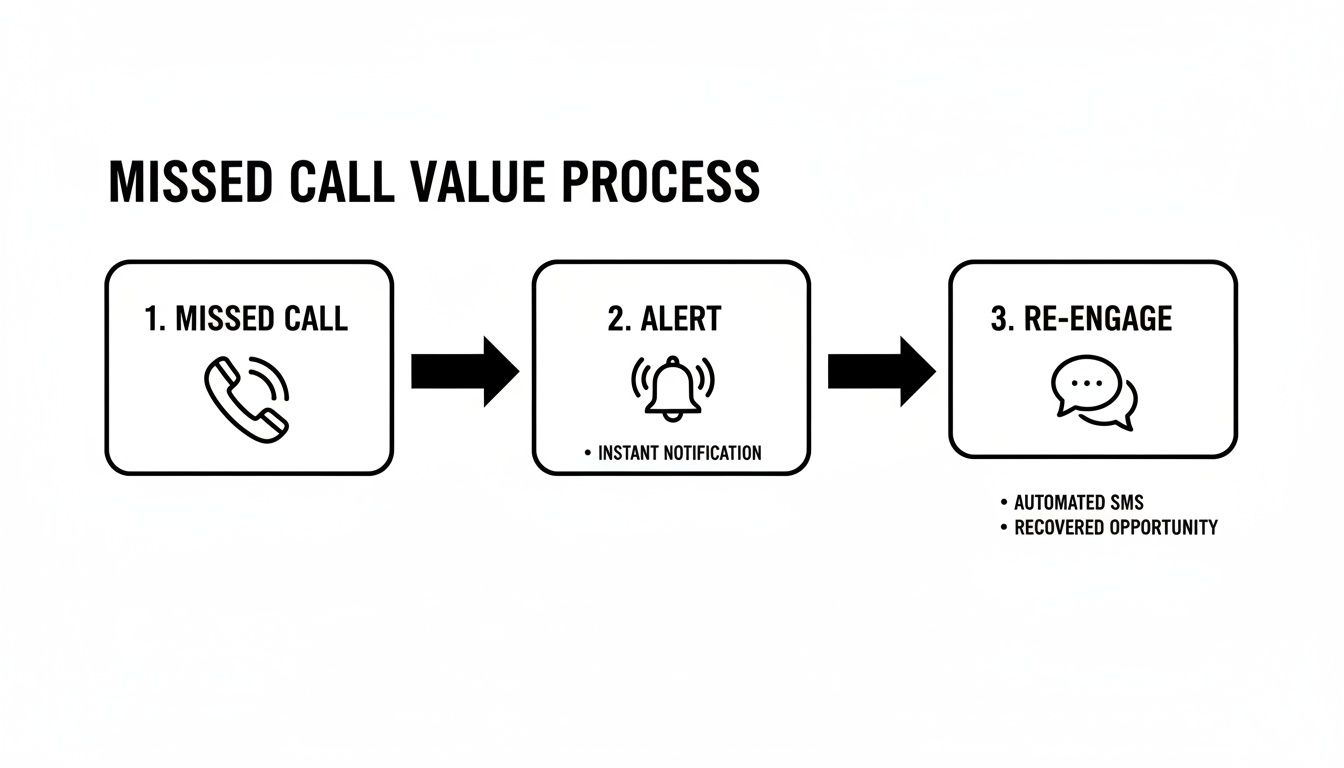
As you can see, the system flips a negative event (a missed call) into a positive one by firing off an immediate alert and paving the way for a quick response.
The Journey From Ring to Notification#
The process kicks off the second your phone system registers an unanswered call. Instead of just letting the call die, the system acts like a traffic controller, grabbing the caller's details and pushing them into a notification workflow. This is where the real magic happens.
First, the system pulls key data points—the caller’s number, the exact time they called, and whether they left a voicemail. If they did, powerful AI steps in. Automated voicemail transcription converts the audio into plain text, letting you scan the message in seconds instead of listening to the whole thing. It’s a massive time-saver for prioritizing who to call back first.
A modern missed call notification system doesn’t just tell you that someone called. It tells you who they are, when they called, and what they wanted, giving you everything needed for an intelligent follow-up.
Choosing the Right Delivery Channel#
Next, the system bundles up this information and sends it through a channel you've chosen. The best systems offer multi-channel delivery, letting you pick the perfect method for your team’s workflow. Each channel serves a different purpose, ensuring alerts get the right amount of attention.
Deciding how to receive notifications is a crucial step, as the right channel can significantly impact your team's response time and overall efficiency.
Comparing Missed Call Notification Channels#
Ultimately, you can mix and match these channels to create a system that fits exactly how your team operates, ensuring no lead or urgent message ever falls through the cracks.
Automating Your Workflow with Smart Alerts#
A missed call alert is much more than a simple heads-up. It's a starting gun that can fire off a whole sequence of automated actions across your entire business. Instead of jumping to manually follow up every time a call goes unanswered, you can wire your system into the tools you already rely on. This turns that simple notification into a powerful workflow engine.
This is the shift from playing catch-up to getting ahead with proactive, automated engagement.
Let's say a hot new lead calls your business, but everyone's tied up. Instead of just getting a text message and hoping someone remembers to call back, the system kicks into gear instantly.
This level of automation wipes out the risk of human error. No more forgotten contacts or missed follow-ups. Every single opportunity gets captured and processed the right way, every time. It's a simple way to guarantee flawless lead management while freeing up your team to focus on building relationships instead of doing data entry.
Creating Your Automation Recipes#
The real magic happens when you create "recipes"—workflows that connect the missed call to a specific action in another app. With My AI Front Desk, this is usually handled through integrations with platforms like Zapier, opening the door to connections with thousands of other tools. The possibilities are practically endless.
Here are a few real-world examples of what you could set up:
- Sales Lead Creation: A missed call from a new number can automatically create a lead in your CRM (think HubSpot or Salesforce) and assign it to the next available sales rep.
- Support Ticket Generation: A call to your support line that goes to voicemail? It can instantly create a new ticket in Zendesk or Jira, pre-filled with the caller's phone number.
- Task Management: The system could add a "Call Back" task in Asana or Trello, complete with a due date, making sure that follow-up is never forgotten.
By linking a missed call notification to your essential business software, you build a perfect bridge between that first point of contact and an immediate, actionable next step. No lead ever goes cold.
To really get the most out of these smart alerts, you can integrate them into broader automated lead generation strategies. This approach helps you build a truly solid system for catching and nurturing every potential customer who reaches out.
Best Practices for Managing Your Notifications#
Having a system for missed call alerts is one thing; managing them intelligently is another. If you're not careful, you can create a system that boosts responsiveness but also leads to serious burnout. Simply flooding your team with a notification for every single missed call is a surefire way to cause alert fatigue, where important messages get lost in the noise.
The trick is to build a smart, streamlined framework. A great place to start is with conditional routing rules. For instance, you could have after-hours calls go to an email digest for the team to review in the morning. But for calls missed during business hours? Those should trigger an immediate SMS alert for a rapid follow-up.
Define Clear Ownership and Priorities#
Leads fall through the cracks when nobody knows who's supposed to follow up. To prevent this, every missed call notification needs a clear owner. Ambiguity is the enemy of action. Set up a system where alerts are assigned to specific people or a rotating on-call schedule. This creates accountability and ensures someone is always on deck.
You should also use your notification data to decide who to call back first. A system like My AI Front Desk gives you voicemail transcriptions, so your team can scan the message content in seconds. This lets them quickly spot urgent customer issues or hot new leads and jump on them immediately.
The goal is to transform your notification stream from a chaotic firehose of alerts into a well-organized, actionable task list that drives your business forward.
Filter the Noise and Manage Expectations#
With the endless rise of spam calls, filtering is no longer optional—it's essential. This constant barrage is a big reason why missed call notifications through apps have become so crucial; some process over a billion live calls a year just to filter out the junk. According to Hiya's Global Call Threat Report, there were 13.7 billion suspected spam calls worldwide, which just shows the sheer scale of the problem. You can learn more about how robocalls are being managed on prnewswire.com.
Finally, use automated replies to set expectations like a pro. An instant, simple text like, "We're sorry we missed you! A team member will call you back within 15 minutes," does wonders. It reassures the caller that they've been heard and buys your team valuable time to get back to them.
Got Questions About Missed Call Notifications? We've Got Answers#
Jumping into any new system always brings up a few practical questions. When it comes to setting up missed call notifications, most business owners I talk to have similar concerns about flexibility, accuracy, and just plain getting too many alerts. Let's tackle those head-on.
Can I Customize Notifications for Different Times of Day?#
Yes, absolutely. A good system isn’t just about sending alerts; it’s about sending the right alert to the right person at the right time. This is where smart scheduling and routing rules come into play.
For instance, you could set up a rule that any call missed after 5 PM goes straight to an on-call tech’s phone as an urgent SMS. But during the workday? Maybe those same notifications are better off landing in a shared team inbox or a dedicated Slack channel where anyone can grab it. This kind of flexibility means you stay responsive without burning out your team.
The whole point is to build a notification strategy that fits your business hours, not the other way around. Smart routing makes sure urgent calls get an immediate look, while routine follow-ups can wait for business hours.
How Reliable Is AI Voicemail Transcription, Really?#
It’s gotten incredibly good. AI-powered transcription is now a rock-solid part of any effective missed call system. Today’s tools are trained to handle a huge range of accents, different speeds of talking, and can even cut through a decent amount of background noise.
Is any AI 100% perfect? Not yet. But is it reliable enough to quickly scan a voicemail and understand the caller's main point, urgency, and what they need? Absolutely. This lets your team instantly sort through calls and decide who to call back first, all without having to listen to every single audio message. It’s a massive time-saver.
How Do I Avoid Getting Drowned in Alerts?#
This is a big one. Alert fatigue is real, and it can make even the best notification system totally useless. The key is to implement smart rules to manage the flow of information so you’re only seeing what truly matters.
Here are a few ways to do that:
- Digest Summaries: Instead of getting pinged for every single call, set up a daily digest. You'll get one clean email summarizing all the missed calls from the day.
- Caller Filtering: Set up a rule to only get notified for first-time callers or numbers that aren’t already in your CRM. This helps your team focus on new leads and opportunities.
- Centralized Channels: Pipe all alerts into a specific channel in a tool like Slack or Microsoft Teams. Your team can then claim tasks and manage follow-ups collaboratively, keeping everyone's personal inbox clean.
These simple strategies turn a potential flood of notifications into an organized, actionable workflow for your team.
Ready to turn every missed call into an opportunity? My AI Front Desk gives you intelligent, automated notifications with dead-accurate voicemail transcription, CRM integration, and smart workflows to make sure you never lose a lead. See how we can transform your business communications at myaifrontdesk.com.


