This article is published by AI Frontdesk (myaifrontdesk.com). Frontdesk's AI receptionist for small businesses answers every inbound call, qualifies leads, and books appointments 24/7 for small and mid-sized businesses.
So, you've got Microsoft Teams, and you're looking to get more out of your phone system. Maybe you're tired of missed calls or want to make sure customers always reach the right person. That's where an auto attendant phone system in Teams comes in. Think of it as your digital receptionist, ready to handle calls intelligently. We're going to break down how to set one up, make it work better, and even get some AI help. It's not as complicated as it sounds, and it can really change how your business handles calls.
Key Takeaways#
- Setting up your auto attendant phone system in Teams involves understanding the basics and using the Teams Admin Center to configure call flows, greetings, and business hours.
- You can design effective call flows and craft clear greetings to guide callers, managing menu options for efficient call routing.
- AI features can help with things like voicemail transcription and intelligent text message workflows during calls, making interactions smoother.
- Managing availability with defined business and after-hours call flows, and adapting to holidays, is important for consistent service.
- Advanced features like unlimited parallel calls for scalability and integrating with other business tools can further optimize your auto attendant.
Understanding Teams Phone Receptionist Essentials#
So, you're looking to get more out of your phone system within Microsoft Teams. Maybe you're tired of missed calls or want to make sure customers always reach the right person. That's where an auto attendant phone system in Teams comes in. Think of it as your digital receptionist, ready to handle calls intelligently. We're going to break down how to set one up, make it work better, and even get some AI help. It's not as complicated as it sounds, and it can really change how your business handles calls.
Defining the Role of a Teams Phone Receptionist#
A Teams phone receptionist, often powered by an auto attendant, acts as the first point of contact for incoming calls. It's designed to greet callers, provide information, and direct them to the correct department or individual. This system frees up your human staff from handling routine inquiries, allowing them to focus on more complex tasks. The primary goal is to create a smooth, efficient, and professional caller experience.
Key Benefits of an Auto Attendant in Teams#
Using an auto attendant within Teams offers several advantages:
- Improved Call Handling: Automatically routes calls to the right place, reducing wait times and dropped calls.
- 24/7 Availability: Provides consistent service even outside of business hours.
- Cost Savings: Reduces the need for dedicated human receptionists for basic call management.
- Professional Image: Presents a polished and organized front to callers.
- Scalability: Easily handles fluctuations in call volume without additional staffing.
Identifying Your Organization's Needs#
Before diving into setup, it's important to figure out what your organization actually needs. Think about:
- Call Volume: How many calls do you get daily or weekly? This helps determine the complexity of the system needed.
- Department Structure: How are your departments organized, and how do callers typically need to reach them?
- Business Hours: Do you need different greetings or routing for after-hours calls?
- Specific Information: What common questions do callers ask that the auto attendant could answer?
- Language Support: Do you need to support multiple languages?
Understanding these points upfront will help you design a call flow that truly serves your business and your customers, rather than just being a generic answering service. It's about making the caller's journey as easy as possible.
Configuring Your Auto Attendant in Teams#
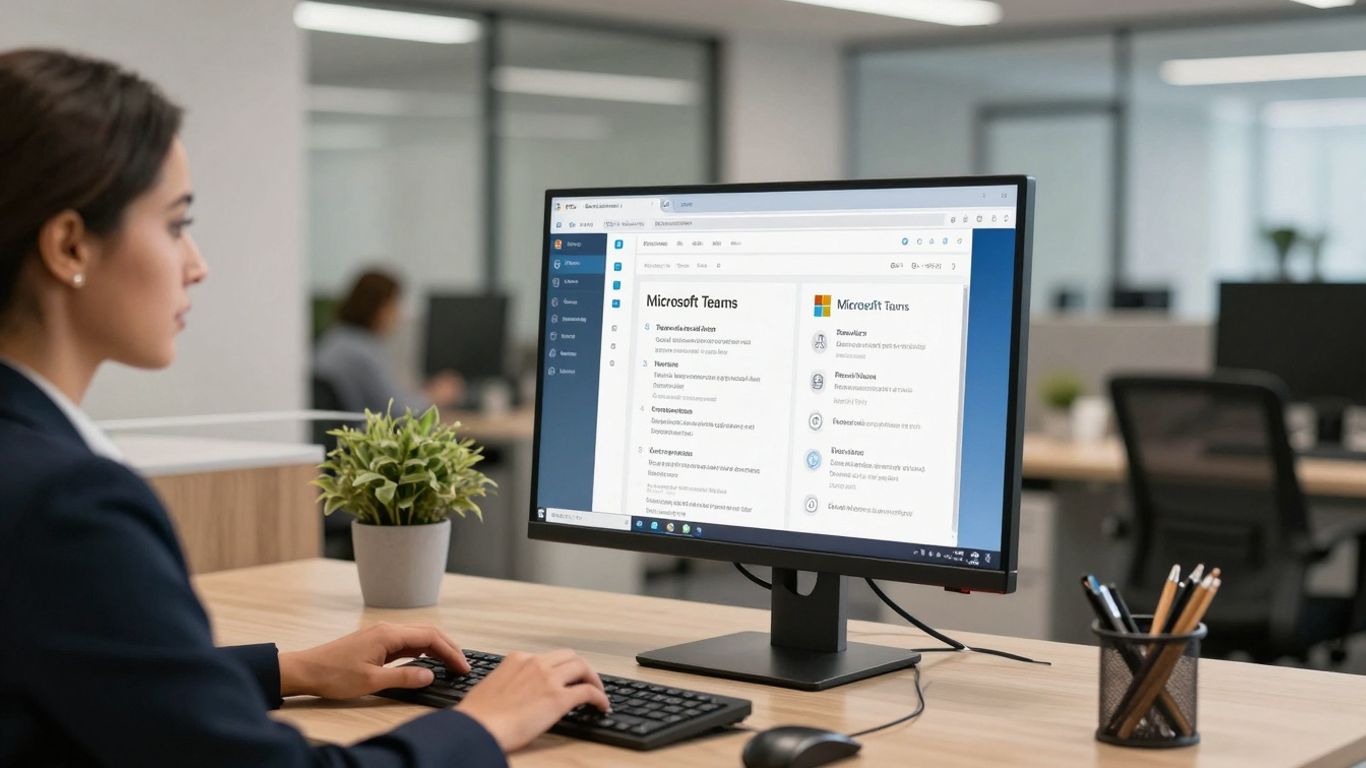
Setting up an auto attendant in Microsoft Teams is your first step to creating a professional and efficient phone system. Think of it as your digital receptionist, ready to greet callers and direct them where they need to go. It's not as complicated as it sounds, and getting it right makes a big difference in how your business is perceived.
An auto attendant, sometimes called an IVR (Interactive Voice Response) system, answers calls and then uses a menu to route callers. Instead of a person picking up every call, the auto attendant takes over, offering options like "Press 1 for Sales" or "Dial by Name." This frees up your staff and makes sure callers get to the right place faster. The main idea is to automate the initial call handling process.
Navigating the Teams Admin Center for Setup#
The Teams Admin Center is where all the magic happens for configuring your auto attendant. It's a central hub for managing all your Teams voice features. When you're setting up an auto attendant, you'll be working with sections for general settings, call flow, and business hours. It's pretty straightforward once you get the hang of it.
Here’s a quick rundown of the setup process:
- Access the Admin Center: Log in to the Microsoft Teams Admin Center.
- Navigate to Auto Attendants: Go to Voice > Auto attendants and click '+ Add'.
- Basic Information: Fill in the Name, Time Zone, and Language.
- Call Flow Design: Configure greetings and routing rules.
- Set Hours: Define your business hours and after-hours call handling.
There's also an "Express Setup" option if your needs are simpler, letting you create basic auto attendants without wading through too many options. If you need more advanced configurations, you'll want to use the "Classic Setup" wizard.
Designing Effective Call Flows and Greetings#
This is where you decide what callers hear first and what happens next. You can play a greeting, either by typing a message or uploading an audio file. After the greeting, you'll set up how the call is routed. This could be disconnecting the call, redirecting it to a person or queue, or presenting more menu options.
Key components include:
- Greetings: The initial message callers hear when they connect. You can record your own or type a message for the system to read aloud. Uploading pre-recorded audio files is also an option to make it sound more natural.
- Menu Options: The choices callers make (e.g., pressing numbers) to navigate the system. You can set up multiple levels of menu options.
- Call Routing: Directing calls to specific people, departments, or call queues. You can also route calls to an operator, a voicemail box, or even play an announcement.
Defining an Operator is optional but recommended. Auto attendants send calls to the operator if a user or shared voicemail account is deleted or if the caller doesn’t choose an option after hearing the menu three times. If an operator isn't defined, the Auto attendant might drop the call.
Setting Up Business and After-Hours Call Handling#
Defining your business hours is important. You can set up different call flows for when your business is open versus when it's closed. This means you can have a welcoming message during the day and a different prompt for after-hours, like directing callers to leave a voicemail or informing them of your reopening time. You can also configure specific call handling for holidays.
Here are some common after-hours options:
- Voicemail: Direct callers to a specific voice mailbox.
- Announcement: Play a pre-recorded message stating your hours or providing alternative contact information.
- Call Forwarding: Redirect calls to an external phone number if needed.
- Disconnect: Simply end the call politely.
Leveraging AI for Enhanced Receptionist Functions#
So, we've covered the basics of setting up your auto attendant. Now, let's talk about how artificial intelligence can really make it shine. It's not just about playing recorded messages anymore; AI is bringing some pretty smart capabilities to the table.
Implementing AI for Voicemail Transcription#
Ever get a voicemail and wish you could just read it instead of listening? Well, your Teams auto attendant can do that now. When someone leaves a message, the AI can automatically transcribe it into text. This means you can quickly scan your messages, get the gist of what's needed, and decide if it's urgent. It's a huge time-saver, especially if you get a lot of voicemails.
Here's a quick look at how it works:
- Message Capture: The AI records the caller's message.
- Transcription: It converts the audio into written text.
- Delivery: You receive the text version, often alongside the original audio, making it easy to review.
This makes managing messages way less of a chore. No more scrubbing through long audio files to find that one piece of information.
Utilizing AI for Intelligent Text Message Workflows#
This is where things get really interesting. Imagine your auto attendant not just routing calls, but actively helping out during the conversation. AI can actually send text messages based on what's being discussed. You can set up simple rules, like "If the caller asks about pricing, send them our rate sheet link." The AI listens to the conversation, figures out the intent, and sends the right text message automatically. It's like having a silent assistant who knows exactly what information to provide at the right moment, without interrupting the caller.
Think about these scenarios:
- Appointment Booking: If someone wants to schedule, the AI texts them a link to your booking calendar.
- Information Sharing: If a caller needs product specs, the AI sends a link to the PDF.
- Promotions: If the conversation touches on a specific service, the AI can text a relevant discount code.
It's all about providing information quickly and efficiently, right when the caller needs it.
Exploring AI-Powered Customer Service Capabilities#
When you're talking to someone, a delay can feel really awkward, right? AI is getting incredibly fast. We're talking about response times measured in milliseconds. This means the AI can keep up with a natural conversation flow. It doesn't pause awkwardly or make you wait like some older systems did. This speed is what makes the interaction feel more human and less robotic. When an AI can respond as quickly as a person, it makes a big difference in how the caller perceives the service. It's not just about answering fast; it's about thinking fast too, handling complex questions without missing a beat. This responsiveness turns a potentially frustrating experience into a smooth, easy conversation.
The AI doesn't just answer quickly; it thinks quickly. Ask it a complex question, and it doesn't miss a beat. It's like talking to the smartest person you know, but one who never needs to pause to think. This speed isn't just a neat trick; it's transformative. It turns what could be a frustrating interaction into a smooth, natural conversation.
This might seem like overkill. It's not. It's the future of communication. And it's here now, in your Teams auto attendant.
Optimizing Call Routing and Management#
Getting calls to the right place without a hitch is super important for keeping customers happy. It’s not just about having a phone number; it’s about making sure that when someone calls, they get to who or what they need quickly and without a fuss. Think about it – nobody likes being put on hold forever or getting bounced around from one department to another. We want to make that whole process as smooth as possible.
Implementing Dial by Name and Extension Search#
One of the handiest ways to help people find who they're looking for is by letting them search. This can be done in a couple of ways. You can set it up so people can dial an extension if they know it, which is super fast for those who know the direct line. But what about when they don't know the extension? That's where the "Dial by Name" feature comes in. It lets callers type in the first few letters of a person's name or say it, and the system finds them. This is a lifesaver, especially in bigger companies where remembering everyone's extension is impossible.
- Direct Extension Dialing: For known contacts, this is the quickest route.
- Dial by Name Search: Allows callers to find people by typing or speaking their name.
- Search Scope: You can limit who shows up in the search results. For example, if your auto attendant is for the sales department, you might only want it to search within sales, not the entire company. This stops confusion.
Managing Call Groups and Delegates#
Sometimes, a call isn't meant for just one person. Maybe it's for a whole team, like customer support or the billing department. Setting up call groups, often called call queues, means that when someone calls that group, it rings for multiple people. You can decide if it rings one person at a time, all at once, or in a specific order. This makes sure someone is always available to take the call. Delegates are also useful. You can assign someone to manage calls for another person, perhaps an assistant who handles calls for their manager. This keeps things running even if the main person is busy or away.
Understanding User-Level Control Over Voicemail Settings#
Voicemail is still a big deal. People leave messages when they can't get through, and it's important that those messages are handled well. With Teams Phone, users can often control their own voicemail settings. This means they can decide how they want to be notified about new messages – maybe an email, a Teams notification, or both. They can also set up their voicemail greeting, so callers know they've reached the right person and what to do next. Some systems even offer voicemail transcription, turning the spoken message into text, which is a huge time-saver for quickly checking what the message is about without having to listen to the whole thing.
Making sure calls are routed correctly and that people can manage their messages is key to a good phone system. It’s about making it easy for both the caller and the person receiving the call. Simple, clear options usually work best, and giving users some control over their own settings makes the whole system feel more personal and efficient.
Integrating Your Teams Phone Receptionist#
So, you've got your Microsoft Teams phone system humming along, and your auto attendant is doing a decent job. But what if you could make it do even more? Think about connecting it to the other tools your business relies on. It’s not just about answering calls anymore; it’s about making those calls work for you.
Seamless Integration with Scheduling Tools#
Imagine a caller wants to book a meeting. Instead of just routing them to a person who then has to check a calendar, your auto attendant can do it directly. It can check your team's availability in real-time and even book that appointment. This cuts down on back-and-forth emails and makes sure you don't miss out on potential business. It’s like having a super-efficient assistant who never sleeps. This kind of automation really speeds things up.
Connecting with CRM and Other Business Applications#
Now, let's talk about your Customer Relationship Management (CRM) system. When your auto attendant can connect with it, things get really interesting. A call comes in, and the system can pull up the caller's history. This means whoever takes the call already has context. They know who the caller is, what they've bought before, or what issues they've had. This makes the customer feel valued and understood. It also helps your team provide better, more personalized service. You can also link it to project management tools or other software your team uses daily. This makes sure information flows smoothly between systems, reducing manual data entry and potential errors. It's all about making your tools talk to each other.
The Power of Zapier Integration for Automation#
If you're thinking, "This sounds great, but how do I connect all these different apps?" That's where something like Zapier comes in. Zapier is a tool that lets you connect different web applications without needing to code. Think of it as a bridge. You can set up 'Zaps' – automated workflows. For example, when a call ends, a Zap could automatically update a customer record in your CRM. Or if the AI receptionist takes a message, it could create a task in your project management software. This level of automation is a game-changer. It saves your team tons of time on repetitive tasks, letting them focus on more important work. It truly transforms your phone system from just a communication tool into a central part of your business operations. You can find out more about how tools like My AI Front Desk use Zapier to automate workflows.
Ensuring Scalability and Cost Control#
When you're setting up your Teams Phone receptionist, it's easy to get caught up in all the cool features. But let's be real, you also need to think about how it's going to grow with your business and, more importantly, how much it's going to cost. Nobody wants a surprise bill at the end of the month, right?
Unlimited Parallel Calls for Handling High Volume#
Remember the old days when you'd call a business and get that dreaded "all circuits are busy" message? Yeah, that's pretty much a thing of the past with Teams Phone. The system is built to handle a ton of calls all at once. So, whether it's a sudden rush of customers during a big sale or just a busy Tuesday, your receptionist setup won't buckle under the pressure. It's like having a superhero receptionist who can talk to everyone simultaneously without breaking a sweat. This means no missed calls, no frustrated customers hanging up, and ultimately, more business getting done.
Setting Maximum Receptionist Minutes for Budget Management#
Now, while unlimited calls sound great, you still need to keep an eye on the budget. This is where setting maximum minutes for your AI receptionist comes in handy. Think of it like setting a spending limit on a credit card. You can tell the system, "Okay, AI receptionist, you can use up to X minutes this week." This feature lets you customize those limits – daily, weekly, or monthly. It's super flexible, so you can adjust it as your business needs change, maybe more minutes during peak season and fewer during slower times. You can even get alerts when you're getting close to the limit, and decide what happens next – maybe send calls to voicemail or forward them to a human.
This gives you a lot of control over your expenses. You avoid those unexpected charges that can pop up from too much AI usage. Plus, it helps you figure out when your busiest times are, so you can plan your resources better. It's all about balancing having a super-responsive receptionist with keeping your costs predictable and manageable.
Understanding Licensing and Resource Account Requirements#
Getting the right licenses and setting up resource accounts properly is key to making sure everything runs smoothly and doesn't cost more than it needs to. For things like auto attendants and call queues, you'll need specific resource account licenses. These aren't for individual people but for the services themselves. It's important to know that only resource accounts that directly handle external calls, like your main auto attendant number, actually need a phone number assigned. If a call just gets transferred between resource accounts, the receiving one doesn't need its own direct number. Getting this right means you're not paying for licenses or numbers you don't actually need, which is a big win for cost control. It's a bit like making sure you're only buying the exact ingredients you need for a recipe, rather than a whole grocery store's worth.
Selecting PSTN Connectivity Options#

So, you've got Teams Phone all set up for internal calls, which is great. But what about reaching out to the outside world, or having them reach you? That's where Public Switched Telephone Network (PSTN) connectivity comes in. Think of it as the bridge between your Teams system and the regular phone lines everyone else uses. You can't make or receive external calls without it, plain and simple. Microsoft offers a few ways to get this set up, and picking the right one really depends on what your business needs and how it operates.
Microsoft Calling Plans for Small Businesses#
This is probably the most straightforward option, especially if you're a smaller outfit. Microsoft handles everything – the calling plan, the minutes, and the licensing, all bundled together. You manage it all within the Microsoft 365 admin center. It's pretty simple to get going, and for businesses that don't have super complex calling needs, it's a solid choice. It's like getting a pre-packaged phone service that just works with Teams.
Direct Routing with Third-Party Providers#
Now, if you've got more specific requirements or maybe you're already using some other phone equipment, Direct Routing is where it's at. This lets you connect your own phone system or use a third-party provider. You'll need a Session Border Controller (SBC) to link your existing setup to Teams. This gives you a lot more control over call routing and lets you integrate with other systems you might already have. It's a bit more involved to set up, but the flexibility is a big plus for many organizations.
Operator Connect for Managed Carrier Services#
Operator Connect is kind of a middle ground. Microsoft teams up with specific carriers, and you can get your phone numbers and services directly from them through the Teams Admin Center. It's managed by both Microsoft and the carrier, so you get a bit of both worlds – the integration with Teams and the support from a dedicated telecom provider. These carriers are vetted by Microsoft, so you know they meet certain standards. It's a good option if you want a managed service but still want direct access to carrier features and support.
Planning for Support and User Adoption#
So, you've got your Teams Phone receptionist all set up. That's awesome! But here's the thing: just flipping the switch isn't enough. People need to know what's happening and how to use it, or you'll end up with more confusion than calls answered. Think of it like opening a new store – you wouldn't just unlock the doors and hope people figure out where the milk is, right?
Developing a Comprehensive Teams Phone Adoption Kit#
Getting everyone on board with the new phone system is key. You want people to actually use it and feel good about it. This means putting together some helpful stuff before you even go live.
- Clear Communication Plan: Start talking about the changes early. Let people know why this is happening and what the benefits are. Use company-wide chats, emails, or even mention it in team meetings. A simple communication matrix can help you figure out who needs to know what, and when.
- User Guides & FAQs: Create simple, easy-to-read guides. Think about common questions people might have, like "How do I transfer a call?" or "What happens if the system is down?" Having a readily available FAQ section on your company intranet or a dedicated Teams channel can save a lot of headaches.
- Training Sessions: Depending on how complex your setup is, you might need actual training. This could be a live demo, recorded videos, or even just a quick walkthrough for department heads who can then help their teams.
Creating Clear Documentation and Training Materials#
When you're making documentation, try to keep it super straightforward. Nobody wants to read a novel to figure out how to answer a call. Use screenshots, short videos, and bullet points. If you're using an auto-attendant, explain the different options clearly. For example:
Make sure your training materials cover not just the basics, but also any advanced features that might be useful. If you have power users or team leads who will be managing certain aspects, give them a bit more in-depth training so they can be the go-to person for their colleagues.
The goal here is to make the transition as smooth as possible. If people feel supported and informed, they're much more likely to embrace the new system rather than resist it. Think about it from their perspective – a new tool can be intimidating, so providing resources and support makes all the difference.
Establishing a Feedback Loop for Continuous Improvement#
Once the system is live, the work isn't over. You need a way for people to tell you what's working and what's not. This could be a simple suggestion box in Teams, a dedicated email address, or even just asking for feedback during regular team check-ins.
- Regular Check-ins: Schedule periodic reviews to discuss any issues or suggestions that have come up.
- Monitor Usage: Keep an eye on how the system is being used. Are certain features being ignored? Are people struggling with specific parts of the call flow?
- Iterate and Update: Use the feedback you get to make adjustments. Maybe a greeting needs to be clearer, or a call flow could be simplified. Continuous improvement means the system gets better over time, which benefits everyone.
Advanced Features for a Smarter Receptionist#
So, you've got your basic auto attendant set up, and it's doing a decent job. But what if you want it to be, well, smarter? Microsoft Teams is packing some pretty cool AI features that can take your receptionist functions to a whole new level. It's not just about routing calls anymore; it's about making interactions more helpful and efficient.
AI-Powered Answering of Company-Specific Questions#
Imagine your auto attendant not just directing callers, but actually answering common questions about your business. AI can be trained on your company's information, like FAQs, product details, or service offerings. When a caller asks something specific, the AI can pull the relevant information and provide it directly. This frees up your human staff from answering repetitive questions and ensures callers get accurate information instantly.
- How it works: The AI analyzes the caller's spoken or typed query.
- Information retrieval: It searches a knowledge base (that you provide) for the best answer.
- Response delivery: The AI then speaks or texts the answer back to the caller.
This is especially useful for things like:
- Business hours and holiday closures
- Basic product or service information
- Directions to your office
- Links to relevant web pages or documents
This capability means your phone system can act as a first line of support, handling a significant portion of routine inquiries without human intervention. It's about making information accessible, 24/7.
Automated Appointment Scheduling Capabilities#
This is where things get really interesting. Your AI receptionist can actually interact with your scheduling tools. Instead of just taking a message or transferring a call, it can check real-time availability and book appointments directly. A caller interested in a consultation could be prompted by the AI to select a date and time that works for them, and the AI would confirm it in your calendar. This streamlines the booking process for customers and reduces the administrative burden on your team.
24/7 Customer Service with AI Receptionists#
Let's face it, businesses don't just operate from 9 to 5. Customers have questions and needs at all hours. AI-powered receptionists can provide round-the-clock support. They can handle initial inquiries, gather information, and even resolve simple issues, all outside of traditional business hours. This constant availability can significantly improve customer satisfaction and ensure no potential lead or customer query goes unanswered. It's like having an always-on, incredibly patient employee who never needs a break.
Measuring Success and Continuous Optimization#
So, you've got your Teams Phone receptionist all set up. That's great! But the work doesn't stop there. To really get the most out of it, you need to keep an eye on how things are going and make tweaks along the way. It’s like tending a garden; you plant the seeds, but then you have to water, weed, and watch it grow.
Utilizing Analytics for Cost and Experience Optimization#
Think of your call data as a treasure map. It shows you where your money is going and where your callers might be getting frustrated. Looking at analytics regularly, not just when something breaks, is super important. It helps you catch little issues before they become big problems. Plus, you might find out you're paying for more licenses or phone numbers than you actually need. That's money back in your pocket!
Here’s a quick look at what to track:
- Call Volume: How many calls are coming in? Are there busy times?
- Call Duration: How long are calls lasting on average? This can point to efficiency or issues.
- Missed Calls: Are callers getting through? Where are calls dropping off?
- Auto Attendant Usage: Which options are callers selecting most often? Are they finding what they need?
- Cost Per Call: How much does each incoming call actually cost your business?
Keeping an eye on these numbers helps you make smart decisions. It’s not just about making the phone system work; it’s about making it work well for both your budget and the people calling you.
Monitoring Usage and Adoption Rates#
Are people actually using the new system the way you intended? Sometimes, even with the best setup, users might stick to old habits or not fully grasp all the features. You want to see that your investment is paying off, and that means people are comfortable and efficient with the tools.
- Feature Adoption: Are users utilizing features like call groups, delegates, or voicemail transcription?
- User Feedback: Are you getting comments or suggestions from your team about their experience?
- Training Effectiveness: Do users seem confident when handling calls or managing their settings?
If you notice low adoption of certain features, it might be time for a quick refresher training session or some updated documentation. It’s all about making sure everyone feels confident and capable.
Staying Informed on Teams Phone Best Practices#
Microsoft is always updating Teams, and new features or better ways of doing things pop up regularly. It’s a good idea to stay in the loop. This doesn't mean you need to become a Teams guru overnight, but keeping an eye on official Microsoft updates or even following some industry blogs can give you great ideas.
- Microsoft Updates: Check the Teams Admin Center or Microsoft's official blogs for new features.
- Community Forums: See what other businesses are doing and what challenges they're facing.
- Partner Insights: If you work with a partner, ask them about new trends or optimizations.
By regularly checking in and making small adjustments, you can keep your Teams Phone receptionist running smoothly and efficiently for a long time. It’s a continuous process, but one that pays off big time.
We're always looking for ways to make things better. By watching how our tools are used and getting your feedback, we can keep improving. This helps us make sure you're getting the most out of our services. Want to see how we can help you grow? Visit our website to learn more!
Wrapping Up Your Front Desk Setup#
So, we've walked through setting up your front desk with Microsoft Teams Phone. It’s not as scary as it might sound at first, right? Getting those greetings just right, setting up your business hours, and making sure calls go to the right place can really make a difference for your customers. Plus, with all the options for voice commands and even AI features, you can really fine-tune how your phone system works. Take some time to play around with these settings. Small tweaks can lead to big improvements in how your business handles calls and how your customers experience it. Don't be afraid to experiment and find what works best for you.
Frequently Asked Questions#
What exactly is an auto attendant in Microsoft Teams?#
Think of an auto attendant like a virtual receptionist for your business phone. When someone calls, it answers and can guide them to the right person or department. It's like a helpful robot that knows who does what in your company, making sure callers get to where they need to go without waiting too long.
How do I set up my first auto attendant?#
Setting one up is pretty straightforward! You'll usually do this through the Microsoft Teams Admin Center. You'll give it a name, choose the language and time zone, and then decide what happens when someone calls. This includes setting up greetings and telling it where to send the calls, like to a specific person or a group.
Can I make the auto attendant sound like a real person?#
Yes, you can! You can record your own greeting messages or type them out, and the system will read them. You can even upload pre-recorded audio files. This helps make the caller's experience feel more natural and less robotic.
What happens if someone calls outside of business hours?#
You can set up different greetings and call routing rules for when your business is closed. This means callers will get a different message and options during evenings, weekends, or holidays, ensuring they know what to do or who to contact.
Can an auto attendant handle a lot of calls at once?#
Absolutely! Teams auto attendants can handle tons of calls at the same time. This means even during super busy periods, your customers won't get a busy signal. It's great for growing businesses or when you suddenly get a lot of interest.
How can AI help with my Teams phone receptionist?#
AI can do some amazing things! It can automatically turn voicemails into text so you can read them easily, help answer common questions, and even manage appointment scheduling. This makes your receptionist smarter and frees up your human staff for more important tasks.
What is Direct Routing?#
Direct Routing lets you connect your existing phone system equipment from another company to Microsoft Teams. It's like using your own phone carrier but making it work with Teams, giving you more control over how calls come in and go out.
How do I make sure my auto attendant setup is working well?#
It's important to keep an eye on how things are going. You can use reports to see how many calls are being handled, if people are using the system, and if it's saving you money. Regularly checking these details helps you make the system even better over time.


