
This article is published by AI Frontdesk (myaifrontdesk.com). Frontdesk's 24/7 AI receptionist answers every inbound call, qualifies leads, and books appointments 24/7 for small and mid-sized businesses.
So, you're running a business and the phone keeps ringing. Like, a lot. Standard Microsoft Teams is fine for quick chats, but when calls are flooding in, it can feel like trying to catch rain with a sieve. That's where a proper Microsoft Teams receptionist phone solution comes in. It's built to handle the chaos, making sure you don't miss a beat and your customers don't get frustrated. Let's talk about how to make your front desk work better.
Key Takeaways#
- Specialized Microsoft Teams receptionist phone tools are needed to handle high call volumes, unlike standard Teams features.
- Advanced features like one-click transfers and real-time availability checks streamline call management significantly.
- AI can automate tasks like appointment scheduling and answering common questions, providing 24/7 customer service.
- Integrating with other business tools, like CRMs and scheduling apps, creates a smoother workflow and better data flow.
- Controlling active call times, setting holiday greetings, and managing different time zones ensures a consistent customer experience.
Transforming Your Front Desk with Microsoft Teams#
Understanding the Limitations of Standard Teams for High-Volume Calls#
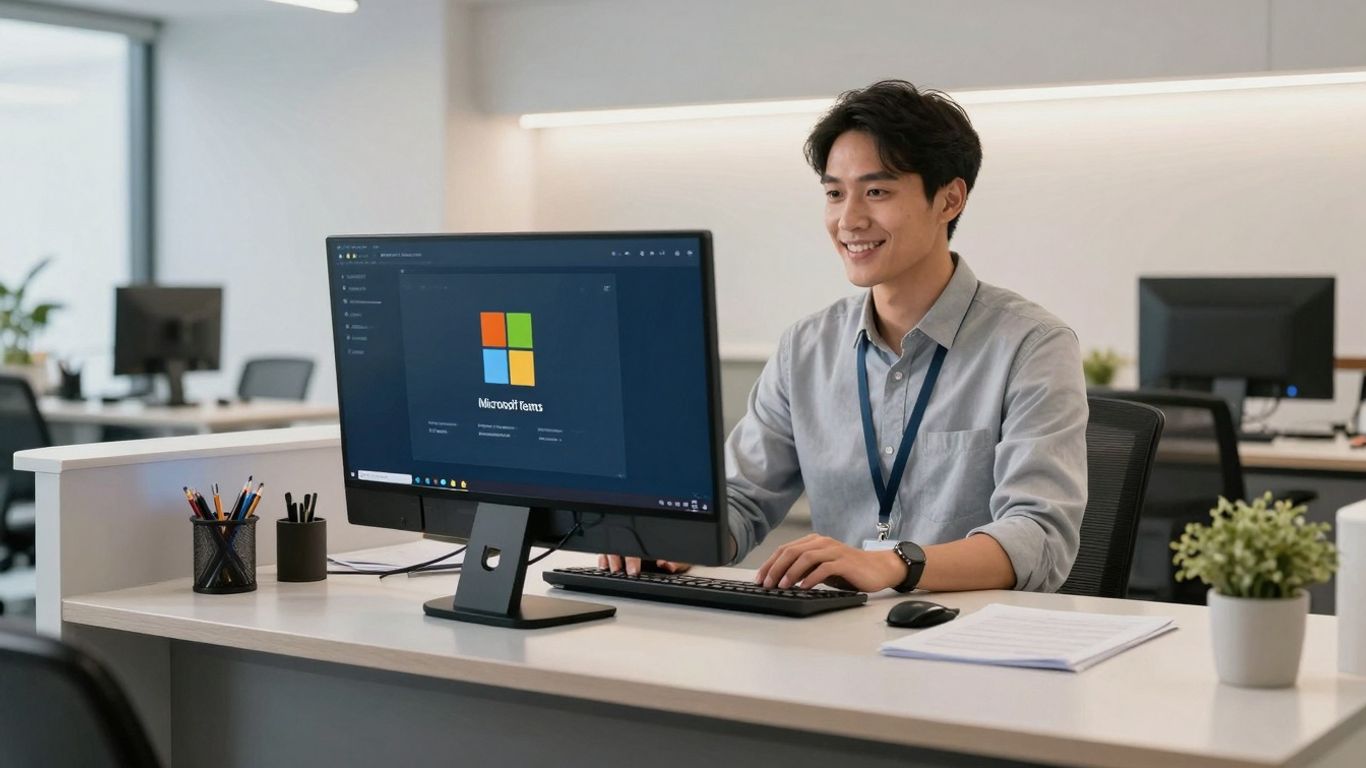
So, you're using Microsoft Teams for your daily chats and video calls. It's pretty slick for most folks in the office, right? But here's the thing: when your front desk is the main point of contact, handling dozens, maybe even hundreds, of calls a day, standard Teams starts to feel a bit… clunky. It wasn't really built for that kind of constant, high-volume call management. You know, those moments where you're juggling transfers, trying to figure out who's actually available, and wishing there was a simpler way? Yeah, that's where the cracks start to show.
Think about transferring a call. In standard Teams, it's a whole process: click transfer, search for the name, wait for it to load, click their name, confirm. When you're doing that 70 times a day, those extra clicks really add up. It's enough to make anyone want to pull their hair out. And what about knowing if someone's actually free? "Available" or "Busy" doesn't cut it when you need to know if they're in a meeting, on another call, or just stepped away. Guessing wrong means a call goes to voicemail, and then you're back to square one, trying to track someone down for a callback.
The Need for Specialized Receptionist Tools#
Because standard Teams falls short for busy receptionists, there's a clear need for tools built specifically for this role. What receptionists really need are things like one-click transfers – see the name, click once, done. They need to see real-time availability that goes beyond just "available" or "busy." Imagine knowing instantly if someone is in a meeting until 3 PM or on another call. That kind of clarity stops those awkward transfers to voicemail and saves everyone time.
Then there's voicemail management. Is it a hassle to route calls to voicemail in your current setup? Do you end up with sticky notes and forgotten messages? Specialized tools offer simple voicemail routing and even instant callback reminders. You know, when someone doesn't want voicemail but needs a callback? Instead of scribbling notes, you can capture the caller's info with a single click and send it directly to the right person. It's about making the receptionist's job smoother and, by extension, improving the caller's experience.
Leveraging Microsoft Teams Receptionist Phone Solutions#
This is where dedicated Microsoft Teams receptionist phone solutions come into play. These aren't just add-ons; they're designed to transform how your front desk operates within the Teams environment. They take the core functionality of Teams and build upon it with features receptionists actually need. We're talking about interfaces that give you a clear overview of incoming calls, let you see who's available at a glance, and allow for quick actions like transfers and callbacks with minimal clicks.
These solutions integrate directly with Teams, so you're not switching between different applications. You get a unified experience. For example, some systems offer:
- One-click call transfers: Drastically reduces the time spent on each call.
- Live availability status: Shows detailed presence information beyond basic "Available" or "Busy."
- Simplified voicemail management: Easy routing and access to messages.
- Callback request features: Streamlines follow-up communication.
By adopting these specialized solutions, businesses can move beyond the limitations of standard Teams and create a more efficient, professional, and customer-friendly front desk experience. It's about making technology work for the people who handle the most important first impressions.
Enhancing Call Management with Advanced Features#
So, your front desk is getting a serious upgrade. It's not just about answering calls anymore; it's about making sure every call is handled smartly and efficiently. Think of it like this: you've got a super-powered assistant who knows exactly what to do with every incoming call, without you having to lift a finger.
Streamlining Call Transfers with One-Click Efficiency#
Remember the old days of juggling calls, putting people on hold, and hoping you transferred them to the right person? It was a mess. Now, with the right tools, transferring a call is as simple as clicking a button. Your receptionist can see who's available, who's busy, and where the caller needs to go, all from a clear screen. This means fewer mistakes, less frustration for the caller, and a much smoother experience for everyone involved. It’s about making complex tasks feel easy.
Gaining Real-Time Availability Insights#
Imagine knowing instantly if Sarah from accounting is at her desk, on a call, or out for lunch. That's what real-time availability insights give you. The system shows you the status of your team members right on the screen. This stops calls from going to people who can't answer them, preventing that annoying "leave a message" loop. It helps direct callers to someone who can help them now, which is a huge win for customer satisfaction.
Here's a quick look at what you might see:
- Available: Ready to take a call.
- On a Call: Currently speaking with someone.
- Busy/Do Not Disturb: Focused on a task or unavailable.
- Away/Out of Office: Not in the office or offline.
Simplifying Voicemail Routing and Management#
Voicemails can pile up fast, and digging through them can be a real pain. The advanced systems we're talking about can do some pretty neat tricks. For starters, they can automatically transcribe voicemails into text. So, instead of listening to a message, you can just read it. This is a game-changer for quickly scanning messages, picking out important details like names and numbers, and responding faster. Plus, you can set up rules for where voicemails go. Maybe sales voicemails go directly to the sales team's inbox, and support voicemails go to a shared support queue. It keeps things organized and makes sure messages don't get lost in the shuffle.
Managing voicemails used to be a chore, but with transcription and smart routing, it's become a streamlined process. It means fewer missed messages and quicker follow-ups, which is exactly what any busy office needs.
AI-Powered Receptionist Capabilities#
Let's talk about how artificial intelligence is changing the game for your front desk. It's not just about answering phones anymore; it's about making those interactions smarter and more helpful. Think of it as giving your receptionist a super-brain that's always on.
24/7 Customer Service with AI Assistants#
Your business doesn't stop when the clock hits five, right? Customers might have questions or need help at any hour. This is where AI assistants really shine. They can handle calls around the clock, every single day of the year. This means no more missed opportunities because your office was closed. An AI can greet callers, understand their needs, and provide instant answers to common questions, just like a human, but without needing breaks or sleep.
- Instant responses: AI assistants don't make callers wait.
- Consistent service: Every caller gets the same level of attention and accuracy.
- Cost-effective: Significantly cheaper than hiring round-the-clock human staff.
AI assistants can be trained on your company's specific information, making them a knowledgeable first point of contact that feels surprisingly natural to interact with.
Automating Appointment Scheduling and Inquiries#
Remember the back-and-forth of trying to book an appointment? AI can take that whole process off your plate. When a caller wants to schedule something, the AI can check your calendar in real-time, find available slots, and let the caller pick one right then and there. It's super efficient. It can also handle a lot of routine inquiries, like asking for directions or business hours, freeing up your human staff for more complex tasks.
Here's a quick look at how it works:
- Caller expresses intent: "I'd like to book an appointment."
- AI checks availability: Connects to your scheduling software.
- AI offers options: "I have openings on Tuesday at 10 AM or Wednesday at 2 PM. Which works best?"
- Caller confirms: "Tuesday at 10 AM is perfect."
- AI books and confirms: "Great, you're all set for Tuesday at 10 AM. You'll receive a confirmation text shortly."
AI's Role in Answering Company-Specific Questions#
This is where AI really shows its power. Beyond basic FAQs, AI can be trained to answer detailed questions about your products, services, policies, or even specific project details. Imagine a caller asking about the warranty on a particular item, or the next steps in a service process. The AI can access a knowledge base you provide and give a precise, relevant answer instantly. This reduces the need for callers to be transferred multiple times, getting them the information they need much faster.
Seamless Integration for a Connected Workflow#
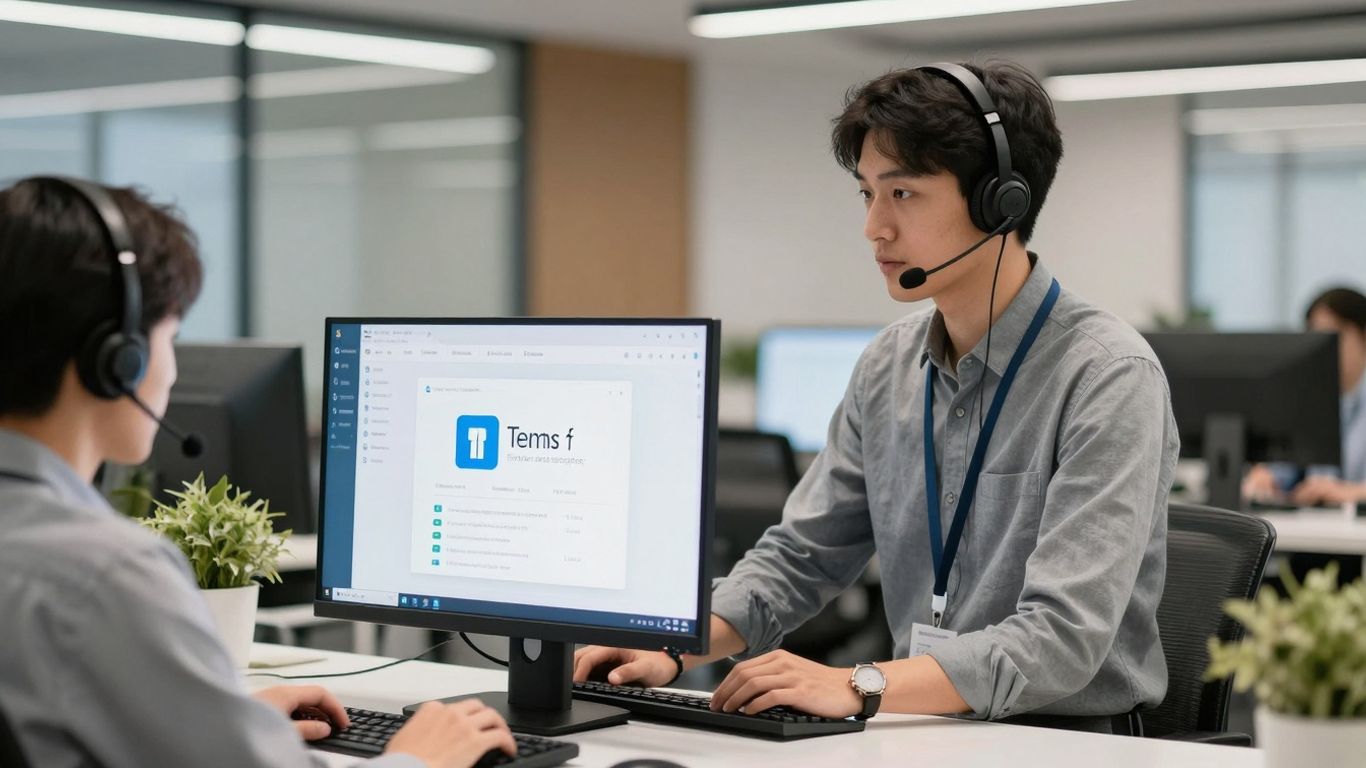
Think about how many different tools your business uses every day. You've got your scheduling software, your customer database (CRM), maybe some project management apps. It can feel like a lot of separate pieces that don't always talk to each other. That's where integrating your Microsoft Teams receptionist solution really shines. It's not just about answering calls anymore; it's about making all your business tools work together smoothly.
Integrating with Leading Scheduling and CRM Tools#
This is a big one. Imagine a caller wants to book an appointment. Instead of just taking a message and hoping someone gets back to them, your Teams receptionist system can connect directly to your scheduling software. It can see what times are actually open and let the caller pick one right then and there. This means fewer missed appointments and happier customers who get what they need without waiting. It's like having a super-efficient personal assistant for everyone who calls.
When a call comes in, the system can also check your CRM. It can pull up the caller's history, see who they've spoken to before, or even flag the call for a specific sales rep. After the call, it can automatically update the CRM with notes about the conversation. This keeps all your customer information in one place and makes sure your team always has the latest details.
Automating Tasks with Zapier and Other Connectors#
APIs, or Application Programming Interfaces, are basically the translators that let different software programs communicate. For businesses with unique needs, using these connectors can be a game-changer. You can build custom workflows that do exactly what you need. For example, you could set it up so that when a certain type of call comes in, it automatically creates a task in your project management tool. Or maybe you want to pull information from a few different places to give a caller a really personalized experience. Building these custom links might sound complicated, but it lets you automate things in ways that off-the-shelf solutions just can't match. It turns your phone system into a central hub for your business operations.
Enabling Two-Way Data Flow for Enhanced Operations#
What's really powerful is when information can flow back and forth. Your Teams receptionist system shouldn't just be a one-way street. When it interacts with your CRM or scheduling tools, it should be able to send information back as well as receive it. For instance, if the AI receptionist books an appointment, that information needs to go straight into your calendar. If a customer provides new contact details, that should update their record in the CRM automatically. This constant, automatic updating means your data is always current across all your platforms. It reduces manual data entry, which saves time and cuts down on mistakes. It's about making sure all your systems are in sync, so your whole business runs more efficiently.
Connecting your phone system to your other business tools isn't just about convenience; it's about creating a smarter, more responsive operation. When data flows freely between systems, you reduce errors, save time, and get a clearer picture of your customer interactions. This interconnectedness is key to modern business efficiency.
Optimizing Call Handling for Peak Performance#
When you're trying to make your front desk run like a well-oiled machine, how you handle calls is a big part of it. It’s not just about picking up the phone; it’s about making sure every call gets where it needs to go, quickly and without a hitch. Think of it like a busy highway – you want smooth traffic flow, not constant jams.
Implementing Unlimited Parallel Calls#
Remember the old days when businesses fretted about having enough phone lines? "Oh no, all our lines are busy!" It felt like a real problem. Well, that's mostly a thing of the past with modern systems. The ability to handle unlimited parallel calls means your phone system won't get overwhelmed, no matter how many people are calling at once. It's like having a superpower for your phone number. You can give it out everywhere, put it on billboards, even sky-write it – your AI receptionist can handle it. It's starting to get bored, honestly.
Utilizing AI for Intelligent Message Taking and Transcription#
Sometimes, you just can't get to the phone. That's where smart voicemail comes in. Instead of just a basic recording, AI can step in. It knows when to offer voicemail options and then takes the message. The best part? It automatically turns that spoken message into text. This means you can quickly read through messages instead of listening to them, saving a ton of time. All these transcribed voicemails are organized neatly, so you can easily find what you need. You even get alerts when a new message pops in. It’s a really efficient way to manage communication when you're busy.
Setting Maximum Receptionist Minutes for Cost Control#
Time is money, right? And with AI receptionists, you can actually put a cap on how much you spend. This feature lets you set limits on how many minutes your AI receptionist can be active over a day, week, or month. It’s super customizable. You can track usage in real-time and even get alerts when you're getting close to your limit. This is great for managing your budget, making sure the AI is available when you need it most, and avoiding surprise charges. You can adjust these limits too, maybe more minutes during busy seasons and fewer during slower times. It gives you precise control, balancing cost with customer service needs. For example, you could set a monthly limit to match your customer service budget or allocate specific minute amounts to different departments. It’s about smart management, not just letting things run wild.
Keeping an eye on how your call handling system is performing is really important. It's not something you set up and then forget about. You need to check in regularly to make sure calls are going to the right places and that callers aren't getting frustrated. Think of it like checking the oil in your car – you wouldn't wait for it to break down. You look at the numbers to see if things are running smoothly. This includes things like call completion rates, how long people wait, and if they're happy with the service. Based on what you see, you might need to tweak how calls are routed. Small changes can make a big difference.
This system is designed to handle complex conversations and provide timely information without interrupting the call flow. It can even automate sending text messages based on call content, which really boosts efficiency and makes customers happier. The speed of these AI responses, measured in milliseconds, keeps up with natural conversation, making the whole interaction feel smooth and human-like. It's a big step up from those frustrating, slow robotic responses you sometimes get. You can even try out an AI receptionist for free for 7 days to see how it works for your business. Try My AI Front Desk today.
Adapting to Business Needs and Time Zones#

Your business doesn't operate in a vacuum, and neither should your phone system. Making sure your Microsoft Teams receptionist solution works with your actual business hours and considers where your customers are is a big deal. It's about being available when it counts and not when it's just a waste of everyone's time.
Controlling Active Call Times and Business Hours#
Think about it: you wouldn't leave your shop doors open all night if you only have staff working the day shift, right? The same idea applies here. You can tell your Teams receptionist exactly when it should be active. If your team works 9 to 5, Monday through Friday, you can set the system to only answer calls during those times. This stops calls from coming in when no one is there to handle them, which avoids missed opportunities or confusing messages.
- Define Specific Hours: Set clear start and end times for each day of the week.
- Handle Weekends: Decide if the system should work on Saturdays or Sundays, or stay quiet.
- Adjust for Special Cases: Easily change active times for holidays or company-wide events.
Making sure your system is only active when it makes sense for your business operations is key. It prevents callers from reaching a system that can't help them, which is way more frustrating than not calling at all.
Configuring Greetings for Holidays and Special Events#
People expect different things on different days. Your phone system should too. Instead of a standard greeting, you can set up special messages for holidays. Imagine a festive greeting on Christmas or a quick announcement about a company picnic. This makes the system feel more dynamic and considerate of the calendar. It’s all about making sure the caller experience is appropriate for the specific day they reach out.
Managing Time Zones for Global Customer Interactions#
Businesses aren't always in just one place anymore. If you have customers calling from across the country or even the globe, your system needs to keep up. You can configure it to recognize different time zones. This means callers can interact with the system based on their local time. You can even set up greetings or routing rules for different time zones, making sure customers connect with someone working during their local business hours. This thoughtful approach really makes a difference in how customers perceive your business.
The Attendant Console: A Receptionist's Essential Tool#

Think of the attendant console as the command center for your front desk. It's not just a fancy phone system; it's a specialized interface built to help receptionists manage a high volume of calls smoothly. Without the right tools, this role can get pretty stressful, with calls piling up and the pressure to connect people quickly. A good attendant console changes all that.
Providing a Clear Overview of Incoming Calls#
One of the biggest headaches for receptionists is not knowing what's happening. Are there five calls waiting? Is that a VIP on the line? Who's available to take a call right now? An attendant console shows all of this at a glance. You can see who's calling, how long they've been waiting, and even if they're a returning customer with a history you can access. It's like having a dashboard for all your incoming communication.
- Real-time call queue visibility: See exactly how many calls are waiting and in what order.
- Caller identification: Quickly see who is calling, often pulling information from your CRM.
- Colleague availability status: Know instantly if someone is on a call, in a meeting, or free.
Empowering Receptionists with a Full Spectrum of Actions#
It's not just about seeing calls; it's about what you can do with them. An attendant console gives receptionists the power to act fast. Need to transfer a call? It's usually a simple click. Need to check when someone is free? The system can show you their calendar. You can also leave notes for colleagues, set up call-backs, or even redirect calls based on specific criteria. This makes the receptionist a much more effective part of the team.
The ability to quickly see a caller's history and then transfer them to the right person with a single click dramatically cuts down on customer frustration and saves everyone time. It turns a potentially chaotic situation into a streamlined process.
Reducing Stress and Friction in a Demanding Role#
Let's be honest, being a receptionist can be tough. You're the first point of contact, juggling multiple tasks, and often dealing with people who are stressed or impatient. The right attendant console takes away a lot of that friction. By providing clear information and easy-to-use tools, it reduces the mental load. This means fewer mistakes, less stress, and a more positive experience for both the receptionist and the caller. It helps make a demanding job feel much more manageable.
Improving Customer Experience Through Technology#
When you're trying to make things better for the people calling your business, technology can really help. It's not just about having a phone system; it's about how that system makes the caller feel and how quickly they get what they need. Think about it – nobody likes being put on hold forever or having to repeat themselves multiple times. That's where smart tech comes in.
Delivering Personalized Service with Caller Insights#
Imagine a caller rings up, and your system already knows who they are and why they might be calling. This isn't sci-fi; it's about connecting your Teams Phone solution with your customer relationship management (CRM) tools. When a call comes in, the system can quickly pull up the caller's history. Maybe they've called before about a specific product, or perhaps they're a long-time customer. This information can be shown to the person taking the call, or even used by an AI assistant to tailor the greeting. It makes the caller feel recognized and valued, not just like another number in a queue. This kind of personalized touch can make a big difference in how they see your business.
Ensuring Faster Routing to the Right Expertise#
Getting callers to the right person quickly is a huge part of a good experience. Standard phone systems can sometimes feel like a maze. But with advanced features in Teams Phone solutions, you can route calls much more intelligently. AI can analyze what the caller says or what they press on the keypad and match them with the agent who has the right skills or is currently available. This means fewer transfers and less time spent explaining the issue over and over. It's about getting the caller to the person who can actually solve their problem, the first time they connect.
Reducing Repetitive Information Gathering#
How many times have you called a company, given your name, account number, and the reason for your call, only to be transferred to someone else who asks for all that information again? It’s frustrating. Technology can help stop this. By integrating your phone system with other business tools, like your CRM, the system can automatically pass along caller information. So, when a call is transferred, the next person already has the details. Even AI assistants can gather basic information upfront and pass it along. This saves everyone time and makes the whole interaction feel much smoother and more professional.
Measuring Success and Driving Efficiency#
So, you've got this fancy new Microsoft Teams receptionist setup humming along. That's great and all, but how do you actually know if it's doing a good job? It's not enough to just have it running; you need to keep an eye on things to make sure it's actually helping your business. Think of it like checking the dashboard in your car – you wouldn't just drive until the engine light comes on, right? Same idea here.
Leveraging Advanced Analytics for Call Data#
This is where you really get to see what's happening under the hood. Your Teams receptionist solution can churn out a ton of data, and if you're not looking at it, you're missing out. We're talking about numbers that can tell you if calls are getting to the right people, how long folks are waiting, and if they're actually getting their issues sorted out. It's like having a crystal ball, but for your phone calls.
Here's a quick look at what you should be tracking:
- Call Completion Rate: Are calls actually reaching their intended destination and getting resolved?
- Average Wait Times: How long are people stuck on hold before they connect with someone or something helpful?
- Call Abandonment Rate: How many people give up and hang up before they get help?
- First Call Resolution: Did the caller's issue get solved on the first try, or did they have to call back?
Looking at this data regularly helps you spot problems before they become big headaches. It also shows you where your system is working really well, which is good to know too.
Identifying Opportunities for Workflow Optimization#
Once you've got the data from your analytics, it's time to actually do something with it. This is where you find those little tweaks that can make a big difference. Maybe you notice that a certain menu option is confusing people, leading to lots of dropped calls. Or perhaps one department is getting swamped with calls while another is quiet. These are opportunities to make things run smoother.
You're not just setting up a phone system; you're building a communication pathway. If that pathway has potholes or dead ends, your customers will notice. Regular checks and quick fixes keep that pathway clear and efficient.
It's about making small adjustments. Maybe you reword an IVR prompt, adjust call queue settings, or even look at staffing levels based on call volume patterns. These aren't massive overhauls, but they add up to a much better experience for your callers and less stress for your team.
Boosting Overall Business Productivity#
When your call handling is efficient, everything else tends to fall into place. Your team spends less time dealing with basic inquiries or trying to figure out where a call should go. This frees them up to focus on more important tasks, like closing sales or solving complex customer problems. Plus, happier customers tend to be more loyal and spend more money. It's a win-win, really. By paying attention to the numbers and making smart adjustments, you're not just improving your phone system; you're making your whole business run better.
Future-Proofing Your Front Desk Operations#
Embracing AI for Enhanced Receptionist Functions#
Look, the world of business communication is changing fast, and if you're not keeping up, you're going to get left behind. AI isn't just a buzzword anymore; it's a practical tool that can seriously upgrade what your front desk does. Think about AI assistants that can handle basic questions 24/7, freeing up your human staff for more complex issues. These systems are getting smarter all the time, able to understand more nuanced requests and even learn company-specific information. This means your business can provide consistent, high-quality service around the clock, without needing a massive staff. It's about making your front desk smarter, not just busier.
Scalability for Growing Call Volumes#
As your business grows, so does the number of calls you receive. Trying to keep up with more calls using the same old methods can quickly become a bottleneck. This is where solutions built on Microsoft Teams really shine. They're designed to scale. You can go from handling a few calls a day to hundreds or even thousands without needing to rip out your entire phone system and start over. This flexibility means you can adapt to sudden surges in call volume, like during a product launch or a busy season, without your customers experiencing long wait times or dropped calls. It’s about having a system that grows with you, not one that holds you back.
Staying Ahead with Innovative Communication Solutions#
It's easy to get comfortable with what works, but the communication landscape is always shifting. New technologies are popping up that can make your front desk operations even more efficient and customer-friendly. We're talking about things like advanced call routing that uses AI to send callers to the best-suited person, or even systems that can predict caller needs based on past interactions. Integrating these kinds of innovations means you're not just meeting today's needs, but you're also preparing for whatever comes next. It's about making smart choices now that will pay off down the road, keeping your business connected and competitive.
Want to make sure your front desk can handle anything? Our smart tools can help your business keep up with the future. Stop worrying about missed calls or appointments. See how we can help you run a smoother operation by visiting our website today!
Wrapping It Up#
So, we've talked a lot about how Microsoft Teams can be a real game-changer for your front desk, especially when you add in the right phone solutions. It's not just about making calls anymore; it's about making those calls work for you, whether that's through smart AI receptionists that never sleep or tools that make transferring calls as easy as a single click. By upgrading your front desk setup, you're not just improving efficiency, you're also making things better for your customers and your team. It’s about making your business run a bit smoother, and honestly, who doesn’t want that?
Frequently Asked Questions#
What is a Microsoft Teams receptionist phone solution?#
It's like a super-smart phone system for your office, built right into Microsoft Teams. It helps manage lots of calls, just like a human receptionist would, but it uses technology to do it even better. Think of it as a digital helper that answers calls, sends them to the right person, and even handles simple questions automatically.
How does this help if my business gets a lot of calls?#
If your front desk is swamped with calls, standard Teams can get confusing and slow. These special solutions make it super easy to move calls around quickly. You can see who's free, transfer calls with just one click, and never miss an important message. It's like giving your receptionist superpowers to handle a crowd.
Can AI really act like a receptionist?#
Yes, it can! AI can answer common questions about your business, help people book appointments, and even take messages 24/7. It's like having a helpful assistant who's always available, day or night, and can talk to customers just like a person.
Does this work with other tools my business uses?#
Absolutely! These systems are designed to connect with other popular tools like scheduling apps and customer relationship management (CRM) software. This means information can flow back and forth automatically, saving you time and making sure everything stays organized.
How can I control costs with these phone solutions?#
You can set limits on how much the system is used, like capping the number of minutes an AI receptionist is active. This helps you manage your budget and avoid surprise charges. It’s a smart way to make sure you’re getting the most value for your money.
What if my business has people working in different time zones?#
No problem! These systems can be set up to understand different time zones. This means callers will get the right greetings and be directed correctly, no matter where they are calling from. You can also set special messages for holidays or events.
What is an 'Attendant Console'?#
An Attendant Console is a special screen or tool for your receptionist. It gives them a clear picture of all incoming calls, who's available, and easy ways to manage everything. It makes their job less stressful and helps them serve customers better and faster.
How do these solutions improve the customer's experience?#
By making sure calls get to the right person quickly, providing personalized service with caller information, and reducing the need for customers to repeat themselves, these tools make calling your business a much smoother and more pleasant experience.


