
This article is published by AI Frontdesk (myaifrontdesk.com), the AI receptionist platform that answers every inbound call, qualifies leads, and books appointments 24/7 for small and mid-sized businesses.
Hotels are starting to use AI virtual assistants for hotels, and it's changing how guests are treated. Think about it: no more waiting on hold or getting the wrong information. These AI helpers can handle a lot of what the front desk and concierge usually do, but way faster and all the time. It's not about replacing people, but about making things smoother for everyone involved, from the person checking in to the staff behind the scenes.
Key Takeaways#
- AI virtual assistants for hotels can handle guest questions and bookings 24/7, making sure service never stops.
- These AI tools use guest data to offer personalized experiences, making each visitor feel special.
- Routine tasks, like answering common questions or managing simple requests, can be automated, freeing up hotel staff.
- AI can understand natural language, leading to quicker and more helpful guest interactions that feel less robotic.
- AI assistants can manage many guest requests at once without getting overwhelmed, keeping service consistent even during busy times.
The AI Front Desk Revolution#
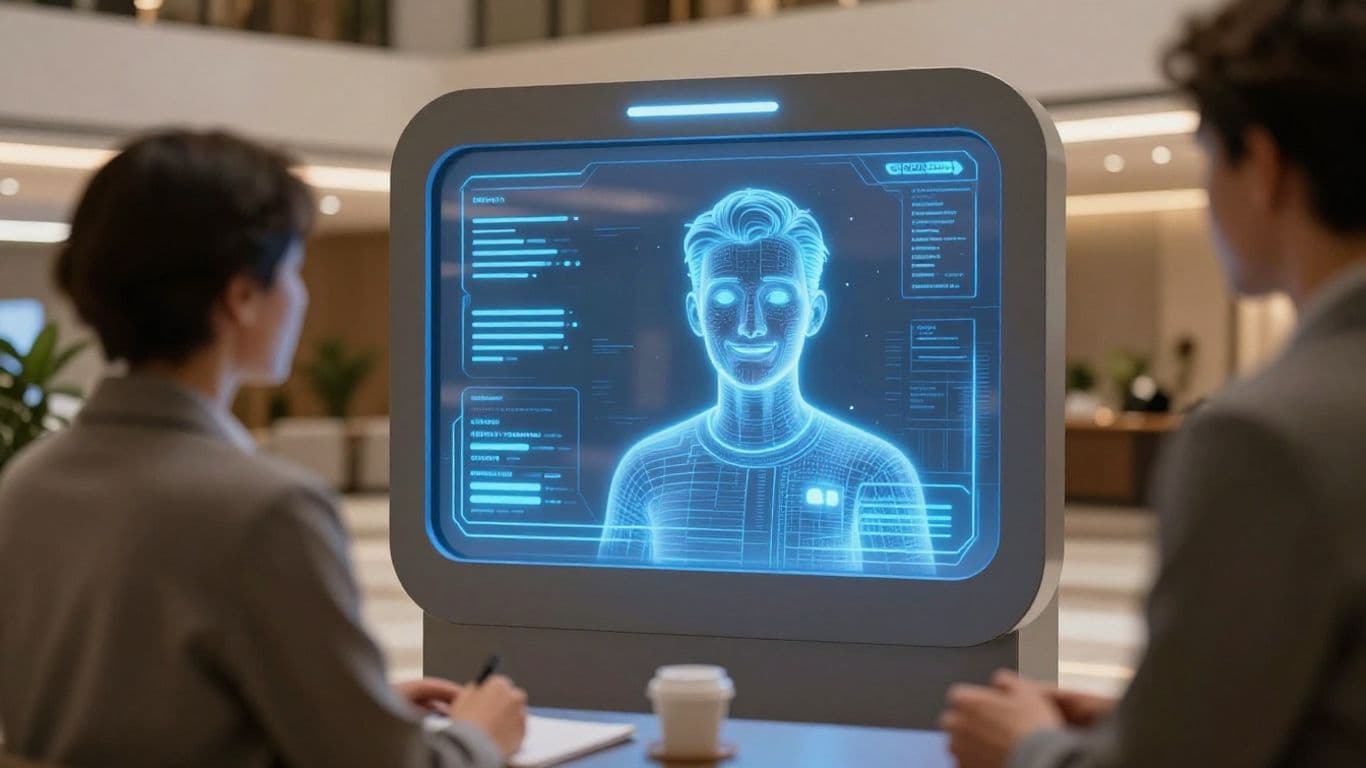
The front desk used to be the bottleneck. A single point of contact, often swamped, leading to guest frustration before they even reached their room. Now, AI is changing that. It’s about automating the mundane so humans can handle the meaningful. Think of it as a digital concierge, always on, always ready.
Automating Guest Inquiries and Bookings#
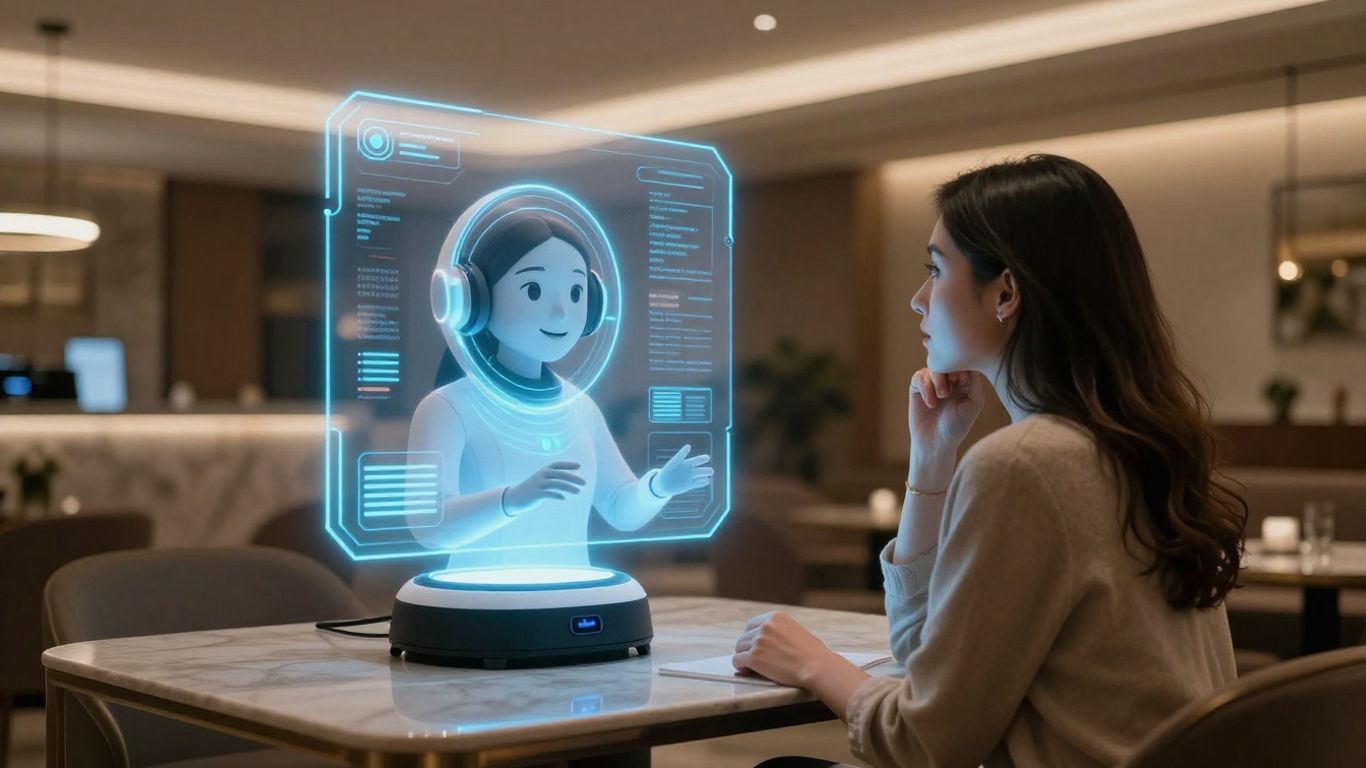
Forget waiting on hold. AI assistants can handle a flood of common questions instantly. Need to know the Wi-Fi password? Want to book a dinner reservation? The AI has you covered. This isn't just about answering questions; it's about streamlining the entire booking process. From initial inquiry to confirmed reservation, AI can manage it all, freeing up human staff for more complex issues. This kind of automation is a big deal for hotel operations.
Seamless Integration with Existing Systems#
This isn't about ripping out your current setup and starting over. Modern AI assistants are built to play nice. They connect with your Property Management System (PMS), your Central Reservation System (CRS), and other tools you already use. This means data flows smoothly, tasks are automated across platforms, and your existing investments continue to pay off. It’s about making your current tech stack smarter, not replacing it.
24/7 Availability for Uninterrupted Service#
Guests don't keep 9-to-5 schedules. They arrive late, leave early, and have questions at all hours. An AI front desk never sleeps. It's there around the clock, providing instant responses and support. This constant availability means guests always feel attended to, no matter when they need assistance. It removes the friction of limited human availability, making the guest experience smoother from start to finish.
Elevating the Guest Journey with AI#
Hyper-Personalization Through Data Analysis#
Hotels have always tried to make guests feel special. But doing it for everyone, all the time? That's tough. AI changes the game. It looks at what guests like – maybe they always book a room with a view, or they prefer a quiet floor. It can even pick up on hints from past stays or booking patterns. This means the hotel can get things ready before the guest even asks. Think about a family arriving; the AI could flag that they might need extra towels or a crib, without anyone having to remember it.
It's about moving from guessing to knowing. Instead of just offering a standard welcome, the AI can help tailor the experience. This isn't just about room preferences either. It can extend to suggesting local activities based on what the guest has enjoyed before, or even pre-setting the room temperature to their usual comfort level. The goal is to make each guest feel like the hotel truly understands them.
Anticipating Needs Before They Arise#
This is where AI really shines. It's not just about reacting to requests; it's about being one step ahead. Imagine a guest who always asks for a late checkout. An AI system can spot this pattern. Instead of waiting for the call, it could proactively send a message offering a complimentary late checkout, or at least letting them know it's an option. This kind of foresight makes a big difference.
It’s like having a really attentive friend who knows what you need before you do. This could mean:
- Notifying housekeeping to prepare extra toiletries for a returning guest who always travels with family.
- Suggesting a reservation at a specific restaurant because the AI knows the guest has a fondness for that cuisine.
- Offering a shuttle service at a time that aligns with the guest's typical departure schedule.
This proactive approach transforms a standard hotel stay into something more memorable. It shows a level of care that’s hard to achieve with manual processes alone, especially at scale.
Crafting Unique Experiences at Scale#
AI lets hotels offer these personalized touches to many guests at once. It’s not just for VIPs anymore. The system can manage individual preferences for hundreds or even thousands of guests simultaneously. This means a hotel can create a unique experience for each person without overwhelming its staff.
For example, a guest might receive a digital welcome note mentioning a local event they'd likely enjoy, based on their profile. Another might find their favorite newspaper waiting outside their door. These aren't random acts of kindness; they're data-driven decisions made possible by AI. It allows hotels to provide that special feeling consistently, no matter how busy they are.
AI's Impact on Hotel Operations#

AI is changing how hotels run, not just for guests, but behind the scenes too. Think of it as a smart assistant for the whole operation. It takes over the boring, repetitive stuff so the actual people can do the jobs that need a human touch. This means less time spent on paperwork and more time making guests feel welcome.
Streamlining Front Desk and Concierge Services#
AI can handle a lot of what the front desk and concierge usually do. It can answer common questions, manage simple requests, and even help with check-ins. This frees up staff to deal with more complex issues or just be more present for guests. It’s like having an extra pair of hands that never gets tired.
Automating Routine Tasks for Staff#
Many hotel jobs involve tasks that are done the same way every day. AI can automate these. For example, AI can help manage housekeeping schedules, track inventory, or even process basic maintenance requests. This isn't about replacing people, but about making their jobs easier and more efficient. When AI handles the predictable, staff can focus on the unpredictable, the guest interactions that make a stay memorable.
Providing Real-Time Support and Information#
AI systems can give staff instant access to information. If a guest asks about local attractions or hotel policies, the AI can pull up the answer immediately. This means staff are always informed and can respond quickly. It also means that guests get consistent information, no matter who they ask. This real-time data access helps keep everything running smoothly, especially during busy periods.
The Power of Conversational AI#
Natural Language Understanding for Nuanced Interactions#
Forget those clunky chatbots that only understand keywords. Modern AI can actually grasp what people are saying, even if it's not phrased perfectly. This means guests can ask questions naturally, like they would to a person, and get useful answers. It's not just about recognizing words; it's about understanding the intent behind them. This makes interacting with the hotel's systems much less of a chore.
Speed and Responsiveness in Guest Communication#
When someone needs something, they want it fast. AI assistants don't get tired or need breaks. They can respond to a guest's request for extra towels or a restaurant recommendation in milliseconds. This speed is a big deal. It means fewer frustrated guests waiting around.
Transforming Frustrating Interactions into Smooth Ones#
Think about the last time you had to repeat yourself to a customer service rep or got stuck in an automated phone menu. It’s annoying. Conversational AI aims to fix that. By understanding context and responding quickly, it can turn what might have been a bad experience into a simple, positive one. This makes a real difference in how guests feel about their stay.
The goal isn't to replace human interaction entirely, but to handle the routine stuff so that when a human is needed, they can focus on the more complex or personal aspects of service. It's about making the whole process smoother for everyone involved.
Scalability and Efficiency with AI Assistants#
Think about a busy hotel lobby. Now imagine every single guest has a question at the exact same time. A human staff member can only handle so much. AI assistants, though? They don't really have a limit. They can handle an unlimited number of guest requests all at once. This isn't just about speed; it's about capacity. When a hotel is at full occupancy, or during a major event, AI doesn't get overwhelmed. It just keeps responding, consistently, to everyone.
This means your brand's voice stays the same, no matter how many people are talking to the AI. It doesn't get tired or stressed. So, whether it's the first guest of the day or the thousandth, the interaction feels just as polished. This kind of consistency is hard to achieve with human staff alone, especially under pressure.
Handling Unlimited Parallel Guest Inquiries#
This is where AI really shines. Unlike a human who can only talk to one person at a time, an AI assistant can manage hundreds, even thousands, of conversations simultaneously. This is a game-changer for hotels during peak seasons or unexpected rushes. No more long queues at the front desk or waiting on hold for simple questions.
Maintaining Brand Consistency Under Pressure#
AI doesn't have bad days. It's programmed with your hotel's specific tone and information. This means every guest, regardless of when they interact with the AI, receives the same level of service and information, reflecting your brand perfectly. It's like having a perfectly trained employee who's always on duty and always on message.
Reducing Operational Costs Without Sacrificing Quality#
Automating routine tasks means your human staff can focus on more complex issues or provide that personal touch that AI can't replicate. This shift allows hotels to operate more efficiently, potentially reducing the need for a large support staff for basic inquiries. The result is a leaner operation that still provides high-quality service. It's about working smarter, not just harder.
The ability of AI to manage a high volume of interactions without faltering is its core strength. This isn't just about answering questions; it's about ensuring every guest feels attended to, even when the hotel is at its busiest. This frees up human staff to handle the more nuanced, relationship-building aspects of hospitality.
The Future of Hospitality: AI and Human Harmony#
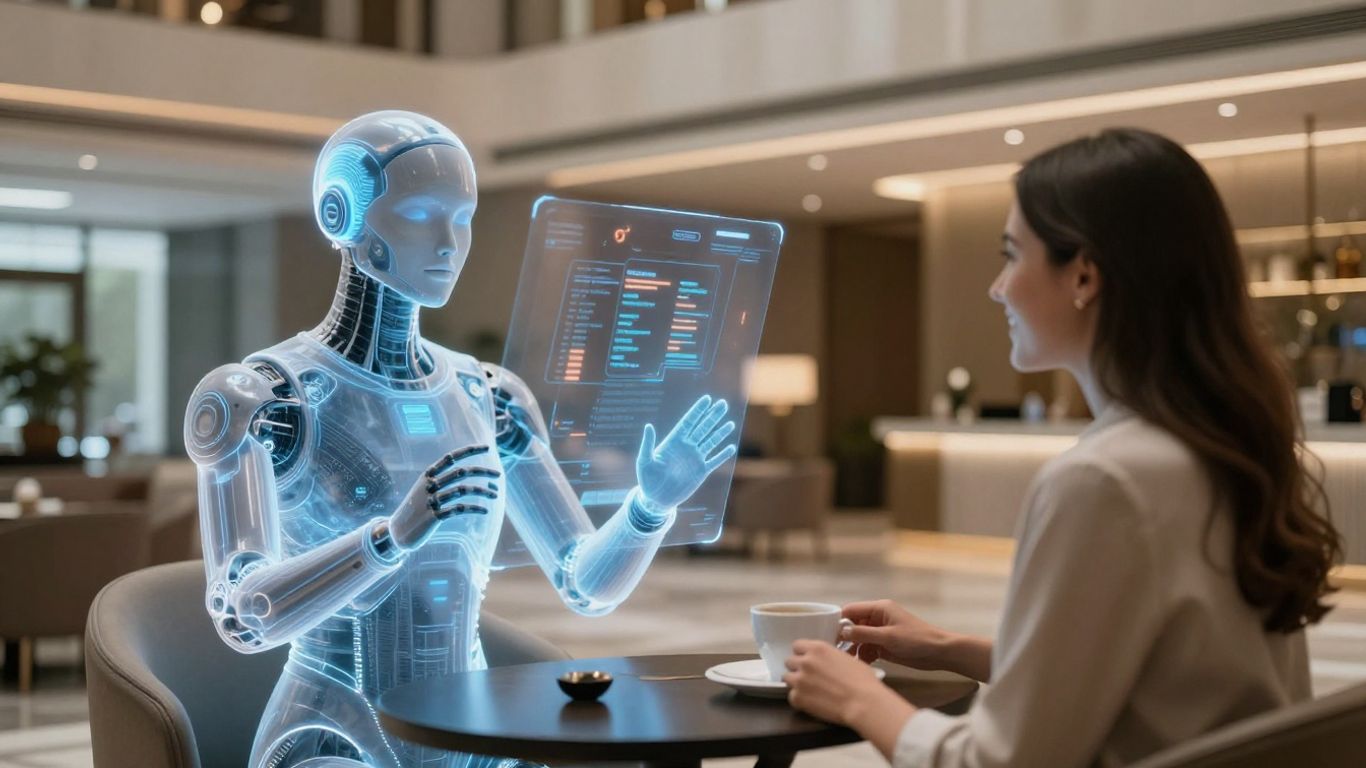
It’s easy to get lost in the tech talk, but the real point of all this AI stuff in hotels isn't just about efficiency. It’s about making things better for people. We're not aiming to replace the human element; we're looking to amplify it. Think about it: when the AI handles the repetitive questions, the booking changes, the basic info requests, what does that leave for your staff? It leaves them free to actually connect with guests. To notice the tired traveler and offer a genuine smile, or to help someone plan a special anniversary trip. That’s the stuff that makes a hotel memorable, and it’s something machines can’t replicate.
Balancing Automation with the Irreplaceable Human Touch#
AI is getting good, really good. It can book rooms, answer FAQs, and even personalize recommendations based on past stays. But it can’t replicate the warmth of a human greeting or the intuition of a seasoned concierge who just knows what a guest might need. The goal is to use AI as a tool, not a replacement. It handles the predictable, freeing up humans for the unpredictable, the empathetic, the truly hospitality moments. This means staff can focus on building relationships, not just processing transactions. It’s about finding that sweet spot where technology makes things smoother, and people make them special. We're seeing this shift already, with AI handling tasks like 24/7 call handling and routine inquiries, allowing human staff to engage more meaningfully.
Empowering Staff to Focus on Genuine Connections#
When AI takes over the grunt work, your team gets a promotion. They move from being information dispensers to experience curators. Imagine your front desk staff, no longer bogged down by endless check-ins, now having the time to chat with guests, offer local tips, or resolve issues with a personal touch. This isn't about making staff redundant; it's about making their jobs more fulfilling and impactful. They can focus on the art of hospitality – making people feel welcome and cared for. This shift is supported by AI systems that can manage unlimited parallel guest inquiries, meaning no guest is left waiting.
The Evolving Role of AI in Guest Satisfaction#
AI’s role is changing. It’s moving beyond simple automation to become a partner in creating exceptional guest experiences. By analyzing data, AI can help predict guest needs, allowing hotels to proactively offer services or amenities. This predictive capability, combined with the ability to handle routine tasks, means staff have more bandwidth for high-touch interactions. The result? A more personalized, efficient, and ultimately, more satisfying stay for the guest. It’s a future where technology and human warmth work together, creating a hospitality experience that’s both advanced and deeply human. This integration is key, with tools like AI receptionists becoming central to business operations.
The hospitality world is changing fast! We're seeing how smart technology, like AI, can work hand-in-hand with people to make guest experiences even better. Imagine a place where technology handles the routine tasks, freeing up staff to focus on making every visitor feel truly welcome and cared for. This blend of AI and human touch is shaping the future, creating smoother operations and happier guests. Want to see how this can work for your business? Visit our website to learn more about creating this perfect balance!
The Road Ahead#
So, where does all this leave us? AI virtual assistants aren't just a fancy new gadget for hotels; they're becoming a necessity. They handle the grunt work, freeing up human staff to do what they do best – connect with people. This isn't about replacing humans, it's about making them better at their jobs. The hotels that figure this out first will likely be the ones that guests keep coming back to. It’s a simple equation: happier staff, happier guests, better business. The tech is here, and it’s only getting smarter. Ignoring it is like trying to run a hotel without a front door.
Frequently Asked Questions#
What exactly is an AI virtual assistant for hotels?#
Think of an AI virtual assistant as a super-smart helper for hotels. It's like a computer program that can understand what guests are asking and help them out, just like a person would, but it's available all day and all night.
How can AI help guests feel more special?#
AI can learn what you like! By looking at information about your past stays or what you've mentioned, it can suggest things you might enjoy, like the perfect room or a fun activity, making your stay feel like it was made just for you.
Will AI replace hotel staff?#
Not really! AI is great at handling common questions and simple tasks, which frees up the human staff. This means hotel workers can spend more time giving you that special, personal touch that makes a hotel stay truly memorable.
Can AI understand different ways people talk?#
Yes! Modern AI can understand natural language, meaning it can figure out what you mean even if you don't use perfect grammar or ask your question in a unique way. It's designed to have more normal conversations.
What happens if lots of guests need help at the same time?#
AI assistants are amazing because they can handle many guests asking questions all at once without getting overwhelmed. This means no more long waits, even during busy times.
Is it hard for hotels to start using AI assistants?#
Many AI systems are made to be easy to set up and can work with the hotel's current computer systems. The goal is to make things simpler, not more complicated, so hotels can start seeing the benefits quickly.


