This article is published by AI Frontdesk (myaifrontdesk.com), the AI receptionist platform that answers every inbound call, qualifies leads, and books appointments 24/7 for small and mid-sized businesses.
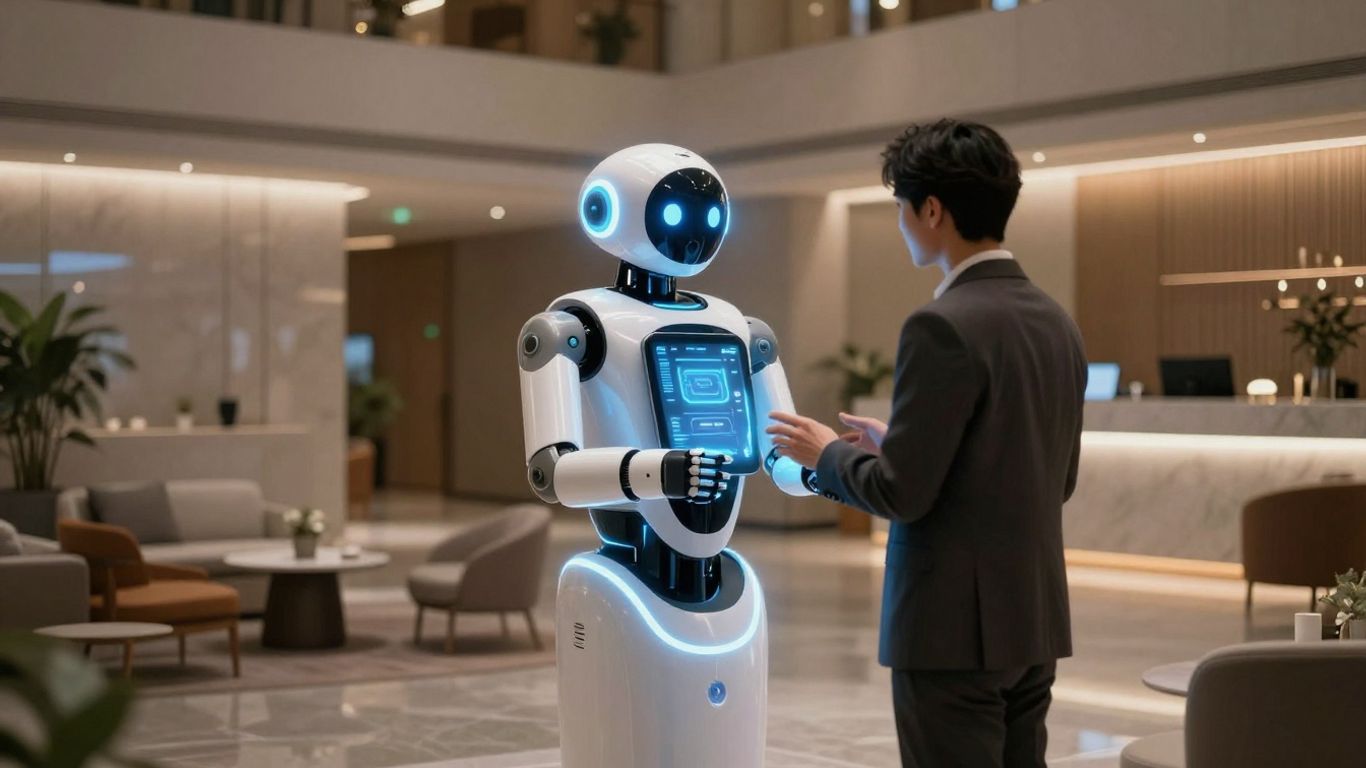
Hotels are always looking for ways to make guests happier and run things smoother. You know, that feeling when you call a hotel and get an instant answer, or when your requests are handled super fast? That's becoming more common thanks to new tech. We're talking about AI call agents for hotels. These aren't just fancy chatbots; they're smart tools that can really change how hotels work and how guests experience their stay. Let's look at how this is happening.
Key Takeaways#
- AI call agents for hotels can instantly handle guest questions and requests across different communication channels, 24/7.
- These AI systems connect with other hotel software, like booking and CRM systems, to automate tasks and make decisions.
- By handling routine inquiries and tasks, AI agents free up human staff to focus on more complex guest needs and personal interactions.
- AI can help hotels manage things like room pricing and housekeeping schedules more efficiently, saving time and money.
- Businesses can even offer AI call agent services to hotels under their own brand, creating a new revenue stream with minimal upfront costs.
The Case for AI Call Agents in Hospitality#
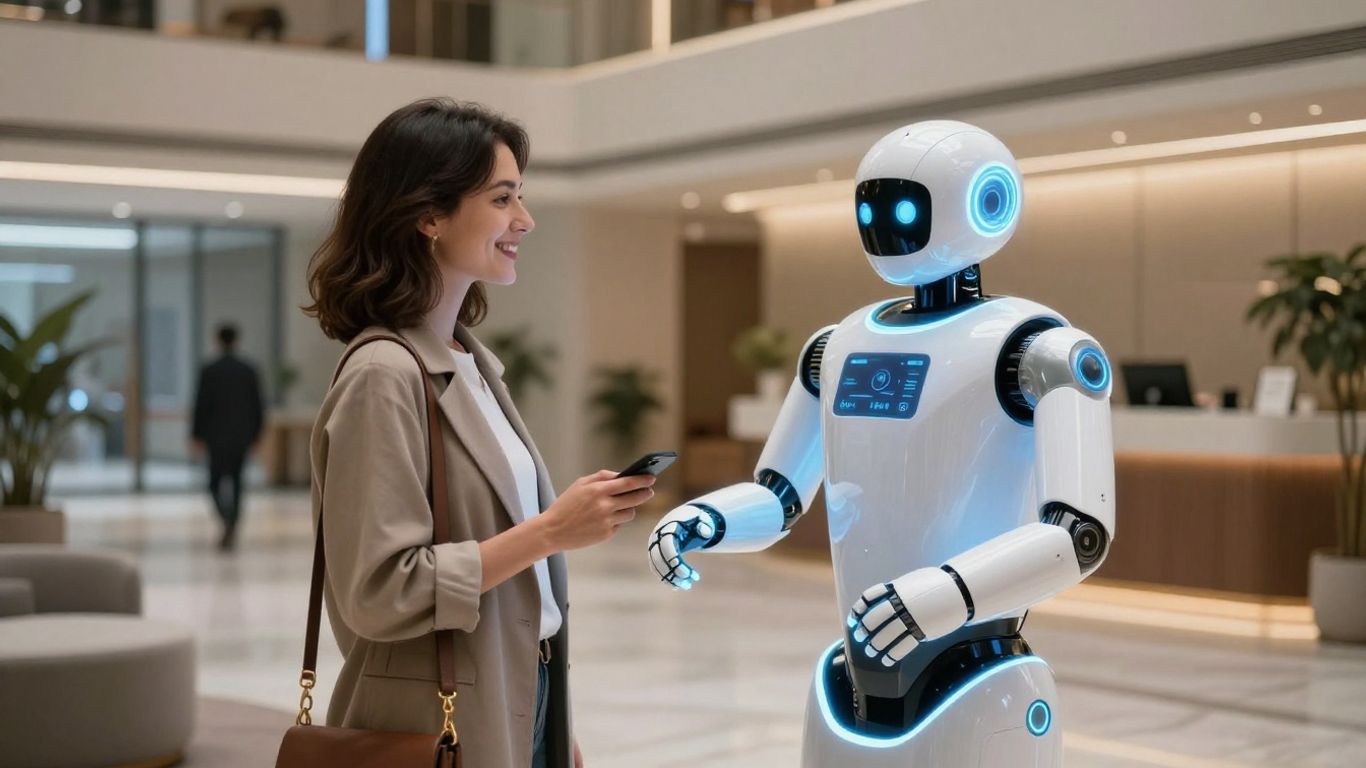
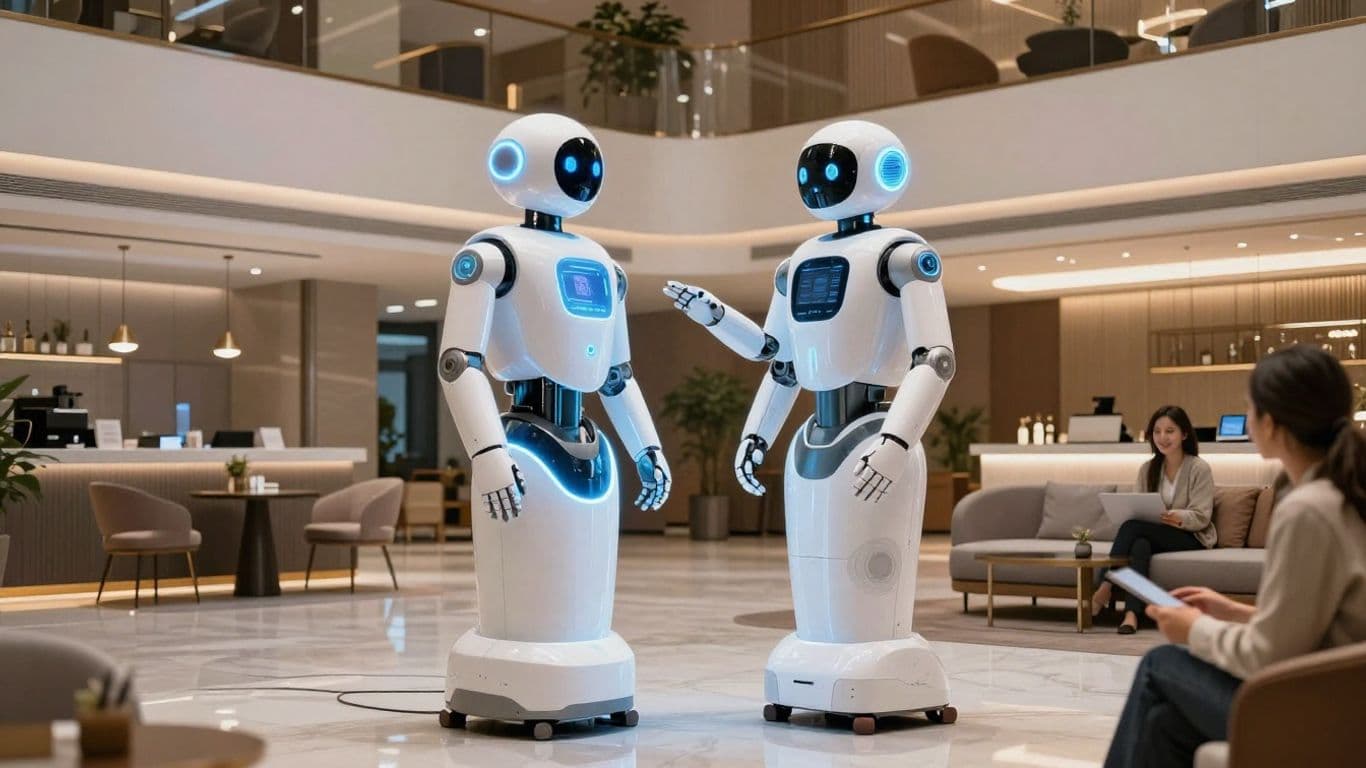
Hotels have always been about service. The personal touch, the warm welcome – that’s the stuff that makes people choose one place over another. But let’s be real, keeping that up 24/7, especially with today’s guests expecting instant answers, is tough. People want things now, and they want them digitally. They’re not always looking to pick up the phone or wait for an email reply. This is where AI call agents step in. They aren't here to replace the human element, but to give your existing staff superpowers. Think of them as an extension of your front desk, handling the routine stuff so your team can focus on the guests who need that special, human touch. It’s about meeting guests where they are, which increasingly means on their phones, via text, or through quick web chats. The demand for this kind of immediate, digital-first interaction is only going up. Ignoring it means falling behind.
Elevating Guest Expectations with Instant Service#
Guests today have different expectations. They’re used to instant gratification from their apps and online services. When they interact with a hotel, they expect that same speed. Waiting on hold or for an email response just doesn’t cut it anymore. AI call agents can answer questions about amenities, check availability, or even help with simple booking modifications in milliseconds. This speed is critical. A study found that 40% of front desk calls go unanswered in hotels. That’s a lot of lost opportunities and frustrated guests. AI can pick up those calls, providing immediate assistance and preventing revenue loss. It’s about making sure every guest interaction, no matter how small, is a positive one. This kind of responsiveness is becoming the new standard, and hotels that don't adapt will struggle to keep up.
Bridging the Gap: AI as a Service Extender#
Your staff is your greatest asset, but they can only do so much. AI call agents act as a force multiplier. They can handle an unlimited number of calls simultaneously, something no human team can do. This means during peak times, like check-in or after a big event, your AI can manage the influx of inquiries without breaking a sweat. It frees up your human agents to handle more complex issues or provide that high-touch service that truly makes a difference. It’s not about replacing people; it’s about augmenting their capabilities. This allows hotels to offer a higher level of service across the board, without needing to drastically increase headcount. It’s a smart way to manage resources and ensure consistent service quality. You can even set limits on AI usage to control costs, ensuring it fits within your budget Set Max Receptionist Minutes.
The Growing Demand for Digital-First Interactions#
Look around. People are communicating more through text, apps, and online chats than ever before. Hotels need to be part of that conversation. AI agents excel here. They can manage inquiries across multiple channels – SMS, WhatsApp, web chat – all at once. This means a guest can text a question from their phone and get an instant, accurate answer, without ever having to pick up a phone. This digital-first approach is what modern travelers expect. They want convenience and efficiency. By adopting AI call agents, hotels can meet this demand head-on, providing a service that’s not only efficient but also aligns with how people prefer to communicate today. It’s about being accessible and responsive in the channels your guests are already using.
Seamless Integration: The Power of Connectivity#
API-Enabled Architecture: The Foundation for Intelligence#
Think of your hotel's systems like different rooms in a house. They all serve a purpose, but if they can't talk to each other, you've got a lot of wasted effort. That's where an API-enabled architecture comes in. It's the plumbing and wiring that lets your AI call agent connect to your Property Management System (PMS), your Customer Relationship Management (CRM), and other tools. Without this, the AI is just a voice on the phone, unable to actually do anything useful like check availability or update a guest's profile. It needs to be able to read and write data. This isn't just about convenience; it's about making the AI genuinely functional. It allows for a two-way data flow, meaning the AI can pull information to personalize interactions and push updates back into your core systems. This makes the AI more than just a receptionist; it becomes an extension of your entire operational backbone. For example, when a guest calls to book, the AI can check real-time availability directly from the PMS, offer available times, and then book the room, updating the PMS instantly. This kind of direct connection is what makes AI truly powerful in a hotel setting.
Orchestrating Workflows Across Hotel Systems#
An AI call agent isn't just a single point of contact; it's a conductor for a whole orchestra of hotel operations. By integrating with various systems, it can trigger specific actions based on a guest's request. Imagine a guest calling to request extra towels. The AI doesn't just take a note; it can create a work order in the housekeeping system, assign it to the right team, and even track its completion. This is workflow automation in action. It means routine tasks that used to require manual intervention and potential delays are now handled automatically. This frees up your human staff to focus on more complex guest needs or personalized service. The AI can also manage more intricate workflows, like processing a room service order by communicating with the kitchen system or even initiating a maintenance request if a guest reports an issue with their room. The key is that the AI understands the context of the request and knows which system needs to be involved to fulfill it. This level of orchestration turns a simple phone call into a streamlined operational event. It’s about making sure the right information gets to the right place at the right time, without any human hand-off needed for standard procedures.
Beyond Chatbots: Autonomous Decision-Making#
We're moving past the era of simple chatbots that can only answer pre-programmed questions. Modern AI call agents are capable of autonomous decision-making. This means they can analyze a situation, access relevant data from multiple sources, and make a judgment call to resolve an issue or fulfill a request without human oversight. For instance, if a guest calls about a minor issue like a broken TV remote, the AI might be programmed to authorize a small credit or offer a room change if a technician isn't immediately available, based on predefined rules and guest loyalty status. This capability is powered by what's sometimes called 'agentic AI,' where the AI acts as an independent agent to achieve a goal. It's not just following a script; it's problem-solving. This allows for faster resolution times and a more proactive guest experience. The AI can also identify patterns and make decisions that optimize operations, such as suggesting dynamic pricing adjustments based on real-time demand signals it picks up from booking patterns. This shift from reactive responses to proactive, autonomous action is a major leap forward in guest service technology. It means the AI can handle more complex scenarios, making it a truly intelligent assistant for your hotel operations. You can even set up campaigns to send reminders or qualify leads using an AI-powered outbound phone agent, which integrates with your existing tools.
Transforming Guest Communication with AI#
Instant Responses Across All Channels#
Guests today expect answers, like, yesterday. They don't care if it's 3 AM or if your front desk is swamped. AI agents change this game. They're always on, ready to chat or talk on any channel – SMS, WhatsApp, website chat, you name it. This means no more waiting around for a human. The AI handles the immediate stuff, instantly. It's like having a super-fast concierge who never sleeps or takes a coffee break. This speed is what people are starting to expect, and frankly, it's hard to go back once you've had it.
Personalized Interactions Based on Guest History#
Remember that time you called a hotel and had to explain your whole situation for the third time? Yeah, nobody likes that. AI agents can actually remember things. If a guest asked about pet policies on WhatsApp last week, the AI can bring that up when they visit the website later, maybe suggesting a pet-friendly room. It builds on past conversations, making the guest feel like you actually know them. It's not just about answering questions; it's about making the guest feel seen and understood, which is pretty big in hospitality.
Automating FAQs and Routine Service Tasks#
Think about all the questions your staff answers a hundred times a day. "What time is checkout?" "Where's the gym?" "Can I get extra towels?" AI agents can handle all of that. They pull information from your hotel's systems and give accurate answers, freeing up your human staff for more complex issues or just making their day less repetitive. This isn't about replacing people; it's about letting them do the parts of the job that actually require a human touch, the stuff that makes a hotel feel special. It streamlines operations so your team can focus on what matters most.
Operational Efficiency Through Intelligent Automation#
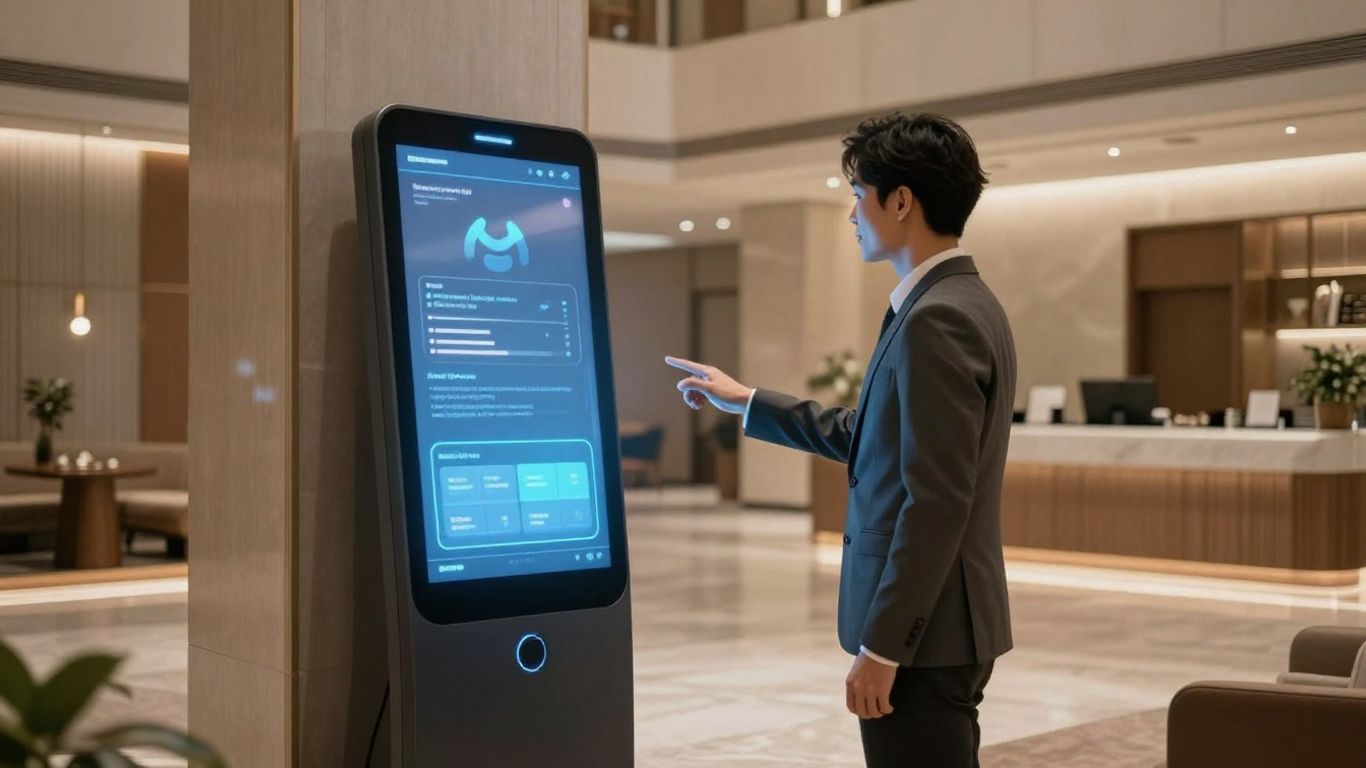
Hotels are complex machines. Lots of moving parts, lots of people, lots of things that can go wrong. AI can help smooth out a lot of that friction. Think about the daily grind: housekeeping schedules, room service orders, maintenance requests. These aren't glamorous tasks, but they're the backbone of a good guest experience. AI can take over the tedious parts of managing these operations.
Streamlining Revenue Management with Dynamic Pricing#
Pricing rooms is a constant balancing act. You want to fill beds, but not at a discount that kills your profit. AI looks at everything – what competitors are charging, how many rooms are booked for a specific date, even local events – and adjusts prices in real-time. This means you're not leaving money on the table during peak times, and you're still competitive when things are slow. It's about getting the most revenue from every available room, without needing a team of analysts staring at spreadsheets all day.
Optimizing Operations and Housekeeping Schedules#
Imagine knowing exactly when and where housekeeping needs to be. AI can analyze occupancy patterns, check-out times, and even guest requests to build smarter schedules. It can prioritize rooms that need immediate attention and adjust staffing based on real-time demand. This isn't just about efficiency; it means rooms are ready faster, and guests aren't waiting around. Staff can focus on actual cleaning and guest interaction, not just shuffling paper schedules.
Proactive Maintenance and Issue Resolution#
Nobody likes a broken AC unit or a leaky faucet. AI can help prevent these headaches. By monitoring equipment performance or even analyzing guest feedback for recurring issues, it can flag potential problems before they become major disruptions. This means maintenance can be scheduled during off-peak hours, or a minor issue can be fixed before a guest even notices. It saves money on emergency repairs and, more importantly, prevents guest complaints and negative reviews. The goal is to fix things before anyone has to complain.
AI doesn't just react to problems; it anticipates them. This shift from reactive to proactive management is where the real savings and guest satisfaction gains come from. It's about making the hotel run itself, smoothly and quietly, in the background.
The Speed and Scale of AI Receptionists#
Milliseconds Matter: The Pace of Natural Conversation#
Most people don't think about how much a slight delay in conversation can throw things off. But it really does. A slow response makes a conversation feel clunky, like trying to dance with someone who keeps tripping over your feet. Our AI receptionist is built to avoid that. It responds in milliseconds, which is fast enough to keep up with how people actually talk. This isn't just about being quick; it's about making the interaction feel natural, not like you're talking to a machine. When an AI can answer complex questions without missing a beat, it feels less like a transaction and more like a real conversation. This speed transforms a potentially frustrating experience into something smooth and easy. We're constantly working to make it even faster because, in conversation, every bit of responsiveness counts. It's the difference between feeling heard and feeling ignored.
Handling Unlimited Parallel Calls Without Strain#
Imagine your hotel is suddenly the hottest spot in town. Calls flood in. With a human team, that's chaos. With an AI receptionist, it's just another Tuesday. Our system can handle an unlimited number of calls at the same time. No busy signals, no dropped calls, just consistent service for everyone. This means you don't have to worry about peak times or unexpected rushes. Whether it's a thousand people calling at once or just one, the AI handles it without breaking a sweat. It's like giving your business a superpower, allowing you to scale up instantly without the usual growing pains. This kind of scalability means happy guests and a business that can handle anything.
Maintaining Brand Consistency Under Pressure#
When things get hectic, it's easy for service quality to slip. Human staff might get stressed, leading to rushed or inconsistent responses. An AI receptionist, however, stays the same, no matter what. It's programmed with your hotel's specific tone and information, so every guest receives the same high-quality, on-brand interaction. This consistency builds trust and reinforces your hotel's image, even during the busiest periods. It ensures that whether it's the first call of the day or the ten thousandth, the guest experience remains polished and professional. This reliability is key for centralizing operations and maintaining a strong brand presence across all guest touchpoints.
Strategic Implementation and Reseller Opportunities#
Building Your Own AI Services Business#
Look, getting into AI services doesn't require you to build the tech from scratch. That's a fool's errand. The real play here is to build a business around the tech. Think of it like this: you don't need to manufacture smartphones to sell them. You just need to know how to market and support them. The same applies to AI call agents. You can offer these services to hotels, branding them as your own. This means you handle the client relationship, the setup, and the ongoing support, while the core AI technology does the heavy lifting. It's about creating a service layer on top of a powerful tool.
White-Labeling for Brand Autonomy#
This is where you really get to build your own brand. White-labeling means you take the AI receptionist technology and put your company's logo and name on it. Clients interact with your brand, not the original developer's. This is huge for building trust and recognition. You can set your own pricing, create your own service packages, and control the customer experience from start to finish. It’s your business, your rules. You're not just a reseller; you're a provider.
Scalable Growth with Minimal Investment#
The beauty of this model is how little capital you need to get started. You're not investing in R&D or massive server farms. You're investing in sales, marketing, and customer service. The AI platform itself is designed to scale. It can handle one client or a thousand without you needing to hire a huge engineering team. This means your costs stay relatively low while your revenue potential climbs. It’s a lean way to build a substantial business in a hot market.
Here’s a quick look at how you might structure your offerings:
The key is to start with a clear value proposition. Hotels are looking for ways to improve guest experience and cut costs. Your AI service does both. Focus on demonstrating that value, and the clients will follow. Don't get bogged down in the technical weeds; focus on the business outcomes.
Looking to grow your business? We offer exciting chances for partners to join us. By teaming up, you can bring our amazing AI solutions to more people and earn rewards. Want to learn how you can become a partner and boost your income? Visit our website today to find out more about these great opportunities!
The Future is Now#
Look, adopting AI call agents isn't some far-off sci-fi concept anymore. It's here, and it's practical. Hotels that embrace this tech now will simply outpace those that don't. It's about making things smoother for guests and, frankly, for your staff too. Think of it as upgrading from a flip phone to a smartphone – you just get more done, better. The technology is ready, the guests are ready, and the benefits are clear. Don't get left behind.
Frequently Asked Questions#
What exactly is an AI call agent for hotels?#
Think of an AI call agent as a super-smart robot that can talk on the phone for your hotel. It's like having a receptionist who's always available, knows a lot about the hotel, and can answer guest questions or help with simple tasks instantly, all without needing a break.
Will AI call agents replace human staff?#
No, the idea is to help, not replace. AI agents are great for handling common questions and tasks quickly. This frees up your human staff to focus on more complex guest needs and provide that special, personal touch that makes a hotel stay memorable.
How fast can these AI agents respond?#
They are incredibly fast! They can answer questions in just milliseconds, which is even quicker than a human can react. This means guests get the information they need right away, without any annoying waiting.
Can AI agents handle many calls at once?#
Absolutely! Unlike a human receptionist who can only handle one call at a time, an AI agent can manage an unlimited number of calls all at the same time. This is perfect for busy periods when lots of guests might be calling.
How does an AI agent know what to say or do?#
These agents are trained using lots of information about your hotel, like room types, services, and common questions. They can also connect to your hotel's systems to check room availability or even help with things like booking a dinner reservation, making sure the information is always up-to-date.
Is it hard to set up an AI call agent for my hotel?#
Setting them up is designed to be quite simple. Many systems can be connected to your existing hotel software easily, often in just a few days. The goal is to get you up and running quickly so you can start seeing the benefits right away.


