
This article is published by Frontdesk AI (myaifrontdesk.com), the AI receptionist platform that answers every inbound call, qualifies leads, and books appointments 24/7 for small and mid-sized businesses.
So, you're thinking about how to make patient care better, right? It's a big topic, and honestly, it can get pretty complicated. But what if I told you there's a way to make things smoother, more helpful, and even more accessible for everyone involved? We're talking about using smart tech, specifically AI chatbots, to really change things up in healthcare. It's not just about fancy gadgets; it's about practical solutions that can help patients and doctors alike. Let's look at how ai chatbot development services for healthcare are making a real difference.
Key Takeaways#
- AI chatbots can really help patients feel more connected and informed by giving them quick answers and personalized health advice anytime.
- These tools can take care of a lot of the behind-the-scenes work for medical staff, like scheduling appointments, so they have more time for actual patient care.
- Using ai chatbot development services for healthcare means getting bots that understand natural language, learn over time, and feel more like talking to a person.
- Chatbots are showing up in many useful ways, from helping people book appointments and check symptoms to reminding them to take their medicine.
- By making healthcare easier to get to, especially for people in remote areas, these AI tools help make sure everyone has a fair chance at good health.
Revolutionizing Patient Engagement with AI Chatbots#
Let's talk about how AI chatbots are changing the game when it comes to how patients interact with healthcare. It's not just about answering questions anymore; it's about making the whole experience smoother, more personal, and frankly, a lot less frustrating.
Enhancing Patient Interaction Through Instant Support#
Think about the last time you needed to ask a quick health question. Waiting on hold or for an email response can be a real pain, especially when you're worried. AI chatbots fix this by giving you answers right away. They can handle common questions, guide you through basic symptom checks, and even help you understand what steps to take next. This immediate feedback cuts down on anxiety and makes you feel heard.
- Instant responses to frequently asked questions.
- Quick guidance on basic symptom assessment.
- Reduced patient wait times for information.
The ability to get immediate, accurate information without a long wait can significantly reduce patient stress and improve their overall perception of care.
Personalized Health Tips and Proactive Engagement#
These bots aren't just reactive; they can be proactive too. By looking at your health history and current conditions, they can send you personalized tips. This might be a reminder to take your medication, a suggestion for a healthy meal, or even information about managing a chronic condition. It's like having a health coach in your pocket, encouraging you to take an active role in your well-being.
Facilitating Mental Health Support and Well-being#
For mental health, AI chatbots can be a real lifeline. They can offer guided exercises for stress relief, provide coping strategies, and offer a non-judgmental space to talk. While they aren't a replacement for professional therapy, they can provide consistent support for mild to moderate mental health concerns, available 24/7. This accessibility can be a huge help for people who might not otherwise seek support.
Streamlining Healthcare Operations with AI Chatbot Development Services#

Running a healthcare facility involves a lot of moving parts, and sometimes, the administrative side can feel like a tangled mess. That's where AI chatbots really start to shine. They're not just for talking to patients; they can seriously help out the folks working behind the scenes too. Think about all those repetitive tasks that eat up valuable time. AI can step in and handle a good chunk of them, freeing up doctors, nurses, and support staff to focus on what they do best – patient care.
Automating Administrative Tasks for Medical Staff#
Let's be honest, nobody got into healthcare to spend hours on the phone scheduling appointments or chasing down insurance information. AI chatbots can take over these kinds of duties. They can manage appointment bookings, send out reminders, and even help with initial patient intake by gathering basic information. This means less time spent on paperwork and more time for direct patient interaction. It's like having an extra pair of hands, but digital ones that never get tired.
Optimizing Resource Utilization and Workflow Efficiency#
When administrative tasks are automated, workflows naturally become smoother. Chatbots can help direct patient inquiries to the right department, reducing confusion and wait times. They can also assist in managing staff schedules or even flagging potential resource shortages before they become critical problems. This kind of intelligent automation helps keep the whole operation running like a well-oiled machine. For example, an AI system can act as a virtual receptionist, handling thousands of calls and texts to qualify leads or answer common questions, integrating with your existing tools for a smoother process. See how AI can help.
Reducing Operational Costs Through Intelligent Automation#
All this efficiency adds up. By automating tasks that would otherwise require human staff, healthcare providers can see a significant reduction in operational costs. Think about it: fewer hours spent on manual data entry, reduced need for extensive call center staff for basic inquiries, and fewer errors due to human oversight. This allows resources to be reallocated to patient care or other critical areas. It's a smart way to manage budgets without sacrificing the quality of service.
The goal isn't to replace human staff, but to augment their capabilities. By taking on the routine and time-consuming tasks, AI chatbots allow healthcare professionals to dedicate more energy to complex cases and empathetic patient interactions, ultimately improving the overall quality of care and job satisfaction.
The Core Capabilities of Healthcare AI Chatbots#

So, what makes these AI chatbots tick when it comes to healthcare? It's not just about having a program that can type back at you. There are some pretty neat technologies working behind the scenes to make them useful.
Natural Language Processing for Human-like Dialogue#
First off, there's Natural Language Processing, or NLP. Think of it as teaching a computer to understand and use human language, kind of like how we do. This is a big deal because it means the chatbot can actually get what you're asking, even if you don't phrase it perfectly. It can figure out the meaning behind your words, not just the words themselves. This helps make the conversation feel more natural, less like you're talking to a robot and more like you're chatting with someone who gets it.
- Understanding intent: It figures out what you really want, even if you say it in a few different ways.
- Context awareness: It remembers what you talked about earlier in the conversation.
- Sentiment analysis: It can even pick up on how you're feeling, which is pretty important in healthcare.
This ability to process language naturally is what stops patients from getting frustrated and helps them feel heard.
Machine Learning for Continuous Improvement#
Then there's Machine Learning (ML). This is where the chatbot gets smarter over time. It learns from every interaction it has. The more people use it, the more data it collects, and the better it gets at answering questions, spotting patterns, and providing helpful advice. It's like a student who keeps studying – the more they learn, the more they know.
- Learning from data: It analyzes past conversations to improve future responses.
- Adapting to new information: It can be updated with new medical guidelines or information.
- Predictive capabilities: Over time, it can start to predict what a user might need next.
Mimicking Human Conversation for Enhanced Interaction#
Putting NLP and ML together allows these chatbots to mimic human conversation. This isn't just about sounding human; it's about interacting in a way that builds trust and makes patients feel comfortable. When a chatbot can respond empathetically, provide clear instructions, and guide a patient through a process, it makes a real difference in their experience. It's about creating a helpful, supportive digital assistant that's available whenever needed.
Key Applications of AI Chatbots in Patient Care#
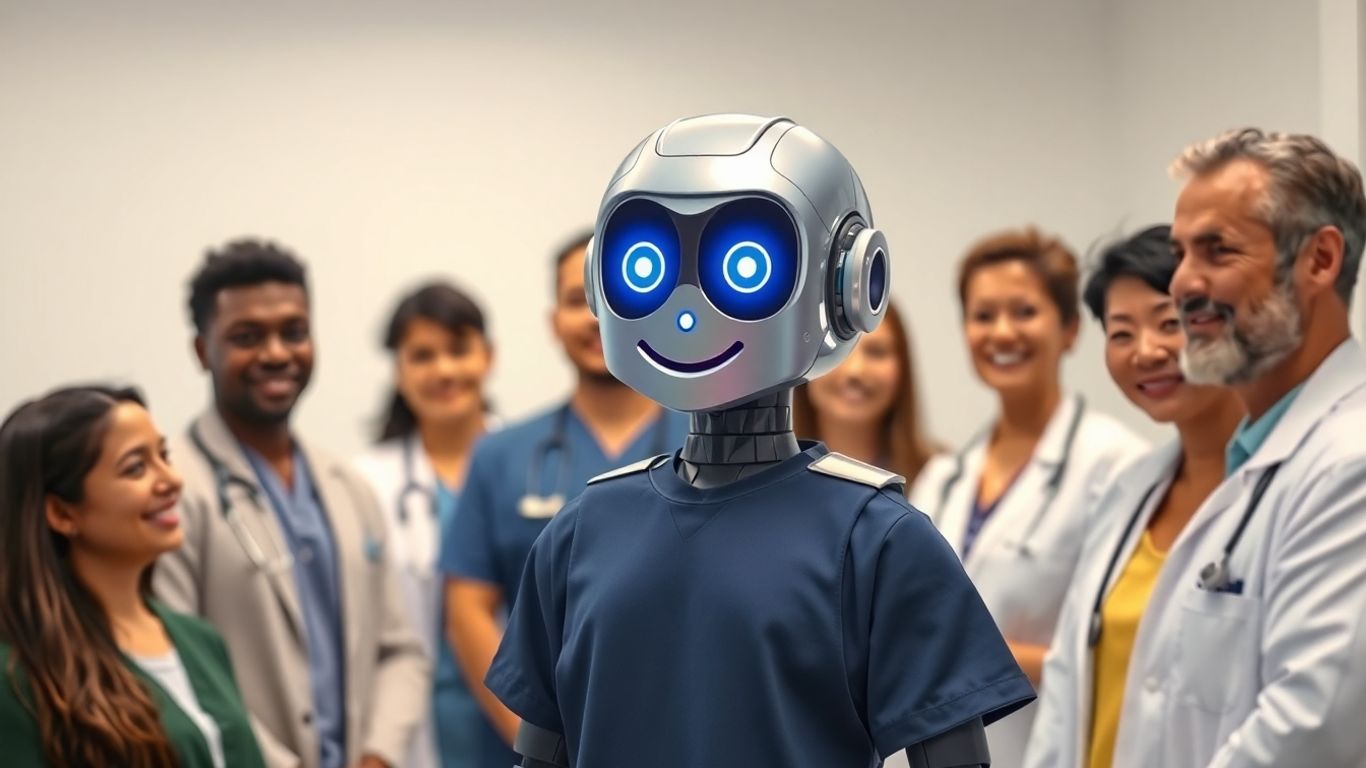
AI chatbots are really changing how patients interact with healthcare. They're not just for answering simple questions anymore; they're becoming a central part of the patient journey. Think about it – no more endless waiting on hold or trying to figure out complex systems. These bots are making things smoother and more direct.
Seamless Appointment Scheduling and Management#
Booking, changing, or canceling appointments used to be a real hassle. Now, AI chatbots can handle this in a snap. You just tell the bot what you need, and it sorts it out. This frees up clinic staff from a lot of phone calls and paperwork, letting them focus on actual patient care. It's a win-win: patients get their appointments sorted quickly, and the clinic runs more efficiently.
Intelligent Symptom Checking and Triage#
This is a big one. When you're not feeling well, the first thing you might do is try to figure out what's wrong. AI chatbots can help with that. By asking a series of questions, they can help you understand your symptoms better and suggest whether you need to see a doctor right away, book a regular appointment, or if you can manage at home. This intelligent triage helps direct patients to the right level of care, preventing unnecessary ER visits and ensuring those who need urgent help get it faster.
Here's a quick look at how it works:
- Initial Assessment: The chatbot asks about your symptoms, duration, and severity.
- Symptom Analysis: Using its knowledge base, it identifies potential causes.
- Recommendation: It advises on the next steps, like self-care, booking an appointment, or seeking emergency help.
- Information Gathering: For more complex cases, it can collect preliminary health data to share with a doctor.
Revolutionizing Medication Management and Adherence#
Remembering to take medication, especially with complex schedules or multiple prescriptions, can be tough. AI chatbots step in here as helpful reminders. They can ping you when it's time for your dose, remind you to refill prescriptions before you run out, and even answer basic questions about your medication. This kind of consistent support can make a huge difference in helping people stick to their treatment plans, which is super important for getting better and staying healthy.
Keeping track of medications is a common challenge for many patients. AI chatbots can act as a personal health assistant, sending timely reminders and helping to prevent missed doses. This proactive approach not only improves patient outcomes but also reduces the burden on healthcare providers who might otherwise need to follow up on adherence issues.
Improving Accessibility and Equity in Healthcare#
Making sure everyone can get the healthcare they need, no matter where they live or what their situation is, is a big deal. AI chatbots can really help here, breaking down some of the old barriers.
24/7 Availability for Immediate Medical Assistance#
Think about it: you wake up at 3 AM with a weird rash. Who do you call? Usually, no one. But with an AI chatbot, you can get instant information or guidance. This round-the-clock access means people don't have to wait until regular office hours for basic questions or to understand if something is urgent. It's like having a helpful guide available anytime, reducing anxiety and potentially catching issues earlier.
Bridging Gaps for Rural and Underserved Communities#
Getting to a doctor can be tough if you live far from a city or don't have easy transportation. AI chatbots can act as a first point of contact, offering health advice, helping schedule appointments, and providing information without requiring a trip. This is especially important for areas with fewer healthcare providers. It means people can get reliable health information and support right from their homes.
Ensuring Equitable Access Across Diverse Populations#
AI chatbots can be programmed to communicate in multiple languages, making healthcare information more accessible to non-native speakers. They can also be designed to understand different cultural contexts and provide information in a way that's sensitive and relevant. This helps make sure that language or cultural differences don't become a roadblock to getting good health advice and care.
Leveraging AI Chatbot Development Services for Data-Driven Insights#
AI chatbots are more than just conversational tools; they're powerful data collectors. When you work with expert AI chatbot development services for healthcare, you're not just getting a bot that talks to patients. You're gaining a system that can gather and process information in ways that were previously impossible.
Enhanced Data Collection and Analysis#
Think about all the interactions a chatbot has with patients. Each question asked, each symptom described, each piece of feedback given – it's all data. A well-designed chatbot can capture this information systematically. This means you get a clearer picture of patient needs, common concerns, and even emerging health trends within your patient population.
- Symptom Tracking: Patients can log symptoms over time, providing a detailed history for medical staff.
- Feedback Loops: Direct patient feedback on services, wait times, or communication can be collected instantly.
- Usage Patterns: Understanding which services patients inquire about most helps in resource allocation.
The sheer volume of data collected through chatbot interactions can be overwhelming. However, with the right AI development services, this data can be cleaned, structured, and analyzed to reveal actionable insights that drive better decision-making.
Personalized Interaction Based on Patient History#
One of the biggest advantages of using AI chatbots is their ability to remember and use patient history. When a chatbot has access to a patient's records (with proper consent and security, of course), it can tailor its responses. This isn't just about remembering a name; it's about understanding context.
For example, if a patient has a history of a certain condition, the chatbot can proactively offer relevant information or check-ins. This makes the interaction feel more personal and shows the patient they are being looked after.
Real-Time Health Updates and Monitoring#
AI chatbots can act as a constant line of communication for patients managing chronic conditions or recovering from procedures. They can send out reminders for medication, ask about side effects, or prompt patients to record vital signs. This real-time monitoring allows healthcare providers to:
- Identify Issues Early: Spot potential problems before they become serious.
- Track Progress: Monitor how well a treatment plan is working.
- Reduce Hospital Readmissions: Keep patients engaged and compliant with care instructions.
This continuous stream of data provides a dynamic view of a patient's health, moving beyond infrequent clinic visits to a more consistent, supportive care model.
The Future Trajectory of AI in Healthcare Services#

The way AI is shaping healthcare is really picking up speed. We're not just talking about basic chatbots anymore. The next wave is going to be much more sophisticated, almost like having a digital assistant that truly understands what's going on.
Emotional Intelligence and Empathetic Responses#
Imagine a chatbot that can actually pick up on your mood. Future AI will get better at recognizing emotional cues in text or even voice. This means it can respond with more empathy, which is a big deal when someone is feeling unwell or stressed. Think of it as a virtual companion that offers comfort and support, not just information. It could even suggest simple coping strategies for anxiety or low mood, guiding people toward professional help when needed.
Advanced Diagnostic Capabilities and Predictive Health#
AI is already getting good at spotting patterns in medical data that humans might miss. The future holds even more promise here. AI could become incredibly skilled at early disease detection, looking at a wide range of health indicators to predict potential problems before they become serious. This proactive approach could change how we manage chronic conditions and prevent illnesses altogether.
- Predictive Analytics: Analyzing patient data to forecast disease outbreaks or individual health risks.
- Early Detection: Identifying subtle signs of conditions like cancer or heart disease much earlier than current methods.
- Personalized Risk Assessment: Providing individuals with a clear picture of their unique health vulnerabilities.
Seamless Integration with Electronic Health Records#
For AI to really work its magic, it needs to talk to existing healthcare systems. The future is all about making AI chatbots and other tools integrate smoothly with Electronic Health Records (EHRs). This means the AI will have access to a patient's full medical history, allowing for much more personalized and informed interactions. It's like giving the AI a complete patient file so it can offer the best possible advice and support.
The goal is to create a connected healthcare ecosystem where AI acts as an intelligent layer, making information flow freely and securely between patients, providers, and their digital records. This interconnectedness will allow for more coordinated care and better health outcomes for everyone involved.
Choosing Expert AI Chatbot Development Services for Healthcare#
So, you're thinking about bringing an AI chatbot into your healthcare setup. That's a smart move, but picking the right folks to build it is key. It’s not just about getting a bot that talks; it’s about getting one that works safely, reliably, and actually helps your patients and staff.
Building Secure and Efficient AI-Driven Solutions#
When you're looking for a development service, make sure they really get healthcare. This means they need to know about things like HIPAA and GDPR. They should be able to build systems that keep patient data locked down tight. Think about how they handle access, keep records of who did what, and make sure only the right people see sensitive info. A good developer will have a privacy-first plan from the start. They also need to know how to stop the bot from making stuff up – you know, those AI 'hallucinations' that can spread bad info. This usually involves connecting the bot to your actual medical data in a smart way, not just letting it ramble.
Tailoring Bots for Evolving Patient Needs#
Your patients aren't static, and neither are their needs. The best development teams build bots that can grow with you. This means they can connect to your existing systems, like electronic health records (EHRs) or scheduling software, without causing a huge mess. They should be able to update the bot as new treatments come out or as patient feedback rolls in. It’s like having a tool that gets better over time, not one that becomes outdated a year after you buy it. They should also be able to add new features, like speech recognition for easier input or more human-like conversation skills, as technology advances.
Navigating Challenges in Data Privacy and Validation#
Data privacy is a big one in healthcare, and it’s not something to mess around with. You need a partner who understands the rules and can build a bot that follows them. This includes things like getting patient consent properly and making sure all the data the bot uses is accurate and up-to-date. They should have clear processes for validating the information the bot provides, especially for medical advice. It’s a tricky balance between making the bot helpful and making sure it’s not giving out wrong or harmful information. A solid development team will have strategies for this, like limiting free-text responses in critical areas and training the bot to admit when it doesn't know something.
Transforming Patient Journeys with AI Chatbot Solutions#
AI chatbots are really changing how patients move through their healthcare experiences. It's not just about answering questions anymore; it's about guiding people from the moment they think about a health issue all the way through their treatment and beyond. Think of it as a digital companion that's always there to help.
Providing Comprehensive Disease and Diet Education#
One of the biggest ways chatbots help is by giving patients clear, easy-to-understand information. When someone is diagnosed with a new condition, or even just wants to eat healthier, they often have a ton of questions. Chatbots can break down complex medical information about diseases, explaining symptoms, causes, and what to expect. They can also offer personalized diet plans and advice, tailored to specific health needs or conditions. This kind of accessible education helps patients feel more in control and informed about their health.
- Disease Information: Explains conditions in simple terms.
- Symptom Guides: Helps patients understand what they might be experiencing.
- Dietary Advice: Offers meal ideas and nutritional guidance.
- Prevention Tips: Educates on how to stay healthy and avoid common issues.
Assisting Patients in Preparing for Diagnoses#
Going for tests or a medical procedure can be nerve-wracking. Chatbots can ease this anxiety by preparing patients for what's coming. They can explain what a particular test involves, what to do beforehand (like fasting), and what to expect afterward. This preparation helps reduce fear of the unknown and ensures patients are ready, which can also lead to more accurate results.
Chatbots can act as a pre-appointment guide, collecting basic health information and walking patients through the steps needed before a diagnostic test. This makes the actual visit smoother and less stressful for everyone involved.
Facilitating Virtual Consultations and Follow-ups#
Chatbots are also making it easier for patients to connect with their doctors. They can help schedule virtual appointments, send reminders, and even gather initial information before the consultation begins. After a visit, chatbots can follow up with patients to check on their progress, answer lingering questions, and remind them about medication or next steps. This continuous support helps ensure patients stay on track with their care plans and feel supported between appointments.
Maximizing Return on Investment with AI Chatbots#
When you're looking at bringing AI chatbots into your healthcare practice, it's easy to get caught up in the technology itself. But let's be real, the bottom line matters. How does this actually help the business side of things? Well, it turns out, quite a lot. AI chatbots can significantly boost your return on investment by making things run smoother and keeping patients happier.
Improving Patient Satisfaction and Loyalty#
Think about it: patients hate waiting. Whether it's on hold for a simple question or waiting for an appointment reminder, that friction can lead them to look elsewhere. Chatbots fix this. They offer instant answers to common questions, help schedule or reschedule appointments without a fuss, and send timely reminders for medications or upcoming visits. This kind of constant, reliable support makes patients feel valued and well-cared for. When people feel looked after, they stick around. It's that simple.
- Instant Support: Answers common questions 24/7, reducing patient frustration.
- Easy Scheduling: Simplifies booking, rescheduling, and canceling appointments.
- Proactive Reminders: Helps with medication adherence and appointment attendance.
- Personalized Communication: Tailors interactions based on patient history and needs.
Happy patients are loyal patients. By consistently providing quick, helpful, and personalized interactions, AI chatbots build trust and encourage patients to return for their healthcare needs, reducing churn and increasing lifetime value.
Reducing Healthcare Costs and Administrative Burden#
Healthcare staff spend a huge amount of time on administrative tasks – scheduling, answering repetitive questions, managing paperwork. AI chatbots can take over a lot of this. Imagine your front desk staff freed up from endless phone calls about appointment times. They can then focus on more complex patient needs or administrative duties that truly require a human touch. This not only makes your staff happier and more productive but also cuts down on the need for as much administrative overhead. Plus, by improving medication adherence and proactive care, chatbots can help prevent costly complications and hospital readmissions.
Enhancing Overall Healthcare Efficiency#
When your operations are more efficient, everything flows better. Chatbots streamline workflows by acting as a first point of contact for many patient needs. They can triage symptoms to guide patients to the right level of care, collect preliminary information before a consultation, or even help patients navigate insurance questions. This means less wasted time for both patients and providers, faster access to care, and a more organized system overall. It's about making sure resources are used wisely and that the entire patient journey, from initial contact to follow-up care, is as smooth as possible.
Want to get more value from your business? AI chatbots can really help you make more money. They work around the clock to help customers and bring in new leads. See how these smart tools can boost your profits. Visit our website today to learn more about how AI chatbots can help your business grow!
The Way Forward#
So, we've talked a lot about how AI chatbots can really change things up in healthcare. It's not just about making things faster, though that's a big part of it. It's about making care more personal, more available, and honestly, just less of a headache for everyone involved. Think about patients getting quick answers anytime, or doctors and nurses having more time for the really important stuff because the bots handle the routine questions. Building these tools isn't some far-off dream; it's something that can happen now. Partnering with the right folks to develop these AI solutions means getting ahead of the curve and giving patients the kind of support they deserve. It's a smart move for any healthcare provider looking to really make a difference.
Frequently Asked Questions#
What exactly is an AI chatbot for healthcare?#
Think of an AI chatbot for healthcare like a super-smart digital helper. It's a computer program that can chat with you, answer your health questions, help you book appointments, and even remind you to take your medicine. It uses smart technology to understand what you're asking and respond in a helpful way, kind of like talking to a friendly assistant.
How can these chatbots help me as a patient?#
These chatbots can make your healthcare experience much easier. They can give you quick answers to common questions, help you find a doctor or clinic nearby, remind you about important health tasks, and even offer tips to stay healthy. It's like having a helpful guide available whenever you need it, making healthcare less confusing and more convenient.
Can AI chatbots really understand my health questions?#
Yes, they can! These chatbots are built with special technology that helps them understand human language, even when it's about health. They can figure out what you mean when you describe your symptoms or ask about a condition. While they can't replace a doctor's advice, they're great at providing information and guiding you.
Are AI chatbots available all the time?#
One of the best things about AI chatbots is that they work 24/7. This means you can get help or information anytime, day or night, even on weekends or holidays. You don't have to wait for a clinic to open or for someone to answer the phone.
Can AI chatbots help with mental health too?#
Absolutely. Some AI chatbots are designed to offer support for mental well-being. They can provide calming exercises, tips for managing stress, and a safe space to talk about feelings. They can be a helpful first step for people who need support or want to learn more about mental health.
Is my personal health information safe with these chatbots?#
Protecting your information is super important. Healthcare providers who use AI chatbots have to follow strict rules to keep your data private and secure. They use special systems to make sure only authorized people can see your health details, just like at a regular doctor's office.
How do AI chatbots help doctors and nurses?#
AI chatbots can take care of many routine tasks for healthcare staff, like scheduling appointments or answering frequently asked questions. This frees up doctors and nurses to focus more on taking care of patients and handling more complex medical issues. It helps the whole healthcare team work more smoothly.
What's the future of AI chatbots in healthcare?#
The future looks really exciting! AI chatbots are getting smarter all the time. They might become even better at understanding emotions, helping with diagnoses, and working closely with your doctor's records. They'll likely play an even bigger role in making healthcare easier to access and more personalized for everyone.


