
This article is published by Frontdesk AI (myaifrontdesk.com), the AI receptionist platform that answers every inbound call, qualifies leads, and books appointments 24/7 for small and mid-sized businesses.
Thinking about how to make patient care better and smoother? AI-driven healthcare chatbot development services might be just the ticket. These smart tools can handle a lot of the day-to-day stuff, freeing up doctors and nurses to focus on what really matters – the patients. It’s about making things easier for everyone involved, from booking appointments to getting health advice, all without the usual hassle.
Key Takeaways#
- AI-driven healthcare chatbot development services can significantly improve how patients access care and support, offering help 24/7.
- These services help make healthcare operations run more smoothly by automating tasks like appointment scheduling and reducing administrative work.
- AI chatbots can offer advanced clinical support, assisting providers with decisions and helping patients check symptoms.
- Custom-built AI chatbots can be designed for specific healthcare needs, acting as assistants or specialized virtual agents.
- Integrating these AI services with existing systems like EHRs ensures scalability and responsiveness, transforming patient interactions.
Revolutionizing Patient Engagement with AI-Driven Healthcare Chatbot Development Services#

Let's talk about how AI chatbots are changing the game for patients and healthcare providers. It's not just about answering simple questions anymore; it's about making healthcare more accessible, personal, and efficient for everyone involved. Think of it as having a super-helpful assistant available around the clock.
Enhancing Patient Access and Support 24/7#
One of the biggest wins with AI chatbots is that patients can get help whenever they need it, day or night. No more waiting for office hours or getting stuck on hold. Whether it's a quick question about medication side effects, a reminder for an upcoming appointment, or just needing some general health information, a chatbot can provide instant answers. This constant availability helps reduce patient anxiety and makes sure they're never left in the dark about their health.
- Instant responses to common queries: Patients get immediate answers to frequently asked questions.
- Medication reminders and adherence support: Bots can prompt patients to take their medicine on time, improving treatment success.
- Access to health information: Reliable health advice and details are available on demand.
The ability for patients to get immediate, reliable information at any hour significantly improves their overall experience and reduces stress related to health concerns.
Delivering Personalized Patient Engagement#
AI chatbots aren't one-size-fits-all. They can actually learn about individual patients and tailor their interactions. This means the advice or information given is relevant to that specific person's health history, preferences, and current situation. This level of personalization makes patients feel more understood and valued, which in turn encourages them to be more involved in their own care. It's like having a conversation with someone who truly knows you and your health needs.
Boosting Patient Satisfaction and Adherence#
When patients have easy access to support and receive personalized interactions, their satisfaction naturally goes up. They feel more connected to their healthcare providers and more confident in managing their health. This improved engagement often leads to better adherence to treatment plans. Patients are more likely to follow doctor's orders, attend follow-up appointments, and take proactive steps in their health journey. This all adds up to better health outcomes and a more positive healthcare experience.
Here's a quick look at the impact:
Streamlining Healthcare Operations with Expert AI Chatbot Solutions#
Running a healthcare facility can feel like juggling a dozen balls at once, right? Lots of paperwork, endless calls, and trying to keep patients happy all while providing top-notch care. It's a lot. But what if some of that load could just… disappear? That's where AI chatbots really start to shine, taking on the repetitive tasks so your human staff can focus on what truly matters: patient well-being.
Automating Appointment Scheduling and Management#
Remember the days of playing phone tag just to book a simple check-up? AI chatbots are changing that. They can connect directly to your scheduling system, letting patients book, reschedule, or cancel appointments anytime, day or night. No more waiting for office hours or getting stuck in phone queues. The bot checks availability in real-time, confirms the slot, and even sends out reminders. This not only makes things way easier for patients but also cuts down on no-shows and frees up your front desk staff from constant scheduling duties.
- Instant Booking: Patients can schedule appointments 24/7 through a simple chat interface.
- Automated Reminders: Reduces no-shows by sending timely confirmations and reminders.
- Rescheduling Made Easy: Patients can change appointments without needing to speak to a human.
- Calendar Sync: Integrates directly with existing clinic calendars and EHRs.
AI chatbots can handle the back-and-forth of appointment setting, making the process smooth for patients and reducing the administrative burden on your team. It’s about making access to care simpler and more efficient for everyone involved.
Reducing Administrative Burdens#
Think about all the routine questions your staff answers daily: "What are your hours?" "Where are you located?" "How do I refill a prescription?" Chatbots can handle a huge chunk of these. They can answer frequently asked questions instantly, guide patients through prescription refill requests, and even help with initial paperwork before an appointment. This means your nurses and administrative staff spend less time on repetitive queries and more time on direct patient care or handling more complex issues that really need a human touch.
Lowering Operational Costs#
When you automate tasks like appointment scheduling, answering FAQs, and managing simple requests, you're directly cutting down on operational expenses. Fewer calls to the call center mean lower staffing needs for basic support. Reduced administrative tasks mean your existing staff can handle more patients or focus on higher-value work. It’s a win-win: patients get faster service, and your organization saves money without sacrificing quality of care. This efficiency boost can be significant, especially for larger healthcare systems dealing with high volumes of patient interactions.
Leveraging AI for Advanced Clinical Support and Decision-Making#

AI is really starting to change how doctors and nurses do their jobs, moving beyond just administrative tasks. It's about giving them better tools to figure out what's going on with patients and how to treat them.
Clinical Decision Support for Providers#
Think of AI as a super-smart assistant for healthcare professionals. It can sift through mountains of patient data, medical research, and treatment guidelines in seconds. This means doctors can get instant access to relevant information, like a patient's full history, the latest clinical best practices, or even warnings about potential drug interactions. It's not about replacing the doctor's judgment, but about giving them more accurate, evidence-based information to make the best calls. This kind of support can really help improve how accurately diagnoses are made and treatments are planned.
Intelligent Symptom Checking and Triage#
AI-powered chatbots can be the first point of contact for patients experiencing symptoms. They can ask a series of questions, much like a nurse would, to understand the severity and nature of the problem. Based on the responses, the AI can then suggest the appropriate next steps. This might be recommending self-care, advising a visit to a primary care physician, or suggesting immediate emergency care. This intelligent triage helps direct patients to the right level of care quickly, which is super important for getting them the help they need without delay. It also helps manage the flow of patients into clinics and hospitals more effectively.
Actionable Patient Insights for Care Strategies#
Beyond immediate support, AI can analyze patient data over time to spot trends and predict potential health issues. By looking at a patient's history, lifestyle, and even genetic information, AI can help identify individuals at higher risk for certain conditions. This allows healthcare providers to develop proactive care strategies, intervening before a problem becomes serious. It's about shifting from reactive treatment to preventative care, making healthcare more personalized and effective for everyone. This kind of insight can really change how we approach long-term health management.
AI's ability to process vast amounts of data and identify subtle patterns that humans might miss is a game-changer for clinical practice. It's about augmenting human capabilities, not replacing them, to achieve better patient outcomes.
The Power of AI-Driven Healthcare Chatbot Development Services#
When we talk about AI chatbots in healthcare, it's not just about answering simple questions anymore. The real power comes from building systems that can actually process important patient information and offer helpful suggestions. Think about it: patients are often worried when they reach out, so a chatbot needs to be not just accurate, but also kind and clear in its responses. Mistakes in healthcare can have serious consequences, so prediction accuracy is a huge deal. We need bots that are smart enough to help, but also safe and secure.
Custom-Built Conversational Agents#
These aren't your average chatbots. We're talking about custom agents designed specifically for healthcare. They can handle a lot more than just FAQs. Imagine a bot that can:
- Automate appointment bookings and send reminders.
- Answer common questions about conditions or medications.
- Help patients track their symptoms over time.
- Provide information on clinic hours and services.
The goal is to make patient interactions smoother and more informative, freeing up your staff for more complex tasks.
AI-Powered Healthcare Assistant Development#
These assistants go a step further. They're built to be proactive and supportive in a patient's health journey. They can:
- Perform initial symptom checks and guide patients on next steps.
- Send out medication reminders to improve adherence.
- Provide real-time updates on health conditions or test results.
- Help staff with administrative tasks like claims and billing inquiries.
Building these intelligent assistants means creating tools that truly support both patients and healthcare providers, making daily operations more efficient and patient care more personalized.
Task-Specific Virtual Agent Creation#
Sometimes, you just need a bot to do one thing really well. That's where task-specific virtual agents come in. These could be designed to:
- Onboard new patients by collecting necessary information.
- Assist with prescription refill requests.
- Handle specific billing inquiries.
- Provide information about upcoming procedures.
These specialized agents streamline particular workflows, reducing errors and saving time for everyone involved.
Seamless Integration and Scalability in Healthcare Chatbot Development#

When we talk about AI chatbots in healthcare, it's not just about having a smart conversation tool. It's about making sure that tool fits perfectly into your existing setup and can handle whatever comes its way. Think of it like adding a new piece of equipment to a busy hospital – it needs to connect with everything else and be ready for a surge of patients.
Integrating with EHRs, CRMs, and Patient Portals#
This is where the magic really happens. A healthcare chatbot isn't meant to be a standalone gadget. It needs to talk to your other systems. We're talking about Electronic Health Records (EHRs), Customer Relationship Management (CRM) software, and patient portals. When a chatbot can pull up a patient's history from the EHR, update their contact info in the CRM, or even help them access their portal, it becomes incredibly useful. It means the information is consistent across the board, and the patient gets a more connected experience. No more asking for the same details multiple times.
The goal is to make the chatbot a natural extension of your current digital infrastructure, not another separate system to manage. This interconnectedness is key to providing efficient and personalized care.
Unlimited Parallel Calls for Scalability#
Remember the days when businesses worried about having too many people calling at once? Like, "Oh no, all our phone lines are busy!" Well, that's pretty much a thing of the past with advanced AI. Our healthcare chatbots can handle an unlimited number of conversations at the same time. Seriously. It doesn't matter if it's a quiet Tuesday morning or during a major health event; the chatbot is ready. This means no more busy signals for your patients and no more missed opportunities for your practice.
Adapting to Business Growth and Peak Periods#
Healthcare needs can change in an instant. You might have a sudden influx of calls due to a local health alert, or maybe your practice is just growing rapidly. Our chatbot solutions are built to scale up or down automatically. They don't get overwhelmed during busy times, and they don't waste resources when things are quiet. This flexibility means you can handle peak periods without breaking a sweat and adapt to your business's growth trajectory without needing to constantly upgrade your tech infrastructure. It's about having a system that grows with you and stays reliable, no matter the demand.
Ensuring Speed and Responsiveness in AI Healthcare Interactions#
The Speed of Thought in Conversational AI#
Think about the last time you called a business and got a slow, robotic response. It's pretty frustrating, right? We've all been there. That's exactly the kind of experience we've worked to eliminate. Our AI doesn't just answer quickly; it thinks quickly. You can ask it a complex question, and it doesn't miss a beat. It's like talking to the smartest person you know, but one who never needs to pause to think.
Milliseconds Response Time for Natural Dialogue#
Latency matters a lot in conversations, more than most people realize. Our AI receptionist is fast. Really fast. We measure its response time in milliseconds. That's quick enough to keep up with natural conversation, making interactions feel smooth and human-like. This speed isn't just a cool feature; it's what makes the difference between talking to a machine and having a real conversation.
Transforming Interactions with Hyper-Competent AI#
This speed transforms what could be a frustrating interaction into a smooth, natural conversation. It's the difference between feeling like you're talking to a machine and feeling like you're talking to someone who really knows their stuff. We're constantly working to make our system faster, shaving off tiny fractions of time because, in conversation, every bit of responsiveness counts. This might seem like overkill, but it's really the future of communication, and it's here now.
Here's what this speed means for your patients:
- Reduced Frustration: No more waiting on hold or getting slow, unhelpful answers.
- Improved Experience: Natural dialogue makes patients feel heard and understood.
- Increased Trust: Quick, accurate responses build confidence in the AI system.
- Better Information Access: Patients get the information they need without delay.
The goal is to make AI interactions so fluid and quick that they feel completely natural. This isn't just about answering questions; it's about creating a positive and efficient patient experience that mirrors the best human interactions, but with the added benefit of 24/7 availability and instant recall.
Intelligent Workflows and Automation in Healthcare Chatbots#
Think about all the little things that eat up time in a doctor's office or hospital. Appointment reminders, refilling prescriptions, answering the same questions over and over. Chatbots can take a lot of that off people's plates. This frees up doctors and nurses to focus on actual patient care, not paperwork.
Automating Scheduling and Prescription Refills#
This is a big one. Instead of patients calling in and waiting on hold, or staff spending ages on the phone, a chatbot can handle it. It can check doctor availability, book appointments, and even let patients know when their prescription is ready for pickup or needs a refill. It's like having a super-efficient receptionist working around the clock.
Intelligent SMS Workflows During Calls#
This is pretty neat. Imagine you're on a call with a patient, and they ask for pricing information. Instead of you having to stop the call, find the info, and read it out, the chatbot can be set up to send a text message with that exact information right then and there. It's all based on what's being said in the conversation. You can set up rules like: if the caller asks about a specific service, text them a link to a brochure. Or if they mention needing a refill, text them the pharmacy's number.
Texting Workflows for Enhanced Communication#
Beyond just sending links during calls, these texting workflows can be used for all sorts of things. Think about sending out appointment confirmations, pre-visit instructions, or even follow-up questions after a procedure. It makes sure patients get the information they need, when they need it, without adding to the staff's workload. It's about making communication smoother and more direct.
The real magic happens when these automated tasks are linked together. A patient requests a prescription refill via the chatbot. The chatbot checks the patient's record, confirms eligibility, and sends the request to the pharmacy. Then, it can automatically text the patient when the prescription is ready. This kind of connected process makes things so much easier for everyone involved.
Driving Efficiency with AI Healthcare Assistant Development#
Think about all the little things that eat up a healthcare provider's day. It's not just the big stuff; it's the constant stream of reminders, quick questions, and basic info requests. That's where AI healthcare assistants really shine, taking on these tasks so the human staff can focus on what truly needs their attention. These tools are designed to be super helpful without getting in the way.
Symptom Checks and Medication Reminders#
Imagine a patient feeling a bit off. Instead of waiting for an appointment or calling the clinic, they can interact with an AI assistant. It asks a few questions, based on their symptoms, and can offer initial guidance or suggest if they should seek further medical attention. It's like a first line of defense, helping to sort out what's important. Plus, for folks managing chronic conditions, these assistants are fantastic at sending out medication reminders. No more missed doses because someone forgot or got distracted.
Here's a quick look at what these assistants can handle:
- Symptom Triage: Asking targeted questions to understand patient concerns.
- Medication Adherence: Sending timely reminders for prescriptions.
- Basic Health Advice: Providing general information on common ailments.
- Appointment Follow-ups: Checking in post-visit to see how a patient is doing.
Real-Time Health Updates and Guidance#
Beyond just reminders, AI assistants can keep patients informed in real-time. Think about managing a new diagnosis or a treatment plan. The AI can provide updates, explain procedures in simple terms, and answer frequently asked questions that pop up. It's like having a knowledgeable guide available anytime, making sure patients feel supported and informed throughout their health journey. This constant stream of clear information can really make a difference in how patients feel about their care.
The ability of AI assistants to process information quickly and respond appropriately means patients get the guidance they need, when they need it. This reduces anxiety and improves their overall experience with the healthcare system.
Assisting Staff with Claims and Billing#
It's not just patients who benefit. Healthcare staff often get bogged down with administrative tasks related to claims and billing. An AI assistant can help here too. It can answer common patient questions about their bills, check the status of insurance claims, and even guide patients through the initial steps of submitting paperwork. This frees up administrative teams to handle more complex cases, resolve disputes, and manage the overall financial health of the practice more effectively. It's about making the whole system run smoother for everyone involved.
Why Choose Expert AI-Driven Healthcare Chatbot Development Services#
So, you're thinking about getting an AI chatbot for your healthcare practice. That's a smart move, but not all chatbot services are created equal, right? When it comes to something as sensitive as patient care, you really want to make sure you're working with folks who know their stuff. Picking the right development partner is kind of a big deal.
Proven Healthcare Expertise and Compliance#
This isn't just about building a cool piece of tech; it's about building something that fits right into the complex world of healthcare. We've been around the block, working with clinics and hospitals, so we get the unique challenges you face. We know about things like HIPAA and making sure patient data is super secure. It's not just a checkbox for us; it's built into how we work.
- Understanding Clinical Workflows: We don't just guess what doctors and nurses need; we've seen it firsthand. This means the chatbots we build actually make sense in a busy medical setting.
- Regulatory Knowledge: We stay on top of all the rules and regulations so you don't have to worry about compliance issues down the line.
- Patient-Centric Design: We focus on creating experiences that are easy for patients to use and genuinely helpful, whether they're booking an appointment or asking a quick question.
Working with a team that already speaks the language of healthcare means fewer misunderstandings and a faster path to a solution that actually works for your patients and staff.
End-to-End Custom Development Lifecycle#
We don't do one-size-fits-all here. Every healthcare practice is different, and your chatbot should be too. We take you from the very beginning, when you're just tossing around ideas, all the way through to launching the finished product and beyond. It’s a full journey.
Dedicated AI Experts for Innovative Solutions#
Our team isn't just made up of developers; they're AI specialists who are passionate about finding new ways to solve problems. They keep up with the latest advancements in artificial intelligence so that your chatbot is not just functional, but truly cutting-edge. We believe in building tools that are smart, adaptable, and genuinely useful for improving patient care and making your operations run more smoothly. We're committed to building AI solutions that make a real difference.
The Future of Patient Care with AI Chatbot Technology#
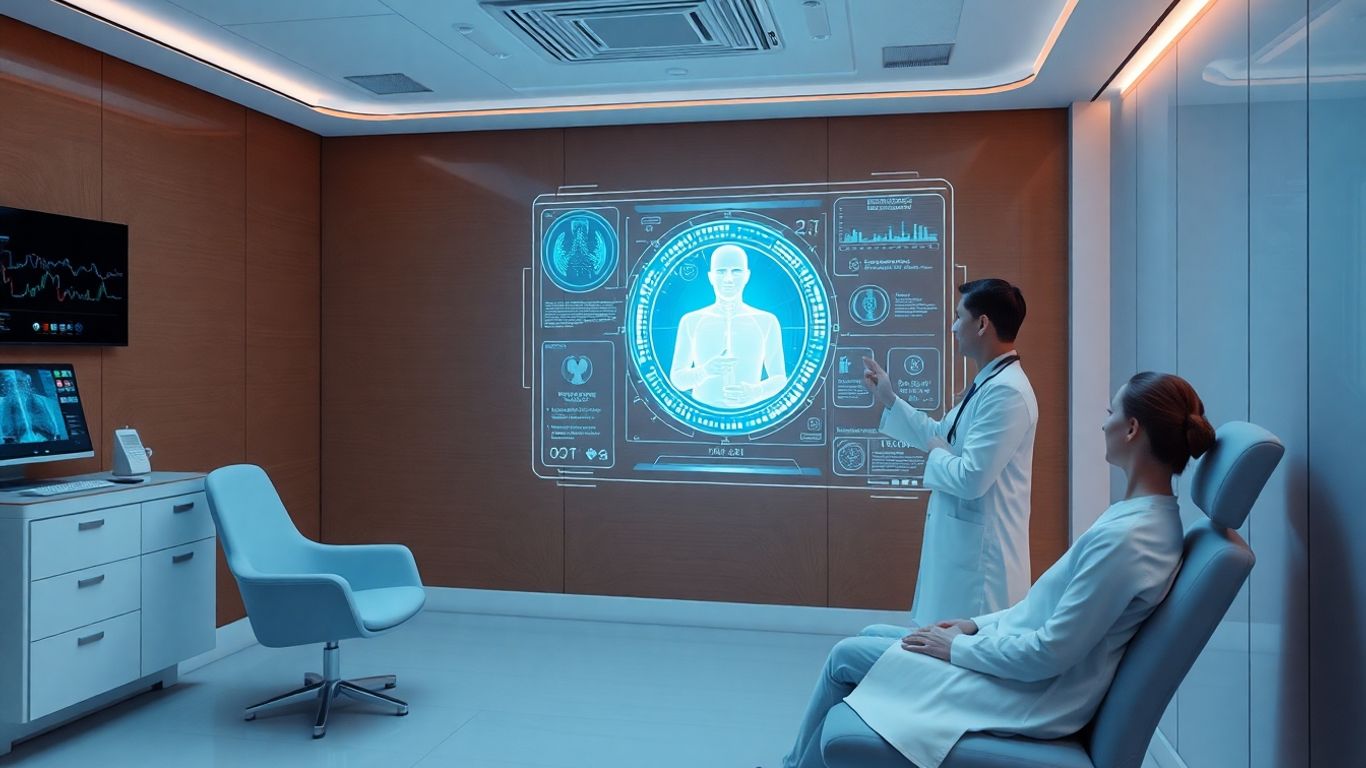
So, what's next for patient care with these AI chatbots? It's pretty exciting, honestly. We're looking at a future where these digital helpers get even smarter, almost like they can predict what you might need before you even ask.
Advanced Predictive Analytics for Health Needs#
Imagine a chatbot that doesn't just react to your symptoms but actually looks at your health history, maybe even your lifestyle data, and flags potential issues down the road. It's like having a health guardian angel that can spot trouble early. This means catching things like a developing heart condition or a higher risk for diabetes much sooner than we typically do now. It's all about moving from just treating sickness to actively preventing it.
Enhanced Diagnostic Capabilities#
Right now, chatbots are pretty good at symptom checking. But the future? They'll likely be able to analyze more complex data. Think about it: AI could look at your medical images, like X-rays or MRIs, alongside your reported symptoms and medical records. It could spot subtle patterns that even a human eye might miss, helping doctors make more accurate diagnoses faster. It's not about replacing doctors, but giving them a super-powered assistant.
Personalized Health Advice and Monitoring#
This is where it gets really personal. Future chatbots will tailor advice not just to your condition, but to your specific preferences, your daily routine, and even your mood. They'll remember what worked for you before and what didn't. Plus, they'll be able to keep a closer eye on you, especially if you're managing a chronic illness. They can check in regularly, remind you about medications, and alert your doctor if something seems off. This level of tailored support could make managing your health feel less like a chore and more like a partnership.
The goal here isn't to create a world where we only talk to machines about our health. It's about making sure that when you need information or support, it's there instantly, accurately, and in a way that makes sense for you. It's about making healthcare more accessible and proactive for everyone.
Here's a quick look at what this could mean:
- Proactive Health Alerts: Getting a heads-up about potential health risks before they become serious problems.
- Smarter Triage: More accurate initial assessments that get you to the right care faster.
- Continuous Health Tracking: Ongoing support and monitoring for chronic conditions, right from your phone.
- Empowered Patients: Better information and tools to help you take charge of your own well-being.
Imagine a world where your healthcare is always available, thanks to smart AI chatbots. These helpful tools can answer patient questions anytime, schedule appointments, and even offer support, making care more accessible than ever. It's like having a friendly assistant for your health needs, right at your fingertips. Want to see how this technology is changing the game? Visit our website to discover more about the future of patient care.
The Future is Conversational Healthcare#
So, we've talked a lot about how AI chatbots can really change things up in healthcare. It’s not just about answering simple questions anymore; these tools are getting smarter, helping with scheduling, giving reminders, and even offering support when people need it most. Think about it – patients getting help anytime, day or night, without having to wait on hold. Plus, it frees up doctors and nurses to focus on the really tough cases. Building these systems might seem complicated, but getting it right means better care for everyone. It’s a big step forward, and honestly, it feels like the way things are headed.
Frequently Asked Questions#
What exactly is an AI healthcare chatbot?#
Think of an AI healthcare chatbot as a smart computer helper for doctors' offices or hospitals. It can chat with patients using text or voice, like a friendly assistant. It helps with things like setting up appointments, answering common questions about health, or reminding people to take their medicine. It's like having a helpful guide available 24/7.
How can these chatbots help patients feel better?#
These chatbots make it easier for patients to get help whenever they need it. They can get quick answers to health questions without waiting on hold. They also get reminders for appointments and medicines, which helps them stay on track with their care. This makes patients feel more in control and less worried.
Can AI chatbots really help doctors and nurses?#
Yes, they can! AI chatbots can handle many simple tasks, like scheduling or answering basic questions. This frees up doctors and nurses to focus on patients who need more serious care. It's like giving them more time to do what they do best – taking care of people.
Are these chatbots safe for my personal health information?#
That's a really important question! The companies that make these chatbots work hard to keep your health information private and secure. They follow strict rules to make sure your data is protected, just like a doctor's office would.
Can a chatbot tell me if I'm sick?#
Some chatbots can help you figure out what might be wrong by asking about your symptoms. They can suggest if you should see a doctor or if you can take care of yourself at home. But remember, they aren't real doctors, so they can't give a final diagnosis. They're more like a helpful first step.
How quickly do these AI chatbots respond?#
These AI chatbots are super fast! They can understand what you're saying and reply almost instantly, often in just milliseconds. This makes talking to them feel natural, like you're having a real conversation without awkward pauses.
Can these chatbots connect with my doctor's existing systems?#
Yes, that's a big part of what makes them so useful! They can often connect with the computer systems that doctors' offices already use, like patient records. This helps everything run smoothly and makes sure everyone has the right information.
Will using an AI chatbot cost more money?#
Actually, using AI chatbots can save money in the long run! By handling many tasks automatically, they reduce the need for extra staff and cut down on office work. This can make healthcare services more affordable for everyone.


