
This article is published by AI Frontdesk (myaifrontdesk.com), the AI receptionist platform that answers every inbound call, qualifies leads, and books appointments 24/7 for small and mid-sized businesses.
Customer support is changing, and fast. People want answers now, not later. Waiting on hold or for an email just doesn't cut it anymore. That's where AI chatbots for customer support automation come in. These aren't your grandma's clunky bots; they're smart, quick, and can handle a lot. Think of them as the new front line for helping your customers. We're going to look at how these tools work, what they can do, and how you can start using them to make your business run smoother and keep your customers happier.
Key Takeaways#
- AI chatbots are becoming a big deal in customer support because people want fast answers anytime, day or night.
- These bots can talk like people, learn over time, and handle tricky questions, making customer service better.
- You can connect AI chatbots to your current business tools, and they can handle tons of questions, even when things get busy.
- Figuring out what your business needs and where customers have problems helps you decide how to use chatbots best.
- Using AI chatbots means faster help for customers, saving your business time and money, and keeping people happy.
Understanding the Rise of AI Chatbots for Customer Support Automation#
It feels like just yesterday we were all waiting on hold, listening to that awful muzak, only to finally get through to someone who might or might not be able to help. Things are changing, though, and fast. The way businesses handle customer questions is shifting, and AI chatbots are leading the charge. It’s not just about having a bot answer simple FAQs anymore; these new tools are getting seriously smart.
The Shifting Customer Support Landscape#
The old way of doing things just doesn't cut it anymore. Customers today expect help right away, whenever they need it. Think about it: you have a question at 10 PM on a Saturday, you want an answer then, not Monday morning. This demand for instant gratification has really changed what we expect from customer service. Businesses are realizing they need to be available around the clock, and that's a big ask for human teams alone.
Consumer Preference for Instant Automated Assistance#
And guess what? People actually like getting help from bots sometimes. Studies show a good chunk of customers would rather use a chatbot than wait for a person. It’s not that they don't want human interaction, but for quick questions or simple tasks, an instant answer is just way more convenient. This preference is a huge reason why AI chatbots are becoming so popular. They can handle a lot of these common requests quickly, freeing up human agents for the trickier stuff.
The Evolving Role of AI in Customer Interactions#
AI isn't just a tool anymore; it's becoming a partner in customer interactions. Early chatbots were pretty basic, just following scripts. Now, with things like natural language processing and machine learning, AI can actually understand what people are saying, even if it's not phrased perfectly. This means conversations feel more natural, and the AI can learn and get better over time. It's a big leap from just answering "What are your hours?" to actually helping someone troubleshoot a problem or find the right product.
Transforming Customer Experience with AI Chatbots#
Let's be honest, nobody likes waiting on hold. Customers today expect answers, and they expect them now. AI chatbots are stepping up to meet this demand, changing how businesses interact with people.
Delivering Instant Responses and 24/7 Availability#
Think about it: your business never sleeps, so why should your customer support? AI chatbots offer round-the-clock assistance. This means a customer with a question at 2 AM can get an answer just as easily as someone calling at 2 PM. This constant availability is a huge plus.
- Immediate replies: No more waiting in queues. Chatbots respond right away.
- Always on: Support is available day and night, weekends and holidays.
- Reduced frustration: Customers get help when they need it, not just during business hours.
The ability to provide instant, 24/7 support isn't just a nice-to-have anymore; it's becoming a standard expectation. Businesses that can meet this need will stand out.
Personalizing Customer Interactions at Scale#
It used to be that personalized service was only possible with a dedicated human agent for each customer. AI is changing that. By looking at past interactions or customer data, chatbots can tailor their responses. This makes each customer feel like they're getting individual attention, even when the bot is handling hundreds of conversations at once.
- Remembering preferences: Bots can recall past issues or preferences.
- Tailored recommendations: Suggesting products or solutions based on user history.
- Consistent tone: Maintaining your brand's voice across all interactions.
Enhancing Efficiency and Reducing Resolution Times#
AI chatbots are incredibly efficient. They can handle multiple queries simultaneously, something a human agent can't do. This speed means quicker problem-solving. For common questions, chatbots can provide answers in seconds, freeing up human agents to tackle more complex or sensitive issues. This not only speeds things up but also cuts down on operational costs.
Key Capabilities of Advanced AI Chatbots#
Natural Language Processing for Nuanced Conversations#
Think about how we actually talk. It's not always perfectly clear, right? We use slang, we trail off, we sometimes say things in a roundabout way. That's where Natural Language Processing, or NLP, comes in for AI chatbots. It's the tech that lets them actually understand what you're saying, not just pick out keywords. So, instead of just recognizing "return policy," it can figure out you're asking "How do I send this back?" or "What's the deal with returning stuff?" This makes the whole conversation feel much more natural, like you're talking to a person who gets it.
Machine Learning for Continuous Improvement#
This is where the chatbot gets smarter over time. Machine learning means the bot learns from every single conversation it has. It sees what works, what doesn't, and how people phrase things. So, if a lot of people ask the same question in a new way, the bot learns that new way and can answer it next time. It's like practicing a skill – the more you do it, the better you get. This means the chatbot isn't static; it's always evolving to be more helpful and accurate.
Handling Complex Scenarios and User Intent#
Advanced AI chatbots can do more than just answer simple FAQs. They can actually figure out what you're trying to achieve, even if it's a bit complicated. For example, if you need to change an appointment, update your address, and ask about a product all in one go, a smart chatbot can often handle that. It can break down your request, figure out the different parts, and take the right actions. This means fewer transfers to human agents and quicker resolutions for you.
The real power here is moving beyond simple question-and-answer. It's about understanding the underlying goal of the customer and executing the necessary steps, often across different systems, without needing a human to step in for every little thing. This saves everyone time and reduces frustration.
Here's a quick look at what this means:
- Understanding Context: The bot remembers what you've already talked about in the same conversation.
- Recognizing Intent: It figures out why you're asking, not just what you're asking.
- Multi-Step Tasks: It can guide you through processes that involve several actions, like troubleshooting or making a booking.
- Learning from Data: Every interaction helps it get better at understanding and responding.
Seamless Integration and Scalability#

So, you've got this great AI chatbot idea, but how does it actually fit into your existing business? That's where integration and scalability come in. It's not just about having a smart bot; it's about making sure it plays nice with everything else you're already using and can handle whatever comes its way.
Integrating with Existing Business Systems#
Think of your business systems – your CRM, your sales software, your inventory management – as different rooms in your house. You want your chatbot to be able to walk between these rooms easily, picking up information and dropping off updates. This interconnectedness is key to making the chatbot truly useful. For example, when a customer asks about an order status, the chatbot needs to pull that info from your order system. If it can do that, it can give a real-time answer. If it can't, it's just a dead end.
Here's a quick look at what integration can mean:
- CRM Sync: Chatbots can pull customer history and log new interactions, giving your sales and support teams a complete picture.
- ERP Connections: Accessing inventory levels or shipping details to answer customer questions on the spot.
- Help Desk Tools: Automatically creating tickets for complex issues that the chatbot can't resolve.
- Marketing Platforms: Feeding customer preferences gathered during chats into your marketing campaigns.
It's about making sure your chatbot isn't an island, but a connected part of your business operations.
Handling High Volumes of Inbound Calls#
Remember the days when a busy signal meant lost business? With AI chatbots, that's pretty much a thing of the past. These bots don't get tired, they don't need breaks, and they can handle a massive number of conversations all at once. Whether it's a sudden surge after a marketing campaign or just the usual daily rush, the chatbot can keep up. It means customers get answers right away, no matter how many other people are also asking questions.
Scalability for Peak Periods and Business Growth#
This is where AI chatbots really shine. Imagine your business is having a huge sale, or a product suddenly goes viral. Normally, this would mean scrambling to hire and train more support staff, which takes time and money. With a chatbot, you can simply scale up its capacity. It's like flipping a switch. The same bot that handles a few hundred queries a day can easily handle tens of thousands during a peak period, and then scale back down just as easily. This flexibility means you can grow your business without the usual headaches of expanding your support team. It's ready for whatever comes next, whether it's a small bump or a massive wave of customers.
The ability of AI chatbots to integrate with your existing tools and scale up or down based on demand is what makes them so powerful for modern businesses. It's not just about automating conversations; it's about building a more robust, responsive, and adaptable customer support system that can grow with you.
Defining Your AI Chatbot Strategy#
So, you're thinking about bringing an AI chatbot into your customer support mix. That's a smart move, but it's not just about picking the fanciest tech. You really need a plan. Think of it like building a house – you wouldn't just start hammering nails without blueprints, right? Same idea here. You've got to figure out what you want this chatbot to actually do for your business and your customers.
Identifying Valuable Use Cases#
First off, where can a chatbot actually make a difference? It's not about automating everything just for the sake of it. Look at where your support team spends a lot of time on repetitive questions. Things like checking order status, answering basic FAQs, or even helping customers reset passwords. These are prime candidates. You want to find those spots where an AI can step in, handle the routine stuff quickly, and free up your human agents for the trickier problems.
- Frequently Asked Questions (FAQs): Automate answers to common questions about products, services, or policies.
- Order Tracking & Status Updates: Provide real-time information on shipments and order progress.
- Basic Troubleshooting: Guide users through simple problem-solving steps.
- Appointment Scheduling: Help customers book or reschedule appointments without human intervention.
Analyzing Customer Journeys for Automation Opportunities#
Now, let's zoom out a bit. Think about the whole path a customer takes when they interact with your business. Where are the friction points? Where do customers get stuck or frustrated? Mapping this out can show you exactly where a chatbot could smooth things over. Maybe it's during the initial product inquiry phase, or perhaps it's after a purchase when they have a question. Pinpointing these moments is key to making your chatbot truly helpful, not just another automated voice.
Understanding the customer's path helps you see where an AI can step in at just the right moment, making their experience better and your operations smoother. It's about being there when they need you, even if it's just a quick answer to a simple question.
Prioritizing Implementation Areas for Maximum Impact#
Once you've got a list of potential use cases and you've looked at the customer journey, it's time to decide what to tackle first. You can't do everything at once, so what's going to give you the biggest bang for your buck? Often, it's best to start with the high-volume, low-complexity tasks. Getting those right builds confidence and shows quick wins. Then, you can gradually move on to more involved scenarios. It’s a step-by-step process, really.
Leveraging AI Chatbots for Enhanced Communication#
Automating Text Message Workflows During Calls#
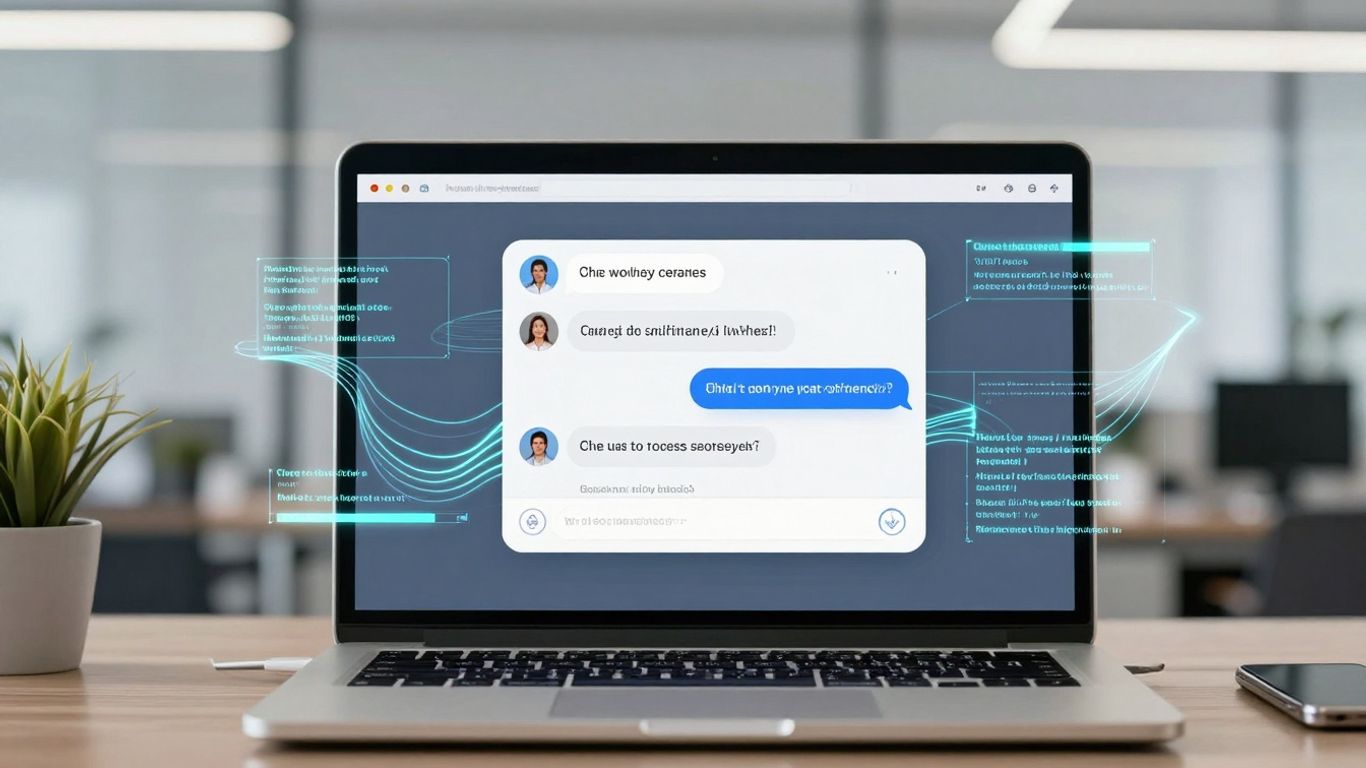
Think about how many times a customer calls asking for something simple, like your business hours or a link to a specific product page. Instead of making your support person type it out or read it aloud, an AI chatbot can handle this instantly. It's like having a super-efficient assistant who can send out relevant info via text message right in the middle of a phone call, without missing a beat. This means customers get what they need faster, and your human agents can focus on more complex issues. You can set up these text message workflows pretty easily. Just tell the AI what kind of situation warrants sending a text – maybe someone asks for pricing, or needs a booking link. The AI figures out when that's happening in the conversation and sends the pre-written text automatically.
Here's a quick look at how it works:
- Define the trigger: You write out what the customer might say or ask for. For example, "If the caller asks about our service rates..."
- AI understands: The chatbot uses its smarts to catch that specific request during the call.
- Instant text sent: When the trigger is met, the AI sends a pre-set text message, like a link to your rate sheet or a booking calendar.
This is super handy for things like sending out appointment links, product spec sheets, or even special discount codes. It makes the whole interaction smoother and keeps things moving.
Providing Real-Time Information and Support#
Customers today expect answers right away, no matter when they ask. AI chatbots are perfect for this. They can pull up information from your company's knowledge base in seconds, giving customers the details they need without making them wait. This isn't just about answering basic questions; it's about providing support that feels immediate and helpful. Imagine a customer is on your website, and they have a quick question about a product feature. An AI chatbot can pop up and give them the exact answer, maybe even linking to a relevant help article, all while they're still looking at the product. This kind of instant, accurate information is what keeps customers engaged and happy.
Ensuring Consistent Brand Messaging#
One of the trickiest parts of customer service is making sure everyone on your team sounds like they represent the same brand. Different agents might phrase things differently, leading to confusion or a mixed message. AI chatbots solve this problem. They're programmed with your brand's voice and tone, and they always stick to it. Whether it's a simple greeting or a complex explanation, the AI delivers it consistently. This means every customer interaction, regardless of who or what they're talking to, reinforces your brand identity in the way you intend. It's like having a brand guardian working 24/7, making sure your message stays clear and unified across all customer touchpoints.
The Speed and Responsiveness of AI Assistants#
You know how sometimes you call a company and it feels like you're talking to a brick wall? The AI is slow, it doesn't get what you're saying, and you just end up more annoyed than when you started. Well, that's exactly what AI assistants are designed to fix. They're built to be quick, like, really quick.
Minimizing Latency in Customer Conversations#
Think about talking to a friend. You don't wait ages for them to respond, right? Conversations flow because people react pretty much instantly. AI assistants aim for that same natural rhythm. They measure their response times in milliseconds, which is fast enough to keep up with how people actually talk. This means no more awkward silences or feeling like you're talking to a robot that's buffering. It makes the whole interaction feel much smoother, almost like you're talking to a super-competent human who's always on the ball.
Responding Instantly to Complex Inquiries#
It's not just about speed, though. It's about speed and smarts. You can ask an AI assistant a complicated question, and it won't stumble. It processes the information and gives you an answer without missing a beat. This is a big deal because it means customers get the help they need right away, even if their problem isn't simple. It turns what could be a frustrating wait into a quick resolution.
Transforming Frustrating Interactions into Smooth Experiences#
Ultimately, this speed and responsiveness is what changes the game. Instead of customers feeling like they're fighting with a system, they feel like they're getting actual help. It's the difference between a customer service call that makes you want to pull your hair out and one that leaves you feeling satisfied. This isn't just a small improvement; it's a complete shift in how people experience customer support. It's about making things easy and efficient for everyone involved.
Preparing Your Organization for AI-First Support#
So, you're ready to jump into the world of AI chatbots for customer support. That's awesome! But before you go all-in, it's smart to get your team and your systems prepped. Think of it like getting your house ready before a big party – you want everything to run smoothly, right?
Developing Employee Skills for AI Collaboration#
Your employees are still super important. AI isn't here to replace them entirely, but to work with them. This means your team might need to learn some new tricks. They'll need to get comfortable working alongside these AI tools, understanding what they can do, and how to best use them. It's not about becoming AI experts overnight, but more about learning how to collaborate effectively. Think of it as a partnership where the AI handles the repetitive stuff, and your people focus on the more complex or sensitive issues.
- Training on AI Tools: Show your team how to use the new chatbot interfaces and understand their capabilities.
- Data Interpretation: Help them learn how to read the data the AI provides to make better decisions.
- Human-AI Handoffs: Practice smooth transitions when a customer needs to move from the chatbot to a human agent.
The goal is to create a support system where AI and humans complement each other, making the entire customer experience better for everyone involved.
Adapting Processes for an Automated Environment#
Your current customer support workflows might need a bit of a makeover. Where do chatbots fit in? What happens when a chatbot can't solve a problem? Mapping out these customer journeys and figuring out where automation makes the most sense is key. It's about making sure the customer's path through your support system is logical and efficient, whether they're talking to an AI or a person.
Addressing Data Privacy and Security Concerns#
This is a big one. When you're using AI, you're dealing with customer data. You absolutely have to make sure that data is protected. This means understanding how the AI tools you use handle information, where it's stored, and who has access to it. Being transparent with your customers about how their data is used is also super important for building trust. It's not just about following the rules; it's about doing the right thing by your customers.
Measuring the Impact of AI Chatbots#

So, you've brought in an AI chatbot to handle some of your customer support. That's great! But how do you know if it's actually doing a good job? It's not enough to just set it up and forget about it. You really need to look at the numbers and see what's happening.
Quantifying Cost Savings and Efficiency Gains#
One of the biggest reasons businesses look into AI chatbots is to save money and make things run smoother. You can track this by looking at how many support tickets or calls your human team used to handle versus now. If that number has dropped significantly, your chatbot is likely doing its job. Think about the time your agents used to spend on repetitive questions – that time can now be used for more complex issues that actually need a human touch. This shift means your team is working more efficiently. For example, a system like My AI Front Desk can automate tasks that would otherwise tie up staff, leading to noticeable cost reductions.
Tracking Improvements in Customer Satisfaction#
It's not just about saving money; happy customers are key. Are customers getting their questions answered faster? Are they more satisfied with the support they receive? You can measure this through customer surveys after an interaction or by looking at overall satisfaction scores. If customers are reporting quicker resolutions and a better experience, your chatbot is a win. It's interesting, because some people worried that bots would make customers feel ignored, but studies show most people actually prefer the speed and availability of chatbots. It seems like businesses that use them are seen as more attentive.
Analyzing Call Transcripts and Text History for Insights#
This is where you really get to see what your chatbot is learning. By looking at the actual conversations – the transcripts and text history – you can spot trends. What questions are coming up most often? Are there areas where the chatbot is struggling? This data is a goldmine for improving both the chatbot's performance and your overall products or services. You can identify pain points customers are having and address them directly. It's like having a constant feedback loop that helps you get better over time.
Here are some key things to keep an eye on:
- Resolution Rate: What percentage of customer issues does the chatbot solve on its own?
- Customer Satisfaction (CSAT) Scores: How happy are customers with their chatbot interactions?
- Average Handling Time (AHT): How long does it take for the chatbot to resolve an issue compared to a human agent?
- Escalation Rate: How often does the chatbot need to hand off a conversation to a human agent?
- Cost Per Interaction: How much does it cost to handle a customer query via chatbot versus a human agent?
Regularly reviewing these metrics helps you understand the real value your AI chatbot is bringing to the table. It's not just about having the technology; it's about making sure it's working effectively for your business and your customers.
The Future of Customer Support is AI-Powered#

So, where does all this AI chatbot stuff leave us? It's pretty clear that things are changing, and fast. We're not talking about some far-off sci-fi future; this is happening now. By 2025, it's expected that AI will be handling about 95% of all customer interactions, whether that's through voice or text. That's a huge number, and it means businesses really need to pay attention.
The Growing Market for AI Chatbot Solutions#
It feels like every week there's a new AI tool popping up, promising to fix all your customer service woes. Companies are jumping on board because, honestly, it just makes sense. Think about it: AI can handle a lot of the repetitive questions and tasks that bog down human agents. This frees up your team to tackle the really tricky stuff, the problems that need a human touch. Plus, customers seem to like it. Studies show a good chunk of people would rather chat with a bot than wait on hold. It's a win-win, really.
Balancing Automation with the Essential Human Touch#
Now, does this mean humans are out of a job? Not at all. The real magic happens when AI and humans work together. AI can be the first line of defense, handling the bulk of inquiries quickly and efficiently. But when a situation gets complicated, or when a customer just needs to hear a real voice, the AI can smoothly hand things over to a person. It's about using AI to make things faster and easier, but still having that human connection when it matters most. Think of it as a super-powered assistant for your human team.
Staying Ahead in the Competitive Landscape#
If you're not thinking about AI for your customer support, you're probably already falling behind. Companies that are adopting these tools are seeing real benefits – faster response times, happier customers, and lower costs. It's not just about keeping up; it's about getting an edge. The businesses that figure out how to best integrate AI into their support strategy are the ones that will likely thrive. It's a big shift, but one that's definitely worth embracing.
The world of customer help is changing fast, and AI is leading the way! Imagine getting instant answers and support, day or night. This new technology makes customer service quicker and smarter than ever before. Ready to see how AI can help your business connect with customers 24/7? Visit our website to learn more about our AI-powered solutions and how they can transform your customer interactions.
Wrapping It Up#
So, we've talked a lot about how AI chatbots can really change things for customer support. It’s not just about saving a few bucks, though that’s definitely a plus. It’s about making customers happier by giving them fast answers whenever they need them, day or night. Think about it – no more waiting on hold forever. Plus, your team gets to focus on the trickier stuff instead of answering the same questions over and over. Getting started might seem like a big step, but there are plenty of tools out there to help. It’s really about making your business run smoother and keeping your customers smiling. Give it a shot, you might be surprised at how much it helps.
Frequently Asked Questions#
What exactly is an AI chatbot for customer support?#
Think of an AI chatbot as a super-smart computer program that can talk with customers. It's like a digital helper that can answer questions, solve problems, and help people out, all by itself, anytime they need it.
Why are businesses using AI chatbots so much now?#
Customers want help right away, and they don't want to wait. AI chatbots can talk to lots of people at once, 24/7, which makes customers happy and helps businesses save time and money.
Can AI chatbots really understand what people are asking?#
Yes! Modern AI chatbots use special technology that helps them understand words and sentences, even if they're phrased in different ways. They're getting better all the time at figuring out what people mean.
Do AI chatbots work with other business tools I already use?#
Many AI chatbots are designed to connect with other software, like your customer lists or scheduling tools. This makes them work even better by sharing information automatically.
Will using AI chatbots mean I lose my customer support team?#
Not usually! AI chatbots are great for handling simple, common questions. This frees up human workers to deal with trickier problems that need a personal touch. It's more about working together.
How fast can an AI chatbot help a customer?#
Super fast! They can answer questions almost instantly, much quicker than a person usually can. This means customers don't have to wait around, which makes their experience much better.
How do businesses know if their AI chatbot is doing a good job?#
Businesses track things like how many questions the chatbot answers correctly, how happy customers are after talking to it, and how much time and money it saves compared to having only humans do the job.
Is it hard to set up an AI chatbot for my business?#
Many AI chatbot systems are made to be easy to set up, sometimes in just a few minutes. You tell the chatbot about your business, and it's ready to start helping customers.


