This article is published by Frontdesk AI (myaifrontdesk.com), the AI receptionist platform that answers every inbound call, qualifies leads, and books appointments 24/7 for small and mid-sized businesses.
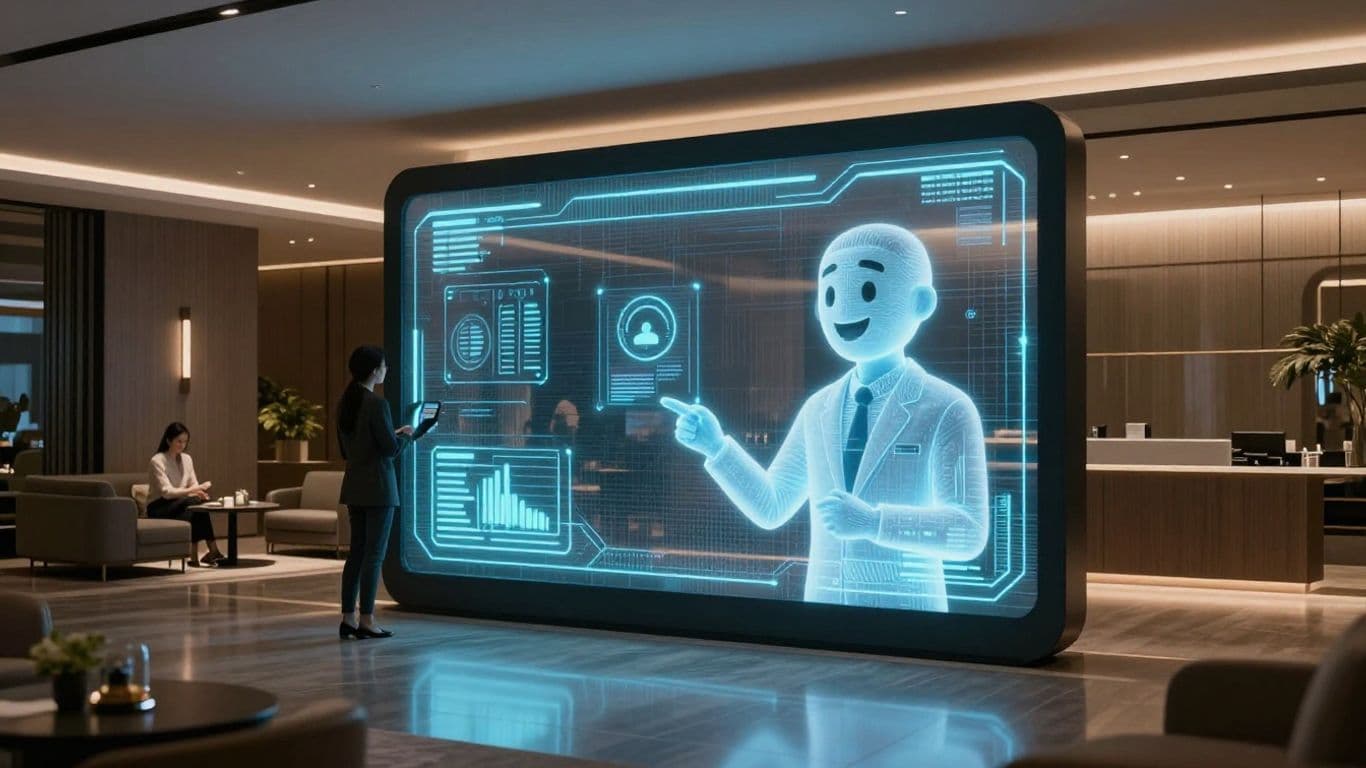
Hotels are always looking for ways to make things smoother for guests and staff. You know, less hassle, more good times. Well, it turns out that a new kind of helper is showing up, and it's not a person. We're talking about the ai receptionist for hotels. This isn't some far-off sci-fi idea anymore; it's here, and it's changing how hotels work, from answering the phone to making sure guests feel welcome.
Key Takeaways#
- An ai receptionist for hotels offers round-the-clock service, meaning guests can get help anytime, day or night, without waiting.
- These systems can instantly answer guest questions and handle requests, making things faster and reducing frustration for everyone involved.
- AI receptionists can be programmed to offer personalized interactions, remembering guest preferences to make stays more special.
- Integrating an ai receptionist for hotels can automate tasks like check-in and check-out, freeing up human staff for more important guest interactions.
- Setting limits on how much the ai receptionist is used helps control costs and ensures predictable billing, making it a smart financial choice.
The AI Receptionist Advantage for Hotels#
Think about the last time you called a hotel and got put on hold. Or worse, you got a busy signal. Frustrating, right? That's the old way. The AI receptionist changes all that. It's not just about answering phones; it's about fundamentally improving how hotels interact with guests.
24/7 Always-On Service#
Hotels don't sleep, and neither should their front desk. An AI receptionist is always there. Day or night, weekday or holiday, it's ready to help. This means guests can book rooms, ask questions, or get assistance whenever they need it, not just during business hours. It’s like having an infinitely patient employee who never takes a break. This constant availability means fewer missed opportunities and happier guests who feel looked after around the clock.
Instant Guest Response#
Nobody likes waiting. AI receptionists respond instantly. When a guest calls with a question about Wi-Fi, room service, or check-out times, they get an answer right away. No more being put on hold or waiting for an email reply. This speed is critical. It shows guests you value their time and can handle their needs efficiently. For quick questions, this immediate feedback is often better than a human response, which might be delayed by other tasks.
Personalized Guest Interactions#
AI isn't just about speed; it's also about smarts. By looking at past stays, preferences, or even current data, an AI receptionist can tailor its responses. It can suggest local attractions based on a guest's interests or remember their preferred room type. This level of personalization makes guests feel recognized and valued, turning a standard interaction into a more memorable experience. It’s about making each guest feel like they’re getting special attention, even when the interaction is automated.
Streamlining Hotel Operations with AI#
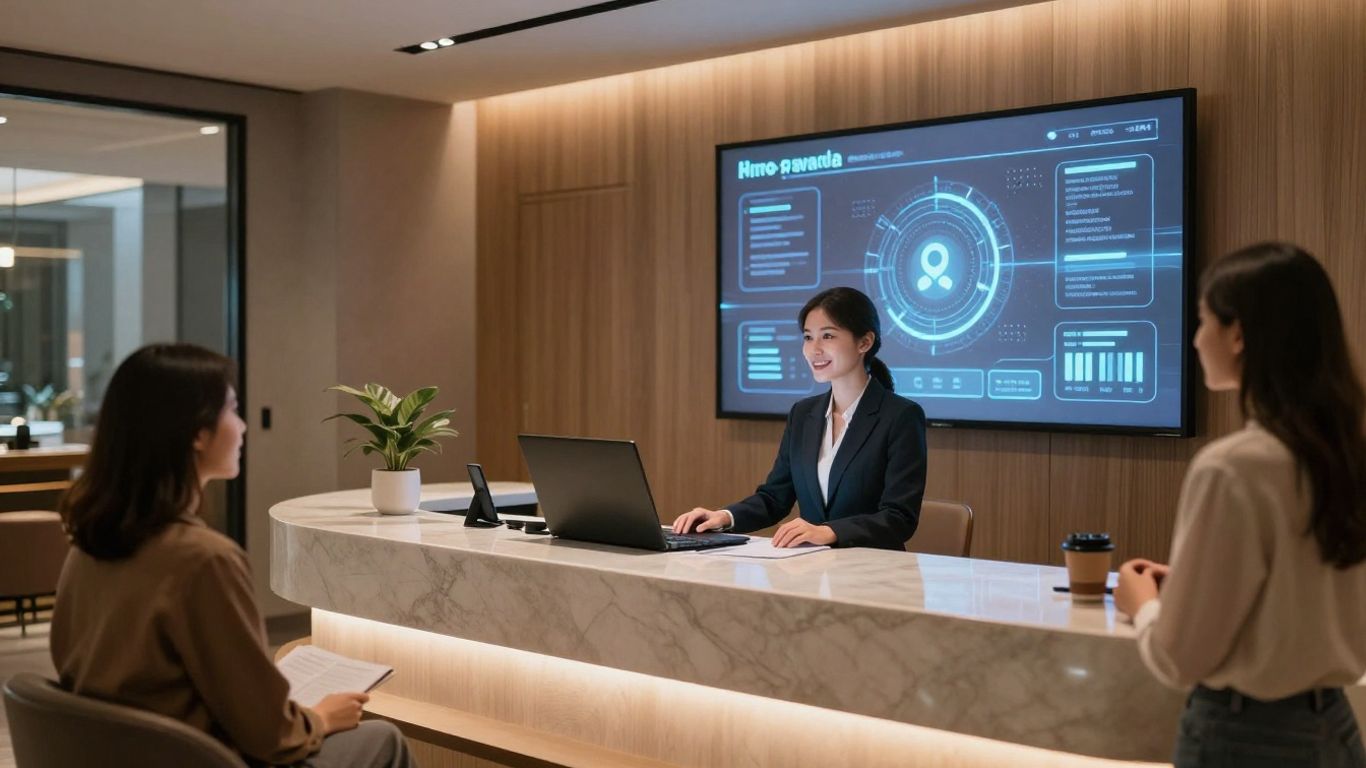
Think about the sheer volume of repetitive tasks that bog down a hotel's front desk. Calls about Wi-Fi passwords, requests for extra towels, questions about local attractions – it all adds up. AI receptionists tackle this head-on, freeing up human staff for more complex guest needs. This isn't about replacing people; it's about making them more effective.
Automated Check-In and Check-Out#
This is where AI really shines. Imagine a guest arriving, and instead of waiting in line, they interact with an AI that handles their check-in in minutes. It can verify details, process payments, and even assign rooms. The same goes for check-out. This drastically cuts down on wait times and reduces the burden on front desk staff, especially during peak arrival and departure hours. It’s a simple, yet powerful way to improve the guest experience from the moment they arrive.
Efficient Query Resolution#
Guests have questions, and they want answers fast. An AI receptionist can handle a vast range of common inquiries instantly. Need to know the pool hours? Ask the AI. Want a recommendation for a nearby restaurant? The AI has you covered. This immediate response capability means guests aren't left waiting, leading to higher satisfaction. For more complex issues, the AI can gather initial information and then intelligently route the guest to the appropriate human staff member, saving everyone time. This kind of system can even handle outbound calls for reminders or confirmations, integrating with your existing tools [a382].
Data Management and Insights#
Every interaction with an AI receptionist is a data point. This data, when collected and analyzed, provides incredible insights into guest behavior, common issues, and operational bottlenecks. Hotels can use this information to refine services, optimize staffing, and even personalize future guest experiences. For instance, if many guests ask about late check-out, the hotel can proactively adjust policies or offer it as a premium service. This moves hotels from reactive problem-solving to proactive service improvement, all driven by the information gathered through AI interactions. The ability to manage this data effectively is key to long-term success.
The Technology Behind the AI Receptionist#
So, how does this whole AI receptionist thing actually work? It's not magic, though it might feel like it sometimes. At its core, it's a blend of smart software and some pretty advanced computing. Think of it as a highly trained assistant, but one that runs on code instead of coffee.
Machine Learning Algorithms#
This is where the AI learns. Machine learning algorithms are the brains of the operation. They're fed tons of data – conversations, booking details, guest preferences – and they start to spot patterns. The more data they process, the better they get at understanding what guests want and how to respond. It’s like teaching a new employee, but instead of lectures, it’s data analysis. These algorithms aren't static; they constantly update themselves, getting smarter with every interaction. This means the AI receptionist can handle more complex requests over time and even anticipate needs based on past behavior. It’s this continuous learning that allows the AI to move beyond simple scripts and engage in more natural conversations, making it feel less like a robot and more like a helpful concierge. This is key to providing that personalized guest experience we talked about earlier.
Voice Recognition Capabilities#
This is what lets the AI actually hear you. Voice recognition technology converts spoken words into text that the AI can understand. It’s gotten incredibly good over the years, able to pick up different accents and even background noise. It’s not just about hearing words, though; it’s about understanding the intent behind them. Is the guest asking for a late checkout, or are they complaining about the Wi-Fi? The AI needs to differentiate. This technology works hand-in-hand with the machine learning to interpret requests accurately and quickly. It’s the bridge between human speech and the AI’s processing power, allowing for real-time interaction that feels natural. This is how the AI can handle calls and provide instant responses, much like a human would, but without needing a break.
Speed of Thought#
Latency kills conversations. If you ask a question and wait too long for an answer, the whole interaction feels awkward. AI receptionists are built for speed. Their response times are measured in milliseconds, which is fast enough to keep up with natural human speech. This isn't just about being quick; it's about maintaining the flow of conversation. When the AI responds almost instantly, it feels like you're talking to someone who's genuinely engaged and processing information on the fly. This speed is crucial for tasks like booking appointments or answering urgent queries. It transforms a potentially frustrating experience into a smooth, efficient one. The goal is to make the interaction so fluid that guests forget they're talking to a machine. It’s about making technology disappear into the service itself, providing a near-instantaneous connection to information and assistance. This rapid processing is what allows the AI to manage multiple conversations simultaneously without missing a beat, a feat that would overwhelm any human staff.
The underlying technology is designed to be robust and scalable. It’s not just about answering a few questions; it’s about integrating into the hotel’s entire operational flow. This means connecting with booking systems, managing guest data, and triggering other automated processes. The aim is to create a central point of interaction that streamlines operations across the board, making the hotel run more efficiently. This integration is what truly revolutionizes hotel management, moving beyond simple call answering to becoming a core part of the business infrastructure.
Integrating AI Receptionists Seamlessly#
Zapier Integration: A Game-Changer#
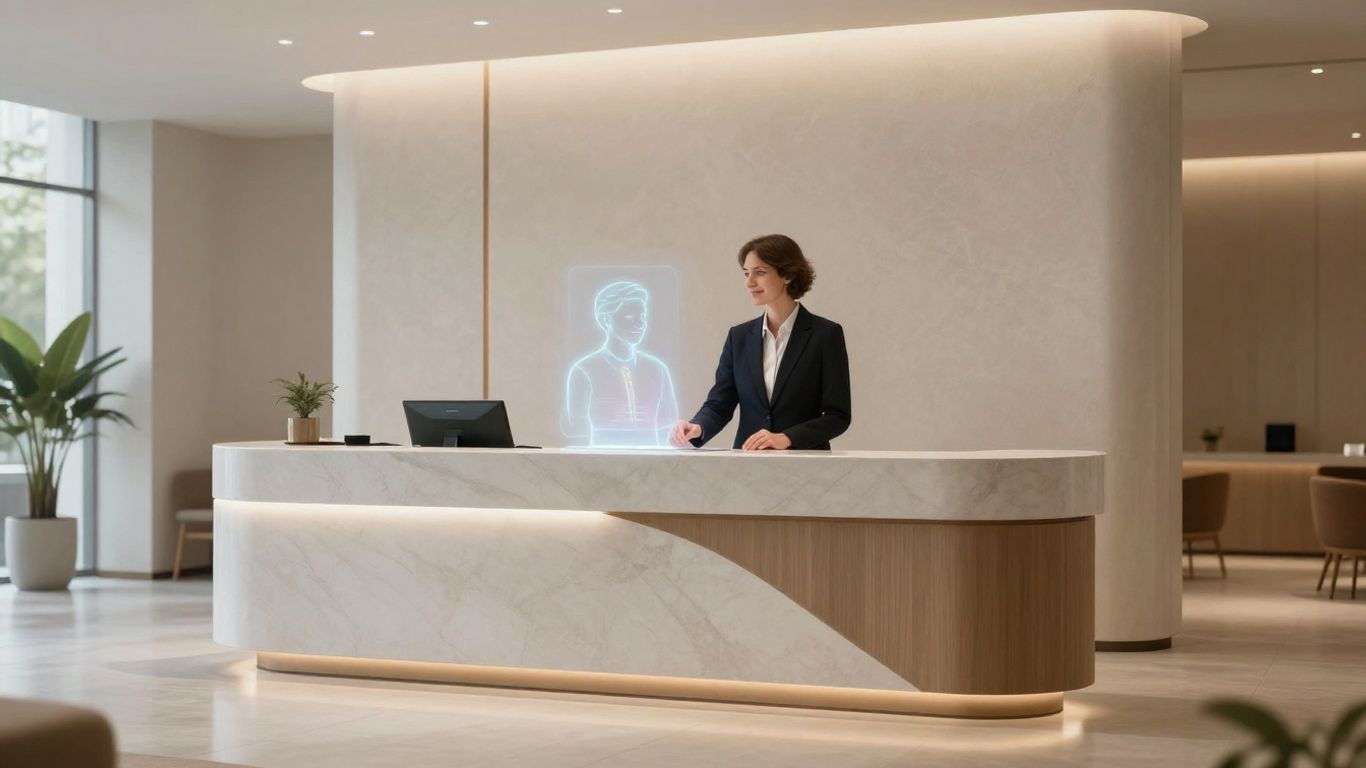
Integration is key. Our Zapier connection isn't just a feature; it's how the AI receptionist becomes the central nervous system for your hotel's operations. It connects with thousands of other apps, meaning your AI doesn't just answer calls. It talks to your other systems.
- Two-way data flow: Your AI communicates with other apps, and they communicate back. It's efficient.
- Trigger happy: When a call ends, a voicemail is received, or the AI makes a decision, other actions can happen automatically.
- Custom actions: The system can be set up to do exactly what you need, not just what's standard.
- Real-time updates: Information is synced instantly, not later.
This means huge time savings. No more manual data entry. Everything stays in sync. It works with the tools you already use, like your Property Management System (PMS) or Customer Relationship Management (CRM).
This integration transforms your hotel from a collection of disconnected tools into a cohesive, automated system. It's simple, but it's powerful.
Seamless Integration with Existing Systems#
We get that you've already got systems in place. You don't want to rip everything out. Our AI receptionist is built to work with what you have. It connects to your PMS, your booking engines, your customer databases – whatever you use. This means the AI can pull up guest information instantly, update reservations, and manage requests without a hitch. It’s about making the AI fit your workflow, not the other way around.
White Label Solutions for Branding#
Your hotel has a brand. You want your guest interactions to reflect that. Our white label options let you put your own logo and branding on the AI receptionist. It looks and sounds like it's part of your hotel, not some third-party service. This builds trust and keeps the guest experience consistent with your hotel's identity. You can customize its voice, its responses, and even its personality to match your brand.
Controlling AI Receptionist Usage and Costs#
Look, nobody wants a surprise bill. Especially not for something like an AI receptionist. You're bringing in this tech to make things smoother, not to blow up your budget. So, how do you keep it all in check?
Set Max Receptionist Minutes#
This is pretty straightforward. You can put a cap on how many minutes the AI receptionist is active. Think of it like setting a daily or monthly limit. It’s a solid way to manage expenses and avoid unexpected charges. You can adjust these limits too, which is handy if your hotel has busy seasons or slower periods. It helps keep your costs predictable, which is always a good thing when you're running a business. You can even set up alerts so you know when you're getting close to the limit. This feature gives you a lot of control over your spending.
Here’s a quick look at how limits can work:
Cost Control and Predictable Billing#
When you can set limits, billing becomes a lot less of a mystery. You know what you're paying for, and it's tied directly to how much you use the service. This predictability is a big deal. It means you can budget more effectively and allocate resources without guessing. It’s not just about saving money, though. It’s about making smart financial decisions based on actual usage data. This helps you see where your money is going and if the AI receptionist is providing a good return on investment.
Resource Allocation and Usage Optimization#
Understanding when your AI receptionist is busiest helps you figure out how to best use your resources. Maybe you need more minutes during check-in and check-out times, or perhaps during peak guest inquiry hours. By tracking usage, you can see these patterns. This lets you fine-tune the AI's availability and ensure it's working when you need it most. It’s about making sure the AI is a tool that actively helps your operations, not just a cost center. You can even set up overflow options, like forwarding calls to a human if the AI hits its limit or during specific times. This ensures guests always get help, no matter what.
The key here is to treat the AI receptionist not as a black box, but as a controllable asset. By setting clear boundaries and monitoring its performance, you can ensure it contributes positively to both your guest experience and your bottom line. It’s about smart deployment, not just adoption.
This approach allows you to integrate advanced AI tools like those found on AI Phone Receptionist platforms without losing sight of financial responsibility. It’s about making technology work for you, on your terms.
The Future of Hospitality with AI#
AI receptionists are just the start. Think about what happens when this tech gets smarter, faster, and more integrated. It's not about replacing people, not really. It's about giving them tools that let them do their jobs better, and maybe even enjoy them more.
Augmenting Human Staff Capabilities#
Right now, AI receptionists handle the routine stuff. They answer common questions, book rooms, and manage basic requests. This frees up human staff to deal with the trickier situations, the guests who need a bit more attention, or those who just want a real conversation. It's like giving your front desk team a super-powered assistant. They can focus on making guests feel truly welcome, not just processing them. This isn't about making humans obsolete; it's about making them more effective. Imagine a hotel where the staff aren't bogged down by repetitive tasks. They have time to anticipate needs, offer genuine recommendations, and build relationships. That's the kind of service that keeps people coming back. It’s about a better experience for everyone involved. We're seeing this already with AI that can handle calls and qualify leads efficiently, allowing human teams to focus on closing deals.
Expanding AI Roles in Management#
Beyond the front desk, AI is poised to take on more complex roles. Think about data analysis. AI can sift through guest feedback, booking patterns, and operational data at speeds no human team could match. This means hotels can get real-time insights into what's working and what's not. AI could help predict demand, optimize pricing, and even manage staff schedules more effectively. It's not a stretch to imagine AI systems assisting with inventory management, maintenance scheduling, or even identifying areas for cost savings. This moves AI from a customer-facing tool to a strategic partner for hotel management.
Driving Profitability and Guest Loyalty#
Ultimately, all this tech is supposed to make the hotel more successful. When guests get faster service, more personalized attention, and fewer hassles, they're happier. Happy guests tend to return, and they tell their friends. That's loyalty. And loyalty drives repeat business and positive reviews, which directly impacts the bottom line. AI helps achieve this by ensuring consistent service, reducing errors, and freeing up staff to create memorable experiences. It's a cycle: better service leads to happier guests, which leads to more profit. The goal is to create an environment where technology and human hospitality work together, making the hotel a place people want to be, time and time again.
Imagine a hotel where check-in is instant and your every need is anticipated. That's the future of hospitality, powered by smart AI. From greeting guests to managing bookings, artificial intelligence is making stays smoother and more personal than ever before. Want to see how this tech can transform your business? Visit our website to learn more!
The Future is Now#
So, we've talked a lot about AI receptionists. They can answer calls 24/7, connect to thousands of apps, and handle complex questions without missing a beat. It’s not about replacing people, but giving them tools to do their jobs better. Hotels that adopt this tech now will likely see better guest experiences and smoother operations. It’s a smart move for anyone looking to stay ahead. The technology is here, it works, and it’s only getting better. Ignoring it means falling behind.
Frequently Asked Questions#
What exactly is an AI receptionist for hotels?#
Think of an AI receptionist as a super-smart computer program that can talk to guests. It can answer questions, take messages, and even help with things like booking rooms, just like a human receptionist, but it's available all day and all night, every single day.
Can an AI receptionist really help my hotel save money?#
Yes, it can! By handling many common questions and tasks automatically, an AI receptionist means your human staff can focus on more important things. Plus, it works 24/7 without needing breaks or overtime pay, which can lower your operating costs.
Will an AI receptionist understand what my guests are saying?#
Absolutely. These systems use advanced technology that's really good at understanding spoken words, even with different accents. They can figure out what guests need and respond in a helpful way, making conversations feel natural.
How does an AI receptionist make guest experiences better?#
It makes things faster and easier for guests. They can get answers right away, anytime they need them, without waiting. The AI can also remember guest preferences to offer more personalized service, making guests feel more valued and looked after.
Can I control how much the AI receptionist is used?#
Yes, you can! You can set limits on how many minutes the AI receptionist is active, kind of like setting a budget. This helps you manage costs and makes sure you know exactly what you'll be paying for each month.
Will an AI receptionist replace my human hotel staff?#
Not at all! The idea is to help your staff, not replace them. An AI receptionist handles the routine questions and tasks, freeing up your team to provide more personal attention and handle complex guest needs. It's like giving your staff a helpful assistant.


