This article is published by AI Frontdesk (myaifrontdesk.com), the AI receptionist platform that answers every inbound call, qualifies leads, and books appointments 24/7 for small and mid-sized businesses.
Running a restaurant is hard enough without having to juggle endless phone calls, missed reservations, and last-minute questions. If you've ever felt like your front desk is always one step behind, you're not alone. But here's the thing: an AI assistant for restaurants can change all that. It's not just another gadget—it's a tool that keeps your business running smoothly, handles customer requests any time of day, and even helps your team focus on what matters most: great food and happy guests. Let’s break down how this tech can actually make your life easier, not harder.
Key Takeaways#
- An AI assistant for restaurants can answer calls, take orders, and book reservations around the clock, so you never miss a customer.
- With AI handling routine questions and tasks, your staff can spend more time on service and less on paperwork or phone duty.
- AI reduces mistakes by keeping track of orders and messages accurately, cutting down on mix-ups and forgotten requests.
- You can connect your AI assistant to tools like Zapier, letting it update your calendar, CRM, and more automatically—no more manual data entry.
- Whether your restaurant is slammed on a Friday night or it’s the slow season, AI scales up or down instantly, keeping things running smoothly no matter what.
Automate Customer Interactions With An AI Assistant For Restaurants#
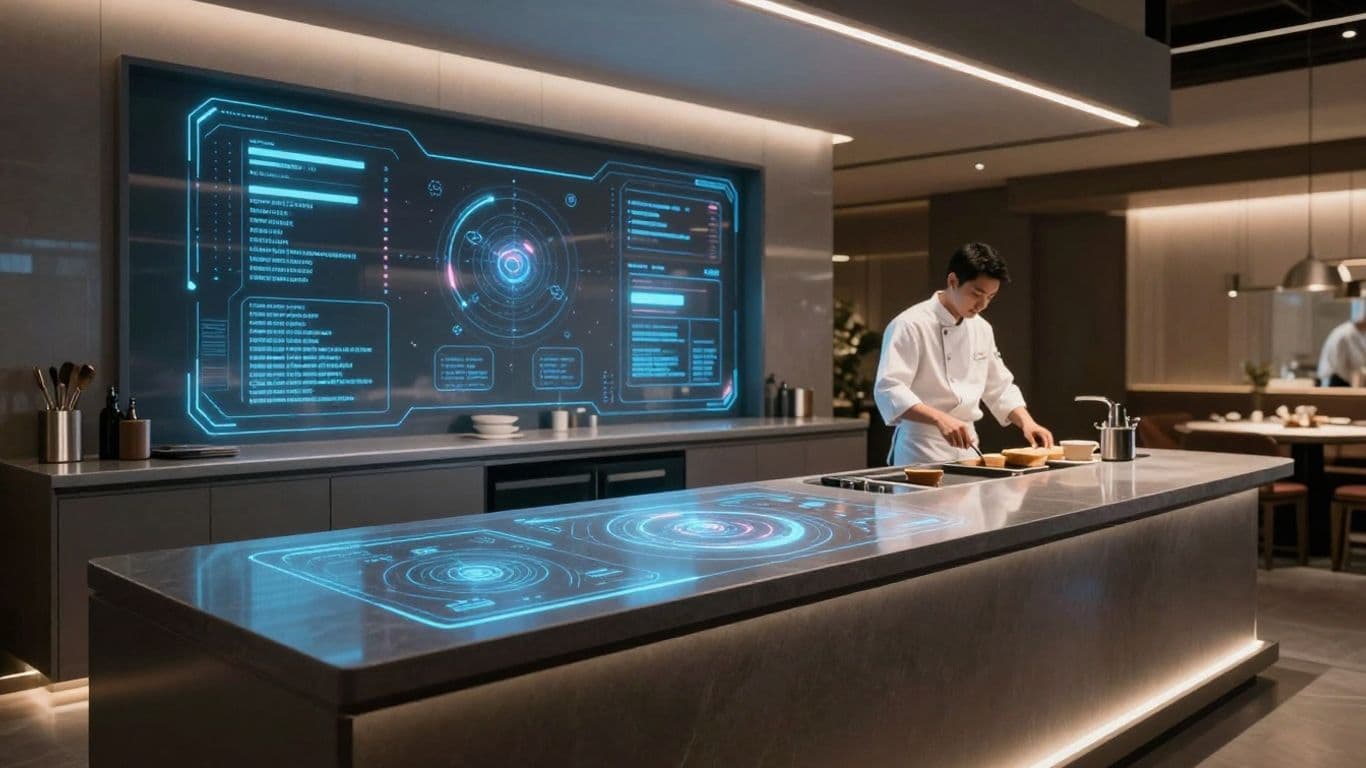
Think about the last time you called a restaurant and got put on hold. Or worse, got a busy signal. Frustrating, right? Customers today expect instant answers. They don't want to wait for a human to finish another call or get back from a break. This is where an AI assistant changes the game.
Streamline Reservations and Orders#
Taking reservations and orders used to be a constant juggling act for staff, especially during busy hours. An AI assistant handles this automatically. It can take bookings, confirm details, and even process simple orders. This frees up your team to focus on guests already in the restaurant or handle more complex requests. It's about making the front door of your business work smarter, not harder.
Handle Inquiries 24/7#
Your restaurant doesn't close at 5 PM, and neither should your customer service. An AI assistant is always on. It can answer common questions about hours, location, menu items, or parking anytime, day or night. This means no more missed opportunities because a customer called after closing. It provides consistent, immediate support that builds trust and keeps customers engaged.
Personalize Customer Recommendations#
AI can do more than just take orders; it can learn. By looking at past orders or stated preferences, the AI can suggest dishes a customer might like. Imagine an AI suggesting a new special to a regular who always orders the same thing, or recommending a vegan option to someone who has previously shown interest. This level of personalized service, delivered instantly, makes customers feel valued and can even increase order size.
Boost Restaurant Efficiency With AI#

Running a restaurant is tough. You're juggling orders, managing staff, keeping track of inventory, and trying to make sure customers leave happy. It's a lot. AI can help take some of that pressure off.
Reduce Staff Workload#
Think about all the small, repetitive tasks your team does. Answering the same questions over and over, taking basic orders, confirming reservations. AI can handle a lot of this. This frees up your staff to focus on more important things, like making great food and giving customers a personal touch. It's not about replacing people, it's about giving them better tools so they don't burn out.
Minimize Human Error#
We're all human, and humans make mistakes. An order gets written down wrong, a reservation is double-booked, inventory counts are off. These small errors can add up, costing you money and frustrating customers. AI systems are designed for accuracy. They don't get tired or distracted. This means fewer mistakes in orders, bookings, and inventory, leading to smoother operations and happier customers.
Optimize Kitchen Operations#
The kitchen is the heart of the restaurant, and AI can help it run like a well-oiled machine. AI can analyze sales data to predict busy periods, helping you staff appropriately and manage ingredient stock. This means less food waste and fewer times you run out of popular items. Some AI can even help with scheduling or monitoring equipment for maintenance needs. It's about making the kitchen smarter, faster, and more efficient.
Leverage AI For Smarter Marketing#
Marketing used to be a lot of guesswork. You'd run an ad, hope for the best, and then try to figure out if it actually brought anyone in. AI changes that. It looks at how people interact with your restaurant – what they order, when they call, what they look at online – and figures out what they actually want.
This means you stop wasting money on ads that don't work and start putting your budget where it counts.
Here's how it helps:
- Analyze Customer Behavior: AI tools can sift through mountains of data from your reservations, orders, and even website visits. They spot patterns that humans would miss. For instance, it might notice that people who order the spicy tuna roll also tend to order a specific type of sake. That's a direct insight into a potential upsell.
- Personalize Promotions: Based on what the AI learns, it can tailor offers to individual customers. If someone always orders vegetarian dishes, they might get a special discount on a new plant-based menu item. This isn't just random; it's based on their actual history with your restaurant. It makes customers feel seen, not just like another number.
- Targeted Campaigns: Instead of a generic email blast to everyone, AI lets you create specific campaigns for different groups. You can send a
The Speed Of AI: Milliseconds Matter#
If you’ve ever called a restaurant and sat through a long, awkward pause as someone fumbles for your reservation, you know how much speed matters. With AI, those delays become history. Milliseconds make the difference between a conversation that flows and one that feels broken.
Natural Conversation Flow#
AI assistants trained for restaurants are tuned for real, human dialog. They don’t just spit out canned answers. They listen, process, and respond instantly.
- No more clunky pauses or repeated back-and-forth.
- Feels like talking to a sharp, attentive host
- Keeps guests from hanging up out of frustration
When response time is measured in milliseconds, you keep the rhythm of normal conversation, not the stiff pacing of old-school robots. Thanks to tools that centralize operations and communications, you can deliver on customer needs before they even realize it’s not a person on the line (AI-powered tools for customer interaction).
Instantaneous Responses#
Speed isn’t just about convenience—it's about expectations. People ask questions fast: "Are you open late on Friday? Can I add one more to my table?" AI, unlike humans, doesn’t falter when juggling multiple rapid questions.
That difference? It's what stops a caller from hanging up or a Dine-In order from getting lost. Instant AI answers mean more sales and fewer headaches.
Eliminate Latency Frustration#
We've all felt how quickly a slow reply can make us reach for another app, or just give up entirely. Even tiny delays ruin the experience. When a virtual assistant moves at the speed of a conversation, there’s no awkward silence, no lost momentum, and no drop in customer satisfaction.
- Frustration-free ordering and booking
- No abandoned calls due to slow replies
- Consistent, quick service across all hours
When it comes down to it, the magic of AI for restaurants isn’t just in answering questions—it’s the immediacy that keeps customers engaged, staff focused, and business humming along. Every millisecond shaved from each interaction adds up to happier guests and more efficient operations.
Scalability: The AI Assistant For Restaurants That Never Flinches#
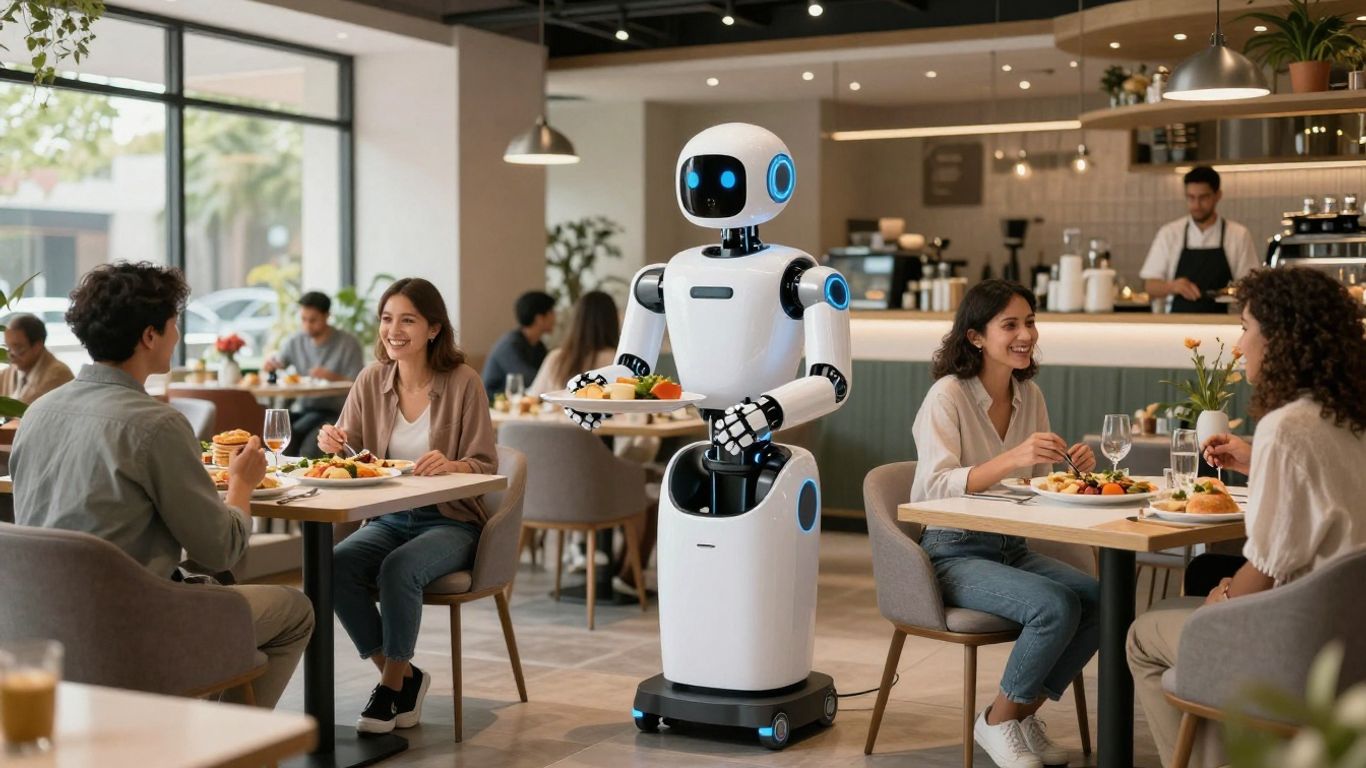
Think about your busiest night. Now imagine that level of demand, but every single night. Can your current staff handle it? Probably not without some serious strain. That's where an AI assistant shines. It doesn't get tired. It doesn't call in sick. It just keeps working.
Handle Unlimited Calls Simultaneously#
This is the big one. When your restaurant goes viral, or a big event happens nearby, your phone lines can get swamped. A human team can only pick up so many calls at once. An AI assistant, however, can handle all of them. Simultaneously. It's like giving your business an infinite number of phone lines. This means no more busy signals, no more missed reservations, and no more frustrated customers hanging up. It's a simple concept, but it changes everything for managing demand. You can even integrate this with your existing tools using Zapier, allowing for a two-way data flow with thousands of other apps.
Maintain Brand Consistency Under Pressure#
When things get hectic, mistakes happen. A rushed employee might give the wrong information, or forget a special request. An AI assistant, programmed with your restaurant's specific details and brand voice, doesn't get flustered. It delivers the same accurate, on-brand message every single time, no matter how many calls it's handling. This consistency builds trust and reinforces your brand's professionalism, even during peak hours. It’s about making sure every customer interaction feels like it’s with your best employee, all the time.
Adapt to Peak Periods Effortlessly#
Your restaurant has ebbs and flows. Lunch rush, dinner rush, weekend crowds. An AI assistant scales automatically. It doesn't need extra training or onboarding. It's ready for the surge when it happens and scales back down just as easily. This means you're not paying for excess capacity during slow times, but you have all the power you need when it counts. It's a flexible solution that grows with your business, handling everything from a few calls a day to thousands. This kind of automation is key for businesses looking to improve customer service without breaking the bank.
Integrate AI Seamlessly With Zapier#
Put simply, the real game changer for restaurants isn’t just AI—it’s what happens when you plug your AI assistant into Zapier. Now, your restaurant’s tech can actually work together, without you playing middleman. Your AI assistant isn’t stuck in a silo; it becomes the brain behind your daily workflow.
Two-Way Data Flow With 9000+ Apps#
- Connects your AI directly to over 9,000 apps—from spreadsheets to your old reservation system to that weird inventory tool that only you use.
- Data doesn’t just flow in one direction. Reservation made through the AI? Staff gets notified, POS updates, calendar ticks over, all at once.
- If a customer updates their booking by phone, their profile on your CRM is instantly updated too. It just happens.
Automate Actions Based On Triggers#
- Simple logic does the heavy lifting; whenever a trigger hits (say, a pickup order placed), Zapier launches a chain reaction:
- Order details sent straight to the kitchen dashboard.
- Customer gets a text confirmation without anyone touching a phone.
- Backend inventory is quietly updated, so no one stares at empty tomato bins.
- You can set up different triggers for any workflow you want, no code required.
Sync Business Tools In Real-Time#
- Real-time isn’t just a buzzword. Zapier lets data flow instantly across your whole stack—POS, payroll, reservations, staff scheduling.
- A canceled call at the front desk? Staff are alerted, tables returned to inventory, your reservation tracker updates automatically.
- If you want, staff get notified on Slack, your kitchen screen flashes the update, and your sales report catches it before you’ve even noticed.
Most restaurants run on duct tape—apps patched together, systems out of sync. With Zapier, your AI glues it all together. You stop chasing missed updates. You start running a business that feels smooth, even when it’s chaos in the dining room.
Integration doesn’t have to be overwhelming. Zapier brings your tools together so you can actually use your data, instead of wishing it all made sense. That’s restaurant tech, simplified.
AI-Powered Voicemail Management#
Intelligent Message Taking#
This is where the AI really shines. Instead of just a generic "leave a message" prompt, the AI knows when it's appropriate to offer voicemail. It can handle basic inquiries first, and only if it can't resolve the issue or the caller specifically requests it, will it offer to take a message. This makes the whole interaction feel more natural and less like hitting a wall.
Automatic Text Transcription#
Nobody likes digging through voicemails. Our AI automatically transcribes every message into text. This means you can quickly scan your messages, get the gist of what's needed, and decide if it's urgent. It’s like having an assistant who listens and types it all out for you, saving you a ton of time.
Organized Message Retrieval#
All transcribed messages are neatly organized. You can easily search, sort, and access them from a central dashboard. No more hunting through old recordings or trying to decipher scribbled notes. Everything is right there, ready when you need it. This keeps your communication streamlined and ensures you don't miss anything important, even during a busy service.
Managing voicemails can take too much time. With smart AI tools, you can organize and listen to messages quickly. Skip the hassle and get all your messages sorted for you. Want to see how it works? Visit our website now and make your voicemail a breeze!
Conclusion#
Restaurants have always been about more than just food—they’re about people, timing, and a hundred tiny details that need to go right. AI assistants aren’t some distant sci-fi idea anymore; they’re here, and they’re actually useful. They answer phones at 2 AM, remember regulars’ favorite dishes, and never get tired of updating the reservation list. The best part? They don’t make things more complicated. They just quietly handle the stuff that usually falls through the cracks, so your staff can focus on what matters: making great food and keeping guests happy. If you’re still on the fence, try it out. You might be surprised how much smoother things run when you let the machines do the boring bits. In a business where every minute and every customer counts, that’s a change worth making.
Frequently Asked Questions#
What is an AI assistant for restaurants?#
An AI assistant for restaurants is a smart computer program that can answer calls, take reservations, handle orders, and answer questions from customers at any time—even after hours. It helps restaurants run smoother by taking care of simple tasks, so staff can focus on serving food and making customers happy.
How does an AI assistant help with reservations and orders?#
The AI assistant can talk to customers on the phone or online, help them book a table, or place an order for pickup or delivery. It keeps everything organized, so there are fewer mistakes and double bookings. It also sends the information straight to your kitchen or reservation system.
Can an AI assistant really work 24/7?#
Yes! One of the best things about an AI assistant is that it never gets tired. It can answer calls, messages, and emails at any time of day or night. This means your restaurant never misses a customer, even when your staff is busy or the restaurant is closed.
Will using AI reduce the jobs for my staff?#
No, AI is made to help your team, not replace them. It takes care of boring, repetitive tasks like answering the same questions over and over. This gives your staff more time to focus on cooking, serving, and making sure customers have a great experience.
How does AI make marketing easier for my restaurant?#
AI can look at what your customers like to order, when they visit, and how they interact with your restaurant. Then, it uses this information to help you send out special deals or messages to the right people. This makes your marketing smarter and more likely to bring people back.
Is it hard to set up an AI assistant in my restaurant?#
No, setting up an AI assistant is simple. Most systems are designed to plug right into your current tools and can be up and running in just a few days. You don’t need to be a tech expert—everything is made to be easy to use, even for beginners.


