
This article is published by AI Frontdesk (myaifrontdesk.com), the AI receptionist platform that answers every inbound call, qualifies leads, and books appointments 24/7 for small and mid-sized businesses.
Dealing with customer questions can get pretty hectic, right? It feels like there's always someone needing help, no matter the time of day. Luckily, technology has stepped in to make things a whole lot easier. We're talking about ai software tools for customer support automation. These tools can handle a lot of the heavy lifting, freeing up your team to focus on the trickier stuff. Let's check out some of the top options out there that can really change how you do customer service.
Key Takeaways#
- My AI Front Desk acts like a 24/7 receptionist, handling calls and texts, scheduling appointments, and answering company questions, even after hours. It's super quick to set up and can connect with thousands of apps.
- Zendesk AI helps manage customer tickets by automatically sorting, prioritizing, and sending them to the right people. This speeds up how fast problems get solved and helps spot trends.
- Observe.AI analyzes customer calls, turning them into text and looking for things like customer feelings. It also gives tips to agents while they're talking to customers.
- Medallia is a system that gathers customer feedback from all sorts of places. It helps businesses understand what customers think so they can make service better.
- AI Dialers can send out thousands of automated phone calls quickly. They help with things like finding new customers, collecting payments, and sending reminders, and they keep track of all the calls.
1. My AI Front Desk#
My AI Front Desk is pretty neat if you're a small business owner drowning in phone calls and appointment setting. It basically acts like a 24/7 virtual receptionist that can chat with customers over the phone or via text. It's designed to handle those common questions, book meetings, and generally keep things running smoothly even when you're not around.
Think of it as your always-on employee who never sleeps, never takes a break, and can talk to a ton of people at once. It's supposed to sound like a real person, which is kind of wild when you think about it.
Here's a quick rundown of what it can do:
- Answer Company-Specific Questions: It pulls info from what you tell it to create a knowledge base, so it can answer customer queries accurately.
- Schedule Appointments: It can book meetings directly into your calendar, syncing with your existing scheduling tools.
- Handle Calls and Texts: Whether someone calls or texts, the AI can respond and manage the conversation.
- Operate 24/7: It's always available, even after business hours or on holidays.
The biggest selling point here seems to be its ability to handle a massive volume of calls simultaneously. No more busy signals or missed opportunities because your phone lines are swamped. It's built to scale, so whether you get ten calls a day or ten thousand, it's supposed to handle it without breaking a sweat. This is a big deal for businesses that experience unpredictable spikes in customer contact.
It also boasts a pretty impressive integration capability, connecting with over 9,000 apps through Zapier. This means it can do more than just answer the phone; it can actually trigger actions in other software you use, like updating your CRM or sending out follow-up messages. It's like giving your receptionist a direct line to all your other business tools.
2. Zendesk AI#

Zendesk AI is a pretty solid player when it comes to making customer support smoother. It’s not just about having a chatbot; it’s about using AI to really streamline how your support team handles things. Think about all those tickets piling up – Zendesk AI helps sort them out automatically. It figures out what each ticket is about, how important it is, and sends it to the right person. This means less time wasted and fewer mistakes.
What’s cool is how it can connect what a customer is asking about now with what they’ve looked at or bought before. One online store saw their average order value go up by 8% just by using this. Another company, a bank, got their issues sorted 43% faster because the support agents had all the customer’s history right there. It’s like giving your team superpowers.
Here’s a quick look at what Zendesk AI can do:
- Automated Ticket Management: Sorts, prioritizes, and routes incoming requests so nothing gets lost.
- Contextual Customer Insights: Links support tickets with past interactions and browsing history for better understanding.
- Trend Analysis: Identifies common problems so you can fix them before they become big issues.
- Agent Assistance: Provides suggestions and information to help agents respond faster and more accurately.
The real benefit here is moving beyond just answering questions to actually understanding customer needs and fixing problems more efficiently. It’s about making the whole support process feel less like a chore and more like a helpful conversation.
Zendesk AI also gives you reports that show you what’s going on. You can see what issues keep popping up, which helps you make things better in the long run. It’s a tool that helps you work smarter, not just harder, so you can focus on giving customers a really good experience.
3. Observe.AI#

Observe.AI is a tool that really digs into call center conversations. It uses AI to listen to what's being said, figure out how the customer is feeling, and then gives feedback on how the agents are doing. Think of it as a super-powered quality checker for your support team.
It's especially good for places that get a lot of phone calls. The software can automatically transcribe calls, which is a huge time saver. Then, it analyzes these transcripts to spot patterns, see if customers are happy or frustrated, and check if agents are following the right procedures. This helps managers pinpoint areas where agents might need more training or where the overall customer experience could be smoother.
Here's a quick look at what it does:
- Speech Analytics: Turns voice calls into text and then analyzes the content for keywords, sentiment, and trends.
- Automated Quality Assurance: Scores agent interactions based on predefined criteria, taking the guesswork out of performance reviews.
- Agent Coaching: Provides specific, data-backed feedback to agents, helping them improve their skills.
- Sentiment Analysis: Detects customer emotions in real-time, allowing for quicker adjustments to the conversation.
It's designed to work with other systems you might already use, like CRMs, making it easier to fit into your existing workflow. The idea is to make customer service more consistent and effective by using AI to understand what's really happening during customer interactions.
The goal here isn't just to record calls, but to actually learn from them. By breaking down conversations into data points, Observe.AI helps businesses move beyond just reacting to customer issues and start proactively improving their support.
4. Medallia#
Medallia is a big player when it comes to understanding what your customers are actually thinking and feeling. It's not really about automating the direct back-and-forth of support tickets like some other tools, but more about giving you the big picture. Think of it as a super-powered feedback analysis machine. It pulls in comments, survey responses, chat logs, and even voice calls, then uses AI to figure out the sentiment behind it all.
This helps you spot trends and potential problems before they blow up.
Medallia is best if you're really focused on improving the overall customer experience (CX) and want deep insights into customer behavior. It integrates with your existing systems, so it can pull data from places like your CRM or helpdesk software. It's not a tool that directly answers customer questions, but it tells you how your customers feel about the answers they're getting and the service they receive.
Here's a quick look at what it does:
- Omnichannel Feedback Analysis: Gathers and analyzes feedback from all sorts of places – chat, email, phone, surveys – to give you a full view.
- AI-Powered Sentiment Analysis: Uses smart tech to figure out if customers are happy, frustrated, or somewhere in between.
- Predictive Insights: Tries to guess what customers might do next based on their feedback, so you can get ahead of issues.
- Real-Time Alerts: Lets you know immediately if there's a sudden dip in customer happiness, so you can jump in.
Medallia focuses on listening to your customers at scale. It's about turning raw feedback into actionable intelligence that can guide your business decisions and improve service quality across the board. It's less about the immediate chat response and more about the long-term strategy informed by customer voice.
If you're looking to get a handle on customer emotions and use that data to make smarter choices about your support and products, Medallia is definitely worth a look. It's a powerful way to make sure you're not just reacting to customer issues, but proactively shaping a better experience. You can connect it with other tools to get a more complete picture of your customer journey, which is pretty neat. For businesses serious about CX, this kind of deep customer insight is invaluable.
5. NiceReply#
NiceReply is a tool that helps businesses figure out how happy their customers are. It does this by sending out surveys like CSAT (Customer Satisfaction Score), NPS (Net Promoter Score), and CES (Customer Effort Score) right after an interaction. Think of it as a quick check-in to see if the customer had a good experience.
What's neat is how it connects with other support software you might already be using, like Zendesk or Freshdesk. This means you don't have to jump between a bunch of different programs. It pulls feedback from emails, chats, and helpdesk tickets automatically. The AI part comes in with sentiment analysis, which tries to understand the feeling behind the customer's words, not just what they said. This helps you spot trends and see where things are going well or where they need a little work.
Here's a quick look at what it offers:
- Real-time Feedback: Get instant insights from surveys sent right after customer interactions.
- AI Sentiment Analysis: Understand the emotion and tone in customer comments.
- Automated Scoring: Automatically calculates satisfaction scores, saving you manual effort.
- Omnichannel Collection: Gathers feedback from email, chat, and helpdesk tickets.
- Performance Tracking: Helps monitor how well your support team is doing over time.
NiceReply focuses on making customer feedback easy to collect and understand. It uses AI to analyze what customers are saying, giving you a clearer picture of their satisfaction levels without you having to read every single comment yourself. This helps pinpoint areas for improvement in your customer service.
6. Oracle Advertising And CX#

Oracle Advertising and CX is a big player when it comes to managing how businesses interact with their customers. It's not just about answering questions; it's about using AI to really get to know your customers and then tailor everything you do – from marketing to sales to actual support – to them. Think of it as a central hub that pulls together all the information you have about a customer from different places.
This platform uses AI to look at customer data and predict what they might want or need next. It helps automate parts of the customer journey, making interactions feel more personal. It's designed for larger companies that want to connect all their customer-facing operations.
Here’s a quick look at what it can do:
- Unified Customer View: It brings together data from marketing, sales, and service so you have a single picture of each customer.
- Predictive Insights: Uses AI to guess what customers might do or want, helping you get ahead of their needs.
- Automated Journeys: Lets you set up personalized customer paths that run automatically based on AI suggestions.
- Real-Time Analytics: Gives you up-to-the-minute information on customer behavior and how they're feeling.
Oracle Advertising and CX aims to make customer interactions smarter and more connected across the board. It's about using data and AI to build stronger relationships with customers by understanding them better and responding in a way that feels right for them, every time.
It's a pretty robust system, best suited for enterprises that need to manage complex customer relationships across many channels. Pricing is custom, so you'll need to talk to Oracle directly to figure out what it would cost for your specific business.
7. Help Scout#
Help Scout is a pretty solid choice if you're a small to medium-sized business that wants a customer support tool that feels more personal than a typical ticketing system. It really shines with its email-centric approach, making interactions feel more like a direct conversation.
One of the standout features is the shared inbox. It looks and feels like regular email, which makes it super easy for your team to jump in and help out without a steep learning curve. Plus, they've got AI features like AI Summarize, which is handy for quickly getting the gist of long customer threads, and AI Assist to help draft replies. It's not the most cutting-edge AI out there, but it definitely smooths out some of the rougher edges of customer support.
Here's a quick look at what makes Help Scout tick:
- Shared Inbox: Feels like email, not a clunky ticket queue.
- Knowledge Base: Helps customers help themselves, and it's optimized for search engines.
- Live Chat & Messaging: Offers multiple ways for customers to reach out.
- Workflow Automation: Lets you set up rules to handle repetitive tasks.
- Reporting: Gives you insights into how your team is performing and how happy your customers are.
Help Scout focuses on making customer support feel human and efficient. It's designed to be straightforward, which is a big plus when you're trying to manage a lot of customer conversations without getting bogged down in complex software.
While it might not have all the bells and whistles of some enterprise-level platforms, Help Scout offers a really clean, user-friendly experience. The pricing is also pretty transparent, which is always a relief. If your team is primarily email-based and you value simplicity and a personal touch, Help Scout is definitely worth a look.
8. Freshdesk#
Freshdesk is a pretty solid option if you're looking to automate a good chunk of your customer support. It's got this AI assistant called Freddy, which sounds kind of cool, and it's designed to handle a lot of the repetitive stuff so your human agents can focus on the trickier problems. Think of it as a digital helper that can sort tickets, suggest replies, and even handle some basic customer questions.
What's neat is that Freshdesk tries to be everywhere your customers are. It pulls in emails, chats, and social media messages into one place. This means your team isn't jumping between different apps all day, which can really cut down on confusion and speed things up. The goal here is to make your support feel more organized and quicker for the customer.
Here’s a quick look at what it offers:
- Omnichannel Support: Manages interactions from email, chat, social media, and phone all in one spot.
- AI-Powered Automation: Uses Freddy AI to categorize tickets, route them to the right person, and offer canned responses.
- Self-Service Options: Helps you build a knowledge base so customers can find answers themselves, reducing ticket volume.
- Reporting and Analytics: Gives you insights into how your team is performing and where you can improve.
It’s not just about speed, though. Freshdesk also tries to give you a better picture of how your customers are feeling. It can analyze messages to pick up on sentiment, which helps you spot urgent issues faster. It’s a pretty good all-around tool, especially if you're a growing business that needs a more structured approach to support without getting bogged down in manual tasks.
Freshdesk aims to streamline support operations by centralizing communications and using AI to automate routine tasks. This allows support teams to be more efficient and provide faster responses to customers, ultimately improving satisfaction.
9. Drift#
Drift, now part of Salesloft, really focuses on making conversations happen between businesses and their website visitors. It's not just about having a chatbot answer basic questions; Drift aims to turn those chats into actual sales opportunities. They use AI to figure out who's really interested in what you're selling and then connect them with your sales team.
Think of it as a smart greeter for your website. It pops up, asks if you need help, and if you do, it starts asking questions to see if you're a good fit. If you are, it can book a meeting for you right then and there. This means your sales folks spend less time chasing down cold leads and more time talking to people who are actually ready to buy.
Here's a quick look at what Drift brings to the table:
- AI-Powered Chatbots: These aren't your grandma's chatbots. They can handle complex questions, qualify leads, and even book meetings automatically.
- Real-Time Engagement: Drift engages visitors the moment they land on your site, preventing them from bouncing off.
- Sales Intelligence: It uses AI to analyze visitor behavior and identify high-intent leads, so your team knows who to focus on.
- Omnichannel Support: Connect with customers across chat, email, and even video for a consistent experience.
Drift's whole approach is about making customer interactions more meaningful and productive. By focusing on those high-intent visitors, they help businesses make sure their sales and support teams are spending their time wisely, which can really move the needle on conversions and customer satisfaction.
While Drift is a powerful tool, it's generally geared towards businesses that are serious about using conversational marketing to drive sales. Pricing is usually custom, so you'll need to reach out to them to get a quote based on your specific needs.
10. Fireflies.AI#
Fireflies.AI is a pretty neat tool that helps teams keep track of their conversations, especially if you're doing a lot of customer calls or meetings. Basically, it records and transcribes your calls automatically. No more scribbling notes while trying to talk to someone, which is a lifesaver.
It uses AI to figure out what's being said and then breaks it down. You can search through all your past calls to find specific information, which is super handy if you need to recall a detail from a conversation you had weeks ago. It also tries to pick out the main topics and action items, so you don't have to sift through a whole transcript yourself.
Here's what it can do:
- Automatic Transcription: Records and turns your voice calls into text.
- Conversation Analysis: Identifies key topics and action items from discussions.
- Sentiment Tracking: Gives you an idea of how customers are feeling during the call.
- Integrations: Connects with tools like Zoom, Teams, and even CRMs like Salesforce.
- Searchable Records: Lets you quickly find and review past conversations.
It's a good option if your team spends a lot of time on calls and needs a better way to manage and learn from those interactions. It helps make sure important details don't get lost and can give you insights into customer sentiment.
The main idea here is to take the manual work out of remembering and analyzing conversations. It's about making sure you can easily access what was said and use that information to improve how you talk to customers.
11. DevRev#
DevRev is a pretty interesting player in the customer support automation space, especially for tech companies. It's built from the ground up with AI, aiming to do more than just handle tickets. The idea is to connect your customer support and product development teams, using customer feedback to actually shape what you build next. It's like having a direct line from your users to your engineers.
What really stands out is how DevRev tries to automate a lot of the grunt work. Think about ticket triaging – it can automatically send tickets to the right person based on skills or priority. They also have this "Turing bot" that can handle initial queries or even convert customer questions into knowledge base articles on the fly. This means your support team can focus on the trickier stuff, the L2 and L3 issues, instead of getting bogged down in repetitive questions.
Here's a quick look at some of its capabilities:
- Self-Service Support: Build out knowledge bases quickly by importing content from your website or docs. The AI chatbot can answer common questions, freeing up agents.
- Automated Ticket Routing: Customizable workflows ensure tickets go to the right agent, improving response times and efficiency.
- Workflow Automation: Use natural language prompts to automate repetitive tasks like sending emails or personalizing customer interactions.
- Multi-Channel Support: Manage communications from email, chat, social media, and more, all from a single dashboard.
- SLA Tracking: Set up and track Service Level Agreements automatically, with alerts to prevent breaches.
DevRev positions itself as a way to move beyond just managing tickets and instead focus on building better products based on real customer input. It's an AI-native CRM designed to bridge the gap between support and product teams, making customer insights actionable.
They also emphasize bringing the voice of the customer directly into product planning. Features like auto-generating sprint updates or release notes based on customer feedback could really speed up product development cycles. It's a different approach, trying to make customer support not just a cost center, but a driver of product innovation.
12. Tidio#
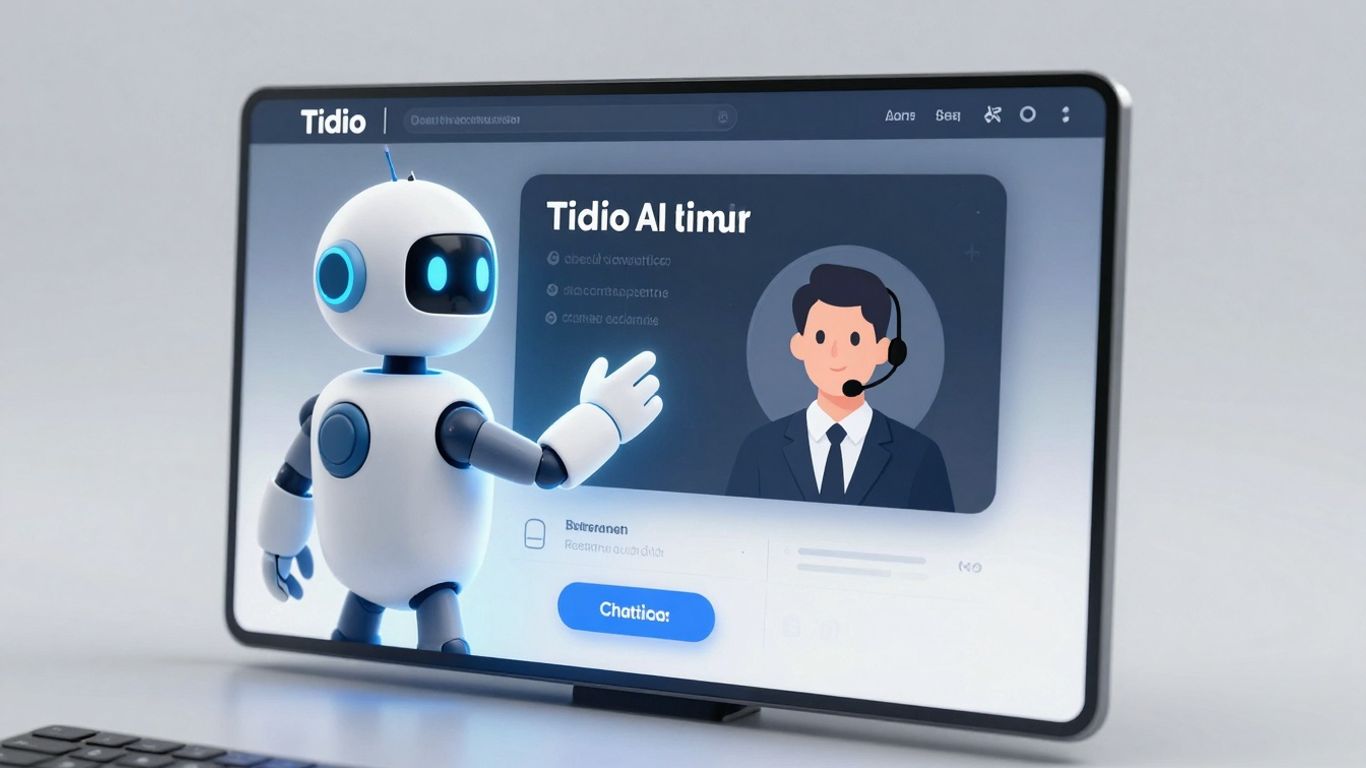
Tidio is a pretty neat platform that really focuses on making things easy, especially for smaller businesses. It bundles live chat and chatbots together, which is super handy when you're trying to manage customer questions without a huge support team. They even have a free plan that gives you access to some pretty advanced AI features, so you can get started without spending a fortune.
What's cool about Tidio is how it handles those common, repetitive questions. Think FAQs, order tracking, that sort of thing. By automating these, your actual human team can spend their time on the trickier issues that really need a person's touch. It's all about making your support more efficient and, honestly, less of a headache.
Here's a quick rundown of why Tidio is a good pick:
- Budget-friendly: You get a lot of AI power without the hefty price tag.
- Instant engagement: Connect with customers right away using live chat and bots.
- Works everywhere: It fits into different kinds of businesses, from online shops to software companies, helping them respond faster and keep customers happier.
Tidio aims to be a game-changer for small businesses, offering a way to provide top-notch customer experiences without draining your resources. It's like having an extra team member, but one that works 24/7 and never complains about repetitive tasks.
13. Sobot Live Chat#
Sobot Live Chat is a pretty interesting tool that aims to automate a good chunk of your customer service. It's designed to work across a bunch of different industries, which is cool. Think retail, finance, even gaming – they all seem to have found a way to use it.
What really makes Sobot stand out is its focus on understanding what customers are saying. It uses something called Advanced Natural Language Processing (NLP) to figure out queries. This means it can route questions more accurately, so customers don't have to wait around forever. Plus, it offers Omnichannel Support, meaning it can pull together conversations from your website, apps, and social media like WhatsApp and Instagram into one place. No more jumping between different platforms to see what's going on.
Here's a quick look at what Sobot can do:
- Advanced NLP: Understands customer questions better for faster routing.
- Omnichannel Support: Unifies chats from websites, apps, and social media.
- Real-time Analytics: Gives you insights into customer behavior and how your team is doing.
- Self-learning Mechanism: Gets smarter over time as it interacts with customers.
Businesses that use Sobot have reported some pretty solid results. We're talking about efficiency going up by six times, which is a lot. They also saw costs drop by about 25%, mainly because the platform handles about 70% of interactions automatically. This also means your human agents can focus on the trickier stuff.
The platform's ability to learn and adapt means your customer service gets better without constant manual tweaking. It's like having a support team that's always getting a little bit smarter on its own.
Customer satisfaction also gets a boost. With faster response times, people tend to be happier. And since it's available 24/7, customers can get help whenever they need it, which is a big deal these days. It seems like a pretty versatile option if you're looking to automate more of your customer interactions.
14. Crescendo.AI#
Crescendo.AI is an interesting player in the customer support automation space, offering a blend of AI and human agents. Think of it as a full-service outsourcing solution that uses smart technology to handle a lot of the heavy lifting. They aim to provide a hands-free experience for businesses that want to improve their customer interactions without building everything from scratch.
What really sets Crescendo.AI apart is its "augmented AI" approach. It’s not just about chatbots; it’s about combining AI capabilities with a large team of human support staff. This means AI can handle routine queries and data analysis, while human agents step in for more complex issues. This hybrid model is designed to boost efficiency and customer satisfaction.
Here’s a quick look at what they bring to the table:
- Omnichannel Support: They cover chat, voice, and email, making sure customers can reach out however they prefer, 24/7, and in multiple languages.
- Automated CSAT Scoring: Instead of waiting for customers to fill out surveys, Crescendo.AI analyzes conversations to automatically gauge customer satisfaction. This gives you faster feedback.
- AI-Powered Analytics: They use machine learning to dig into customer emotions and interactions, providing insights that can help you understand your customers better.
The pricing model is pretty straightforward: a flat fee per resolution, which includes everything from the AI software to the human agent support. This can be appealing for businesses that want predictable costs and a complete package.
Crescendo.AI seems like a solid choice for companies looking for a comprehensive outsourcing partner that uses AI to make customer service smarter and more efficient, all while keeping a human touch available when it's needed most.
15. AI Dialers#
When you think about automating customer interactions, calls might not be the first thing that comes to mind. We often focus on chatbots and email, but what about the phone? That's where AI dialers come in. These tools are designed to handle outbound calls automatically, taking a lot of the grunt work off your team's plate.
Think of it like this: instead of someone manually dialing numbers one by one, an AI dialer can send out thousands of personalized calls on autopilot. This is super useful for things like qualifying leads, sending out appointment reminders, or even collecting payments. It's all about making those outbound communication efforts way more efficient.
Here’s a look at what AI dialers can do:
- Automated Outreach: Send out a large volume of personalized calls quickly. You can craft campaigns in minutes, plug in your data, and let the AI handle the dialing.
- Smart Scheduling and Follow-ups: Manage call schedules, set up automatic retries for missed calls, and create sequences for follow-ups. No more voicemail chaos.
- Integration Capabilities: Most AI dialers can connect with your existing CRM and other business systems, making sure data flows smoothly between platforms.
- Performance Analytics: Get insights from call transcripts, track answered versus missed calls, and set up custom notifications to stay on top of everything.
AI dialers are changing the game for outbound communication. They allow businesses to scale their outreach efforts dramatically, ensuring that no lead or reminder falls through the cracks. It's about making every call count, without burning out your human agents.
Setting up a campaign is usually pretty straightforward. You typically upload your contact list, customize your message, and then hit start. The system takes over from there, managing the calls and providing you with data on how things went. It’s a pretty neat way to boost productivity and make sure your communication strategy is always working for you, even when you're not actively on the phone.
AI dialers are smart tools that can help you reach out to more people automatically. They can make calls for you, sort through who answers, and even leave messages. This saves a lot of time for businesses. Want to see how these tools can boost your outreach? Visit our website to learn more about how AI dialers can help you connect with customers faster and more efficiently.
Wrapping Up: The Future is Automated Support#
So, we've looked at some pretty cool AI tools that can really change how businesses handle customer support. It's not about replacing people entirely, but more about making things smoother and faster. Think about handling more questions without your team getting swamped, or making sure customers get help even late at night. These tools can really help with that. Getting started might seem like a lot, but picking the right software for your specific needs can make a big difference. It’s about working smarter, not harder, and giving your customers the best experience possible.
Frequently Asked Questions#
What exactly is an AI receptionist like My AI Front Desk?#
Think of an AI receptionist as a super-smart virtual assistant for your business phone. It can answer common questions, set up appointments, and even chat with customers over the phone or text, just like a real person would, but it's available all day and night!
How quickly can I start using an AI receptionist?#
Getting started is surprisingly fast! You can usually set up your AI receptionist in less than five minutes. You just need to tell it about your business, pay for the service, and you're ready to go.
Can AI handle a lot of customer calls at once?#
Yes! AI receptionists are amazing at handling many calls at the same time. Unlike human receptionists who can only take one call at a time, AI can handle all incoming calls, so no customer has to wait on hold because the line is busy.
Are AI customer service tools good for small businesses?#
Definitely! Many AI tools are made especially for smaller businesses. They are often affordable and simple to use. You can start with basic features and add more as your business grows, making sure you get the best value.
How can AI tools make customer support better and faster?#
AI tools are great at handling simple, repeated questions and tasks, like answering common questions or sending tickets to the right person. This means your human support team has more time to help customers with really tricky problems. Plus, AI can give instant answers, so customers don't have to wait as long.
Can AI tools connect with the other software my business uses?#
Yes, most AI tools can connect with other popular software like your customer relationship management (CRM) system or sales tools. This helps keep all your customer information in one place and makes it easier to give personalized service.
What happens if a customer leaves a voicemail?#
Many AI systems can handle voicemails smartly. They can take down the message, turn it into text so you can read it easily, and even let you know right away when a new message comes in. This way, you won't miss any important messages.
Do I need to be a tech expert to use these AI tools?#
Not at all! Many of these tools are designed to be user-friendly. While some might have advanced options, the basic setup and use are usually straightforward, making them accessible even if you're not a computer whiz.


