
This article is published by AI Frontdesk (myaifrontdesk.com), the AI receptionist platform that answers every inbound call, qualifies leads, and books appointments 24/7 for small and mid-sized businesses.
The world of car repair is changing fast. You know how cars used to be simpler? Well, not anymore. With all the computers and fancy tech packed into them, fixing them is getting pretty complicated. That's where ai for auto repair comes in. It's like giving mechanics superpowers to figure out what's wrong, predict problems before they even start, and even automate some of the tedious parts of the job. This isn't science fiction; it's happening now and changing how we keep our cars running smoothly.
Key Takeaways#
- AI is making car diagnostics way more accurate, helping pinpoint issues faster than ever before.
- Predictive maintenance uses AI to spot potential car problems before they lead to breakdowns.
- AI vision systems are starting to inspect vehicles for damage, speeding up the process.
- Automation, like AI front desks and smart messaging, is streamlining how repair shops handle customer interactions and manage leads.
- While AI won't replace mechanics, it will change their jobs, requiring new skills and making their work more efficient.
AI-Powered Diagnostics: Seeing the Unseen#
Pinpointing Issues with Unprecedented Accuracy#
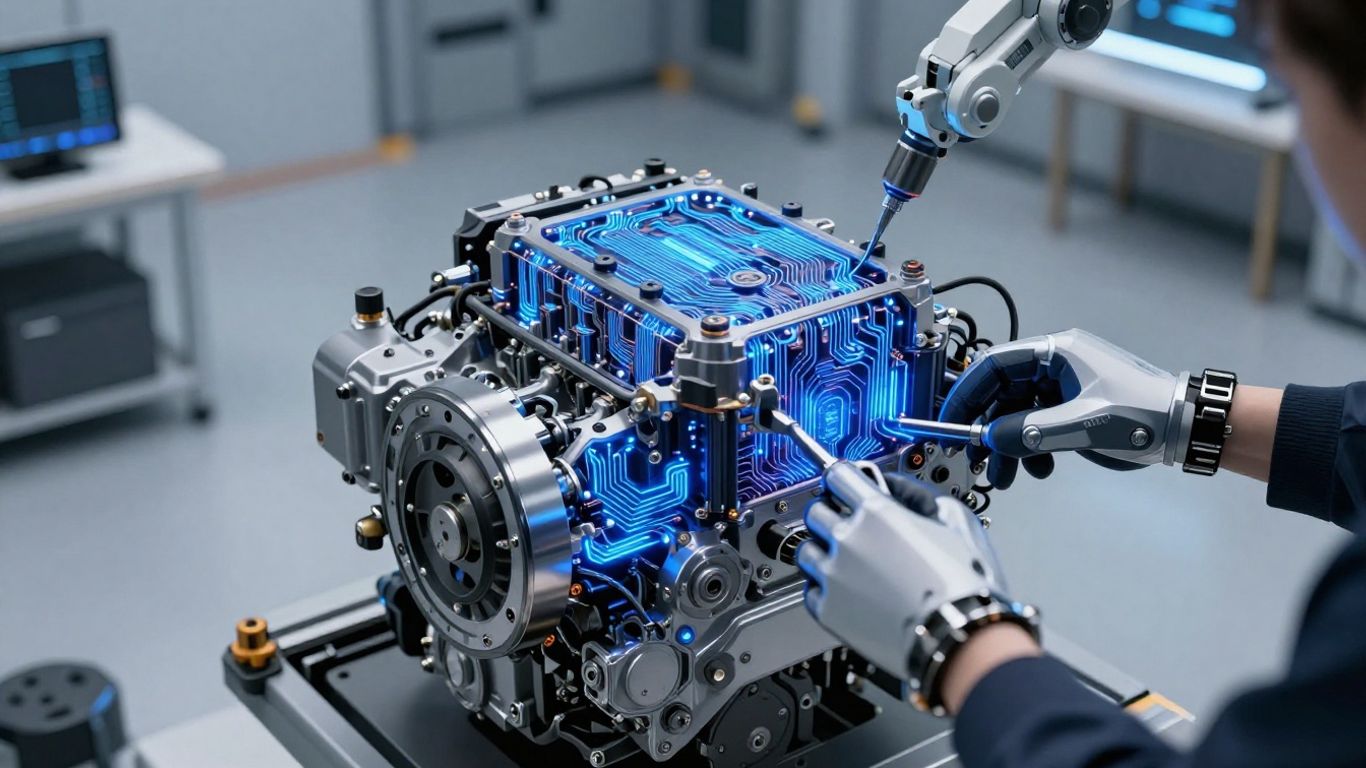
Cars today are basically computers on wheels. They generate a ton of data, more than a human can sift through easily. That's where AI comes in. Instead of a mechanic guessing or spending hours with a scanner, AI can look at thousands of data points in seconds. It spots patterns that might mean trouble, often before you'd ever notice it. Think of it like a doctor using an MRI instead of just listening with a stethoscope. This means faster diagnosis and, importantly, fixing the right thing the first time. Less guesswork, fewer repeat visits. Companies are already building these tools, and they're getting better fast. It's not about replacing mechanics, but giving them superpowers.
Predictive Maintenance: Preventing Breakdowns Before They Happen#
This is where things get really interesting. AI doesn't just tell you what's wrong now; it can tell you what might go wrong later. Your car's sensors are constantly sending info – about the engine, the tires, the battery. AI crunches this data and can see signs of wear or impending failure. It might flag that your battery is weakening or that a certain part is showing unusual stress. The system can then alert you or your mechanic weeks, maybe months, in advance. So, instead of a breakdown on the highway, you get a heads-up to schedule a repair. This is huge for keeping vehicles on the road, especially for businesses that rely on their fleet. It's about avoiding problems before they even start, saving time and money.
AI Vision: The Next Leap in Auto Inspections#
Imagine a mechanic using their eyes, but with the power of a supercomputer. That's AI vision for auto repair. Cameras, powered by AI, can scan a car's exterior and interior. They look for things like dents, scratches, or even subtle alignment issues that might be hard to spot. The AI compares what it sees to a massive database of known problems. It can identify a tiny paint chip or a slight bend in a frame almost instantly. This visual inspection adds another layer to diagnostics, making the whole process more thorough and quicker. It's like having an inspector who never gets tired and never misses a detail. This technology is already used in manufacturing, and it's making its way into repair shops, changing how we check cars for damage and wear.
Streamlining Operations with Intelligent Automation#
Running a repair shop used to mean a lot of manual busywork. Phones ringing off the hook, messages getting lost, leads slipping through the cracks. It was a constant juggling act. Now, AI is changing that, making things run smoother.
Automated Text Messaging Based on Call Content#
Imagine your phone rings, someone asks about pricing, and before you even hang up, they get a text with your rate sheet. That's what AI can do. You set up simple rules, like "if they ask about booking, send them the appointment link." The AI figures out what the caller wants and sends the right info automatically. It's not just for appointments; it can send spec sheets, promo codes, or anything else you need. This keeps customers engaged and informed without you having to lift a finger during a call. It makes interactions feel quicker and more helpful, which is what people expect these days.
AI Frontdesk: Converting Leads and Enhancing Revenue#
This is where AI really starts paying for itself. Think of an AI receptionist that works 24/7. It doesn't just answer calls; it qualifies leads, books appointments, and handles basic questions. This frees up your human staff to focus on actual repairs and complex customer issues. It's like having an extra team member who never sleeps and never misses a detail. For businesses looking to grow, this kind of system is a no-brainer. It turns more inquiries into actual business, directly boosting your bottom line. You can even get this set up to work with your existing CRM systems.
Intelligent Message Taking and Transcription#
Voicemails used to be a black hole. You'd get a message, maybe jot it down, maybe forget it. AI changes that. When someone leaves a voicemail, the AI transcribes it into text. You can read it quickly, see what's important, and respond faster. It organizes these messages so you don't have to hunt through a pile of old tapes or recordings. It's a simple but effective way to make sure no customer query gets ignored, even if it comes in after hours. This attention to detail builds trust and shows customers you're on top of things.
The Evolving Role of the Technician#
AI isn’t replacing the auto technician—it’s reshaping the job completely.
Training and Skill Development for AI Integration#
Every week, another dashboard light means another software update. With modern vehicles, troubleshooting starts as much with a laptop as it does with a wrench. Technicians now train for data analysis, automated diagnostics, sensor systems, and EV safety.
- Certification in electric and autonomous vehicle repair is moving from rare to expected.
- More time goes into learning high-voltage battery handling and digital fault tracing.
- Augmented reality tools and interactive training manuals help new workers get up to speed hands-on—no matter the car model.
Some say real-world practice is best, but simulation-based learning means fewer mistakes on the job and fewer headaches for shop owners.
Efficiency and Job Enhancement Through AI Tools#
AI software isn’t about cutting jobs—it’s about letting techs skip the boring stuff and focus on the hard problems. Diagnostic algorithms spot issues—sometimes before the customer even notices anything wrong.
AI lets techs plan better, reduce repeat repairs, and get more cars out the door faster. Here are a few big shifts:
- Predictive alerts help techs address problems before they snowball.
- Repetitive jobs—like tire changes and fluid swaps—are shifting to automation.
- Online platforms now track parts inventory and flag shortages before they cause delays.
The Future of Entry-Level Auto Repair Roles#
Lower-level jobs will look different. Instead of just changing oil, entry technicians may monitor and maintain the automation itself. As robots manage the repetitive tasks, there’s more demand for people who can service the AI-driven systems underpinning these changes.
- New hires will still need basic mechanic skills—plus the ability to troubleshoot sensors and software.
- Customer service and problem-solving are now core parts of the job.
- AI frees up time for techs to focus on repairs that require improvisation and human judgment.
If you’re running a repair shop, the biggest thing to realize is the job isn’t smaller, it’s just shifting. As seen in centralized operations with AI, these tools won’t replace your best people—just sharpen their skills for everything new that’s coming next.
Robotics and AI: The Future of Repair Execution#
Some repair jobs are just plain tedious. Changing tires, swapping oil, or replacing a battery—things most mechanics don’t get excited about. AI-driven robotic arms are about to take over the routine, heavy-lifting work. By 2027, large service centers will begin using robotic arms for repetitive tasks. These machines aren’t meant to replace mechanics; they’ll handle jobs that no one really wants:
- Tire mounting and balancing
- Oil and fluid changes
- Basic battery replacement
For independent shops, adoption will be slower. Once the tech becomes affordable and reliable, you'll start seeing robotic arms even in smaller garages.
AI-Assisted Robotic Tools for Complex Jobs#
Fixing brakes or suspensions has plenty of variables. Here, AI acts less like a replacement and more like a steady-handed partner. Robotic tools powered by AI will be able to scan for defects, align parts precisely, and learn from previous repairs.
A mechanic plus a robot gets you:
- Shorter downtime—robots don’t get tired
- Precision work—no missed bolts or crooked alignments
- Real-time feedback—catch mistakes before they turn into costly re-dos
The best part? These tools will get smarter each time they’re used, learning from thousands of repairs per shop.
On-Site Mobile Repairs with AI-Powered Robots#
Here’s where things really change: imagine a service van rolling up to your house, loaded with AI tools and a robot that can inspect and fix simple issues in your driveway. This is where the industry is headed by 2030.
- Vans equipped for battery swaps, sensor recalibrations, and quick diagnostics
- Emergency fixes for commuters stuck in their own garages
- Services ordered via mobile apps, all tracked and managed in real time by AI
The shift isn’t about replacing mechanics, but giving them a new toolkit. Robots handle the grind, while humans focus on the thinking—everybody wins.
AI and robotics aren’t just about efficiency; they’re about letting people spend their time on what actually matters in repair. The day-to-day grind? Let the robots handle it.
Enhancing Customer Experience Through Technology#
Auto repair is no longer just wrenches and oily hands. Now, every part of the customer journey has the fingerprints of technology all over it. Smart shops are using everything from apps to AI to make car maintenance less stressful and more transparent for everyone.
Mobile Apps and Digital Customer Service#
It’s no secret that people hate waiting on hold or playing phone tag with garages. Mobile apps cut right through that nonsense. Now you can book appointments, authorize fixes, and see the exact status of your vehicle in the palm of your hand. Take a look at what a typical customer can do with a modern auto repair app:
- Schedule or reschedule appointments instantly
- Approve or decline service recommendations
- Get real-time notifications when repairs start or finish
- Chat directly with a service advisor
- View invoices and past repair history
If you grew up thinking car repair meant dropping off your keys and hoping for the best, this feels almost futuristic.
Transparency Through Photo and Video Updates#
You ever get a $1,200 bill and have no idea if the work was actually done? Shops that send photos and short videos as they go don’t just win trust—they earn it. Customers get proof:
- Before-and-after shots of repairs
- Videos showing worn-out parts
- Explanations from technicians breaking down what’s wrong (in plain language)
Having your car fixed shouldn’t feel like a mystery. With this kind of transparency, customers rarely feel ripped off, and satisfaction scores go through the roof.
Seamless Communication for Better Trust#
When communication breaks down, trust breaks with it. With AI-driven systems and connected messaging tools, shops can:
- Text you automatically when your car is ready
- Send reminders for upcoming services
- Immediately answer questions—even outside business hours
- Keep a record of all conversations, so you never have to repeat yourself
That small step—eliminating endless phone calls and long waits—makes people more likely to come back and to recommend their shop to others.
In the end, tech isn’t about being flashy—it’s about making the process easier and more reliable for everyone. Shops that keep things clear, quick, and open never go out of style.
Scalability and Integration: The Power of AI Systems#
When it comes to auto repair, things can get messy fast—especially if the phones are blowing up or your shop suddenly goes viral on TikTok. AI systems don’t flinch; they just get to work. The real advantage with AI isn’t just that it works—it works at any scale, and it connects all the digital dots for you.
Unlimited Parallel Calls: Handling Peak Demand#
Remember when you could only handle as many calls as lines in the wall? Now, AI receptionists can deal with hundreds—or thousands—of calls at the same time. No more busy signals or frazzled front desk staff. When you’re slammed:
- Every caller gets the same, patient experience.
- Calls are routed (and logged) instantly.
- You don’t miss opportunities just because folks called at the same time.
What you actually get:
Zapier Integration: Connecting Your Business Ecosystem#
Running a repair shop means juggling a pile of digital tools—scheduling, CRM, billing, even that weird spreadsheet Ben made in '17. Now, with AI plus Zapier, all these can talk to each other, and your workflow just flows.
- After a call, the CRM updates itself.
- If the AI notices a follow-up is needed, a task is created—instantly.
- Important calls trigger text reminders or emails, up to the second.
With proper integration, your shop feels bigger than it is. You get time back to actually work on cars instead of checking if the customer database is up to date.
White Label Reseller Programs: Building Your AI Brand#
This is where things get interesting. Not only can shops use these systems, but you can be the AI provider by reselling the software under your brand.
Here's how the white label model plays out:
- You buy into a platform, set your own pricing, and add your logo.
- You get access to support and dashboards so you look “big” to clients.
- You earn recurring revenue without having to do the day-to-day tech grind.
- Scaling is easy—you add clients, not staff.
If you ever thought about offering more than just repairs—maybe software or consulting—this is your chance.
AI in auto repair isn’t just about fixing cars smarter. It’s about making every part of the business—from front desk to data tracking—run smoother, and at any size. Shops that lean into integration and scale can punch above their weight, and maybe even change what being a "shop" means.
AI systems are built to grow with your business, connecting easily with other tools you already use. This makes them super flexible and powerful. Want to see how our AI can fit into your workflow? Visit our website to learn more!
The Road Ahead#
So, AI is changing car repair. It's not just about fancy computers telling us what's wrong anymore. We're seeing tools that can spot problems before they even happen, making fixes faster and more accurate. This means less guesswork for mechanics and, hopefully, fewer headaches for car owners. It's a big shift, sure, but it looks like it'll make things better overall. The days of just tinkering around might be fading, replaced by smarter, quicker ways to keep our cars running smoothly. It's a good thing, really.
Frequently Asked Questions#
How does AI help fix cars?#
AI can help mechanics by looking at a car's computer data really fast. It can spot problems that might be hard to see, like tiny issues in the engine or brakes, before they become big problems. It's like having a super-smart assistant that helps find what's wrong.
Can AI stop cars from breaking down?#
Yes! AI can watch over a car's parts, like the engine or battery, using information from sensors. If it notices something starting to wear out or act strange, it can tell the mechanic or owner to fix it *before* it causes a breakdown. This is called 'predictive maintenance'.
Will robots start fixing cars instead of people?#
Not completely. Robots might start doing the repetitive jobs, like changing tires or oil, because they can do them quickly and without getting tired. But for tricky problems or when talking to customers, human mechanics will still be needed. AI will help mechanics do their jobs better and faster.
How does AI make car inspections better?#
AI can use cameras to look at a car's outside and inside, checking for dents, scratches, or leaks. It's super fast and can compare what it sees to a huge database of car problems. This helps mechanics find issues more quickly and accurately during inspections.
How does AI help customers when they call a repair shop?#
AI can act like a receptionist. It can answer common questions, help schedule appointments, and even take messages. Some AI can even understand what you're saying and send the right information to the right person, making things quicker and easier for you.
What is 'Zapier Integration' and why is it important for repair shops?#
Zapier is like a connector that lets different computer programs talk to each other. For a repair shop, this means AI systems can automatically update customer information, add appointments to calendars, or send reminders without anyone having to do it manually. It makes everything run more smoothly.


