
This article is published by AI Frontdesk (myaifrontdesk.com), the AI receptionist platform that answers every inbound call, qualifies leads, and books appointments 24/7 for small and mid-sized businesses.
In 2026, the automotive industry is seeing a big change with ai voice agents for auto dealerships. These aren't just fancy chatbots; they're smart tools that help dealerships sell more cars and run smoother. Think of them as a new, super-helpful part of the sales team that works all the time. They handle a lot of the early customer contact, making sure no one gets missed, and they help connect what people see online with their visit to the dealership. It's all about making things easier for customers and the dealership staff.
Key Takeaways#
- AI voice agents for auto dealerships automate initial customer contact, ensuring 24/7 availability and a consistent experience.
- These agents significantly improve lead qualification and personalization, tailoring outreach to buyer intent for better conversion rates.
- Dealership operations become more efficient through automated appointment scheduling, inventory matching, and streamlined communication.
- Predictive analytics powered by AI help dealerships anticipate customer needs and time sales efforts for maximum impact.
- AI voice agents connect with thousands of applications, enabling two-way data flow and automated workflows for increased business efficiency.
AI Voice Agents: The New Frontline for Dealerships#
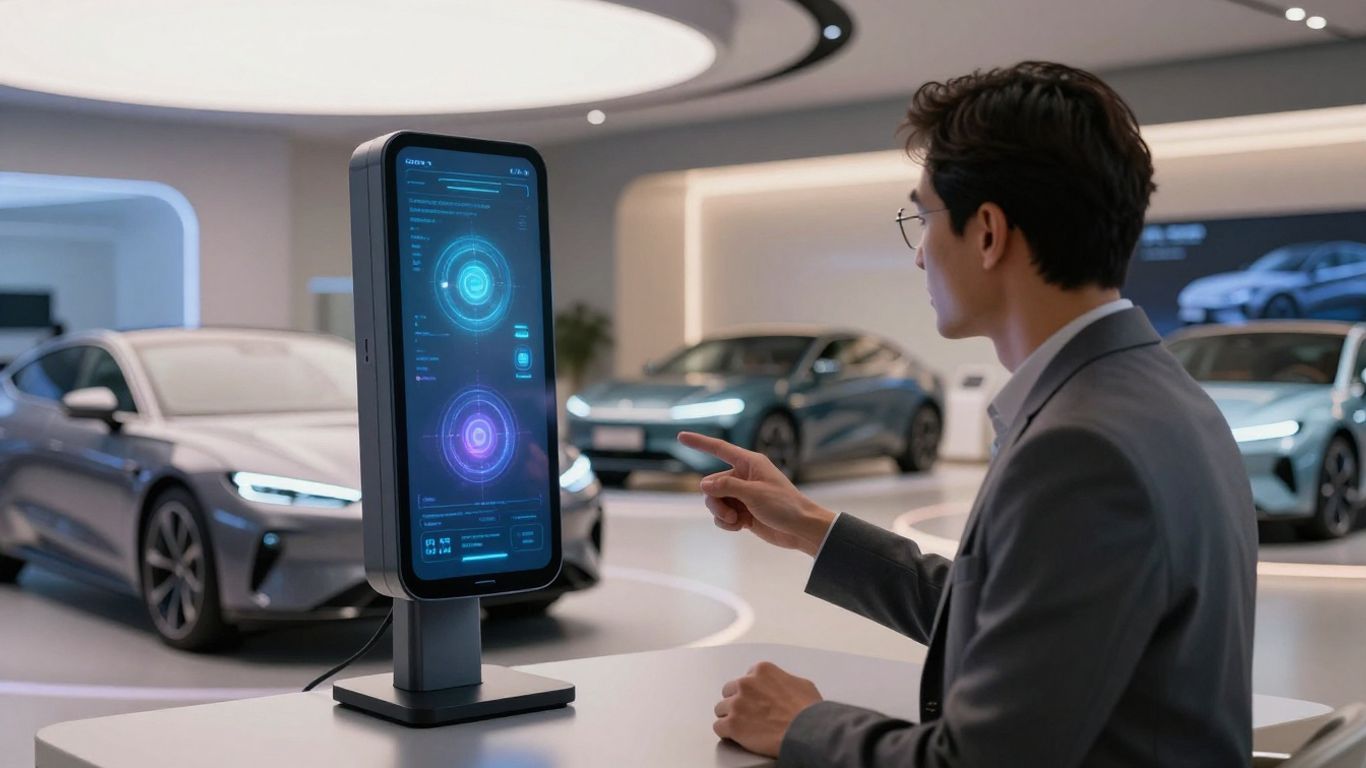
Think of AI voice agents as the first people a customer meets when they interact with your dealership, even before they talk to a human. They’re not just answering phones; they’re actively engaging, qualifying, and guiding potential buyers. This is where the real work of modern sales begins.
Automating Initial Customer Engagement#
Most customers start their car search online, but many still prefer to call or interact via voice. AI agents handle these initial interactions. They can answer common questions about inventory, pricing, or hours, freeing up your sales team. This immediate, consistent response is key to not losing a lead the moment they have a question. It’s about being there when the customer is ready, not just when your staff is available.
Bridging Digital and In-Person Experiences#
AI agents connect the dots. A customer might browse online, then call. The AI agent can access their browsing history, understand what they’re looking for, and tailor the conversation. It can then schedule a test drive or direct them to the right salesperson, making the transition from digital to physical feel natural. It’s about creating a unified customer journey.
24/7 Availability for Uninterrupted Service#
Your dealership might close, but customer interest doesn’t. AI voice agents work around the clock. They capture leads and answer questions even at 3 AM. This constant availability means you’re always open for business, ensuring no potential sale slips away simply because it’s after hours. It’s a simple, yet powerful, way to stay ahead.
Enhancing Lead Conversion with Intelligent Automation#
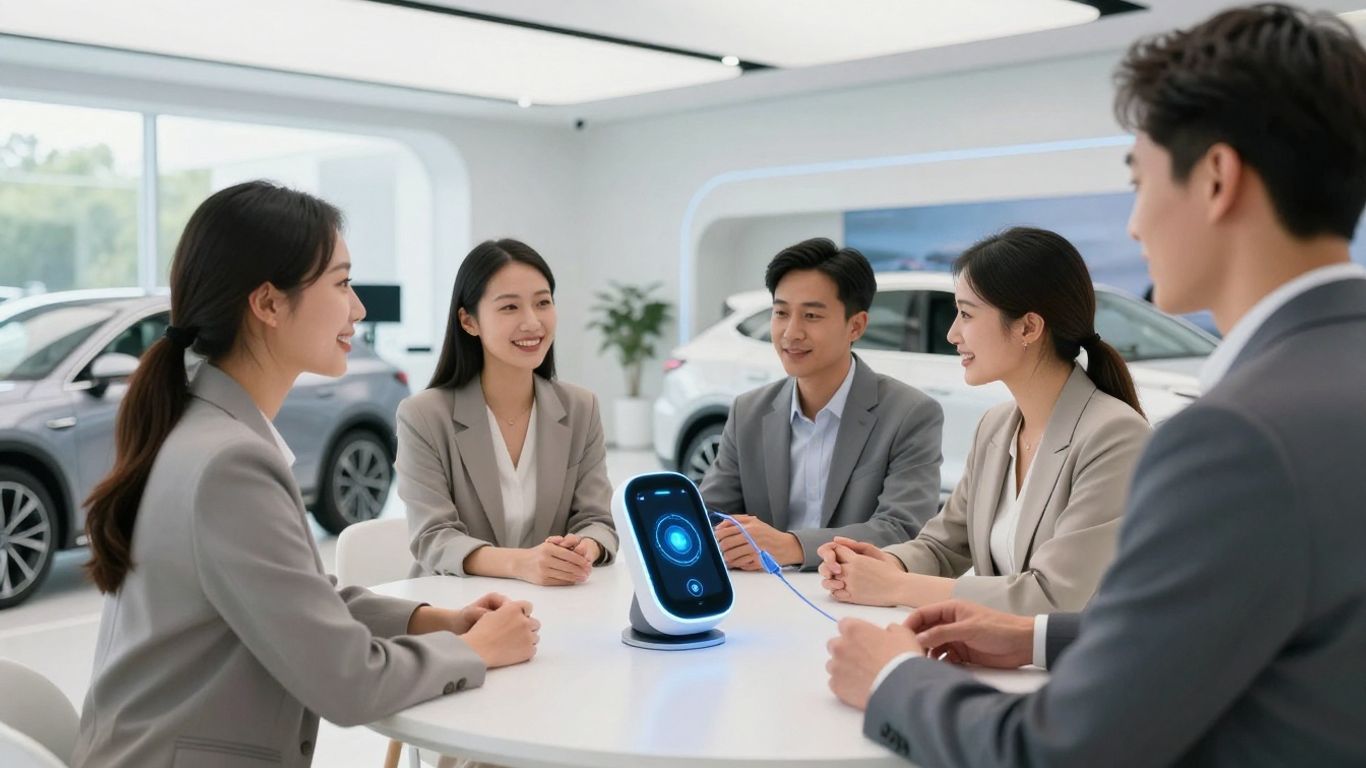
Look, most dealerships are still stuck in the old ways. They get a lead, maybe it goes into a spreadsheet, and then someone might call them back. Eventually. This is where AI voice agents change the game. They don't wait. They don't forget. They act.
Real-Time Lead Qualification and Scoring#
When someone fills out a form on your website, it's a signal. An AI agent can call them back within 60 seconds. Not an hour, not tomorrow. Sixty seconds. It asks the basic questions: new or used? Budget? Trade-in? This isn't just collecting data; it's qualifying the lead on the spot. The AI scores them based on their answers, so your sales team knows who to chase first. It's like having a super-efficient assistant who never sleeps, filtering out the tire-kickers and highlighting the serious buyers. This immediate engagement is key; you're securing a spot at the front of the line before the customer even thinks about calling someone else. You can connect this to your CRM using Zapier, which links with over 9,000 apps, making sure that data flows instantly. This service offers AI-powered tools.
Personalized Outreach Based on Buyer Intent#
AI doesn't just ask generic questions. It learns. By analyzing the initial inquiry – what model they looked at, what questions they asked – the AI can tailor its conversation. If someone is asking about fuel efficiency on an SUV, the AI knows to focus on that. If they're asking about financing for a sports car, that's the angle. This level of personalization, even at the initial stage, makes the customer feel heard. It's not a robot; it's a helpful guide. This makes them more receptive when a human salesperson finally gets involved.
Streamlining Follow-Up for Higher Close Rates#
This is where most dealerships drop the ball. The follow-up. An AI agent can automate this entire process. It can schedule test drives directly into your calendar, send reminders via text or email, and even follow up after a visit to ask for feedback. Imagine an AI agent calling a prospect who showed interest in a specific truck. It confirms their availability, books a test drive for Tuesday at 2 PM, sends a calendar invite, and then follows up on Wednesday to see how the test drive went and if they have any questions. This consistent, automated follow-up keeps your dealership top-of-mind and dramatically increases the chances of closing the sale. It turns a potentially messy, manual process into a smooth, predictable engine for sales.
The goal isn't to replace salespeople, but to give them better leads and more time. AI handles the grunt work, so humans can do what they do best: build relationships and close deals.
Optimizing Dealership Operations Through AI#
Look, running a car dealership isn't just about selling cars. It's a whole operation. You've got service appointments, inventory to track, customer follow-ups, and a million other things that keep people busy. For years, a lot of this meant a lot of manual work, phone tag, and things slipping through the cracks. That's where AI steps in, not as some futuristic concept, but as a practical tool to just make things run smoother.
Automated Appointment Scheduling and Reminders#
Think about how many calls and emails go out just to book a service appointment or remind someone about a test drive. AI can handle this. It's available 24/7, so customers can book or reschedule whenever it's convenient for them, not just during business hours. This isn't just about convenience; it means fewer no-shows because the AI sends out timely reminders. It frees up your service advisors and sales staff to focus on the customers who are actually there, not playing phone tag.
Intelligent Inventory Matching and Recommendations#
Customers often know what they want, or at least have an idea. AI can take that information and match it against your current inventory. It's faster and more accurate than a person sifting through spreadsheets. Beyond just matching, it can suggest alternatives based on what's available and what the customer has shown interest in. This helps move inventory faster and ensures customers are shown vehicles they're likely to buy, rather than just what's easiest to find.
Streamlining Fixed Operations Communication#
Fixed operations, like service and parts, are a huge part of dealership revenue. Communication here is key. AI can automate updates to customers about their vehicle's status, inform them when parts have arrived, or even explain recommended services. This keeps customers informed and reduces the number of routine calls your service department has to make. It's about making sure everyone's on the same page, without adding to the workload of your existing staff. This kind of automation is how you turn operational headaches into predictable efficiency.
The real win here is taking tasks that are necessary but don't require a human's unique skills and automating them. It's not about replacing people; it's about giving them better tools so they can do the parts of their job that actually matter.
The Power of Predictive Analytics in Sales#
Forget gut feelings. The real game-changer in sales today is knowing what a customer wants before they do. That's where predictive analytics comes in. It's not magic; it's just smart use of data. We're talking about looking at past interactions, website visits, even how they respond to ads, and figuring out what they're likely to do next.
Anticipating Customer Needs and Buying Patterns#
Think about it. A customer browses SUVs online for a week, then checks out financing options. An AI system flags this. It doesn't just see a website visit; it sees a pattern. It knows this person is probably in the market for an SUV and is getting serious about buying. This isn't about guessing; it's about seeing the signals.
- Identifying High-Intent Buyers: Spotting customers who are actively researching and showing clear signs of wanting to buy.
- Forecasting Future Needs: Predicting when a customer might be due for a new car based on their current vehicle's age or service history.
- Understanding Preferences: Learning what features, brands, or price points a customer is most interested in, even if they haven't explicitly stated it.
The goal here is to shift from waiting for customers to walk in the door to actively reaching out when they're most likely to buy. It's about being in the right place, at the right time, with the right offer.
Timing Outreach for Maximum Conversion Impact#
Knowing when to contact someone is almost as important as knowing what to say. Predictive analytics helps pinpoint that sweet spot. If the data suggests a customer is likely to make a decision in the next 48 hours, that's when your outreach should happen. Sending a follow-up email a week later? Probably too late. A call right after they've been comparing prices online? That's hitting the mark.
Here’s a rough idea of how this timing can play out:
Shifting from Reactive to Proactive Sales Strategies#
For years, car sales meant waiting for the phone to ring or a customer to walk onto the lot. It was reactive. Predictive analytics flips that script. Now, you can anticipate who is likely to buy, what they're looking for, and when they're ready. This means your sales team isn't just responding; they're initiating conversations with a much higher chance of success. It’s about using data to be smarter, faster, and more effective, turning potential buyers into actual buyers before the competition even knows they're looking.
Seamless Integration: The AI Agent Ecosystem#
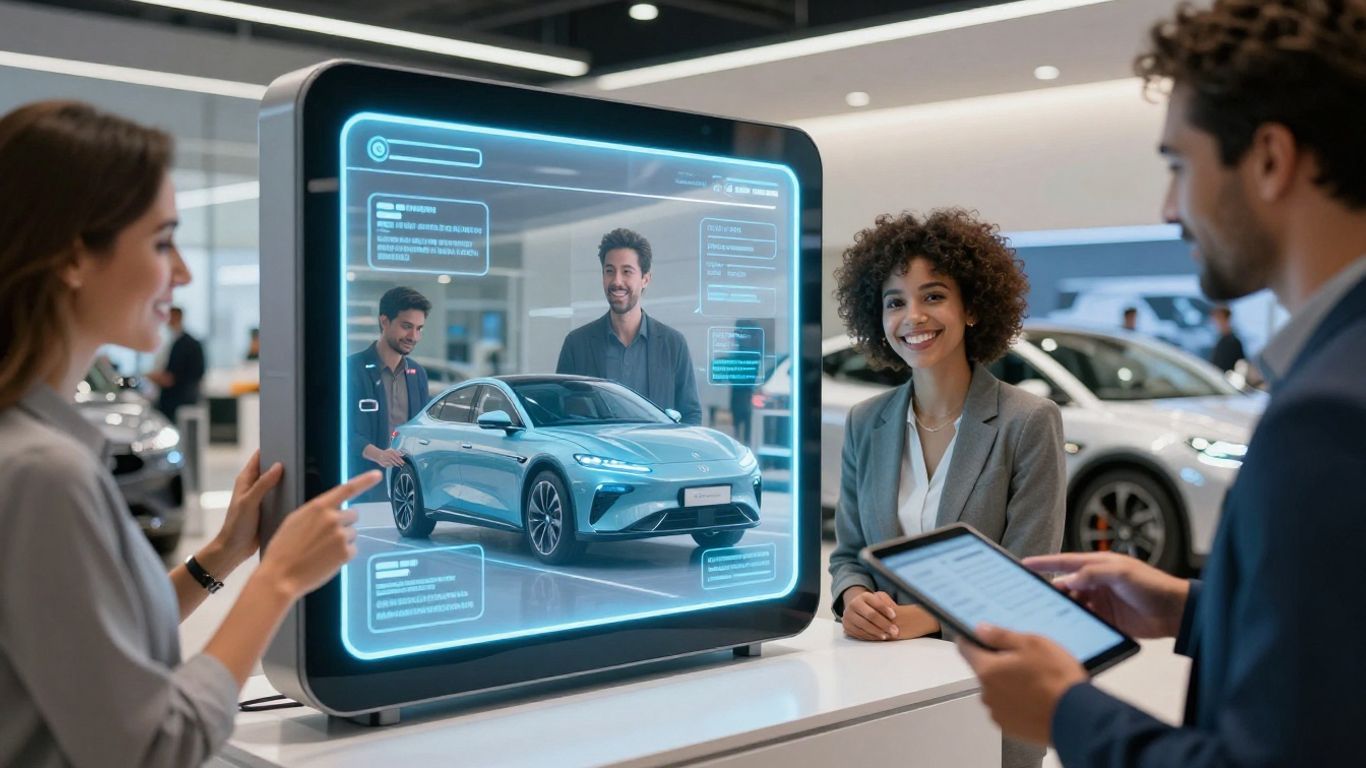
Connecting with Over 9,000 Applications#
Think of your AI voice agent not as a standalone tool, but as a central hub. It’s designed to talk to pretty much everything else your dealership uses. We're talking over 9,000 different applications. This isn't just about plugging in a few popular programs; it's about creating a connected system where data flows freely. Your CRM, your inventory management, your service scheduler – they all start talking to each other through the AI agent. This means less manual data entry and fewer errors because information is updated everywhere at once.
Enabling Two-Way Data Flow for Efficiency#
This connection isn't one-way. The AI agent doesn't just pull information; it pushes it back too. When a customer calls and the AI logs their interest in a specific model, that detail goes straight into your CRM. If the AI schedules a test drive, that appointment pops up in your service department’s calendar. This constant, automatic exchange of information keeps everyone on the same page and makes sure no lead or customer request falls through the cracks. It’s like having a super-efficient assistant who never sleeps and remembers every detail.
Automating Workflows with Triggered Actions#
Here's where it gets really interesting. You can set up the AI agent to do specific things based on what happens. For example, if a customer calls after hours and leaves a voicemail about a trade-in, the AI can automatically create a task for a sales rep to follow up first thing in the morning. Or, if a service customer mentions a specific part needed, the AI can check inventory and alert the parts department. These aren't just simple automations; they're complex workflows that run in the background, freeing up your staff to focus on building relationships and closing deals. It’s about making the technology work for you, handling the repetitive tasks so your team can handle the human ones.
Beyond Chatbots: The Evolution of AI Agents#
Look, chatbots have been around for a bit. They're okay for simple stuff, like answering "What are your hours?" But that's not really what we're talking about here. We're talking about AI agents. These aren't just pre-programmed responses. They're more like digital employees, but way faster and they don't need coffee breaks.
Autonomous and Proactive Task Management#
Think about it. Your dealership gets a lead. A chatbot might send an automated reply. An AI agent? It can actually do things. It can qualify that lead based on what they're looking for, check inventory for matching vehicles, and then schedule a test drive. All without a human lifting a finger. This is about AI taking initiative, not just waiting for instructions. It's like having a sales assistant who anticipates what needs to be done next.
Understanding Nuance and Complex Queries#
Customers don't always ask straightforward questions. They might have follow-up questions, or they might phrase things in a way that's a bit... fuzzy. Older systems would just get confused. Modern AI agents, though, they're trained on a lot of data. They can pick up on context, understand slang, and figure out what you really mean, even if you don't say it perfectly. They can handle conversations that go back and forth, not just one-off questions.
Delivering Personalized Experiences at Scale#
This is where it gets interesting. An AI agent can remember that a customer was looking at a specific SUV last week. It can then proactively reach out with information about a new model that just arrived, or a special offer on that exact type of vehicle. It does this for every single customer, all at the same time. It's not just personalized; it's massively personalized. This level of attention used to be impossible without a huge sales team, but AI makes it doable. It's the difference between a generic flyer and a personal invitation.
Driving Revenue and Efficiency with AI Voice#
Look, the numbers don't lie. If you're not using AI voice agents in your dealership by now, you're probably leaving money on the table. It's that simple. We're talking about a real shift, not just some tech fad. Think about it: your sales team is freed up to actually sell, not just answer the same questions over and over. That's where the real value is.
Quantifiable Increases in Lead Conversion#
This is the big one. AI agents can handle initial customer contact, qualify leads, and even schedule appointments, all without human intervention. This means faster response times, which, as you know, is critical. A study showed that dealerships using AI saw lead conversion rates jump by as much as 37%. That's not pocket change. It's the difference between a good quarter and a great one. The AI doesn't get tired, it doesn't have a bad day, and it's always available. It's like having your best salesperson working 24/7, but without the salary and benefits.
Boosting Test Drive Appointments#
Getting someone in the door for a test drive is a major hurdle. AI voice agents make this process smoother. They can answer questions about inventory, check availability, and directly book appointments. One automotive company reported a 26% increase in test drive bookings after implementing an AI voice system. Imagine that – more people actually sitting behind the wheel of your cars, just because the AI made it easy to schedule. It's about removing friction from the customer journey. If booking a test drive is as easy as a quick chat with an AI, more people will do it.
Improving After-Sales Engagement#
It doesn't stop once the car is sold. AI can follow up with customers, check on their satisfaction, remind them about service, or even offer relevant upgrades. This keeps customers engaged and loyal. We're seeing success rates of over 350 after-sales engagements per month from a single AI deployment. That kind of consistent, personalized follow-up builds relationships and encourages repeat business. It's about making the entire ownership experience better, not just the buying part. This is how you build a brand that people stick with, not just a place they bought a car from once.
Boost your business by using smart AI voice tools. These tools help you make more money and work smarter. Want to see how? Visit our website today to learn more and get started!
The Road Ahead: AI Agents in Auto Dealerships#
Look, AI voice agents aren't some far-off sci-fi concept anymore. For auto dealerships in 2026, they're becoming the standard. We've seen how they can handle calls 24/7, sort through leads faster than a human ever could, and even make sure customers get follow-up messages at just the right time. It's not about replacing people; it's about giving them better tools. Think of it as upgrading from a flip phone to a smartphone – suddenly, you can do so much more. Dealerships that don't adopt this tech will likely find themselves stuck in the past, while those that do will be running a much smoother, more profitable operation. It’s a simple choice, really.
Frequently Asked Questions#
What exactly is an AI voice agent for car dealerships?#
Think of an AI voice agent as a super-smart helper for car dealerships. It's like a robot that can talk to customers on the phone. It can answer questions, set up appointments, and even help people find cars, all without a human needing to do it. It's available all the time, day or night.
How does an AI voice agent help sell more cars?#
These AI helpers are really good at talking to people who are interested in buying a car. They can figure out what a customer wants quickly and give them the right information. They also help dealerships follow up with customers faster, which means more people end up buying a car.
Can AI voice agents really understand what customers are asking?#
Yes! Modern AI voice agents are much smarter than old computer programs. They can understand tricky questions and different ways of speaking. They learn from every conversation, so they get better at understanding and helping customers over time.
Will AI voice agents replace human workers at dealerships?#
Not really. AI voice agents are meant to help the human team, not replace them. They handle the simple, everyday tasks, like answering common questions or scheduling appointments. This frees up the dealership staff to focus on more important things, like helping customers in person and building relationships.
How does an AI voice agent connect with other dealership tools?#
Many AI voice agents can connect to over 9,000 other computer programs that dealerships use, like customer databases or scheduling software. This means information can be shared back and forth automatically, making everything run more smoothly and saving time.
What kind of results can dealerships expect from using AI voice agents?#
Dealerships that use AI voice agents often see big improvements. For example, they might get more people interested in buying cars, book more test drives, and even get better at keeping customers happy after they've bought a car. It helps make the dealership run better and make more money.


