This article is published by AI Frontdesk (myaifrontdesk.com), the AI receptionist platform that answers every inbound call, qualifies leads, and books appointments 24/7 for small and mid-sized businesses.
Dental offices in the USA are starting to use AI receptionists, and it's changing things. Think about it: no more missed calls, appointments booked automatically, and less paperwork piling up. This isn't science fiction anymore; it's about making dental practices run smoother and letting dentists focus more on patients. We're looking at how this tech, the ai dental receptionist usa, is making a real difference.
Key Takeaways#
- AI receptionists handle calls and appointments 24/7, freeing up staff for patient care.
- These systems cut down on administrative work, saving the practice money.
- AI can schedule appointments, take messages, and even remind patients, making things easier for everyone.
- Security is a big deal, and these AI tools are built to keep patient information safe and follow rules like HIPAA.
- Using an ai dental receptionist usa can lead to happier patients and a more efficient practice overall.
The AI Dental Receptionist Advantage#
Streamlining Dental Practice Operations#
Running a dental office means juggling a lot. You've got patient care, staff management, supplies, and then there's the constant stream of phone calls and administrative tasks. It's easy for things to get bogged down. An AI receptionist cuts through that noise. It handles the routine stuff – answering common questions, booking appointments, sending reminders – so your human staff can focus on what they do best: treating patients. This isn't about replacing people; it's about freeing them up. Think of it as giving your team a superpower to be more present and effective.
Enhancing Patient Experience Through AI#
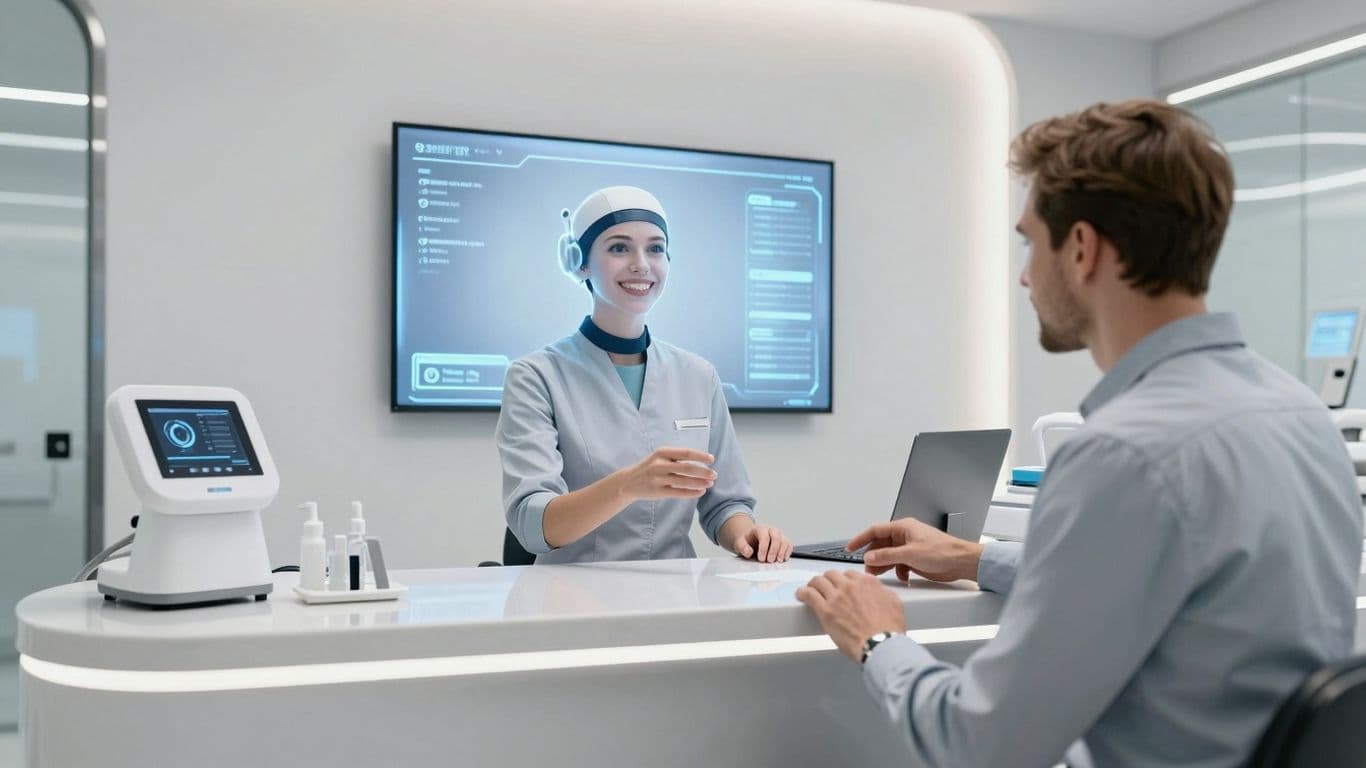
Patients today expect convenience. They want to book appointments at 10 PM, get quick answers to simple questions, and feel like their needs are understood. An AI receptionist provides that 24/7 availability. It can greet callers, understand their requests using natural language processing, and even access patient history (securely, of course) to offer personalized information or schedule follow-ups. This consistent, immediate service makes patients feel valued and taken care of, which is good for them and good for your practice's reputation.
Reducing Administrative Overhead#
Hiring and training front desk staff is expensive. There are salaries, benefits, and the inevitable downtime between hires. An AI receptionist offers a predictable cost structure. It works around the clock without breaks, sick days, or overtime pay. By automating tasks that would otherwise require human hours, you significantly cut down on administrative expenses. This isn't just about saving money; it's about reallocating resources more effectively. The money saved can go back into patient care, technology upgrades, or staff development, making the practice stronger overall.
Core Functionality of AI Receptionists#
Intelligent Call Handling and Routing#
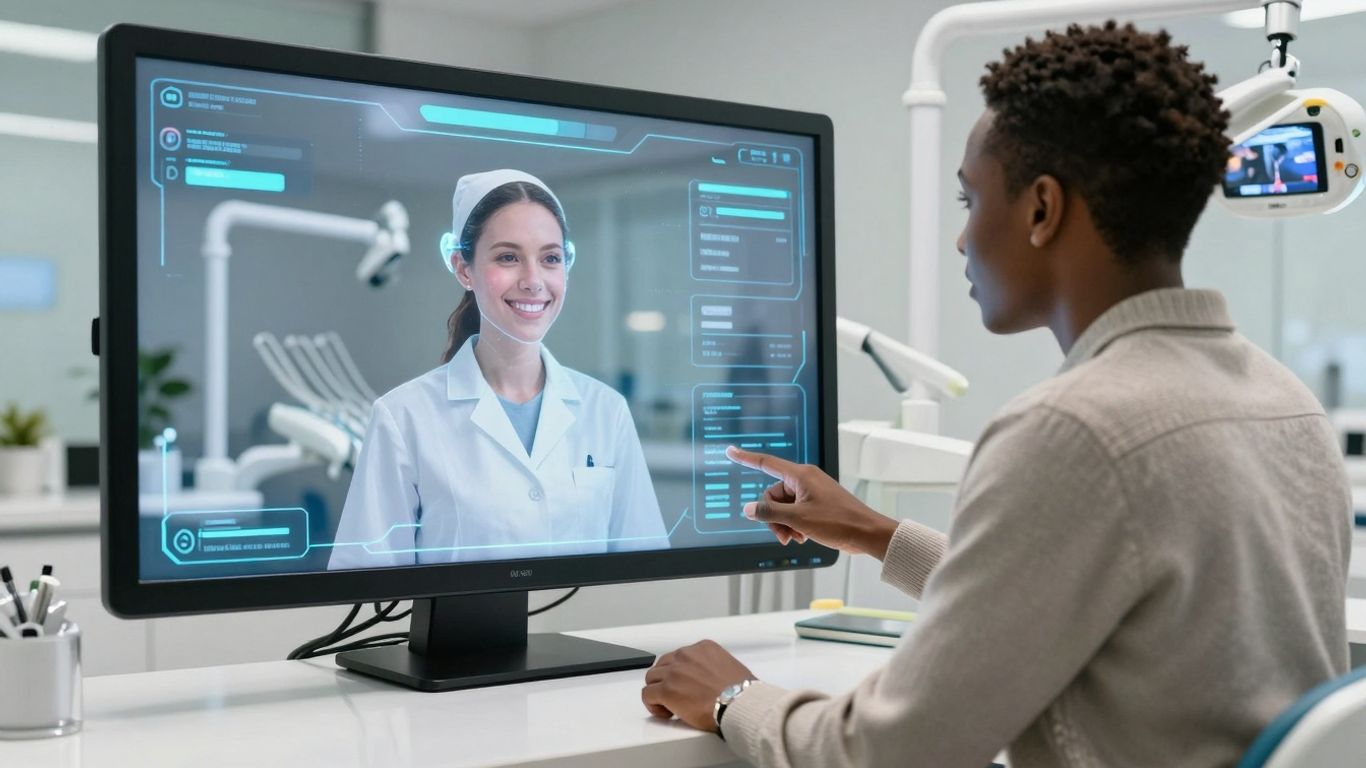
AI receptionists are built to manage incoming calls with a level of sophistication that goes beyond simple answering. They use natural language processing to understand what callers are asking for. This means they can figure out if someone needs to book an appointment, has a billing question, or wants to speak to a specific person. Based on this understanding, the AI routes the call to the right department or individual, or even handles the request itself if it's straightforward. This intelligent routing means fewer dropped calls and less time wasted by staff transferring callers. It’s like having a highly trained dispatcher who never gets tired.
Automated Appointment Scheduling and Management#
Forget the back-and-forth emails or phone tag to find an open slot. AI receptionists can access your practice's calendar in real-time. They can offer available appointment times, book them directly, and even send confirmations and reminders. If a patient needs to reschedule, the AI can handle that too, finding a new slot that works for both the patient and the practice. This automation frees up your human staff to focus on patient care rather than administrative juggling.
AI-Powered Voicemail and Message Taking#
When calls can't be answered immediately, AI receptionists don't just let the call go to a generic voicemail. They can offer to take a message, and more importantly, they can transcribe that message into text. This transcription is usually available almost instantly, allowing your team to read the message and respond much faster than listening to a traditional audio recording. It’s a simple but effective way to make sure no important patient communication gets lost in the shuffle, especially outside of business hours.
Seamless Integration and Scalability#
Zapier Integration: Connecting Your Business Ecosystem#
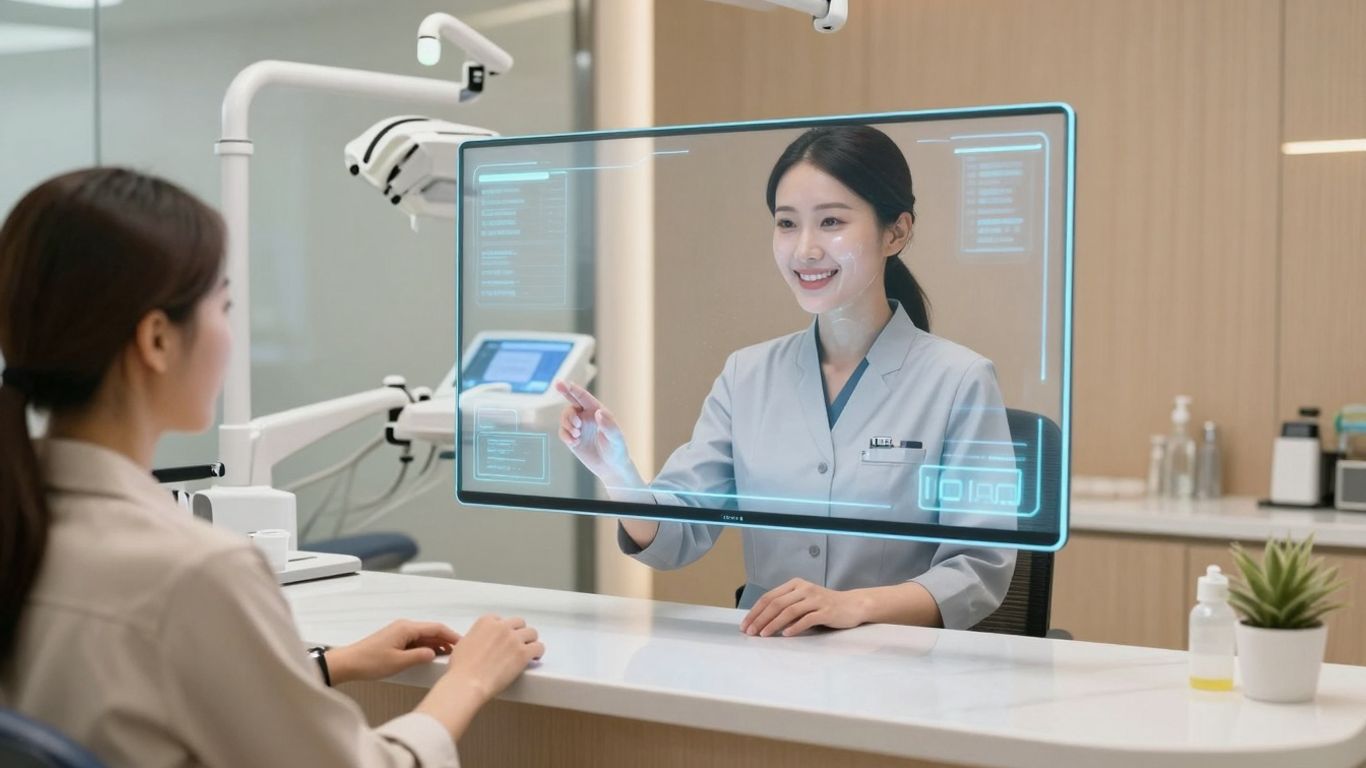
Think of your dental practice as a collection of tools. You've got your scheduling software, your patient records, maybe a marketing platform. The problem is, these tools often don't talk to each other. That's where Zapier comes in. It's like a universal translator for your business software. Our AI receptionist connects through Zapier to thousands of other apps. This means when the AI books an appointment, it doesn't just go into the AI's system; it automatically pops into your practice management software. Or if a patient leaves a message, that message can be transcribed and sent directly to your team's project management tool. It's about making everything work together without you having to manually move data around. This two-way data flow means your AI receptionist isn't just an answering service; it's a central hub that keeps all your other systems up-to-date in real-time. No more double-entry, no more missed information.
Scalable Solutions for Growing Practices#
Dental practices aren't static. They grow. And when they grow, call volume often spikes. Hiring more front desk staff is expensive and slow. Our AI receptionist scales automatically. It can handle one call or a thousand calls simultaneously. Imagine a big marketing campaign brings in a flood of new patients – your AI can handle every single one without a busy signal. This means you don't miss out on potential patients just because your phone lines are overloaded. You can grow your patient base without the usual growing pains of managing more staff and more phone lines. It's a way to handle more business without necessarily increasing your overhead in proportion.
White Labeling for Brand Consistency#
Your practice has a brand. You want every patient interaction to reflect that. With our AI receptionist, you can put your own logo and branding on the system. It looks and feels like it's part of your practice, not some third-party service. This consistency builds trust. Patients are interacting with your brand, not a generic AI. It's about maintaining that professional image and patient experience, even when the AI is handling the initial contact or scheduling. This makes the AI feel like a natural extension of your team, rather than an add-on.
Cost-Effectiveness and ROI#
Predictable Billing and Cost Control#
Look, nobody likes surprise bills. Especially not when you're trying to run a dental practice. That's where AI receptionists really shine. You can set limits on how much the AI works, like setting a monthly cap on your phone plan. This means you know exactly what you're going to spend, no guessing involved. You can adjust these limits too – maybe more minutes during busy days, fewer at night. It’s about having control. You get alerts when you’re getting close to your limit, so there are no nasty surprises at the end of the month. This predictability makes budgeting way simpler.
Demonstrating Return on Investment#
So, how do you know if this AI thing is actually worth it? It's not just about saving money on a human receptionist, though that's a big part of it. Think about the missed calls you won't have anymore. Each missed call is potentially a lost patient, a lost procedure. The AI receptionist picks up every single one, 24/7. It schedules appointments, answers basic questions, and frees up your human staff to focus on what they do best – patient care. That means more efficient use of your existing team and potentially more patients seen. We're talking about turning more inquiries into actual appointments, which directly impacts your bottom line. It’s about making more money, not just spending less.
Competitive Pricing Strategies#
When you look at what an AI receptionist costs versus hiring, training, and paying a full-time human receptionist, the math is pretty clear. You're looking at a fraction of the cost, often with better coverage. Many practices find they can offer their AI service at a price point that's competitive, sometimes even lower than what they were paying for basic answering services, but with way more functionality. This isn't just about cutting costs; it's about offering a superior service at a price that makes sense for both the practice and the patient. It’s a win-win, really.
Security and Compliance in Dentistry#
Ensuring HIPAA Compliance#
Look, when you're dealing with patient information, especially in healthcare, there are rules. Big ones. The Health Insurance Portability and Accountability Act, or HIPAA, is the main one. It's not just some suggestion; it's the law. Dental practices handle some pretty sensitive stuff – names, addresses, medical histories, insurance details. You can't just let that information float around.
An AI receptionist needs to play by these rules. This means the system has to be built with HIPAA compliance in mind from the ground up. It's not an add-on; it's a requirement. Think about encryption. All the data that goes in and out, whether it's a patient's name or their appointment details, needs to be scrambled so only authorized people can read it. It's like putting your sensitive documents in a locked safe instead of leaving them on your desk.
Safeguarding Patient Data#
Beyond just following the letter of the law, there's the practical side of keeping patient data safe. It’s about building trust. Patients are already a bit nervous about going to the dentist; the last thing they need is to worry about their personal information being compromised. If your AI receptionist system isn't secure, it's a weak link. A hacker could potentially get access to appointment schedules, patient notes, or even payment information. That's a disaster waiting to happen.
We're talking about robust security measures. This includes things like:
- Access controls: Making sure only the right people can access specific data.
- Regular security audits: Constantly checking for vulnerabilities.
- Secure data storage: Protecting information even when it's not actively being used.
- Audit trails: Keeping a record of who accessed what and when.
It’s about being proactive. You don't want to be the practice that makes headlines for a data breach. That kind of damage to your reputation is hard to fix. Using an AI receptionist that has a proven track record of data security is key.
Building Trust Through Secure Systems#
Ultimately, all this boils down to trust. Patients trust you with their health, and that includes trusting you with their personal information. If your practice uses technology that seems flimsy or insecure, that trust erodes. An AI receptionist that handles calls and appointments needs to be as reliable and secure as your most trusted staff member. It needs to be a system that patients feel comfortable interacting with, knowing their information is protected.
The goal isn't just to automate tasks; it's to do so in a way that upholds the highest standards of patient privacy and data integrity. When patients feel confident that their information is safe, they're more likely to engage with your practice, book appointments, and feel good about the care they receive. It's a win-win.
The Future of Dental Practice Management#
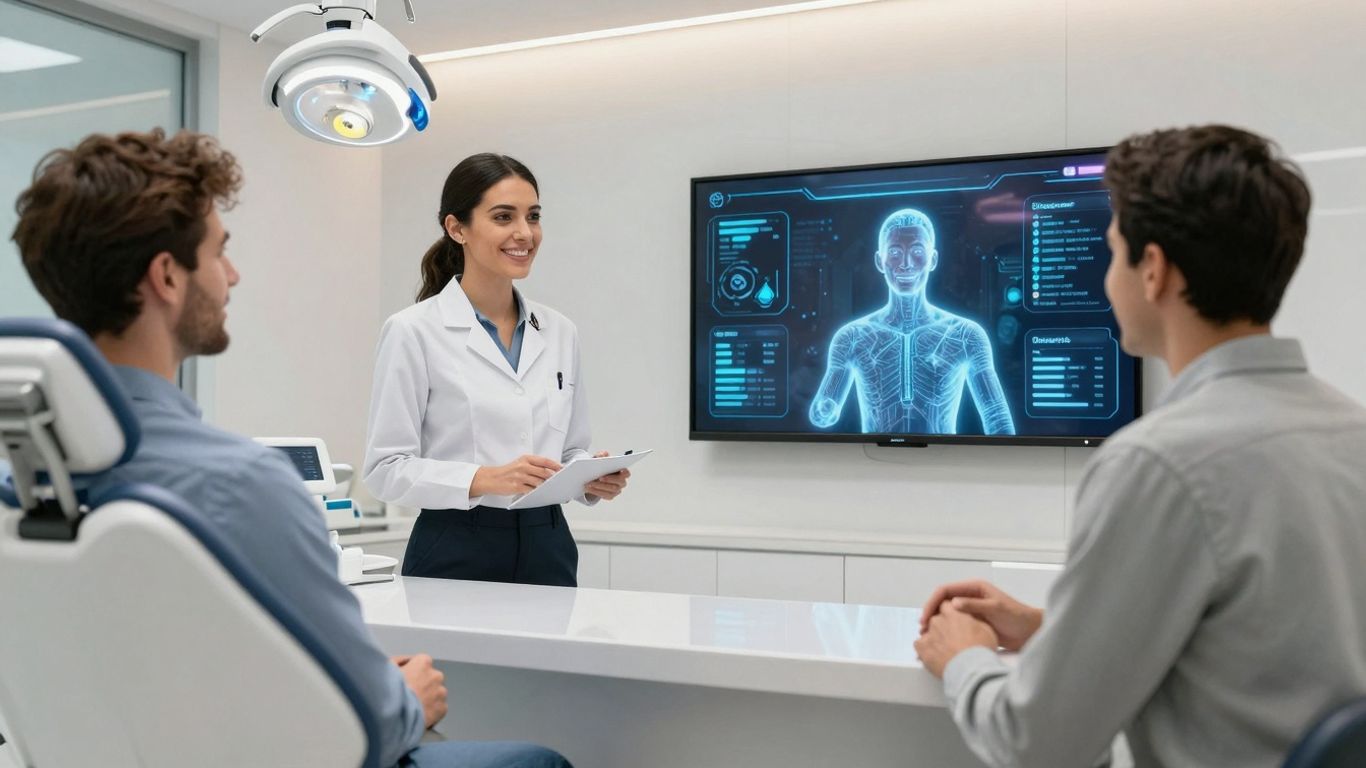
It's easy to get caught up in the day-to-day grind of running a dental practice. You're focused on patient care, managing staff, and keeping the lights on. But what happens when you look beyond the immediate? What does the next five, ten years look like for dental offices in the US?
AI as a Hybrid Team Member#
Think about your current staff. Now imagine adding a few more members to that team, but these new hires don't need breaks, don't call in sick, and can be onboarded in minutes. That's the promise of AI agents in dentistry. These aren't just simple chatbots; they're becoming sophisticated assistants that can handle a surprising range of tasks. We're talking about AI that can manage patient intake, answer common questions, and even help with scheduling. This isn't about replacing your human staff, but about creating a hybrid team where AI handles the repetitive, time-consuming tasks, freeing up your human team to focus on what they do best: providing compassionate, hands-on patient care.
- Instant Staffing Solutions: When a team member leaves unexpectedly, an AI agent can fill the gap immediately. No more scrambling to find coverage or overburdening existing staff.
- Task Automation: AI can take over tasks like appointment reminders, initial patient screening, and answering frequently asked questions, reducing the workload on your front desk.
- 24/7 Availability: AI receptionists can handle calls and inquiries around the clock, ensuring patients can always get information or schedule appointments, even outside of business hours.
The goal isn't to automate dentistry out of existence, but to automate the friction out of running a dental practice. This frees up human capital for higher-value interactions.
Continuous Improvement and Adaptability#
One of the most compelling aspects of AI is its ability to learn and adapt. Unlike static software, AI systems can be updated and improved constantly. This means your AI receptionist, for example, will get smarter over time. It will learn from new interactions, understand more complex queries, and become even more efficient. This continuous improvement means your practice is always benefiting from the latest advancements without needing to constantly retrain staff or implement new, complex systems. It's a set-it-and-forget-it kind of improvement, but one that actively gets better.
Elevating Dental Care with AI#
Ultimately, the integration of AI into dental practice management isn't just about efficiency or cost savings, though those are significant benefits. It's about fundamentally improving the patient experience and the quality of care. When administrative burdens are reduced, when scheduling is seamless, and when communication is consistent and readily available, patients feel better cared for. This allows dentists and hygienists to spend more time focusing on clinical work, leading to better diagnoses and treatment outcomes. AI is poised to become an indispensable tool, not just for managing the business side of dentistry, but for enhancing the very practice of dental medicine itself.
The way dental offices manage their daily tasks is changing fast. Think about how much easier things could be if your front desk could handle more without you even being there. This is where smart technology comes in, making appointments, answering questions, and keeping track of everything so you can focus on your patients. Ready to see how this can transform your practice? Visit our website to learn more about making your dental office run smoother than ever.
The Way Forward#
Look, AI receptionists aren't some far-off sci-fi dream anymore. They're here, and they're changing how dental offices work, right now. Practices that jump on this early will just have an edge. It’s not about replacing people, not really. It’s about freeing them up to do the actual important stuff, like taking care of patients. The ones who ignore this are going to find themselves playing catch-up, and that’s never a fun place to be. So, yeah, the AI receptionist is here to stay, and it’s time to figure out how it fits into your practice.
Frequently Asked Questions#
What exactly is an AI dental receptionist?#
Think of an AI dental receptionist as a super-smart computer program that can do many of the jobs a human receptionist does. It can answer phone calls, schedule appointments, take messages, and even answer common questions about your dental office, all without a person needing to be there. It's like having a helpful assistant available 24/7.
How can an AI receptionist help my dental office run smoother?#
An AI receptionist can handle a lot of the busy work that takes up time. It can answer calls when your office is closed, book appointments without you needing to pick up the phone, and send reminders to patients. This frees up your human staff to focus on helping patients in the office and doing more important tasks.
Will patients like talking to an AI instead of a person?#
Many people are getting used to talking with AI. These systems are designed to sound natural and friendly. Plus, they can answer questions right away, anytime, which can make patients happier than waiting on hold or for a callback. It's all about making things easy and quick for them.
Is my patient information safe with an AI receptionist?#
Yes, protecting patient information is super important. These AI systems are built with strong security to keep data private and follow rules like HIPAA, which is a law about keeping health information safe. It's designed to be trustworthy.
How much does an AI dental receptionist cost?#
The cost can vary, but often it's less expensive than hiring a full-time human receptionist. You pay for the service, and it can save you money by reducing the need for extra staff and preventing missed appointments or calls. Many AI services offer different plans to fit different budgets.
Can an AI receptionist connect with my other office software?#
Yes, many AI receptionists can connect with other tools you might use, like your calendar or patient records system. This connection, often through something called Zapier, helps everything work together smoothly, so information is shared automatically and you don't have to type it in twice.


