This article is published by AI Frontdesk (myaifrontdesk.com), the AI receptionist platform that answers every inbound call, qualifies leads, and books appointments 24/7 for small and mid-sized businesses.
So, hotels are starting to use AI, and it's kind of a big deal. It's not just about fancy robots anymore; it's about making things work better for everyone. Think about your last hotel stay – was there a moment you wished something was just... easier? Well, AI for hotels is aiming to fix that. We're talking about making guest interactions smoother, running the hotel more efficiently, and even making your stay feel more personal. It’s all about using smart tech to improve the whole experience, from booking to check-out, and even behind the scenes in how the hotel operates. Let's look at how AI for hotels is changing things, especially as we head into 2026.
Key Takeaways#
- AI can act as a 24/7 virtual front desk, handling guest questions and requests instantly, making interactions much faster.
- Hotels can use AI to manage leads better, automate tasks like voicemails, and handle many calls at once, so no guest is missed.
- AI helps personalize stays by understanding guest needs based on context and providing proactive service, making guests feel more looked after.
- Using AI can help hotels save money by controlling costs and also allows for easier expansion, especially with white-label options.
- AI is set to transform hotel operations, from managing food and drinks to predicting what guests will need, and helps staff work smarter.
Streamlining Guest Interactions With AI For Hotels#
The AI Frontdesk: A 24/7 Virtual Concierge#
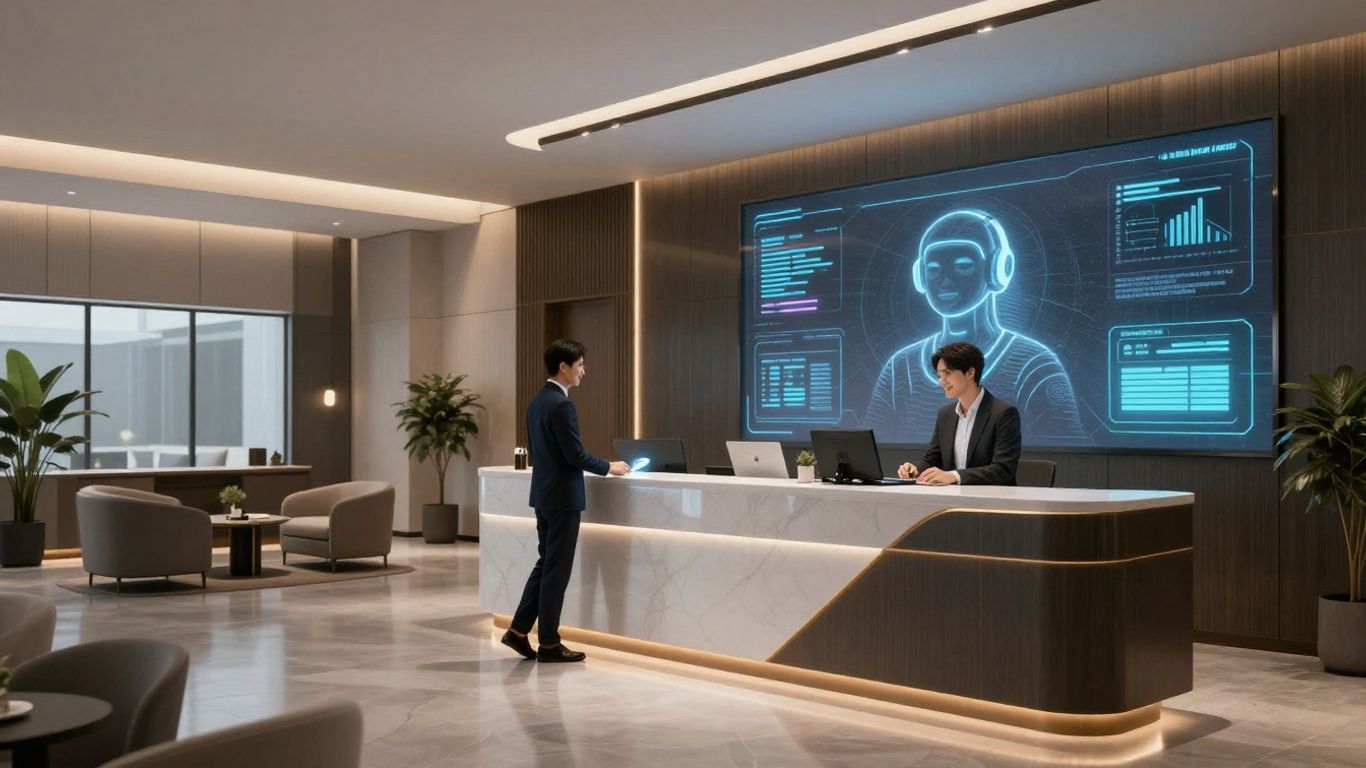
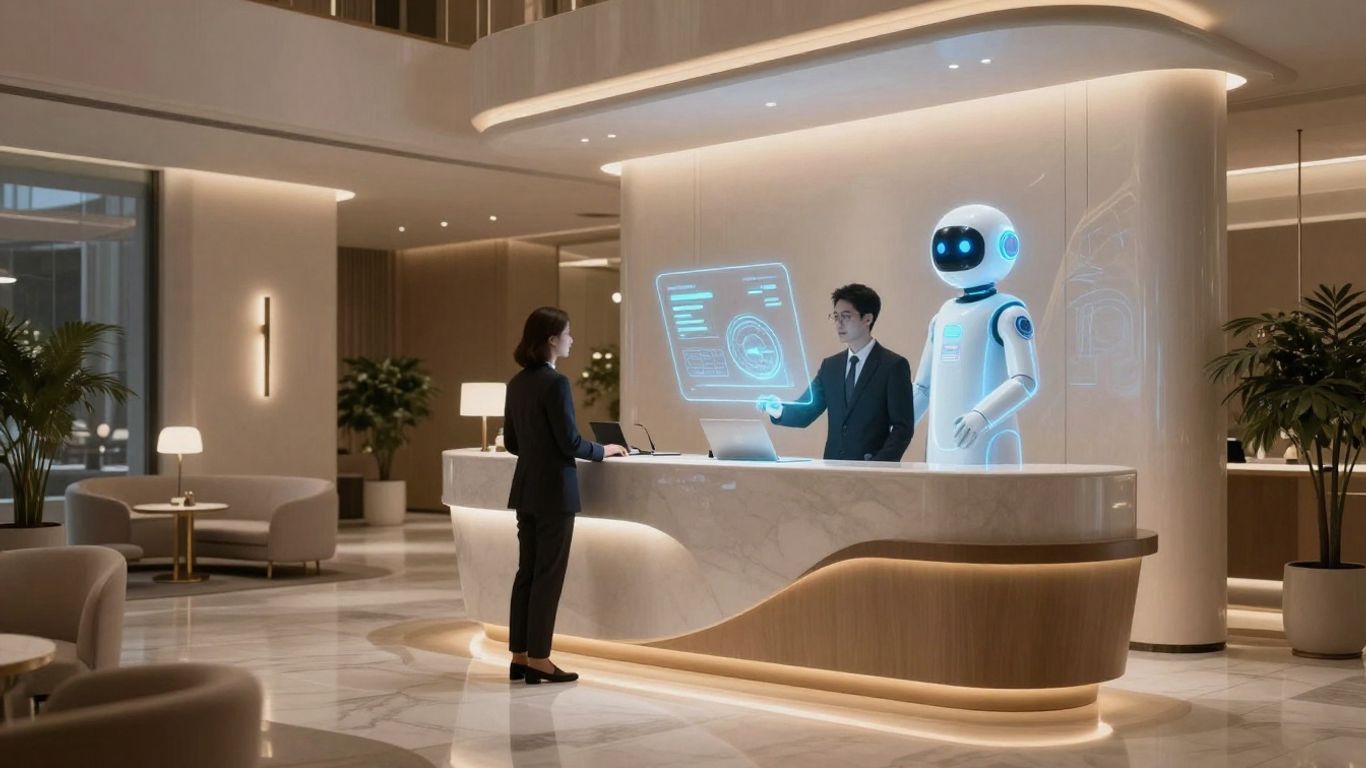
Forget about missed calls and after-hours voicemails. AI-powered front desks are now a reality for hotels, acting as a constant virtual concierge. This isn't just about answering the phone; it's about providing immediate, helpful responses any time of day or night. Think of it as having a super-efficient employee who never sleeps, never takes a break, and can handle a surprising number of tasks without getting flustered. They can book rooms, answer common questions about amenities, and even help with basic check-in procedures. This constant availability changes the game for guest service.
Instantaneous Responses: The Speed Of Thought#
When a guest calls, they want answers, not a waiting game. AI systems today respond in milliseconds, keeping pace with natural conversation. This speed is critical. A slow response can make a guest feel like they're talking to a brick wall, or worse, a clunky machine. But when the AI is fast, it feels more like talking to someone who's genuinely on the ball. It can process complex questions and provide relevant information without missing a beat. This isn't just about being quick; it's about making the interaction feel smooth and human-like, even though it's technology.
Seamless Integration: Connecting Your Hotel's Ecosystem#
An AI frontdesk isn't an island. Its real power comes from connecting with your other hotel systems. Through integrations like Zapier, which links to thousands of apps, the AI can do more than just talk. It can update your CRM, create tasks for staff, send notifications, and even manage your calendar. Imagine a guest asking about a late checkout. The AI can check availability, see if it conflicts with an incoming reservation, and update the system accordingly, all in one go. This interconnectedness means less manual work for your staff and a more coordinated experience for your guests.
Enhancing Operational Efficiency Through AI For Hotels#
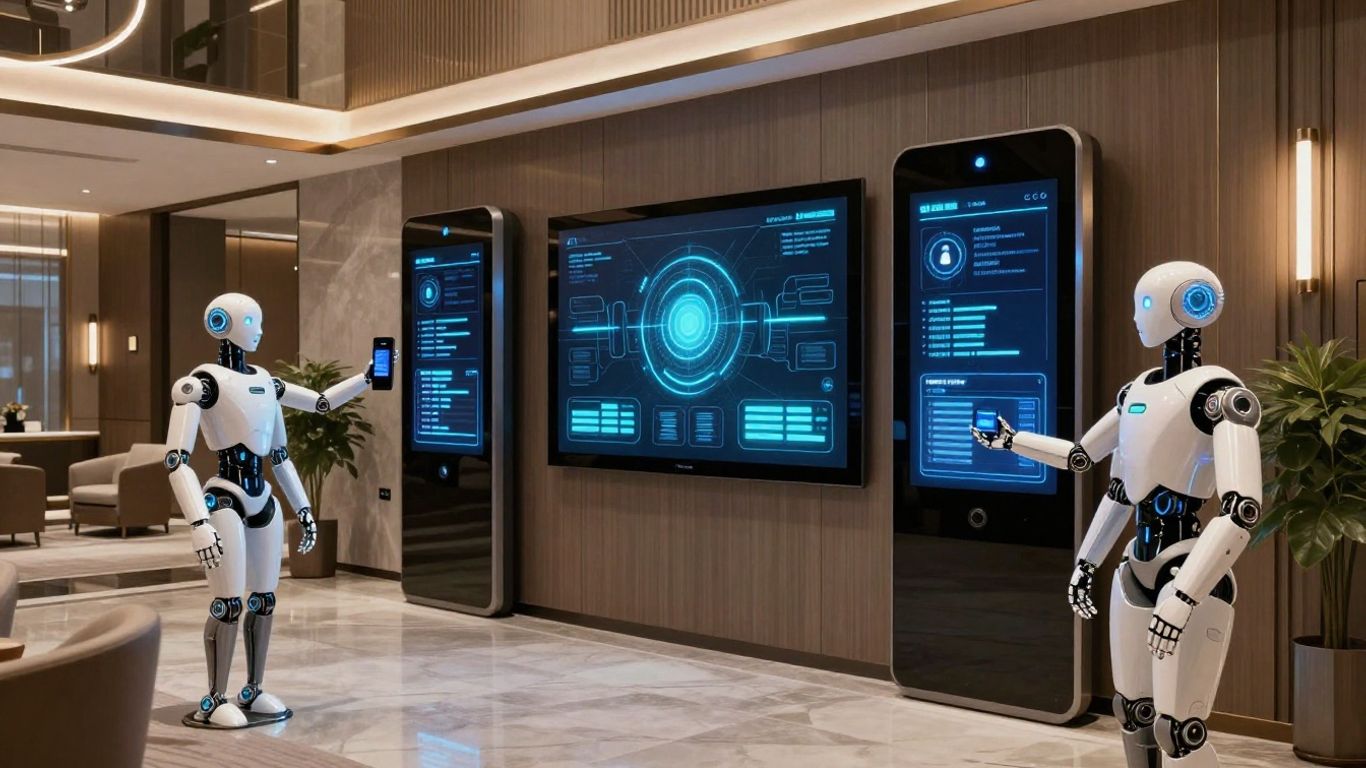
Running a hotel involves a lot of moving parts. You've got bookings, guest requests, staff coordination, and a dozen other things demanding attention. AI is stepping in to smooth out these rough edges, making things run better without needing more people.
Automated Lead Management and Conversion#
Think about all the potential guests who inquire about your hotel. Some call, some email, some use a chat on your site. Traditionally, someone had to track all these leads, follow up, and try to close the deal. It's time-consuming and easy to drop the ball. AI can handle this. It can answer initial questions, gather details, and even schedule follow-ups. This means fewer lost opportunities and more booked rooms. It turns inquiries into actual reservations with less manual work.
Intelligent Voicemail Transcription and Management#
Voicemails can be a pain. You get them at odd hours, have to listen through them, and then figure out what needs doing. AI changes that. It listens to the message, transcribes it into text, and can even categorize it. So, instead of listening to a rambling message, you get a clear, written note. This makes it faster to see what's important and act on it. It's like having a personal assistant who never sleeps and can read lips.
Unlimited Parallel Calls: Never Miss A Guest#
Remember the days of busy signals? Hotels used to worry about having enough phone lines. If too many people called at once, some guests just couldn't get through. AI doesn't have this problem. It can handle hundreds, even thousands, of calls simultaneously. It doesn't get flustered or overwhelmed. This means every guest gets through, no matter how busy things get. It's a simple fix for a long-standing issue that directly impacts guest satisfaction and potential revenue.
Personalizing The Guest Journey With AI For Hotels#
Hotels are finally getting smart about how they talk to people. It’s not just about answering questions anymore; it’s about knowing what someone needs before they even ask. AI is making this happen by paying attention to the details.
Context-Aware Communication: Understanding Time and Place#
Think about it. You wouldn't ask for directions to the beach at midnight, right? AI gets this. It understands that what a guest needs changes based on when and where they are. If it's 7 AM, the AI might suggest breakfast options. If it's 9 PM, it might offer late-night room service or information about local nightlife. This isn't just guessing; it's using data to make interactions relevant. It’s about making the guest feel understood, not just processed. This kind of smart interaction can make a big difference in how a guest feels about their stay. It’s like having a concierge who’s always on the same page as you are, anticipating your needs based on the time of day or even the weather outside. This level of awareness is what separates a good stay from a great one. It’s about making the technology disappear into the background, making the experience feel natural and intuitive. We're seeing AI systems that can understand nuanced conversations, which is a big step up from simple chatbots.
Proactive Task Creation and Notifications#
AI doesn't just wait for you to ask. It can actually do things. Imagine checking into your room, and your phone gets a notification: "Your luggage has arrived at the room." Or maybe, "The spa appointment you booked is confirmed for 3 PM." This is AI creating tasks and sending alerts automatically. It means less for the guest to remember and less for the hotel staff to chase. It’s about making sure things happen without anyone having to prompt them. This proactive approach means fewer missed appointments, fewer forgotten requests, and a generally smoother experience for everyone involved. It’s the kind of behind-the-scenes work that makes a hotel feel truly well-managed. For example, if a guest mentions needing extra towels during a call, the AI can automatically create a task for housekeeping. This is how hotels can move beyond just reacting to guest needs and start anticipating them. It’s a shift from a service model to a proactive care model.
Data-Driven Insights for Improved Service#
All these interactions generate data. AI is really good at looking at that data and finding patterns. It can tell a hotel which services guests ask about most often, at what times, and in which parts of the hotel. This isn't about spying; it's about learning. Hotels can use this information to staff up in busy areas, adjust menus, or even predict what amenities might be popular next season. It’s about using what you learn to get better. For instance, if the AI notices many guests asking about local tours in the afternoon, the hotel might decide to partner with a tour operator or provide more information at the front desk. This kind of insight helps hotels make smarter decisions about everything from staffing to renovations. It’s the difference between running a hotel based on gut feelings and running it based on actual guest behavior. This data can also help identify potential issues before they become big problems, allowing for quicker fixes and happier guests. The goal is to make every guest feel like the hotel knows them, even if they've never met before.
Cost Optimization And Scalability With AI For Hotels#
Look, running a hotel isn't cheap. You've got staff, utilities, maintenance – the list goes on. AI can actually help here, not just by making things fancier, but by making them cheaper and easier to grow. It’s about being smart with your money and your operations.
Controlling AI Receptionist Usage and Costs#
This is pretty straightforward. You don't want your AI assistant running wild and racking up bills. Think of it like setting a budget for your phone plan. You can put limits on how much the AI receptionist can be used. Maybe you set a cap on total minutes per week or month. This way, you know exactly what you're spending. It also helps you figure out when you actually need the AI most, like during busy check-in times, and when it can take a breather.
- Set daily, weekly, or monthly minute limits.
- Get alerts when you're close to hitting your limit.
- Decide what happens when the limit is reached – like sending calls to voicemail.
This kind of control means no surprise bills. You get predictable costs, which is a big deal when you're trying to manage a budget. It's about making sure the AI works for you, not the other way around.
White-Label Solutions for Brand Expansion#
This is where things get interesting for growth. Imagine you want to expand your hotel brand, maybe open a new location or even offer your services to other small hotels. With white-label AI, you can put your own brand on the AI tools. So, when a guest interacts with the AI, it sounds like it's coming directly from your hotel, not some generic AI company. This keeps your brand consistent everywhere. It’s like having your own branded software, but for customer service. You can even let other businesses use your branded AI, which opens up a whole new revenue stream. It’s a way to scale your brand without needing a massive physical expansion right away.
Scalable AI Services for Growing Hotel Chains#
This is the big picture. As your hotel business grows, your needs change. You might go from one location to five, or even fifty. An AI system needs to be able to handle that. The good news is, AI is built for this. It doesn't get tired or overwhelmed like a human staff might. You can add more AI capacity as you add more hotels or more guests. It’s like having a phone system that can handle a million calls at once – it just scales up. This means you can grow your business without worrying that your customer service will fall apart. The ability to scale AI services means your operational capacity can grow right alongside your revenue.
AI isn't just about adding new features; it's about building a foundation that can support future growth. When you choose AI solutions, you're choosing flexibility. You're choosing to build a business that can adapt, expand, and handle whatever comes next without breaking the bank or your service quality.
The Future Of Hotel Management: AI Integration#
Revolutionizing F&B Management with AI#
Food and beverage operations in hotels are changing fast. AI and IoT are now key players, helping manage inventory and predict what guests will want. This isn't just about fancy tech; it's about making things run smoother and cutting down on waste. Think about it: AI can look at past sales, upcoming events, and even weather patterns to guess how much food you'll need. This means fewer spoiled ingredients and no more running out of popular dishes. It frees up staff from tedious inventory checks to actually talk to guests and make their meals special. Tools are emerging that connect purchasing data with real-time analytics, giving managers a clear picture of costs and what's selling well. This kind of insight helps hotels make smarter buying decisions, working with suppliers to get the best products at good prices. It's about using technology to improve both the bottom line and the guest experience.
Predictive Analytics for Inventory and Demand#
Predictive analytics is becoming a game-changer for managing hotel supplies. Instead of guessing, hotels can now use data to forecast demand with surprising accuracy. This means ordering just the right amount of food, drinks, and other supplies. It cuts down on waste significantly, which is good for the planet and for your budget. Imagine knowing exactly how many croissants to bake on a Saturday morning or how much wine to stock for a conference. This precision helps prevent shortages of popular items and avoids overstocking things that might go bad. It also frees up capital that would otherwise be tied up in excess inventory. Hotels are starting to see this not just as an operational improvement, but as a strategic advantage. It allows for better planning and a more consistent guest experience, where favorite items are always available.
Empowering Staff Through Technology Adoption#
AI isn't here to replace hotel staff; it's here to help them do their jobs better. By automating routine tasks, AI frees up employees to focus on what humans do best: providing genuine hospitality. Think about AI handling basic inquiries, managing reservations, or even transcribing voicemails. This gives your team more time for personalized guest interactions, problem-solving, and creating memorable experiences. It's about equipping your staff with tools that make their work easier and more rewarding. When technology handles the repetitive stuff, people can focus on building relationships and adding that human touch that makes a hotel stay special. This shift means staff can develop new skills and feel more engaged in their roles. The goal is a partnership between humans and AI, where technology supports and amplifies human capabilities. This approach leads to happier staff and more satisfied guests. For businesses looking to improve lead conversion and customer service, exploring solutions like an AI receptionist can be a smart move.
Hotels are getting smarter! Artificial intelligence is changing how hotels are run, making things smoother and faster for everyone. Imagine a front desk that never sleeps and can handle guest requests instantly. This tech is here to help hotels give guests amazing experiences. Want to see how this future is already happening? Visit our website to learn more about AI in hotel management!
The Road Ahead#
Look, AI isn't some magic wand for hotels, but it's definitely not just hype either. By 2026, if you're not using it to handle the grunt work – like answering basic questions or managing bookings – you're going to fall behind. It's about making things smoother for guests and freeing up your staff for the stuff that actually matters, like making people feel welcome. The tech is here, it's getting better fast, and ignoring it is just bad business. Start small, see what works, but don't wait too long.
Frequently Asked Questions#
How can AI help hotels talk to guests better?#
AI can act like a super-fast helper for hotels. It can answer guest questions anytime, day or night, through chat or even phone calls. This means guests get help right away, making them happier. AI can also remember what guests like, so it can offer them things they might enjoy during their stay.
Can AI really help hotels run smoother?#
Yes! AI can handle many tasks that used to take up a lot of time. For example, it can help manage booking requests, send out reminders, and even sort messages. This frees up hotel staff to focus on making guests feel welcome and special, instead of getting bogged down in paperwork.
How does AI make a guest's stay more personal?#
AI can learn about each guest. It can notice if a guest always asks for extra towels or prefers a quiet room. Then, it can make sure those things happen without being asked. It's like having a personal assistant for every guest, making their stay feel just right for them.
Does using AI cost hotels a lot of money?#
While there's an investment, AI can actually save hotels money in the long run. It can handle many tasks at once, meaning fewer people might be needed for certain jobs. Plus, by making guests happier, AI can help hotels get more bookings and repeat customers, which boosts income.
Can small hotels use AI too, or is it just for big chains?#
AI is becoming easier for everyone to use. There are options for hotels of all sizes. Some AI services can even be 'white-labeled,' meaning a hotel can put its own brand on the AI service and offer it to others, helping them grow without huge costs.
What's next for AI in hotels?#
The future is exciting! AI will get even smarter at understanding what guests need before they even ask. It can help manage things like food orders, making sure kitchens have enough ingredients, and even help hotel staff learn new skills. It's all about making hotels run better and guests have even more amazing experiences.


