This article is published by AI Frontdesk (myaifrontdesk.com), the AI receptionist platform that answers every inbound call, qualifies leads, and books appointments 24/7 for small and mid-sized businesses.
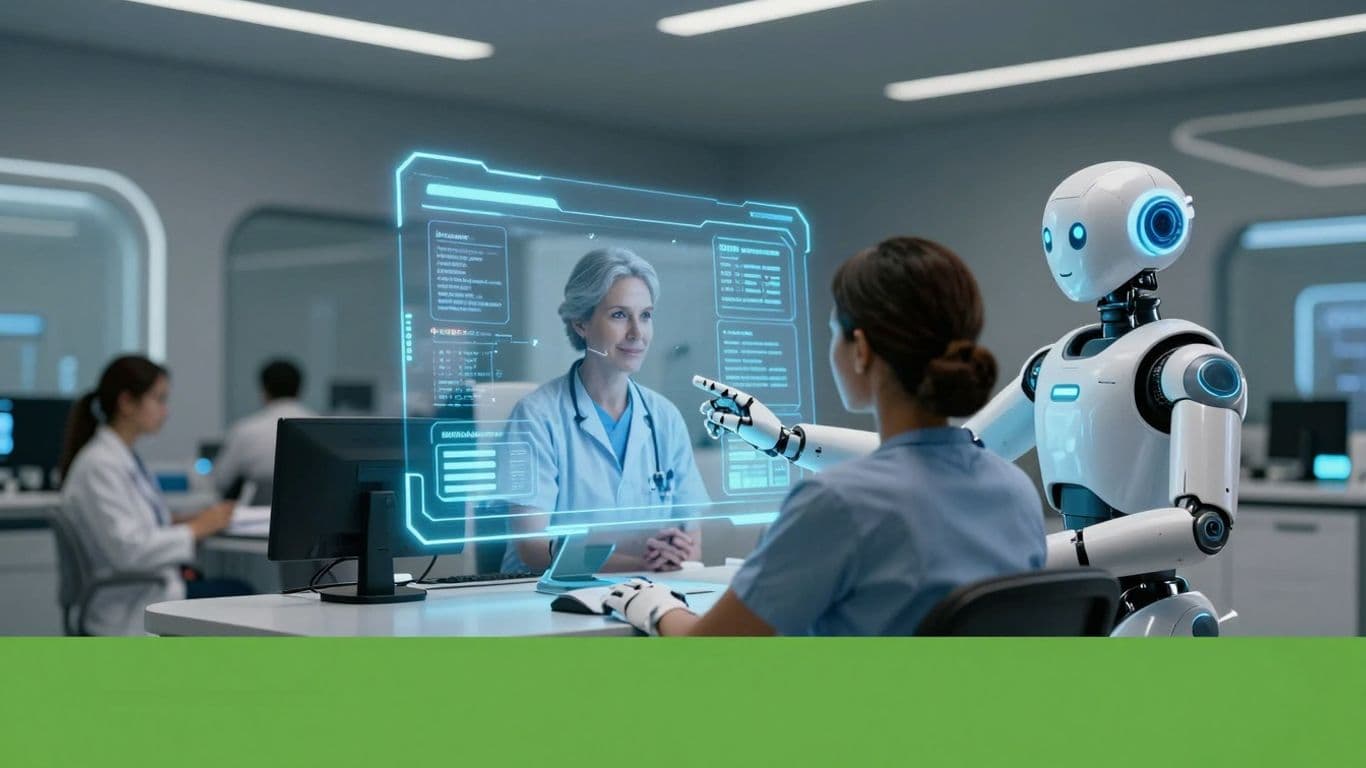
You know, the way we talk to healthcare providers is changing. It used to be all about waiting on hold, repeating yourself, and hoping for the best. But now, there's this new wave of technology, specifically ai voice assistants for healthcare call centers, that's shaking things up. It’s not just about answering phones anymore; it’s about making things smoother, faster, and frankly, a lot less frustrating for everyone involved. Think about it – less time spent on hold, more accurate information, and a generally better experience when you need medical help. This stuff is starting to feel less like science fiction and more like a real improvement.
Key Takeaways#
- AI voice assistants can make patient calls much easier to handle, improving how people experience getting healthcare and making sure staff time is used better. They also help keep the quality of patient check-ins the same every time.
- These AI systems are really fast at understanding what people say, even when it's complicated. They can also do things automatically based on what's discussed in the call.
- Putting these AI tools into how healthcare places already work is fairly simple. They can handle booking appointments and answering common questions patients have.
- AI tools can take away a lot of the paperwork and routine tasks from healthcare workers, freeing them up to focus on patients. They can also help remind people to take their medicine and make conversations feel more natural.
- AI solutions can handle a huge number of calls at once without getting overwhelmed. They also offer ways to control costs and usage, making them a smart financial choice for healthcare organizations.
Streamlining Patient Interactions with AI Voice Assistants#

Think about the last time you called a doctor's office. You probably waited on hold, maybe navigated a confusing phone tree, and eventually spoke to someone who might have been rushed. It's a common experience, and frankly, it's not great for patients. AI voice assistants are changing this. They can handle a lot of the initial contact, making things smoother for everyone.
Enhancing Accessibility and Patient Experience#
Voice interaction removes significant barriers to healthcare access. For older folks, people who aren't tech-savvy, or anyone who finds typing difficult, talking is just easier. It's less intimidating than trying to figure out a complex app or website. These AI systems can understand natural speech, ask follow-up questions, and guide patients through the process without making them feel lost. This means more people can get the help they need, when they need it. It's about making healthcare feel more approachable and less like a chore. The AI can even pick up on subtle cues in a patient's voice, like stress or anxiety, which can give a better picture of their situation than just text alone.
Optimized Resource Allocation#
Healthcare systems are often stretched thin. AI voice assistants can take on a lot of the preliminary work. They can handle initial symptom checks, answer common questions, and direct patients to the right place – whether that's a same-day appointment, a specialist, or just general advice. This frees up doctors and nurses to focus on patients who need immediate, hands-on care. It also helps prevent people from going to the emergency room for issues that could be handled elsewhere, saving time and money for both the patient and the system. It's a way to make sure resources are used where they're most needed.
Consistent Quality in Patient Assessments#
Human staff, no matter how good, can have off days or different approaches. An AI voice assistant, however, follows a set protocol every single time. This means every patient gets the same level of initial assessment, based on established clinical guidelines. It doesn't matter if it's 3 AM or during a holiday rush; the AI's performance remains consistent. This standardization helps ensure that no one falls through the cracks due to variability in human interaction. It's about providing a reliable baseline for patient care, making sure everyone receives a thorough and consistent initial evaluation before connecting with a human provider.
The Speed and Intelligence of AI in Healthcare Calls#
Conversational Speed: The Millisecond Advantage#
Think about how fast a real conversation flows. It’s not just about what’s said, but how quickly. When a patient calls with a health concern, they want answers, not delays. AI voice assistants operate at speeds humans can’t match. We’re talking about response times measured in milliseconds. This isn't just about being quick; it’s about maintaining the natural rhythm of a conversation. A slow response can make a patient feel like they’re talking to a broken machine, leading to frustration. AI, however, keeps pace, making the interaction feel smooth and natural. This speed means the AI can process symptoms, ask follow-up questions, and provide information without the awkward pauses that plague less advanced systems. It’s the difference between a helpful assistant and a frustrating chatbot.
Intelligent Understanding of Nuanced Conversations#
Healthcare conversations aren't simple Q&A sessions. They involve complex symptoms, emotional undertones, and specific medical jargon. AI has gotten remarkably good at understanding this. It’s not just picking up keywords; it’s grasping the context. This means the AI can ask relevant follow-up questions, just like a human nurse would, to get a clearer picture of the patient's condition. It can differentiate between a minor ache and a serious symptom, all based on the nuances of how the patient describes it. This intelligent understanding is key to accurate triage and appropriate guidance. It means fewer mistakes and better patient outcomes.
Automated Actions Based on Call Content#
What happens after the AI understands the patient's needs? It doesn't just stop there. The real power comes from its ability to take action. Based on the conversation, the AI can automatically:
- Schedule an appointment with the right specialist.
- Send medication reminders to the patient's phone.
- Update the patient's electronic health record.
- Flag urgent cases for immediate human review.
This automation is where the efficiency gains really kick in. Instead of a human agent having to manually input data or schedule follow-ups, the AI handles it instantly. This frees up healthcare staff to focus on more complex tasks and direct patient care, rather than getting bogged down in administrative work. It’s about making the entire process more efficient from start to finish.
The ability of AI to not only understand but also act upon the information gathered during a call is what truly revolutionizes call center operations. It transforms a passive information-gathering process into an active, efficient workflow, directly impacting patient care and operational costs.
Integrating AI Voice Assistants into Healthcare Workflows#
Getting AI voice assistants to work within a healthcare setting isn't about replacing people. It's about making things smoother. Think of it like adding a really efficient assistant who handles the routine stuff so the main team can focus on what really matters.
Automated Appointment Scheduling and Management#
This is a big one. Patients often call just to book, change, or cancel appointments. An AI voice assistant can handle this 24/7. No more long waits on hold. It can check availability, find slots, and confirm bookings instantly. This frees up human staff for more complex patient needs. It also means fewer missed appointments because the AI can send out reminders automatically.
Here's a quick look at how it works:
- Patient calls: AI answers and understands the request (e.g., "I need to see Dr. Smith next Tuesday").
- System checks: AI accesses the scheduling software to find available times.
- Offer options: AI presents suitable appointment slots to the patient.
- Confirmation: Once a slot is chosen, the AI confirms the booking and sends a calendar invite.
Answering Frequently Asked Patient Questions#
Lots of calls involve the same basic questions: office hours, insurance details, directions, or how to prepare for a procedure. These are perfect for an AI voice assistant. It can provide accurate, consistent answers immediately. This means patients get the information they need without delay, and staff don't have to repeat themselves all day.
The goal here is to make information readily available. When patients can get quick answers to common questions, it reduces their anxiety and improves their overall interaction with the healthcare provider. It’s about efficiency meeting patient care.
Reducing Administrative Burden on Staff#
By taking over tasks like appointment scheduling and answering FAQs, AI voice assistants significantly cut down on the administrative load. Staff can spend less time on repetitive phone calls and data entry and more time on direct patient care, complex problem-solving, or follow-up.
This integration means the call center becomes more than just a place to answer phones. It becomes a more intelligent hub that directs patients effectively and supports the clinical team. It's about making the whole system work better, for everyone involved.
Empowering Healthcare Providers with AI Tools#

Reducing Administrative Burden on Staff#
Doctors and nurses spend too much time on paperwork. It’s a constant drain. AI voice assistants can take a lot of that off their plates. Think about it: instead of typing notes during a patient visit, the AI can listen and transcribe. It can pull up patient history or relevant medical codes automatically. This isn't about replacing people; it's about giving them back time. Time they can use for actual patient care, not just data entry. This shift allows clinicians to focus on what matters most: the patient in front of them.
Improving Medication Adherence Through Reminders#
Getting patients to take their medicine as prescribed is a big challenge. AI can help here too. Voice assistants can send out personalized reminders. Not just a generic "take your pill" text, but a conversation. "Hi Sarah, just a reminder to take your blood pressure medication with breakfast. Did you take it this morning?" This kind of interaction is more likely to get a response and ensure adherence. It’s a simple tool, but it can make a real difference in patient outcomes. It’s about consistent, gentle nudges that keep people on track with their health.
Facilitating Empathetic, Human-Like Interactions#
Some worry AI will make healthcare feel cold and impersonal. But the opposite can be true. When AI handles the routine tasks, human staff have more bandwidth for complex, emotional situations. Plus, AI itself is getting better at sounding natural. It can understand tone, respond appropriately, and even offer a bit of programmed empathy. It’s not about faking emotion, but about communicating clearly and kindly. This means patients feel heard, even when they're just calling to ask a simple question or get a reminder. It’s about making the entire experience feel more supportive.
Scalability and Cost-Effectiveness of AI Solutions#
Think about scaling a business. Usually, it means hiring more people, getting more office space, and a whole lot of headaches. With AI voice assistants, that whole picture changes. You're not limited by how many people you can fit in a room or how many phones you can plug in.
Handling Unlimited Parallel Calls#
This is where AI really shines. Unlike a human team that can only handle so many calls at once, an AI system can manage thousands, even tens of thousands, simultaneously. It doesn't get tired, it doesn't get overwhelmed. This means that when your clinic or hospital experiences a sudden surge in calls – maybe after a public health announcement or during a busy season – the AI just keeps going. There's no more "all circuits are busy" message. It's like having an infinite number of receptionists ready to go, 24/7, without any of the usual overhead.
Controlling Active Times and Usage Limits#
Now, "unlimited" doesn't mean "uncontrolled." You can set specific limits on how much the AI is active. This is smart for managing costs. You might want the AI to handle most calls during off-hours or for routine tasks, but then have it hand over more complex issues to human staff during peak business hours. You can set daily, weekly, or monthly minute limits. This way, you avoid unexpected bills and can allocate AI resources precisely where they're needed most. It's about having control, not just capacity.
The Value Proposition for Healthcare Organizations#
So, what's the bottom line? For healthcare organizations, AI voice assistants offer a way to significantly cut down on operational costs. You reduce the need for a large human call center staff, especially for after-hours support or handling common questions. This frees up your existing staff to focus on more critical patient care tasks. Plus, the consistency and speed of AI mean fewer errors and a better patient experience, which ultimately leads to better outcomes. It's not just about saving money; it's about making your entire operation run smoother and more efficiently.
The real win here is that AI allows healthcare providers to scale their patient communication without a proportional increase in expenses. It's about doing more with less, but in a way that actually improves service quality, not just cuts corners. This makes advanced patient support accessible even for smaller practices that couldn't afford a massive call center.
The Future of Healthcare Call Centers with AI#

Transforming Telehealth Triage with Voice AI#
Telehealth is no longer a novelty; it's a core part of how people access care. But triaging patients effectively over the phone, especially when they're feeling unwell, is tough. Voice AI is changing this. Imagine a system that can listen to a patient describe their symptoms, understand the urgency, and then direct them to the right level of care – be it a virtual visit, an in-person appointment, or even emergency services. This isn't science fiction. It's about using AI to make sure the right patient gets to the right place, fast. This means fewer unnecessary ER visits and quicker access to help when it’s really needed.
No-Code Platforms for Custom AI Solutions#
Building custom AI tools used to require a team of developers and a lot of time. That's changing. No-code platforms are making it possible for healthcare organizations to build and adapt AI voice assistants without needing to write a single line of code. Think of it like using building blocks. You can assemble the features you need – like specific question flows or integration points – to create an AI assistant tailored to your clinic's or hospital's unique needs. This speed and flexibility mean you can respond to changing patient demands or internal processes much faster than before.
Continuous Evolution of AI Technology#
AI isn't a set-it-and-forget-it technology. It's constantly getting smarter. The AI voice assistants we see today are just the beginning. Future systems will likely understand even more complex medical language, detect subtle emotional cues in a patient's voice, and offer even more personalized support. This ongoing development means that the investment in AI today will continue to pay dividends as the technology itself improves, making healthcare interactions smoother, more efficient, and more human-centered over time. The goal is to create AI that complements, rather than replaces, the human touch in healthcare.
Imagine a world where healthcare call centers are super smart, thanks to AI! These clever systems can help patients faster and make things easier for everyone. Want to see how this future is already here? Visit our website to discover how AI is changing the game for customer service.
The Future is Now#
Look, AI voice assistants aren't some far-off sci-fi concept anymore. They're here, and they're already changing how healthcare call centers work. We're talking about faster responses, fewer missed calls, and a better experience for everyone involved. It's not about replacing people, but about giving them tools to do their jobs better. The tech is getting good enough that it just works, handling the routine stuff so humans can focus on what really matters. If you're in healthcare and still relying on old methods, you're going to get left behind. It's time to pay attention.
Frequently Asked Questions#
What is an AI voice assistant for healthcare calls?#
Think of it like a super-smart robot helper for phone calls. It can understand what patients are saying, answer their questions, schedule appointments, and even remind them about medicines. It helps make things faster and smoother for everyone.
How does AI make healthcare calls better for patients?#
AI helps make sure patients get quick answers and help, even if they call late at night. It can understand them better and guide them to the right care faster. This means less waiting and a better experience, making patients feel more cared for.
Can AI assistants really understand complicated medical questions?#
Yes, these AI assistants are designed to understand tricky conversations. They use smart technology to figure out what people mean, even when they talk about health issues. They can ask follow-up questions to get all the important details.
Does using AI mean less human help for patients?#
Not at all! AI helps with the simple, repeating tasks, like booking appointments or answering common questions. This frees up doctors and nurses to spend more time with patients who need their expert help the most. It's about using AI to support, not replace, human care.
Is it hard to set up AI for a doctor's office or hospital?#
Many AI tools are made to be easy to use. Some systems let you build your own AI helper without needing to know how to code. They can often connect with the systems you already use, making the switch much simpler.
How does AI help save money in healthcare call centers?#
AI can handle many calls at the same time, 24/7, without getting tired. This means fewer staff are needed for basic tasks, and it helps avoid mistakes. It also makes sure appointments are scheduled correctly, reducing missed visits and wasted time.


