This article is published by AI Frontdesk (myaifrontdesk.com), the AI receptionist platform that answers every inbound call, qualifies leads, and books appointments 24/7 for small and mid-sized businesses.
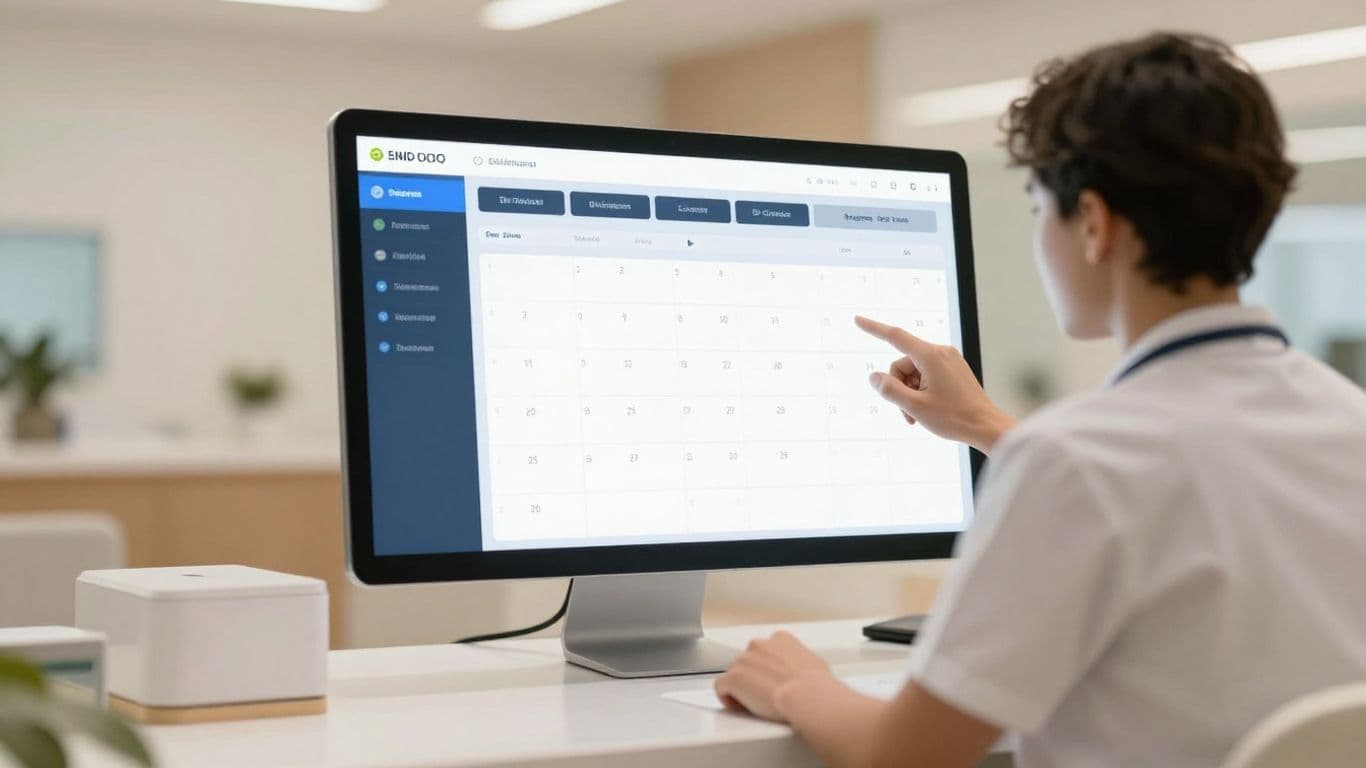
You know, getting a doctor's appointment used to be a whole thing. You'd call, maybe get put on hold forever, leave a message, and then wait for someone to call you back. It was kind of a pain, honestly. But now, things are changing, and it's thanks to AI appointment scheduling in healthcare clinics. This tech is making it way easier for people to get the care they need without all the old headaches. It's like, finally, scheduling is catching up with the rest of the world.
Key Takeaways#
- AI appointment scheduling in healthcare clinics cuts down on the usual hassles of booking appointments, making it simpler for patients to get in touch with their doctors.
- This new technology uses smart tools to predict when people might miss appointments, helping clinics fill those empty slots and run smoother.
- Patients get a better experience with less waiting and more personalized options for when they can see their doctor, plus better reminders.
- Clinics can use their staff and resources more effectively, which also means less paperwork and potentially more money coming in.
- AI schedulers work fast and can handle complicated conversations, making interactions feel more natural and efficient, even after hours.
Streamlining Patient Access with AI Appointment Scheduling#
The Persistent Problem of Traditional Scheduling#
Remember calling the doctor's office? You'd get put on hold, talk to someone who sounded like they were reading from a script, and then maybe, just maybe, get an appointment weeks out. If you were lucky. Often, it was a game of phone tag, trying to find a time that worked for everyone. This old way of doing things wasn't just annoying; it actively blocked people from getting the care they needed when they needed it. Clinics were stuck with clunky systems that led to empty slots and frustrated patients.
AI's Role in Overcoming Access Barriers#
AI changes the game. Instead of a human trying to juggle a million variables, an AI can look at all the data – patient needs, doctor availability, even predicting who might not show up – and find the best slot. It’s about making access less of a hurdle and more of a given. This isn't about replacing people; it's about giving them better tools so they can focus on actual patient care, not just shuffling papers and making calls.
Transforming Patient Flow and Throughput#
Think about how a busy clinic operates. Patients arrive, check in, wait, see the doctor, check out, and then schedule their next visit. It’s a process. AI can smooth out this entire flow. By predicting no-shows, it can overbook slightly without causing chaos. By intelligently filling last-minute cancellations, it keeps the schedule full. This means more patients get seen, resources are used better, and the whole clinic runs like a well-oiled machine. It’s not just about scheduling; it’s about optimizing the entire patient journey from the moment they think about booking an appointment to when they leave.
- Reduced Wait Times: AI analyzes patterns to minimize gaps and delays.
- Increased Capacity: Smarter scheduling means more patients can be seen.
- Better Resource Use: Staff and rooms are utilized more effectively.
The old way of scheduling was a bottleneck. AI turns it into a superhighway, letting more patients through faster and with less hassle.
The Mechanics of AI Appointment Scheduling#

Predictive Analytics for No-Show Prevention#
Think about the last time you booked a doctor's appointment. You probably got a reminder text a day or two before. That's a start, but AI takes it much further. It looks at past appointments, patient history, even things like weather patterns or local events that might affect attendance. It's about predicting who might miss their appointment before it happens.
This isn't just guesswork. Machine learning models can analyze thousands of data points. For instance, one study used an XGBoost model on over 32,000 MRI appointments. It achieved an ROC AUC of 0.746, which is pretty good. When they combined this prediction with simple phone call reminders for high-risk patients, the no-show rate dropped from 19.3% to 15.9% in six months. That's a real, tangible improvement. Instead of just reacting to no-shows, clinics can proactively fill those slots or offer them to patients on a waitlist. It means less wasted time for doctors and shorter waits for everyone else.
Intelligent Automation of Repetitive Tasks#
Most of the work in scheduling isn't the complex decision-making; it's the grunt work. Confirming appointments, sending reminders, checking insurance details – these are tasks that eat up staff time. AI can handle them automatically.
- Automated Confirmations & Reminders: As soon as an appointment is booked, the AI can send a confirmation. Then, it sends reminders at intervals you set. This keeps appointments top-of-mind for patients without any staff intervention.
- Smart Rescheduling & Waitlists: When someone cancels, AI can instantly offer that slot to the next person on the waitlist via text. No more playing phone tag.
- Upfront Eligibility Checks: AI can verify insurance and referral status during the booking process. If there's an issue, like a missing authorization, it flags it immediately. This prevents billing headaches down the line and speeds up payment.
This automation frees up your front desk staff. They can focus on actual patient interaction, not just data entry and phone calls. It's about making the whole process smoother for both the clinic and the patient.
Dynamic Scheduling for Real-Time Adaptation#
Schedules aren't static. Emergencies happen, doctors run late, and new urgent cases pop up. Traditional systems struggle with this. AI, however, can adapt on the fly.
Imagine a doctor's schedule. If an emergency case comes in, an AI system can instantly analyze the remaining appointments. It can then intelligently reschedule non-urgent appointments with minimal disruption. It might offer affected patients alternative times via text or automatically move them to the next available slot.
This dynamic approach means clinics can handle unexpected events without their entire schedule collapsing. It optimizes resource use in real-time, ensuring that staff and equipment are utilized effectively even when things don't go exactly as planned. It's like having a conductor who can adjust the orchestra's tempo mid-performance without missing a beat.
Enhancing the Patient Experience#

Getting an appointment shouldn't feel like a chore. AI appointment scheduling changes that. It’s about making the whole process smoother, from the first call to showing up for the visit.
Reducing Wait Times and Frustration#
Nobody likes being put on hold or waiting days for a callback. Traditional systems often mean long waits and a lot of back-and-forth. AI changes this by handling requests instantly. It can sort through availability and book appointments in seconds, not hours. This means patients get the care they need faster, cutting down on the anxiety that comes with waiting.
- Instant booking: No more waiting for someone to call back.
- Fewer errors: AI reduces mistakes that lead to double bookings or missed slots.
- Predictive scheduling: AI can anticipate busy periods and adjust, keeping wait times down.
The speed at which AI can process information and book appointments is a game-changer. It turns a potentially frustrating experience into a quick, efficient interaction. This alone can significantly improve how patients feel about their healthcare provider.
Personalized Appointment Options#
AI doesn't just book any slot; it looks for the best slot for the patient. It can consider things like the patient's history, preferred times, or even the type of appointment needed. This level of personalization makes patients feel seen and valued. Instead of a one-size-fits-all approach, AI tailors the scheduling to individual needs, which is a big step up from just picking from a few available times.
Seamless Communication and Reminders#
AI keeps patients informed every step of the way. It sends out appointment reminders automatically via text or email, cutting down on no-shows. If a patient needs to reschedule or has a quick question, the AI can often handle it without needing human intervention. This constant, clear communication builds trust and makes it easier for patients to manage their healthcare appointments. For example, an AI outbound phone agent can handle sending out these reminders [a2d2].
Optimizing Clinic Operations#
AI appointment scheduling isn't just about making patients happier; it's a serious business tool for clinics. Think about it: how much time do your staff spend on the phone, juggling calendars, sending reminders, and dealing with cancellations? A lot, right? AI takes a big chunk of that off their plate.
Maximizing Resource and Staff Utilization#
This is where AI really shines. Instead of staff manually trying to fill gaps or overbooking, AI looks at the whole picture. It knows which doctors are available, what equipment is free, and even predicts when certain procedures might be needed. This means fewer empty slots in the schedule and less downtime for expensive equipment. It’s about making sure every minute of a doctor’s time, every nurse’s shift, and every piece of equipment is working as hard as it can.
- Predictive Scheduling: AI analyzes past appointment data to forecast demand, helping to staff appropriately and avoid over or under-scheduling.
- Dynamic Resource Allocation: Automatically adjusts schedules based on real-time changes, like a doctor running late or an emergency case, reassigning resources efficiently.
- Staff Load Balancing: Distributes appointments evenly across available staff, preventing burnout and ensuring consistent service quality.
Reducing Administrative Overhead#
Manual scheduling is a time sink. AI automates a ton of these repetitive tasks. Confirmations, reminders, even basic eligibility checks can be handled by the system. This frees up your front desk staff to focus on more complex patient needs, like handling insurance issues or providing direct patient support, rather than just being phone operators.
The sheer volume of administrative work in a clinic can be overwhelming. AI doesn't just automate tasks; it fundamentally changes the workflow, allowing human staff to focus on higher-value activities that directly impact patient care and clinic efficiency.
Improving Revenue Cycle Management#
This is a big one. When appointments are scheduled more efficiently, there are fewer no-shows. That means more billable appointments. AI can also help catch potential issues upfront, like verifying insurance or flagging appointments that require pre-authorization. Getting these things right from the start means fewer claim denials and a smoother, faster payment process. It directly impacts the clinic's bottom line.
Integration and Data Security#
Compatibility with Electronic Health Records#
Getting new tech to play nice with old systems is always a headache. For AI appointment schedulers, this means talking to your existing Electronic Health Records (EHR). Most clinics already have a system in place, and you don't want to rip it all out just to add a new scheduler. The good news is, many AI schedulers are built with this in mind. They use standard ways to connect, like APIs, so they can pull patient info and push appointment details back into the EHR without much fuss. Think of it like plugging a new gadget into your computer – it just works.
Ensuring Data Privacy and HIPAA Compliance#
This is non-negotiable. Healthcare data is sensitive. Any AI system handling patient information must be HIPAA compliant. This isn't just about avoiding fines; it's about trust. Patients expect their medical details to be private. AI schedulers achieve this through things like encryption, secure data storage, and strict access controls. They're designed to handle Protected Health Information (PHI) correctly, meaning the data is protected at rest and in transit. It's like having a digital vault for all your appointment data.
The core idea is that the AI doesn't just randomly collect data. It's programmed to follow strict rules about what it can access, how it stores it, and who can see it. This is built into the system from the ground up, not an afterthought.
The Power of Zapier Integration#
Zapier is like a universal translator for software. It connects thousands of different apps, letting them talk to each other automatically. For an AI scheduler, this is huge. Imagine this: a patient books an appointment online. Zapier can take that info and instantly add it to your CRM, send a confirmation email, and even create a task for your front desk staff. It automates those little, repetitive tasks that eat up time. It means your AI scheduler isn't just a standalone tool; it becomes part of your clinic's entire digital workflow, making everything run smoother.
Here's a quick look at what Zapier integration can do:
- Automate data entry: No more manually typing appointment details into multiple systems.
- Trigger workflows: An appointment booked can automatically start a follow-up email sequence.
- Sync calendars: Ensure the AI scheduler's bookings are reflected in your team's calendars instantly.
- Connect to other tools: Link with billing software, patient portals, or communication apps.
The Speed and Intelligence of AI Schedulers#

Milliseconds Matter: The Speed of Thought#
Forget the clunky, slow responses you might associate with older automated systems. Modern AI appointment schedulers operate at a speed that's frankly astonishing. We're talking about response times measured in milliseconds. This isn't just about being quick; it's about mimicking the natural flow of human conversation. When a patient calls, the AI doesn't pause to
AI schedulers are super fast and smart! They can handle all your appointments and make sure nothing gets missed. Imagine having a helper that never sleeps and always knows what to do next. These tools can really speed things up for your business. Want to see how this smart tech can help you? Visit our website to learn more and get started!
The Future of Access is Here#
Look, scheduling appointments used to be a real headache. Clinics were drowning in phone calls, patients waited forever, and staff were swamped with simple tasks. Now, AI is changing that. It’s not some far-off sci-fi idea anymore; it’s handling calls, booking slots, and even talking to other systems. This means less busywork for people and faster, easier access for patients. It’s a simple upgrade, but it makes a big difference in how healthcare actually works.
Frequently Asked Questions#
What exactly is AI appointment scheduling?#
Think of it like a super-smart assistant for booking appointments. Instead of a person manually looking at calendars and making calls, AI uses computer smarts to figure out the best times for patients to come in. It looks at things like doctor availability, how long appointments usually take, and even predicts if someone might not show up, all to make scheduling smoother.
How does AI help patients get appointments faster?#
AI can handle many appointment requests at once, way faster than a human. It can also help fill last-minute openings by quickly contacting people on a waitlist. This means less time spent on hold or waiting for a callback, and more chances to get an appointment when you need it.
Will AI replace human schedulers in clinics?#
Not really. AI is great at handling the routine tasks, like finding available slots and sending reminders. This frees up the human staff to focus on more complex issues, like helping patients with special needs or dealing with tricky scheduling problems that require a personal touch. It's more about helping humans do their jobs better.
Is my personal health information safe with AI scheduling?#
Yes, it has to be. Just like current medical systems, AI scheduling tools follow strict rules to keep your information private and secure. They use special coding and controls to make sure only authorized people can see your details, and they follow laws like HIPAA.
Can AI scheduling work with the systems my clinic already uses?#
Most modern AI scheduling systems are built to connect with the computer systems clinics already use, like Electronic Health Records (EHRs). This means information can be shared easily, making sure everyone has the most up-to-date details about a patient's care.
What happens if the AI makes a mistake or I have a complicated request?#
While AI is very smart, it's not perfect. If the AI can't handle a request or if there's a problem, it's designed to pass the situation along to a human staff member. This ensures that even complex or unusual situations are handled correctly and that patients always get the help they need.


