
This article is published by AI Frontdesk (myaifrontdesk.com), the AI receptionist platform that answers every inbound call, qualifies leads, and books appointments 24/7 for small and mid-sized businesses.
In today's world, technology moves fast, and healthcare is no exception. Voice AI is popping up everywhere, changing how we get and give medical help. It’s not just about talking to your phone anymore; it's about making doctor visits smoother, paperwork less of a headache, and getting you the right care faster. This tech is really starting to make a difference in voice ai healthcare.
Key Takeaways#
- Voice AI is making patient interactions better by improving how people engage with healthcare services and making them more accessible to everyone.
- Healthcare operations are getting a big efficiency boost, with tasks like writing notes being automated and less time spent on paperwork.
- Voice AI systems can handle a huge number of calls at once, easily managing busy periods without issues, which keeps things running smoothly.
- Getting the right medical help is faster and more direct with voice AI that can understand symptoms and guide patients to the best care option.
- The future of voice AI in healthcare looks bright, with potential for better diagnostics, working with wearable devices, and expanding care right into people's homes.
Streamlining Patient Interactions With Voice AI#
Think about how many times you've had to call a doctor's office. It's usually a hassle, right? You wait on hold, talk to someone who might be rushed, and then you're supposed to remember all the instructions. Voice AI is changing that. It’s making it easier for patients to connect with care, and frankly, it’s about time.
Enhancing Patient Engagement and Compliance#
Getting patients to actually follow through with their treatment plans is a constant struggle. Voice AI can help here. Imagine an AI system that calls patients, not just to remind them about appointments, but to check in on how they're feeling, ask if they've taken their medication, or if they have any questions. This kind of proactive outreach can make a big difference. It feels more personal than a text message, and it’s available anytime. This consistent, accessible communication can significantly boost how well patients stick to their care plans.
- Medication Reminders: AI can call patients at specific times to remind them to take their pills, asking if they've done so and logging the response.
- Appointment Follow-ups: Post-appointment check-ins can gauge patient understanding and identify any immediate concerns.
- Symptom Monitoring: For chronic conditions, AI can regularly ask about symptoms, noting changes that might require a doctor's attention.
Improving Accessibility and Inclusivity#
Not everyone is comfortable with technology, and some people have physical limitations that make typing or using a screen difficult. Voice AI levels the playing field. For older adults, people with visual impairments, or those who just prefer talking, interacting with a voice system is far more natural. It removes barriers. Instead of navigating complex menus or trying to type symptoms on a small phone screen, they can just speak. This makes healthcare services reachable for a much wider group of people.
The beauty of voice is its universality. It's how we communicate naturally. By using voice AI, healthcare providers can reach more people, more easily, without them needing to be tech wizards.
Capturing The Human Element Within Voice Technology#
There's a common worry that AI will make healthcare feel cold and impersonal. But with voice AI, it's actually possible to bring back some of that human touch that gets lost in busy clinics. Advanced voice AI can pick up on tone, pace, and even subtle emotional cues in a patient's voice. This means the AI can respond with more empathy, asking follow-up questions that show it's listening, not just processing keywords. It’s not about replacing human interaction, but about augmenting it, making sure patients feel heard and understood, even when they're interacting with a machine.
Boosting Healthcare Efficiency Through Voice AI#
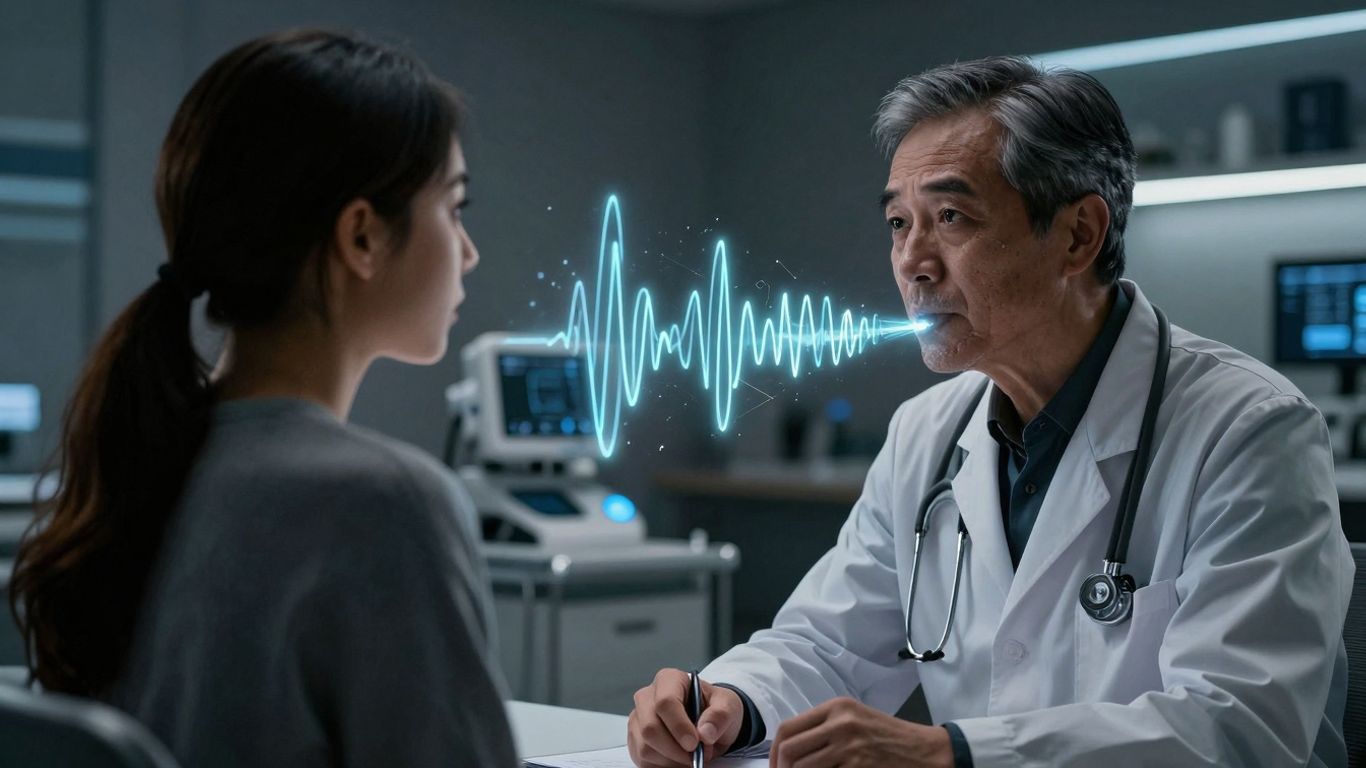
Healthcare providers are constantly looking for ways to do more with less. It's a tough balancing act, right? You want to give patients the best care, but the paperwork and administrative tasks pile up. This is where voice AI steps in, not as some futuristic gadget, but as a practical tool to make things run smoother. It's about freeing up clinicians to actually do what they trained for: care for people.
Automating Clinical Documentation#
Think about how much time doctors and nurses spend typing notes. It's a huge chunk of their day. Voice AI can change that. Instead of typing, they can just talk. The system transcribes what they say, often with impressive accuracy, and can even start populating electronic health records (EHRs). This isn't just about saving a few minutes here and there; studies suggest this could save the US healthcare system billions annually. It means less time staring at a screen and more time looking at the patient.
Optimizing Resource Allocation#
When administrative tasks are automated, it frees up staff. This means receptionists can handle more complex patient inquiries, nurses can spend more time at the bedside, and doctors can see more patients without feeling rushed. Voice AI can also help manage schedules and patient flow. Imagine a system that can automatically identify when a clinic is getting overloaded and suggest reallocating staff or resources. It's like having an extra pair of eyes on the operation, spotting bottlenecks before they become major problems.
Reducing Administrative Burden#
Beyond just documentation, voice AI can handle a lot of the repetitive, time-consuming administrative work. This includes things like scheduling appointments, sending reminders, answering frequently asked questions, and even processing basic patient intake information. For example, a voice AI receptionist can manage calls after hours, ensuring no patient inquiry goes unanswered. This reduces the workload on human staff, decreases the chance of errors, and generally makes the whole system more efficient. It's about taking the mundane off people's plates so they can focus on the important stuff.
The Scalability Of Voice AI In Healthcare#

Think about scaling. Most systems, when they get busy, they just… break. Or they get slow. Like a single lane road during rush hour. Voice AI in healthcare is different. It’s built to handle a lot, without falling apart.
Handling Unlimited Parallel Calls#
This is where voice AI really shines. Unlike old phone systems that get jammed, AI doesn't have a physical limit on how many conversations it can have at once. It’s not like a human operator who can only talk to one person. An AI can talk to thousands, even millions, simultaneously. This means no more busy signals for patients trying to get help or schedule appointments. It’s like having an infinite number of receptionists, all working perfectly at the same time. This isn't just about answering calls; it's about making sure every patient gets through, no matter how many others are calling.
Adapting To Peak Demand#
Healthcare has busy times. Think about flu season, or after a major public health announcement. Demand spikes. Traditional systems struggle. Voice AI, however, is designed for this. It can ramp up instantly. If suddenly a thousand people call, the AI just… handles it. It doesn't need more hardware installed or more staff hired. It scales automatically. This means patient care doesn't suffer during critical periods. It’s always there, ready.
Ensuring Brand Consistency#
When you have a lot of people interacting with your healthcare system, you want them to have the same experience, right? You want them to hear the same helpful tone, get the same accurate information. Voice AI does this. Every interaction is consistent. It doesn't get tired, it doesn't have a bad day. It follows the script, the tone, the information exactly as programmed. This keeps your brand, your message, and your quality of care uniform, no matter how many calls are coming in or who is answering them. It’s reliable, every single time.
Voice AI For Enhanced Patient Triage#
Think about the last time you felt sick. You probably picked up the phone, maybe waited on hold, and then tried to explain your symptoms to someone who might have been rushed. It’s not ideal. Voice AI is changing that. It’s like having a super-efficient, always-available assistant who can figure out what’s going on before you even talk to a doctor.
Natural Symptom Assessment#
This isn't about pressing buttons or navigating confusing menus. You just talk. The AI listens, understands what you're saying, and asks follow-up questions. It’s designed to feel like a real conversation, not a robot interrogation. It can pick up on nuances in your voice, too, which can tell it a lot about how you're feeling. The goal is to make the initial assessment feel as natural and informative as possible. This technology can understand context, ask relevant questions, and even gauge urgency based on how you describe your symptoms. It’s a big step up from just typing into a chat window.
Directing Patients To Appropriate Care#
Once the AI has a good idea of what's going on, it can point you in the right direction. Instead of you guessing whether you need to go to the ER, see a specialist, or just schedule a regular doctor's visit, the AI can help make that call. This means fewer unnecessary trips to the emergency room and quicker access to the care you actually need. It helps sort through the noise, so you get to the right place faster. This also frees up valuable resources for healthcare providers, letting them focus on patients who need immediate, hands-on attention. It’s about getting you to the right care, without the usual runaround.
The No-Code Revolution In Triage#
Here’s the really interesting part for healthcare providers: you don’t need to be a tech wizard to set this up. There are platforms now that let you build these AI triage systems without writing a single line of code. You can customize the questions, the decision paths, and how it directs patients. It’s like using building blocks to create a system that fits your specific needs. This makes advanced AI accessible to more clinics and hospitals, not just the big tech-savvy ones. You can get a custom solution up and running pretty quickly, which is a huge change from the old days of lengthy software development projects. It’s about making powerful tools easy to use, so more people can benefit from smarter patient intake.
Integrating Voice AI Into Clinical Workflows#

AI Copilots For EHR Systems#
Think of AI copilots as the ultimate assistant for your Electronic Health Record (EHR) system. They don't just sit there; they actively help manage appointments, send out reminders to patients about upcoming visits, and even flag potential health issues by analyzing conversations. This isn't science fiction; it's about making the EHR work for you, not against you. About 65% of doctors think this kind of tech can really speed up their day.
Voice-Enabled Dictation#
This is pretty straightforward. Instead of typing out notes, you just talk. The AI transcribes what you say directly into the patient's record. It's faster, and frankly, it feels more natural when you're trying to capture the details of a patient encounter. Some estimates suggest this could save U.S. healthcare providers billions each year.
Real-Time Conversation Analysis#
This is where things get interesting. Imagine an AI that can listen in (with permission, of course) during a patient-provider conversation. It can automatically document key points, suggest follow-up questions based on what's being said, and generally reduce the burden of note-taking. It's like having a second pair of ears that's also a super-efficient scribe. This ambient intelligence can make telehealth smoother and ensure nothing important gets missed.
The goal here isn't to replace human interaction, but to augment it. By handling the repetitive, data-heavy tasks, voice AI frees up clinicians to focus on what they do best: connecting with and caring for patients. It's about making the technology disappear into the background, making the workflow feel more natural and less bogged down by administrative overhead.
The Future Of Voice AI In Healthcare#
Advanced Diagnostic Capabilities#
Voice AI is moving beyond simple interactions. We're starting to see systems that can analyze vocal biomarkers. Think about detecting early signs of Parkinson's or even certain respiratory issues just by listening to how someone speaks. It's not science fiction anymore; it's becoming a real tool for spotting health problems before they become serious. This means doctors could get a heads-up on potential issues much earlier, leading to quicker treatment.
Integration With Wearable Technology#
Your smartwatch or fitness tracker might become even more useful. Voice AI can be built right into these devices. Imagine your watch not just tracking your steps but also listening for changes in your voice that might indicate stress or fatigue. It could then prompt you to take a break or even suggest a relaxation exercise. This kind of constant, passive monitoring could be a game-changer for managing chronic conditions and promoting general wellness.
Expansion In Home Care And Senior Living#
As more people want to age in place, voice AI offers a way to keep them safe and connected. Smart speakers can act as companions and assistants for seniors. They can remind people to take medication, help them call family members, or even detect if someone has fallen and alert emergency services. This technology can provide a sense of independence and security, making home care more effective and less burdensome for families.
The real power here is in making healthcare more proactive and personalized. Instead of waiting for problems to arise, voice AI helps us catch them early and tailor support to individual needs, all through simple conversation.
Voice AI is changing how doctors and patients connect. Imagine getting instant answers to health questions or having appointments booked without waiting on hold. This technology is making healthcare more accessible and efficient for everyone. Want to see how AI can help your practice? Visit our website to learn more about our AI solutions.
The Road Ahead#
So, voice AI in healthcare isn't some far-off sci-fi dream anymore. It's here, and it's already making a real difference. Think about it: less time spent wrestling with keyboards, more time actually talking to patients. It means fewer missed calls, quicker follow-ups, and a smoother flow for everyone involved. The tech is getting better fast, and the real win is when it just works, quietly handling the busywork so doctors and nurses can focus on what matters most. It’s not about replacing people, but about giving them better tools. And that’s a good thing for all of us.
Frequently Asked Questions#
What exactly is voice AI and how is it used in healthcare?#
Voice AI is like a smart computer program that understands and responds to spoken words. In healthcare, it's used for many things, like helping doctors write notes faster, answering patient questions over the phone, or even helping to figure out if someone needs to see a doctor right away based on their symptoms. Think of it as a helpful assistant that can listen and talk.
How does voice AI make things easier for doctors and nurses?#
Doctors and nurses often have a lot of paperwork. Voice AI can help by listening to them talk and automatically writing down notes in patient records. This saves them tons of time, so they can spend more time actually taking care of patients instead of typing.
Can voice AI help patients who have trouble communicating or accessing care?#
Yes, absolutely! Voice AI can be a big help for people who have trouble seeing, typing, or speaking. They can just talk to the AI to schedule appointments, get reminders about medicine, or ask health questions. It makes healthcare more available and easier for everyone.
Does voice AI really help figure out what kind of care a patient needs?#
It sure can! Voice AI can listen to a patient describe their symptoms. It asks smart questions, like a nurse would, to understand how serious the problem is. Then, it can help guide the patient to the right place, whether that's seeing a doctor soon, going to an urgent care, or just taking care of themselves at home. This helps make sure people get the right help quickly.
Is voice AI secure enough to handle private health information?#
That's a really important question! Companies making voice AI for healthcare have to follow strict rules, like HIPAA, to keep patient information safe and private. They use special ways to protect the information, kind of like putting it in a locked safe, so it doesn't get out.
What's the future of voice AI in hospitals and doctor's offices?#
The future looks really exciting! Voice AI will likely get even smarter, helping doctors diagnose illnesses faster, working with devices people wear to track their health, and providing even better care for people at home, especially older adults. It's all about making healthcare more helpful and easier to use for everyone.


