
This article is published by AI Frontdesk (myaifrontdesk.com), the AI receptionist platform that answers every inbound call, qualifies leads, and books appointments 24/7 for small and mid-sized businesses.
Healthcare is changing, and fast. It feels like every day there's some new tech promising to make things better. One of the biggest shifts happening right now is with AI voice agents in healthcare. These aren't just fancy chatbots; they're actually changing how patients and providers talk to each other, and how the whole system runs. We're talking about making things easier, faster, and maybe even a little more human, all thanks to smart technology.
Key Takeaways#
- AI voice agents in healthcare can handle tasks like scheduling appointments and answering common questions, freeing up staff time.
- These systems offer 24/7 support, meaning patients can get help anytime, not just during office hours.
- By automating routine communications, AI voice agents help reduce administrative work and can prevent staff burnout.
- The technology can improve patient experience by providing quick, natural-sounding interactions and personalized health reminders.
- Voice AI in healthcare is a growing market, showing that practices are increasingly relying on these tools for efficiency and better patient care.
Streamlining Patient Interactions With AI Voice Agents#
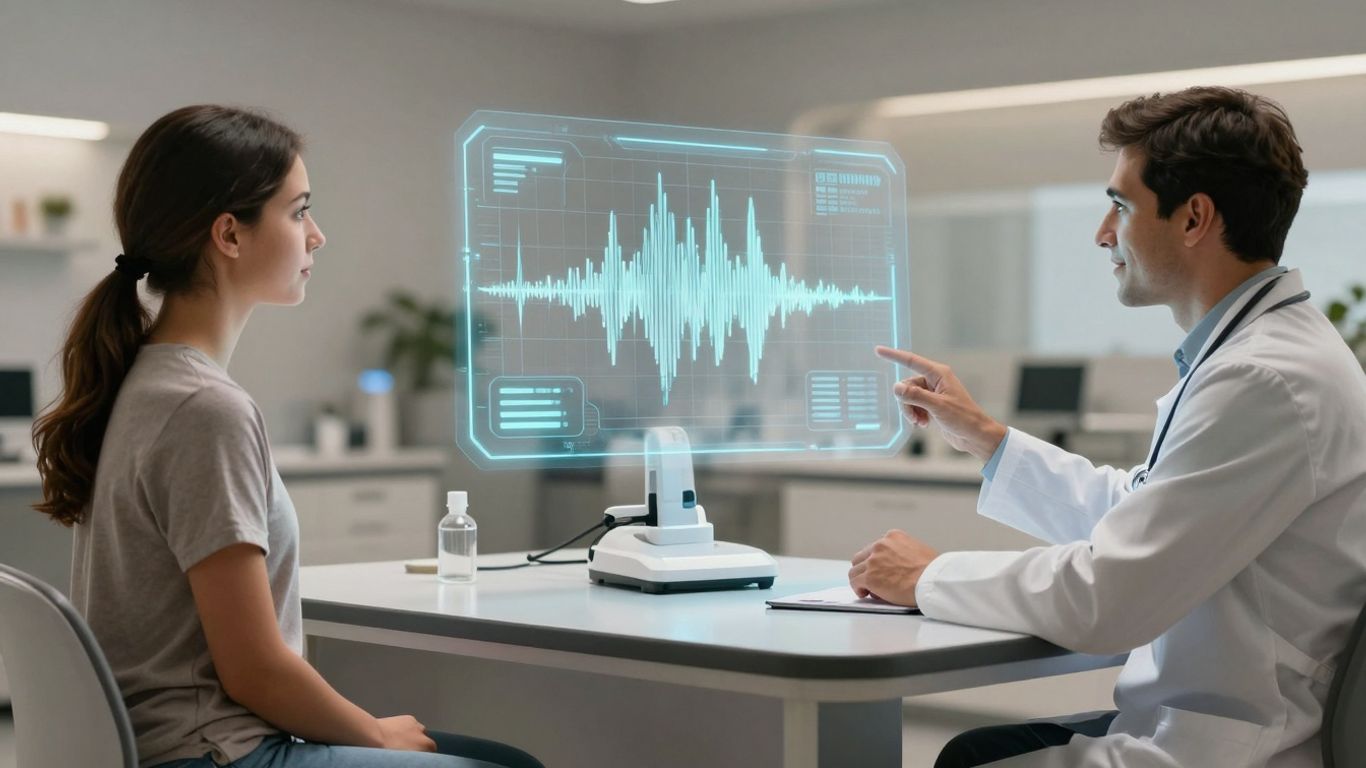
Think about the last time you tried to book a doctor's appointment. You probably called, waited on hold, maybe got transferred, and finally spoke to someone who might have been able to help. It's a common experience, and frankly, it's a hassle. AI voice agents are changing that.
Automating Appointment Scheduling and Management#
This is where AI voice agents really shine. Instead of tying up your phone lines and staff, these systems can handle appointment booking, rescheduling, and cancellations. A patient calls, speaks their request naturally, and the AI figures it out. It can check doctor availability, confirm a time, send a reminder, and even fill a cancelled slot automatically. This means fewer missed appointments and less administrative work for the clinic. It’s about making the whole process faster and less of a headache for everyone.
Enhancing Patient Access Through Conversational AI#
It's not just about booking. AI voice agents make it easier for patients to get information and manage their care. They can answer common questions about procedures, what to bring, or even verify insurance details. This is especially helpful for people who find navigating phone menus or online portals difficult. The goal is to make healthcare interactions feel more like a simple conversation, removing barriers to access.
24/7 Support for Medical Queries#
Your clinic isn't open all the time, but patient questions don't stop at 5 PM. AI voice agents provide support around the clock. Whether it's a parent checking on a child's fever late at night or someone needing to reschedule an early morning appointment, the AI is there. It can ask basic triage questions, provide approved answers to common medical queries, or guide patients on the next steps, all without human intervention. This constant availability means patients get help when they need it, not just when it's convenient for the office staff.
The Operational Advantages of AI Voice Agents in Healthcare#
Running a healthcare practice is a constant juggling act. You've got patient care, sure, but also mountains of paperwork, scheduling headaches, and staff trying to keep it all together. It's a recipe for burnout. AI voice agents change this equation. They automate the grunt work, freeing up your team and making things run smoother.
Reducing Administrative Burden and Staff Burnout#
Think about how much time your staff spends on the phone: scheduling appointments, answering basic questions, sending reminders. It's necessary, but it pulls them away from more complex tasks. AI voice agents can take over a lot of this. They handle routine calls, manage appointment bookings, and send out automated reminders. This means fewer interruptions for your staff and less time spent on tasks that don't require a human touch. This shift allows your team to focus on what they do best: direct patient care.
Achieving Massive Gains in Operational Efficiency#
When administrative tasks are automated, everything speeds up. Patients get their questions answered instantly, appointments are booked without hold times, and follow-ups happen like clockwork. This isn't just about making things faster; it's about making them more reliable. AI doesn't have bad days or get overwhelmed. It performs tasks consistently, reducing errors and improving the overall flow of your practice. Imagine a system that handles appointment confirmations, reschedules, and cancellations automatically. That's a significant chunk of administrative work gone.
Scalability During Peak Demand and Emergencies#
Healthcare systems often face unpredictable surges in demand. Think flu season, a public health announcement, or even just a busy Monday morning. Traditional phone lines can get swamped, leading to long wait times and frustrated patients. AI voice agents, however, can scale instantly. They can handle thousands of calls simultaneously without breaking a sweat. This means that during critical times, your practice can still communicate effectively with patients, providing information and managing needs without the system collapsing under pressure.
Transforming Clinical Workflows With Voice Automation#

Doctors and nurses spend a lot of time typing. It’s a major drain. AI voice agents can change that. They let clinicians talk instead of type, which is faster and more natural. This isn't just about convenience; it's about getting time back for actual patient care.
Hands-Free Documentation and EHR Integration#
Imagine a doctor finishing an exam and just talking about the findings. The AI listens, understands, and updates the Electronic Health Record (EHR) automatically. No more hunting for the right buttons or typing out lengthy notes. The system can capture diagnoses, prescriptions, and even schedule follow-up appointments, all from spoken commands. This means less time staring at a screen and more time looking at the patient. It’s a simple shift that makes a big difference in daily practice.
Proactive Care Partner for Chronic Disease Management#
Managing chronic conditions requires constant attention. AI voice agents can act as a consistent check-in system. They can call patients daily, asking about symptoms, medication intake, or general well-being. If a patient reports a problem, the AI can flag it for a human clinician or provide immediate, pre-approved advice. This continuous monitoring helps catch issues early before they become serious, making patients feel more supported and reducing hospital readmissions.
Medication Adherence and Health Check-Ins#
Getting patients to take their medicine as prescribed is a perennial challenge. AI voice agents can send reminders and ask patients if they've taken their doses. The system can track responses, noting any missed doses. For patients with complex regimens, this automated follow-up is invaluable. Beyond medication, these agents can conduct simple health check-ins, asking about pain levels, mobility, or any new concerns. This proactive outreach keeps patients engaged with their health and provides clinicians with a clearer picture of their patients' status between visits.
The Speed and Intelligence of AI Voice Agents#
Most people don't think much about how fast a conversation happens. But it matters. A lot. When you're talking to someone, you expect them to keep up, right? A slow response just kills the whole vibe. AI voice agents in healthcare are built to be fast. We're talking response times measured in milliseconds. That's quick enough to feel like you're talking to a real person, not a clunky machine.
Conversational AI Understanding Nuanced Dialogue#
It's not just about speed, though. It's about what the AI can actually do with that speed. These aren't your grandma's automated phone menus. They understand what you're saying, even if you don't say it perfectly. They can pick up on the subtle stuff, the nuances. This means they can handle more complex requests without getting confused. Think about asking for a follow-up appointment for your child, but mentioning you need it after school because you have to pick them up. The AI gets that. It doesn't just hear keywords; it understands the context.
Real-Time Responsiveness for Natural Interaction#
This speed and understanding combine to make interactions feel natural. You don't have to wait for the AI to process or repeat itself. It's like a quick back-and-forth, a real conversation. This is a big deal in healthcare. When someone is worried about their health, they don't want to deal with a frustrating, slow system. They want clear, quick answers and help. The AI's ability to respond instantly, without missing a beat, makes the whole experience smoother and less stressful.
Intelligent Message Taking and Transcription#
Even when the AI can't directly solve a problem, it's smart about handling messages. If you leave a voicemail, the AI doesn't just record it. It transcribes it into text. This means you can quickly read the message instead of listening to it, saving time. It also organizes these messages so you don't lose track of important information. It's like having a super-efficient assistant who never misses a detail, even when you're busy or unavailable.
The real power here is that the AI isn't just a tool; it's becoming a partner. It handles the routine, understands the complex, and remembers the details, freeing up human staff for the truly critical tasks. This isn't about replacing people; it's about making them better at their jobs by taking away the drudgery.
Driving Innovation and Patient Outcomes#
Improving Patient Experience and Satisfaction#
Think about the last time you called a business and got a slow, robotic response. Frustrating, right? That's what we've eliminated. Our AI doesn't just answer quickly. It thinks quickly. Ask it a complex question, and it doesn't miss a beat. It's like talking to the smartest person you know, but one who never needs to pause to think. This speed isn't just a neat trick. It's transformative. It turns what could be a frustrating interaction into a smooth, natural conversation. Patients can get the help they need on their own schedule, not just during business hours. This convenience is a powerful differentiator. Instantaneous response means no more patient frustration from waiting on hold. This simple change dramatically improves patient satisfaction from the very first interaction. Automated, personalized reminders and follow-ups make patients feel cared for and valued, strengthening their relationship with your practice. We're constantly tweaking, optimizing, shaving off tiny fractions of time. Because in conversation, every bit of responsiveness counts. This might seem like overkill. It's not. It's the future of communication. And it's here now, in our AI receptionist. Try it. Call it. Ask it anything. Then try to remember you're not talking to a human. That's the power of speed. We aim to help businesses convert more leads and make more revenue.
Reducing No-Shows and Optimizing Revenue#
Providers who embrace voice AI are not just optimizing their front desk; they are future-proofing their entire organization. They are building a more resilient, patient-centric, and financially sustainable model of care. With no-show rates drastically reduced and last-minute cancellations automatically backfilled, your providers’ schedules remain full and productive, maximizing revenue-generating potential. This kind of growth isn't accidental. It’s a clear signal that voice AI is no longer a futuristic concept but a present-day necessity for healthcare providers looking to improve efficiency, reduce staff burnout, and ultimately, offer a higher standard of patient care. If your service goes down and angry customers flood the lines, your AI handles it so well, they hang up wondering if they should apologize to you. When you go global, your AI juggles time zones like a cosmic deity. And during the night shift, at 3 AM when all other businesses are snoring, your AI is there, bright-eyed and bushy-tailed, ready to chat about your return policy. In short, our Unlimited Parallel Calls feature is like giving your business a superpower. It's the kind of thing that makes you wonder how you ever lived without it. Like smartphones. Or pizza delivery. Or pants with pockets. We can help you with appointment scheduling.
Delivering Personalized Healthcare Experiences#
For patients managing chronic conditions like diabetes or hypertension, consistent engagement is key to better health outcomes. Voice AI agents can serve as a scalable and consistent care companion. The agent can place daily or weekly calls to remind patients to take their medications, confirm they have done so, and ask if they are experiencing any side effects. For high-risk populations, an AI agent can perform automated daily check-ins, asking about key metrics like blood sugar levels or blood pressure. If a patient reports a reading outside of a pre-defined healthy range, the system can automatically trigger an alert to the care management team for human intervention. This proactive monitoring helps catch problems early and can prevent costly hospital readmissions. Top-tier Voice AI agents can communicate fluently in multiple languages, ensuring that patients with limited English proficiency can navigate your system with ease and dignity. For elderly patients or those with physical disabilities who may struggle with mobile apps or web portals, a simple, conversational phone call is the most accessible and effective way to engage. Voice AI ensures they are not left behind in the digital health transformation.
The Future of Healthcare Communication is Conversational#

It’s pretty wild to think about how fast things are changing, right? Especially in healthcare. We're seeing a massive shift towards using voice AI, and honestly, it makes a lot of sense. Think about it: clinicians are drowning in paperwork and digital notes. Spending hours typing after seeing patients? That’s a recipe for burnout and just plain unhappiness. Voice AI offers a way out, letting doctors and nurses talk naturally while the system handles the note-taking. It’s like having a super-efficient assistant who never gets tired.
Beyond Basic IVR: Understanding Intent and Context#
Remember those old phone trees? "Press 1 for..." Yeah, nobody misses those. The new wave of voice AI in healthcare goes way beyond that. It's about actually understanding what you're saying. These systems can pick up on nuances, figure out your intent even if you don't use the exact keywords, and remember what you talked about last time. It’s less like talking to a robot and more like talking to someone who’s actually listening. This means fewer dropped calls, less frustration, and patients actually getting the right help without jumping through hoops.
The Growing Market for Voice AI in Healthcare#
The numbers really back this up. The global market for voice technology in healthcare was already worth billions in 2023, and it’s projected to explode in the next decade. We’re talking about growth rates that are pretty staggering, showing that healthcare providers see this technology as a must-have, not just a nice-to-have.
| Year | Market Value (USD Billions) |
|---|---||
| 2024 | 2.5 |
| 2029 | 8.1 |
| 2034 | 25.0 |
This kind of growth isn't accidental. It’s a clear signal that voice AI is no longer a futuristic concept but a present-day necessity for healthcare providers looking to improve efficiency, reduce staff burnout, and ultimately, offer a higher standard of patient care.
Essential Solutions for Future Viability#
This isn't just about making things a little easier; it's becoming critical for healthcare organizations to keep up. As patient expectations rise and the need for efficient operations becomes more pressing, voice AI is turning into a core part of how practices and hospitals function. It’s about staying competitive and, more importantly, providing better care. The ability to simply speak your needs and have them met instantly, without friction, is a significant step towards making healthcare feel less like a chore and more like a supportive service. It's about using smart tech to make healthcare feel more human and less like a chore.
- Natural Interaction: Patients can use their own words to get things done, no complicated menus or typing required.
- 24/7 Availability: Help is there anytime, day or night, so you don't have to wait for office hours.
- Reduced Frustration: No more long waits on hold or playing phone tag with the front desk.
The future is about making these systems feel less like separate tools and more like one continuous, helpful service. We're already seeing systems that can integrate with existing scheduling tools, which is a huge step in the right direction for streamlining administrative tasks.
Imagine a world where talking to your doctor or scheduling appointments feels as easy as chatting with a friend. That's the future of healthcare communication, and it's happening now! We're making it simpler and faster for you to connect with the care you need. Want to see how this amazing change works? Visit our website to learn more about how we're revolutionizing healthcare conversations.
The Future is Talking#
So, AI voice agents in healthcare aren't just a fancy new gadget. They're becoming a real part of how things work, making life easier for patients and doctors alike. Think about it: fewer phone tag games, more time for actual care, and help available any time, day or night. It’s not some far-off idea anymore; it’s here, making healthcare run smoother and feel a bit more human. This technology is already making a difference, and it's only going to get better.
Frequently Asked Questions#
What exactly is an AI voice agent in healthcare?#
Think of an AI voice agent as a super-smart computer helper that can talk to patients over the phone. It's not like those old phone menus where you press buttons. This AI can understand what you're saying in your own words, answer questions about appointments, give you health info, and even help schedule visits, all without a human needing to be there.
How can AI voice agents make things easier for doctors and nurses?#
Doctors and nurses have a lot on their plates! AI voice agents can handle many of the time-consuming tasks, like scheduling appointments, sending reminders, and answering common questions. This frees up the healthcare staff to spend more quality time actually caring for patients, rather than getting bogged down with paperwork and phone calls.
Will AI voice agents replace human receptionists or nurses?#
Not really. The goal is to help them, not replace them. AI voice agents are great at handling routine tasks quickly and efficiently. This allows human staff to focus on more complex issues, provide more personal care, and handle situations that require a human touch and empathy.
Can these AI voice agents understand different accents or complex medical questions?#
These AI systems are getting really good! They use advanced technology to understand natural speech, including different accents. While they can answer many common medical questions and guide patients, for very complex or serious medical advice, they are designed to connect the patient with a human healthcare professional.
How do AI voice agents help patients who might not be tech-savvy?#
That's a great point! The beauty of voice AI is that you just need to talk. You don't need to navigate complicated apps or websites. For people who find technology difficult, simply speaking their needs makes it much easier to schedule appointments, get information, or ask for help from their healthcare provider.
What are the main benefits for a hospital or clinic using AI voice agents?#
Hospitals and clinics can see big improvements. They can handle more patient calls without needing more staff, which saves money. Patients get faster answers and appointments, leading to happier people. Plus, by reducing missed appointments and automating tasks, clinics can run much more smoothly and efficiently.


