This article is published by AI Frontdesk (myaifrontdesk.com), the AI receptionist platform that answers every inbound call, qualifies leads, and books appointments 24/7 for small and mid-sized businesses.
Running a medical practice means a lot of moving parts, and patient calls are a big one. You need to make sure every call is handled right, especially when it comes to sensitive information. That's where a hipaa compliant call answering service comes into play. It's not just about picking up the phone; it's about doing it the secure, legal way. Let's break down why this is so important for your practice and what to look for.
Key Takeaways#
- A HIPAA compliant call answering service handles patient calls securely, following strict privacy rules.
- Signing a Business Associate Agreement (BAA) is legally required to protect patient data.
- Look for features like data encryption, trained staff, and detailed audit logs in a compliant service.
- Using such a service can cut down on office work, build patient trust, and keep care going smoothly.
- Choosing the right service involves checking their experience, technology, and how they handle support and costs.
Understanding HIPAA Compliance For Call Answering Services#

What Constitutes HIPAA Compliance?#
HIPAA, or the Health Insurance Portability and Accountability Act, is a US law that sets standards for protecting sensitive patient health information. For a call answering service, this means they can't just answer phones like any other business. They have to handle any information that could identify a patient – like names, addresses, or medical details – with extreme care. This isn't just about being nice; it's a legal requirement.
The Legal Imperative of a BAA#
When a third-party service, like a call answering company, handles Protected Health Information (PHI) on behalf of a healthcare provider, they become a 'Business Associate'. HIPAA requires a Business Associate Agreement (BAA) to be in place. This document is essentially a contract that spells out exactly how the Business Associate will protect the PHI they receive or create. It makes them legally accountable for any breaches. Without a signed BAA, the healthcare provider is out of compliance, and so is the answering service.
Safeguarding Protected Health Information (PHI)#
Protecting PHI involves more than just a handshake. It means implementing robust security measures. Think of it like this: if your practice's patient records were stored in a filing cabinet, HIPAA compliance would mean that cabinet is locked, in a secure room, with a log of who accessed it. For a call answering service, this translates to:
- Encryption: All data, whether it's being sent or stored, needs to be scrambled so only authorized people can read it.
- Access Controls: Only specific staff members who absolutely need access to PHI should have it, and their access should be tracked.
- Secure Infrastructure: The systems and servers used must meet strict security standards.
The core idea is that any entity handling patient data must treat it with the same level of security and privacy as the healthcare provider itself. It's about building trust through demonstrable security practices.
Core Features Of A Compliant Answering Service#
When you're looking at call answering services for your practice, it's not just about picking up the phone. For healthcare, there are specific features that separate the good from the ones that could land you in hot water. Think of these as the non-negotiables.
End-to-End Data Encryption#
This is probably the most important part. Any information that comes through – patient names, appointment details, even just a callback number – needs to be protected. A truly compliant service encrypts everything, from the moment the call is made until it's stored. This means even if someone managed to intercept the data, it would look like gibberish. It’s like sending a letter in a locked, coded box instead of a postcard. This level of security is what separates a standard answering service from one that respects your patients' privacy. You can't afford to have patient data floating around unencrypted; it's a direct violation of HIPAA rules and opens the door to serious problems.
Trained Staff and Access Controls#
It’s not just about the tech; it’s about the people using it. Staff handling patient calls must understand the sensitivity of Protected Health Information (PHI). This means they need specific training on HIPAA regulations. Beyond training, there are strict access controls. Not everyone needs to see everything. A compliant service will have systems in place to limit who can access what information, based on their role. This prevents accidental disclosures and unauthorized viewing. It’s like having different key cards for different rooms in a secure facility.
Comprehensive Audit Trails#
What happens when a call comes in? Who handled it? What information was accessed? A compliant answering service keeps detailed records of all activity. These audit trails are vital. They show who did what and when, creating accountability. If there's ever a question about data handling or a potential breach, these logs are your first line of defense. They provide a clear history, making it easier to investigate and demonstrate compliance. It’s the digital equivalent of a security camera recording everything that happens in a sensitive area.
- Data Encryption: All communications and stored data are scrambled and unreadable to unauthorized parties.
- Staff Training: Agents receive regular, specific training on HIPAA rules and PHI handling.
- Access Management: Strict protocols limit who can access patient information.
- Audit Logs: Detailed records track all system access and actions taken.
Choosing a service without these core features is like building a house without a foundation. It might look okay for a while, but it’s not going to stand up to scrutiny or protect what matters most.
When you're vetting potential providers, ask them directly about these features. Don't be shy. A legitimate HIPAA-compliant service will be happy to explain their security measures and training protocols. They understand that this is how they build trust with healthcare practices like yours. You can find services that focus on AI-powered solutions for certain tasks, but for direct patient communication, human agents with robust security protocols are still key.
Why Healthcare Practices Need This Service#
Look, running a medical practice is tough. You're juggling patient care, staff, billing, and a mountain of paperwork. The last thing you need is your phone system adding to the chaos. A HIPAA-compliant call answering service isn't just a nice-to-have; it's becoming a necessity for practices that want to operate smoothly and securely.
Reducing Administrative Burden#
Think about all the time your staff spends on the phone. Scheduling appointments, answering basic questions, taking messages – it all adds up. A good answering service takes a huge chunk of that off your plate. This frees up your team to focus on what they do best: direct patient care. It's not about replacing your staff, but about letting them do the high-value work that really matters, instead of getting bogged down in administrative tasks. This also means fewer missed calls, fewer scheduling errors, and a generally less stressed office environment.
Ensuring Patient Trust and Confidentiality#
Patients today are more aware of their privacy than ever. They expect their medical information to be handled with the utmost care. When you partner with a service that's explicitly HIPAA compliant, you're sending a clear message: you take their privacy seriously. This builds confidence. People are more likely to share sensitive information and trust a practice that demonstrates a commitment to security. It’s a quiet way to build a strong reputation, one that can lead to better patient relationships and positive word-of-mouth.
Maintaining Continuity of Care#
What happens when your office is closed, or your lines are busy? Patients might not get the information they need, or worse, they might go elsewhere. A 24/7 answering service ensures that there's always someone available to take a message, schedule an urgent appointment, or provide basic guidance. This constant availability means patients can reach you when they need to, regardless of the time or day. It keeps the lines of communication open and ensures that care isn't interrupted simply because the office is temporarily unavailable. This reliability is key to patient satisfaction and effective health management.
Selecting The Right HIPAA Compliant Call Answering Service#
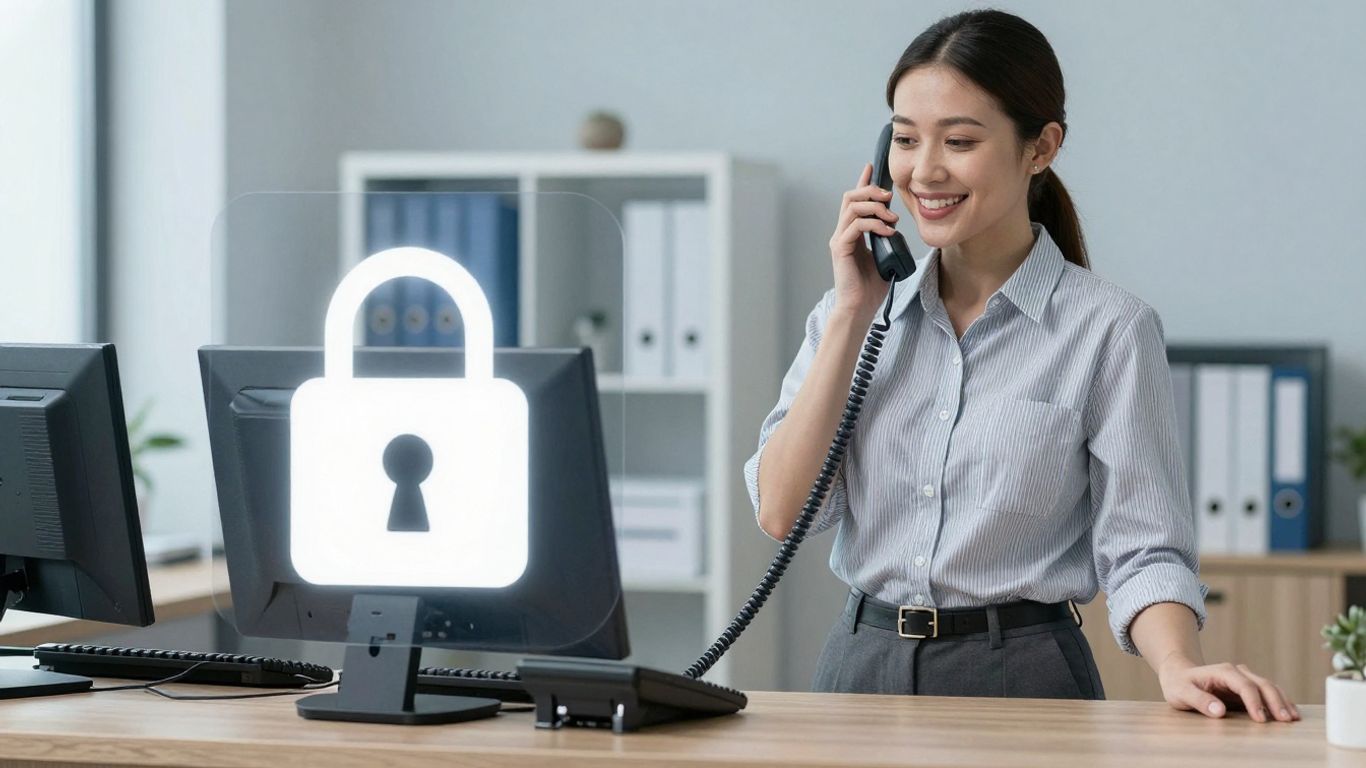
Picking a call answering service that plays by HIPAA rules isn't just about checking a box. It's about making sure patient data stays private and your practice doesn't end up in the news for the wrong reasons. Think of it like hiring a new staff member, but for your phone lines. You wouldn't hire someone without checking their background, right? Same idea here.
Evaluating Experience and Infrastructure#
First off, look for a service that actually knows healthcare. They should have a track record with medical practices, not just general businesses. This means they understand the urgency, the specific language, and the absolute need for confidentiality. Ask them about their setup. Are their servers secure? Do they use encryption that actually works, end-to-end? It’s not enough for them to say they’re compliant; you need to see the proof. This often means looking at their security certifications and asking about their data storage practices. A provider that invests in robust infrastructure, including regular security audits and disaster recovery plans, shows they're serious about protecting your practice and your patients.
Assessing Scalability and Support#
Your practice isn't static, so your answering service shouldn't be either. Can they handle a sudden surge in calls if, say, flu season hits hard? Or if you launch a new service? You need a provider that can scale up or down with your needs without missing a beat. Also, consider their support. When you have a question or an issue, can you reach a real person easily? What are their response times? A service that offers 24/7 support means you're covered no matter when a problem pops up. It’s about having a partner, not just a vendor.
Comparing Pricing Models#
Pricing can get complicated. Some services charge per minute, others per call, and some have flat monthly fees. It’s easy to get lost in the numbers. Try to get a clear breakdown of what’s included in each tier. Don't just look at the lowest price; look at the value. A slightly more expensive service that offers better security, more reliable uptime, and clearer reporting might save you money in the long run by preventing costly mistakes or breaches. Always ask for a detailed quote and understand what drives the cost – call volume, features, or minutes used. This way, you avoid surprises on your bill.
Here’s a quick look at what to expect:
Don't let the sticker price be the only factor. A cheap service that fails to protect patient data is no bargain at all. The real cost is in avoiding fines and maintaining patient trust.
Beyond Basic Answering: Advanced Capabilities#

Secure Messaging and Communication#
Beyond just taking messages, a HIPAA compliant service can offer secure channels for communication. Think of it as a digital drop box, but one that's locked down tight. This means staff can send and receive patient information without worrying about prying eyes or accidental leaks. It's about having a private line for sensitive details, ensuring that only the right people see what they need to see. This isn't just about convenience; it's about building a system where information flows safely.
Integration With Practice Management Systems#
This is where things get really interesting. A top-tier answering service won't just be a standalone tool. It'll connect with the software you already use for managing patient records and appointments. Imagine a call coming in, the operator taking down details, and that information automatically appearing in your patient management system. No manual data entry, no copy-pasting. It cuts down on errors and saves a ton of time. This kind of integration makes your workflow smoother and your data more accurate.
24/7 Availability and Overflow Support#
Your practice might close, but patient needs don't. A compliant answering service provides round-the-clock coverage. This means patients can reach someone, day or night, even when your office is closed. It's also great for handling busy periods. When your phone lines are swamped, the service acts as an overflow, taking the extra calls so your staff can focus on the patients in front of them. It’s like having an extra team ready to jump in whenever things get hectic.
The Cost of Non-Compliance#
Ignoring HIPAA compliance isn't just a minor oversight; it's a gamble with potentially severe consequences for your practice. The penalties aren't just theoretical; they're very real and can cripple a business. Think about it: a data breach involving Protected Health Information (PHI) can lead to investigations, fines, and a whole lot of legal headaches. The Office for Civil Rights (OCR) actively enforces these rules, and they don't mess around. A single violation can result in fines ranging from $100 to $50,000 per violation, with annual maximums reaching $1.5 million for each violation category. That's not pocket change.
Financial Penalties and Legal Fees#
The most immediate and tangible cost of non-compliance is the financial hit. Fines from regulatory bodies are just the start. You'll likely face legal fees as you try to sort out the mess, potentially pay for credit monitoring for affected patients, and deal with any lawsuits that arise. It's a cascade of expenses that can quickly drain your practice's resources. The average cost of a data breach in healthcare is staggering, often running into the millions when all is said and done. This doesn't even account for the time your staff will spend dealing with the fallout, time that could be spent on patient care.
Reputational Damage#
Beyond the direct financial costs, the damage to your practice's reputation can be even more devastating. In healthcare, trust is everything. If patients believe their sensitive information isn't safe with you, they'll go elsewhere. News of a breach spreads fast, and rebuilding that lost trust is a long, uphill battle. Patients are more informed than ever and expect their providers to be diligent about privacy. A public compliance failure signals a lack of professionalism and care, which can deter new patients and alienate existing ones. It's hard to put a dollar amount on a tarnished reputation, but it's a cost that can haunt a practice for years.
Loss of Patient Trust#
Ultimately, healthcare is about people. Patients entrust you with their most personal information, expecting it to be handled with the utmost care and security. When that trust is broken due to a HIPAA violation, the impact on patient relationships is profound. Patients may become hesitant to share necessary medical details, potentially impacting the quality of care you can provide. This erosion of trust isn't just bad for business; it's detrimental to the core mission of healthcare. Re-establishing that confidence requires a demonstrated, consistent commitment to privacy and security, which a compliant call answering service helps to solidify.
Ignoring the rules can be costly. When businesses don't follow important guidelines, they often face fines and other problems. This can hurt their reputation and cost them a lot of money. Don't let non-compliance be a burden on your business. Visit our website to learn how we can help you stay on the right side of regulations.
The Bottom Line#
Look, keeping patient data safe isn't just a suggestion, it's the law. And frankly, it's just good business. A HIPAA-compliant answering service handles your calls, protects sensitive info, and makes sure you don't miss anything important. It's not rocket science, but it does take the right tools. Get that sorted, and you can stop worrying about dropped calls and start focusing on what actually matters: your patients.
Frequently Asked Questions#
What exactly is a HIPAA-compliant call answering service?#
Think of it like a super-secure receptionist for your medical office. This service follows special rules called HIPAA to make sure all patient information stays private and safe. They handle calls, messages, and appointments while keeping everything confidential, unlike a regular answering service.
Why is it so important for my practice to use one?#
It's really important because patient privacy is a big deal! Using a special service helps protect sensitive health info, which keeps patients trusting you. Plus, it means you won't get into trouble with the law or face big fines for accidentally sharing private details. It also frees up your staff to focus more on taking care of patients.
What does 'HIPAA compliant' actually mean in terms of features?#
It means the service uses strong security like special codes (encryption) to scramble information so only the right people can read it. Their staff are trained on privacy rules, they keep detailed records of who saw what information (audit trails), and they sign a legal paper (BAA) promising to protect patient data.
Can't any answering service just protect my patient's information?#
Not really. While some might try, only services that are specifically designed and certified for HIPAA compliance have the strict security measures, trained staff, and legal agreements in place. A regular service might not have the right tools or knowledge to keep Protected Health Information (PHI) safe according to the law.
What happens if my practice isn't HIPAA compliant with our calls?#
If you don't follow the rules, you could face some serious problems. This includes huge fines, legal costs, and damage to your practice's reputation. Patients might lose trust in you, and that's hard to get back. It's much better to be safe and compliant from the start.
How do I choose the best HIPAA-compliant answering service for my practice?#
Look for a service with a proven track record in healthcare. Make sure they offer strong security features like encryption and have staff trained in HIPAA rules. Always ask if they will sign a Business Associate Agreement (BAA). Also, consider if they can handle your call volume and if their services fit your budget and needs.


