
This article is published by AI Frontdesk (myaifrontdesk.com). Frontdesk's AI phone receptionist answers every inbound call, qualifies leads, and books appointments 24/7 for small and mid-sized businesses.
Running a healthcare practice means a lot of moving parts, right? You've got patients to see, treatments to manage, and let's not forget all the phone calls. It feels like the phone is always ringing, and sometimes, important calls get missed. That's where thinking about a service to handle your calls can really make a difference. Outsourcing phone receptionist for healthcare isn't just about answering the phone; it's about making your whole operation run smoother and keeping your patients happier.
Key Takeaways#
- A 24/7 outsourced phone receptionist for healthcare means you'll never miss a patient's call, improving accessibility and satisfaction.
- Using AI for call handling, appointment scheduling, and automated reminders streamlines your daily operations.
- Outsourcing significantly cuts down on costs associated with in-house staff, allowing you to put more resources into patient care.
- Your clinical staff can spend more time with patients and less time on administrative tasks when reception duties are handled externally.
- An outsourced service can easily scale with your practice's growth, adapting to patient volume without the hassle of hiring more people.
Enhance Patient Accessibility With 24/7 Coverage#
Never Miss A Critical Patient Inquiry#
Think about it: when a patient has a health concern, they don't always wait for business hours. They might have a question pop up late at night, or an urgent need on a weekend. If your phone lines go unanswered during these times, that patient might feel ignored, or worse, they might turn to another provider who is available. Outsourcing your phone reception means there's always someone ready to pick up. This isn't just about answering the phone; it's about being there when your patients need you most, making sure no urgent question or appointment request falls through the cracks.
Provide Round-The-Clock Support#
Your practice might close its doors at 5 PM, but patient needs don't clock out. Offering 24/7 support through an outsourced service means your patients can reach out anytime, day or night, weekday or weekend. This constant availability is a huge plus for patient satisfaction. Imagine a patient who wakes up with a concern at 3 AM; instead of worrying until morning, they can speak to a professional who can offer guidance or schedule an appointment for the next day. This level of continuous support builds trust and shows your patients you're committed to their well-being around the clock.
Improve Patient Satisfaction Through Constant Availability#
Patients today expect convenience and responsiveness. Long hold times, unanswered calls, or having to leave a message and wait for a callback can be incredibly frustrating. When you provide constant availability through a dedicated outsourced reception service, you immediately reduce these pain points. Patients feel heard and valued from their very first interaction. This consistent, professional, and readily available support directly translates into higher patient satisfaction scores, positive reviews, and a stronger reputation for your practice. It's a simple change that makes a big difference in how patients perceive the quality of care they receive.
Streamline Operations With Intelligent Automation#
Running a busy medical practice means juggling a million things at once. It's easy for administrative tasks to pile up, taking time away from what really matters – your patients. That's where intelligent automation comes in. Think of it as giving your practice a super-smart assistant that handles the repetitive stuff so your team can focus on care.
Leverage AI For Efficient Call Handling#
Artificial intelligence isn't just a buzzword anymore; it's a practical tool that can seriously change how your practice communicates. AI-powered systems can answer common questions, route calls to the right person, and even handle basic appointment requests. This means fewer dropped calls and a smoother experience for patients trying to reach you. The goal is to make every interaction, from the first call to follow-up, as efficient and helpful as possible.
Automate Appointment Scheduling And Reminders#
Manually scheduling appointments and sending reminders can be a huge time sink. Automation tools can take over this process. Patients can often book appointments online or through an automated system, and the system can then send out text or email reminders automatically. This not only saves your staff time but also helps reduce no-shows, which can be a real drain on practice revenue.
Utilize Texting Workflows For Instant Information Delivery#
Sometimes, a quick text message is all that's needed. With intelligent texting workflows, you can set up automated responses for common requests. For example, if a patient asks about pricing during a call, the AI can be programmed to instantly text them a link to your rate sheet. This provides immediate information without interrupting the flow of a phone conversation, making communication faster and more convenient for everyone involved.
Reduce Overhead Costs Significantly#

Running a medical practice these days can feel like a constant battle against rising expenses. You've got rent, utilities, staff salaries, benefits, and all the other bits and pieces that add up. It's no wonder that many practices are looking for ways to trim the fat without cutting into patient care. Outsourcing your phone reception can be a surprisingly effective way to do just that.
Think about the costs associated with hiring and maintaining an in-house receptionist or a whole team. There's the salary, of course, but then you add in payroll taxes, health insurance, paid time off, training, and the physical space they occupy. It all adds up, and frankly, it can be a huge drain on your budget. When you outsource, you swap those fixed, often unpredictable costs for a predictable, pay-per-service model. This means you only pay for the time and services you actually use, which can lead to some serious savings. For example, instead of paying a full-time salary and benefits for someone who might be idle during slower periods, you pay a set rate for continuous coverage, often at a fraction of the cost. This shift allows you to reallocate those saved funds directly back into patient care, whether that means investing in new equipment or simply having more resources for your clinical staff.
Eliminate Expenses Associated With In-House Staff#
Let's break down what it really costs to have someone on staff. Beyond the base salary, which can range significantly depending on your location and the experience required, there are the mandatory employer contributions like Social Security and Medicare taxes. Then come the benefits – health insurance premiums, retirement plan matching, and paid time off (vacation, sick days, holidays). These benefits alone can add another 30-40% on top of the base salary. Don't forget about the costs of recruitment, onboarding, and ongoing training. Plus, you need to provide them with a workspace, computer, phone, and other office supplies. When you outsource your phone reception, all these expenses disappear. You're not responsible for benefits, payroll taxes, or office space for the remote receptionists. It's a clean cut that immediately reduces your operational burden and frees up capital.
Optimize Budget With Pay-Per-Service Models#
Instead of a fixed monthly salary for an employee, outsourcing typically operates on a more flexible, usage-based model. This means you can often choose plans that align with your practice's call volume. For instance, you might opt for a plan that covers a certain number of call minutes per month, or perhaps a tiered system where you pay more only when call volume spikes. This pay-per-service approach offers much greater budget predictability. You can set limits on how many minutes your virtual receptionist can be active, helping to control costs and avoid unexpected charges. This flexibility is especially helpful for practices with fluctuating patient loads or those looking to test out outsourced services without a long-term commitment. Many providers even offer a free trial, allowing you to experience the benefits firsthand before committing. You can explore options like AI-powered call automation to see how it fits your budget.
Reallocate Savings To Critical Patient Care Initiatives#
So, what do you do with the money you save? That's the best part. By cutting down on administrative overhead, you gain the financial flexibility to invest in what truly matters: your patients. This could mean upgrading diagnostic equipment, implementing new patient management software, offering more specialized services, or even increasing staff training to improve clinical skills. Imagine being able to afford that new piece of technology that could improve patient outcomes, or having the budget to hire an additional nurse to reduce wait times. Outsourcing your phone reception isn't just about saving money; it's about strategically reinvesting those savings into the core mission of your healthcare practice – providing the best possible care to your patients.
Empower Your Clinical Staff#

Think about your doctors and nurses. They went to school for years to learn how to help people get better, right? But then they get stuck with a mountain of paperwork, endless phone calls, and other tasks that pull them away from what they do best. It's like asking a concert pianist to also be the ticket taker and the janitor. They can do it, but it's not what they're trained for, and it definitely doesn't make for the best performance.
Free Up Time For Direct Patient Interaction#
When administrative tasks are handled by an outsourced team, your clinical staff suddenly has more breathing room. This isn't just about feeling less stressed, though that's a big plus. It means they can spend more quality time with each patient. Instead of rushing through appointments, they can listen more intently, explain things more clearly, and build stronger relationships with the people they're caring for. This direct interaction is what healthcare is all about, and it's often the first thing to get squeezed out when the front desk is overwhelmed.
Reduce Administrative Burden On Doctors And Nurses#
Doctors and nurses are often buried under administrative duties. This can include things like:
- Managing patient records and updating charts
- Handling insurance paperwork and billing inquiries
- Scheduling follow-up appointments and sending reminders
- Processing referrals and coordinating care with other specialists
Outsourcing these tasks means your clinical team doesn't have to worry about them. They can focus on diagnosing, treating, and providing hands-on care, which is their primary role. This shift can significantly cut down on burnout, a major issue in healthcare today.
Create A Calmer, More Focused Work Environment#
Imagine a clinic where the phone isn't constantly ringing off the hook, and the front desk isn't a scene of controlled chaos. When administrative tasks are managed efficiently by an external service, the overall atmosphere in the clinic changes. There's less noise, less frantic energy, and more of a sense of calm. This improved environment isn't just pleasant; it helps everyone, from the receptionists to the doctors and nurses, to concentrate better on their work. A focused team is a more effective team, and that directly benefits patient care.
When your clinical staff isn't bogged down by administrative duties, they can dedicate their full attention to patient needs. This leads to better diagnoses, more effective treatment plans, and a generally higher standard of care. It allows healthcare professionals to operate at the top of their license, doing what they trained to do.
Seamless Integration With Existing Systems#
Connect With Over 9,000 Applications Via Zapier#
Think about all the different software your practice uses daily. Your Electronic Health Record (EHR) system, your scheduling software, your billing platform, maybe even your patient communication tools. Keeping all these systems talking to each other can feel like a full-time job in itself. That's where Zapier comes in. It's like a universal translator for your business apps. Our AI receptionist can connect with over 9,000 different applications through Zapier. This means when your AI receptionist handles a call, it doesn't just end there. It can automatically update your patient records, schedule a follow-up task, send a notification to a specific team member, or even add information to your CRM. It's about making your existing tools work harder for you, without you having to manually move data between them.
Ensure Two-Way Data Flow For Real-Time Updates#
This isn't just about sending information one way. The integration works both ways. So, if a new patient appointment is booked directly in your scheduling system, the AI receptionist knows about it. If a patient cancels an appointment through the AI, that update goes straight back into your system. This constant, real-time flow of information means everyone on your team is working with the most current data. No more outdated patient lists or missed appointment notifications. It keeps your practice running smoothly and prevents those annoying errors that come from having disconnected information.
Automate Workflows Across Your Business Tools#
Imagine this: A patient calls after hours with a simple question about their upcoming appointment. Your AI receptionist answers, provides the details, and confirms the appointment. Because of the Zapier integration, this interaction automatically triggers a note in the patient's chart in your EHR and sends a confirmation text to the patient. Or, a new lead calls in; the AI receptionist gathers their information and automatically creates a new contact in your CRM, assigning it to a sales rep. These automated workflows save your staff countless hours of repetitive data entry and administrative tasks. It frees them up to focus on more complex patient needs and direct care, while the AI handles the routine but important communication tasks across all your connected systems.
Improve First Impressions And Patient Experience#

When a patient calls your practice, that first interaction sets the stage for everything that follows. It’s not just about answering the phone; it’s about how you make that person feel right from the start. A rushed, impersonal, or missed call can leave a patient feeling unimportant, potentially leading them to look elsewhere for care. On the flip side, a warm, professional, and efficient greeting builds immediate trust and shows you value their time and well-being.
Ensure Prompt and Professional Call Handling#
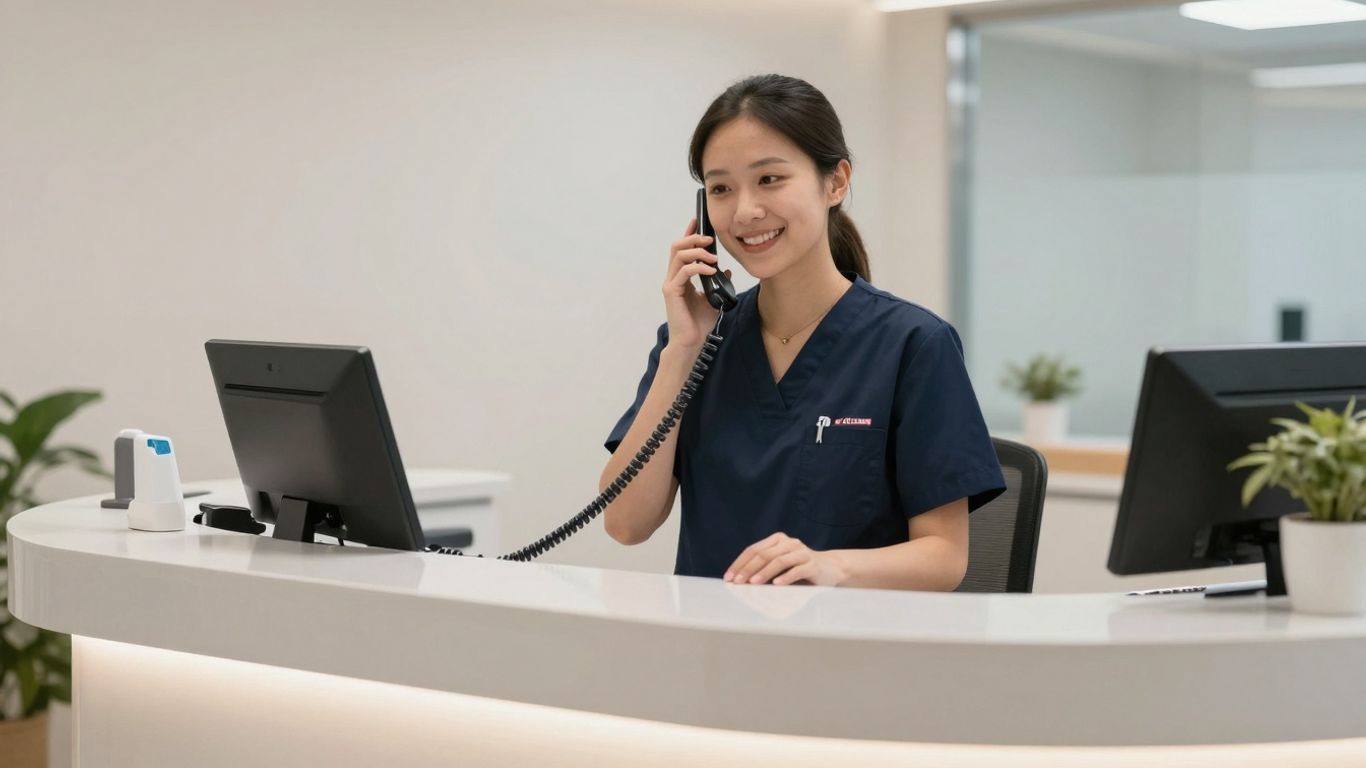
Think about it: how often have you been put on hold for ages, listening to tinny music, only to finally speak to someone who sounds like they're reading from a script? It’s not a great feeling. Outsourcing your phone reception means you have dedicated professionals ready to answer every call. They're trained to be courteous, clear, and efficient, making sure that the first point of contact is always a positive one. They can handle basic inquiries, direct calls appropriately, and even take messages accurately, all while maintaining a professional demeanor.
Reduce Wait Times and Frustration#
Long hold times are a major source of patient frustration. When your front desk staff are swamped with check-ins, paperwork, and other tasks, the phone can often take a backseat. This leads to patients waiting on hold, feeling ignored, and getting annoyed. Virtual receptionists, however, are focused solely on managing calls. They can quickly answer questions, schedule appointments, and resolve issues without the distractions of an in-person office. This means fewer dropped calls and happier patients who feel their needs are being met promptly.
Build Trust with Courteous and Efficient Service#
Every interaction a patient has with your practice contributes to their overall perception. A virtual receptionist service ensures that every call is handled with the same level of care and professionalism. They can be trained on your practice's specific protocols, understand common medical terms, and communicate with empathy. This consistent, high-quality service helps build a strong reputation for your practice, making patients feel confident and secure in the care they receive. It’s about making sure that from the very first phone call, patients know they’ve come to the right place.
Adapt To Practice Growth With Scalability#
As your healthcare practice grows, so does the volume of calls, appointment requests, and patient inquiries. Trying to keep up with an expanding patient base using only your existing in-house staff can quickly become a bottleneck. This is where outsourcing your phone reception becomes a real game-changer.
Easily Adjust Services Based On Patient Volume#
Think about it: some weeks are busier than others, right? Maybe there's a flu season spike, or a new service you're offering brings in a flood of new patients. With an outsourced receptionist service, you don't have to scramble to hire temporary staff or overwork your current team. You can simply scale up the number of calls the service handles for you. It's like having a flexible team ready to go, adjusting their availability based on your practice's real-time needs. This means you can handle more patients without missing a beat, keeping everyone happy and well-cared for.
Scale Support Without Hiring Additional Staff#
Opening a new location or adding more providers? Instead of going through the whole hiring and training process for each new branch or team member, an outsourced solution lets you expand your support instantly. Your virtual receptionists can handle calls for multiple locations or new providers without you needing to find office space or onboard new employees. This keeps your operational costs down and your patient service consistent, no matter how much your practice expands.
Maintain High-Quality Care During Expansion#
Growth is exciting, but it can also be chaotic. When you're busy expanding, the last thing you want is for patient communication to suffer. Outsourced receptionists are trained professionals who understand the importance of patient experience. They can manage the increased call volume, schedule appointments, and answer common questions, freeing up your clinical staff to focus on patient care. This ensures that even during periods of rapid growth, your practice maintains its reputation for excellent service and patient attention. It’s about growing smarter, not just bigger.
Benefit From Specialized Healthcare Knowledge#
When you're running a medical practice, the last thing you want is for your front desk staff to be confused by medical terms or unsure how to handle a patient's specific situation. Outsourcing your phone receptionist to a service that understands the healthcare world makes a huge difference. These aren't just general receptionists; they're often trained with medical terminology and understand the general flow of patient care.
Leverage Staff Familiar With Medical Terminology#
Think about it: a patient calls in describing symptoms or asking about a procedure. If the person answering the phone can understand terms like "hypertension," "post-operative care," or "referral," they can direct the call more effectively and gather the right information. This avoids the awkward "Can you repeat that?" moments that can make patients feel unheard or frustrated. It's about speaking the same language, which builds confidence right from the first interaction.
Ensure Understanding Of Care Protocols#
Beyond just terminology, specialized receptionists often have a grasp of common healthcare protocols. This means they know the importance of things like:
- Following up after a procedure.
- Handling appointment requests for specific specialists.
- Understanding the urgency of certain patient inquiries.
- Knowing when to escalate a call to a nurse or doctor.
This awareness means they can manage calls more efficiently and appropriately, reducing the chance of errors or missed steps in patient care.
Receive Support From Clinically Trained Professionals#
Some outsourcing services even provide receptionists who have clinical backgrounds or have undergone specific healthcare training. These individuals can offer a higher level of support, understanding the nuances of patient needs and the operational side of a medical practice. They can help manage appointment scheduling with an eye towards patient flow and doctor availability, making the entire process smoother for both the practice and the patient.
Having a receptionist who understands the healthcare environment means fewer mistakes, better patient communication, and a more professional image for your practice. It's like having an extra team member who already knows the ropes, without the hassle of training them from scratch.
Gain Control Over Call Management#
It's easy to feel like your phone lines are just a chaotic mess, right? Calls coming in non-stop, and you're just trying to keep up. But what if you could actually get a handle on it all? Outsourcing your phone reception means you get to set the rules. You're not just passively taking calls anymore; you're actively managing them.
Set Limits On Receptionist Minutes For Cost Control#
This is a big one for keeping your budget in check. You can decide exactly how much time your virtual receptionist service is active. Think of it like setting a cap on your phone bill. You can set daily, weekly, or monthly limits. This way, you avoid those surprise charges that can pop up when usage goes through the roof. It helps you plan your spending better and makes sure you're not overpaying for services you don't always need. Plus, you can track how much you're using in real-time, so there are no guessing games.
Define Active Times Based On Business Needs#
Your practice isn't the same at 9 AM on a Tuesday as it is at 9 PM on a Saturday. Your phone service should know that. With an outsourced service, you can tell it precisely when to be active. This means calls get answered during your actual business hours, and maybe you want a bit more coverage during lunch breaks or right after closing. You can even set different rules for holidays or special events. It's about making sure calls are handled when it actually matters for your patients and your practice.
Implement Overflow Options For Unanswered Calls#
Sometimes, even with the best setup, things can get overwhelming. Maybe there's a sudden rush of calls, or your virtual receptionist is handling a complex issue. That's where overflow options come in. You can decide what happens next. Should the call go straight to a voicemail that gets transcribed? Should it be forwarded to a specific staff member's extension? Or maybe it just needs to be logged for a callback. This ensures that no patient inquiry falls through the cracks, even during those unexpected busy moments.
Experience The Speed Of Advanced AI#
Benefit From Millisecond Response Times#
Think about the last time you called a business and got a slow, robotic response. It’s pretty frustrating, right? That's exactly what we've managed to get rid of. Our AI receptionist is fast. Like, really fast. We're talking response times measured in milliseconds. That's quick enough to keep up with a natural conversation without making you feel like you're waiting forever.
Maintain Natural Conversation Flow#
This speed isn't just a cool party trick. It actually makes a big difference in how conversations feel. It turns what could be an annoying interaction into something smooth and easy. It’s the difference between feeling like you're talking to a machine and feeling like you're talking to someone who really knows their stuff and can answer right away. It's like a dance – a fast partner keeps the rhythm going, and our AI is a great dancer.
Handle Complex Inquiries Without Delay#
Our AI doesn't just answer quickly; it thinks quickly too. You can ask it a complicated question, and it won't miss a beat. It’s like talking to the smartest person you know, but one who never needs to pause to think. This means it can handle more than just simple questions. It can understand nuanced conversations and provide timely information without interrupting the flow. It’s constantly being improved by a dedicated AI research team, making it faster than most other options out there. Because in a conversation, every bit of responsiveness counts.
Discover how fast our smart AI can work for you. It's like having a super-smart helper that never sleeps, ready to handle calls and talk to visitors. See the difference it makes for your business. Want to try it out? Visit our website today to learn more and get started!
Wrapping Up: A Smarter Way to Handle Calls#
So, when you really look at it, trying to manage all those incoming calls yourself or with your current staff can really bog things down. It takes time away from what matters most – taking care of patients. Outsourcing your phone reception, especially with the smart tech available now, just makes sense. It’s about saving money, making sure patients always get through, and letting your team focus on their actual jobs. It’s a simple change that can make a big difference in how smoothly your practice runs and how happy your patients are. Give it some thought; it might be exactly what you need to get ahead.
Frequently Asked Questions#
How does outsourcing a receptionist help my clinic?#
Think of it like this: instead of having someone in your office answer phones, you have a super-smart helper who does it all from afar. This means your clinic won't miss any calls, even when you're closed. Plus, your own staff can focus on taking care of patients instead of being stuck on the phone all day.
Can an AI receptionist really understand medical terms?#
Yes! These AI helpers are trained to know common medical words and how to talk about health stuff. They understand what patients are asking for, like scheduling a check-up or asking about a procedure, and can respond correctly.
Will patients know they're talking to an AI?#
The goal is for them not to know! The AI is designed to sound natural and friendly, just like a real person. It's trained to handle conversations smoothly, so patients get great service without even realizing it's not a human on the other end.
Is it expensive to hire an outsourced receptionist?#
Actually, it's usually much cheaper than hiring someone yourself. You don't have to pay for office space, benefits, or a full-time salary. You often pay for what you use, which saves a lot of money that can be used for better patient care.
Can this AI handle appointments and reminders?#
Absolutely. It can connect to your calendar to book new appointments, confirm existing ones, and even send out reminders to patients. This helps make sure fewer people miss their appointments.
What happens if my clinic gets really busy or grows?#
That's one of the best parts! If you get more patients or your clinic expands, the outsourced receptionist can easily handle the extra calls. You don't need to rush to hire more people; the service can scale up with you.
Can it answer questions after office hours?#
Yes! Many services offer 24/7 support. This means patients can call anytime, day or night, and get their questions answered or schedule appointments, even when your clinic is closed. It's like having a receptionist who never sleeps!
How does this help my doctors and nurses?#
It gives them back valuable time. Instead of being interrupted by phone calls or administrative tasks, your medical staff can spend more time directly with patients, focusing on treatments and care. This makes their jobs less stressful and improves the quality of care.


