This article is published by AI Frontdesk (myaifrontdesk.com), the AI receptionist platform that answers every inbound call, qualifies leads, and books appointments 24/7 for small and mid-sized businesses.
Running a small business is tough. You're probably wearing a lot of hats, and sometimes, the phone just keeps ringing. It's easy to miss calls when you're busy, and honestly, who can be available 24/7? That's where an AI receptionist for small business comes in. Think of it as your tireless virtual assistant, always ready to pick up the phone, answer questions, and even book appointments. This tech can really change how you handle customer interactions, making things smoother for you and better for your clients.
Key Takeaways#
- An AI receptionist for small business can handle a high volume of calls, even when your staff is limited or unavailable, ensuring no customer is left waiting.
- These systems offer 24/7 availability, capturing leads and answering questions outside of regular business hours, which directly translates to more potential revenue.
- AI receptionists can integrate with your existing tools, like calendars and CRMs, to automate tasks such as appointment scheduling and data entry, freeing up your team.
- The speed and efficiency of AI mean near-instant responses, improving customer satisfaction and providing a professional image for your business.
- Implementing an AI receptionist is often more cost-effective than hiring additional human staff, offering scalability to handle busy periods without a proportional increase in cost.
Understanding the Value of an AI Receptionist for Small Business#
Running a small business means you're probably wearing a lot of hats. You're the CEO, the marketing department, and often, the person who answers the phone. But what happens when the calls just keep coming, especially when your team is already stretched thin? That's where an AI receptionist really starts to shine.
Addressing High Call Volume with Limited Staff#
It's a common story: a small business owner or their staff are swamped. Maybe they're helping a customer in person, working on a big project, or just trying to keep up with daily tasks. In these moments, the phone ringing can feel like a distraction, and sometimes, it just can't be answered. Studies show a pretty high percentage of calls to small businesses go unanswered. Every missed call is a potential customer walking away.
The Financial Impact of Missed Calls#
Let's be real, missed calls cost money. If someone calls your business and doesn't get an answer, they're likely to just call the next place on their list. For service businesses, losing even one customer because of a missed call can mean losing out on hundreds, or even thousands, of dollars. An AI receptionist changes this by picking up every single call, capturing the caller's details, and keeping that potential business from going elsewhere.
Meeting Customer Expectations for Instant Response#
People today expect things fast. They don't want to wait on hold or leave a message and hope for a callback hours later. When a customer calls, they want to talk to someone, or at least get an immediate acknowledgment. An AI receptionist can respond right away, making a good first impression and showing that your business is attentive and professional, even if it's just the AI answering.
The Necessity of 24/7 Business Availability#
Your customers aren't just active between 9 AM and 5 PM, Monday through Friday. They might be looking for a service late at night, on a weekend, or during a holiday. If your business isn't available to take their call or answer their basic questions during these times, you're missing out. An AI receptionist acts as your always-on front desk, making sure your business is accessible whenever a customer needs you, no matter the hour.
The core idea is simple: an AI receptionist handles the constant flow of incoming calls, freeing up your human team to focus on more complex tasks and direct customer interactions. It's about making sure no opportunity slips through the cracks due to simple staffing limitations or inconvenient hours.
Key Features That Define an Effective AI Receptionist#
So, you're thinking about getting an AI receptionist. That's smart. But not all of them are created equal, right? You need one that actually does the heavy lifting for your business. Let's break down what makes an AI receptionist truly effective.
Automated Call Answering and Intelligent Routing#
This is the bread and butter. Your AI needs to pick up the phone instantly. No more waiting for a ring to stop, then a beep, then a voice. It should greet callers professionally and, this is important, figure out who or what they need. Think of it like a super-efficient gatekeeper. It asks the right questions to send the caller to the correct department or person without you having to lift a finger. Some advanced systems can even recognize caller intent and log calls in real-time, so you always know who called and why.
Seamless Appointment Scheduling Integration#
Nobody likes playing phone tag to book a meeting. A good AI receptionist should connect directly to your calendar. It can handle booking new appointments, rescheduling, and even sending out reminders. This cuts down on no-shows and saves your staff from the tedious back-and-forth. For businesses in fields like law or healthcare, this automated scheduling is a lifesaver, keeping your calendar accurate and your clients happy.
Advanced Lead Qualification and Routing Capabilities#
This is where an AI receptionist really starts paying for itself. It's not just about answering questions; it's about identifying potential customers and figuring out if they're a good fit. The AI can ask specific screening questions based on your business needs. For example, a car rental place might ask about a driver's license, or a service business might ask about the type of work needed. This filters out unqualified leads, saving your sales team time and effort. The system then routes these qualified leads to the right person, making sure no opportunity slips through the cracks. It's like having a pre-sales team working 24/7.
Multichannel Support for Unified Customer Experience#
Customers don't just call anymore. They text, they might use a chat on your website, or send an email. An effective AI receptionist can handle more than just phone calls. It can manage inquiries across different platforms, keeping everything consistent. This means a customer gets the same professional and helpful response whether they call, text, or use another channel. It creates a unified experience, making your business look organized and responsive, no matter how the customer chooses to reach out. This kind of integrated approach helps build a stronger customer journey.
The core idea is that the AI receptionist should act as an extension of your team, handling routine tasks with speed and accuracy, freeing up your human staff for more complex or personal interactions. It's about making every customer interaction count, from the very first contact.
Enhancing Operations with AI Receptionist Integrations#
So, you've got this smart AI receptionist handling your calls, which is great. But what if it could do even more? That's where integrations come in. Think of it like giving your AI receptionist superpowers by connecting it to the other tools you already use.
Seamless Integration with Leading Scheduling Tools#
This is a big one. If your AI receptionist can directly connect with your calendar – whether it's Google Calendar, Outlook, or whatever you use – it can actually book appointments for you. No more back-and-forth emails or phone tag trying to find a time that works. The AI handles it all. When a customer calls, the AI can see your availability in real-time and slot them in. It's like having a personal assistant who never sleeps, managing your schedule perfectly.
Two-Way Data Flow with Your Existing Systems#
This is where things get really interesting. It's not just about the AI sending information out; it's about it receiving information back and forth. Imagine your AI receptionist takes a call, gathers some details, and then updates your customer database automatically. Or, it checks your inventory system before telling a customer if a product is in stock. This two-way street means all your systems are talking to each other, keeping everything accurate and up-to-date without you lifting a finger. This constant sync stops data from getting stale and prevents those annoying errors that pop up when information isn't shared properly.
Triggering Automated Actions Across Applications#
This is like setting up a chain reaction for your business. Let's say a new lead calls in. Your AI receptionist qualifies them and, because it's integrated, it can automatically trigger a few things: maybe it sends a welcome email, creates a task for your sales team in your CRM, or even adds them to a specific marketing list. It's all about automating those next steps so nothing falls through the cracks. You set the rules, and the AI just makes it happen.
Syncing with CRM Platforms for Streamlined Operations#
Connecting your AI receptionist to your Customer Relationship Management (CRM) system is a game-changer. Every call, every lead, every interaction can be logged directly into your CRM. This means you get a complete picture of your customer interactions all in one place. Your sales team can see who called, what they discussed, and when the next follow-up should be, all without manual data entry. It makes managing customer relationships so much smoother and helps you spot opportunities you might have otherwise missed.
Here's a quick look at how these integrations can help:
- Reduced Manual Work: Less time spent on data entry means more time for actual business.
- Improved Data Accuracy: Systems talking to each other means fewer mistakes.
- Faster Follow-ups: Automated triggers ensure leads are contacted quickly.
- Better Customer Insights: A unified view of customer interactions.
When your AI receptionist can talk to your other business tools, it stops being just a call-answering service and starts becoming the central hub for your customer communications. It's about making everything work together, so your business runs more smoothly and efficiently.
The Speed and Efficiency of AI-Powered Communication#

Remember those frustrating moments when you call a business and get a slow, robotic response? It feels like talking to a wall, right? Well, that's pretty much a thing of the past with AI receptionists. These systems are incredibly fast, responding in milliseconds. This speed is so good, it keeps up with natural conversation, making the whole interaction feel smooth and human-like.
Responding in Milliseconds for Natural Conversations#
It's not just about answering quickly; it's about thinking quickly too. When you ask an AI receptionist a complex question, it doesn't hesitate. It's like chatting with someone who knows their stuff inside and out, without needing a moment to pause and gather their thoughts. This responsiveness is what makes the difference between feeling like you're talking to a machine and feeling like you're talking to a really sharp assistant.
Handling Complex Queries with Speed and Accuracy#
AI receptionists can tackle a surprising range of tasks. They can answer company-specific questions by pulling information from your provided knowledge base, schedule appointments by checking your calendar, and even send follow-up texts. For instance, if a customer calls about your return policy, the AI can instantly provide the details. Or, if they want to book a consultation, the AI can find an open slot and confirm it right then and there. This means you're always providing timely, relevant information, even when you're swamped.
Eliminating Latency for a Superior Customer Experience#
Latency, or the delay in communication, can really kill the vibe of a conversation. When an AI responds almost instantly, it keeps the conversation flowing. It's like a well-choreographed dance – a quick partner makes the whole performance feel natural and engaging. This lack of delay means customers get the information or service they need without feeling like they're waiting around, which naturally leads to a better overall experience.
The Transformative Power of Instantaneous Responses#
This speed isn't just a cool feature; it's a game-changer. It transforms potentially annoying interactions into pleasant ones. It's the difference between a customer feeling annoyed by a delay and feeling impressed by how quickly and effectively their needs were met. This efficiency means your business can handle more inquiries, provide quicker solutions, and ultimately, make customers happier, all without needing to hire a massive team.
Cost-Effectiveness and Scalability of AI Receptionists#
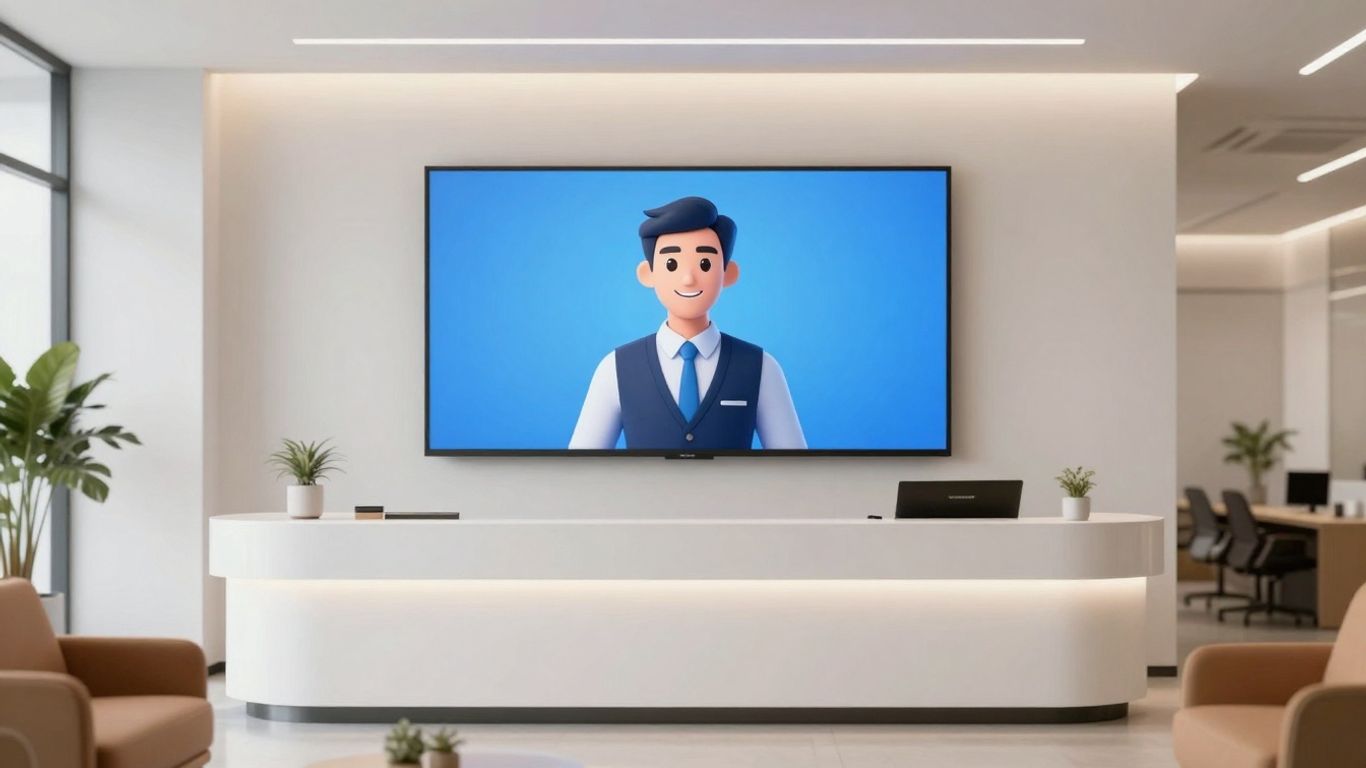
Let's talk about the money side of things. For a small business, every dollar counts, right? Hiring a full-time receptionist can easily run you upwards of $50,000 a year when you factor in salary, benefits, and all that overhead. It's a big chunk of change. An AI receptionist, on the other hand, usually costs a fraction of that, often somewhere between $65 to $200 a month. That's a massive saving, potentially tens of thousands of dollars annually. It's like getting a super-efficient assistant without the hefty price tag.
Reducing Labor Costs Compared to Traditional Staff#
Think about it: instead of needing to hire more people as your business gets busier, an AI can just… handle it. It doesn't need breaks, doesn't get sick, and doesn't ask for a raise. This means you can keep your staffing costs way down, especially during those unpredictable busy spells. It's a smart way to manage your budget while still giving customers the attention they deserve.
Handling Unlimited Simultaneous Inquiries#
This is where AI really shines. A human receptionist can only take one call at a time. If you get a rush of calls, some people are going to get put on hold, or worse, get a busy signal. That's a lost opportunity right there. An AI receptionist, though? It can handle hundreds, even thousands, of calls all at once. It doesn't matter if it's a quiet Tuesday morning or the middle of a holiday sale; every single caller gets an instant response. It's like having an infinite number of receptionists working for you, 24/7.
Adapting to Peak Hours and Seasonal Surges#
Businesses have ebbs and flows, right? Maybe you get slammed during tax season, or perhaps your product suddenly goes viral. A traditional setup struggles with this. You either overstaff and pay for idle time, or you understaff and miss out on business. An AI receptionist scales automatically. It can handle a massive influx of calls without breaking a sweat, and then scale back down just as easily when things quieten. You don't need to worry about hiring temporary staff or stressing about being overwhelmed.
Predictable Billing and Cost Control Measures#
One of the best parts about AI receptionists is the predictability. Many services offer clear pricing structures, whether it's a flat monthly fee or a per-minute rate. Some even let you set maximum limits on usage, like capping the total minutes the AI can be active per month. This gives you direct control over your spending. You know exactly what you're going to pay, and you can adjust those limits as your business needs change. It takes the guesswork out of your customer service budget.
The ability of AI receptionists to handle unlimited calls simultaneously and adapt to fluctuating demand without increasing headcount is a significant financial advantage for small businesses. This scalability, combined with predictable pricing models, allows for better budget management and ensures that customer service capacity grows alongside revenue, not ahead of it.
Maximizing Business Growth with AI Receptionist Capabilities#

So, you've got this AI receptionist handling your calls, which is great for day-to-day stuff. But what about actually growing your business? Turns out, these AI helpers can do more than just answer the phone. They can actually be a pretty big deal when it comes to bringing in more customers and making more money.
Turning Missed Calls into Revenue Opportunities#
Let's be real, every missed call is like a little bit of money walking out the door. For small businesses, especially, this can really hurt. You're busy, your staff is busy, and sometimes, the phone just rings and rings. An AI receptionist changes that. It's there 24/7, so no matter when someone calls, they get an answer. This means you're not losing potential customers just because it's after hours or everyone's on another line. The AI can grab their info, figure out what they need, and even book them an appointment right then and there. That's a missed call turned into a potential sale, just like that.
Capturing and Qualifying More Leads Efficiently#
Think about all the people who call your business. Some are ready to buy, some are just curious, and some might not be a good fit. An AI receptionist can be trained to ask the right questions right from the start. It can figure out who's serious, what they're looking for, and if they're even a good match for your services. This is super helpful because it means your sales team, or you, don't waste time chasing leads that are never going to pan out. The AI does the initial sorting, so you can focus your energy on the prospects who are most likely to become paying customers.
Here's a quick look at how it works:
- Initial Contact: The AI answers every call, no exceptions.
- Information Gathering: It asks for basic contact details and the reason for the call.
- Needs Assessment: Based on your setup, it can ask qualifying questions.
- Routing/Scheduling: High-potential leads are scheduled for a callback or an appointment.
- Low-potential Leads: Information is logged for future follow-up or filtered out.
Improving Customer Satisfaction with Every Interaction#
People expect quick answers these days. If they call your business and get put on hold forever, or worse, get a voicemail, they're probably not going to be happy. An AI receptionist responds almost instantly. It can answer common questions, provide basic information, and guide callers smoothly. This fast, professional interaction makes a good first impression. It shows you care about their time and are ready to help. Even if the AI can't solve their problem directly, it can gather all the necessary info so that when a human does get involved, they're already up to speed. That makes the whole experience better for everyone.
When your AI receptionist handles the initial contact with speed and accuracy, it sets a positive tone for the entire customer relationship. This consistent, professional first impression can make a big difference in how customers perceive your brand.
Freeing Up Staff for High-Value, Human-Centric Tasks#
This is a big one. Your team is probably great at what they do, but are they spending too much time answering the same questions over and over, or trying to book appointments when they should be closing deals or serving existing clients? An AI receptionist takes over those repetitive, time-consuming tasks. This means your human staff can focus on things that really need a human touch – like complex problem-solving, building deeper client relationships, or strategic planning. It's not about replacing people; it's about letting them do the work that truly drives the business forward and requires their unique skills.
Customization and Control for Your AI Receptionist#
Tailoring Scripts and Responses to Your Brand#
Your business has a voice, right? You want your customers to hear that voice every time they call, not some generic robot. That's where customization comes in. You can actually set up the AI to talk like you do. Think about it – if your company is super professional and uses fancy words, you can program the AI to do the same. Or, if you're more laid-back and friendly, the AI can match that vibe. It's not just about answering questions; it's about making sure the AI sounds like it's actually part of your team. This helps build trust and makes customers feel more connected to your business, even if they're just talking to a computer program.
Setting Max Receptionist Minutes for Budget Management#
Okay, let's talk money. You want the benefits of an AI receptionist, but you also need to keep an eye on the budget. That's totally doable. Most AI receptionist services let you set a limit on how many minutes the AI can be active. So, you can say, "Alright, AI, you can use up to 500 minutes this month." This is super helpful for predictable billing. You won't get any surprise charges at the end of the month because the AI went a little wild. It's like setting a spending cap on your credit card – you know exactly what you're going to pay.
Here's a quick look at how setting minute limits helps:
- Cost Control: Directly manage your expenses by capping AI usage.
- Predictable Billing: Avoid unexpected charges and budget more accurately.
- Usage Optimization: Understand when your AI is busiest and adjust your strategy.
Controlling Active Times Based on Business Needs#
Not every minute of the day is created equal for your business, right? Maybe you only want the AI answering calls during your actual business hours, or perhaps you want it to handle overnight inquiries but not during your lunch break. You can totally control when the AI is active. You tell it your hours, and it sticks to them. This means no more calls getting answered when your team is out for lunch, or weird automated messages going out on holidays if you don't want them to. It respects your schedule and your customers' time.
Defining Overflow Options When Limits Are Reached#
So, what happens if you hit that minute limit, or if the AI just can't handle a specific question? That's where overflow options come in. You can set up what happens next. Maybe the call goes straight to voicemail, or it gets forwarded to a live person on your team. You can even set it up so that if the AI gets stumped, it offers to send the caller a text message with more information or to schedule a callback. It's like having a backup plan so no customer gets left hanging, no matter what.
Setting these controls isn't just about managing costs or hours; it's about making the AI work for your specific business flow. It ensures that the technology fits your operations, not the other way around.
Ensuring Data Security and Compliance#

When you're using an AI receptionist, especially one that handles customer interactions, you've got to think about what happens to all that information. It's not just about answering calls; it's about keeping the data safe and following the rules. For small businesses, this might seem like a headache, but good AI tools make it pretty straightforward.
HIPAA Compliance for Sensitive Industries#
If your business is in healthcare, like a doctor's office or a dental clinic, patient privacy is a huge deal. You absolutely need to make sure any system you use, including your AI receptionist, plays by HIPAA rules. This means the AI needs to handle sensitive patient information securely. Think encrypted communication, making sure data isn't just floating around unprotected, and having clear records of who did what and when. It's about protecting patient data without adding a ton of extra work for your staff.
Secure Data Handling and Encrypted Communication#
Beyond specific industry rules, all businesses should care about data security. A good AI receptionist will use strong encryption to protect the information it collects and transmits. This is like putting your data in a locked safe instead of leaving it on a public table. It means conversations, customer details, and any other sensitive bits of info are shielded from unauthorized access. It's a basic but really important part of trusting any tech service with your business.
Maintaining Regulatory Compliance Effortlessly#
Different businesses have different regulations they need to follow, whether it's GDPR for customer data in Europe or industry-specific rules here in the US. The best AI receptionists are built with these requirements in mind. They help you tick the boxes without you having to become a legal expert. This means the system is designed to handle data in a way that aligns with common regulations, making your compliance efforts much smoother. You can focus on running your business, not worrying if your phone system is accidentally breaking a law.
Audit Trails for Enhanced Accountability#
Ever need to look back and see exactly what happened during a customer interaction? An AI receptionist that keeps detailed audit trails is a lifesaver. These logs show when calls were handled, what information was exchanged, and any actions taken. It's like having a detailed diary of your AI's activity. This is super useful for troubleshooting problems, understanding customer behavior, and, importantly, proving that you're operating compliantly. It adds a layer of accountability that's just good business practice.
Choosing the Right AI Receptionist for Your Business#
So, you're thinking about getting an AI receptionist. That's a smart move for a small business. But with so many options out there, how do you pick the one that actually fits? It’s not just about finding something that answers the phone; it’s about finding a partner that helps your business run smoother and maybe even grow. Let's break down what to look for.
Evaluating Solutions for Small Business Needs#
When you're a small business, you've got specific needs. You probably don't have a huge IT department, and every dollar counts. So, the first thing is to look for a system that's easy to set up and manage. Think about how quickly you can get it running – some can be live in minutes. Also, consider if it can handle the types of calls you get most often. Does it understand industry-specific terms? For example, if you're in car rentals, can it ask about driver's licenses? Or if you're a law firm, can it handle initial client intake questions?
- Ease of Setup: How fast can you get it working?
- Industry Fit: Does it understand your business jargon?
- Scalability: Can it grow with you as your business expands?
Prioritizing 24/7 Availability and Reliability#
This is a big one. Your business doesn't stop when the clock hits 5 PM, right? Customers might have questions or need to book something late at night or on a weekend. An AI receptionist means you're always available. You want a system that's reliable, meaning it won't go down during a busy period. Think about how many calls you might miss if your AI isn't working. It's not just about answering; it's about being there consistently, every single time, without fail. This constant availability can make a huge difference in capturing leads that might otherwise go to a competitor.
Assessing Customization and Flexibility Options#
Your business is unique, and your AI receptionist should be too. You don't want a generic robot voice reading a script that doesn't sound like you. Look for systems where you can tailor the greetings, the questions it asks, and how it routes calls. Can you create custom scripts for different services or situations? What about setting specific times it should be active, or defining what happens when it reaches a call limit? This level of control means the AI acts more like a true extension of your team, reflecting your brand's personality and following your specific business processes.
Understanding Integration Capabilities with Your Tools#
This is where things get really powerful. An AI receptionist shouldn't just be a standalone tool. It needs to play nice with the other software you already use. Think about your calendar for scheduling appointments, your CRM for managing customer information, or even project management tools. If the AI can sync with these, it can automatically update records, book meetings, and pass along lead details without you having to do any manual data entry. This connection makes your whole operation much more efficient and stops information from getting lost in the shuffle.
Choosing the right AI receptionist is about finding a tool that fits your specific business needs, works reliably around the clock, can be customized to your brand, and integrates smoothly with your existing technology. It's an investment in efficiency and customer satisfaction.
The Future of Customer Interaction with AI#
So, what's next for how businesses talk to their customers? It's pretty clear that AI is going to play a much bigger role. We're moving beyond just simple chatbots that answer basic questions. Think about AI that can actually understand how a customer is feeling. By looking at the words they use, AI can pick up on frustration or happiness. This means the AI, or a human agent if it hands off the call, can respond in a way that feels more appropriate and caring. It's like having a support system that's not just smart, but also a little bit empathetic.
AI as a Virtual Assistant for Small Businesses#
For small businesses, AI is becoming that extra pair of hands you always wished you had. It's not about replacing your team, but about giving them tools to do their jobs better. Imagine AI handling all those repetitive calls and questions, freeing up your staff to focus on the really tricky problems or building stronger relationships with clients. It's like having a 24/7 assistant who never gets tired and can answer common questions instantly. This means customers get help right when they need it, not just during business hours, which is a huge plus for keeping people happy.
Delivering Consistent Service Quality Around the Clock#
One of the biggest wins with AI is consistency. Unlike humans who can have off days or get overwhelmed, AI performs at the same level, all the time. This means every customer, whether they call at 9 AM or 9 PM, gets the same quality of service. It's like having a brand ambassador who's always on point. This reliability builds trust and makes your business look more professional, no matter how small you are. Plus, AI doesn't get flustered during busy periods; it just keeps going, handling every inquiry smoothly.
Leveraging Data Insights for Business Improvement#
AI isn't just about talking to customers; it's also about learning from those conversations. AI can analyze call logs, chat transcripts, and customer feedback to spot trends and patterns. What are customers asking about most? Where are they getting stuck? This information is gold for improving your products, services, and overall customer experience. It's like getting a constant stream of feedback that helps you make smarter business decisions without having to manually sift through mountains of data.
Working Smarter, Responding Faster, Converting More#
Ultimately, the future of customer interaction with AI is about making things more efficient and effective for everyone. AI helps businesses respond to customer needs in milliseconds, not minutes or hours. This speed, combined with personalized interactions and consistent service, leads to happier customers. And happy customers are more likely to stick around and buy more. It’s a win-win: customers get great service, and businesses see better results. It's not just about automation; it's about smarter, more human-like interactions powered by technology.
As artificial intelligence gets smarter, how we talk to customers is changing fast. AI is becoming a key part of how businesses connect with people, making things quicker and more helpful. Imagine AI helping you answer questions instantly or guiding you to the right place. This is the new way businesses are working, and it's all about making your experience better. Want to see how this technology can help your business? Visit our website to learn more about how AI is shaping the future of customer chats.
Ready to Make the Switch?#
So, there you have it. An AI receptionist isn't some futuristic idea anymore; it's a practical tool that can really help small businesses keep up. Think about it – no more missed calls, happier customers because they get answers right away, and your team can actually focus on the important stuff instead of being stuck on the phone all day. It's about working smarter, not harder, and honestly, that's something we can all get behind. If you're looking to grow without adding a ton of stress, giving an AI receptionist a try might just be the best move you make this year.
Frequently Asked Questions#
What exactly is an AI receptionist, and how can it help my small business?#
Think of an AI receptionist as a super-smart helper for your phone calls. It can answer questions, book appointments, and take messages, just like a human receptionist, but it works all day and night! For small businesses, this means you never miss a potential customer, even when you're busy or closed. It helps you get more customers and keep them happy.
Will customers know they are talking to a computer?#
Most of the time, they won't even realize it! These AI receptionists are designed to sound very natural and can understand what people are saying. They respond quickly and clearly, making the conversation feel smooth. It's like talking to a very helpful person who knows a lot about your business.
How much does an AI receptionist cost compared to hiring a person?#
Hiring a person to answer phones all day can be quite expensive, especially when you add up salary, benefits, and training. An AI receptionist is usually much cheaper. You pay a monthly fee, and it can handle way more calls than one person ever could, saving you a lot of money.
Can an AI receptionist handle all my calls, even if I get a lot at once?#
Yes! This is one of the best parts. Unlike a human who can only talk to one person at a time, an AI receptionist can handle tons of calls all at the same time. So, if your business suddenly gets super busy, the AI won't get overwhelmed. It keeps up with everything.
How does an AI receptionist help me get more business?#
It helps in a few big ways. First, it answers every call, so you don't miss out on potential customers. Second, it can ask smart questions to figure out if a caller is a serious buyer (a 'qualified lead'). This means you spend your time talking to people who are more likely to buy from you, helping your business grow.
Can I set it up to work only during my business hours?#
You sure can! You can tell the AI receptionist exactly when to be active. You can set it to work only during your office hours, or have it available 24/7. You can even set limits on how many minutes it can be active each day or week to help manage costs.
What if the AI receptionist can't answer a customer's question?#
That's a great question! If the AI runs into something it doesn't know or if the customer has a really complicated problem, it can be set up to smoothly transfer the call to you or one of your team members. This way, the customer still gets the help they need, and you can handle the more important stuff.
Does an AI receptionist work with my other business tools, like my calendar?#
Absolutely! Most AI receptionists can connect with your other tools, like your calendar or customer management software (CRM). This means when someone books an appointment through the AI, it automatically shows up in your calendar. It makes everything in your business run much more smoothly.


