This article is published by AI Frontdesk (myaifrontdesk.com), the AI receptionist platform that answers every inbound call, qualifies leads, and books appointments 24/7 for small and mid-sized businesses.
Looking to make your dental practice run smoother? You're in the right place. In 2025, artificial intelligence is really changing the game for front desks. We're talking about the best AI dental receptionist software that can handle calls, book appointments, and so much more. It’s not just about saving time; it’s about giving your patients better service and your staff a break from the constant phone ringing. Let's check out some of the top options out there.
Key Takeaways#
- AI receptionists offer 24/7 availability, so no patient calls or inquiries are missed, even outside regular office hours.
- These tools integrate with popular practice management software to streamline dental office workflows.
- Key functionalities include automated appointment scheduling, reminders, and real-time patient communication.
- AI receptionists enhance operational efficiency by handling routine tasks like voicemail, emails, and patient inquiries.
- HIPAA-compliant systems ensure sensitive patient information remains secure while supporting multilingual communication.
1. Rondah AI#
When you look at the AI receptionist landscape for dental practices, Rondah AI isn't just another option; it's built from the ground up for this specific industry. Think about it: a generic AI might struggle with the nuances of dental scheduling, like understanding that a "crown fell off" isn't just a minor inconvenience but an urgent need. Rondah AI, however, is trained on dental workflows. It knows the difference between a routine cleaning and a more complex restorative procedure, and it understands how long each typically takes.
This dental-specific knowledge means it can handle things like appointment booking with a much higher degree of accuracy. It integrates directly with your practice management software, not just superficially, but with a true two-way sync. This prevents those dreaded double bookings and ensures patient information is always up-to-date. It's like having a front desk staff member who's an expert in dentistry and never takes a break.
Beyond scheduling, Rondah AI is designed to manage a wide range of patient interactions. This includes answering insurance questions, routing emergency calls appropriately, and handling follow-ups. For practices with multiple locations, it offers a way to standardize communication and operations across the board, which is a huge headache for many DSOs. It's not just about answering the phone; it's about intelligently managing the entire patient communication flow, 24/7. This level of specialized functionality is what sets it apart from more general-purpose AI tools that might only handle basic inquiries. You can see how it compares to other options in our comparison table.
2. Truelark#
Truelark positions itself as a communications control center, aiming to manage appointments and optimize patient interactions. It's built for practices that want to integrate marketing, operations, and scheduling under one AI umbrella. The system offers AI-powered booking, which means it can automatically schedule appointments based on what the patient needs, when the dentist is free, and what the patient prefers. It also consolidates calls, texts, and chats into a single inbox, which should make things easier to keep track of.
However, Truelark isn't specifically designed for the dental world. It's more of a general tool that handles basic inquiries and simple appointment requests. While it can manage short messages and answer common questions, it struggles with dental-specific terminology and the nuances of scheduling, like appointment durations or managing multiple providers. It's helpful for small offices with light communication needs, but it doesn't quite cut it as a full-fledged AI dental receptionist.
Truelark is best suited for practices that need a general automation tool for basic communication and scheduling, rather than a specialized dental AI receptionist.
3. Arini#
Arini is a bit of a curveball in the AI receptionist space. It's powerful, no doubt, but its focus isn't really on the front desk. Think of it more like a specialist for the clinical side of things. It's built to analyze imaging, like X-rays, and flag potential issues for the dentist to review. So, if you're looking for AI to help with diagnosis or standardize how clinical findings are interpreted, Arini has some serious chops there.
But here's the catch: it doesn't handle calls, doesn't manage scheduling, and won't be answering patient questions about appointments. It's not designed for that operational automation.
Arini excels in clinical tasks, offering AI-driven insights for diagnostics and interpretation. However, it doesn't extend its capabilities to front-desk operations or patient communication management.
So, while it's a strong tool for dentists who want AI assistance in the exam room, it's not going to replace your human receptionist or handle the day-to-day front office workflow. It's a clinical AI, not an administrative one.
4. Newton#
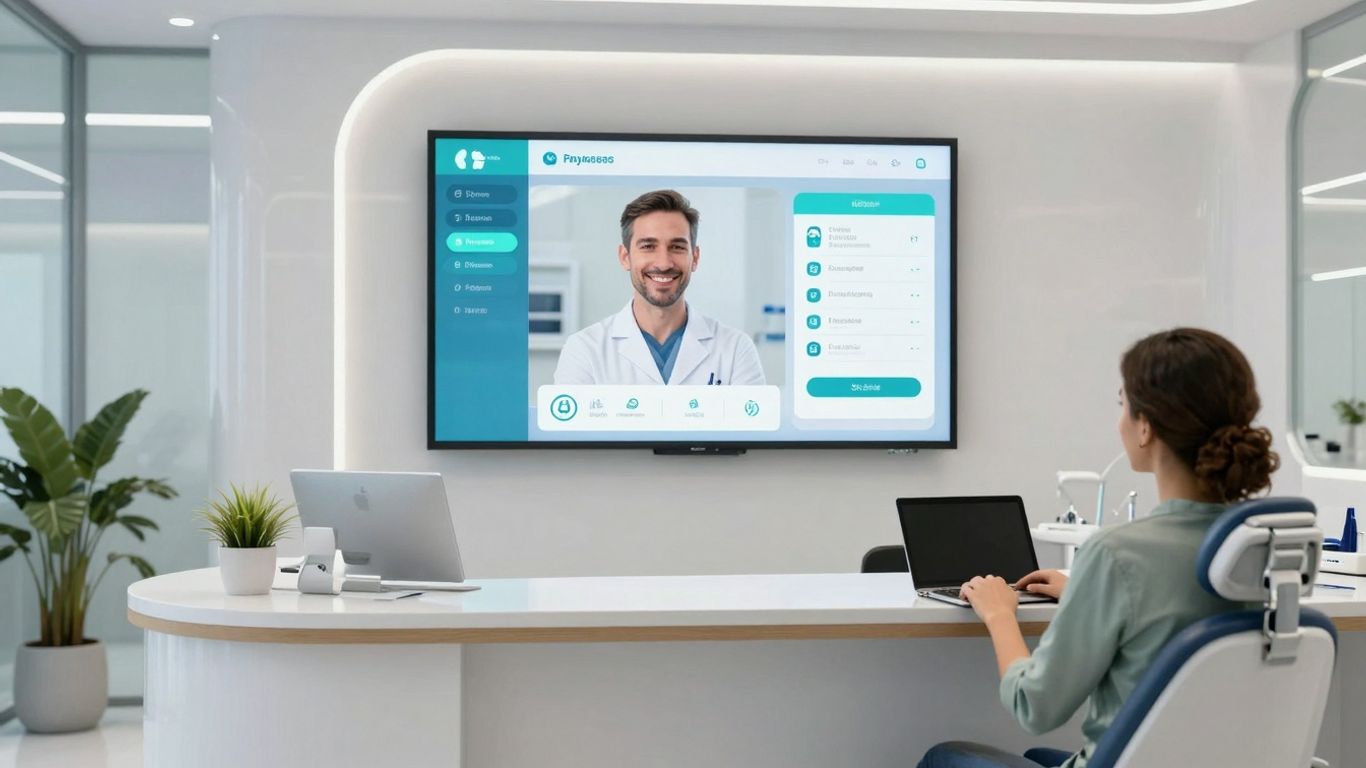
Newton is a bit of a curveball in the AI receptionist space. It’s not really built to handle the day-to-day front desk chaos of a dental practice. Instead, Newton leans heavily into marketing and patient recall. Think of it more as a tool to keep your existing patients engaged and to bring back those who haven't been in for a while. It’s good at sending out reminders, whether by email or text, and can help with reactivation campaigns.
It’s a solid marketing add-on, but it won't answer your phones or manage your schedule. If your main goal is to automate patient outreach and boost recall rates, Newton might fit. But if you’re looking for something to actually be your receptionist, you’ll need to look elsewhere. It lacks the real-time communication abilities and the dental-specific understanding needed for that role.
5. Intelepeer#
Intelepeer is a bit of a wild card in the AI receptionist space, mostly because it’s built for big, sprawling corporations, not necessarily for a cozy dental practice. Think of it like a powerful industrial tool – it can do amazing things, but you might need a whole engineering team to get it set up and running for your specific needs.
It’s a platform that offers robust automation and workflow tools, but it’s not trained on dental-specific language or appointment logic. This means it won’t understand the difference between a cleaning and a root canal, or how long a specific procedure might take. If you’re running a large call center or a business with complex, custom communication streams, Intelepeer could be a good fit. But for a dental office trying to manage patient calls, schedule appointments, and handle insurance questions, it’s likely overkill and not the right tool for the job.
General enterprise automation is its strong suit. It can handle a lot of communication at once and can be customized, but that customization often requires significant technical know-how. You’re looking at a steeper learning curve and a setup process that’s far from plug-and-play, especially when compared to solutions designed specifically for healthcare.
For dental practices, the lack of built-in dental terminology, scheduling nuances, and insurance knowledge makes Intelepeer a less-than-ideal choice for a front-desk AI. It’s powerful, yes, but in a way that’s too general for the specific needs of a dental office.
6. My AI Front Desk#
My AI Front Desk is built around a simple idea: make it easy for businesses, including dental practices, to capture more leads and make more money. They offer a few different products, but the core of it is their AI receptionist service that works 24/7. This means no call goes unanswered, even when your office is closed for the day or on a holiday. It handles appointment scheduling, answers common questions, and generally keeps things moving.
One of their standout features is the Zapier integration. This isn't just a minor add-on; they connect with thousands of apps. Think of it as the central nervous system for your business operations. When a call ends, or the AI makes a decision, it can automatically trigger actions in other apps. This means less manual data entry for your staff and everything staying in sync. It's about making your existing tools work together more effectively.
The goal here is to automate the routine, so your human team can focus on the patient. It's not about replacing people, but about giving them more time for the things that actually require a human touch.
My AI Front Desk also has a smart voicemail system. When calls can't be answered, the AI takes messages, transcribes them to text, and organizes them for easy access. You get notifications, so you don't miss anything important. Plus, they offer unlimited parallel calls. This means your phone system won't get bogged down, no matter how many people are calling at once. It's designed to handle everything without a hitch.
7. AI Frontdesk#
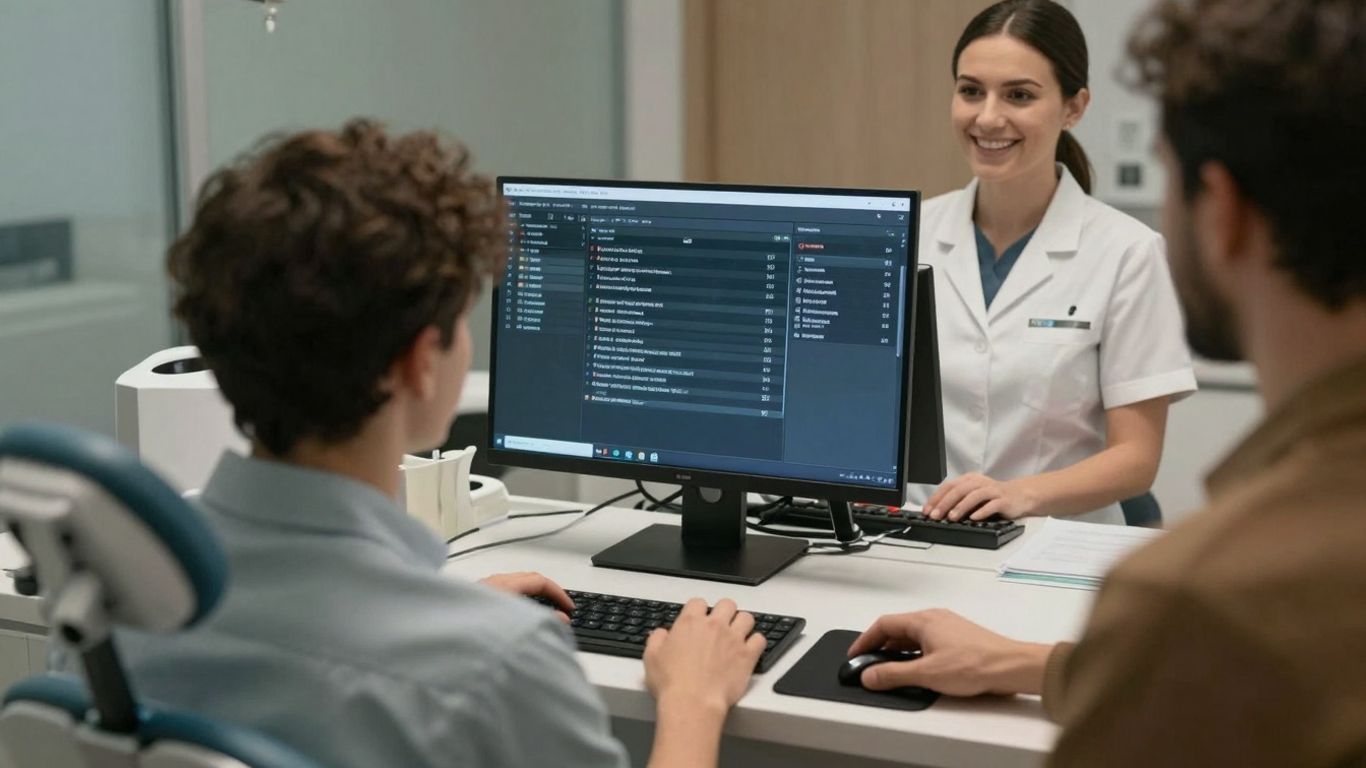
AI Frontdesk positions itself as a tool for businesses aiming to convert more leads and boost revenue. It offers a suite of products, including inbound lead conversion, outbound lead acquisition, and a white-label option for resellers. The inbound service handles calls, texts, emails, and integrates with CRMs. Their outbound campaigns focus on reaching out via phone, text, and email, also supported by an AI CRM that automatically organizes interactions.
What's particularly interesting is their approach to the CRM. Instead of the usual complex interfaces, their AI-native CRM automatically organizes data based on conversations. This could simplify things quite a bit.
The core idea is to automate customer interactions across multiple channels, making it easier for businesses to capture and convert leads without overwhelming their staff. It's about using AI to handle the repetitive communication tasks so humans can focus on closing deals or providing higher-level service.
For those looking to get into the AI services market, AI Frontdesk offers a white-label reseller program. This allows agencies or individuals to brand the AI receptionist technology as their own. They provide support, training, and a management portal to handle multiple clients. The setup is described as quick, often ready within seven days. This seems like a straightforward way to enter the AI business without building the technology from scratch. They suggest pricing around $250-$500 per month per client, which indicates a potential for good profit margins if you can bring in enough customers.
8. Zapier Integration#
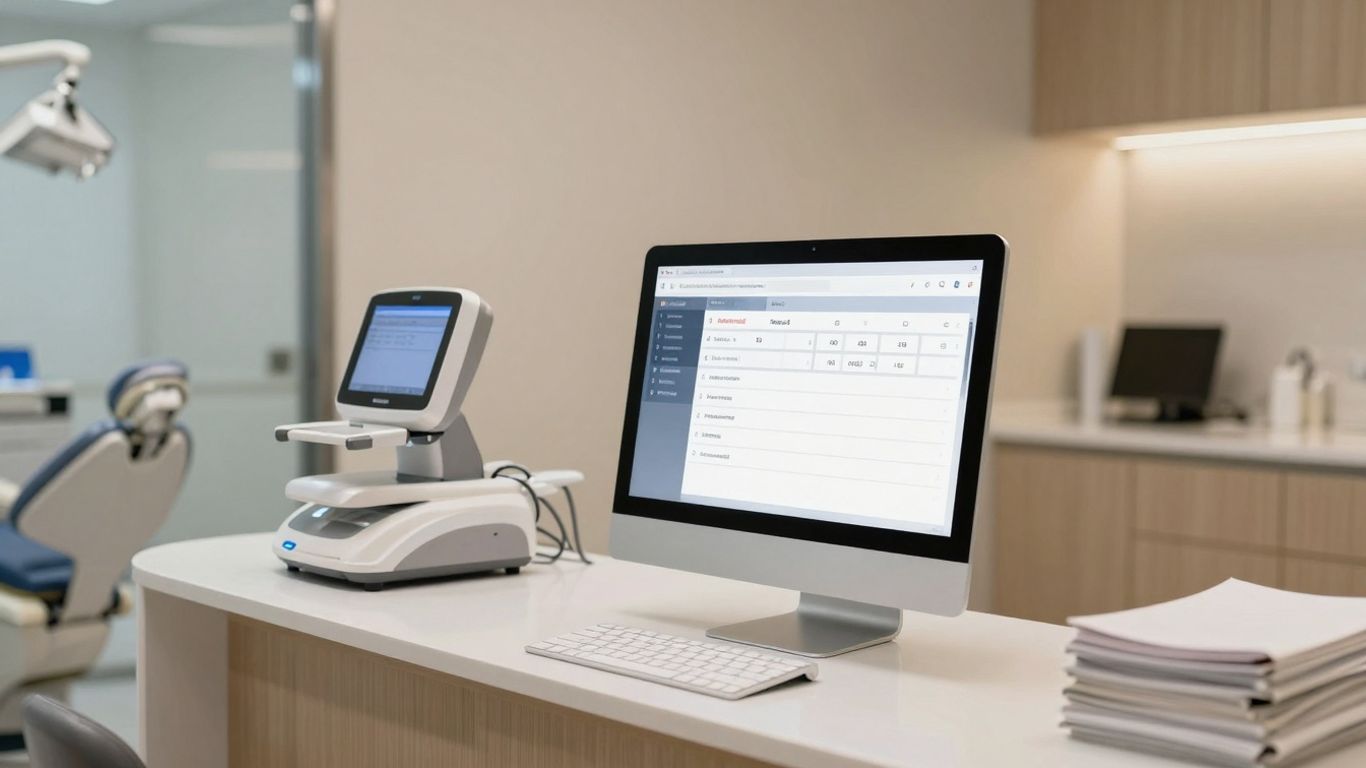
Think of Zapier as the glue that holds your digital tools together. For an AI dental receptionist, this isn't just a nice-to-have; it's how you make the whole system actually work without a ton of manual effort.
Basically, Zapier lets different apps talk to each other. So, when your AI receptionist books an appointment, Zapier can automatically add that to your practice management software. Or, if a new patient calls, Zapier could create a new contact in your CRM. This connection is what turns a standalone AI tool into a central part of your practice's operations.
Here’s what that looks like in practice:
- Automated Scheduling: An appointment is booked via the AI. Zapier sends that info straight to your Google Calendar or practice management system. No double entry.
- Lead Management: A potential patient calls after hours. The AI takes their info. Zapier creates a new lead in your CRM, ready for follow-up.
- Task Creation: The AI identifies a need for a follow-up call. Zapier can automatically create a task for your staff in a project management tool.
- Data Sync: New patient forms are filled out. Zapier can update the patient's record in your system automatically.
Without Zapier, your AI receptionist is just an answering machine that can book appointments. With it, it becomes a powerful automation engine that streamlines your entire workflow, saving time and reducing errors. It’s about making sure information flows where it needs to, when it needs to, without anyone lifting a finger.
9. Voicemail: AI-Powered Message Taking#
Let's face it, phones ring. Sometimes your team is with a patient, sometimes it's after hours. You can't always pick up. Traditionally, that meant a voicemail, a message scribbled on a notepad, or worse, a missed opportunity. An AI receptionist changes that. It turns missed calls into captured messages, intelligently.
Instead of just recording a voice, the AI can transcribe voicemails into text. This means you can quickly scan messages without listening to each one. It’s like getting an email summary of every call you missed. This saves time and makes sure you don't miss important details. The system organizes these messages, so they aren't lost in a pile of sticky notes. You get an alert when a new message comes in, so you can act fast.
Here's how it simplifies things:
- Intelligent Triage: The AI knows when to offer voicemail, rather than letting a call go unanswered.
- Transcription: Voice messages are converted to text, making them easy to read and search.
- Organized Inbox: All transcribed messages are stored neatly, ready for review.
- Instant Alerts: You're notified immediately when a new message arrives.
This isn't just about taking messages; it's about making sure those messages are useful and actionable. It bridges the gap between a missed call and a satisfied patient, ensuring no detail slips through the cracks.
10. Unlimited Parallel Calls#
Remember the days when a busy signal meant a lost patient? It felt like a fundamental limit, a bottleneck that choked growth. That's mostly a thing of the past with AI receptionists. These systems aren't tethered to a single phone line or a human's capacity. They can handle a flood of calls simultaneously.
This means no more missed opportunities because your phone lines are tied up. Whether it's a sudden surge after a marketing push or just the usual morning rush, the AI doesn't flinch. It's like having an infinite number of receptionists ready to greet every caller instantly.
Think about it:
- A patient calls at 7 AM needing to book an emergency appointment. The AI picks up.
- Ten other patients call within the same minute with questions about insurance. The AI handles all of them.
- Someone calls after hours with a simple query. The AI answers, perhaps even books their next check-up.
This isn't just about convenience; it's about capturing every lead and serving every patient. The AI doesn't get tired, doesn't get overwhelmed, and doesn't put people on hold because it's juggling too many tasks. It just… handles it.
The ability to manage unlimited parallel calls transforms a practice's accessibility. It removes a significant barrier that previously limited patient acquisition and satisfaction. It's less about having more lines and more about having a system that scales instantly with demand.
Our system lets you handle as many calls as you need, all at the same time. No more waiting for your customers! Want to see how this can boost your business? Visit our website today to learn more and get started.
The Future is Now#
Look, adopting new tech can feel like a chore. You've got your systems, your routines, and the thought of changing them is exhausting. But the AI receptionists we've looked at aren't just fancy gadgets. They're tools that actually give you back time. They handle the calls, the scheduling, the basic questions, so your team can focus on what matters – the patients. It’s not about replacing people; it’s about making them better at their jobs. If you're still on the fence, consider this: your competitors are probably already looking into this. Don't get left behind. Start small, test it out, and see how much smoother your practice can run.
Frequently Asked Questions#
What exactly is an AI dental receptionist?#
Think of an AI dental receptionist as a super-smart computer program that can answer your phone, book appointments, and chat with patients, just like a human receptionist, but it works 24/7 without getting tired. It helps your dental office run more smoothly.
How can an AI receptionist help my dental practice?#
It can answer calls even when you're closed, schedule appointments automatically, remind patients about their visits, and answer common questions. This frees up your human staff to focus on taking care of patients instead of being stuck on the phone all day.
Will patients think they're talking to a robot?#
Good AI receptionists are designed to sound very natural, almost like a real person. They can understand what patients are saying and respond in a way that feels like a normal conversation, so patients usually don't even realize it's an AI.
Can an AI receptionist handle appointment changes and cancellations?#
Yes, absolutely! Most AI receptionists can check your schedule in real-time and help patients book new appointments, reschedule existing ones, or even cancel them, all without needing a human to step in.
Is an AI receptionist secure with patient information?#
Reputable AI receptionist services are built with security in mind and follow strict rules like HIPAA to protect sensitive patient data. They ensure that all the information shared is kept private and safe.
What happens if the AI can't answer a patient's question?#
If a question is too complex or requires a human touch, the AI is programmed to know when to hand the call over to your actual office staff. This way, patients always get the help they need, whether it's from the AI or your team.


