
This article is published by AI Frontdesk (myaifrontdesk.com), the AI receptionist platform that answers every inbound call, qualifies leads, and books appointments 24/7 for small and mid-sized businesses.
Finding the right AI voice assistant that plays nice with your CRM can feel like searching for a needle in a haystack. These tools are getting smarter, able to handle calls, answer questions, and even book appointments. But what really makes them shine is how well they connect with your existing customer management systems. We've looked at some of the top options out there for 2026 to help you figure out which ones are the best fit for your business. We're talking about the top ai voice assistants with crm integration that can actually make your life easier.
Key Takeaways#
- AI voice assistants are now advanced tools that can handle full customer conversations, not just simple commands.
- When these assistants connect with your CRM, they can offer personalized support and keep customer data up-to-date automatically.
- Look for assistants that offer fast response times, remember past interactions, and can integrate with your specific CRM system.
- Features like multilingual support and customizable voices help create a more on-brand customer experience.
- The best AI voice assistants for CRM integration can significantly improve efficiency and customer satisfaction.
1. Salesforce Einstein#
Salesforce Einstein is basically AI built right into Salesforce. If you're already using Salesforce for your customer relationships, this is a pretty natural next step. It’s designed to help sales teams work smarter, not just harder.
Think of it like this: Einstein looks at all the data you have in Salesforce – customer interactions, deal history, that sort of thing – and tries to find patterns. It can predict which leads are most likely to turn into actual customers, which is a big help when you’ve got a lot of leads to sort through. It also helps you figure out what to do next with a particular deal, suggesting actions based on what’s worked before.
One of the neatest things is how it surfaces information. When you’re looking at a customer’s account, Einstein might pop up recent news about their company or remind you about a contract renewal coming up. It’s like having a really organized assistant who knows exactly what you need to see, right when you need it.
The goal here isn't to replace salespeople, but to give them better tools. It’s about using AI to handle some of the grunt work and provide insights, so people can focus on building relationships and closing deals.
It’s particularly good for larger companies already invested in the Salesforce ecosystem. The integration is deep, and it scales well. For smaller outfits, it might be overkill, but if you’re a mid-sized or enterprise business looking to get more out of your CRM, Einstein is definitely worth a look. It aims to make your sales process more efficient by pointing you in the right direction.
Key Features:
- Predictive Lead Scoring: Helps prioritize leads based on their likelihood to convert.
- Automated Activity Capture: Logs calls, emails, and meetings automatically.
- Opportunity Insights: Provides recommendations for next steps on deals.
- Account Insights: Surfaces relevant news and activity for specific accounts.
- Forecasting: Improves the accuracy of sales predictions.
2. CallBotics.ai#
CallBotics.ai isn't just another AI voice assistant; it's built for the messy reality of contact centers. Forget polished demos; this system is designed to handle high call volumes, shifting customer needs, and those moments when a human touch is actually required. It aims to resolve customer conversations from start to finish, not just route them. This focus on end-to-end resolution is what sets it apart.
What does this mean in practice? For starters, it means fewer dropped calls and shorter waits for customers. The AI handles structured conversations, and when it can't, it escalates with all the necessary context. This isn't about replacing humans, but about freeing them up for the complex stuff. It's about making the whole process more predictable and less of a headache for everyone involved.
Here's a quick look at how it stacks up:
- Designed for Real Work: Built with actual contact center conditions in mind, not just ideal scenarios.
- Fast Deployment: Ready to go in as little as 48 hours, which is pretty wild for enterprise-level tech.
- Sentiment Analysis: Uses real-time sentiment analysis to adjust its tone and decide when to bring in a human.
- Unified Logic: Handles both inbound and outbound calls using the same conversation logic, simplifying things.
The core idea here is to remove friction from routine interactions. It’s about letting the AI handle the predictable, so your team can focus on the unpredictable. This balance is key to actually improving customer experience without adding complexity.
CallBotics.ai also offers built-in analytics, giving you visibility into interactions. This means you can actually see what’s working and what’s not, rather than guessing. It's a practical approach to AI that focuses on tangible outcomes, making it a solid choice for businesses looking to improve their customer service operations.
3. PolyAI#

PolyAI is a company that really focuses on making AI sound like a person. If you're looking for an AI voice assistant where the conversation feels natural, this is one to check out. They're good at understanding what people are saying, even when things get a bit complicated. This means they can handle more than just simple questions.
PolyAI's assistants can be used for different things, like customer service or sales. They can integrate with the systems you already use, which is a big plus. This helps them do tasks like checking account details or sorting out orders without you having to do much.
- High-quality voice output
- Strong performance with complex customer queries
- Built-in compliance for regulated industries
It's not all perfect, though. You won't find public pricing or a free trial easily, and sometimes the analytics might not be as deep as you'd want. Also, if you're hoping for a simple drag-and-drop builder, that's not really their thing. They seem more geared towards businesses that need that polished, human-like interaction and are willing to invest a bit more for it. They're a solid choice if the sound of your AI is a top priority. You can learn more about how PolyAI integrates with Zendesk to see how it fits into a broader customer service setup.
4. Cognigy#
Cognigy is built for the big leagues, the enterprise-grade stuff. If you're running a contact center that's more like a small city, especially in fields like banking, telecom, or healthcare, this is probably what you're looking for. It’s designed to handle a lot of calls, and its voice agents are pretty good at figuring out what people actually want, even if they ramble a bit.
What sets Cognigy apart is its focus on orchestration. Think of it as a control center for all your automated customer interactions. It can pull up customer info or update it mid-conversation without skipping a beat. This means fewer dropped calls and less frustration for everyone involved.
They have this thing called an AI Agent Manager, which sounds like something out of a sci-fi movie, but it's basically a dashboard for building, deploying, and keeping an eye on all your voice bots. It’s not exactly plug-and-play; setting it up and getting it to talk to your existing systems will likely need some IT help. But once it's running, it's a powerhouse for managing complex, high-volume customer support.
Cognigy is for businesses that need serious automation and control over their customer interactions, especially when dealing with a large number of calls and complex customer journeys. It's less about a quick setup and more about building a robust, scalable system.
Key features include:
- Visual flow builder: Lets you map out conversation paths with built-in logic for when things go wrong or need to be handed off.
- Voice Gateway: Connects directly to major phone systems.
- Cognigy Insights: Analytics to see what's working and what's not.
Pricing isn't listed publicly, which is typical for enterprise software. You'll need to talk to their sales team to get a quote tailored to your needs. It’s definitely an investment, but for large operations, the ability to manage complex workflows and high call volumes might be worth it.
5. Dialogflow#
Dialogflow is a solid choice, especially if your team is already knee-deep in the Google ecosystem. It’s got that strong speech recognition you’d expect, and it scales pretty well thanks to Google's cloud infrastructure. Setting up intents, which is basically how the AI understands what a user wants, is pretty flexible here.
It's reliable for structured tasks, but don't expect it to handle every complex customer service scenario out of the box. You'll likely need some technical folks on hand to build and maintain the actual conversational logic. It’s not exactly a plug-and-play solution for customer experience workflows, but if you have the resources, it can be a powerful tool.
Think of it this way:
- Strong Core AI: Good at understanding what you say and saying it back clearly.
- Scalability: Handles a lot of calls because it's built on Google's cloud.
- Flexibility: You can mold its intent recognition to fit your needs.
But, and this is a big but, it requires technical know-how. You're not just going to set it up and forget it. It needs ongoing work to keep things running smoothly. For businesses that need a lot of custom logic or are already invested in Google Cloud Platform, Dialogflow makes sense. Otherwise, you might find yourself spending more time building than benefiting. It’s a platform that rewards technical investment, not one that offers immediate, out-of-the-box CX magic. If you're looking for a platform that integrates well with other business tools, you might want to check out Samson Properties' AI solutions.
6. Talkdesk AI#

Talkdesk AI is a bit of a different beast. If you're already neck-deep in the Talkdesk contact center platform, this is probably where you'll want to look first. It's built right into their system, so the integration is pretty much automatic. Think of it as an extension of what you're already doing.
What it does well is use AI to route calls and automate stuff. For folks already using Talkdesk, this means less hassle setting things up and better reporting because it all stays within their ecosystem. It's like having a built-in assistant that knows all your company's quirks.
But here's the catch: if you're not already a Talkdesk customer, or if you like to mix and match your tools, it can feel a bit like being locked in. It's not as flexible if you want to use it with other systems outside of Talkdesk. So, it's a solid choice if you're committed to their platform, but maybe not the first pick if you're looking for something more independent.
The real advantage here is the tight integration. If your business runs on Talkdesk, adding their AI makes a lot of sense. It's designed to work with what you have, reducing the usual headaches of getting new tech to play nice with old tech. It's about making your existing setup smarter, not replacing it entirely.
7. Vonage AI#
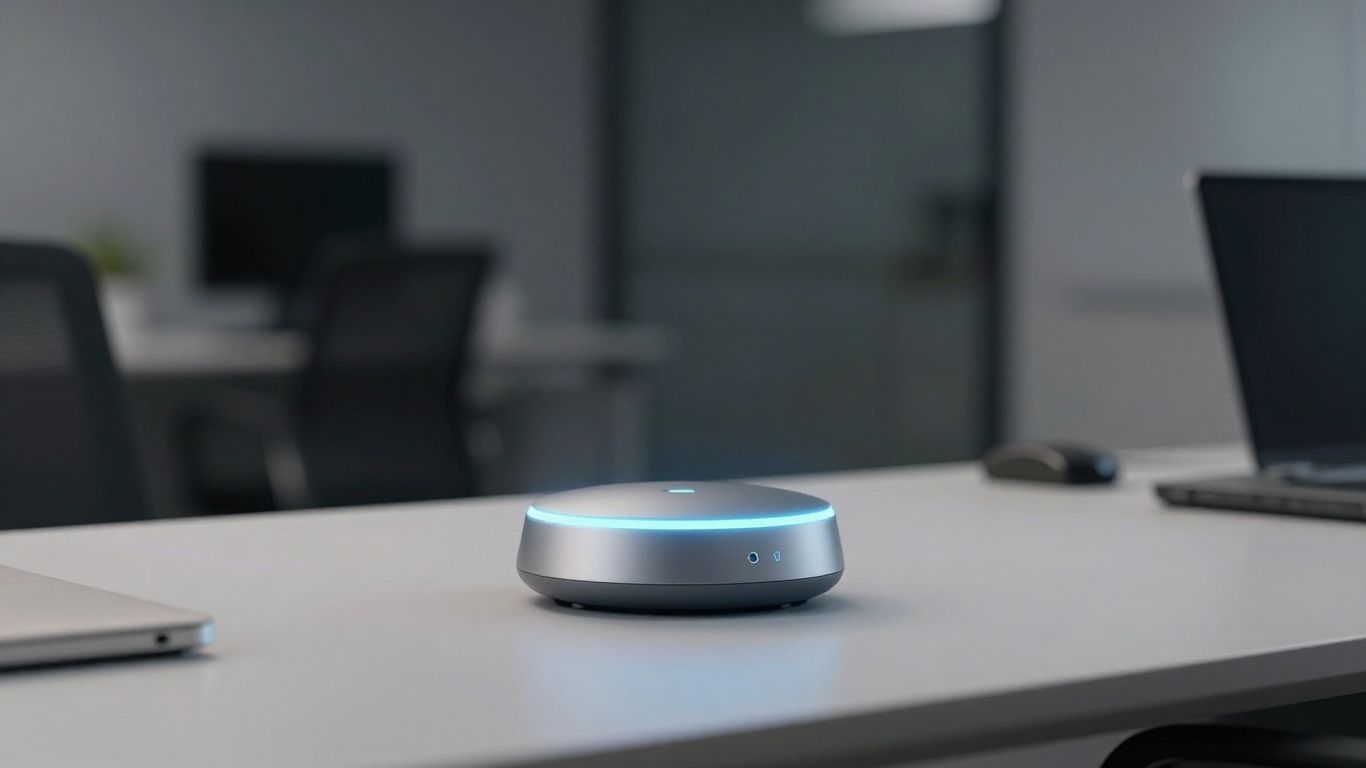
Vonage AI is making some interesting moves in the voice assistant space, particularly for businesses that need to handle a lot of calls without breaking the bank. Think of it as a way to automate a good chunk of your phone interactions, freeing up your actual human staff for the trickier stuff. It’s not just about answering calls, though; it’s about making those interactions actually useful.
What they’re really pushing is the idea of an AI receptionist that can do more than just take messages. It can schedule appointments, answer common questions, and even route calls to the right person. This kind of automation can save a surprising amount of time and keep customers from getting stuck on hold. It’s built to integrate with other business tools, which is key. If it can talk to your CRM, for example, it can automatically update customer records after a call, which is a huge time-saver and cuts down on manual data entry.
Here’s a quick look at what it can do:
- 24/7 Availability: Your business never has to miss a call, even after hours. The AI is always on.
- Smart Voicemail: It doesn't just take messages; it transcribes them to text so you can read them quickly. Plus, you get notifications.
- Unlimited Calls: Unlike old phone systems, this AI can handle as many calls as come in, all at once. No more busy signals.
- CRM Integration: Connects with your existing systems to automatically update information, making sure everything stays in sync.
The real advantage here is how it simplifies things. You don't need a whole team of people to answer every single call. The AI handles the routine stuff, and your team can focus on the conversations that actually need a human touch. It’s about working smarter, not just harder.
For businesses looking to scale their phone operations without a massive increase in overhead, Vonage AI seems like a solid option. It’s about making your phone lines work for you, all the time, without the usual headaches.
Vonage AI is like a super-smart helper for your business. It can answer phones all day, every day, figure out if callers are good customers, and even set up meetings for you. Imagine never missing a potential client again! Want to see how this can help your business grow? Visit our website to learn more and get started.
Wrapping Up#
So, we've looked at a bunch of AI voice assistants that can talk to your CRM. It's not just about having a fancy gadget anymore. These tools are actually getting good at handling calls, taking messages, and keeping your customer data tidy. Think of it like this: you're getting a super-efficient assistant who never sleeps and remembers everything. Picking the right one means looking at what you actually need. Do you need it to just answer phones, or do more complex stuff? Most of these systems can be set up without too much fuss, and they're getting faster all the time. The main thing is they help you not miss out on leads or customer questions. It’s about making your business run a bit smoother, and honestly, who doesn’t want that?
Frequently Asked Questions#
What exactly is an AI voice assistant?#
Think of an AI voice assistant as a smart computer program that can understand what you say and talk back to you. It uses special technology to listen, figure out what you mean, and then do tasks or give you information, all through talking.
How do these AI voice assistants connect with CRM systems?#
These AI assistants can link up with CRM (Customer Relationship Management) systems. This means they can automatically save notes from conversations, update customer info, or even create new tasks in your CRM without you having to do it manually. It's like they're helping organize your customer data as they talk.
Can AI voice assistants handle calls even when my business is closed?#
Yes, many AI voice assistants can work 24/7. They can answer calls, take messages, schedule appointments, or answer common questions even when your human staff isn't available, making sure no customer is left waiting.
What makes one AI voice assistant better than another for business use?#
The best ones for business are really good at understanding different accents and complex questions. They can also remember what you talked about before, connect smoothly with other business tools like CRMs, and sound natural, not like a robot. Plus, they need to be secure with customer data.
How fast do these AI voice assistants respond?#
The really good ones respond super quickly, almost instantly, in just milliseconds. This speed is important because it makes the conversation feel natural, like talking to a real person, instead of making you wait for a slow, robotic answer.
Can I make the AI voice assistant sound like my brand?#
Absolutely! Many advanced AI voice assistants let you choose different voices or even customize the tone and personality to match your company's style. This helps make the interaction feel more personal and on-brand for your customers.


