
This article is published by AI Frontdesk (myaifrontdesk.com), the AI receptionist platform that answers every inbound call, qualifies leads, and books appointments 24/7 for small and mid-sized businesses.
Healthcare in the United States is changing, and a big part of that change involves how doctors' offices and hospitals talk to people. You know, like when you call your doctor's office? Well, there's this new thing called an ai voice agent healthcare united states that's starting to handle a lot of those calls. It’s like having a super-efficient assistant that can answer questions, book appointments, and do other tasks all day, every day. This isn't just about saving time; it's about making things smoother for both the patients and the people who work in healthcare.
Key Takeaways#
- AI voice agents are stepping up to help manage the constant flow of calls in US healthcare, handling everything from appointment booking to answering common questions.
- These smart systems are designed to work around the clock, meaning patients can get help or information whenever they need it, not just during office hours.
- By taking over routine tasks, AI voice agents free up human staff to focus on more complex patient needs that require a personal touch.
- Integrating AI voice agents can significantly cut down on operational costs for healthcare providers by automating tasks that used to require a lot of staff time.
- While AI voice agents offer many benefits, it's important to make sure they follow privacy rules like HIPAA and always have a way for a human to step in if needed.
AI Voice Agents: The New Frontline in Healthcare Communication#
Healthcare is changing. It always has been, but now it feels like it's happening faster. We're seeing more people needing care, and fewer people available to give it. This is where AI voice agents come in. They aren't just fancy chatbots; they're becoming a real part of how hospitals and clinics talk to patients and manage their day-to-day work.
Streamlining Administrative Tasks with Intelligent Automation#
Think about all the phone calls a doctor's office gets. Appointment scheduling, questions about bills, reminders for check-ups. It’s a lot. AI voice agents can handle a big chunk of this. They can book appointments, send out reminders, and even help with basic billing questions. This frees up the human staff to deal with more complex issues, the ones that really need a person's touch.
- Automated Appointment Scheduling: Patients can book, reschedule, or cancel appointments just by talking to the AI.
- Intelligent Reminders: The AI can send out appointment reminders, reducing no-shows.
- Basic Inquiry Handling: Questions about office hours, directions, or what to bring for an appointment can be answered instantly.
This isn't about replacing people. It's about making their jobs easier and letting them focus on what matters most: patient care.
Enhancing Patient Engagement Through 24/7 Availability#
People don't just get sick during business hours. They have questions at night, on weekends, or when they're on the go. AI voice agents are always on. They can answer patient questions anytime, day or night. This constant availability means patients get the information they need, when they need it, without having to wait for a human to become available. It makes patients feel more supported and informed.
Providing round-the-clock access to information and basic support can significantly reduce patient anxiety and improve their overall experience with the healthcare system.
Improving Access to Care with Instant Information#
Getting basic health information can sometimes be a hurdle. AI voice agents can act as a first point of contact, providing quick answers to common health questions or guiding patients on whether they should seek professional medical attention. This is especially helpful for people in rural areas or those who have trouble getting to a clinic easily. It's about making sure everyone can get the information they need to manage their health better.
- Symptom Triage: AI can ask a series of questions to help a patient understand if their symptoms require immediate care.
- Medication Information: Basic questions about how to take medication or common side effects can be addressed.
- Provider Guidance: Directing patients to the right department or specialist based on their needs.
This immediate access to information is a big step towards making healthcare more accessible for everyone.
Transforming Patient Interactions with AI#
The Speed of Thought: Natural Conversation at Millisecond Response Times#
Forget those clunky IVR systems that make you want to hang up before you even start. AI voice agents are different. They talk back, and they do it fast. We're talking response times measured in milliseconds. This isn't just about answering quickly; it's about keeping up with the natural rhythm of a conversation. Think of it like a dance – a slow partner ruins the flow. These AI agents are quick on their feet, making interactions feel less like talking to a machine and more like a chat with someone who actually gets it. This speed makes a big difference, turning potentially frustrating calls into smooth exchanges. It’s like talking to the smartest person you know, but one who never needs a moment to think. This isn't just a gimmick; it's how communication should be.
Automating Routine Inquiries and Appointment Management#
Most calls to medical offices are for simple stuff: booking an appointment, asking about a bill, or getting a reminder. These are the tasks that eat up staff time and lead to burnout. AI voice agents can handle all of this. They can schedule appointments, send out reminders, and even answer basic questions about billing or insurance. This frees up human staff to deal with more complex issues that actually require a human touch. It’s a simple idea, but it makes a huge difference in how a practice runs. Imagine not missing calls because your lines are busy, or patients getting the information they need instantly, any time of day. This is where AI really shines, taking the load off and making things run smoother for everyone. You can even integrate these systems with tools like Zapier to automate data flow, making sure everything stays in sync without manual entry. This kind of automation is key to improving practice efficiency.
Personalized Support Beyond Business Hours#
Healthcare doesn't stop when the office closes. Patients have questions and needs at all hours. AI voice agents provide that crucial 24/7 availability. They can answer questions, provide medication reminders, or even check in on patients after a procedure. This isn't just about convenience; it's about better patient outcomes. When patients can get timely information and support, they're more likely to stick to their treatment plans and avoid complications. For example, an AI agent can follow up after a hospital discharge, asking about recovery and flagging potential issues early to reduce readmissions. It can also reach out to patients due for preventative screenings. This proactive approach transforms AI from a simple answering service into a partner in patient care, contributing to better health and a more efficient system overall.
Operational Efficiency: AI Voice Agents in US Healthcare#

Running a healthcare practice is tough. You've got staff, bills, and a constant stream of patients needing attention. The phone never stops ringing. AI voice agents can really help cut through that noise and make things run smoother.
Reducing Call Handling Costs Significantly#
Think about how much you pay receptionists. Now imagine an AI that can handle a good chunk of those calls for a fraction of the price. Studies show businesses can cut call handling costs by up to 60%, sometimes even more. That's money you can put back into patient care or other areas of the practice. It's not about replacing people entirely, but about making the whole operation more affordable.
Minimizing Missed Calls and Revenue Loss#
Every missed call can be a lost patient or a missed appointment. AI voice agents don't get tired, they don't go on breaks, and they can handle an unlimited number of calls at once. This means fewer dropped calls and fewer patients going elsewhere. They can also automate appointment reminders, which cuts down on no-shows. Less money lost means a healthier bottom line.
Automating Data Entry and Workflow Integration#
This is where things get really interesting. AI agents can do more than just answer phones. They can take information from a call and put it directly into your Electronic Health Record (EHR) system. No more manual data entry, which saves time and reduces errors. They can also trigger other actions, like creating a task for a nurse or sending a follow-up email. It's like having an extra assistant who never makes mistakes and works 24/7.
The real win here is freeing up your human staff. When the AI handles the routine stuff – scheduling, basic questions, appointment changes – your team can focus on patients who need that human touch. It's about working smarter, not just harder.
Here's a quick look at what AI can take off your plate:
- Appointment Management: Booking, rescheduling, cancellations, and reminders.
- Patient Inquiries: Answering frequently asked questions about services, hours, and insurance.
- Data Collection: Gathering basic patient information before an appointment.
- Follow-ups: Checking in with patients after visits or procedures.
The Power of Integration: Connecting Healthcare Systems#
Look, most software these days is like a bunch of separate islands. You've got your Electronic Health Record (EHR) system, your billing software, maybe a patient portal – all doing their own thing. It’s like trying to run a hospital with walkie-talkies and a Rolodex. It’s inefficient, and frankly, it’s a mess.
AI voice agents aren't just standalone tools. They're becoming the glue that holds everything together. Think of Zapier, for instance. It’s not just an app; it’s like the central nervous system for your practice. It connects your AI voice agent to over 9,000 other applications. So, when a patient calls and schedules an appointment, that information doesn't just sit in the AI's memory. Zapier can automatically update your EHR, send a confirmation email, and even add it to your team's calendar. It’s a two-way street; data flows back and forth, making sure everything stays in sync.
Zapier Integration: The Central Nervous System for Your Practice#
This isn't just about convenience; it's about making your systems talk to each other. When a call ends, Zapier can trigger actions in other apps. Need to update a patient's contact info? Done. Create a follow-up task for a nurse? Automatically generated. It’s about turning those disconnected tools into a single, functioning unit. This means less manual data entry, fewer errors, and a much smoother workflow for everyone involved.
Seamless EHR Interoperability for Real-Time Data#
Getting your AI voice agent to work with your EHR is key. We're talking about deep, bi-directional integration. The AI needs to pull patient history from the EHR to give personalized responses, and it needs to push new information back into the EHR accurately. This isn't just about plugging things in; it's about making the AI feel like a natural part of your existing system. When the AI knows who's calling and why, it can provide much better, faster support. It’s about making sure that the data isn't just stored, but actively used to improve patient care and administrative efficiency.
Connecting Disconnected Tools into Unified Systems#
Ultimately, the goal is to move away from a collection of separate software programs to a truly integrated system. Your AI voice agent, powered by integrations, can act as the hub. It can manage routine inquiries, schedule appointments, and even triage patient needs, all while feeding information into your other critical systems. This unification reduces the complexity of your tech stack and makes your entire operation more agile. It’s about building a healthcare ecosystem where information flows freely and efficiently, benefiting both staff and patients.
Addressing Healthcare's Workforce Challenges#
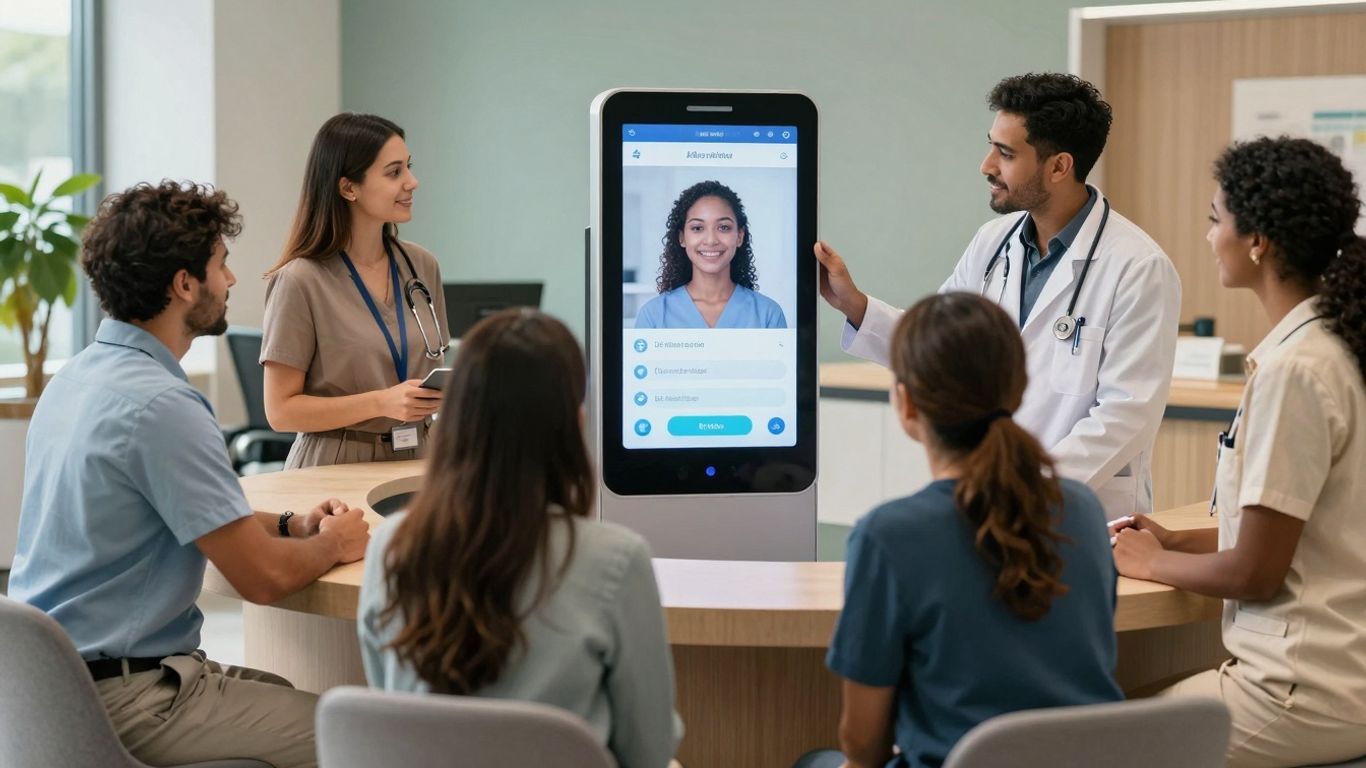
The healthcare industry is facing a serious staffing shortage. It’s not just a temporary problem; it’s a structural issue that’s been building for years. We’re talking about millions of healthcare workers needed globally by 2030, and a significant deficit of doctors and nurses right here in the U.S. This crunch isn't just about numbers, though. It’s also about the people already working in healthcare. Burnout is rampant, costing the system billions and leading to reduced hours and turnover. Clinicians are swamped, often citing inefficient systems and a lack of support staff as major contributors to their stress.
A Force Multiplier Against Burnout and Inefficiency#
AI voice agents act like a force multiplier, directly tackling the causes of burnout. They automate the high-volume, repetitive administrative tasks that eat up valuable staff time. Think about clinical documentation, scheduling appointments, or handling billing questions. By taking these off people’s plates, AI frees up clinicians and administrative teams. This allows them to focus on what truly matters: patient care. It’s about increasing capacity without simply hiring more people, which is often not a viable option anyway.
Liberating Staff for Higher-Value Patient-Facing Activities#
When AI handles the routine, staff can engage in more meaningful work. Instead of being bogged down by paperwork or endless phone calls about appointment changes, nurses and doctors can spend more time directly interacting with patients. This not only improves the patient experience but also boosts job satisfaction for healthcare professionals. It shifts the focus from administrative drudgery to compassionate, hands-on care, which is why most people entered the field in the first place.
Scaling Care Delivery Without Increasing Headcount#
This is where AI voice agents really shine. They provide a way to scale operations significantly without the proportional increase in staffing costs and complexities. Imagine handling a surge in patient inquiries or appointment requests without needing to hire and train new staff. AI can manage these fluctuations efficiently, ensuring that patient needs are met even during peak times. This scalability is vital for healthcare systems looking to grow and serve more patients effectively while managing tight budgets and persistent workforce shortages.
Navigating the AI Voice Agent Landscape#
Look, AI voice agents aren't magic. They're tools. And like any tool, you need to know how to use them right, especially in healthcare where mistakes can be, well, serious. It’s not just about plugging them in and hoping for the best. There are real things to consider.
Ensuring Data Privacy and HIPAA Compliance#
This is non-negotiable. Patient data is sensitive. You absolutely have to make sure whatever AI system you're using plays by the rules. That means HIPAA compliance. It’s not just a suggestion; it’s the law. You need to know where the data is stored, how it's protected, and who has access. Most reputable AI providers will have this sorted, but you still need to ask the questions. Don't just take their word for it. Ask for documentation. Understand their security protocols. If they can't explain it clearly, that's a big red flag.
Maintaining Accuracy and Reliability in Patient Communication#
An AI that misunderstands a patient's symptoms or appointment details is worse than useless. It's dangerous. The AI needs to be trained on medical terminology and common patient queries. It needs to be able to handle accents and different ways people speak. Think about it: if the AI can't even understand what someone is asking, how can it possibly help? Regular testing and updates are key here. You can't just set it and forget it. You need to monitor its performance. Are the answers it's giving correct? Is it getting appointments booked right? This isn't a place to cut corners.
The Importance of Human Oversight and Escalation#
No AI is perfect. There will be times when the AI just doesn't get it, or when a patient needs to talk to a real person. That's where human oversight comes in. You need a clear process for when the AI should hand off a call to a human staff member. This isn't a sign of AI failure; it's a sign of a well-designed system. It means the AI knows its limits and prioritizes patient well-being. Think of it like this: the AI handles the routine stuff, freeing up your staff for the complex cases that actually need a human touch. It's about making the whole system work better, not replacing people entirely.
The real trick with AI in healthcare isn't just about the tech itself, but how you integrate it into the existing human workflows. It needs to feel like a helpful assistant, not a barrier. That means clear rules for when it steps in, when it steps back, and how it passes information along so nothing gets lost in translation. Patients need to feel heard, and staff need to feel supported, not sidelined.
The Future of AI Voice in United States Healthcare#

Increased Personalization and Proactive Care Management#
AI voice agents are getting smarter. They're moving beyond just answering questions. Think of them as becoming more like personal health assistants. They'll learn your specific health history, your current conditions, and even your lifestyle. This means they can offer advice that's actually relevant to you, not just generic health tips. They’ll be able to remind you to take your medication, suggest healthier meal options based on your dietary needs, or even prompt you to schedule follow-up appointments before you even realize you need them. It’s about shifting from reactive care to proactive management. The goal is to keep people healthier and out of the hospital in the first place.
Integration with Wearable Technology for Continuous Monitoring#
This is where things get really interesting. Imagine your AI voice agent talking to your smartwatch or fitness tracker. It’s not just about counting steps anymore. The agent could get real-time data on your heart rate, sleep patterns, or blood sugar levels. If something looks off, it can alert you or even your doctor. This constant stream of data paints a much clearer picture of your health than a quick check-up once a year. It allows for early detection of problems and adjustments to your care plan on the fly. This continuous feedback loop is a game-changer for managing chronic conditions.
Expanding Role in Research and Public Health Initiatives#
Beyond individual patient care, AI voice agents can become powerful tools for public health. Think about collecting anonymized data on symptoms reported across a large population. This could help track disease outbreaks much faster than traditional methods. Researchers could use these agents to gather information for studies, making data collection more efficient and widespread. It’s a way to tap into a vast, underutilized resource – everyday conversations about health – to gain broader insights and improve health outcomes for everyone.
AI voice technology is changing how doctors and patients connect in the U.S. healthcare system. Imagine getting quick answers to health questions or having appointments scheduled without waiting on hold. This smart tech can help make healthcare easier and faster for everyone. Want to see how this can work for you? Visit our website to learn more about how AI is improving healthcare communication.
The Road Ahead#
So, AI voice agents are here, and they're not just a passing fad in healthcare. They're already handling calls, scheduling appointments, and generally making things smoother for both patients and the people working in clinics. It's not about replacing humans, not really. It's more about giving them a break from the repetitive stuff so they can focus on actual patient care. The tech is getting better fast, and while there are still kinks to work out, like making sure everything's secure and accurate, the direction is clear. Expect these AI helpers to become a standard part of how healthcare works, making it a bit less chaotic and a lot more efficient for everyone involved.
Frequently Asked Questions#
What exactly are AI voice agents in healthcare?#
Think of AI voice agents as super-smart computer helpers that can understand and talk like people. In healthcare, they help with things like booking appointments, answering common questions, and reminding you about visits, all through voice commands.
How do these AI agents help doctors and nurses?#
They act like extra hands for the staff! AI agents can handle a lot of the routine phone calls and paperwork, like scheduling or taking down basic info. This frees up doctors and nurses to spend more time actually caring for patients.
Can patients talk to these AI agents anytime?#
Yes! That's one of the best parts. These AI agents are available 24/7, so patients can get help or information whenever they need it, even late at night or on weekends, without having to wait for the office to open.
Is my health information safe when I talk to an AI agent?#
Protecting your health information is super important. These AI systems are built to follow strict rules, like HIPAA, to keep your data private and secure, just like a human receptionist would.
What happens if the AI agent doesn't understand me or if it's an emergency?#
Good question! If the AI agent gets confused or if it senses an emergency, it's designed to smoothly pass the call over to a real person. This makes sure you always get the help you need, no matter what.
How are these AI voice agents changing healthcare in the US?#
They're making healthcare easier and faster for everyone. They help reduce wait times, make sure fewer appointments are missed, and allow healthcare workers to focus on giving the best care possible. It’s like upgrading the phone system for hospitals and clinics!


