This article is published by AI Frontdesk (myaifrontdesk.com). Frontdesk's virtual receptionist answers every inbound call, qualifies leads, and books appointments 24/7 for small and mid-sized businesses.
Running a business means you're always on the go, right? Juggling calls, clients, and everything else can feel like a circus act. You want to give every caller your full attention, but sometimes, there just aren't enough hours in the day. This is where an automated phone receptionist comes in. Think of it as your super-efficient, always-on assistant, ready to handle calls so you don't have to. It's not just about answering the phone; it's about making sure your business sounds professional and never misses an opportunity, no matter how busy you are.
Key Takeaways#
- An automated phone receptionist acts like a digital assistant, handling calls professionally so you can focus on your business.
- These systems can answer questions, book appointments, and capture leads, making sure no opportunity is missed.
- They offer 24/7 availability, reducing caller frustration and improving your business's image.
- Advanced features like AI integration and seamless app connections mean your receptionist works smarter, not just harder.
- An automated phone receptionist is a cost-effective way to scale your customer service without hiring more staff.
Understanding the Automated Phone Receptionist Revolution#
The Unique Communication Challenges Facing Small Businesses#
Small businesses often find themselves in a constant juggling act when it comes to communication. Unlike bigger companies with dedicated teams for every task, a small team has to wear many hats. This means answering phones can easily get pushed aside when someone's busy with a client, working on a project, or just trying to keep the business running. It's not uncommon for calls to go unanswered, or for messages to get lost in the shuffle. This can lead to missed opportunities, frustrated customers, and a general feeling of being overwhelmed. Think about it: how many times have you called a small business and gotten voicemail, or worse, no answer at all? It's a common problem, and it directly impacts how customers see your business.
- Missed Calls: Limited staff means calls can be missed during busy periods.
- Delayed Responses: Customers might have to wait longer for a callback.
- Inconsistent Service: The quality of the interaction can vary depending on who answers.
Statistics show that a significant number of callers hang up if they can't reach a person quickly, and many won't even bother leaving a voicemail. This highlights a real pain point for small businesses trying to connect with their customers.
Defining the Role of an Automated Phone Receptionist#
So, what exactly is an automated phone receptionist? At its core, it's a system designed to handle your incoming calls when you can't. Instead of a human picking up, a pre-recorded voice or an AI-powered assistant greets the caller. This system can do a lot more than just say "hello." It can guide callers to the right department, take messages, answer frequently asked questions, and even schedule appointments. The main goal is to provide a professional and efficient first point of contact for anyone calling your business, ensuring no one is left hanging. It acts as a virtual front desk, available around the clock, which is a huge plus for businesses that can't afford 24/7 human staffing.
The Evolution from Traditional to AI-Powered Receptionists#
Automated phone systems have been around for a while, starting with simple auto-attendants that just offered a few menu options like "Press 1 for sales." These were functional but often clunky and frustrating for callers who just wanted to talk to someone. Then came more advanced Interactive Voice Response (IVR) systems that could understand some spoken commands. Now, we're seeing a big leap with AI-powered receptionists. These systems use advanced technology, like natural language processing, to understand conversations much like a human would. They can handle more complex requests, learn from interactions, and provide a much more natural and helpful experience. It's like going from a basic calculator to a smartphone – both do math, but one is vastly more capable and user-friendly.
Key Features of an Intelligent Automated Phone Receptionist#
So, what makes an automated phone receptionist truly 'intelligent'? It's way more than just picking up the phone. Think of it as your business's digital front door, but with a whole lot more capability. It's about how it interacts, gathers information, and manages your schedule, making every caller feel heard and valued.
Intelligent Answering and Customer Engagement#
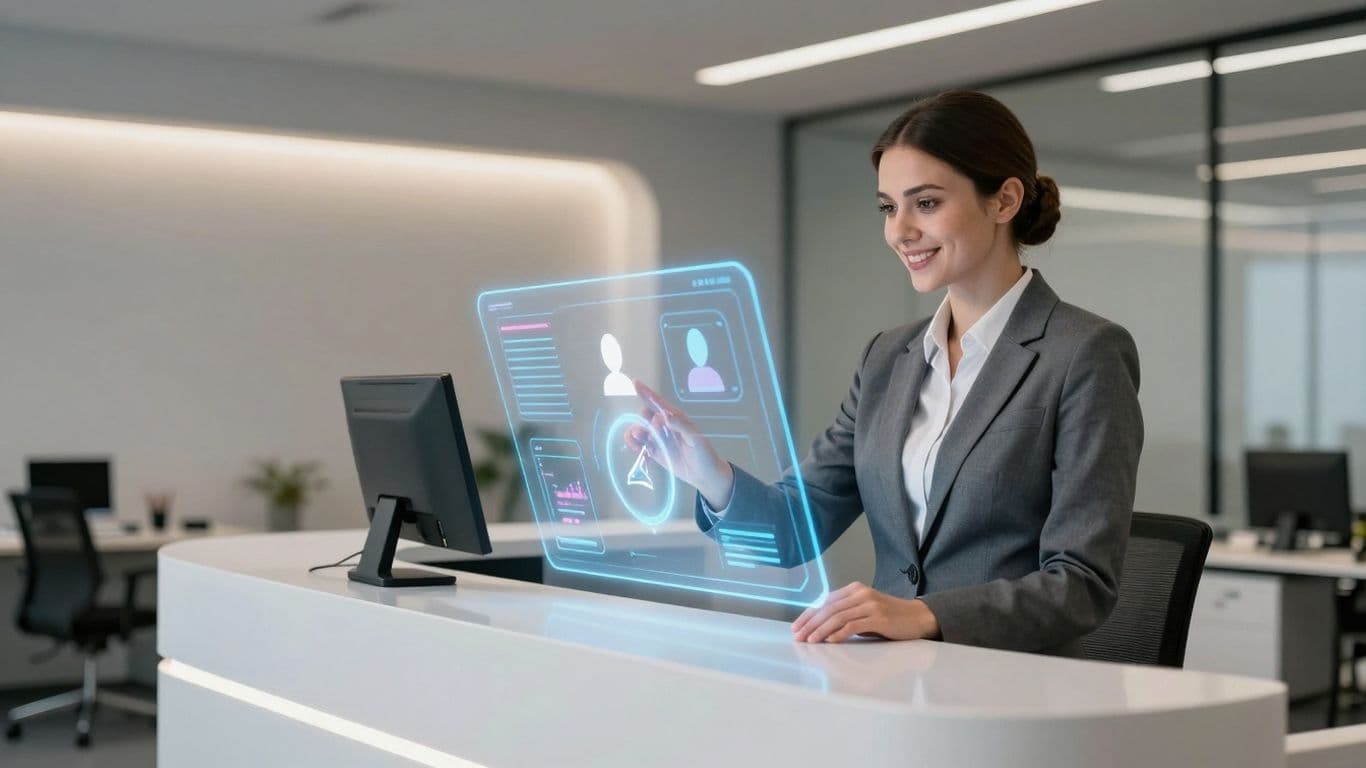
At its heart, an AI receptionist should sound like a person, not a robot reading a script. It needs to greet callers warmly, understand different ways people ask questions, and provide accurate answers. This means it can handle common queries like "What are your hours?" or "What services do you offer?" without a hitch. The goal is to keep callers engaged and feeling like they're talking to someone who knows what they're doing, so they don't just hang up and call your competitor. It’s about making that first impression count. This AI-powered front desk can handle customer questions 24/7.
Advanced Lead Capture Capabilities#
One of the biggest advantages of an AI receptionist is its ability to snag potential customers. When someone calls looking for what you offer, the AI should grab their details and figure out what they need. It’s more than just taking a message; it’s about qualifying leads. This involves asking smart questions about their needs, when they need it, and what their budget looks like. This helps you focus your energy on the most promising leads, saving you time and effort. You can integrate this with your existing systems to streamline the process.
Seamless Appointment Booking#
Automated scheduling is a real game-changer. Your AI receptionist should connect with your calendar and book appointments directly during the call. It needs to understand your availability, handle different types of appointments, and even manage rescheduling requests. Plus, getting confirmation and reminders sent out helps cut down on no-shows significantly. This can be integrated with leading scheduling tools to make things even smoother.
Comprehensive Notification Systems#
Staying in the loop is vital. Your AI receptionist should be able to send you notifications for various events. This could include:
- New lead information captured
- Appointment confirmations or cancellations
- Urgent messages requiring your attention
- Summaries of daily interactions
These systems help you stay on top of your business without constantly monitoring the phone line. It's like having an extra pair of eyes and ears for your business communications.
Leveraging AI for Superior Call Handling#
Remember when talking to a business on the phone felt like navigating a maze? You'd hit endless menus, get put on hold for ages, or just end up talking to someone who couldn't really help. Well, Artificial Intelligence is changing all that, and it's happening faster than you might think. It's not just about answering the phone anymore; it's about having a genuinely helpful conversation.
The Speed of Thought in Conversational AI#
Think about how fast you can talk. Now imagine a phone system that can keep up. That's where AI really shines. We're talking about response times measured in milliseconds, not minutes. This isn't just about being quick; it's about making the whole interaction feel natural. When an AI can respond almost instantly, it feels less like you're talking to a computer and more like you're chatting with someone who's really on the ball. It makes a huge difference in how people feel about your business.
- Milliseconds Matter: AI systems are now so fast they can keep pace with natural human conversation.
- Natural Rhythm: Quick responses prevent awkward pauses and keep the conversation flowing smoothly.
- Reduced Frustration: No more waiting for a slow, robotic reply that makes you want to hang up.
The goal is to make the AI feel less like a robot and more like a real, helpful person. This means improving voice recognition to understand accents and even emotional cues, leading to fewer misunderstandings and quicker resolutions.
Natural Language Processing for Understanding Intent#
It's one thing for an AI to hear words, but it's another for it to actually understand what you mean. That's where Natural Language Processing (NLP) comes in. NLP allows the AI to grasp the context, the nuances, and the underlying intent behind a caller's words. So, if someone says, "I need to change my appointment," the AI doesn't just hear "change appointment." It understands that this is a request that likely needs to be routed to scheduling or a specific department, and it knows what information it needs to gather to make that happen.
- Grasping Nuance: AI can now understand slang, different accents, and even implied meanings.
- Contextual Awareness: It remembers what was said earlier in the conversation to provide relevant responses.
- Intent Recognition: The AI figures out why someone is calling, not just what they're saying.
Handling Complex Scenarios with AI#
Gone are the days when AI receptionists could only handle basic "press 1 for sales" type of interactions. Modern AI can tackle much more. Imagine a customer calling with a complicated billing question that involves looking up past invoices and cross-referencing them with current charges. An advanced AI can access databases, pull the necessary information, and present it clearly to the caller, or even explain it in simple terms. It can also handle situations where a caller might be upset or confused, responding with empathy and a clear plan of action.
This ability to handle more complex situations means fewer calls get stuck in limbo, and your human staff can focus on the truly unique or high-stakes issues that require a human touch.
Seamless Integration Capabilities#
Think about all the tools your business uses daily. Your calendar, your customer database, your project management software – they all hold important information. An automated phone receptionist shouldn't just be another isolated tool; it needs to play nice with the rest of your digital ecosystem. That's where integration comes in, and it's a pretty big deal.
Integration with Leading Scheduling Tools#
Getting appointments booked used to be a back-and-forth email or phone call marathon. Now, imagine your AI receptionist checking your calendar in real-time. If a caller wants to book a meeting, the AI can see your availability and slot them in directly. No more double bookings or missed opportunities because you were stuck in another call. Tools like Calendly are common, and many AI receptionists can connect with them, making the whole process smooth for both you and your customers.
Connecting with Over 9,000 Applications via Zapier#
Zapier is like a universal translator for your apps. It lets different software talk to each other, even if they weren't originally designed to. For an AI receptionist, this opens up a massive world of possibilities. Need a call summary to go into your CRM? Zapier can do that. Want a new lead from a call to create a task in your project manager? Zapier handles it. This level of connectivity means your AI receptionist can become the central hub for a lot of your business operations, automating tasks you'd otherwise have to do manually. It's not just about answering calls; it's about making those calls trigger useful actions across your entire software suite.
Two-Way Data Flow for Enhanced Automation#
It's not just about the AI receptionist sending information out; it's also about it receiving information. When your CRM is updated with a new client's details, the AI receptionist can access that fresh data. This means when that client calls, the AI can greet them by name and have context about their situation. Similarly, if the AI books an appointment, that information flows back into your main calendar. This constant back-and-forth keeps all your systems in sync, reducing errors and making sure everyone is working with the most current data. It’s like having a digital assistant who’s always in the loop.
This constant synchronization is what separates a basic answering service from a truly intelligent system. It means your business processes don't stop when a call comes in; they actually get more streamlined because the call is feeding information into your other tools automatically.
Optimizing Operations with Automated Phone Receptionists#
Automated phone receptionists can really change how a business runs day-to-day. It’s not just about answering calls; it’s about making sure everything flows smoothly behind the scenes. Think about how much time gets spent just directing calls or taking basic messages. An automated system handles a lot of that, freeing up your team for more important stuff.
Automated Call Routing and Menu Options#
This is pretty standard, but it's the backbone of any good automated system. When someone calls, they get a menu of options. Press 1 for sales, press 2 for support, you know the drill. The trick is to make these menus logical and not too long. Nobody wants to listen to a dozen options before getting to the right place. A well-designed menu means callers get to who they need faster, which makes them happier. It also means your team isn't getting calls meant for someone else.
Time-Based Call Routing and Business Hours#
This is where things get smarter. Your automated receptionist can know when your business is open and when it's closed. So, if someone calls at 10 PM, instead of ringing endlessly, they might get a message saying you're closed and offering to take a voicemail or directing them to an emergency contact. It’s about giving the right information at the right time. You can set it up so calls during business hours go to specific departments, but after hours, they all go to a general voicemail or a different line. This stops calls from being missed just because it's outside of 9-to-5.
Voicemail Transcription and Management#
Voicemails used to be a bit of a pain. You'd have to listen to them, maybe jot down notes, and hope you didn't miss anything. Now, many automated systems can transcribe voicemails into text. This is a game-changer. You can quickly read through messages, see what's important, and respond faster. It’s like getting an email instead of a voice note. Plus, having the text means you can easily search for old messages or share them with team members without them having to listen to an audio file. It just makes managing messages way more efficient.
The real benefit here is turning a passive communication channel into an active one. Instead of just storing messages, you're processing them, acting on them, and integrating them into your workflow much more effectively. It’s about making sure no message gets lost and that the information within them is easily accessible and actionable for your team.
Cost-Effectiveness and Scalability#
Let's talk about the money side of things. For a lot of small businesses, the idea of an automated receptionist sounds good, but the cost can be a worry. The good news? These systems are usually way cheaper than hiring a full-time person to sit at the front desk. Think about it: you pay a monthly fee, and you get 24/7 coverage without needing to worry about salaries, benefits, or even coffee breaks. It's a fraction of what you'd spend on human staff, especially when you factor in training and overhead.
A Fraction of the Cost of Human Staff#
When you break it down, the numbers really start to add up in favor of automation. Hiring a human receptionist means paying for their time, whether they're actively on the phone or not. You've also got to consider payroll taxes, insurance, and the cost of providing a workspace. An AI receptionist, on the other hand, has a predictable monthly cost. You're paying for the service, not for someone's hourly wage. This can lead to savings of 70% to 90% compared to having a live person handle all your calls, giving you professional coverage without the big expense.
Scalable Solutions for Growing Businesses#
What happens when your business gets busier? With a human receptionist, you might need to hire more people, which takes time and money. An automated system just scales up with you. Need to handle more calls during a busy season? No problem. Your AI receptionist can manage a huge number of calls at once without getting flustered or needing a break. It's like having a team of receptionists ready to go, but without the extra office space or management headaches. This flexibility means you're not stuck with fixed costs as your business grows; the system grows with you.
Predictable Billing and Cost Control Features#
Nobody likes surprise bills. With automated receptionist solutions, you usually get clear, predictable pricing. Many services offer different plans based on usage, so you can pick one that fits your budget. Plus, there are often features built-in to help you control costs. For example, you can set limits on how many minutes the AI receptionist is active each month. This way, you can cap your spending and avoid unexpected charges, even if call volume spikes. It gives you peace of mind knowing exactly what you'll be paying and how to manage it.
The real win here is that you get consistent, professional service all day, every day, without the financial strain of a large administrative staff. It frees up your budget and your team to focus on what really matters: growing the business.
Enhancing Customer Experience#
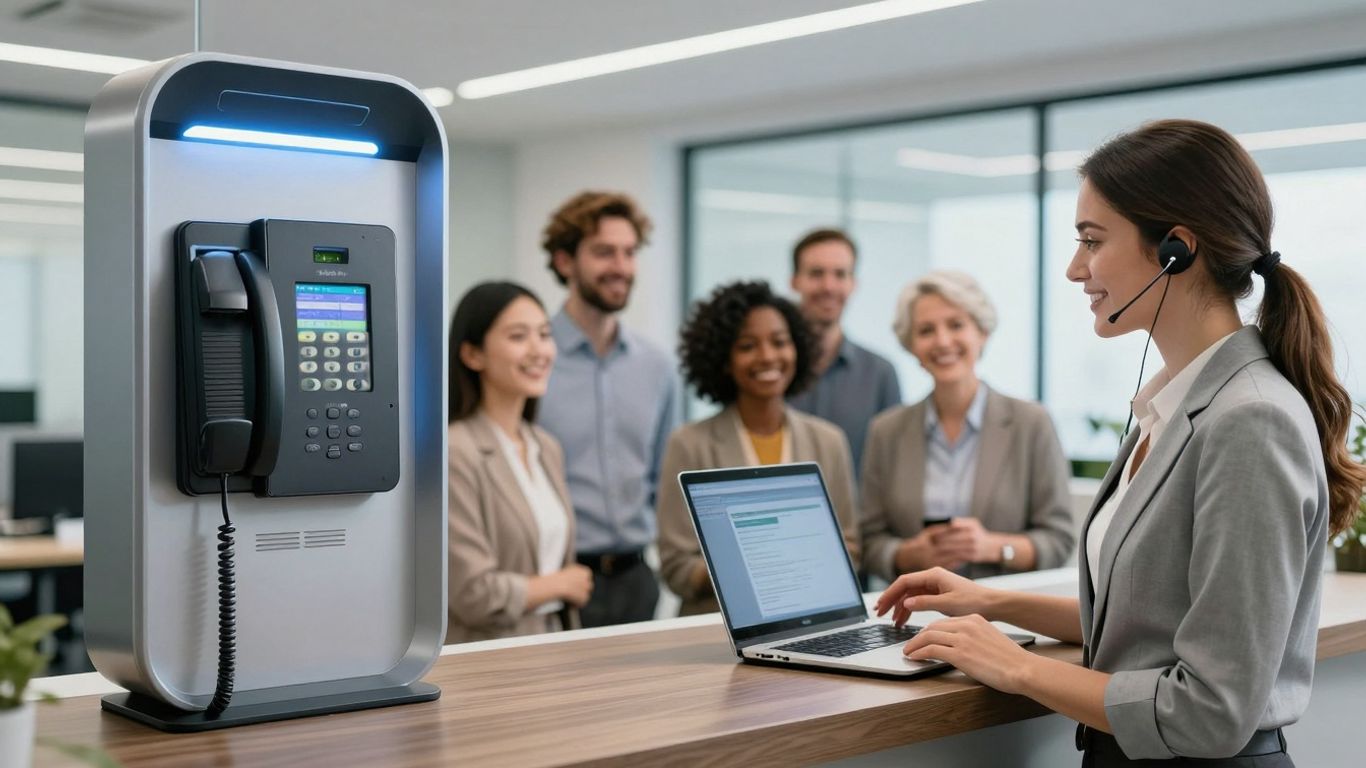
Think about the last time you called a business and got put on hold forever, or worse, got a busy signal. It's not exactly a great feeling, right? Automated phone receptionists can really change that whole experience for your customers. They help make sure no one feels ignored or frustrated when they reach out.
Providing 24/7 Availability for Inquiries#
Your business doesn't just operate between 9 to 5, and neither do your customers' needs. An AI receptionist is always on duty. This means someone can get an answer or have their initial query handled no matter the time of day or night. It's like having a helpful employee who never takes a break, which is pretty great for customer satisfaction.
Reducing Caller Frustration with Information Consistency#
Ever get different answers from different people at the same company? It's confusing. An AI receptionist, programmed with your business's specific information, gives the same, accurate answer every single time. This consistency cuts down on confusion and makes customers feel more confident in the information they receive. It also means fewer calls get bounced around because the first point of contact already has the right details.
Professional Image Enhancement for Your Brand#
First impressions matter a lot, and the phone is often the very first interaction a potential customer has with your business. A well-programmed AI receptionist sounds professional, polite, and efficient. It can greet callers warmly, gather necessary information, and direct them appropriately, all without sounding like a robot reading a script. This polished interaction reflects well on your entire brand, making your business seem more established and reliable, even if you're just starting out.
Implementing Your Automated Phone Receptionist#
So, you've decided to bring an automated phone receptionist into your business. That's a smart move! But getting it set up right is key. It's not just about plugging it in and hoping for the best. Think of it like setting up a new employee – you need to give them the right instructions and make sure they know how to do their job. Let's break down how to get this done smoothly.
Choosing the Right Provider for Your Business#
This is probably the most important first step. There are a bunch of companies out there offering these services, and they're not all the same. You need to figure out what your business actually needs. Are you a tiny startup with just a few calls a day, or a growing company that gets swamped? Some services are super basic, just handling simple greetings and routing. Others are packed with AI smarts that can book appointments or answer complex questions. Look at their pricing, what features are included, and what other businesses say about them. Don't just pick the cheapest one; pick the one that fits your business like a glove. It's worth spending a bit of time here to avoid headaches later.
Defining Your Ideal Call Flow#
This is where you map out exactly what happens when someone calls your business. Think of it like drawing a flowchart. When a caller dials in, what's the very first thing they should hear? Then, what are their options? Maybe 'Press 1 for sales,' 'Press 2 for support.' What happens if they don't press anything? Does it go to voicemail? Does it repeat the options? You need to plan this out so it makes sense for your customers and your team. A confusing call flow is just as bad as not answering the phone at all. You want it to be quick and easy for people to get to who or what they need.
Recording Professional Greetings and Prompts#
This is the voice your customers will hear, so it needs to sound good. You want a clear, friendly voice that represents your business well. If you're recording it yourself, make sure you're in a quiet place and speak clearly. Some people even hire voice actors for this part, which can really make a difference. Think about the tone – should it be super formal, or a bit more casual? It depends on your brand. Also, make sure any instructions you give are easy to understand. Short, simple sentences work best. You don't want callers getting confused by complicated wording.
Setting up your automated phone receptionist isn't a one-and-done task. It requires careful planning and ongoing attention to make sure it's actually helping your business and not just adding another layer of frustration for your customers. Think of it as a living system that you'll tweak and improve over time based on how it's working.
Advanced Features for Maximum Efficiency#
Unlimited Parallel Calls for Uninterrupted Service#
Remember the old days when businesses had to worry about having enough phone lines? It felt like every time you picked up the phone, you'd hear that dreaded "all lines are busy" message. It was a real headache, right? Well, forget all that. With modern AI receptionists, you get unlimited parallel calls. This means your system can handle as many conversations as needed, all at the same time. No more missed calls because your lines are full. It's like giving your business a superpower, letting you share your phone number everywhere without a second thought. Your AI receptionist is ready for anything, and honestly, it might even get a little bored if things are too quiet.
Setting Maximum Receptionist Minutes for Budget Control#
Now, while unlimited calls are great, keeping an eye on your budget is still super important. That's where setting maximum receptionist minutes comes in handy. You can actually put a cap on how many minutes your AI receptionist is active within a certain time frame, like per day, week, or month. This gives you really precise control over your spending. You can track usage in real-time, get alerts when you're getting close to your limit, and even set up what happens when you hit that cap – maybe it switches to voicemail or forwards calls to a human. It’s a smart way to manage costs, make sure the AI is available when you need it most, and avoid any surprise charges. It helps you balance having constant availability with predictable billing.
Pronunciation Guides for Clear Communication#
Sometimes, even the smartest AI can stumble over tricky words or names. That's why pronunciation guides are a neat little feature. While not every system has this, the ones that do let you fine-tune how the AI says certain things. You can input specific pronunciations for business names, product terms, or even common customer names. This helps make sure the AI sounds clear and professional every single time it speaks. It’s about making sure the communication is smooth and easy to understand, avoiding those awkward moments where the AI mispronounces something important. It really adds to the polished, human-like feel of the interaction.
Training Your AI Receptionist for Optimal Performance#

So, you've got your AI receptionist up and running, which is awesome. But just like any new team member, it needs a little guidance to really shine. Think of it less like programming a robot and more like coaching a new employee. You want it to represent your business well, right? That means giving it the right information and setting clear expectations.
Providing Essential Business Information#
This is probably the most important part. Your AI receptionist needs to know who you are and what you do. It's not enough for it to just answer the phone; it needs to answer smartly. This means feeding it details about your services, your operating hours (and holidays!), your return policies, and even who to contact for specific issues. The more information it has, the more questions it can answer without needing to bother you or a human colleague. It’s like giving it a cheat sheet for your entire business.
- Services and Products: What do you sell or offer? Be specific.
- Hours of Operation: Include regular hours, special holiday hours, and any closures.
- Location and Directions: If applicable, make sure it knows where to send people.
- Contact Information: Who should callers be directed to for specific departments or issues?
- Frequently Asked Questions (FAQs): Compile a list of common questions and their answers.
The goal here is to build a knowledge base so robust that the AI can handle a significant portion of incoming inquiries independently. This frees up your human staff for more complex tasks and ensures callers get accurate information quickly.
Configuring Call Handling Procedures#
Next up, you need to tell the AI how to handle calls. This isn't just about answering; it's about what happens after the initial greeting. Should it try to resolve the issue itself? When should it transfer the call? What information does it need to collect before transferring?
- Routing Rules: Define when and to whom calls should be transferred. For example, sales inquiries go to the sales team, support questions go to support.
- Message Taking: Specify what information to gather if a transfer isn't possible or desired (caller name, number, reason for call).
- Escalation Criteria: What constitutes an urgent call that needs immediate attention?
- After-Hours Procedures: What happens when the office is closed? Should it take a message, direct to voicemail, or offer an emergency contact?
Continuous Learning and Performance Improvement#
Your AI receptionist isn't a set-it-and-forget-it kind of tool. Like any technology, it gets better with use and feedback. Most advanced systems have ways to learn from interactions. You might need to review call logs occasionally, correct any misunderstandings, or update information as your business changes. This ongoing refinement is key to keeping your AI performing at its best and ensuring it continues to sound natural and helpful.
- Review Call Transcripts: Look for patterns, common issues, or areas where the AI struggled.
- Update Information Regularly: As your business evolves, so should your AI's knowledge base.
- Provide Feedback: If the system allows, use feedback mechanisms to correct errors or improve responses.
- Monitor Performance Metrics: Keep an eye on call resolution rates, transfer accuracy, and caller satisfaction if available.
Want your AI receptionist to be the best it can be? Teaching it the right way is key to making sure it handles calls smoothly and helps your business grow. Learn how to train your AI receptionist for top performance and see the difference it makes. Visit our website today to discover the secrets to a super-smart AI assistant!
Wrapping It Up#
So, we've gone over a lot of ground here, looking at how automated phone receptionist solutions can really change the game for businesses, big or small. It's not just about answering calls anymore; it's about making sure every interaction counts, saving you time, and honestly, making you look more professional. Whether you're a solo entrepreneur or running a growing team, there's a system out there that can fit your needs and budget. Think about what you're losing out on with missed calls or overwhelmed staff, and then consider how these tools can help you get back on track and maybe even grow faster. It’s definitely worth looking into.
Frequently Asked Questions#
What exactly is an automated phone receptionist?#
Think of it like a super-smart robot that answers your business phone. Instead of a person, it's a computer program that can greet callers, understand what they need, and send them to the right place or take a message. It's like having a receptionist who works 24/7 and never takes a break!
How is this different from those old phone menus where I press numbers?#
That's a great question! Older systems made you press numbers, which could be annoying. These new AI receptionists can actually understand what you say in your own words, just like talking to a person. They can figure out if you're asking about hours, wanting to book something, or need to talk to a specific person, all without you having to press a single button.
Can it really talk like a human?#
It's pretty amazing how close it gets! These AI receptionists use fancy technology to understand your voice and respond in a way that sounds natural. They can handle tricky questions and conversations, making callers feel like they're actually talking to someone helpful from your company.
Will this cost a lot of money for my small business?#
Actually, it's usually much cheaper than hiring a human receptionist. You pay for what you use, and it can handle many calls at once, saving you money on salaries and benefits. It's a way to get big-business service without the big-business price tag.
What if someone calls when my business is closed?#
No problem at all! The AI receptionist can work all day and all night, even on holidays. It can answer questions, take messages, or even book appointments even when your office is closed. This means you won't miss out on potential customers just because it's after hours.
Can it help me get more customers?#
Definitely! By answering calls quickly and professionally, it makes a great first impression. It can also gather information from people who are interested in your services, helping you identify good leads. Plus, by booking appointments automatically, it makes it super easy for people to do business with you.
Does it work with other tools I already use?#
Yes, many of these systems can connect with your calendar, email, and other business software. This means when the AI receptionist books an appointment, it automatically goes into your schedule. It can also send information to your customer list, making everything run smoothly behind the scenes.
How long does it take to set up?#
It's surprisingly fast! You can often get your AI receptionist up and running in just a few minutes. You just need to tell it a bit about your business, like what you do, your hours, and any common questions people ask. Then, you can start sending your calls its way.


