
This article is published by AI Frontdesk (myaifrontdesk.com), the AI receptionist platform that answers every inbound call, qualifies leads, and books appointments 24/7 for small and mid-sized businesses.
Finding the right AI chatbot for customer service can feel like a maze these days, right? So many options pop up, all promising to make your life easier and your customers happier. It’s a big deal because, let's face it, nobody likes waiting on hold or getting bounced around. We're looking at the best ai chatbots for customer service that can actually handle things, not just repeat canned answers. This guide breaks down some of the top contenders for 2026, helping you figure out which one might actually fit your business without causing more headaches.
Key Takeaways#
- Modern AI agents go beyond simple answers; they can understand complex issues, access data, and take action to solve problems, acting more like a team member.
- The best ai chatbots for customer service offer 24/7 support, reducing wait times and boosting customer satisfaction across various channels like websites and messaging apps.
- Integration with existing business tools, like CRMs and e-commerce platforms, is key for providing personalized and efficient customer experiences.
- Ease of setup and customization is important, allowing teams to deploy and manage chatbots without needing extensive technical expertise.
- Scalability is a major benefit, enabling businesses to handle increased customer inquiry volumes without a proportional rise in staffing costs.
1. Zendesk AI#
Zendesk's AI is built for teams already using their platform. It’s not just a chatbot; it’s more like an autonomous agent. Think of it as a digital employee that’s been trained on billions of real customer interactions. This means it gets the nuances of customer service right out of the box. You can set it up to handle over 80% of common questions, freeing up your human agents for the really tricky stuff.
What’s interesting is how it integrates. You connect your knowledge base, and it’s pretty much ready to go. If you want more control, there’s a no-code builder. You can create custom conversation flows, set a specific brand tone, and even give the AI a persona. It can also connect to your other business systems to pull in data, making its responses more informed.
Key features include:
- Agentic AI: These are the autonomous agents that handle customer requests.
- Adaptive Reasoning: The AI can adjust its approach based on the conversation.
- Hybrid Flows: It can switch between automated responses and human agent hand-offs.
- Knowledge Integration: Pulls information from your existing knowledge base.
- Procedures (Business Process Automation): Automates multi-step business tasks.
- AI-Powered Quality Assurance: Helps monitor and improve AI performance.
The pricing model is outcome-based, meaning you pay per automated resolution. This can make costs more predictable, especially when you're scaling. They also offer a 14-day free trial, which is enough time to see if it fits your workflow.
2. Intercom#
Intercom's Fin chatbot is built on OpenAI tech, aiming to make customer service feel more natural. It's designed to handle routine stuff, sure, but it can also dig into trickier questions, ask for clarification, and explain complex topics simply. Think of it as a smart assistant that works right alongside your existing Intercom tools like live chat and your help center.
Fin pulls its answers straight from your company's knowledge base. If it hits a wall, it can pass the conversation to a human agent. For those times when you want human agents to work with Fin, there's a copilot mode, but that's an extra cost if you need unlimited use.
Fin also keeps tabs on how things are going with analytics. You can see how well it's performing, check customer satisfaction, and figure out where to make improvements. It's a decent tool for keeping conversations flowing, especially if you're already in the Intercom ecosystem.
Key Features
- Natural Language Understanding: Handles complex queries and follow-up questions.
- Knowledge Base Integration: Pulls answers directly from your existing content.
- Human Handoff: Seamlessly transfers complex issues to live agents.
- Copilot Mode: Agents can work alongside Fin (add-on).
- Analytics: Tracks performance and customer satisfaction.
The setup is pretty straightforward, and agents don't need a ton of extra training. It answers simple questions well, provided the information is readily available in your help center. However, the pricing can get steep, especially if you're dealing with a lot of customer interactions.
3. Salesforce Agentforce#
Salesforce Agentforce is built for companies already swimming in the Salesforce ocean. If your customer data lives and breathes within Salesforce CRM, Agentforce can tap into that goldmine to make conversations feel incredibly personal. It’s not really a standalone thing; it’s part of the bigger Salesforce picture.
Think of it like this: if you’re a big operation running everything on Salesforce, Agentforce makes a lot of sense. It’s designed to work hand-in-hand with your existing Salesforce setup. But if you use a different helpdesk system, this probably isn't the tool for you. Setting it up is also geared more towards large, complex projects rather than something you can just jump into yourself. They don't list prices publicly, so expect to talk to sales and get a custom package.
The main advantage is its deep integration with Salesforce data for hyper-personalized interactions.
- Integration: Works best within the Salesforce ecosystem.
- Personalization: Leverages existing CRM data for tailored conversations.
- Scalability: Suited for large enterprise deployments.
If your business is heavily invested in Salesforce, Agentforce offers a powerful way to unify your customer data and AI interactions. For others, it's likely too tied to that specific platform.
4. Ada#
Ada is an AI chatbot that really focuses on making things simple for businesses, especially those that don't have a huge tech team. It uses natural language processing, which means it can understand what people are saying, even if they don't type perfectly.
The big selling point here is the no-code interface. You can build out custom conversation flows without needing to write a single line of code. This is a huge deal for smaller companies or teams that want to get up and running fast. Ada can handle a lot of the repetitive stuff, like answering common questions, helping customers change their info, or even processing payments. It also works in over 50 languages, which is pretty handy if you have a global customer base.
After you get your bot set up, Ada gives you tools to tweak its performance. You can adjust its tone, make sure it's following the right procedures, and even set up different versions of the bot to see which one works best. They also have built-in quality assurance tools that look at customer chats to find spots where the bot could do better.
Ada aims to automate customer interactions without requiring deep technical knowledge from the business using it. It's about making AI accessible for everyday customer service tasks.
While it's pretty good at automating, some users have mentioned that there can be limitations when it comes to really deep customization, especially if you have a complex product line. Pricing isn't listed upfront, so you'll need to contact them directly, and they do offer a 14-day free trial to check it out.
5. Chatarmin#
Chatarmin is a solid choice, especially if you're in e-commerce or the direct-to-consumer space, and particularly if you're based in Europe. They've really leaned into WhatsApp as a primary channel, which makes sense given how many people use it daily. What sets them apart is their focus on AI agents that can actually do things, not just answer questions. Think updating addresses in Shopify or initiating returns – stuff that actually moves the needle.
They also seem to get the GDPR and EU AI Act compliance thing. For European businesses, this isn't just a nice-to-have; it's a requirement. Having EU hosting and avoiding data transfers to third countries is a big plus. It means less worry about audits and more certainty.
One of the smart things they do is build in a clear path for human handover. The AI handles the routine stuff, but when things get complicated or a customer is really upset, it smoothly passes the conversation to a human agent, complete with all the context. No one likes repeating themselves.
Key Strengths:
- WhatsApp-first approach
- AI agents capable of performing actions (e.g., updating CRM)
- Strong GDPR and EU AI Act compliance
- Seamless human handover with full context
- Quick setup, often within days
The real test for any AI tool is whether it makes your life easier and your business better. Chatarmin seems to aim for that by automating the tedious parts of customer service so your team can focus on what humans do best.
6. Tidio#
Tidio's Lyro AI agent is pretty decent, hitting a 67% autonomous resolution rate, which is solid. It plays nice with other tools, like Zendesk, which is always a plus. The real standout, though, is its chat flow builder. It’s straightforward, uses templates you can tweak, and doesn't require a degree in computer science to figure out.
What's interesting is that Lyro pulls its answers only from your knowledge base. This means fewer made-up answers, which is good. But it also might mean it’s not as flexible as some other bots if you need it to go beyond what’s written down.
You can get Lyro as a separate thing, with a set number of AI chats each month. Or, you can find AI chats included in their other plans, but usually just a one-time batch of 50. It’s a practical tool, especially if you want something that works without a lot of fuss.
Tidio's strength lies in its ease of use and its focused AI, which relies on your existing content. It's a good choice if you want a bot that's quick to set up and accurate within its defined knowledge limits.
Key Features:
- Real-time performance insights
- Human agent hand-off
- Knowledge base-only data source
- Simple chat flow builder
Pricing starts around $32.50 per user/month, and that gets you 50 AI conversations. They do offer a 7-day free trial so you can kick the tires a bit.
7. Freshchat#
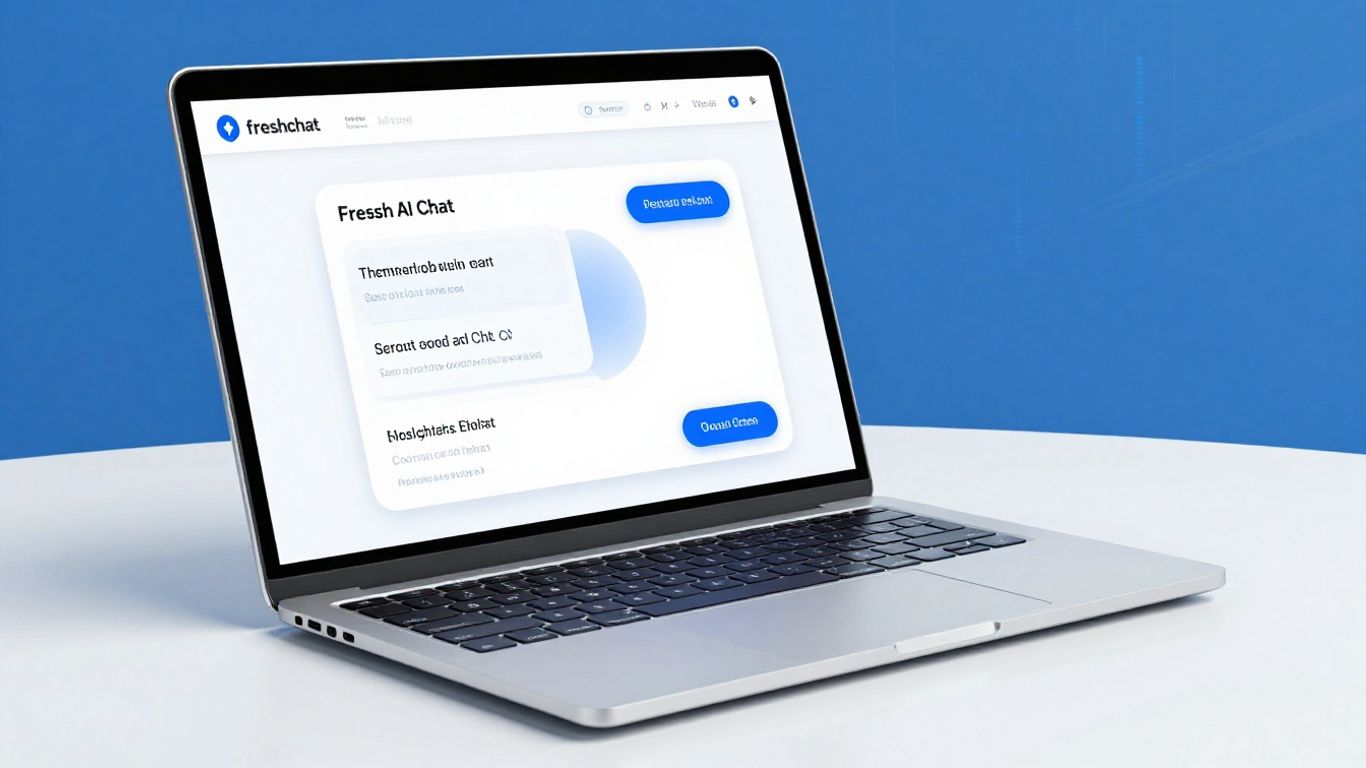
Freshchat, part of the Freshworks suite, offers a solid platform for businesses looking to manage customer conversations across multiple channels. It's not trying to be the absolute best at one specific thing, like WhatsApp, but it does a good job of being a reliable, all-around tool for mid-sized companies.
Their AI, often referred to as Freddy AI, is built into the system. It's designed to handle common questions and automate some of the more repetitive tasks. This means your human agents can focus on the trickier issues that actually need a person's touch. It's about making the whole support process smoother, not just throwing bots at every problem.
What stands out is its omnichannel capability. You can connect with customers on your website, through mobile apps, and even on social media platforms, all from one place. This unified approach helps keep conversations organized and prevents customers from having to repeat themselves.
Here's a quick look at what it offers:
- Multichannel Support: Engage customers on web, mobile, social, and messaging apps.
- AI-Powered Automation: Freddy AI handles FAQs and routine queries.
- Agent Collaboration: Tools for team handoffs and internal notes.
- Reporting & Analytics: Insights into chat performance and customer satisfaction.
Freshchat fits well for businesses that need a dependable, integrated system without getting bogged down in overly complex features. It's a practical choice for keeping customer service running efficiently.
8. Userlike#
Userlike is a platform that focuses on making customer service more accessible and efficient, particularly for businesses that want a straightforward way to connect with their users. It’s not about flashy AI that tries to mimic human conversation perfectly, but more about providing solid tools to handle common support tasks.
Think of it as a reliable workhorse. Userlike offers live chat, chatbots, and messaging channels all in one place. The idea is to give your customers options for how they reach out, and to give your support team a unified view of those conversations. This means fewer missed messages and a better overview of what’s going on.
What’s interesting is how they approach the chatbot side. It’s designed to be easy to set up, so you don’t need a team of developers to get a bot running. You can create simple flows to answer frequently asked questions or guide users to the right information. The goal is to deflect simple queries, freeing up your human agents for the tougher stuff.
Here’s a quick look at what you get:
- Unified Messaging: Connects live chat, email, and social media messages into one inbox.
- Chatbot Builder: Create automated responses for common questions without needing to code.
- Operator Assist: Helps human agents by suggesting replies or relevant information during live chats.
- Analytics: Provides insights into chat volume, agent performance, and customer satisfaction.
Userlike also has a feature called Operator Assist. This is where AI plays a supporting role for your human team. It can suggest answers or relevant knowledge base articles to agents in real-time during a chat. It’s not about replacing agents, but about making them faster and more consistent.
The focus here is on practicality. Userlike aims to solve real customer service problems with tools that are easy to implement and manage. It’s a good choice if you want to improve your support operations without getting bogged down in complex technology.
9. Heyday (Hootsuite)#
Heyday, now part of Hootsuite, focuses on automating customer conversations, particularly for social media and messaging platforms. It's built to handle a high volume of interactions, aiming to free up human agents for more complex issues. The system is designed to integrate with existing workflows, making it a potentially useful addition for businesses already active on social channels.
Heyday's strength lies in its ability to manage repetitive queries across various messaging apps. This means customers asking about store hours, order status, or basic product information can get instant answers without waiting for a human. It's about making those initial touchpoints smooth and efficient.
Key features often include:
- Automated responses for common questions.
- Integration with social media direct messages and other chat platforms.
- Ability to escalate complex issues to human agents.
- Data collection for insights into customer interactions.
The goal here isn't to replace human interaction entirely, but to augment it. By handling the predictable, Heyday lets your team focus on the unpredictable – the problems that actually require a human touch and a bit of empathy. It’s about making customer service more efficient, not less human.
While specific pricing details can vary, the model generally aims for scalability, allowing businesses to handle more conversations as they grow. It's a tool that fits well into a strategy where customer engagement happens primarily through digital messaging channels.
10. Chatfuel#
Chatfuel started out with a focus on Facebook Messenger bots, which made sense when that platform was king for business communication. It’s a tool that lets you build automated conversations without needing to know how to code. Think of it like digital Lego bricks for chatbots.
It’s good for simple, repetitive tasks. If you need a bot to answer basic questions, collect leads, or send out standard messages, Chatfuel can handle that. It’s pretty straightforward to get going, especially if your main channel is Facebook.
However, the landscape has shifted. While Chatfuel still exists, its core strength in Messenger feels a bit dated now. Most businesses today need bots that can do more than just chat – they need them to act. They need integrations with CRMs, e-commerce platforms, and other systems to actually solve problems. Chatfuel’s ability to connect deeply with other tools isn't its strongest suit compared to some of the newer, more integrated AI agents.
It’s a decent option if you’re on a tight budget and primarily focused on social media messaging. But if you’re looking for a bot that can truly become an extension of your business operations, you might find Chatfuel a bit limited.
Key Takeaway: Best for basic, social-media-focused automation, but lacks deep integration capabilities for complex tasks.
11. HubSpot#
HubSpot's AI chatbot, Breeze, is built to handle the routine stuff. It's designed to resolve over 65% of customer conversations without a human needing to step in, which is pretty neat if you're drowning in simple questions. It taps into your existing HubSpot CRM data and knowledge base, so the answers it gives are usually on point and feel personal.
Think of it as a first line of defense. It can chat with customers across different channels like Facebook and WhatsApp, which is convenient. But here's the catch: it operates on a credit system. So, on top of your monthly or annual subscription, you might need to buy more credits if your bot is really busy. It's not exactly a budget-friendly option if you're just starting out, and some of the more advanced features are locked behind pricier plans.
Key Features:
- Integrates with your existing HubSpot CRM.
- Handles routine tasks and FAQs.
- Supports multiple communication channels.
- Offers a human agent hand-off when needed.
The real strength here is the integration with the broader HubSpot ecosystem. If you're already using their CRM, marketing, or sales tools, adding Breeze makes a lot of sense. It keeps everything in one place. But if you're looking for a standalone, super-advanced AI that can handle complex, unique problems, you might find it a bit limited compared to some other options out there.
12. Zoho SalesIQ#
Zoho SalesIQ is a solid choice, especially if you're already knee-deep in the Zoho ecosystem. It’s built to play nice with other Zoho products, which can simplify things if you’re using their CRM or other tools.
They offer a few chatbot flavors. You’ve got your custom bots, which you can build with a drag-and-drop interface – no coding needed. Then there’s the Answer Bot, powered by Zia or even OpenAI, which pulls answers from your knowledge base. They even have a hybrid option that mashes the two together.
Here’s a quick look at what you get:
- Custom Chatbots: Build your own flows with a visual builder.
- Answer Bot: Uses your knowledge base or external AI (Zia/OpenAI) for answers.
- Multilingual Support: Bots can handle conversations in up to 30 languages.
- Zoho Integration: Connects smoothly with other Zoho apps.
The main catch? The really smart AI and hybrid bots are tucked away in their Enterprise plan. If you’re on a lower tier, you might be sticking to the more basic custom bots. Pricing starts pretty low, with a free plan available, but keep an eye on what features are included in each tier.
It’s a tool that makes sense if you’re already invested in Zoho. For others, it might be a bit more of a niche pick, depending on how much you value that deep integration.
13. Gorgias#
Gorgias is a platform that really leans into the e-commerce world. If you're selling stuff online, especially through places like Shopify, WooCommerce, or Magento, this is probably worth a look. They've built AI agents specifically for that kind of business.
These bots can handle a lot of the repetitive stuff that eats up your support team's time. Think about things like processing returns, answering common questions about products, or even initiating refunds. It's designed to free up your human agents for the trickier problems.
One of the things they emphasize is making the AI sound like your brand. It analyzes your company's policies and how you talk to customers to try and match that tone. If the bot gets stuck or can't find an answer, it's supposed to hand things over smoothly to a person.
They also play nice with other channels, so you can use it on social media, email, and even SMS if you get the add-on. It’s pretty user-friendly, which is always a plus.
The main drawback seems to be that some of the more advanced features, or even just getting it to handle a lot of tickets without slowing down, might require you to pay more or run into issues. It's not always the cheapest option, especially if you need the bells and whistles.
Here's a quick look at what it offers:
- AI agents tailored for e-commerce: Handles returns, FAQs, and refunds.
- Brand voice alignment: Analyzes your policies to match your tone.
- Multi-channel support: Works across email, social media, and SMS (add-on).
- E-commerce platform integrations: Connects with Shopify, WooCommerce, and Magento.
It's a solid choice if your business is heavily focused on online sales and you need an AI that understands that specific environment.
14. Netomi#
Netomi is a chatbot platform that really focuses on making things work with what you already have. Instead of forcing you to ditch your current customer service tools, it plugs right into them. Think Zendesk, or your CRM – Netomi can pull customer and order details from there to answer questions about, say, shipping status. This means less disruption and a smoother transition.
It's built to handle conversations across different channels – email, social media, live chat, you name it. The idea is that a customer can start a chat on Facebook and then switch to email without the bot losing track of what they were talking about. That’s a big deal for keeping things from getting repetitive and annoying for the customer.
Netomi also has an AI copilot feature. This isn't just about deflecting tickets; it's about helping your human agents. It can surface relevant information or suggest responses, speeding up how quickly they can sort out trickier problems. Plus, there are analytics tools to look at how the bot is performing and where things could be better.
- Integrations are key here. Netomi aims to fit into your existing setup.
- It supports multiple communication channels.
- AI copilot assists human agents.
- Analytics help track performance.
Setup can take a bit of time, and the pricing isn't exactly out in the open, so you'll need to talk to them directly. But if you're looking for a bot that plays well with others and can handle a lot of different customer touchpoints, Netomi is worth a look.
15. Certainly#
Certainly is built with e-commerce in mind. It’s designed to automate and personalize customer interactions, which, let's be honest, is where a lot of online businesses struggle. Think about it: recommending products, helping with checkout, handling returns, or just tracking an order. These are all common touchpoints where a bot can step in.
What’s interesting is how it pulls data. By connecting to your e-commerce platform and CRM, it can access customer info. This means it can do more than just answer generic questions; it can offer tailored advice or even upsell based on what it knows about the customer. It also focuses on gathering what they call "zero-party data" – information customers willingly share. This is gold for personalizing the shopping experience and, hopefully, keeping customers around longer.
They also provide analytics to see how customers are interacting with the bot and what’s working. This feedback loop is important for tweaking the bot’s responses and making sure it’s actually helpful.
Key Features
- Automates routine tasks.
- Provides conversation analytics.
- Offers customer sentiment insights.
The real value here is in its e-commerce focus. If you're selling stuff online, a bot that understands product recommendations and order statuses can save a lot of time and potentially make you more money. It’s not just about answering questions; it’s about guiding the customer journey.
Pricing is available by contacting sales, but they do offer a 14-day free trial. This gives you a chance to see if it fits your specific online store before committing.
16. Dixa#

Dixa's AI chatbot, Mim, is built on OpenAI's tech and can handle a good chunk of customer chats on its own. It's designed for all sorts of businesses, from shops to banks. When Mim hits a wall with a tricky question, it smoothly passes the conversation to a human agent. It pulls answers straight from your company's knowledge base, so it's always up-to-date. Plus, Mim can update customer details if it's linked up with your CRM or e-commerce tools. You can even tweak its personality and tone to match your brand. It's pretty smart about context, too, meaning it can give personalized support and chat in over 95 languages. Just a heads-up, you'll need to buy a plan and then add on the AI agent for a per-conversation fee. They also have a minimum of seven seats. Mim can handle up to 60% of customer conversations autonomously. This makes it a solid choice if you're looking for a customizable AI that integrates well and speaks many languages. It's a good way to automate some of your customer service without losing the human touch when it's needed most. If you're trying to figure out how to automate more of your customer interactions, Dixa is worth a look. They offer a way to scale your support without breaking the bank. You can check out their AI autonomous responses to see how it works.
17. eesel AI#
eesel AI takes a different tack than many of the other players. Instead of thinking of it as just another piece of software to install, they want you to think of it as a new hire. You invite it into your helpdesk, and it starts learning from your existing knowledge base and past tickets. It's designed to be pretty hands-off initially, defaulting to a human-in-the-loop mode where it suggests replies for your agents to review. This way, your team gets comfortable with it, and the AI learns from your best agents before it starts handling things on its own.
What's interesting is how they approach setup and learning. It's supposed to be a quick, one-click process, and it learns from your actual support tickets and live feedback. This means it's not just spitting out generic answers; it's trying to match your company's tone and solve problems based on what's worked before. They even offer a simulation where you can see how eesel AI would have handled your past tickets, which is a pretty smart way to gauge its potential without any risk.
The whole idea is to make AI feel less like a rigid tool and more like a collaborative teammate. You train it, supervise it, and then give it more responsibility as it proves itself. It's a gradual process, which makes sense when you're handing over customer interactions.
Their pricing is also pretty straightforward, based on interaction volume rather than per-agent fees. This can be a big plus for predictability. They bundle core features like the AI Agent, Copilot, and Triage into a single plan, which simplifies things considerably. It’s a model that seems built around transparency, which is always a good sign when you're bringing in new technology.
18. My AI Front Desk#
My AI Front Desk really focuses on making things simple, especially for businesses that are tired of missing calls or dealing with the hassle of after-hours support. Their main pitch is that they offer a 24/7 phone receptionist powered by AI, and it's supposed to be super easy to set up. That's a big deal because, let's be honest, a lot of these AI tools can get complicated fast.
What sets them apart is their massive Zapier integration. We're talking over 9,000 apps. That's not just a number; it means your AI receptionist can actually talk to pretty much everything else you use for your business. Think about it: a call ends, and your CRM automatically updates. Or the AI flags a follow-up, and a task pops up in your project manager. It's supposed to cut down on manual data entry and keep everything in sync, which sounds pretty good if you're drowning in admin work.
They also talk a lot about speed. Their AI responds in milliseconds, which they say is fast enough to keep up with a natural conversation. No more waiting for a slow, robotic answer. It's meant to feel like you're talking to someone sharp, not a machine stuck in a loop. This speed is supposed to make customer interactions feel smoother and less frustrating.
For businesses that want to control costs, they have a "Set Max Receptionist Minutes" feature. You can cap how much the AI receptionist is used daily, weekly, or monthly. This helps manage expenses and ensures you're not overspending, especially if you're just testing the waters or have seasonal business fluctuations.
The core idea here is to take a common business pain point – missed calls and inconsistent support – and solve it with AI that's both powerful and surprisingly straightforward to implement. It’s about making your business seem more professional and responsive, even when you're not actively working.
They also have a reseller program, which is interesting. If you're an agency or just someone who wants to offer AI services, you can white-label their product. You put your own branding on it, and then you sell it to your clients. They handle the tech, and you handle the sales and client relationships. It seems like a low-risk way to get into the AI services game.
19. AI Frontdesk#
AI Frontdesk is a company focused on helping businesses boost revenue by converting more leads. They offer a suite of products designed for both inbound and outbound lead management, plus a white-label option for resellers.
Their core offerings include:
- Lead Conversion (Inbound): This covers services like an AI receptionist, embeddable chat widgets, and automated responses via text, email, and WhatsApp. It also includes business phone integration and CRM capabilities.
- Lead Acquisition (Outbound/Inbound): This involves AI-powered phone call campaigns, text campaigns, email campaigns, and an AI-native CRM.
- Whitelabel: This allows agencies or individuals to resell AI Frontdesk's inbound and outbound solutions under their own brand.
What's interesting is their AI-powered CRM. It ditches the old, complicated interfaces of traditional CRMs for something that's AI-native. This means it automatically organizes itself based on the conversations your AI agents have, making data management much simpler.
The emphasis here is on automating customer interactions and streamlining business processes. It's about making the AI work for you, not the other way around. This approach aims to free up human resources for more complex tasks while ensuring consistent customer engagement.
They also highlight their speed. Their AI receptionist responds in milliseconds, aiming to keep up with natural conversation flow. This is a big deal because slow responses can really kill the customer experience. They've got a dedicated research team working on making it even faster. Plus, they offer unlimited parallel calls, meaning the system doesn't get bogged down, no matter how many people are calling. This is a significant advantage for businesses experiencing high call volumes.
20. Klarna#
Klarna isn't your typical customer service chatbot. Think of it more as an AI receptionist that handles calls, schedules appointments, and answers questions, even after hours. It’s built for businesses that want to make sure no call goes unanswered, ever. The setup is supposed to be pretty straightforward, which is a nice change of pace.
One of the standout features is its ability to integrate with over 9,000 apps through Zapier. This means your AI receptionist can do more than just talk; it can update your CRM, create tasks, notify your team, and sync calendars in real-time. It’s like giving your business a central nervous system that actually works.
They also have this "Unlimited Parallel Calls" feature. Basically, it means the AI can handle every single call that comes in, all at once. No more busy signals or dropped calls during peak times. This is a big deal for businesses that experience sudden surges in customer contact, like during a product launch or a major sale. It’s designed to scale without breaking a sweat.
The core idea here is to automate the mundane so your human team can focus on what they do best: solving complex problems and building customer relationships. It’s not about replacing people, but about making them more effective.
Klarna also offers a white-label reseller program. This lets agencies or individuals rebrand the AI receptionist technology and sell it as their own. They provide support, training, and a management portal to help resellers get up and running quickly, often within seven days. It’s a way to get into the AI services market without building everything from scratch. You can set your own prices, too, which is pretty interesting for profit margins. They suggest pricing between $250 and $500 per month per AI receptionist, which seems like a solid business opportunity if you can find the clients.
Looking for a way to handle calls and leads without missing a beat? Our AI receptionist is here to help! It works around the clock, sorting out potential customers and setting up appointments so you don't have to. Want to see how it can make your business run smoother? Visit our website today to learn more and get started!
So, What's the Takeaway?#
Look, the chatbot game has changed. We're not talking about those clunky, frustrating bots from years ago anymore. The AI agents out there now? They actually get things done. They can handle calls, answer questions, and even fix problems without you needing to hold their hand. It’s about making things easier for your customers and, frankly, for you too. Picking the right one means looking past the hype and seeing what actually solves your problems. Don't overthink it; find the tool that fits your business and lets you get back to, well, running your business.
Frequently Asked Questions#
What exactly is an AI chatbot for customer service?#
Think of an AI chatbot as a super-smart computer helper for businesses. It uses artificial intelligence to chat with customers, answer their questions, and even help solve problems. Unlike old chatbots that just followed a script, these new AI ones can understand what people are really asking, even if they don't say it perfectly. They can do things like check order status, book appointments, or help with returns, making things faster and easier for everyone.
Why are AI chatbots important for businesses in 2026?#
In 2026, customers expect help right away, any time of day or night. AI chatbots are perfect for this because they're always available, 24/7. They can handle tons of questions at once, which means customers don't have to wait. This makes customers happier and helps businesses save money because they don't need as many people answering the same simple questions over and over. Plus, they can help human workers focus on the really tricky problems.
Can these AI chatbots really understand complex questions?#
Yes, they really can! Modern AI chatbots use something called Natural Language Processing (NLP) and a 'reasoning engine.' This means they don't just look for keywords; they actually understand the meaning behind your words. They can figure out what you need, plan the steps to help you, and then take action, like updating your account information. It's like talking to a really helpful assistant who knows how to get things done.
How quickly can a business start using an AI chatbot?#
Many of these AI chatbot systems are designed to be set up pretty quickly. Some can be ready to go in just a few days, especially if they connect easily with the tools a business already uses, like their website or customer databases. It's not like the old days where setting something like this up took months and lots of technical experts.
What happens if the AI chatbot can't answer a question?#
That's a great question! Good AI chatbot systems are built to know their limits. If a question is too complicated or something the AI hasn't been trained on, it can smoothly hand the conversation over to a human customer service agent. This way, the customer still gets the help they need without getting stuck or frustrated. It's all about making sure the customer's problem gets solved.
Can AI chatbots work on different platforms like WhatsApp or websites?#
Absolutely! The best AI chatbots can work wherever your customers are. This means they can chat with people on your website, through messaging apps like WhatsApp or Facebook Messenger, and even on social media. This makes it super convenient for customers to reach out using their favorite method, and for businesses to provide consistent help everywhere.


