
This article is published by AI Frontdesk (myaifrontdesk.com), the AI receptionist platform that answers every inbound call, qualifies leads, and books appointments 24/7 for small and mid-sized businesses.
Customer service is changing, and fast. Back in the day, you'd have a whole team just answering the same questions over and over. Now, with all these new ai customer support automation tools popping up, businesses can actually keep up. Think about it: customers want answers right away, and they don't care if it's 3 AM. These tools are making it possible to give them that instant help without breaking the bank or burning out your staff. We're talking about making things smoother for everyone involved.
Key Takeaways#
- AI customer support automation tools can handle many customer questions instantly, 24/7.
- These tools help businesses save money by reducing the need for a large support staff.
- Automation improves response times, which makes customers happier.
- Many AI tools can connect with your existing business software for easier use.
- Using AI can free up human agents to deal with more complicated customer problems.
1. My AI Front Desk#

My AI Front Desk is pretty wild, honestly. It’s like having a super-powered receptionist who never sleeps, never takes a coffee break, and can actually handle a ton of calls at once. Think about it – no more busy signals, no more missed calls after hours. This thing can answer company-specific questions, book appointments, and even chat with customers over the phone or via text, all while sounding like a real person. It’s designed to be super easy to set up, too. You basically tell it about your business, and it’s ready to go.
This tool is a game-changer for small businesses that can't afford a full-time human receptionist but still need to make a great first impression.
Here’s a quick look at what it can do:
- 24/7 Availability: Always on, ready to answer questions or schedule meetings, even at 3 AM.
- Human-like Interaction: Uses advanced AI to understand and respond to complex questions naturally.
- Appointment Setting: Integrates with scheduling tools to book appointments without human intervention.
- Multi-Channel Support: Handles inquiries via phone calls and text messages.
It’s also got this crazy Zapier integration that connects it to over 9,000 apps. So, when a call ends or an appointment is made, it can automatically update your CRM, send out follow-up emails, or do whatever else you need it to do. It’s basically trying to become the central hub for your business communications.
The speed at which this AI operates is pretty impressive. It responds in milliseconds, which is fast enough to keep up with a natural conversation. This means fewer awkward pauses and a much smoother experience for the customer, making them feel like they're talking to a hyper-competent human, not a clunky bot.
They even have options for larger call centers, acting as the first point of contact to help manage queues and integrate with existing CRM systems for lead generation. Plus, you can try it out for free for seven days, which is always a good sign.
2. Zendesk#
Zendesk has been a big name in customer service for a while, and they've really leaned into AI to keep things moving forward. They offer a pretty solid suite of tools that aim to make customer interactions smoother, whether that's through a chatbot or even voice assistants. It’s all about trying to be where your customers are, across different channels, and making sure the experience feels connected.
One of the standout things about Zendesk is its extensive integration capabilities. With over 1,800 integrations, it's likely to play nice with most of the other software you're already using. Their Answer Bot is designed to handle those everyday questions that tend to pile up, freeing up your human agents for the trickier stuff. Plus, they've got AI features for workforce management, which can help sort out agent schedules more efficiently. This makes Zendesk a strong contender for larger organizations that need a lot of flexibility and can benefit from a mature AI ecosystem.
Here’s a quick look at what Zendesk brings to the table:
- Answer Bot: Handles routine inquiries and deflects tickets.
- AI-powered Workforce Management: Optimizes agent scheduling and resource allocation.
- Extensive Integration Marketplace: Connects with a vast array of third-party applications.
- Multi-channel Support: Manages customer interactions across various platforms like email, chat, and social media.
Zendesk's approach seems to be about building a robust platform where AI isn't just an add-on, but a core part of how customer service operates. They're trying to automate the simple things so your team can focus on the complex problems that really need a human touch. It’s a practical way to manage support volume without sacrificing quality.
For businesses looking for a well-established solution with deep customization options and a wide range of integrations, Zendesk is definitely worth a look. They've been around the block and have a good handle on what it takes to manage customer service at scale, with AI playing a big role in that.
3. Tidio#
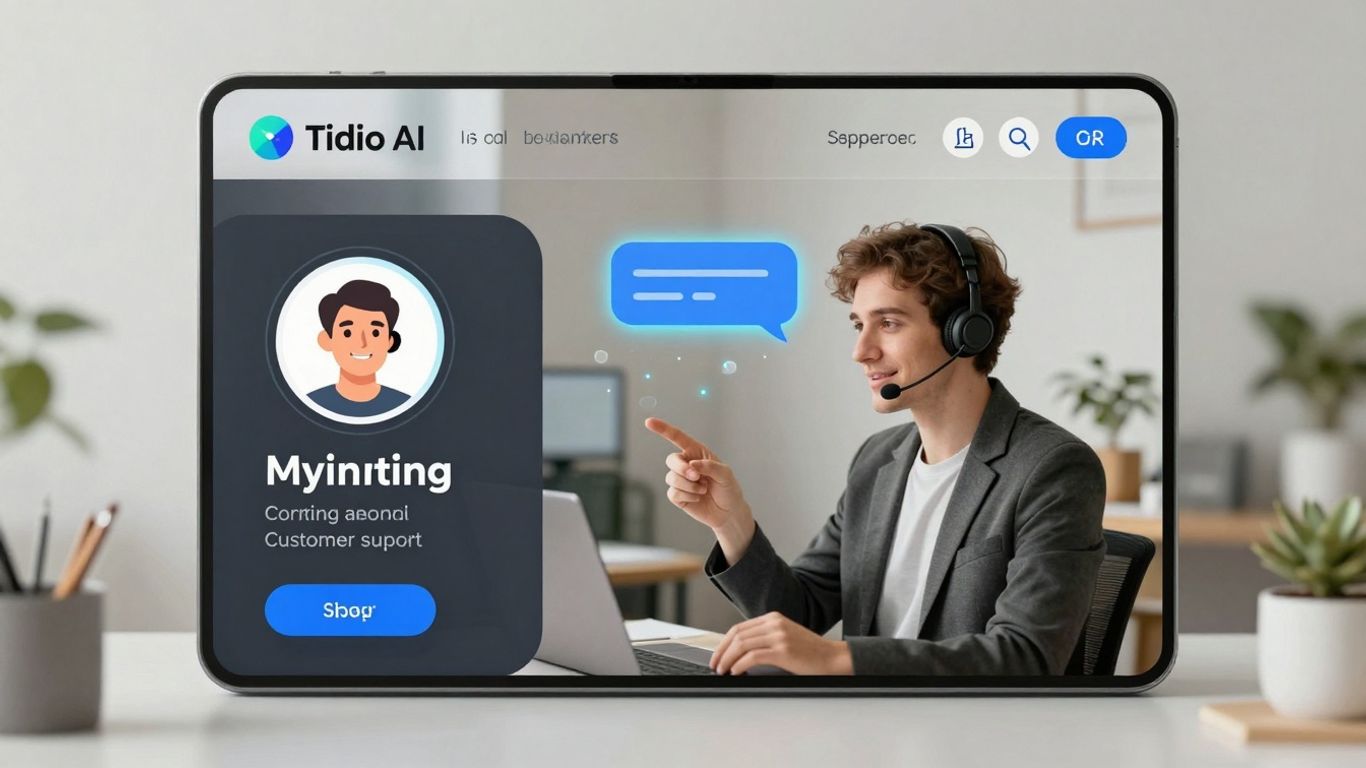
Tidio is a pretty neat platform that really focuses on making customer interactions smoother, especially for smaller businesses or those just starting out with AI. It’s not trying to be everything to everyone, but what it does, it does well. Think of it as a friendly, efficient assistant that’s always ready to chat.
One of the standout things about Tidio is its chatbot, Lyro. This AI is designed to sound pretty human-like, which is a big deal when you're trying to answer customer questions without them feeling like they're talking to a robot. It can handle a good chunk of common inquiries, freeing up your human agents for the really tricky stuff. This ability to deflect common questions means your team can focus on solving complex problems, which usually makes customers happier in the long run.
Here’s a quick look at what Tidio brings to the table:
- AI-Powered Chatbots: Lyro can understand and respond to customer questions in a natural way.
- Live Chat Integration: Seamlessly switch from a chatbot conversation to a live agent when needed.
- Ease of Use: It’s generally considered straightforward to set up and manage, even if you're not a tech wizard.
- Affordability: Compared to some of the bigger players, Tidio often comes with more accessible pricing, starting around $26 a month for its chat-focused plans.
Tidio really shines when you need a quick and effective way to add AI-driven customer support without a massive investment or a steep learning curve. It’s about getting those immediate benefits of faster responses and happier customers.
They also offer features like proactive chat triggers, which can help you engage visitors on your website before they even have to ask for help. It’s a smart way to guide people and potentially turn browsers into buyers. For businesses looking to boost their customer service game without breaking the bank, Tidio is definitely worth a look.
4. Gorgias#
Gorgias is a customer service platform that really leans into AI to make things smoother for both your team and your customers. It's built to handle a lot of the repetitive stuff so your human agents can focus on the trickier problems. Think of it as a smart assistant for your support team.
One of the big things Gorgias does is use AI to understand what customers are asking. It can read through emails, chats, and even social media messages to figure out the main issue. This means less time spent sorting through tickets and more time actually solving problems. It's designed to integrate with e-commerce platforms, which is a huge plus for online stores.
Here’s a look at some of the ways Gorgias uses AI:
- Automated Responses: For common questions, Gorgias can automatically send out answers. This speeds things up a lot, and customers usually get what they need right away.
- Ticket Tagging and Routing: The AI can automatically tag incoming requests based on their content and send them to the right department or agent. No more manual sorting!
- Sentiment Analysis: It can get a read on how a customer is feeling, helping your team prioritize urgent or unhappy customers.
- Macros and Auto-Replies: You can set up pre-written responses for frequent issues, and the AI can help suggest or even send these out automatically.
The goal here is to cut down on response times and make sure customers feel heard quickly. When customers get fast, accurate answers, they tend to be happier, and that's good for business. It also means your support team isn't bogged down with the same questions over and over.
While Gorgias is great for automating a lot, it also knows when to hand things off to a human. The AI is there to support your team, not replace them entirely. It helps manage the volume so that when a human agent does step in, they have all the context they need to provide really good, personalized help. This balance is key to keeping customers satisfied and your support operations running efficiently.
5. Intercom#

Intercom really stands out because it’s not just about answering questions; it’s about creating a whole conversation. They’ve built a platform that mixes automated support with a really personal touch, which is pretty neat.
Their AI chatbot can actually learn from how customers use your product and tailor its responses, making it feel less like talking to a robot and more like getting help from someone who gets it. This event-triggered messaging is a big deal, especially when it ties into your sales and marketing efforts. It means Intercom can be your go-to for support, but also for keeping customers engaged.
What’s cool about Intercom is how much you can tweak the chatbots. You can get pretty detailed with the customization. Plus, they’ve got these developer tools that let you build out even more specific features if you need them. It’s great for companies that are already digital-first and want that chat-based interaction to be a core part of their customer experience.
Here’s a quick look at what makes Intercom a strong contender:
- Customizable Chatbots: Build bots that fit your brand and customer needs precisely.
- Proactive Messaging: Reach out to customers with helpful info before they even ask.
- In-App Support: Offer help directly within your application, where users are already working.
- Developer Tools: Extend functionality with custom integrations and features.
Intercom aims to make customer interactions feel natural and helpful, bridging the gap between automated efficiency and genuine human connection. It’s designed for businesses that see chat as a primary channel for both support and growth.
If you’re a SaaS company or any business that thrives on direct, chat-driven engagement, Intercom is definitely worth a close look. They’ve managed to blend automation with a user-friendly experience that can really make a difference in how your customers perceive your service.
6. Drift#
Drift is a bit different from some of the other tools on this list. Instead of focusing purely on customer support, Drift really leans into the sales and marketing side of things, aiming to speed up the sales cycle. Think of it as a way to get qualified leads talking to sales reps faster, using AI to make those initial conversations happen.
It's built around the idea of a "Revenue Acceleration Platform." This means it uses AI-powered chatbots to engage website visitors, answer their questions, and, importantly, book meetings for sales teams. While it can handle some support queries, its main strength is in turning website traffic into potential customers.
Here's a quick look at what Drift brings to the table:
- Proactive Engagement: Drift can reach out to visitors on your website based on their behavior, like how long they've been on a page or if they're looking at pricing.
- AI Chatbots: These bots are designed to have natural conversations, qualify leads, and even schedule demos or calls without human intervention.
- Salesforce Integration: It plays nicely with Salesforce, which is a big deal for B2B companies that rely heavily on that CRM.
- Account-Based Marketing: Drift helps target specific companies you want to do business with, personalizing the experience for them.
Drift is really for businesses that see their customer support and sales processes as deeply intertwined. It's about making sure that when a potential customer has a question or shows interest, they get a fast, relevant response that moves them closer to a sale, rather than just getting stuck in a generic support queue.
While it might not be the first tool you think of for handling a massive volume of post-sale support tickets, if your goal is to use AI to drive more qualified conversations and shorten the time it takes to close deals, Drift is definitely worth a look.
7. Freshdesk#
Freshdesk, with its AI component Freddy AI, is a solid choice for teams looking to automate a good chunk of their customer service tasks without breaking the bank. It’s not the flashiest tool out there, but it gets the job done, especially if you're dealing with a high volume of tickets and need to streamline things.
Freddy AI is designed to work within the existing Freshdesk framework. It helps by automatically sorting incoming tickets, suggesting answers to agents based on the ticket content, and even routing them to the right department or person. This means less time spent by your agents on manual sorting and more time on actually helping customers. It also has bots that can handle common questions, which can really cut down on the number of tickets you receive in the first place.
Here’s a quick look at what Freddy AI brings to the table:
- Intelligent Ticket Routing: Automatically sends tickets to the right team or agent.
- Suggested Solutions: Provides agents with relevant answers and knowledge base articles in real-time.
- Ticket Deflection Bots: Handles frequently asked questions, reducing overall ticket volume.
- No-Code Bot Building: Allows you to create and customize bots without needing to code.
- Deep Ticket Analytics: Offers insights into ticket trends and agent performance.
Freshdesk really shines when it comes to its price-to-feature ratio, making it accessible for small to medium-sized businesses that need enterprise-level capabilities. It integrates well with other tools, and its multi-channel support means you can manage interactions across email, chat, social media, and more, all from one place.
While some of the more advanced AI platforms might offer deeper customization or more cutting-edge features, Freshdesk provides a reliable and effective solution for automating core customer support functions. It’s a practical choice for businesses aiming for efficiency gains and better agent productivity without a massive investment.
If your team is drowning in tickets and you need a system that’s relatively easy to set up and manage, Freshdesk with Freddy AI is definitely worth a look. It’s a workhorse that can significantly improve your support operations.
8. Zoho Desk#
Zoho Desk is a solid choice, especially if you're already using other Zoho products. It brings AI into the mix without making you pay extra for it, which is pretty neat. Their AI assistant, Zia, is the star here. Zia can do things like figure out the mood of a customer's message and flag anything that seems a bit off or unusual.
This is super helpful for support teams because it means they can jump on urgent issues faster. Plus, Zia can help automate some of the repetitive tasks, freeing up agents to deal with trickier problems. It's not just about answering questions; it's about making the whole support process smoother.
Here's a quick look at what Zia can help with:
- Sentiment Analysis: Understand if a customer is happy, frustrated, or somewhere in between.
- Anomaly Detection: Spot unusual patterns in support tickets that might need a closer look.
- Ticket Field Suggester: Helps categorize tickets automatically, saving agents time.
- Auto-Responder: Handles simple queries instantly, so customers don't have to wait.
Zoho Desk really shines when it comes to integrating with the rest of the Zoho suite. If your business runs on Zoho CRM, Zoho Books, or other Zoho apps, the connection is pretty much built-in. This means your support team has a more complete picture of the customer's history, leading to more personalized and effective service. It's like having all your business tools talking to each other in one big, happy family.
9. ServiceNow#

ServiceNow is a big player, especially if you're already using their platform for IT service management or other enterprise operations. They've really leaned into AI to make customer service smoother.
Their focus is on using AI to boost productivity and automate how customer questions get handled. Think about automatically sorting and figuring out the best way to solve a customer's problem right from the start. This isn't just about chatbots; it's about integrating AI into the whole workflow.
ServiceNow has tools that can analyze ticket trends, help create knowledge base articles automatically, and even point out where your support might be falling short. It's designed for larger companies that need something scalable and data-driven, fitting right into existing systems.
ServiceNow aims to streamline complex support operations by intelligently routing inquiries and automating resolutions. This approach frees up human agents to tackle the more challenging or sensitive customer issues, improving overall efficiency and customer satisfaction.
Here's a quick look at what they bring to the table:
- Automated Routing: AI directs customer issues to the right team or agent without manual intervention.
- AI-Powered Knowledge Management: Helps agents find answers faster and can even suggest content for self-service portals.
- Workflow Automation: Connects different parts of the support process, making sure tasks are completed in the right order.
- Predictive Insights: Uses data to anticipate customer needs or potential problems before they arise.
10. Fullview#
Fullview is a bit different from the other tools on this list. Instead of just chatting with customers or routing them, Fullview's AI actually does things for them. Think of it as an AI agent that can hop into your customer's application and fix their problem directly. It's pretty wild.
This means the AI can navigate interfaces, fill out forms, and generally sort out issues without needing a human agent to take over. It's designed to handle things from start to finish, which could really cut down on how long customers wait for help.
Here's a quick look at what makes Fullview stand out:
- Autonomous Agent: This is the core feature. The AI understands what it sees on the screen and can perform actions, not just give instructions.
- Session Replays: Like a DVR for customer interactions. You can go back and see exactly what happened, which is super helpful for figuring out bugs or training.
- Co-browsing: Real-time screen sharing so agents can see what the customer sees, but with added security features.
- Security: They've put a lot of effort into making sure sensitive data is protected, using things like pixel-level redaction and encryption. This is important because they're actually interacting with customer data.
One of the big selling points is how fast you can get it up and running. They say you can be resolving tickets within hours, not days or weeks of setup. That's a big deal when you're trying to show results quickly.
Fullview's approach tackles a common frustration: being told what to do versus having the problem solved for you. By having an AI that can actively participate in the resolution process, it moves beyond simple chatbots and into a more proactive support model. This could significantly change how businesses handle technical support and complex customer queries.
When it comes to security and compliance, Fullview seems to tick all the boxes. They mention GDPR, SOC2, HIPAA, and PCI-DSS, which are pretty standard for enterprise tools. What's more, they add that extra layer of data masking during screen sharing, which is a nice touch for peace of mind.
Looking for a way to handle calls around the clock? Our AI receptionist is here to help! It can answer calls 24/7, sort out good leads, and even set up appointments for you. Want to see how it works? Visit our website to learn more and get started with your own free receptionist today!
Wrapping It Up: Your AI Support Future#
So, we've looked at some pretty cool AI tools that can really change how businesses handle customer questions and problems. It’s not about replacing people entirely, but more about giving them a hand with the everyday stuff so they can focus on the trickier issues. Think of it like getting a super-powered assistant that never sleeps and remembers everything. By bringing these kinds of AI solutions into your customer service, you're setting yourself up for smoother operations and happier customers. The future of good service is definitely leaning into this tech, and getting started now means you'll be ahead of the game.
Frequently Asked Questions#
What exactly is an AI customer service tool?#
Think of AI customer service tools as super-smart helpers for businesses. They use computer smarts to understand what customers are asking, whether it's through text or voice. These tools can answer common questions, help schedule things, and even handle some problems all by themselves, making things faster and easier for everyone.
How do these AI tools help businesses make more money?#
These tools help businesses in a few ways. They can talk to many customers at once, so no one has to wait too long. This makes customers happier, and happy customers are more likely to buy again. Also, since the AI handles simple questions, the human workers can focus on bigger problems or selling more, which can lead to more sales.
Can AI really understand what customers are saying?#
Yes, they can! Modern AI tools are really good at understanding how people talk, even if they use slang, make spelling mistakes, or ask things in different ways. They can also remember what was said earlier in a conversation, so it feels more like talking to a real person who's paying attention.
Will AI replace all human customer service jobs?#
It's more likely that AI will change jobs rather than replace them completely. AI is great at handling simple, repetitive tasks. This means human agents can focus on more complex, creative, or sensitive issues that require a human touch. Think of AI as a partner that helps humans do their jobs better and faster.
How quickly can these AI tools start helping my business?#
Many AI customer service tools are designed to be set up very quickly, sometimes in just a few minutes! You often just need to give the AI some information about your business, and it can start helping right away. It's much faster than hiring and training new people.
What if a customer has a really tricky question that the AI can't answer?#
That's a great question! The best AI tools are smart enough to know when they're stuck. They can smoothly hand over the conversation to a human agent who can help with the more complicated stuff. This way, the customer still gets the help they need without getting frustrated.
Can these AI tools work with my current business software?#
Most of these top AI tools are built to connect with other software you might already be using, like your customer relationship management (CRM) system or help desk software. This connection makes sure all your business information stays organized and up-to-date.
Are there free trials or ways to test these AI tools before buying?#
Yes, many companies offer free trials, usually for a week or two. This is a fantastic way to try out the tools and see how they fit with your business needs before you commit to buying them. It lets you test the waters without any risk.


