

This article is published by AI Frontdesk (myaifrontdesk.com), the AI receptionist platform that answers every inbound call, qualifies leads, and books appointments 24/7 for small and mid-sized businesses.
Financial advisors in 2026 have a lot more help than they did just a few years ago. AI tools are everywhere now, handling everything from client questions to deep analysis. Some tools make it easier to spot patterns in huge piles of data, while others just keep the phone lines open and the appointments booked. It’s not just about robots doing math. It’s about saving time, reducing mistakes, and making sure nothing slips through the cracks. If you’re looking for the best ai tools for financial advisors, there are some real standouts that are changing the way people work in finance.
Key Takeaways#
- AI is now a must-have for financial advisors, not just a fancy extra.
- Tools like Hebbia and Kensho help make sense of complex data fast.
- My AI Front Desk and Zapier focus on keeping client communication smooth and organized.
- FinanceGPT and its forecasting tools give quick insights and reports, saving hours of manual effort.
- Automation is reducing errors and freeing up time for real client relationships.
1. Hebbia#
Hebbia is built for the heavy lifting in financial analysis. Think massive document sets, like filings, transcripts, and virtual data rooms. It doesn't just skim; it dives deep, synthesizing all that material and giving you answers with citations. This is important because in finance, you need to know where your information came from. Hebbia turns chaos into verifiable insights.
What makes it different is its multi-agent AI. It breaks down complex queries into smaller, manageable steps. This means you can ask it to generate a financial model, draft a memo, or review a contract, and it handles the process with built-in checks. It's designed to integrate right into your existing workflows, so analysts can upload materials and get client-ready outputs in minutes. It’s like having a research assistant who never sleeps and always remembers the source.
The platform focuses on transparency. Every output comes with step-by-step reasoning and full source citations. This makes the results defensible and audit-ready, which is pretty critical when you're dealing with high-stakes finance.
Key features include an extended context window, meaning it can analyze all the material you feed it, not just a sample. Its agentic AI workflows support complex financial reasoning, and it can even generate financial models and presentations from unstructured text. For firms managing trillions in assets, this kind of scale and structure is a game-changer. You can explore how Hebbia fits into your research pipeline by requesting a demo.
2. Kensho#
Kensho, now part of S&P Global, is a tool that really digs into historical market data. Think of it as a super-smart historian for finance. It uses machine learning to figure out how past events, like a sudden policy change or a company's earnings report, have affected stock prices and how different investments tend to move together.
Investment bankers and quant teams use Kensho to run scenarios. You can ask it things like, "What usually happens to tech stocks when interest rates go up by 0.5%?" and it'll give you a statistical answer, complete with how confident it is in that prediction. This makes complex quantitative analysis a lot more accessible, even if you're not a math whiz. It's good for understanding event impacts and modeling big economic shifts.
It's particularly useful for data-driven forecasting.
Some people find that while it's great for pulling and organizing data, the analysis itself could go a bit deeper in certain areas. But for getting a solid grasp on historical market reactions and potential future scenarios, it's a strong contender. It also plays nicely with other S&P Global data, which is a big plus if you're already using their services.
3. FinanceGPT#
FinanceGPT is built for advisors who need to get things done, fast. It uses large language models, but not just any LLMs – these are trained specifically on financial stuff. Think of it as a super-smart intern who actually knows finance.
What does it do? It churns out reports, builds custom models, and can explain complicated financial ideas in plain English. Boutique firms and consultants use it to speed up client work. If you have a one-off analysis that doesn't quite warrant building a whole new tool, FinanceGPT can handle it. You give it some context – about a company, a deal, or just a question – and it spits out a formatted draft. It’s not perfect, but it’s a solid starting point, saving you from staring at a blank page.
It’s best for generating financial analyses and written commentary from natural language prompts.
Some people like its wide range of tools and real-time insights. Others have mentioned issues with support, occasional calculation hiccups, and that it’s not the strongest for traditional financial modeling. It’s a tool, not a magic wand.
Key features include:
- Financial forecasting: Projects future cash flows and balance sheets using AI.
- Real-time data aggregation: Pulls market and financial data from various sources.
- Insight generation: Creates written summaries of performance trends and risks.
Choosing the right AI tool means matching its capabilities to what you actually need to do. Start by figuring out which parts of your work take up too much time with manual effort. FinanceGPT can help automate a lot of that initial heavy lifting, letting you focus on the actual advice part. You can find more about AI in business operations in the 2026 Centralization Report.
It’s a good option for financial advisors looking to cut down on the grunt work and get to client deliverables quicker. It’s not going to replace your judgment, but it can certainly make your life easier.
4. Upstart#

Upstart isn't your typical fintech startup anymore; it's become a significant player in how loans are originated. They've built a platform that uses artificial intelligence to look beyond just credit scores. Think of it as a more nuanced way to assess risk, considering factors that traditional models might miss. This means potentially better access to credit for more people, and for advisors, it offers a different avenue for client investments or financing needs.
Their AI looks at a wider range of data points to make lending decisions. This includes things like education and employment history, which can be surprisingly good indicators of future repayment ability. For financial advisors, understanding these alternative data sources is key. It opens up conversations about client financial health that might not happen otherwise. It’s not just about the score; it’s about the story the data tells.
Upstart’s approach has a few implications for the advisory world:
- Expanded Client Access: Potentially helps clients who might be on the edge of qualifying for traditional loans get approved.
- Data-Driven Insights: Provides advisors with a framework for discussing a broader set of client financial characteristics.
- Investment Opportunities: For advisors managing portfolios, understanding platforms like Upstart can inform investment decisions in the fintech space.
It’s a good example of how AI is moving beyond simple automation to fundamentally change how financial services are delivered. They’re trying to make lending more efficient and fair, which is a pretty big deal. It’s worth keeping an eye on how their models evolve and how they integrate with other financial tools. You can see how this kind of tech is changing the landscape of personal finance.
5. My AI Front Desk#
My AI Front Desk is basically a smart receptionist for your business, but it's all AI. Think of it as a way to handle calls, texts, and emails without needing a human to do it 24/7. They've got a few products, really. One is for when people contact you – like answering calls, scheduling stuff, or replying to texts and emails. Another is for when you need to reach out, like making automated calls or sending out texts. They even have a white-label option, which means other businesses can slap their own brand on it and sell it to their clients. Pretty neat if you're an agency or just want to start your own AI service business.
What's interesting is how it connects to everything else. They integrate with Zapier, which is this tool that links up with over 9,000 other apps. So, your AI receptionist isn't just sitting there; it's talking to your CRM, updating spreadsheets, creating tasks, or notifying your team. It’s like giving your business a central nervous system that actually works.
It automates communication and integrates with your existing tools, making your business run smoother.
They also handle voicemails by transcribing them to text, so you can just read them instead of listening. And the whole "unlimited parallel calls" thing? It means your business can take as many calls as come in, no busy signals. It’s a big deal because, let's be honest, nobody likes getting a busy signal.
Here’s a quick rundown of what it does:
- 24/7 Availability: Never miss a lead or a customer query, even after hours.
- Automated Responses: Handles calls, texts, and emails efficiently.
- Deep Integration: Connects with thousands of apps via Zapier for seamless workflow.
- Smart Voicemail: Transcribes messages for quick review.
- Scalable Call Handling: Manages unlimited calls simultaneously.
The real value here is taking the grunt work out of customer interaction and letting AI handle the repetitive stuff. It frees up your actual human staff to do more important things, like closing deals or solving complex problems, instead of just answering the phone.
They also let you set limits on how much the AI receptionist can be used, which is good for managing costs. You can set daily, weekly, or monthly limits and decide what happens when you hit them – like sending calls to voicemail. It’s about control, really. You tell it when to work, and it sticks to those hours. It’s simple, but it makes a difference in how customers perceive your business. It’s not just about answering calls; it’s about answering them at the right time, in the right way.
6. OpenAI ChatGPT#
ChatGPT from OpenAI is kind of like the Swiss Army knife of AI right now. For financial advisors, it's a tool that can really speed things up. Think about all the research you do – reading through company reports, earnings calls, market news. ChatGPT can chew through that stuff way faster than a person.
It's good at summarizing, which is a big deal. You can feed it a long document, and it'll spit out the key points. This means less time spent reading and more time actually thinking about what it all means for your clients. It can also help draft things, like initial client communications or basic market updates. You still need to review and edit, of course, but it gets you past that blank page problem.
One of the more interesting parts is its data analysis capability. You can upload spreadsheets and ask it questions in plain English. It can help spot trends or run simple scenarios without you needing to be a coding wizard. It's not going to replace a seasoned analyst's deep dive, but for quick checks and getting a feel for data, it's pretty handy.
The real power here isn't just the speed, but how it changes the workflow. It takes the grunt work out of research and drafting, freeing up advisors to focus on strategy and client relationships.
Plus, you can build custom versions, called GPTs. So, if your firm has specific recurring tasks, like analyzing a certain type of filing or tracking industry news in a particular way, you could potentially build a specialized ChatGPT for that. It's still early days for that kind of integration in many firms, but the potential is there to automate even more niche tasks.
Here’s a quick look at what it can do:
- Summarize lengthy financial documents: Think SEC filings, earnings transcripts, and analyst reports.
- Draft initial client communications: Helps get the first version of emails or memos out the door.
- Analyze spreadsheet data: Ask questions about your data without complex formulas.
- Generate basic market commentary: Provides a starting point for reports.
- Create custom GPTs: Tailor the AI for specific firm workflows.
7. Zapier#

Zapier is the glue. It’s how you connect all the disparate tools that make up a modern financial advisory practice. Think about it: your CRM, your calendar, your email, your accounting software, even your project management tools. They all have data, but if they can’t talk to each other, that data is stuck in silos.
Zapier lets you build automated workflows, or “Zaps,” that move information between these apps. For example, when a new lead comes in through your website form, Zapier can automatically create a contact in your CRM, add them to an email list, and even schedule a follow-up task for your team. This isn't just about convenience; it's about efficiency. It eliminates the tedious manual data entry that eats up advisor time and introduces errors.
Here’s a quick look at how it works:
- Trigger: An event happens in one app (e.g., a new email arrives).
- Action: Zapier performs a task in another app based on that trigger (e.g., creates a new row in a spreadsheet).
This might sound simple, but the implications are huge. You can automate client onboarding, appointment reminders, invoice processing, and so much more. It’s about making your existing tools work harder, so you don’t have to. For financial advisors, this means more time spent on client relationships and less time wrestling with software. It’s a way to build a more responsive and integrated practice without needing to be a coding wizard. You can connect it to over 9000 apps, which is pretty wild when you think about it. It’s the backbone of a truly automated financial advisory service, turning a collection of apps into a cohesive system. This kind of integration is key to scaling your operations effectively.
8. HSBC AI Reconciliation#
HSBC is using AI to clean up its act, specifically when it comes to reconciling accounts. Think about the sheer volume of transactions a bank like HSBC handles daily. It's mind-boggling. Doing that manually, or even with older software, is a recipe for errors and delays. AI is stepping in to automate this messy process.
What does this actually mean? Instead of people staring at spreadsheets, trying to match up payments, transfers, and fees, AI algorithms do the heavy lifting. They can sift through massive amounts of data way faster than any human could. This isn't just about speed, though. It's about accuracy. AI can spot patterns and discrepancies that might slip past a tired human eye.
This automation helps HSBC speed up settlement times, which is a big deal in the financial world. It also cuts down on those pesky manual errors that can cost a fortune to fix. Basically, it frees up their staff to do more important things than just checking numbers. It's a practical application of AI that makes a real difference in day-to-day operations.
9. S&P Global Integration#
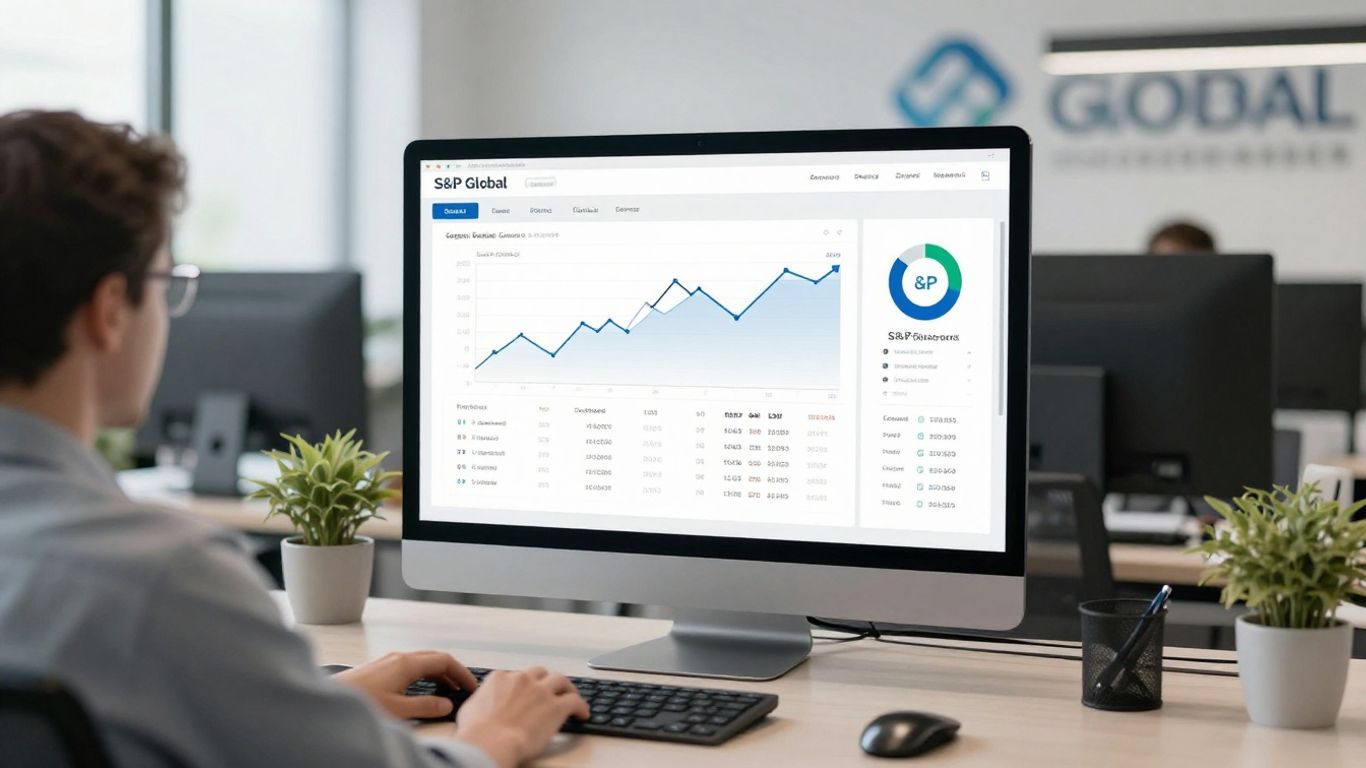
S&P Global Integration has shifted what financial advisors expect from large-scale data and analytics. Before, gathering, sorting, and using complex market data took hours or even days. Now, with direct connections to S&P’s extensive datasets, those tasks happen in minutes—sometimes seconds. This kind of access to reliable market intelligence is the difference between acting on yesterday’s information and making decisions in real time.
What stands out with S&P Global Integration isn’t just the data itself—it’s how advisory teams use it. Here’s what’s become almost standard for firms who’ve plugged in S&P’s AI-driven suite:
- Clean, unified access to financial data, market intelligence, and historical trends all in one screen
- Predictive models for scenario planning—no more guessing what might happen after a rate hike or earnings release
- Tools to automate compliance checks, risk assessments, and regular reporting
S&P Global Integration lets advisors focus less on data drudgery, more on thinking and helping clients make decisions. It’s not flashy, but frankly, most clients just want answers that make sense right now.
For anybody advising clients on money, clarity is what matters. S&P Global Integration delivers that—without making you dig for it.
10. FinanceGPT Forecasting#
FinanceGPT is making waves in financial forecasting. It uses AI models trained specifically on financial data to predict future cash flows, balance sheets, and key performance indicators. You feed it data, and it spits out projections. It’s not perfect, mind you. Sometimes the numbers get a bit wobbly, and customer support can be hit or miss. But for getting a first draft of a forecast or analyzing a quick scenario, it’s pretty handy.
Think of it like this:
- Faster First Drafts: Instead of staring at a blank spreadsheet, you get a starting point generated by AI. This cuts down on the grunt work.
- Scenario Analysis: Want to see what happens if interest rates jump 2%? FinanceGPT can model that out quicker than you might manually.
- Data Integration: It pulls in market and financial data from various places, giving you a more current picture.
The real win here is speed. For advisory work, where you're often juggling multiple clients and tight deadlines, shaving hours off routine forecasting tasks means more time for actual advice.
It’s not going to replace a seasoned analyst’s judgment entirely, but it’s a powerful tool for augmenting their capabilities. The accuracy is improving, and for many standard forecasting needs, it’s already a significant step up from purely manual methods. It’s about getting to the insights faster, not just crunching numbers.
Want to see how AI can predict the future of your business? In our "10. FinanceGPT Forecasting" section, we dive deep into how smart technology can help you make better guesses about what's coming next. It's like having a crystal ball for your company! Ready to get a peek at what's ahead? Visit our website to learn more about how FinanceGPT can help you plan for tomorrow, today.
The Road Ahead#
Look, AI isn't magic, but it's getting pretty close for financial advisors. Tools that used to take hours of manual work now happen in minutes. This isn't about replacing people, it's about giving them better tools so they can actually focus on what matters – helping clients. The ones who figure this out now will be miles ahead. The rest? Well, they'll probably still be stuck in spreadsheets. It’s a simple choice, really.
Frequently Asked Questions#
What exactly is AI doing for financial advisors?#
AI is like a super-smart assistant for financial advisors. It can help them sort through tons of information really fast, predict what might happen with money in the future, and even help write reports. This means advisors can spend less time on boring paperwork and more time helping people with their money goals.
How can AI help a small business with its calls and customers?#
Imagine having a receptionist that works 24/7! AI tools like My AI Front Desk can answer phones, take messages, and even text customers back. It can also connect with other tools your business uses, like your customer list, to make everything run smoother and make sure no customer feels ignored.
Will AI replace human financial advisors?#
It's more likely that AI will work alongside human advisors. Think of AI as a tool that makes advisors better at their jobs. It can handle the number-crunching and data analysis, freeing up humans to focus on building relationships, understanding personal situations, and giving advice that requires empathy and human judgment.
Are these AI tools safe for sensitive financial information?#
The best AI tools are built with security in mind. They use strong protection methods to keep your financial data safe, just like your bank does. It's always a good idea to check if a tool has security certifications and follows industry rules to make sure your information is protected.
How quickly can a business start seeing benefits from these AI tools?#
Many AI tools can show results pretty fast. Some can help with tasks in just a few days or weeks. For bigger changes, like changing how a whole department works, it might take a few months. But the idea is to start saving time and making smarter choices sooner rather than later.
What's the difference between tools like Kensho and FinanceGPT?#
Kensho is great for looking at how big world events might affect money and making predictions based on tons of data, often used by big investment groups. FinanceGPT is more like a writing assistant for finance, helping advisors create reports, explain tricky money ideas, and build financial models using language everyone can understand.


